
Introduction: Learning India’s heritage beyond the classroom
India’s cultural heritage is reflected in its historic monuments, traditional art forms, architecture, literature, customs and diverse regional traditions. Helping students understand this heritage encourages them to look beyond textbook facts and recognise the stories, ideas and values that have shaped the country.
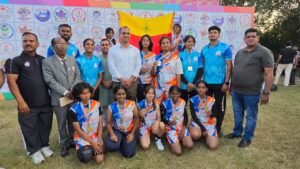
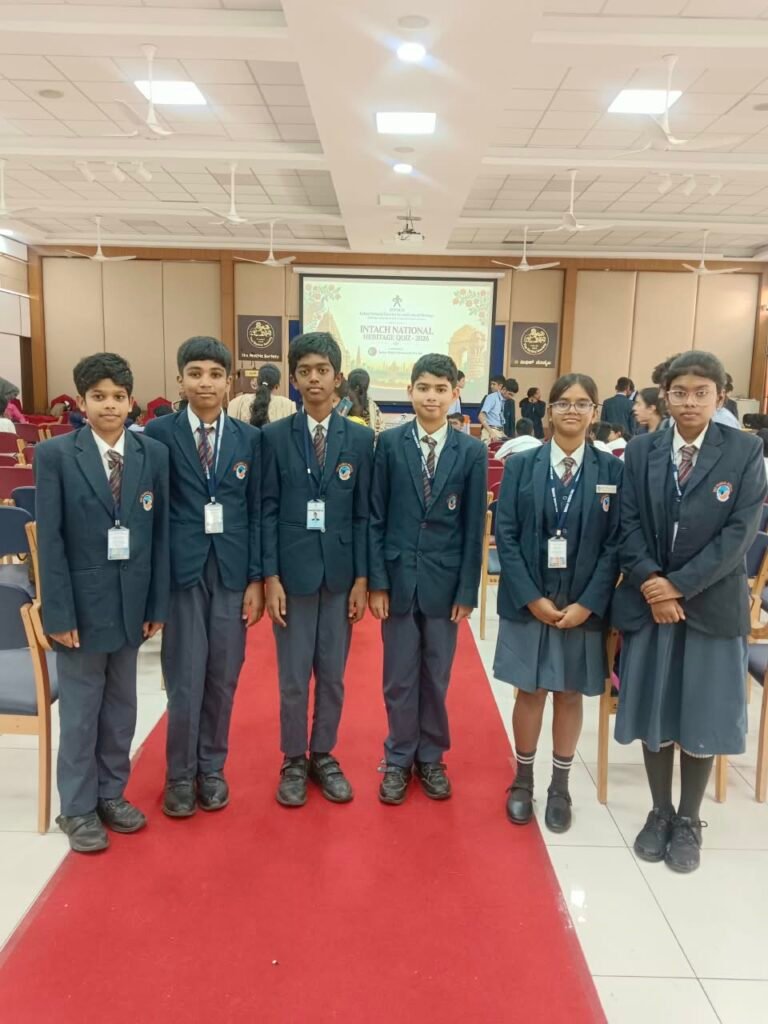
On 26 October 2026, six students from BRS Global School, Sarjapur Road, participated in the INTACH National Heritage Quiz 2026 at The Mythic Society in Bengaluru. Organised by the Indian National Trust for Art and Cultural Heritage, the event provided an opportunity for students to engage with India’s cultural and historical legacy through a quiz-based learning experience.
Representing Grades 7, 8 and 9, the students participated in three teams of two members each. Their involvement reflected the value of intellectual curiosity, collaboration and learning through educational competitions.
At BRS Global School, Sarjapur Road Campus, learning extends beyond regular classroom instruction through opportunities that encourage students to explore ideas, develop their interests and connect academic knowledge with the world around them.
Event Overview
Event : INTACH National Heritage Quiz 2026
Organiser : Indian National Trust for Art and Cultural Heritage (INTACH)
Date : Monday, 26 October 2026
Venue : The Mythic Society, Nrupathunga Road, Bengaluru
Participating school : BRS Global School, Sarjapur Road
Students : 6
Teams : 3 teams, with 2 students per team
Grades represented : Grades 7, 8 and 9
Recognition : Participation certificates for all six students
What happened during the INTACH National Heritage Quiz?
The event brought students together around the subject of India’s cultural heritage. Through their participation, the students had an opportunity to explore historical knowledge, cultural traditions and the significance of preserving the country’s shared legacy.
Three teams represented the Sarjapur Road campus, with students from Grades 7, 8 and 9 participating in pairs. This format provided an opportunity to engage in a collaborative academic activity while representing their school at an educational event outside the classroom.
The quiz also offered a setting in which students could connect their existing knowledge with broader questions about Indian history, art and heritage. Such experiences can encourage learners to ask questions, explore unfamiliar subjects and recognise that history is not limited to dates and events; it also reflects the development of societies, ideas, artistic traditions and cultural identities.
All six participating students received certificates recognising their involvement in the quiz.
Meet the participating students
The students represented three teams across the middle and secondary school grades.
Team 1 – Grade 7
• Abhiram Bhardwaj – Grade 7A
• Bandam Anish Virat – Grade 7B
Team 2 – Grade 8
• S. Kannan – Grade 8A
• Sutej Joshi – Grade 8B
Team 3 – Grade 9
• Aaradhana – Grade 9
• Eeram Khan – Grade 9
Their participation highlighted the importance of providing students with opportunities to engage in academic activities beyond the regular timetable. Each student contributed to the school’s representation at the event, and all six received participation certificates in recognition of their involvement.
What did students learn from the heritage quiz?
A heritage quiz can offer more than an opportunity to recall historical facts. It can encourage students to connect information, consider different perspectives and understand the cultural significance of places, traditions and historical developments.
The INTACH National Heritage Quiz 2026 provided participating students with an opportunity to deepen their understanding of India’s history, art and traditions. It also encouraged skills that support learning across different subjects.
Historical awareness and cultural understanding
Learning about heritage helps students understand how historical events, artistic achievements and cultural traditions contribute to India’s identity. It can also encourage respect for the different communities and traditions that form the country’s cultural landscape.
Critical thinking and recall
Quiz-based learning encourages students to retrieve information, interpret questions and draw on what they have learned. When questions require connections between topics, students also have an opportunity to practise reasoning and analytical thinking.
Teamwork and collaboration
Working in pairs encourages students to listen to one another, share knowledge and approach questions collaboratively. These experiences can help develop communication, cooperation and respect for a teammate’s contribution.
Curiosity and independent learning
Preparing for or participating in a heritage-focused event can spark interest in subjects that students may wish to explore further, including historical monuments, traditional art, architecture and regional customs.
Awareness of heritage preservation
Understanding cultural heritage can help students appreciate why historic sites, traditional knowledge, artistic expressions and cultural practices deserve attention and care. This awareness can contribute to a sense of responsibility towards preserving India’s legacy for future generations.
For more information about the school’s wider learning opportunities, explore Beyond the Classroom at BRS Global School.
How does heritage-based learning support CBSE education?
Heritage-based learning complements classroom education by giving students opportunities to explore history, culture, social development and the connections between different subjects.
In a CBSE learning environment, activities such as quizzes can support the development of knowledge, reasoning, communication and independent learning habits. The specific educational value depends on the questions asked, the student’s preparation and the opportunity to reflect on what has been learned.
The INTACH National Heritage Quiz offered students a way to engage with Indian heritage beyond routine lessons. It encouraged them to apply their knowledge in a competitive academic setting and consider the cultural context behind historical information.
The experience connects naturally with several areas of learning:
• Social Science: Understanding historical developments, cultural traditions and the significance of heritage.
• Language and communication: Reading questions carefully, interpreting information and discussing possible answers.
• Critical thinking: Recalling facts, making connections and evaluating information.
• Civic awareness: Recognising the importance of preserving shared cultural resources.
• Collaborative learning: Working with a teammate towards a common objective.
These are complementary educational benefits rather than a claim that participation in one quiz automatically demonstrates mastery of every skill.
Why are educational competitions valuable for student development?
Educational competitions provide a structured opportunity for students to use their knowledge in a different setting. They can introduce new topics, encourage preparation and help learners become more comfortable engaging with unfamiliar questions.
The value of participation is not limited to winning a prize. Taking part in an academic event allows students to experience a learning environment beyond their usual classroom, represent their school and gain exposure to different forms of intellectual engagement.
For middle and secondary school students, these opportunities can be particularly useful as their academic interests broaden and they begin to explore subjects in greater depth.
The heritage quiz illustrates three important aspects of this approach:
• Learning through participation: Students experience a subject through an organised educational activity.
• Learning with others: Team-based participation encourages students to share knowledge and work collaboratively.
• Learning beyond the syllabus: Exploring cultural heritage can prompt students to investigate historical and cultural topics beyond their immediate classroom requirements.
At BRS Global School, these experiences complement the school’s broader emphasis on academic learning, co-curricular engagement and student development.
Encouraging curiosity, cultural awareness and responsible citizenship
Cultural heritage connects the past with the present. Historic places, art, architecture and traditional practices provide insights into how communities have developed and how knowledge and creativity have been passed between generations.
When students explore these subjects, they have an opportunity to develop a more informed understanding of India’s diversity. They can also begin to recognise the role individuals and communities play in protecting cultural resources.
The INTACH National Heritage Quiz 2026 gave participating students an opportunity to engage with this wider theme. By taking part in a heritage-focused educational event, they could extend their knowledge while developing an appreciation for India’s cultural legacy.
Such experiences are relevant to education because they encourage students to look beyond examination preparation. Academic knowledge becomes more meaningful when learners can connect it with society, culture and their responsibilities as citizens.
How does BRS Global School encourage learning beyond textbooks?
At BRS Global School, Sarjapur Road Campus, students have opportunities to engage with learning through academic activities, competitions, clubs and experiences beyond conventional classroom instruction.
The school’s co-curricular and extracurricular programmes include activities designed to encourage creativity, communication, collaboration and the exploration of individual interests.
These opportunities complement formal academic learning in different ways. Competitions can encourage preparation and application of knowledge, while clubs and enrichment activities allow students to explore particular subjects more deeply.
Participation in the INTACH National Heritage Quiz fits within this wider educational approach: giving students opportunities to represent their school, explore India’s cultural heritage and take part in an organised academic activity.
The objective is not simply to accumulate certificates or achievements. It is to create opportunities for students to learn, participate, reflect and discover interests that can continue to develop over time.
Why does this experience matter to parents?
Parents evaluating a school often consider academic standards alongside the opportunities available for their child’s wider development. They may want to know whether students are encouraged to explore their interests, work with others, participate in competitions and learn about the world beyond their immediate environment.
Participation in the INTACH National Heritage Quiz demonstrates one example of an educational opportunity offered to students at the Sarjapur Road campus.
For parents, the experience highlights the potential value of:
• Exposure to organised academic competitions.
• Opportunities to explore history and cultural knowledge.
• Team-based activities that encourage collaboration.
• Experiences that complement classroom learning.
• Participation in educational events outside the school campus.
Every child has different interests and strengths. Providing a variety of learning opportunities can help students discover what interests them, develop confidence through participation and become more engaged learners.
Families considering the school’s wider educational approach can explore the Sarjapur Road campus and review the school’s admissions information for details about the programmes offered.
Local relevance: Learning opportunities for families around Sarjapur Road
BRS Global School, Sarjapur Road Campus, located in Kasavanahalli, Bengaluru, serves families looking for quality CBSE education in and around the Sarjapur Road corridor. The campus is accessible to families from nearby residential communities, making it a relevant option for parents exploring schools in Sarjapur Road, CBSE schools in Sarjapur Road, and schools near Sarjapur Road.
The surrounding areas include Kasavanahalli, Bellandur, Sarjapur Road, Harlur, Haralur Road, Hosa Road, HSR Layout, Carmelaram, Kaikondrahalli, Doddakannelli, Dommasandra, Kodathi, Choodasandra, Junnasandra, Iblur, Gunjur, Varthur, Rayasandra, Kudlu Gate, and Electronic City.
The school also serves families from other residential areas, including Naganathapura, Huskur, Muthanallur Cross, Sompura, Mullur, Chikkanayakanahalli, Chikbellandur, Doddanagamangala, Meenakshi Layout, CSB Layout, and Spring Fields, subject to applicable transport routes and availability.
For families working in Bengaluru’s technology corridors, including Marathahalli, Kadubeesanahalli, Koramangala, and the Electronic City area, choosing a school involves considering curriculum, commuting arrangements, co-curricular activities and opportunities for holistic development.
The INTACH National Heritage Quiz 2026, held at The Mythic Society on Nrupathunga Road, Bengaluru, demonstrates how students from the Sarjapur Road campus can participate in educational activities beyond their regular classrooms and engage with India’s history and cultural heritage.
Parents can explore the official BRS Global School, Sarjapur Road campus page to learn more about the school’s educational approach and facilities.
For admission-related information, visit the admissions page.
Families can also find the campus through its official Google Business Profile for location details and available business information.
Location note: BRS Global School also has a separate branch in Attibele. Parents looking specifically for that campus can visit the Attibele branch listing. This event article focuses on the Sarjapur Road campus.
Common Parent Questions About Montessori Arithmetic
How can a heritage quiz benefit middle school students?
Heritage quizzes encourage students to explore history, art, architecture and cultural traditions. They can also support knowledge recall, analytical thinking, curiosity and collaboration. For middle school learners, such activities offer an engaging way to broaden subject knowledge and discover areas they may wish to investigate further.
Why should students participate in inter-school and external academic activities?
External academic activities allow students to apply their knowledge in a different setting, engage with new questions and represent their school. Depending on the format, these experiences can encourage preparation, teamwork, communication and confidence through participation.
Does participation in an academic quiz support holistic development?
Yes, it can contribute to holistic development by complementing academic learning with opportunities to practise collaboration, reasoning, communication and cultural awareness. The extent of development depends on the nature of the activity and how students engage with the experience.
What is the importance of teaching children about Indian heritage?
Learning about Indian heritage helps children understand the country’s historical development, cultural diversity and artistic traditions. It can foster respect for different communities and encourage awareness of the importance of preserving cultural resources for future generations.
How can parents encourage interest in history and culture at home?
Parents can encourage children to read age-appropriate history books, visit museums and heritage sites, discuss local traditions, explore historical documentaries and ask questions about the places they encounter. Allowing children to investigate topics that interest them can make learning more engaging.
Key highlights of the INTACH National Heritage Quiz 2026
• Six students from BRS Global School, Sarjapur Road, participated in the national heritage quiz.
• Students from Grades 7, 8 and 9 represented the school.
• Three teams participated, with two students in each team.
• The event was held on 26 October 2026 at The Mythic Society, Nrupathunga Road, Bengaluru.
• The quiz was organised by the Indian National Trust for Art and Cultural Heritage (INTACH).
• The activity encouraged engagement with Indian history, art, traditions and cultural heritage.
• All six participants received participation certificates.
• The experience provided an opportunity to practise teamwork, critical thinking and historical knowledge.
Frequently Asked Questions (FAQs)
What is INTACH?
INTACH stands for the Indian National Trust for Art and Cultural Heritage. It is an organisation associated with the conservation and preservation of India’s cultural heritage.
When was the INTACH National Heritage Quiz 2026 held?
The event was held on Monday, 26 October 2026, at The Mythic Society on Nrupathunga Road, Bengaluru.
How many BRS Global School students participated?
Six students from Grades 7, 8 and 9 participated in the quiz, representing the school in three teams of two students each.
Which students represented BRS Global School?
The participants were Abhiram Bhardwaj and Bandam Anish Virat from Grade 7; S. Kannan and Sutej Joshi from Grade 8; and Aaradhana and Eeram Khan from Grade 9.
Did the participants receive certificates?
Yes. All six students received participation certificates in recognition of their involvement in the quiz.
What skills can students develop through heritage quizzes?
Heritage quizzes can encourage historical awareness, knowledge recall, critical thinking, teamwork, communication and curiosity about cultural traditions. They also offer opportunities to learn beyond routine classroom instruction.
Where can parents learn more about BRS Global School, Sarjapur Road?
Parents can visit the official Sarjapur Road campus website to explore the school’s educational approach, facilities and student activities. For admissions enquiries or a campus visit, they can use the admissions page or contact the school.
Conclusion: Building knowledge through cultural exploration
The participation of six students from BRS Global School, Sarjapur Road, in the INTACH National Heritage Quiz 2026 reflects the value of educational experiences that encourage students to explore India’s history and cultural traditions.
Held at The Mythic Society in Bengaluru, the event provided an opportunity for students from Grades 7, 8 and 9 to engage with heritage-focused learning, work in teams and broaden their knowledge beyond the classroom. All six participants received participation certificates.
Experiences like these complement formal education by encouraging curiosity, collaboration and an appreciation of the country’s cultural legacy. They also remind students that learning involves not only understanding the past but also recognising the responsibility to preserve its legacy for future generations.
Explore our Campus:
Attibele Branch:
https://share.google/iFhJaeGo8wkgOZ1Y5
Sarjapur Road Branch: