
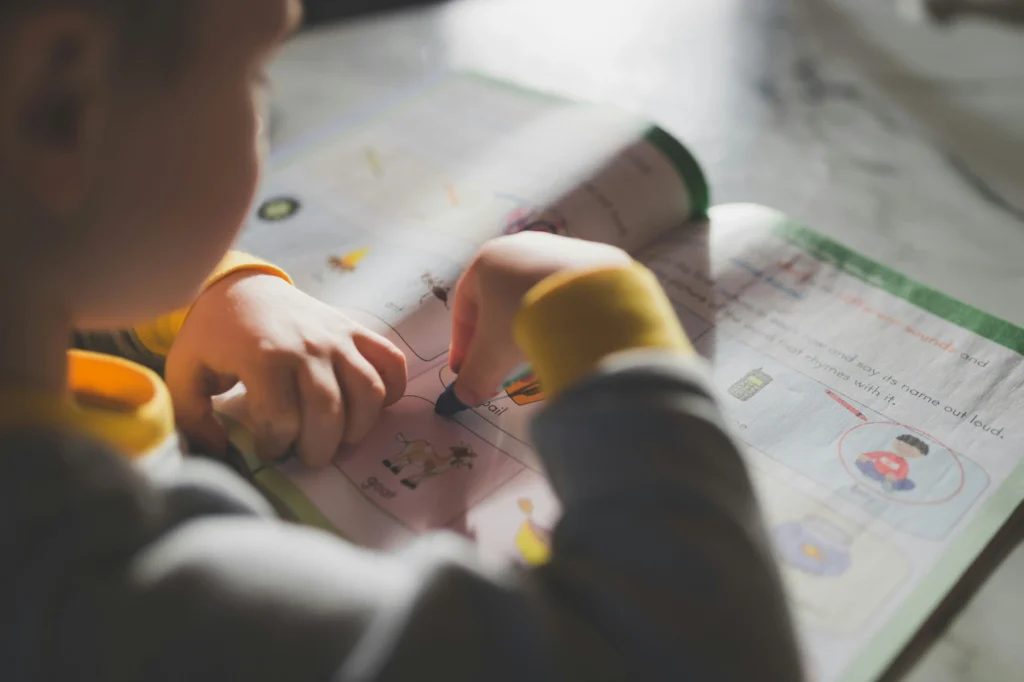
Why Creative Activities Are Important for a Child's Overall Development
Introduction
The importance of creative activities for children is often underestimated: art, music, drama and imaginative play are treated as pleasant extras, the first things cut when academic pressure rises. This is a significant misjudgement. Research in developmental psychology shows creative engagement is not supplementary to a child’s development; it is one of its primary drivers.
Parents comparing the best schools in Sarjapur Road should treat a school’s creative provision as a genuine measure of quality. At BRS Global School, creativity sits alongside academics, and here is why that matters.
Key Takeaways
• The importance of creative activities for children lies in the cognitive, emotional and social skills they build that academics alone do not.
• Problem-solving, sustained attention and spatial reasoning all have strong roots in creative work.
• Art, drama and storytelling give children tools to process emotion, supporting resilience and mental health.
• Group creative work builds collaboration skills that classrooms rarely replicate.
• Creative time does not trade off against academics; the two are complementary.
What counts as a creative activity?
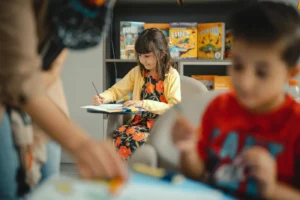
Creative activities are those where the child generates something: a drawing, a story, a structure, a performance, a solution to an open problem. They are distinct from activities where a child receives or reproduces information. The most valuable include visual art, music, drama and storytelling, dance, construction, creative writing and open-ended imaginative play. What they share is that the child must make decisions, take risks, tolerate uncertainty and see a process through.
How do creative activities build thinking skills?
Creative tasks rarely have one correct answer, so they build flexible, iterative thinking. A child building a cardboard bridge must try an approach, see if it holds and adapt, which is exactly the problem-solving academic work later demands. Creative engagement also builds some of the most sustained voluntary attention seen in childhood, and drawing, building and dancing develop spatial reasoning, one of the strongest early predictors of maths and science performance.
How do creative activities support emotional development?
Creative expression gives children a way to process feelings they cannot yet put into words. A child who cannot explain their anxiety may draw it, build it, or act it out, which is why art and drama are established tools in child psychology. Drama and storytelling also build empathy by asking children to inhabit other perspectives, and the repeated small failures of creative work, a drawing that goes wrong, a collapsed structure, are low-stakes practice at managing frustration and trying again.
Do creative activities build social skills?
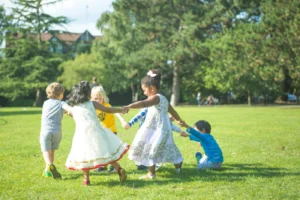
Yes. Group creative work, a choir, a drama production, a collaborative mural, requires negotiation, shared decisions and compromise, the collaborative skills workplaces value most. Ensemble music is especially well-documented for building listening and turn-taking. Among the CBSE schools in Attibele and wider Bengaluru that integrate the arts into the daily timetable rather than treating them as optional, students show stronger engagement and a broader range of abilities.
Do creative activities hurt academic performance?
No, the opposite. Multiple studies find children with high arts engagement outperform peers in reading, writing and maths, because the skills creativity builds, sustained attention, flexible thinking, spatial reasoning, self-regulation, are the same skills academic performance depends on. Protecting creative time is investing in the foundations that make academic outcomes achievable.
Creative activities and what they build
| Creative activity | Development area | What it builds |
|---|---|---|
| Drawing and painting | Cognitive, fine motor | Visual thinking, coordination, spatial awareness |
| Storytelling and drama | Language, emotional | Vocabulary, empathy, perspective-taking |
| Music and singing | Language, social | Memory, pattern recognition, teamwork |
| Building and construction | Cognitive, physical | Spatial reasoning, problem-solving, planning |
| Dance and movement | Physical, emotional | Body awareness, self-expression, confidence |
| Craft and making | Fine motor, cognitive | Planning, sequencing, task completion |
What can parents do at home?
Keep basic materials accessible, resist directing the activity, and engage alongside your child rather than supervising. Ask about the process (“Tell me about what you made”) rather than judging the product, and protect unstructured time, the space where imaginative play develops. Our pages on co-curricular activities and life beyond the classroom show how this continues at school.
Frequently Asked Questions (FAQs)
Are creative activities important for academically focused children?
Yes, perhaps especially. They build the resilience, flexible thinking and collaboration that support sustained high performance rather than just early test scores.
How much creative time should children have each day?
Research broadly supports at least 30 to 60 minutes of unstructured creative or imaginative activity daily, alongside any school arts. Consistency matters more than exact duration.
My child says they are not creative. How do I respond?
Creativity is not a fixed trait; it develops through practice and exposure. Offering varied materials and removing pressure for a “good” outcome usually finds something that engages them.
Does screen-based creative content count?
Digital art, animation and coding can be genuinely creative if the child is making something rather than consuming. The distinction is active creation versus passive consumption.
Do creative activities help children who struggle academically?
Often yes. They offer an alternative context for success and build the underlying attention, flexible thinking and self-regulation that academic performance depends on.
Conclusion
Creative activities are not a reward for finishing the real work; they are a significant part of the real work of childhood. The drawing, building, singing and storytelling children do are the mechanisms through which they develop the thinking, feeling and relating capacities they rely on for life.
Families should weigh how a school values its creative programme, not just its results. To see how BRS Global School does both, enquire about admissions or contact us.