
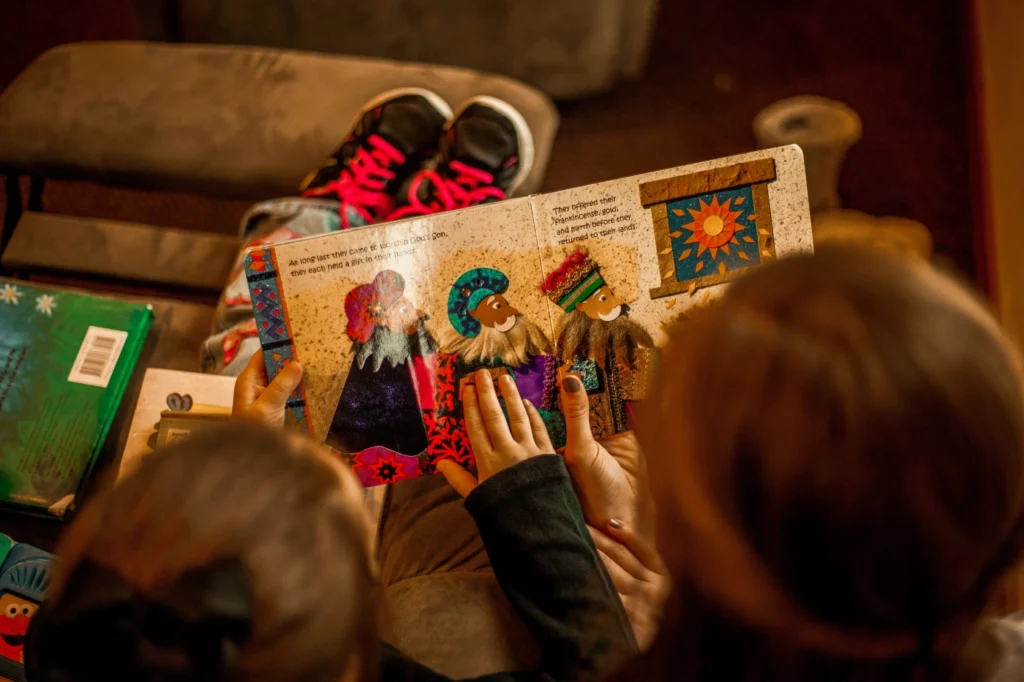
How Reading to Children Builds Imagination and Vocabulary
Introduction
The benefits of reading to children go far beyond entertainment. Stories do something to a child’s brain that facts and instructions cannot: they build vocabulary, imagination and empathy, quietly and powerfully, over years. This is why reading aloud is one of the highest-return habits a parent can build.
The impact is backed by decades of research, and it is visible to any parent who has heard a five-year-old use a word that surprised them. At BRS Global School, reading is treated as core to learning, not an extra. Here is how daily stories shape a child.
Key Takeaways
- • The benefits of reading to children include stronger vocabulary, imagination, empathy and long-term academic performance.
- • Stories activate multiple brain regions at once, so they are remembered as experience, not just information.
- • Reading exposes children to words they would never hear in everyday conversation, which widens vocabulary fast.
- • Visualising story worlds builds the imagination that creative and analytical thinking rely on.
- • Both fiction and non-fiction help, in different ways; a varied reading diet is best.
What happens in a child’s brain during a story?
Hearing a story is not passive: multiple brain regions activate at once. The language centres process words and meaning, the sensory cortex responds to descriptions of taste and touch, and the emotional centres respond to what characters feel. This full-brain engagement is why a well-told story is remembered far more durably than a list of facts. The brain treats it as experience.
How does reading build a child’s vocabulary?
Reading builds vocabulary because books use words that everyday conversation does not. A child who meets “luminous” in a story about the night sky absorbs its meaning through context, which sticks better than a dictionary definition. The volume matters: research from Ohio State University (Logan, 2019) found that children read to daily hear roughly 1.4 million more words by age five than children who are not. That gap compounds across every school year. Schools that prioritise read-aloud and independent reading, including the CBSE schools in Sarjapur Road belt, see it narrow for children who arrive less read-to.
How does reading build imagination and empathy?
Unlike film, a book does not show everything. A story describes a forest and the child builds one, and repeating that act across thousands of pages builds real imaginative capacity. Every story also asks the reader to inhabit someone else’s experience, which is direct practice in empathy, the foundation of communication and leadership. This link between reading and social intelligence is one reason many schools in Bangalore treat library time as core, not optional.
Fiction or non-fiction: which is better?
Both help, in different ways, so a mix is best:
| Book type | What it builds | Best for |
|---|---|---|
| Picture books | Early vocabulary, narrative sense | Ages 2 to 6 |
| Fiction (chapter books) | Imagination, empathy, sustained attention | Ages 6 onwards |
| Non-fiction | Subject vocabulary, factual curiosity | All ages, strong for specific interests |
| Poetry | Rhythm, playful language, phonological awareness | All ages |
| Graphic novels | Inference, engagement | Reluctant readers |
How do I build a daily reading habit at home?
Read aloud every day, even after your child can read alone, and let them choose some of the books so they feel ownership. Ask “What do you think happens next?” to build comprehension, keep books physically within reach, and set a consistent quiet reading time separate from screens. Our guide on building a reading habit has more, and you can contact us to see how BRS Global School reinforces reading at school.
Frequently Asked Questions (FAQs)
At what age should I start reading to my child?
From birth. Infants respond to the rhythm and sound of language long before they understand words, and early read-alouds build familiarity with language and the idea that print carries meaning.
How long should a daily reading session be?
Even ten to fifteen minutes a day produces significant benefits. Consistency matters more than length; a short daily session beats a long weekly one.
My child prefers screens to books. How do I encourage reading?
Start with books linked to their screen interests, a graphic novel of a favourite film, or a book about a game they love. Keep books visible and read alongside them rather than directing them to read alone.
Does audiobook listening count as reading?
Yes. Audiobooks expose children to the same vocabulary and narrative structures as print, and are especially valuable for reluctant readers or those who struggle with decoding.
What if my child only wants one type of book?
Let them, at least at first. A child absorbed in any books is building vocabulary and stamina. Introduce variety gradually through library visits and your own recommendations.
Conclusion
Reading to children is not a gentle extra; it is one of the most powerful developmental tools available, producing real gains in vocabulary, imagination, empathy and academic performance. Every story is an investment in how a child thinks and understands the world. To see how BRS Global School builds reading into everyday learning, enquire about admissions or contact us.