
Introduction
Mental well-being is an important part of a child’s overall development. School life is not limited to academic learning; it also provides children with opportunities to understand themselves, build relationships, manage emotions and develop the confidence to seek support when they need it.
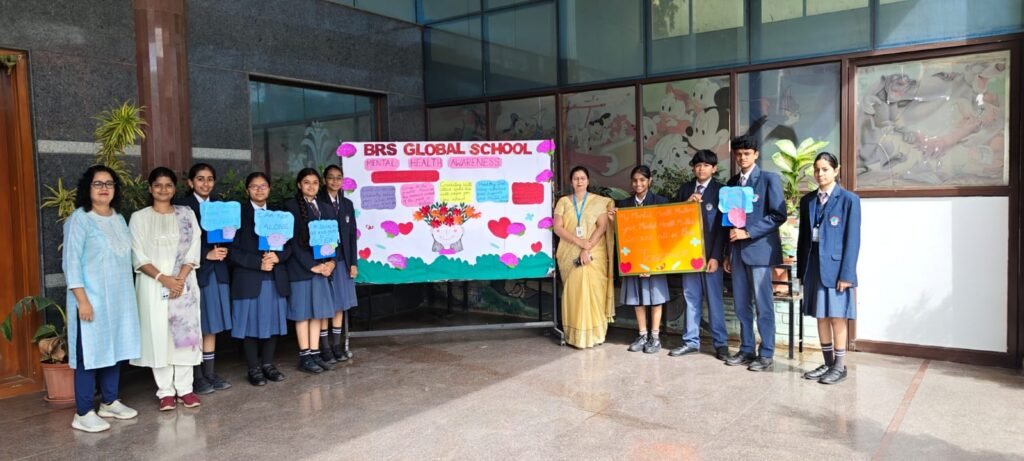
At BRS Global School, Sarjapur Road, Kasavanahalli, Mental Health Week in October 2025 provided students with meaningful opportunities to explore these aspects of development through age-appropriate activities.
The programme combined awareness, reflection, student participation, gratitude, mindfulness and nature-based learning. Rather than treating mental health as a single-day topic, the activities encouraged students to see emotional well-being as an ongoing part of everyday life.
The programme also connected with the wider educational focus on student well-being. Manodarpan is a Ministry of Education initiative that provides psychosocial support resources for students, teachers and families, including guidance on healthy lifestyles, acknowledging feelings, peer support and family engagement.
Event Overview: Mental Health Week at BRS Global School
Event: Mental Health Week Celebration
Campus: BRS Global School, Sarjapur Road, Kasavanahalli, Bengaluru
Month: October 2025
Key Activities:
• Sahyog and Paricharcha session telecast
• Mental Health Week Assembly
• Gratitude Wall
• Mindful nature visit to Cubbon Park
• Student reflection and peer-support activities
The celebrations brought together different age groups and learning experiences. Older students took an active role in awareness-building through the Grade 9 assembly, while younger learners explored mindfulness and sensory awareness through their nature visit.
This variety helped make mental health education accessible across different stages of childhood.
What Happened During Mental Health Week?
4 October 2025: Sahyog and Paricharcha Session
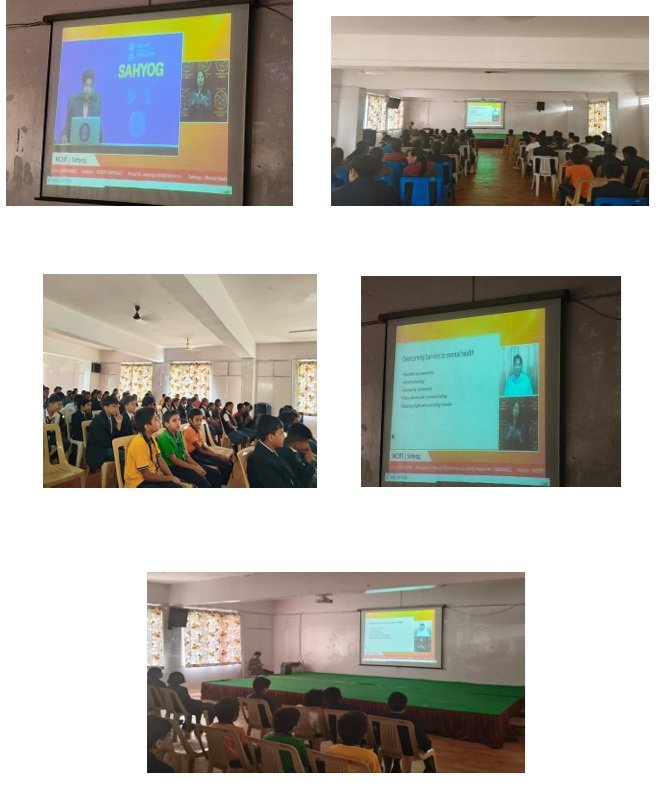
Students participated in the telecast of the ‘Sahyog’ and ‘Paricharcha’ sessions under the Manodarpan initiative by NCERT, based on the theme “Mental Health and Society: Breaking Barriers and Building Support.”
The session explored why mental health deserves the same attention as other aspects of well-being. It also addressed barriers that can prevent people from seeking support, including stigma, lack of awareness and difficulties in accessing appropriate help.
Students were encouraged to understand that experiencing stress, sadness or emotional difficulty is part of being human and that reaching out to a trusted adult can be an important step towards support.
The session also reinforced the role of families, teachers, counsellors and peers in creating an environment where children feel comfortable expressing themselves.
NCERT’s educational resources include Manodarpan sessions such as Sahyog – Counseling Session on Mental Well-being, reflecting the initiative’s focus on psychosocial support and student well-being.
6 October 2025: Mental Health Week Assembly
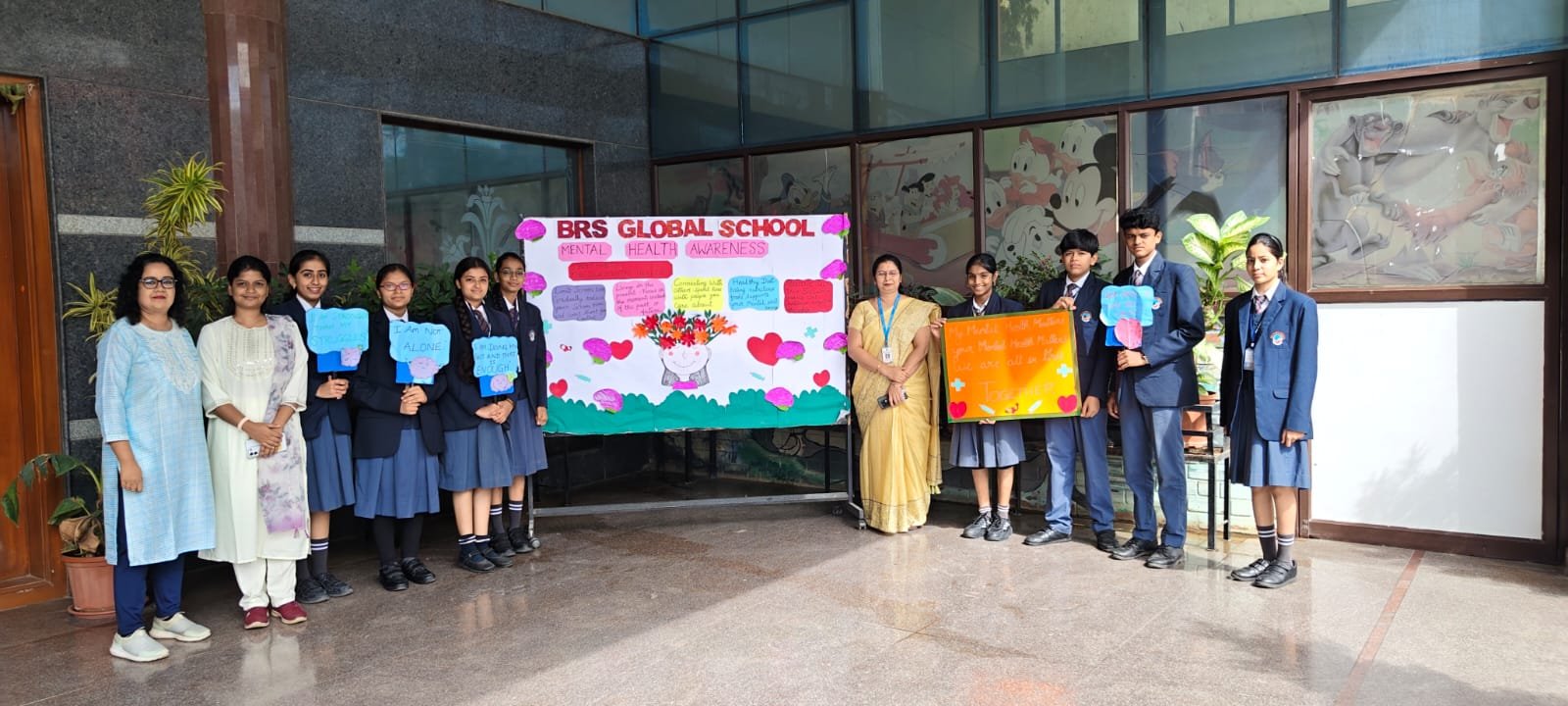
A special Mental Health Week Assembly was conducted by Grade 9 students under the guidance of the school counsellor.
The assembly focused on breaking the stigma around mental health and encouraging students to talk openly about emotions. Students shared the important message that having difficult days does not make someone weak and that seeking support is a positive step.
One of the most memorable elements of the assembly was the presentation of four student-created positive mantras:
• “I am doing my best, and that is enough.”
• “It’s okay to not be okay.”
• “I am stronger than my struggles.”
• “I am not alone.”
The messages encouraged students to develop self-compassion and recognise that challenges can be managed with appropriate support.
The assembly also highlighted simple expressions of kindness, such as smiling at someone, offering encouraging words or checking on a friend.
These everyday actions can contribute to a more caring school environment.
For the students who participated, the activity provided an opportunity to develop communication, presentation, leadership and empathy while contributing to the emotional well-being of their peers.
Gratitude Wall: Turning Appreciation into a Well-Being Activity
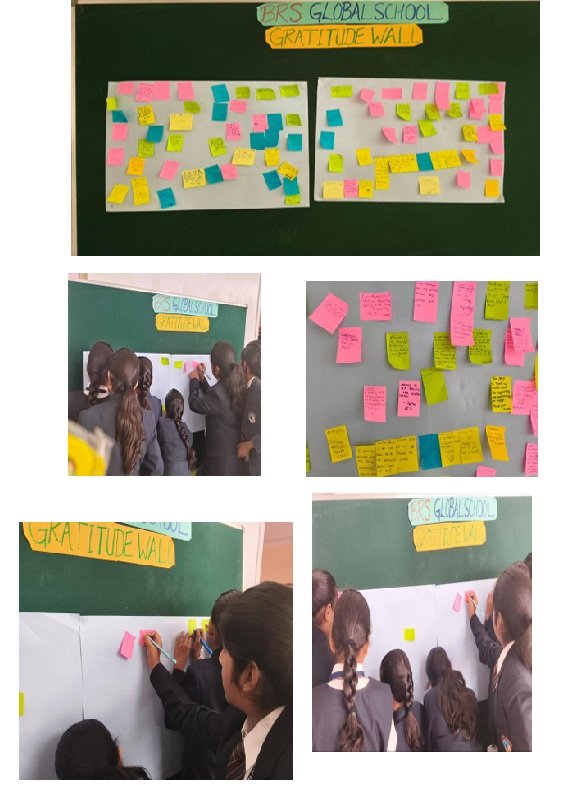
The Gratitude Wall was another meaningful part of the Mental Health Week celebrations.
Students were given colourful sticky notes and encouraged to write messages of appreciation for parents, teachers, friends, classmates and the school community.
Many students participated enthusiastically, writing several notes to acknowledge people who had supported, encouraged or inspired them.
The completed wall became a colourful collection of positive messages and personal reflections.
Students expressed appreciation for:
• Friends who offered support and companionship
• Parents and family members who provided love and encouragement
• Teachers who offered guidance and patience
• Classmates who made school life enjoyable
• The school community for providing a safe and caring environment
The activity gave students a simple way to pause and reflect on positive relationships in their lives.
10 October 2025: Mindful Nature Visit to Cubbon Park
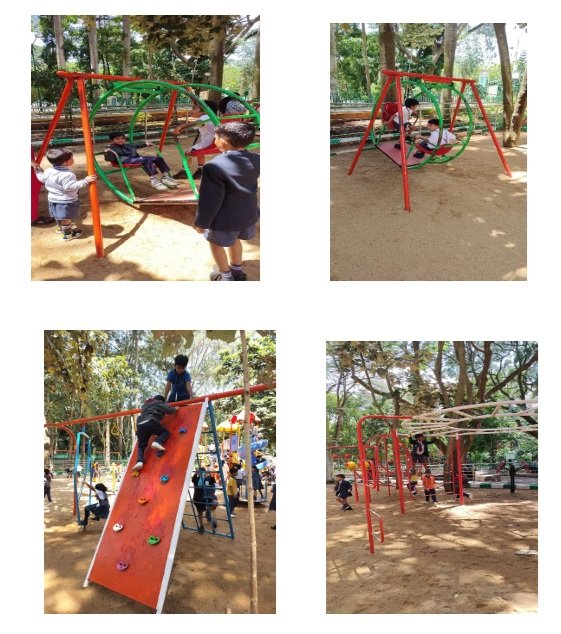
Students from Grades 1 and 2 participated in a teacher-guided educational visit to Cubbon Park as part of the Mental Health Week programme.
The visit introduced young learners to mindfulness through direct interaction with nature.
During the mindful nature walk, students were encouraged to observe the sounds, colours, textures and movements around them. They listened to birds and rustling leaves, observed flowers and insects, touched natural textures such as tree bark and noticed patterns in leaves and the sky.
Students also participated in a quiet walk, during which they focused on breathing and attentive observation.
The experience was not restricted to structured activities. Students also enjoyed spending time together, playing and sharing discoveries with their friends.
Teachers later conducted a nature-inspired storytelling session under the shade of a tree. Students were encouraged to respond to open-ended questions and share what they had noticed and how the experience made them feel.
The activity demonstrated how experiential learning can support emotional awareness in young children.
What Did Students Learn from These Activities?
The Mental Health Week programme provided learning opportunities beyond conventional classroom instruction.
Students developed or practised:
Emotional Awareness
Students learned to recognise that different emotions are normal and that talking about feelings can be a healthy way of seeking support.
Empathy
The assembly and peer-support messages encouraged students to consider how their words and actions affect others.
Communication
Open discussions about emotions created opportunities for students to express themselves and listen to others.
Gratitude
The Gratitude Wall encouraged students to identify and acknowledge positive relationships and experiences.
Mindfulness
The Cubbon Park visit introduced younger students to attentive observation, quiet reflection and awareness of their surroundings.
Cooperation
Group activities and shared experiences encouraged students to listen, participate and work together.
Self-Confidence
Grade 9 students who conducted the assembly gained an opportunity to communicate meaningful ideas to a wider school audience.
How Does Mental Health Week Support CBSE Learning?
Mental Health Week complements the broader educational goal of developing students who are not only academically capable but also emotionally aware, socially responsible and resilient.
CBSE has continued to place emphasis on student mental health and wellness, including initiatives relating to counselling, social-emotional learning and school-based mental health support.
The activities at BRS Global School connected these principles with practical student experiences.
For example:
| Activity | Learning Connection |
|---|---|
| Manodarpan session | Mental health awareness and help-seeking |
| Grade 9 Assembly | Communication, leadership and empathy |
| Positive Mantras | Self-awareness and positive reflection |
| Gratitude Wall | Emotional expression and appreciation |
| Cubbon Park visit | Mindfulness and experiential learning |
| Group participation | Cooperation and social-emotional development |
The emphasis was therefore not simply on discussing mental health but on giving students opportunities to practise behaviours associated with emotional and social well-being.
Why Does Mental Health Education Matter for Student Development?
Mental health education matters because students learn more effectively when they have opportunities to understand emotions, relationships and healthy ways of responding to challenges.
The Manodarpan framework describes mental health and well-being as important foundations for holistic development and highlights competencies such as communication, cooperation, teamwork and resilience.
For parents, this means that activities related to emotional well-being are not separate from education. They can complement academic learning by helping children develop the personal and interpersonal skills needed to participate confidently in school and community life.
At different ages, students may benefit differently:
• Younger children can learn emotional vocabulary, mindfulness and sensory awareness.
• Primary students can develop cooperation, gratitude and communication.
• Middle-school students can explore empathy, self-awareness and healthy coping.
• Older students can take leadership roles and help create supportive peer environments.
Educational Philosophy and Institutional Value
A holistic school environment recognises that children develop through multiple forms of learning.
The Mental Health Week programme reflected this approach by combining:
Awareness + Reflection + Participation + Communication + Experiential Learning
The Grade 9 assembly provided student leadership and communication opportunities. The Gratitude Wall encouraged reflection and positive expression. The Cubbon Park visit allowed younger children to learn through observation and sensory experience.
This approach is consistent with the wider educational emphasis on developing well-rounded learners rather than focusing exclusively on academic outcomes.
For a CBSE school community, such experiences can help connect classroom learning with everyday life.
Why This Matters for Families in Sarjapur Road and Nearby Communities
Families looking at schools in Sarjapur Road increasingly consider more than curriculum and academic performance when evaluating a school.
Emotional well-being, counselling support, student relationships, extracurricular opportunities and the overall school environment are also important considerations.
For families living around Bellandur, Sarjapur Road, Hosa Road, Koramangala, HSR layout, Dommasandra, Kodathi, Gunjur, Varthur, Kaikondrahalli, Kasavanahalli, Carmelaram, Harlur, Rayasandra, Naganathapura, Doddakannelli, Kudlu Gate, A Krishnappa Nagar, Halnayakanahalli, Radha Reddy Layout, Chikkanayakanahalli, Huskur, KPC Layout, CSB Layout, Owners Court, Doddanagamangala, Doctors Layout, Shiva Reddy Layout, Meenakshi Layout, Chikbellandur, Sompura Gate, Muthannalur Cross, Gunjur to Dommasandra Road, Mullur, Amrita Engineering College Road Kasavanahalli, Amrita Nagar, Serenity Layout, Spring Fields, Iblur, Marathahalli, Shobha Apartments, Choodasandra, Junnasandra, Rayasandra and nearby parts of Sarjapur Road, access to a school that values holistic development can be an important part of the school-selection process.
BRS Global School‘s Sarjapur Road campus in Kasavanahalli serves families in these surrounding communities and provides a CBSE learning environment where academic development can be complemented by activities focused on communication, creativity, life skills and student well-being.
Parents searching for CBSE schools in Sarjapur Road, schools near Sarjapur Road or schools in Bellandur can therefore consider not only academic programmes but also how a school approaches the broader development of its students.
The Attibele campus is a separate branch of BRS Global School and serves families in areas including Attibele and nearby communities. It should not be confused with the Sarjapur Road/Kasavanahalli campus.
Common Parent Questions
How does Mental Health Week support CBSE learning?
Mental Health Week supports holistic learning by developing emotional awareness, communication, empathy, cooperation and self-care alongside academic education. These skills complement the broader goal of developing confident and well-rounded learners.
How can activities like a Gratitude Wall benefit children?
A Gratitude Wall gives children a simple opportunity to identify positive relationships and express appreciation. It encourages reflection and helps students recognise the supportive people and experiences around them.
Does mindfulness have a place in school education?
Yes. Age-appropriate mindfulness activities can encourage students to slow down, observe their surroundings, focus attention and become more aware of their experiences. The Cubbon Park visit introduced these concepts through nature-based learning.
How can schools help students talk about mental health?
Schools can create safe opportunities for age-appropriate conversations, provide access to trained support personnel, encourage empathy and help students understand that seeking appropriate support is a positive step.
What role do parents play in student well-being?
Parents can listen without immediately judging, acknowledge their child’s feelings, maintain open communication and work with teachers or counsellors when additional support may be appropriate. Manodarpan also provides resources encouraging families to validate children’s feelings and maintain supportive communication.
Which students benefit from mental health awareness activities?
Students across age groups can benefit, although activities should be adapted to their developmental stage. Younger children may benefit from mindfulness and emotional awareness, while older students can engage more deeply with peer support, communication, leadership and self-reflection.
Key Highlights
• Mental Health Week was observed in October 2025 at BRS Global School, Sarjapur Road.
• Students participated in a Manodarpan Sahyog and Paricharcha session.
• Grade 9 students conducted a dedicated Mental Health Week Assembly.
• Students presented positive emotional well-being mantras.
• A Gratitude Wall encouraged appreciation and positive reflection.
• Grades 1 and 2 participated in a mindful educational visit to Cubbon Park.
• Students explored mindfulness, sensory awareness and nature-based learning.
• Activities encouraged empathy, communication, gratitude, cooperation and self-awareness.
• The programme supported a safe, caring and inclusive school environment.
• The activities reflected the importance of holistic development in school education.
Frequently Asked Questions (FAQs)
When was Mental Health Week celebrated at BRS Global School?
Mental Health Week was observed at the Sarjapur Road campus in October 2025, with activities conducted on 4 October, 6 October and 10 October, along with the Gratitude Wall activity.
What was the main theme of the Manodarpan session?
The telecast focused on “Mental Health and Society: Breaking Barriers and Building Support.” It addressed mental health awareness, stigma, support systems and the importance of communication.
What was the purpose of the Mental Health Week Assembly?
The Grade 9 assembly aimed to create awareness about emotional well-being, encourage open conversations about feelings and promote empathy and peer support.
What was the Gratitude Wall activity?
The Gratitude Wall was a student activity where children wrote appreciation messages for parents, teachers, friends, classmates and their school community.
Why did Grades 1 and 2 visit Cubbon Park?
The visit introduced younger students to mindfulness, sensory awareness, nature observation and quiet reflection through a teacher-guided outdoor learning experience.
Is mental health education part of holistic school development?
Yes. Mental health and social-emotional development complement academic learning by supporting skills such as communication, cooperation, resilience, self-awareness and healthy relationships. Manodarpan resources specifically connect student well-being with holistic development.
How can parents support children’s emotional well-being?
Parents can encourage open conversations, listen empathetically, acknowledge children’s feelings and maintain communication with the school when additional support is needed. Manodarpan provides guidance for parents and families on supportive engagement with children.
Conclusion: Building a More Caring School Community
Mental Health Week at BRS Global School, Sarjapur Road, Kasavanahalli demonstrated how meaningful school experiences can help children understand themselves, connect with others and develop healthy approaches to emotional well-being.
From the Manodarpan awareness session and Grade 9 assembly to the Gratitude Wall and mindful nature visit, each activity provided a different way for students to explore empathy, communication, gratitude, mindfulness and self-awareness.
The programme reinforced an important message: supporting student well-being is an ongoing part of education, not a one-day activity.
For parents exploring CBSE schools in Sarjapur Road, schools near Sarjapur Road or schools in Bellandur, the approach a school takes towards emotional well-being can be an important part of understanding its educational environment.
Parents interested in learning more about the learning environment and student experience at BRS Global School, Sarjapur Road, can explore the campus and admission information or connect with the school admissions team.
Explore our Campus:
Attibele Branch
https://share.google/iFhJaeGo8wkgOZ1Y5
Sarjapur Road Branch: