
Introduction
Early childhood learning is most effective when children actively explore concepts through joyful experiences. Colour-themed celebrations provide young learners with opportunities to discover, observe, interact, and express themselves in an engaging environment that supports both cognitive and emotional development.
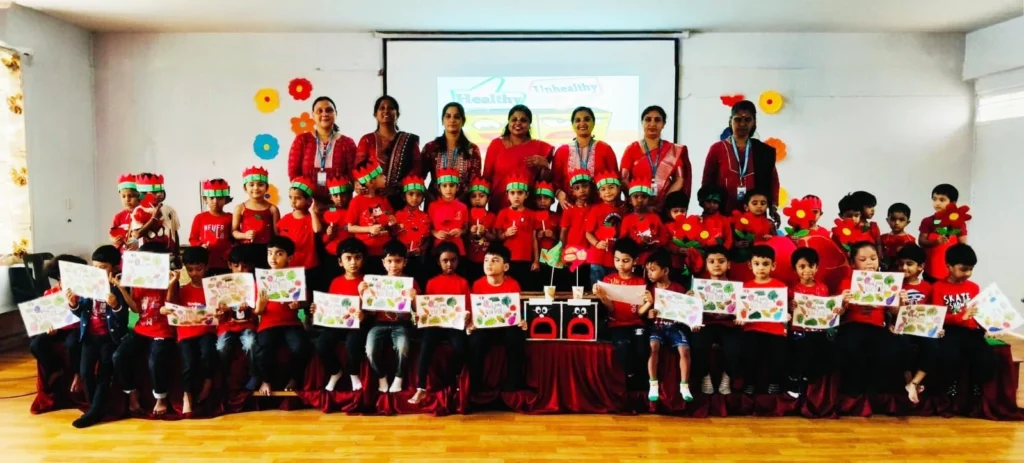
Keeping this philosophy at the heart of learning, BRS Global School | Best CBSE School in Sarjapur Road organised a vibrant Red Day Celebration for its Montessori students on 10th July 2026. The event transformed the campus into a cheerful space filled with shades of red, enthusiastic participation, music, dance, and interactive activities that made learning memorable.
The celebration was thoughtfully designed to help children recognise the colour red while developing confidence, creativity, communication skills, and social interaction. By combining classroom concepts with experiential learning, the event encouraged every child to participate actively, express themselves freely, and enjoy learning through play.
For parents searching for CBSE schools in Sarjapur Road that emphasise holistic development from the early years, activities like Red Day demonstrate how foundational learning can be both meaningful and enjoyable.
Event Overview
Event Overview
Event: Red Day Celebration
Date: 10th July 2026
Participants: Montessori 1 and Montessori 2 Students
Venue: BRS Global School – Sarjapur Road Campus
Theme: Learning Through Colours – Red Day
Objective: To help children identify and understand the colour red through fun, interactive, and experiential learning activities.
Activity Type: Early Childhood Learning Programme
Learning Focus: Colour recognition, communication, creativity, confidence, and social development.
What Happened During the Event?
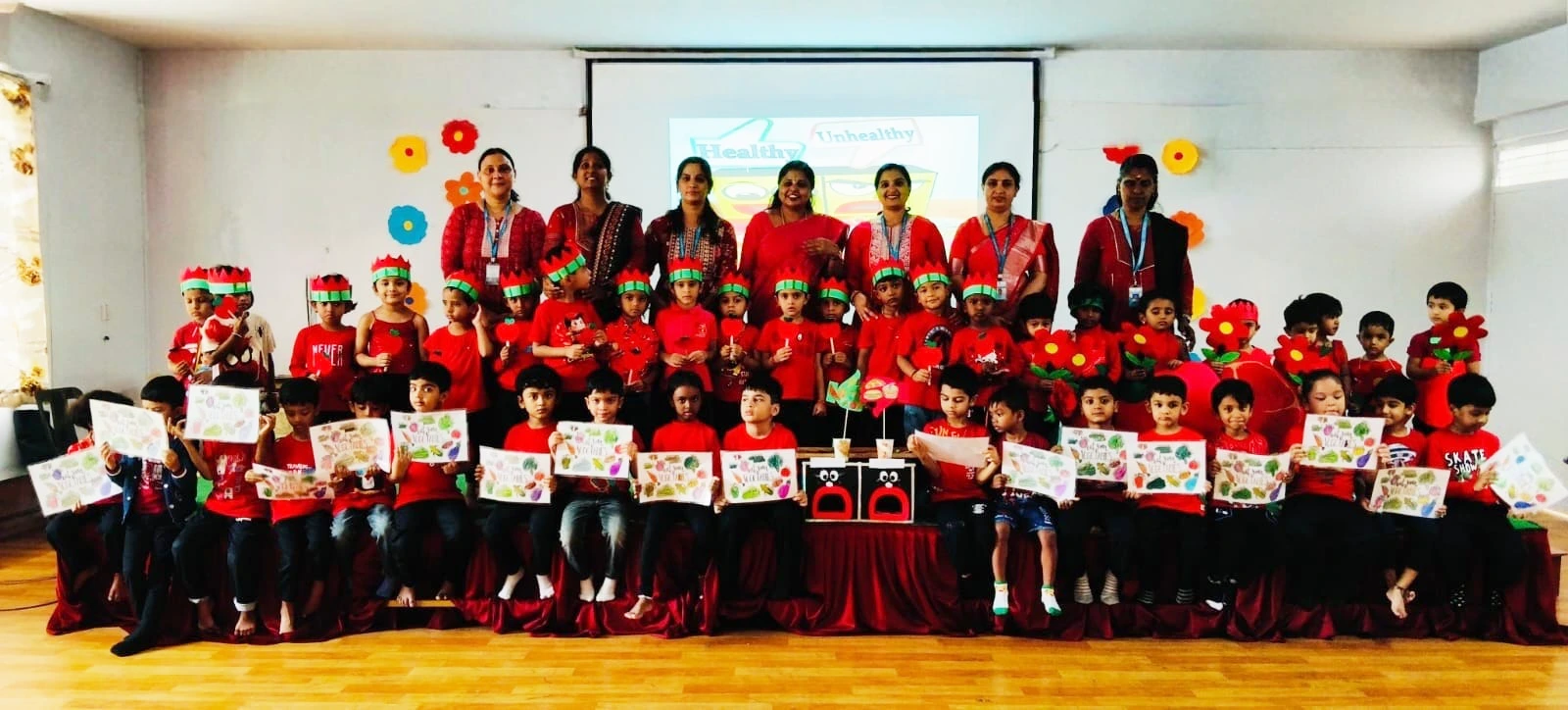
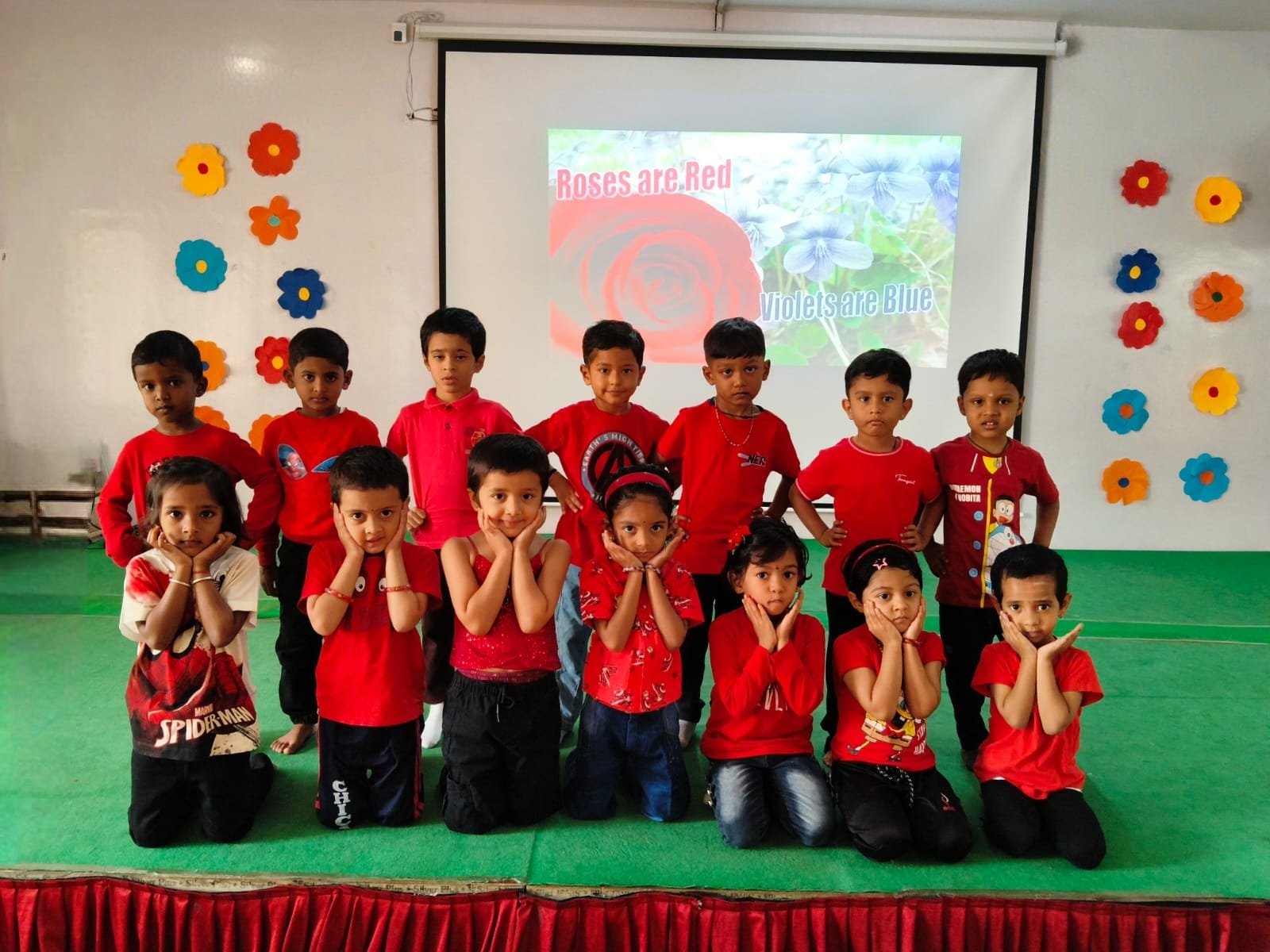
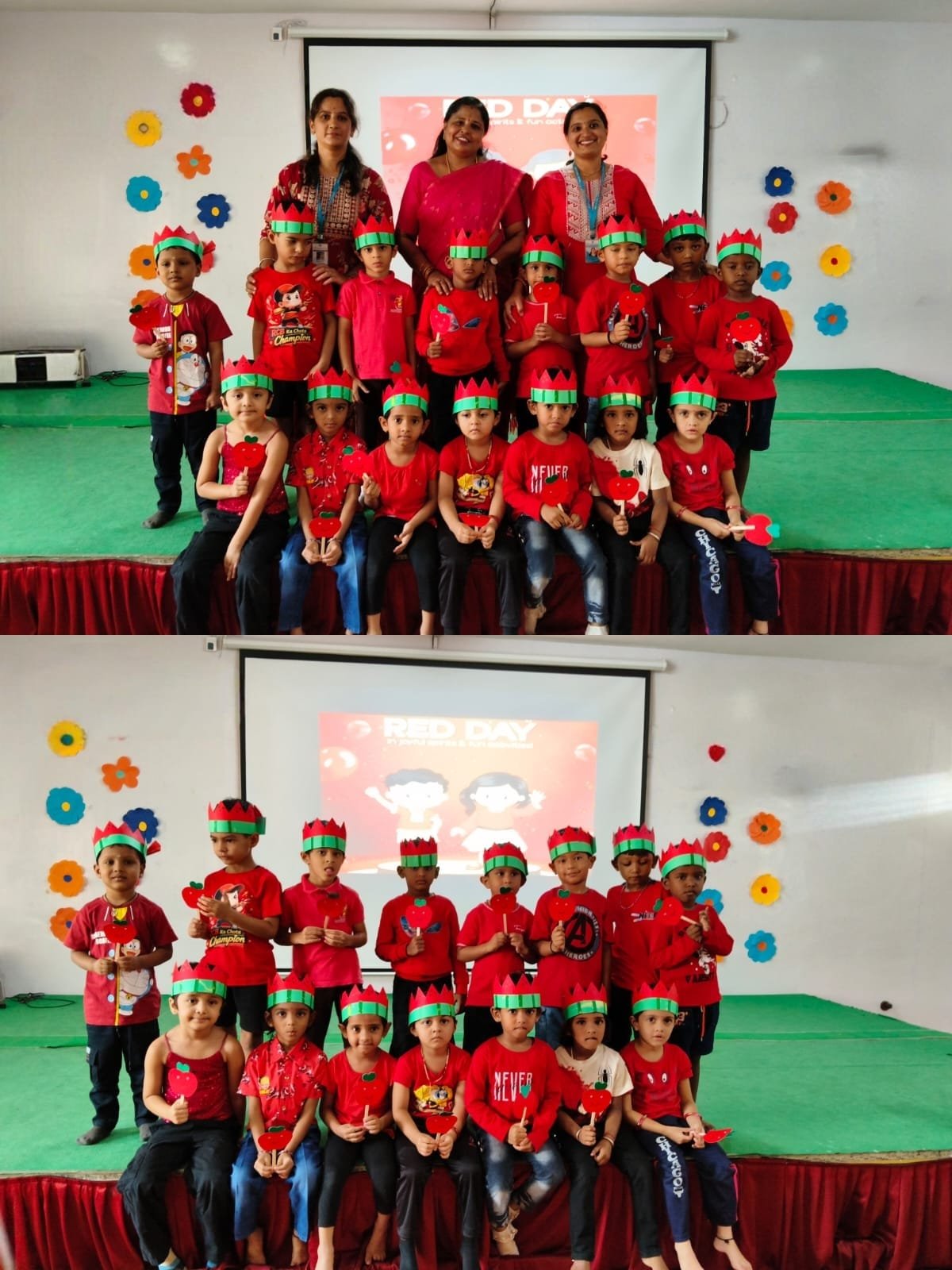
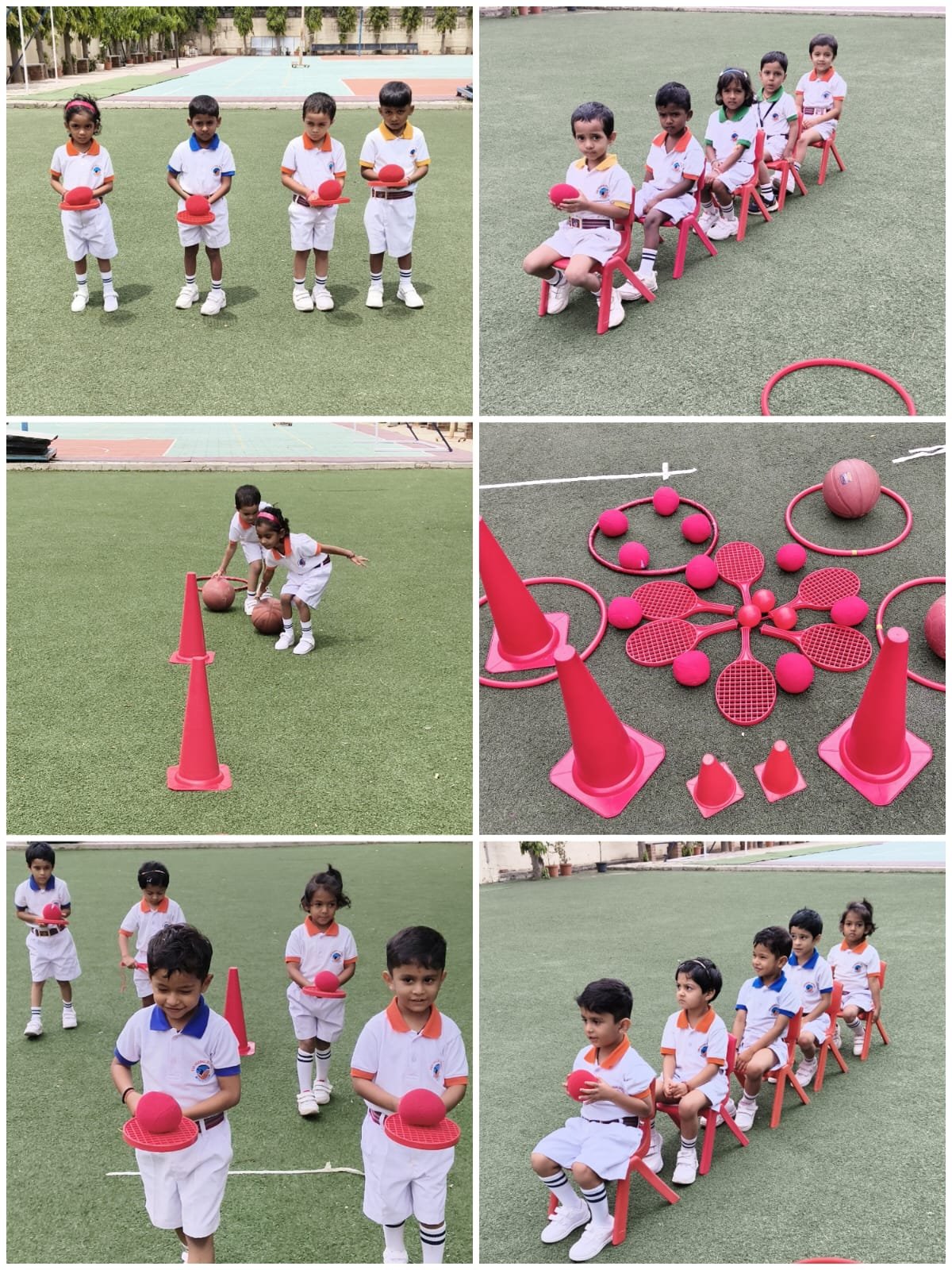
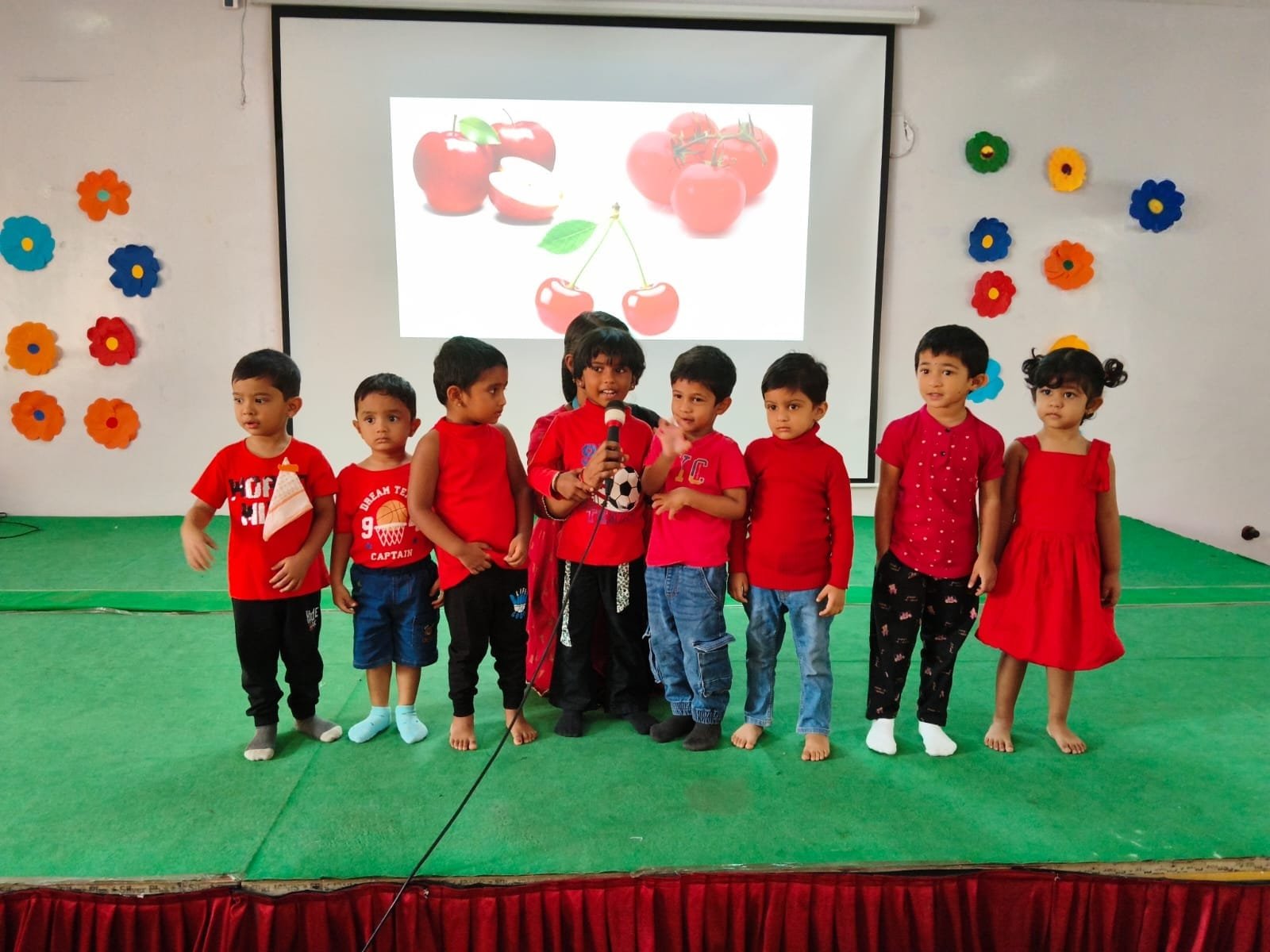
The Red Day Celebration began with an atmosphere of excitement as Montessori students arrived at school dressed in beautiful shades of red. The colourful attire immediately transformed the campus into a lively learning space, creating curiosity and enthusiasm among the young learners.
The programme opened with a simple introduction explaining the significance of the colour red. Children learned that red is often associated with love, warmth, courage, energy, happiness, and celebration. This age-appropriate discussion helped students connect colours with emotions and familiar objects from their everyday lives.
The celebration then unfolded through a series of engaging performances and interactive activities designed specifically for early learners.
Montessori-2 Action Song
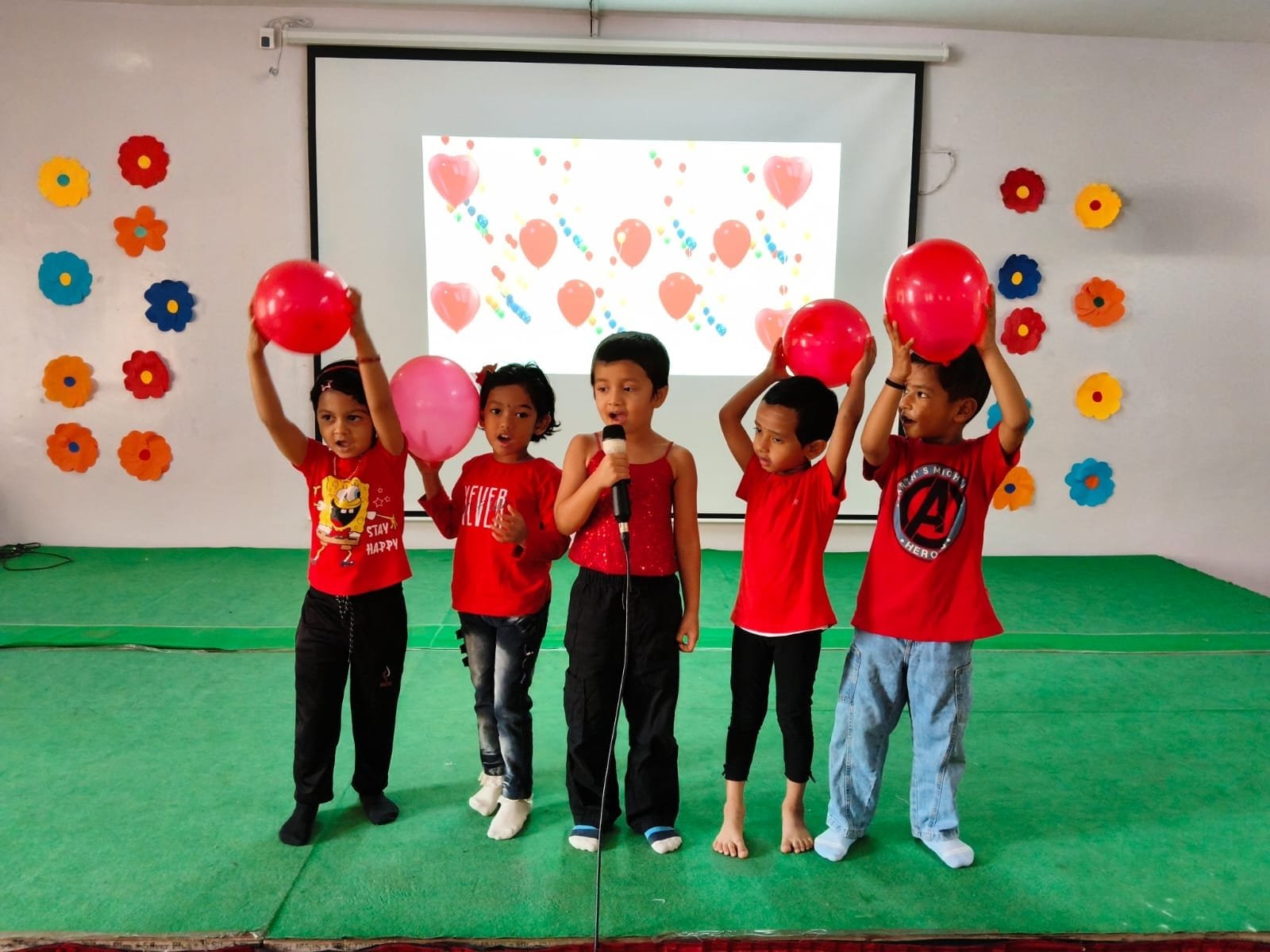
Students of Montessori-2 enthusiastically performed an action song that combined music, movement, and rhythm. As they sang and performed coordinated actions, children strengthened their listening skills, body coordination, and confidence while enjoying a fun learning experience.
Montessori-1 Rhymes
The Montessori-1 students delighted everyone with cheerful rhymes centred on familiar themes. Reciting rhymes together encouraged language development, pronunciation, memory, and participation while creating an enjoyable classroom atmosphere.
Montessori-2 Dance Performance
One of the highlights of the celebration was the energetic dance performance by the Montessori-2 students. The children performed confidently with bright smiles, showcasing their enthusiasm, coordination, and growing stage presence.
The dance not only entertained the audience but also encouraged children to express emotions through movement and music.
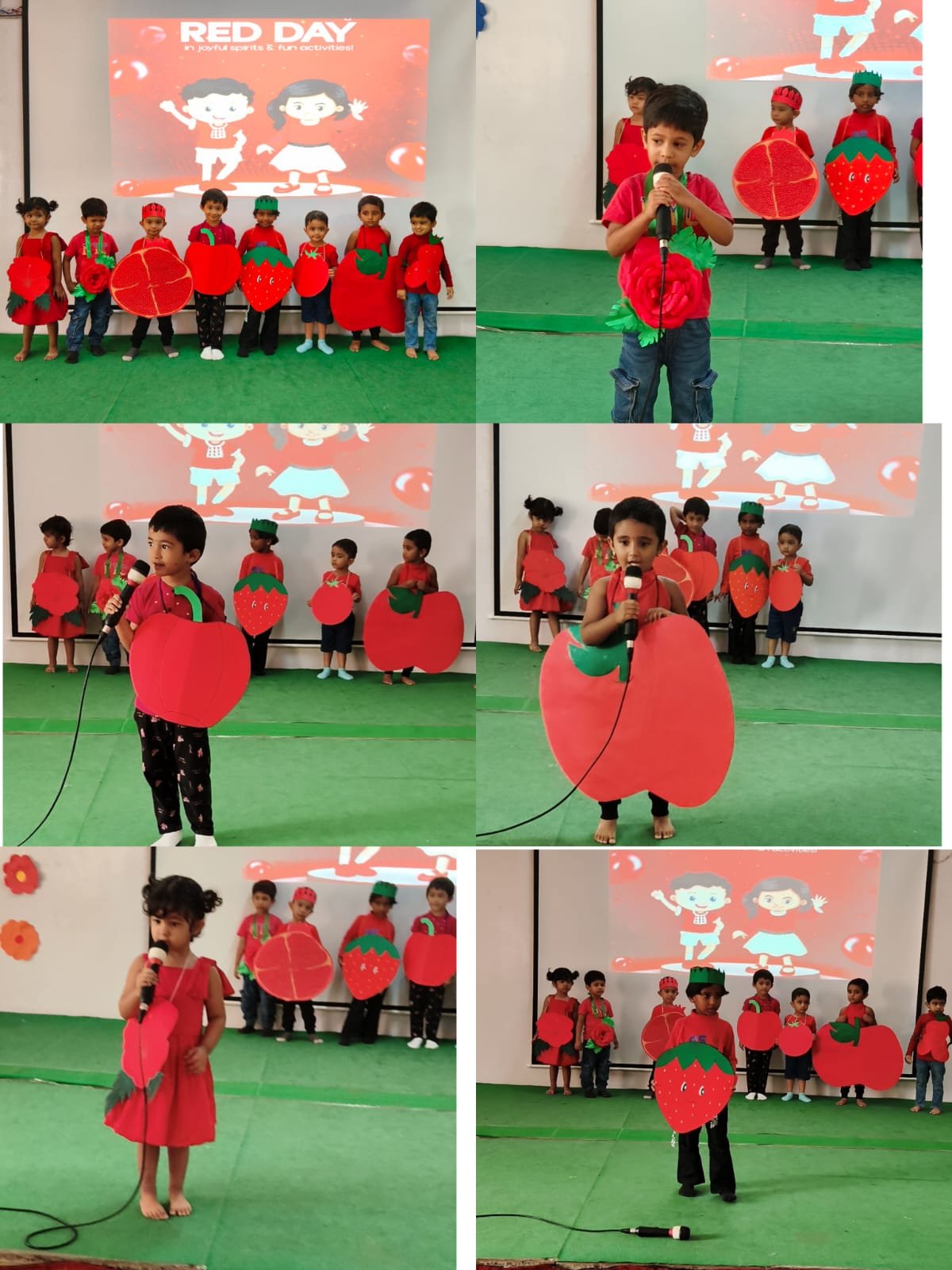
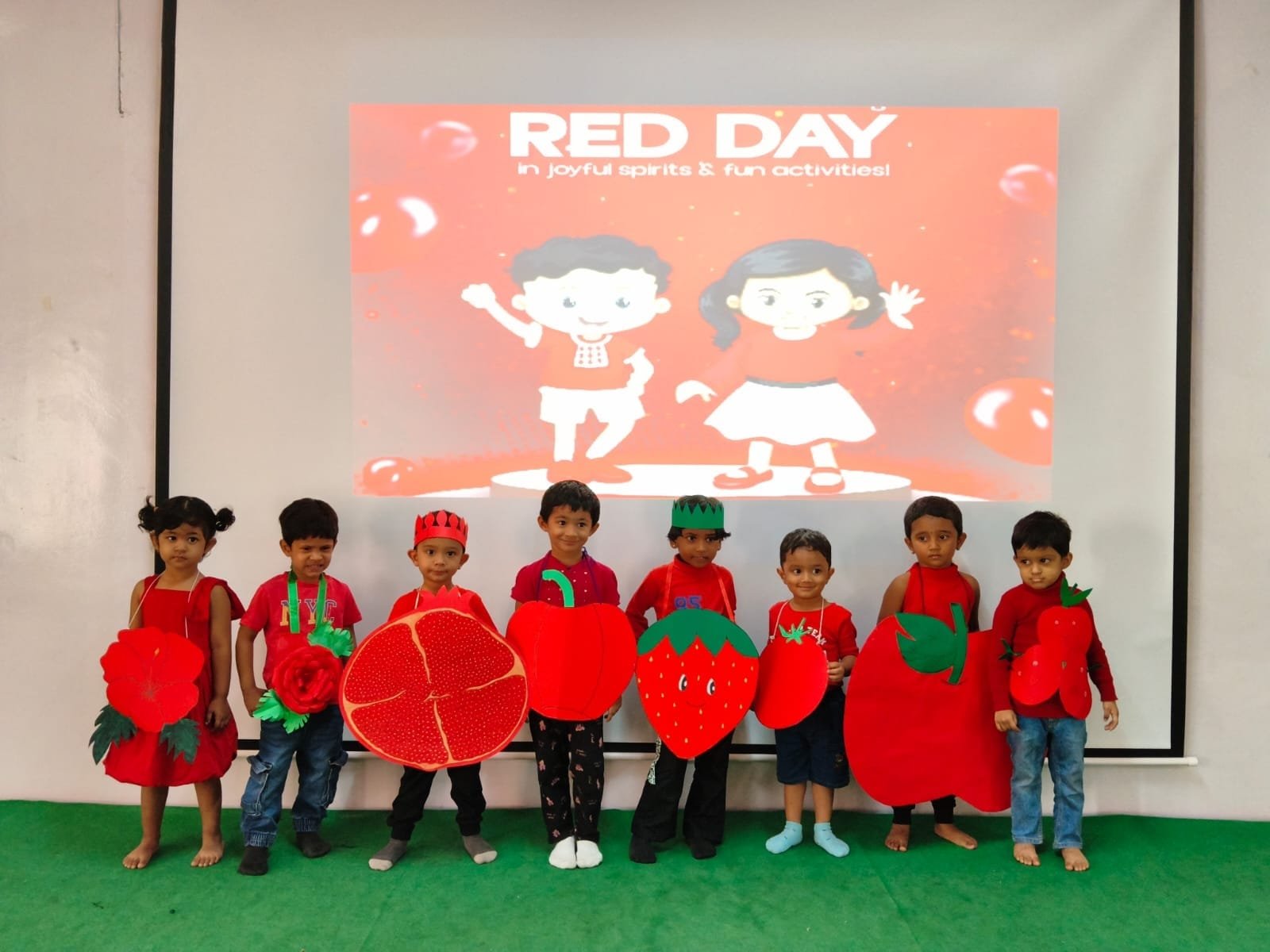
Montessori-1 Ramp Walk
The Montessori-1 Ramp Walk added excitement and confidence to the celebration.
Dressed in vibrant red outfits, the young learners walked confidently across the stage while proudly displaying their cheerful smiles. The activity helped children overcome stage hesitation, build self-confidence, and enjoy expressing themselves before their teachers and classmates.
For many children, this became a memorable first stage experience.
Take-Home Activity
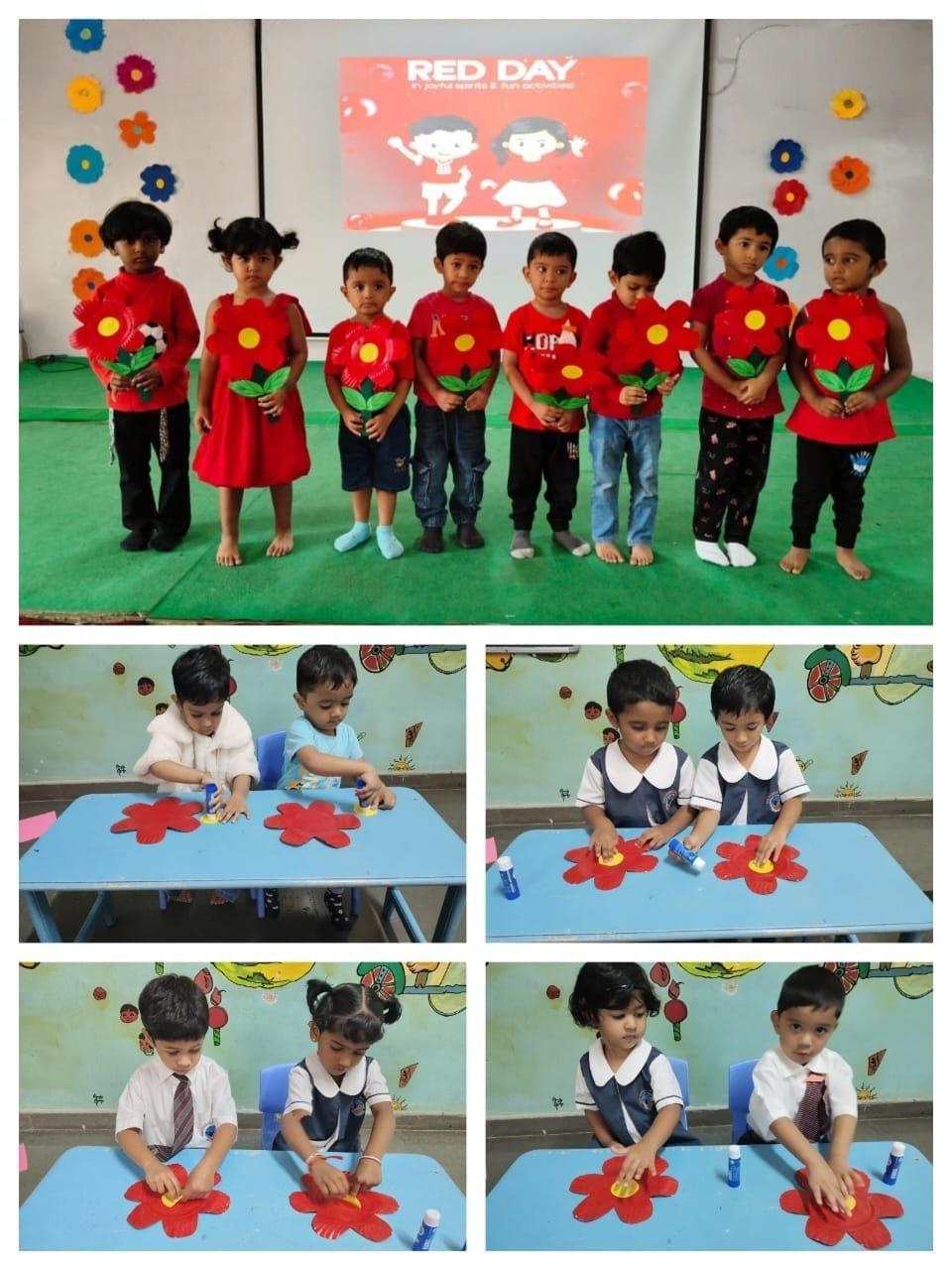
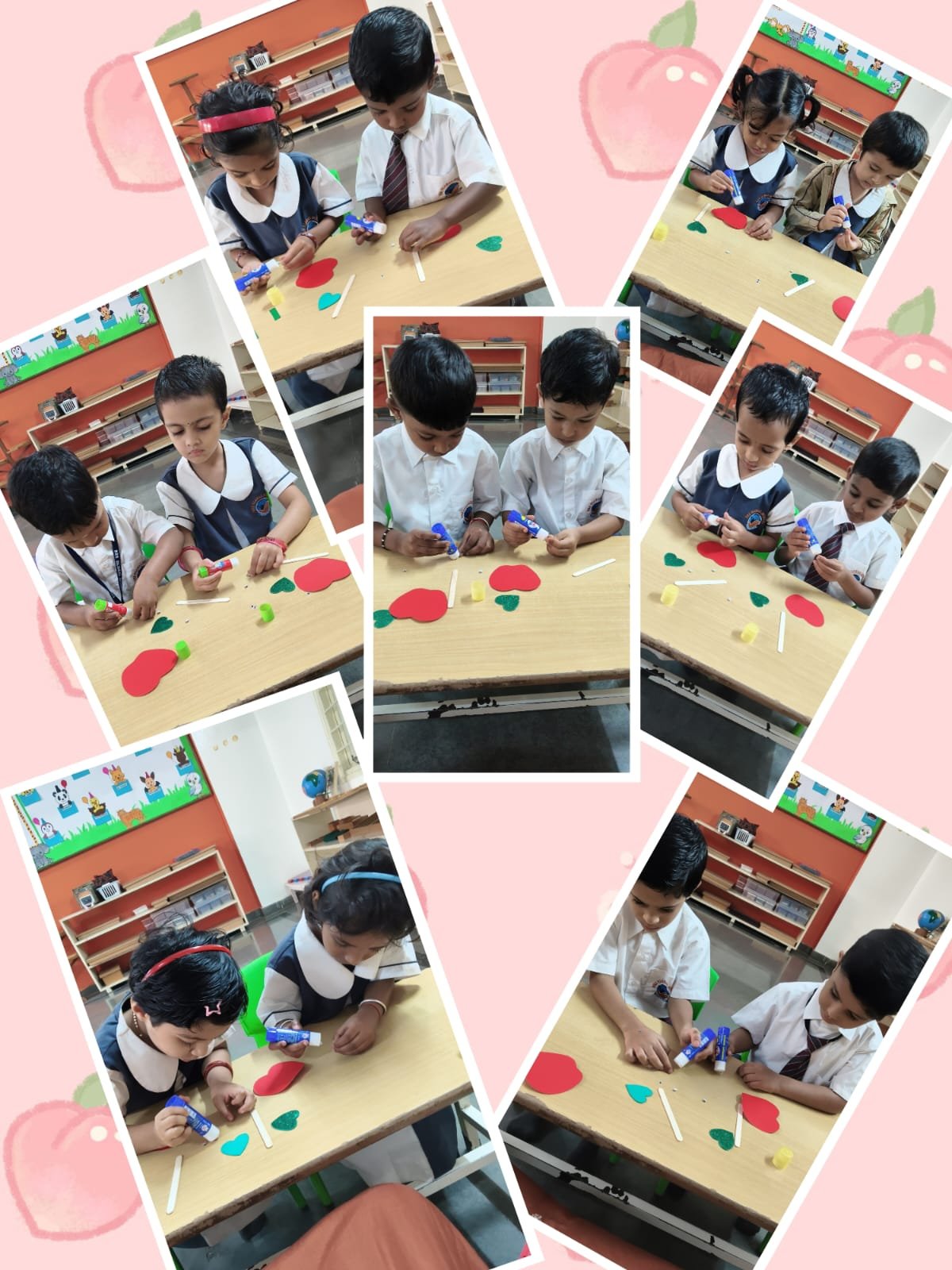
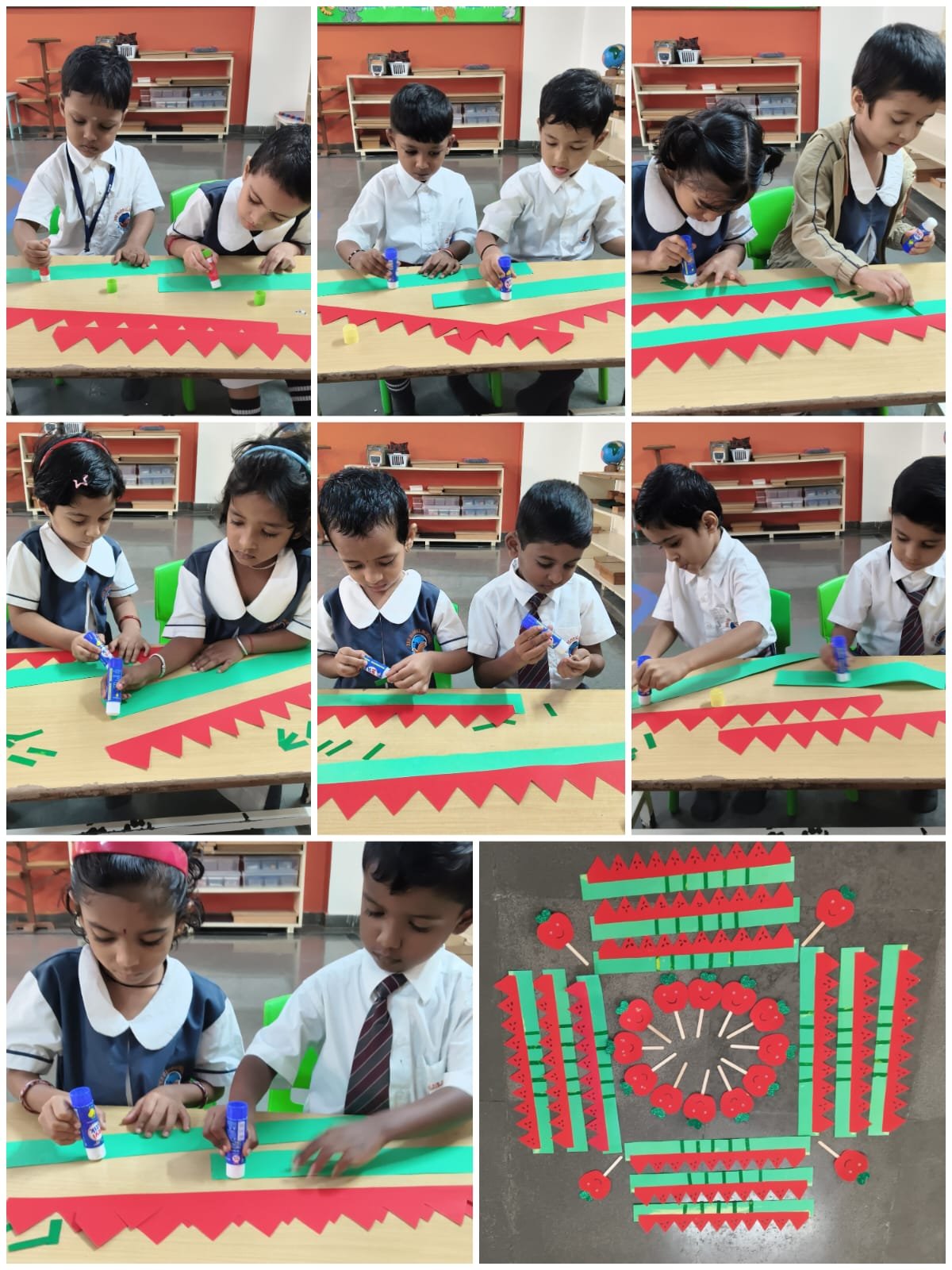
To extend learning beyond the classroom, students received a Red Day take-home activity that encouraged parents to continue colour-based learning at home.
This collaborative activity strengthened the connection between school and home while giving families an opportunity to reinforce concepts through enjoyable conversations and creative engagement.
Such parent involvement supports consistency in learning and helps children apply classroom experiences to their daily lives.
Student Learning Outcomes & Benefits
Learning Through Experience
Red Day was much more than a colour celebration. It provided meaningful opportunities for young children to develop foundational skills through observation, participation, movement, music, and creative expression.
The event supported several important areas of early childhood development.
Colour Recognition
Children learned to identify the colour red by observing objects, clothing, decorations, and classroom activities.
This hands-on approach helped reinforce colour recognition more effectively than traditional classroom instruction alone.
Communication Skills
Participating in rhymes, songs, and performances encouraged children to communicate confidently in front of teachers and peers.
Activities involving speaking, singing, and interaction naturally strengthened vocabulary, pronunciation, and verbal expression.
Confidence Building
Walking on stage during the ramp walk and participating in performances gave children opportunities to express themselves confidently.
Celebrating every child’s participation helped build positive self-esteem while reducing hesitation in public settings.
Creativity and Self-Expression
Children explored the colour theme through music, movement, costumes, and classroom activities.
These experiences encouraged imagination and allowed every learner to express individuality while participating in a shared celebration.
Social and Emotional Development
Working together during performances helped children cooperate with classmates, follow instructions, and celebrate each other’s participation.
The joyful environment also strengthened friendships, emotional security, and a sense of belonging within the classroom.
Motor Skill Development
Dance movements, action songs, and stage activities contributed to the development of balance, coordination, body control, and gross motor skills.
These experiences are important during the Montessori years as they support both physical development and classroom readiness.
Parent-School Partnership
The take-home activity encouraged families to continue learning together beyond school hours.
By involving parents in the learning process, children received consistent reinforcement of concepts while strengthening the connection between home and school.
Educational Philosophy: How Does Red Day Support Early Childhood Learning?
Red Day is an experiential learning activity that helps young children understand colours through play, music, movement, and creative participation. It supports cognitive, social, emotional, language, and physical development while making learning joyful and memorable.
At BRS Global School | Best CBSE School in Sarjapur Road, early childhood education is designed around the belief that children learn best through active participation and meaningful experiences. Rather than introducing concepts only through classroom instruction, the Montessori programme encourages children to explore, observe, interact, and discover the world around them.
The Red Day Celebration reflected this philosophy by transforming a simple colour concept into an engaging learning experience. Through songs, rhymes, dance, movement, role play, and collaborative activities, children explored the colour red in an enjoyable and age-appropriate way.
This experiential approach aligns with the principles of the National Education Policy (NEP) 2020, which emphasises play-based, activity-based, and experiential learning during the foundational years. It also complements the broader vision of CBSE, which encourages schools to nurture creativity, confidence, communication, and holistic development alongside academic learning.
Why Does Red Day Matter for Student Development?
Red Day helps children recognise colours while developing confidence, communication skills, creativity, motor coordination, social interaction, and emotional expression through fun and engaging activities.
Early childhood experiences form the foundation for future learning. Activities such as Red Day provide opportunities for children to explore concepts using multiple senses, making learning more meaningful and easier to remember.
The celebration supported several key areas of child development.
Cognitive Development
Children identified the colour red through classroom decorations, costumes, performances, and discussions. Associating colours with familiar objects strengthened observation, memory, and concept recognition.
Language and Communication Skills
Rhymes, songs, classroom conversations, and stage performances encouraged children to listen carefully, pronounce words clearly, and communicate confidently with teachers and classmates.
These activities naturally enriched vocabulary while improving verbal expression.
Social Development
Performing together helped students learn to cooperate, take turns, encourage classmates, and celebrate each other’s participation.
Working in groups also nurtured teamwork and positive classroom relationships.
Emotional Growth
For many children, participating in front of an audience was an exciting new experience.
Receiving appreciation from teachers and peers helped build confidence, reduce stage hesitation, and develop a positive self-image.
Physical Development
Dance performances, action songs, and movement-based activities improved body coordination, balance, rhythm, and gross motor skills.
Such experiences contribute significantly to healthy physical development during the Montessori years.
Creativity and Imagination
The colourful environment encouraged children to observe, imagine, and express themselves freely through music, movement, costumes, and classroom interaction.
These opportunities nurture creative thinking and independent expression from an early age.
How Does Red Day Support CBSE and NEP 2020 Learning Goals?
Red Day supports competency-based and experiential learning by helping children understand concepts through active participation rather than memorisation. It develops communication, observation, creativity, collaboration, and confidence in a joyful learning environment.
Although Red Day is designed for Montessori learners, its educational objectives reflect the broader vision promoted by both CBSE and NEP 2020.
The celebration encourages children to:
• Learn through experience.
• Build confidence by participating in stage activities.
• Strengthen communication through songs and rhymes.
• Improve observation and colour recognition.
• Develop creativity through movement and self-expression.
• Build social skills through collaborative participation.
These foundational skills support future academic success while fostering a lifelong love for learning.
Why Should Parents Value Experiences Like Red Day?
Colour-themed celebrations help children learn naturally through play while developing confidence, communication, creativity, and social skills. They also encourage parent involvement, making learning more meaningful beyond the classroom.
Parents today recognise that early education should focus on the overall development of a child rather than academic instruction alone.
Activities like Red Day create opportunities for children to:
• Learn through joyful experiences.
• Develop confidence in public settings.
• Build friendships and social skills.
• Strengthen communication abilities.
• Express creativity without fear of making mistakes.
• Connect classroom learning with everyday experiences.
The take-home activity further strengthened the partnership between school and home by encouraging parents to continue colour recognition and interactive learning beyond the classroom.
Local Relevance: A Trusted Learning Environment for Families Around Sarjapur Road
Located in Kasavanahalli, BRS Global School | Best CBSE School in Sarjapur Road serves families from Bellandur, Sarjapur Road, Hosa Road, Koramangala, HSR layout, Dommasandra, Kodathi, Gunjur, Varthur, Kaikondrahalli, Kasavanahalli, Carmelaram, Harlur, Rayasandra, Naganathapura, Doddakannelli, Kudlu Gate, A Krishnappa Nagar, Halnayakanahalli, Radha Reddy Layout, Chikkanayakanahalli, Huskur, KPC Layout, CSB Layout, Owners Court, Doddanagamangala, Doctors Layout, Shiva Reddy Layout, Meenakshi Layout, Chikbellandur, Sompura Gate, Muthannalur Cross, Gunjur to Dommasandra Road, Mullur, Amrita Engineering College Road Kasavanahalli, Amrita Nagar, Serenity Layout, Spring Fields, Iblur, Marathahalli, Shobha Apartments, Choodasandra, Junnasandra, Rayasandra, and several nearby residential communities.
The campus is conveniently accessible from major IT corridors, including RMZ Ecoworld, Embassy TechVillage, RGA Tech Park, Wipro Campus, Prestige Tech Park, and the Electronic City IT Corridor, making it an ideal choice for working professionals seeking a balanced educational environment for their children.
For families searching online for schools in Sarjapur Road, best schools in Sarjapur Road, CBSE schools in Sarjapur Road, or schools near Sarjapur Road, experiences like the Red Day Celebration reflect the school’s commitment to nurturing creativity, confidence, communication, and holistic development from the earliest years.
Parents interested in learning more about campus events, student activities, and admissions can also explore the BRS Global School – Sarjapur Road Campus Google Business Profile:
Sarjapur Road Campus GMB:
https://share.google/2oEno2EtFtY7eyP2B
BRS Global School also has another campus in Attibele, serving families from Attibele, Chandapura, Anekal, and nearby areas.
Common Parent Questions
Why do schools celebrate Red Day?
Red Day helps preschool children recognise colours through fun and interactive experiences. Activities involving music, movement, art, and role play make colour recognition enjoyable while supporting overall child development.
How does Red Day improve children’s confidence?
Participating in songs, dance performances, and ramp walks allows children to perform before teachers and classmates in a supportive environment. These experiences gradually build self-confidence and reduce stage hesitation.
How does Red Day help communication skills?
Children strengthen communication by singing rhymes, participating in action songs, interacting with teachers, and expressing themselves during group activities.
Is Red Day only about learning colours?
No. While colour recognition is the primary objective, the celebration also develops creativity, social interaction, language skills, emotional confidence, gross motor coordination, and classroom participation.
Why are parents involved through take-home activities?
Take-home activities encourage parents to reinforce classroom learning at home. This strengthens the partnership between school and family while helping children remember concepts through shared experiences.
What makes experiential learning effective in Montessori education?
Experiential learning allows children to understand concepts through observation, movement, participation, and exploration. This approach improves understanding, retention, and enthusiasm for learning.
Key Highlights
• Red Day Celebration conducted on 10th July 2026.
• Montessori 1 and Montessori 2 students participated enthusiastically.
• Children came dressed in bright red outfits, creating a joyful learning environment.
• Students learned about the significance of the colour red and its association with love, energy, warmth, and happiness.
• Activities included Action Song, Rhymes, Dance Performance, and Ramp Walk.
• A Red Day take-home activity encouraged parent participation and reinforced learning at home.
• The celebration supported experiential, play-based learning aligned with NEP 2020 principles.
• Students developed confidence, communication skills, creativity, colour recognition, social interaction, and motor coordination.
• The event strengthened the partnership between school and home through collaborative learning.
Frequently Asked Questions (FAQs)
What is the purpose of celebrating Red Day in Montessori education?
Red Day introduces young children to colour recognition through engaging, play-based experiences. Activities such as songs, dance, rhymes, and interactive learning help children identify the colour red while developing confidence, communication skills, creativity, and social interaction in an enjoyable environment.
Which students participated in the Red Day Celebration?
The celebration was organised for Montessori 1 and Montessori 2 students at BRS Global School – Sarjapur Road Campus on 10th July 2026. Every child actively participated in age-appropriate activities designed to make learning joyful and meaningful.
How does Red Day support early childhood development?
Red Day contributes to cognitive, language, social, emotional, and physical development. Through music, movement, performances, and classroom interaction, children strengthen colour recognition, communication, confidence, creativity, gross motor skills, and teamwork.
How does this activity support the CBSE and NEP 2020 approach to learning?
The celebration reflects the principles of experiential and competency-based learning encouraged by CBSE and NEP 2020. It helps children understand concepts through participation, observation, and exploration while promoting holistic development during the foundational years.
Why are colour-themed activities important for preschool children?
Colour-themed activities stimulate curiosity and make learning enjoyable. They improve observation skills, vocabulary, sensory development, memory, and creativity while helping children connect classroom learning with real-life experiences.
Why is parent participation encouraged through take-home activities?
The Red Day take-home activity extends learning beyond the classroom by involving parents in their child’s educational journey. Home-based activities reinforce colour recognition, encourage family interaction, and strengthen the partnership between school and home.
Why should parents choose a school that organises experiential learning activities?
Experiential learning helps children develop essential life skills alongside academics. Activities such as Red Day encourage confidence, creativity, communication, collaboration, and independent thinking, creating a strong foundation for future learning and overall personality development.
Conclusion
The Red Day Celebration was a joyful and enriching experience that transformed a simple colour concept into a meaningful learning opportunity for Montessori students. Through songs, rhymes, dance, a ramp walk, and interactive classroom activities, children explored the significance of the colour red while developing confidence, creativity, communication skills, and social awareness.
Beyond recognising colours, the celebration encouraged children to express themselves freely, participate enthusiastically, and build positive relationships with their peers and teachers. The take-home activity further strengthened the partnership between school and parents, allowing learning to continue beyond the classroom.
At BRS Global School | Best CBSE School in Sarjapur Road, early childhood education is built on the belief that children learn best through exploration, participation, and joyful experiences. Events like Red Day create memorable learning moments that support holistic development and lay a strong foundation for lifelong learning.