
Introduction
Healthy eating habits developed during early childhood play a significant role in a child’s physical growth, cognitive development, and overall well-being. When children understand the value of nutritious food from a young age, they are more likely to make healthier choices throughout their lives.
At BRS Global School | Best CBSE School in Sarjapur Road, learning extends beyond academics by providing meaningful experiences that encourage children to apply essential life skills in their everyday lives. Through activity-based learning, our Montessori programme helps young learners understand important concepts in an engaging, enjoyable, and age-appropriate manner.
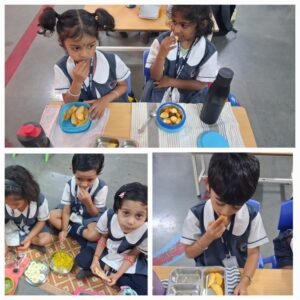
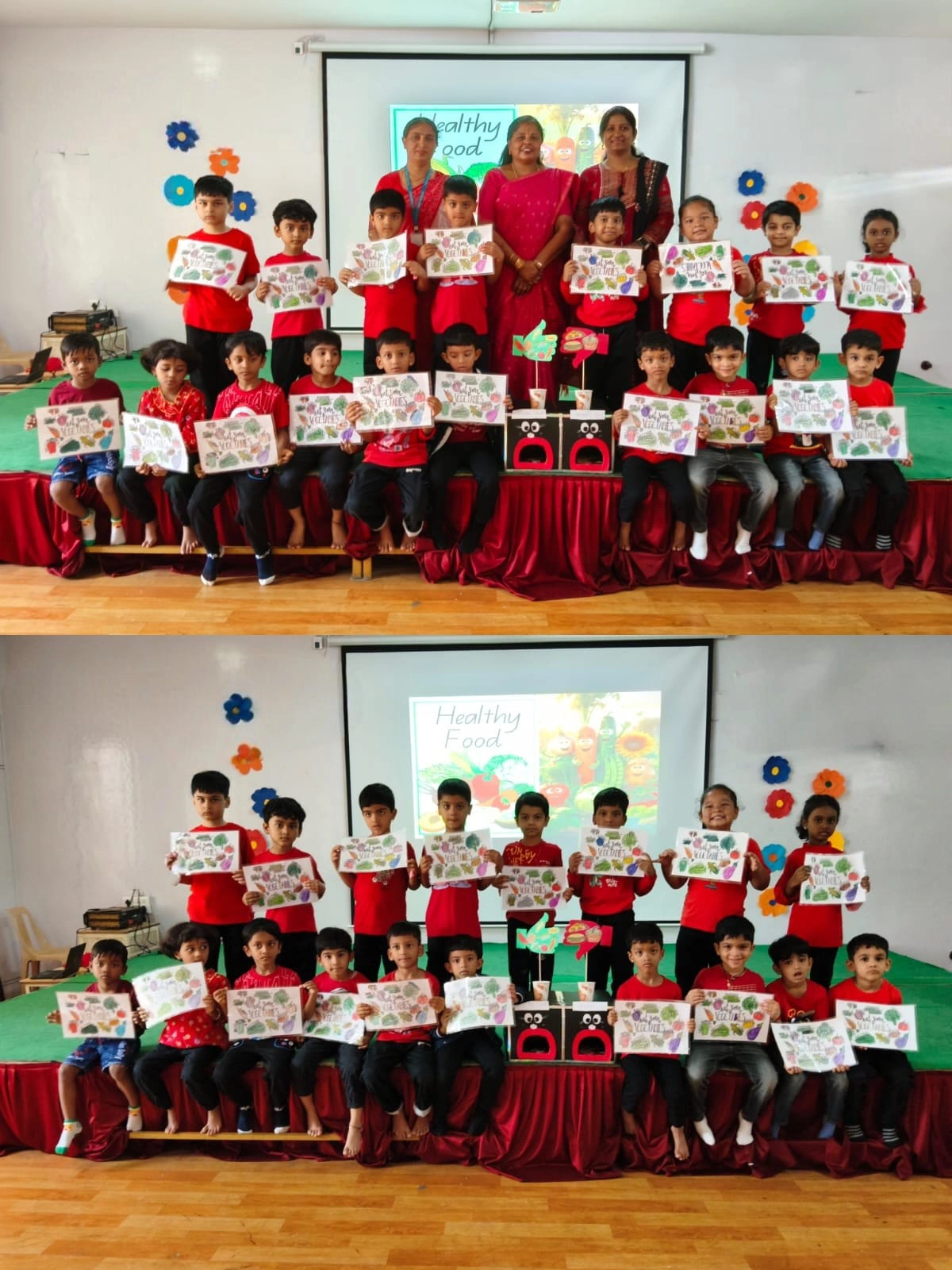
Keeping this vision in mind, the school organised a Healthy and Unhealthy Food Awareness Programme on 10 July 2026 for Montessori students. The event transformed nutrition education into an enjoyable learning experience where children actively participated through discussions, presentations, dance, interactive voting, and a healthy eating pledge.
Instead of simply teaching children what foods are healthy, the programme encouraged them to think critically, recognise nutritious food choices, and understand how healthy eating contributes to a happy and active lifestyle. These engaging activities also helped children build confidence, improve communication skills, and develop responsible decision-making abilities.
For parents looking for CBSE schools in Sarjapur Road that focus on holistic child development, programmes like these demonstrate how everyday life skills are naturally integrated into the learning journey.
Located in Sarjapur road, BRS Global School – Sarjapur Road Campus is conveniently accessible for families residing in Bellandur, HSR Layout, Harlur, Carmelaram, Kaikondrahalli, Dommasandra, Marathahalli, Varthur, Gunjur, Kodathi, Electronic City, and neighbouring communities, making it an excellent choice for working professionals across Bengaluru’s major IT corridors.
Visit our Sarjapur Road Campus Google Business Profile:
https://share.google/2oEno2EtFtY7eyP2B
Event Overview
Event Name: Healthy and Unhealthy Food Awareness Programme
Date: 10 July 2026
Participants: Montessori 3 Students
Venue: BRS Global School | Sarjapur Road Campus
Theme: Promoting Healthy Food Choices Through Experiential Learning
Objective: To help young learners understand the importance of healthy eating habits, identify nutritious and unhealthy foods, and make informed food choices through engaging, activity-based experiences.
Key Activities: Introduction to healthy eating, Montessori-3 student presentations, dance performance, interactive healthy food voting activity, Healthy Eating Pledge, and a take-home learning activity.
Learning Outcomes: Improved awareness of balanced nutrition, enhanced communication skills, confidence, critical thinking, observation, decision-making, and healthy lifestyle habits.
Parent Involvement: A take-home activity encouraged parents to reinforce healthy eating habits and continue nutrition awareness at home.
Educational Focus: Experiential learning aligned with the CBSE Foundational Stage and the principles of NEP 2020, fostering holistic development through real-life learning experiences.
What Happened During the Healthy and Unhealthy Food Awareness Programme?
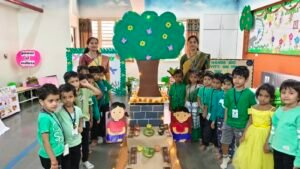
The Montessori classrooms were filled with enthusiasm as students participated in a thoughtfully planned programme dedicated to promoting healthy eating habits. The event began with an engaging introduction explaining why nutritious food is essential for maintaining good health, supporting growth, and providing the energy children need for learning and play.
Teachers interacted with students by discussing the difference between healthy and unhealthy foods using familiar examples from everyday life. Fruits, vegetables, whole grains, milk, and other nutritious foods were introduced alongside common unhealthy food choices, helping children understand the importance of making balanced dietary decisions.
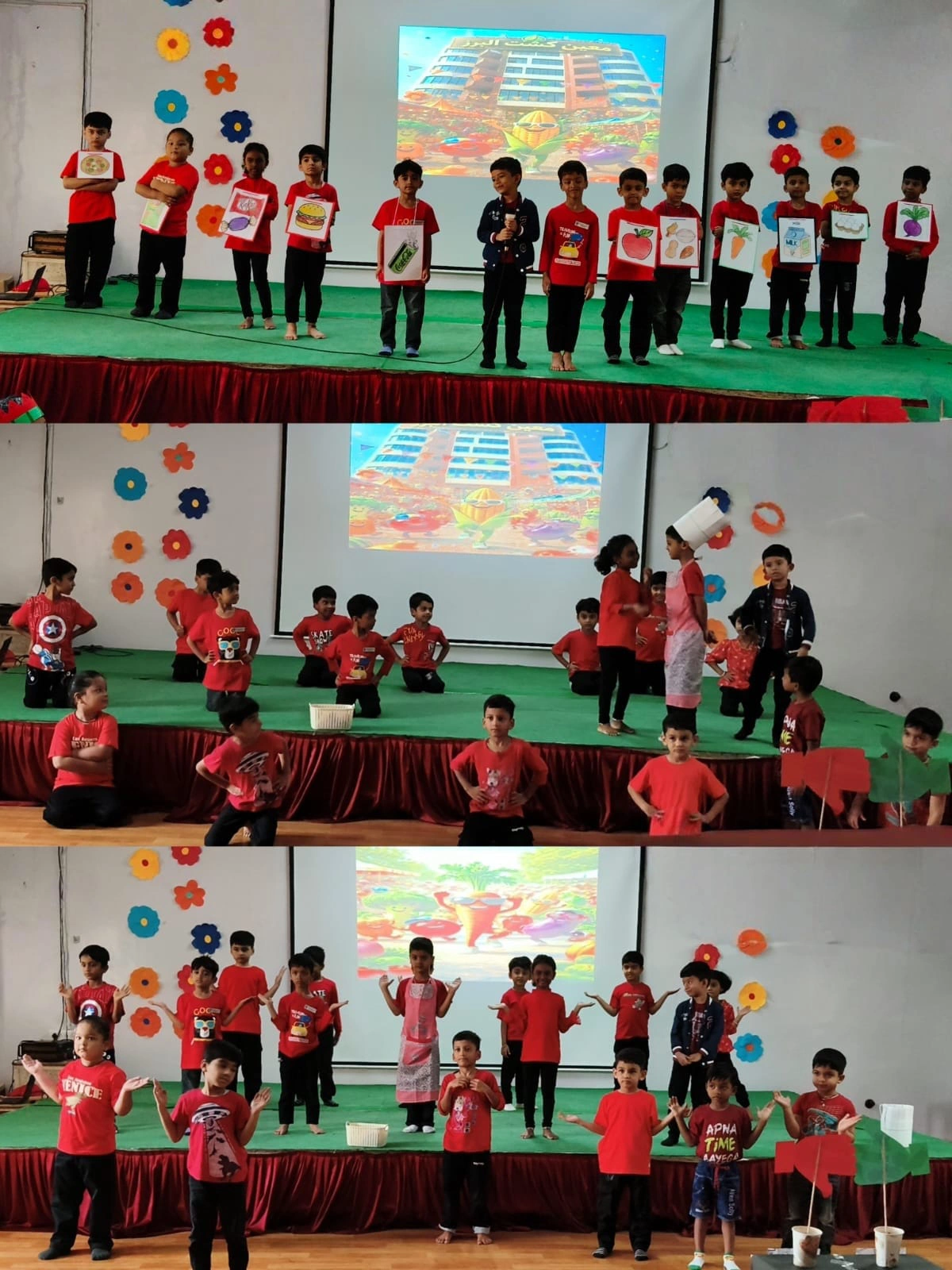
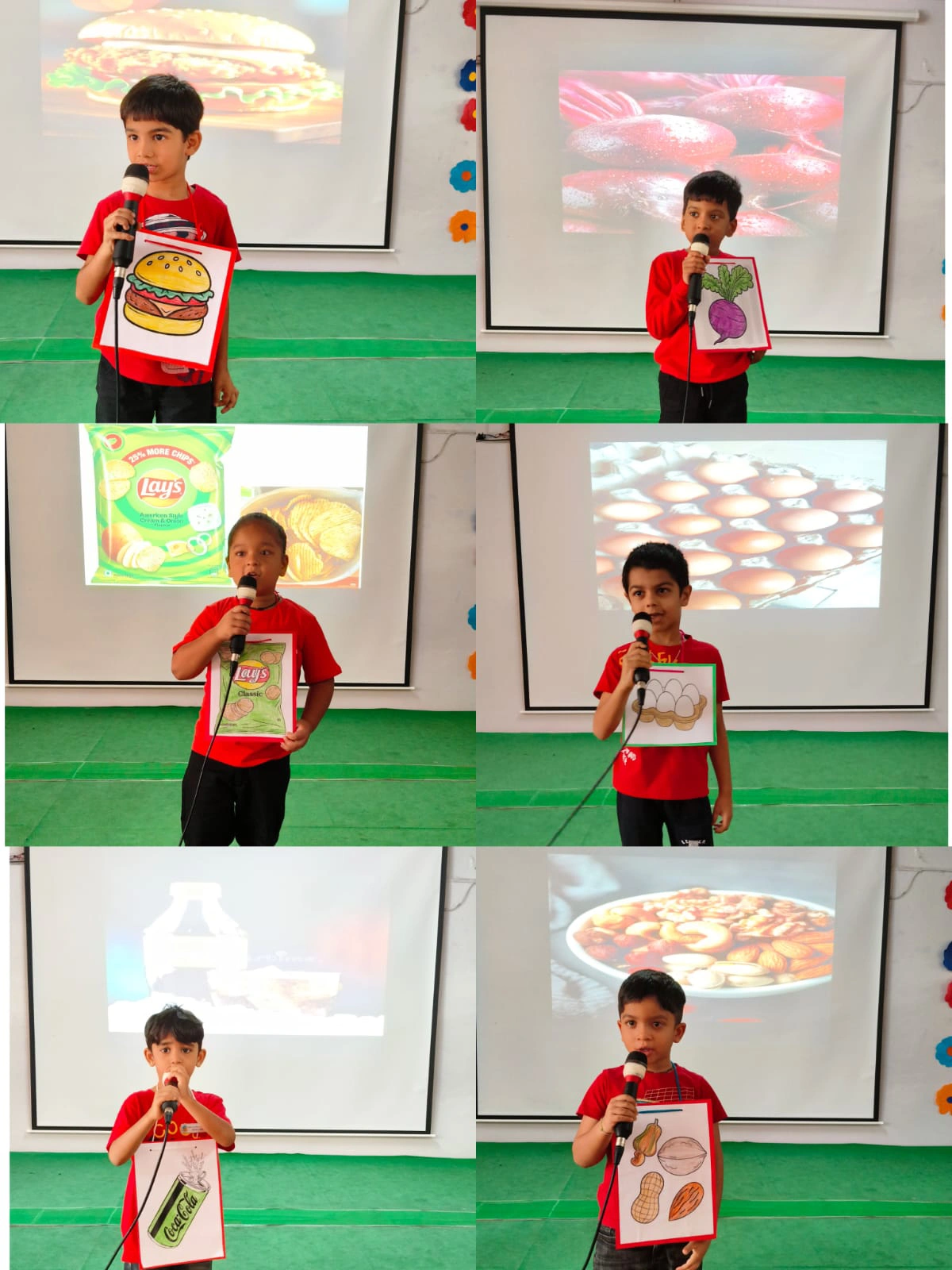
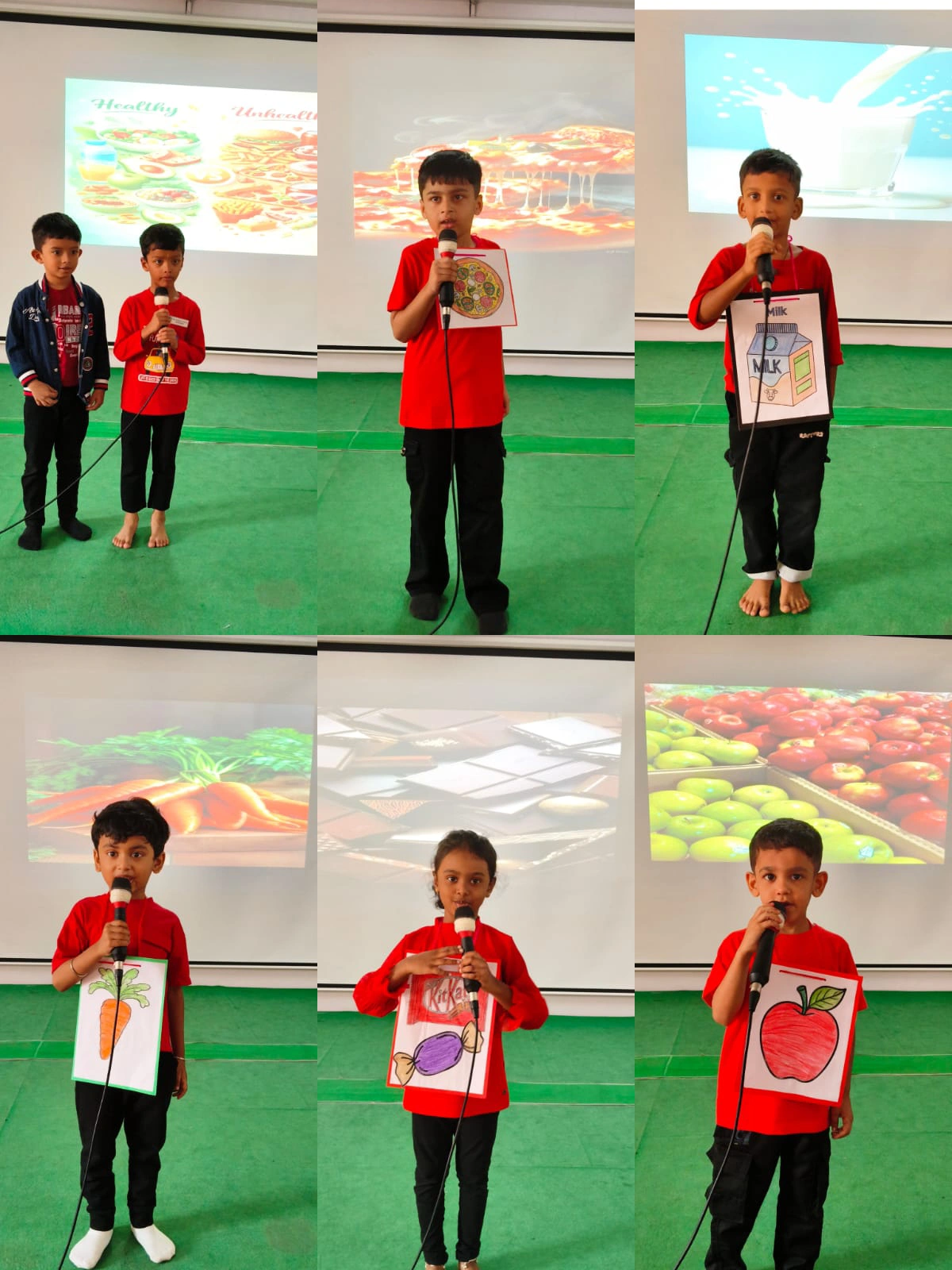
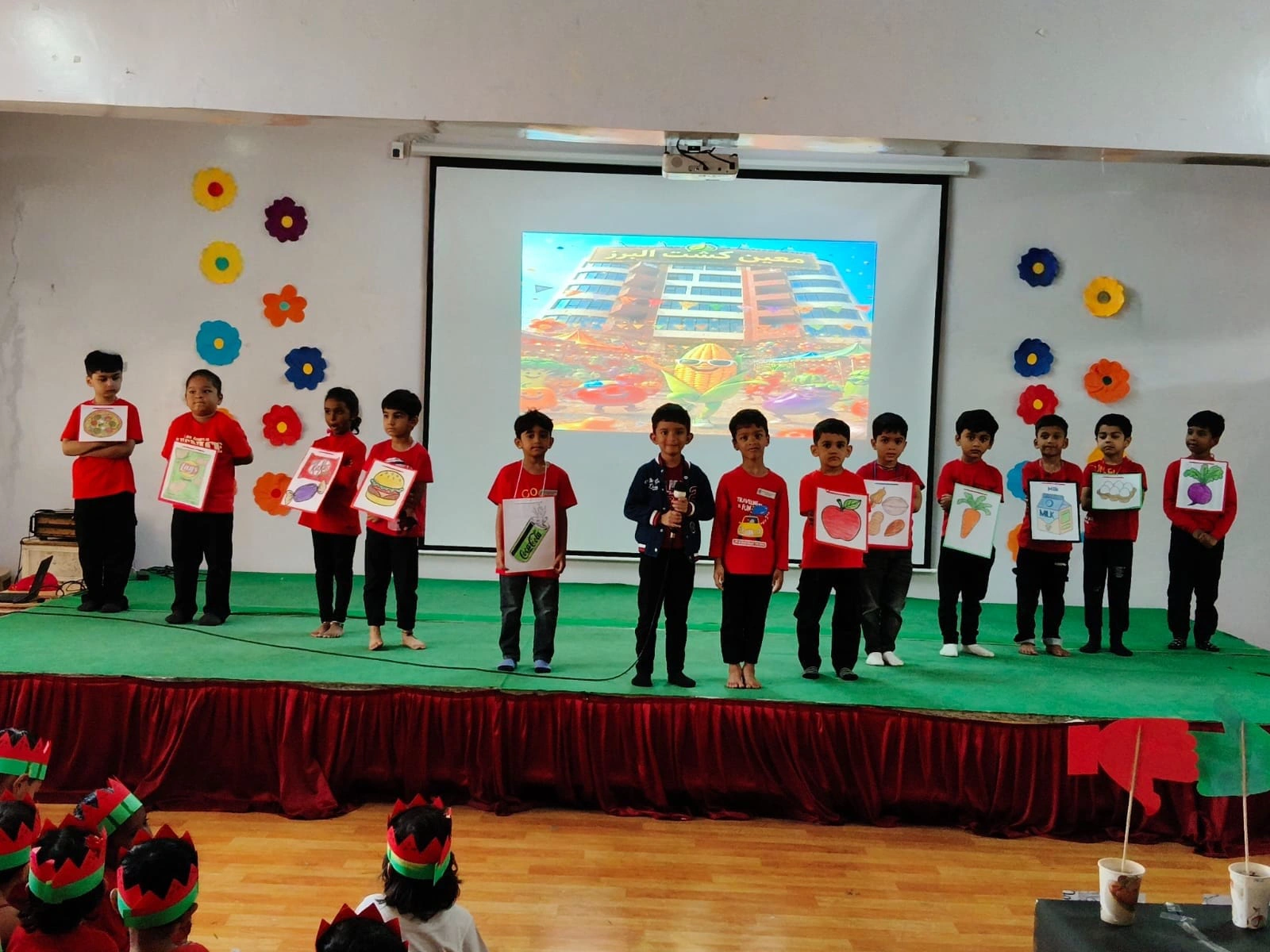
A highlight of the programme was the confident presentation by the Montessori-3 students, who spoke about healthy eating habits and shared simple messages about maintaining a balanced diet. This activity encouraged public speaking, communication, and self-expression while reinforcing their understanding of nutrition.
The celebration continued with an energetic Montessori-3 dance performance, where students enthusiastically conveyed the message of healthy living through music and movement. The lively performance created an enjoyable atmosphere while reinforcing the importance of active lifestyles and good nutrition.
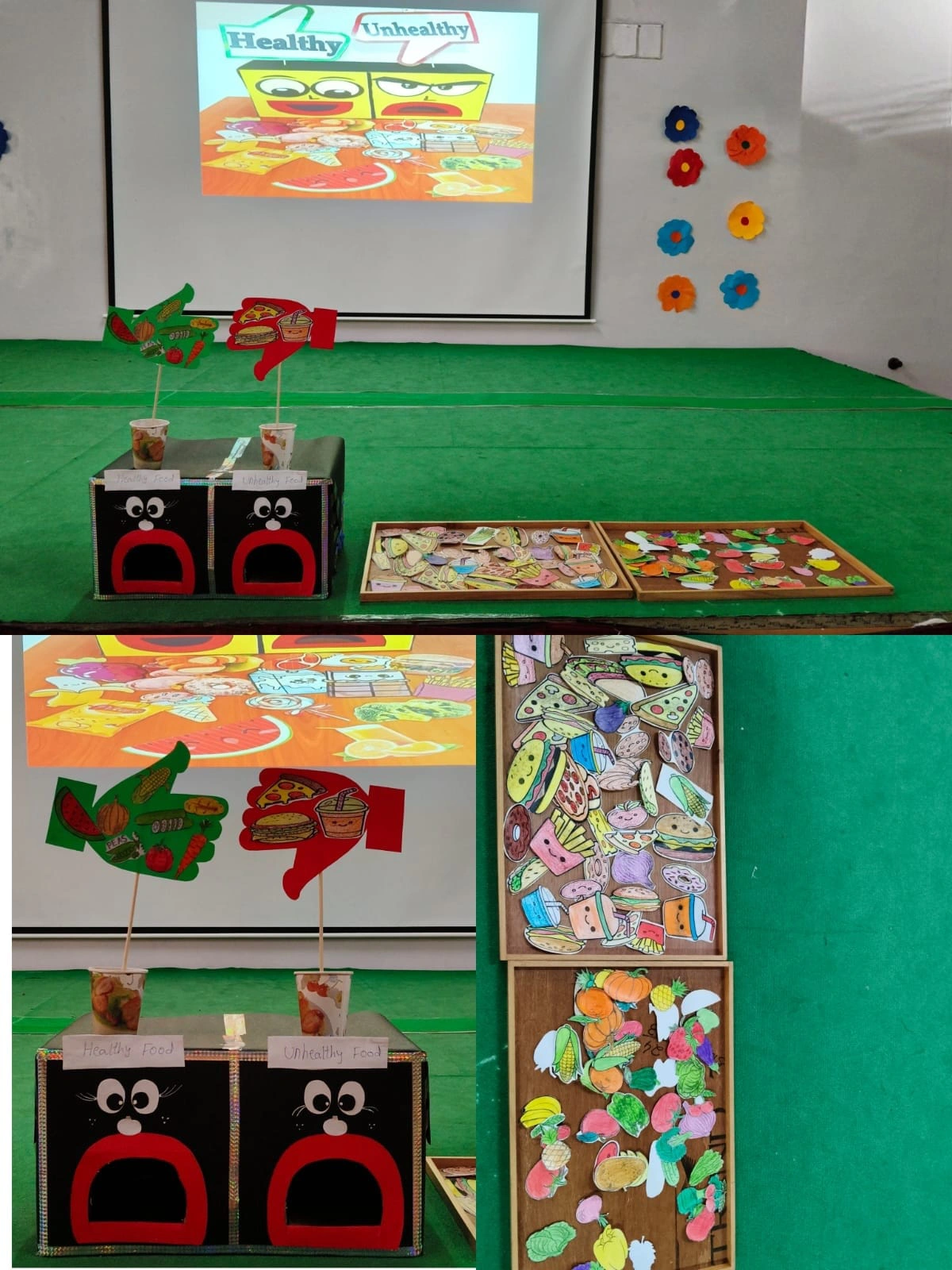
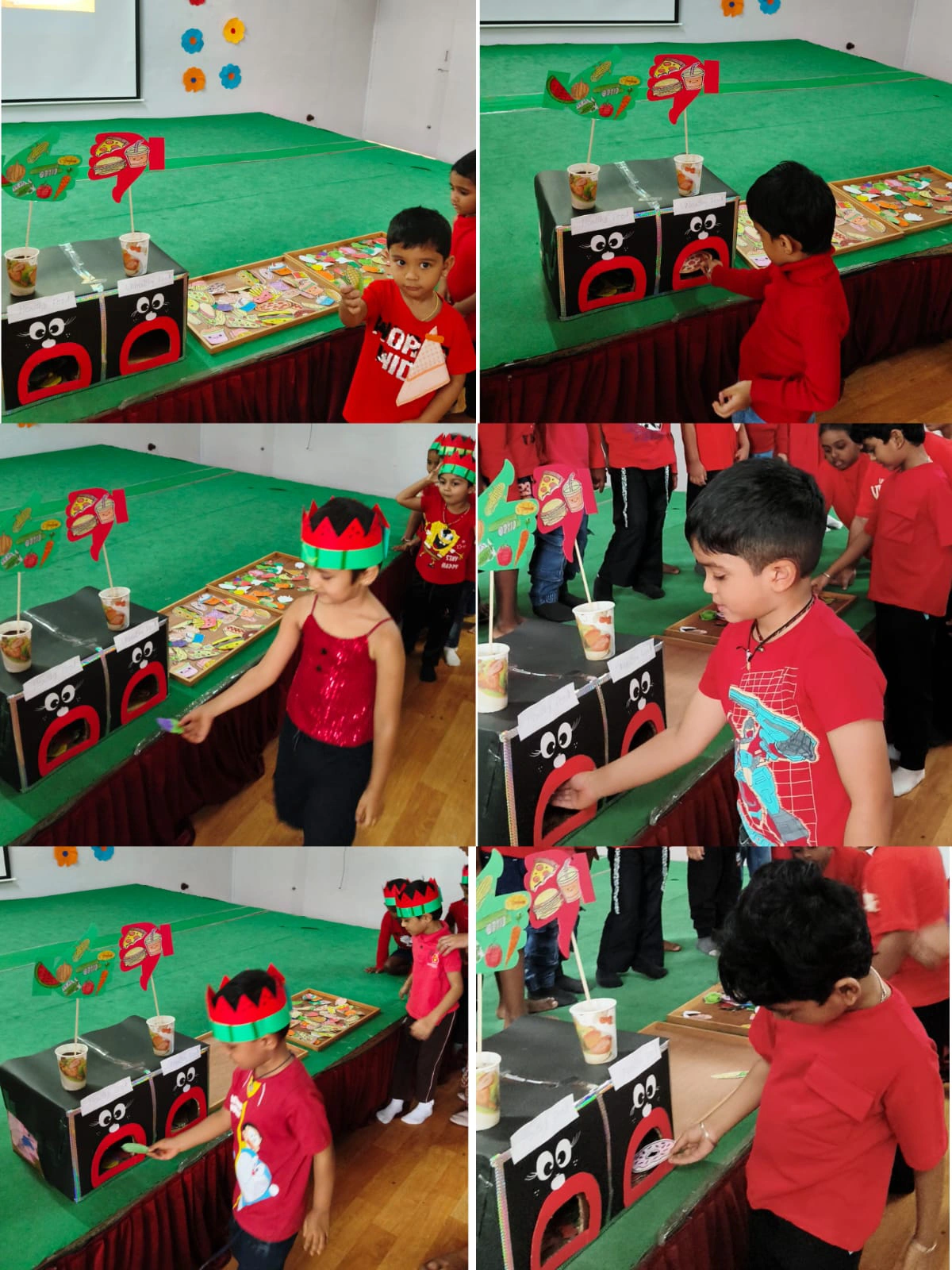
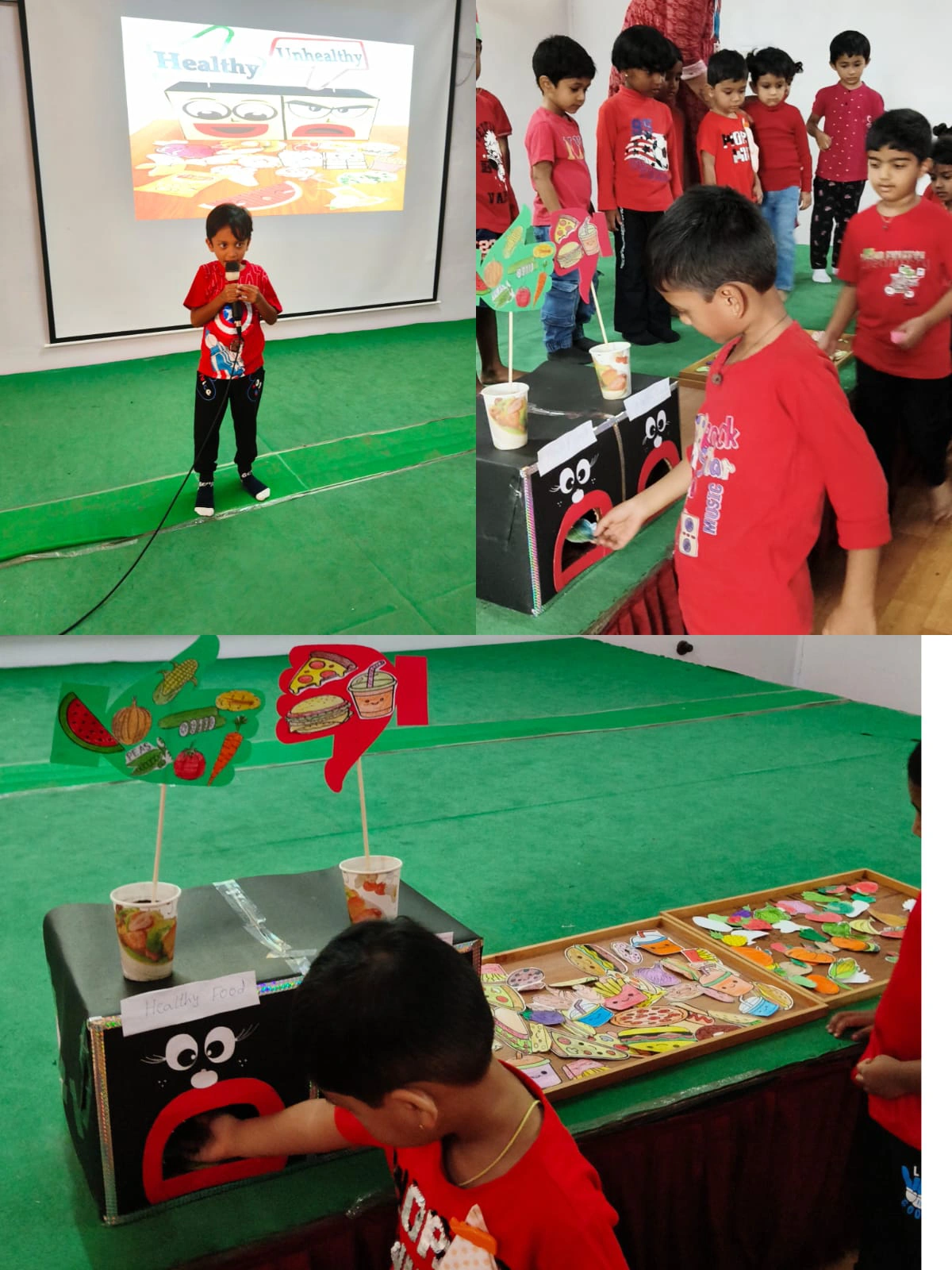
One of the most engaging segments of the programme was the interactive voting activity. Children identified different food items and voted on whether they belonged to the healthy or unhealthy category. This hands-on activity encouraged observation, logical thinking, and decision-making while making nutrition education enjoyable and memorable.
The programme concluded with a Healthy Eating Pledge, where students promised to make healthier food choices every day. This simple yet meaningful activity encouraged children to apply what they had learned beyond the classroom and develop positive eating habits from an early age.
To strengthen the connection between school and home, students were also given a take-home activity designed to reinforce the concept with the support of parents. This collaborative approach encouraged meaningful family discussions about healthy eating and enabled children to practise their learning in everyday situations.
Throughout the programme, every activity reflected the school’s commitment to experiential learning, helping children understand important life concepts through participation, exploration, creativity, and joyful engagement.
What Did Students Learn During the Healthy and Unhealthy Food Awareness Programme?
The programme helped Montessori students understand the importance of nutritious food, recognise the difference between healthy and unhealthy food choices, and develop lifelong healthy eating habits through interactive, activity-based learning.
Young children develop healthy habits more effectively when they learn through engaging experiences. During the Healthy and Unhealthy Food Awareness Programme, students explored nutrition in a fun, practical, and meaningful way.
By participating in discussions, presentations, and interactive activities, children learned to identify healthy foods such as fruits, vegetables, whole grains, milk, pulses, and nuts while recognising that foods high in sugar, salt, and unhealthy fats should be enjoyed only occasionally.
The programme also encouraged children to understand why healthy food is essential for growth, energy, immunity, and overall well-being. Rather than memorising information, students actively applied their knowledge through observation, participation, and decision-making activities.
Beyond nutrition awareness, the programme strengthened communication skills, confidence, teamwork, and critical thinking while creating a positive attitude towards healthy living.
Skills Developed Through the Programme
The Healthy and Unhealthy Food Awareness Programme contributed to several important developmental areas that support children’s academic and personal growth.
Health Awareness
Children learned the importance of making nutritious food choices and developed an early understanding of balanced eating habits that contribute to a healthy lifestyle.
Critical Thinking and Decision-Making
The interactive voting activity encouraged students to observe different food items, compare them, and decide whether they belonged to the healthy or unhealthy category. This strengthened reasoning and decision-making skills.
Communication Skills
The Montessori-3 presentations gave children an opportunity to confidently express their ideas, improving their vocabulary, speaking skills, and classroom participation.
Confidence and Self-Expression
Speaking before classmates, participating in group activities, and performing during the dance programme helped students develop self-confidence while reducing stage hesitation.
Social and Emotional Development
Working together during activities encouraged cooperation, active listening, respect for others’ opinions, and appreciation for teamwork.
Physical Development
The lively dance performance promoted movement, coordination, rhythm, and body balance while reinforcing the importance of an active lifestyle alongside healthy eating.
How Does This Programme Support CBSE Foundational Learning?
The Healthy and Unhealthy Food Awareness Programme supports the CBSE Foundational Stage by promoting experiential learning, life skills, health awareness, communication, observation, and decision-making through engaging classroom experiences.
The National Education Policy (NEP) 2020 and the CBSE Foundational Stage Framework encourage schools to move beyond traditional teaching methods and create meaningful learning experiences that connect classroom concepts with real life.
The Healthy and Unhealthy Food Awareness Programme reflected these educational principles by helping children learn through observation, discussion, movement, participation, and collaborative activities. Rather than simply explaining healthy eating, the programme enabled students to experience, discuss, and practise good nutrition in enjoyable ways.
Such experiential learning helps children retain concepts more effectively while developing curiosity, confidence, responsibility, and lifelong healthy habits.
Educational Philosophy: Learning Life Skills Through Everyday Experiences
At BRS Global School | Best CBSE School in Sarjapur Road, education extends beyond academic knowledge to include essential life skills that prepare children for a healthy and responsible future.
Health awareness is one of the most valuable lessons children can learn during their early years. By introducing nutrition concepts through enjoyable activities, discussions, performances, and interactive learning, the school creates experiences that are meaningful, memorable, and relevant to children’s daily lives.
The Montessori programme encourages children to explore, question, communicate, and actively participate in learning rather than simply receiving information. This child-centred approach helps nurture independent thinking, confidence, creativity, and responsible decision-making from an early age.
Why Should Parents Value Nutrition Awareness Programmes?
Nutrition awareness programmes help children develop healthy food habits early in life while encouraging informed decision-making, confidence, communication, and active family participation in building lifelong wellness.
Healthy eating habits established during childhood often continue into adulthood. When children understand the importance of nutritious food at an early age, they become more likely to make healthier choices independently.
Programmes such as these also encourage parents to continue nutrition conversations at home, creating consistency between school learning and everyday family routines.
Children benefit by:
• Developing positive eating habits from an early age.
• Understanding the importance of balanced nutrition.
• Making informed food choices.
• Improving communication and presentation skills.
• Building confidence through participation.
• Learning responsibility for their own health and well-being.
How Did Parents Participate in the Learning Process?
An important part of the programme was the take-home activity, which encouraged parents to continue nutrition education beyond the classroom.
Families were invited to discuss healthy eating habits, identify nutritious foods available at home, and involve children in simple conversations about balanced meals. These shared experiences reinforced classroom learning while strengthening the partnership between home and school.
Parental involvement plays a significant role in helping young children develop consistent habits, making healthy lifestyle education more effective and sustainable.
Why This Matters for Holistic Development
Healthy eating is closely connected to a child’s physical growth, emotional well-being, cognitive development, and academic readiness.
The Healthy and Unhealthy Food Awareness Programme supported holistic development by helping children build knowledge, confidence, communication skills, social interaction, and responsible decision-making alongside health awareness.
By combining learning with music, movement, presentations, and interactive participation, the programme transformed an important life lesson into an enjoyable educational experience that children will remember long after the event.
Local Relevance: Supporting Families Across Sarjapur Road
Families searching for schools in Sarjapur Road, CBSE schools in Sarjapur Road, or the best schools in Bellandur increasingly seek educational institutions that combine academic excellence with life skills education and holistic child development.
At BRS Global School – Sarjapur Road, programmes like the Healthy and Unhealthy Food Awareness Programme demonstrate how practical life lessons are seamlessly integrated into everyday learning. These experiences help children develop responsible habits while making education engaging and meaningful.
Conveniently located in Sarjapur road, the campus is easily accessible for families from Bellandur, Sarjapur Road, Hosa Road, Koramangala, HSR layout, Dommasandra, Kodathi, Gunjur, Varthur, Kaikondrahalli, Kasavanahalli, Carmelaram, Harlur, Rayasandra, Naganathapura, Doddakannelli, Kudlu Gate, A Krishnappa Nagar, Halnayakanahalli, Radha Reddy Layout, Chikkanayakanahalli, Huskur, KPC Layout, CSB Layout, Owners Court, Doddanagamangala, Doctors Layout, Shiva Reddy Layout, Meenakshi Layout, Chikbellandur, Sompura Gate, Muthannalur Cross, Gunjur to Dommasandra Road, Mullur, Amrita Engineering College Road Kasavanahalli, Amrita Nagar, Serenity Layout, Spring Fields, Iblur, Marathahalli, Shobha Apartments, Choodasandra, Junnasandra, Rayasandra and nearby residential communities. Its proximity to major business hubs such as RMZ Ecoworld, Embassy TechVillage, RGA Tech Park, Prestige Tech Park, Cessna Business Park, and the Wipro Campus makes it a preferred choice for working professionals seeking quality CBSE education close to home.
Explore our Sarjapur Road Campus:
https://share.google/2oEno2EtFtY7eyP2B
Common Parent Questions
How does this programme support CBSE learning?
The programme supports CBSE‘s experiential learning approach by helping children understand nutrition through interactive activities, discussions, performances, and real-life examples instead of rote learning.
How does it improve student confidence?
Students participated in presentations, dance performances, discussions, and group activities that encouraged them to communicate confidently, express ideas, and participate actively before their peers.
What life skills were developed?
Children developed healthy decision-making, observation, communication, teamwork, confidence, responsibility, critical thinking, and awareness about maintaining a balanced lifestyle.
Key Highlights
• Montessori students participated in a Healthy and Unhealthy Food Awareness Programme on 10 July 2026.
• Children learned the importance of balanced nutrition through interactive discussions and engaging activities.
• Montessori-3 students confidently presented healthy eating messages.
• A lively dance performance promoted the importance of healthy living.
• Interactive voting activities strengthened observation and decision-making skills.
• Students took a Healthy Eating Pledge to encourage positive food habits.
• A take-home activity strengthened parent involvement and reinforced learning at home.
• The programme reflected the school’s commitment to experiential learning aligned with the CBSE Foundational Stage and NEP 2020.
Frequently Asked Questions (FAQs)
What was the objective of the Healthy and Unhealthy Food Awareness Programme?
The programme aimed to help Montessori students understand the importance of healthy eating habits, recognise the difference between nutritious and unhealthy foods, and encourage informed food choices through fun, interactive, and experiential learning activities.
How does nutrition education benefit young children?
Nutrition education helps children develop healthy eating habits from an early age. It supports physical growth, brain development, concentration, immunity, and overall well-being while encouraging lifelong healthy lifestyle choices.
How does this programme support CBSE and NEP 2020?
The programme aligns with the CBSE Foundational Stage and National Education Policy (NEP) 2020 by promoting experiential learning, activity-based education, communication skills, life skills, and holistic child development through meaningful classroom experiences.
What skills did students develop during the programme?
Students developed:
• Nutrition awareness
• Communication and presentation skills
• Confidence and self-expression
• Observation and critical thinking
• Decision-making abilities
• Teamwork and collaboration
• Healthy lifestyle awareness
Why is experiential learning important in Montessori education?
Experiential learning allows children to understand concepts through participation, exploration, and real-life experiences. It makes learning enjoyable, improves knowledge retention, encourages curiosity, and builds confidence while supporting overall development.
How were parents involved in the programme?
Parents supported learning through a take-home activity that encouraged discussions about healthy eating, identifying nutritious foods at home, and reinforcing healthy habits in everyday life.
Why should parents choose a school that conducts life-skill programmes?
Life-skill programmes help children develop responsible habits, practical knowledge, communication skills, confidence, and social awareness alongside academic learning. These experiences prepare children for lifelong success and overall well-being.
Conclusion
The Healthy and Unhealthy Food Awareness Programme was a meaningful initiative that encouraged Montessori students to understand the importance of making healthy food choices through joyful and experiential learning. By combining presentations, interactive discussions, dance, voting activities, and a healthy eating pledge, the programme transformed nutrition education into an engaging and memorable experience.
At BRS Global School | Best CBSE School in Sarjapur Road, we believe that education should prepare children not only for academic success but also for healthy, confident, and responsible living. Programmes like these nurture essential life skills while fostering curiosity, creativity, communication, and informed decision-making from an early age.
If you are looking for a school that combines academic excellence, holistic development, and experiential learning, we invite you to explore BRS Global School – Sarjapur Road, where every child is encouraged to learn, grow, and thrive.
Visit our Sarjapur Road Campus Google Business Profile:
https://share.google/2oEno2EtFtY7eyP2B
Schedule a campus visit today to experience our Montessori programme and child-centred learning environment.
Looking for another BRS Global School campus?
Our Attibele Branch offers quality CBSE education for families in Attibele, Chandapura, Anekal, Hosur, and nearby areas.