
Introduction
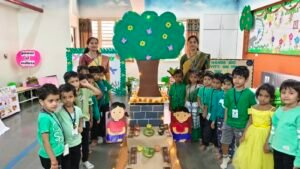
Food is an everyday part of a child’s life, making healthy eating a meaningful concept to introduce through real and familiar experiences. At BRS Global School | Best CBSE School in Sarjapur Road, the concept of healthy and unhealthy food was introduced through a series of interactive learning experiences designed to help young learners understand the importance of making nutritious food choices.
Located close to communities such as Sarjapur Road, Kasavanahalli, Bellandur, Harlur, HSR Layout, Kaikondrahalli, Carmelaram, Gunjur, Dommasandra and Varthur, the school focuses on creating learning experiences that connect classroom concepts with children’s everyday lives.
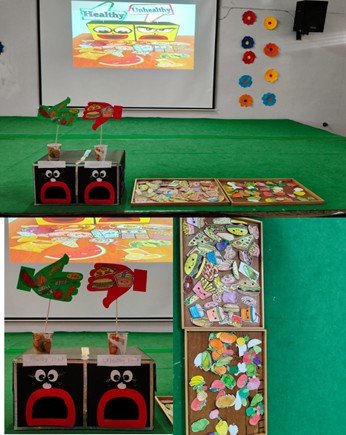
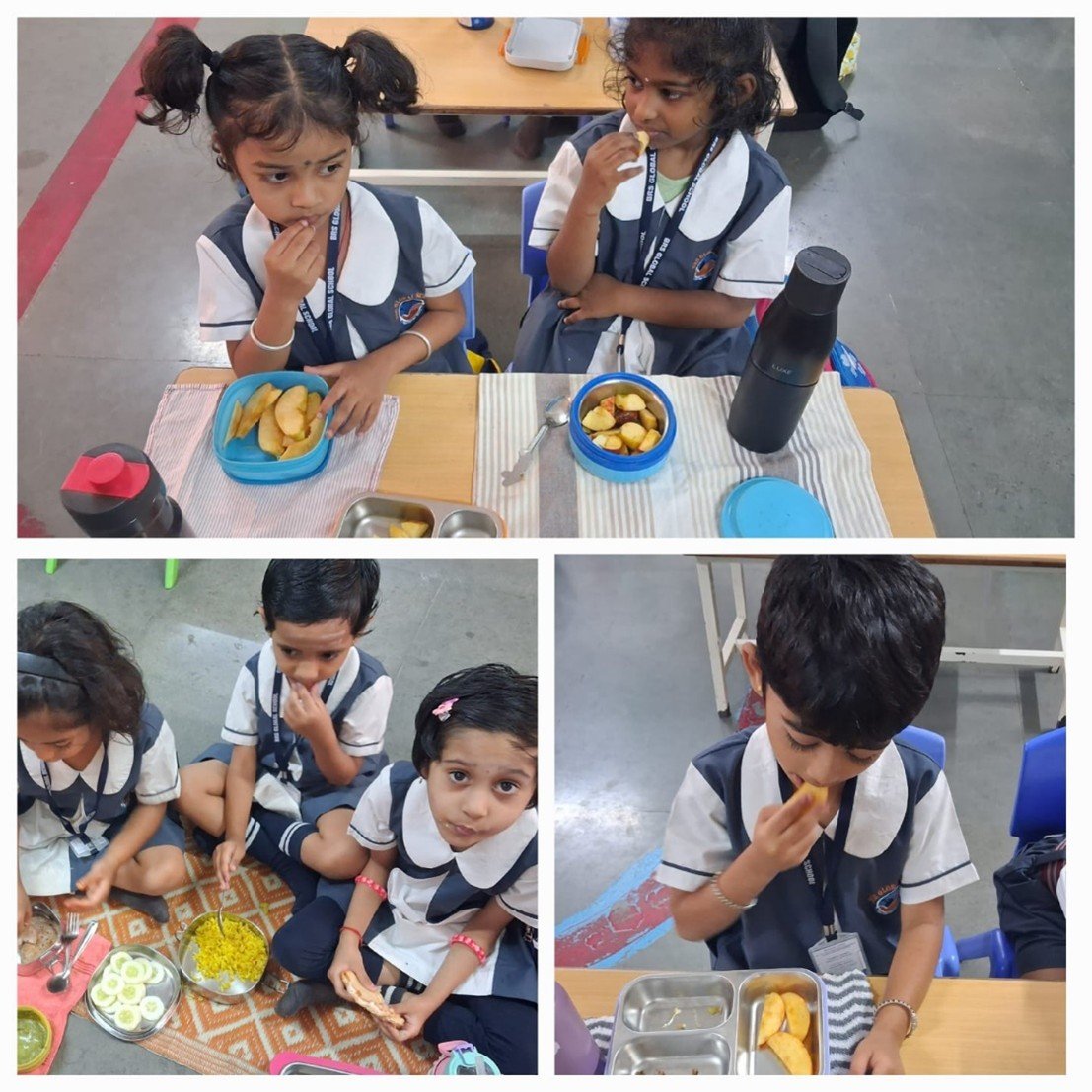
Instead of presenting healthy eating as a purely theoretical topic, teachers introduced the concept through four methods: Healthy Food Collection, Food Mat Activity, Election Activity, and a Culminating Day.
The sequence allowed children to encounter the concept in different ways. They brought healthy food items from home, identified and sorted food, expressed their choices during a classroom voting activity, and finally demonstrated their understanding through a culminating experience.
This approach reflects the broader principle of experiential learning: children are given opportunities to actively engage with a concept and apply what they learn. CBSE guidance emphasises experiential and active learning as important approaches to competency-based learning, while NCERT’s foundational-stage learning outcomes include children’s understanding of nutritious food and their ability to identify healthy and unhealthy food choices.
What Happened During the Healthy and Unhealthy Food Activity?
The learning experience was designed as a hands-on journey of observation, participation, choice and discovery for the Montessori children.
The teacher first introduced the topic using familiar food items and pictures. Children were encouraged to recognise the foods, talk about what they eat at home and share their everyday food experiences.
Through this simple conversation, children connected the new topic with what they already knew. They began to notice that some foods are good for their health and that making healthy food choices is an important part of everyday life.
Instead of simply being told which foods are healthy or unhealthy, the children were given opportunities to observe, identify, sort and make choices through a series of engaging activities. This hands-on approach made the concept easier for young learners to understand and remember.
The activities gradually encouraged children to become more aware of the foods they eat while developing simple habits of observation, decision-making and healthy choice-making in an enjoyable and meaningful way.
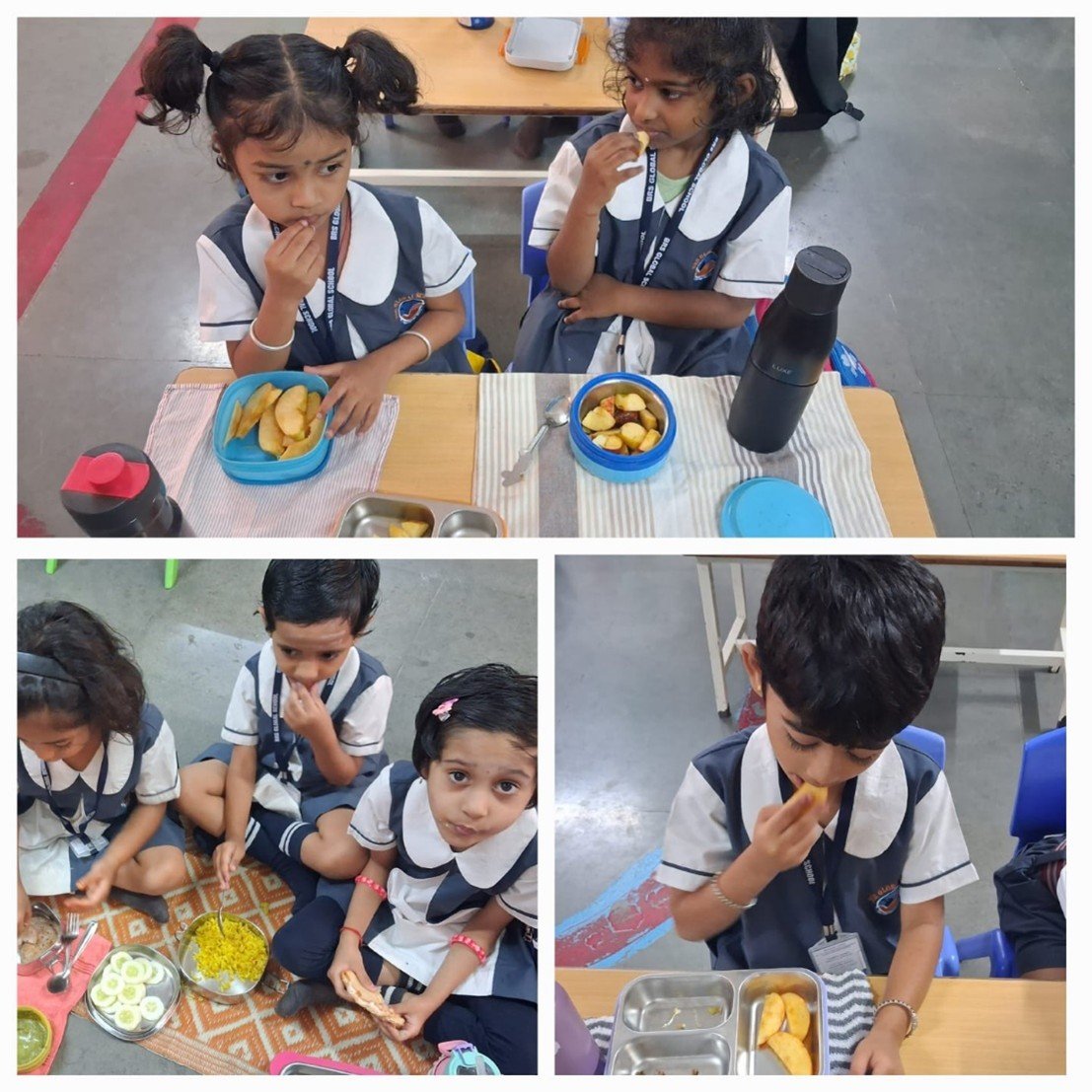
Method 1: Healthy Food Collection
The first activity gave children an opportunity to connect school learning with their homes.
Children were asked to bring healthy food items from home. This simple task encouraged them to look at familiar foods and identify items they considered nutritious.
The activity also created a bridge between classroom learning and family conversations. Children could discuss their food choices with parents before bringing the selected items to school.
Why was the Healthy Food Collection important?
The collection activity encouraged children to:
• Recognise familiar nutritious food items
• Make a conscious food choice
• Connect home experiences with classroom learning
• Participate in a shared classroom activity
• Develop awareness of healthy eating habits
For young learners, this type of activity can make a concept more meaningful because the learning begins with objects and experiences they already know.
NCERT’s foundational-stage learning outcomes include identifying healthy and unhealthy foods and developing an understanding of nutritious food.
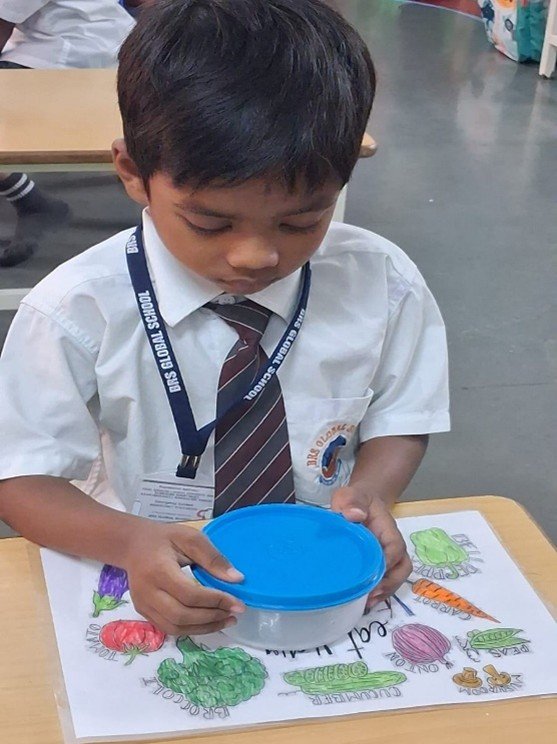
Method 2: Food Mat Activity – Learning Through Sorting and Classification
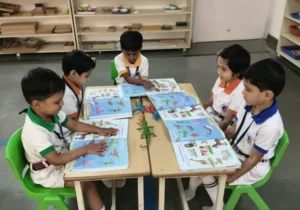
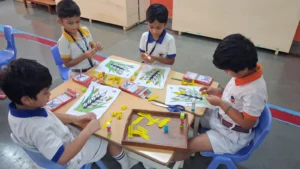
The second method was a hands-on Food Mat Activity.
Students were given food items and were encouraged to identify and sort them according to whether they represented healthier or less healthy choices.
Sorting activities are particularly useful for young learners because they require children to observe characteristics, compare objects, make decisions and place items into meaningful groups.
Instead of simply memorising the difference between healthy and unhealthy food, children actively participated in the process of classification.
What did students practise during the Food Mat Activity?
The activity encouraged:
• Observation
• Identification
• Comparison
• Classification
• Decision-making
• Communication
• Hands-on participation
The teacher could also use the activity to ask simple follow-up questions such as:
• “Why do you think this food belongs here?”
• “Which food would you choose for a healthy meal?”
• “Have you eaten this food at home?”
Such questions encourage children to explain their thinking rather than simply provide an answer.
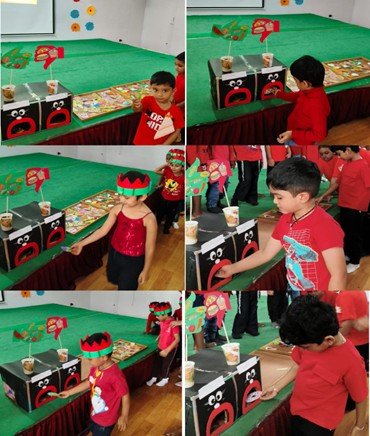
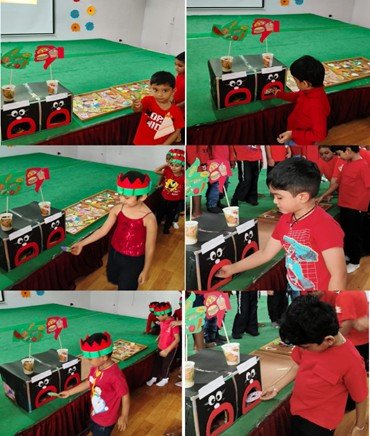
Method 3: Election Activity – Giving Children a Voice in Learning
The third activity introduced an engaging classroom election-style voting activity based on healthy and unhealthy food choices.
In this activity, children participated by expressing their preferences and making choices around the food theme. The activity gave them an opportunity to participate, listen to others and understand that people may have different preferences.
The word “election” in this context refers to a classroom voting activity designed for learning, rather than a political election.
Why use voting as a learning activity?
A classroom voting exercise can make learning interactive while encouraging children to:
• Express their choices
• Listen to different opinions
• Participate confidently
• Follow simple instructions
• Understand the idea of making a choice
• Engage with classmates
• Develop early decision-making skills
The activity also made the healthy-food topic more memorable because children were not passive recipients of information. They became active participants in the learning process.
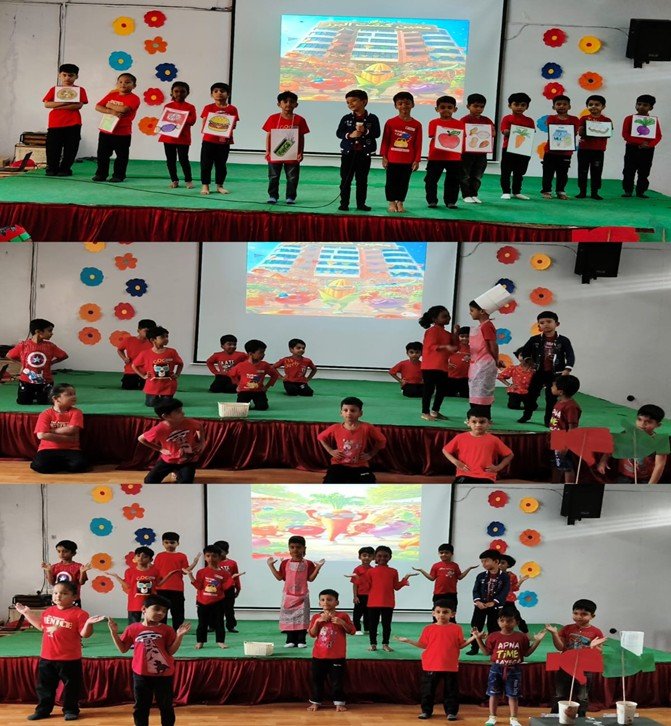
What Was the Purpose of the Culminating Day?
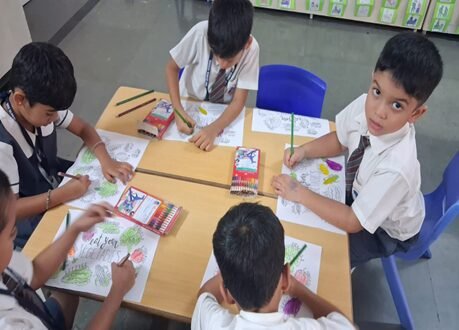
The Culminating Day brought together the learning experiences from the earlier activities.
Children participated in activities related to healthy and unhealthy food and had an opportunity to demonstrate what they had understood.
A culminating activity is valuable because it provides a natural point for children to revisit a concept after they have explored it through different experiences.
By this stage, students had already:
• Discussed healthy and unhealthy food.
• Identified healthy food items.
• Collected food items from home.
• Sorted food through the Food Mat activity.
• Expressed choices through classroom voting.
• Revisited the concept during the culminating experience.
This sequence helped reinforce the idea that learning can involve discussion, observation, participation, choice and reflection.
What Did Students Learn From the Healthy Food Activity?
The activity supported learning at several levels.
At the most basic level, students began recognising the difference between healthy and unhealthy food choices. More importantly, they were encouraged to think about food as part of everyday health and well-being.
Awareness of Nutritious Food
Children were introduced to the importance of nutritious food through familiar examples.
Identification and Classification
The Food Mat activity helped children identify and group food items according to the concept being taught.
Decision-Making
The collection and voting activities gave children opportunities to make choices and communicate their preferences.
Communication
Classroom discussions allowed students to speak about food they eat at home and explain their choices.
Participation and Confidence
Interactive activities encouraged children to participate actively rather than simply listen to a teacher’s explanation.
Connecting Learning With Daily Life
Because food is part of every child’s everyday experience, the topic provided an opportunity to connect classroom learning with real-life situations.
How Does This Activity Support CBSE and Foundational Learning?
Healthy food is a particularly relevant theme for young learners because it connects learning with health, self-care and daily routines.
NCERT’s foundational-stage learning outcomes include understanding nutritious food, identifying healthy and unhealthy food items, recognising different food groups and developing habits that support health and well-being.
CBSE also places emphasis on experiential and active learning, where students engage with concepts through meaningful activities and apply their knowledge rather than relying only on memorisation.
The healthy and unhealthy food activity supports these principles by providing children with opportunities to:
• Observe real food items
• Discuss familiar experiences
• Sort and classify objects
• Make choices
• Participate in group activities
• Express their ideas
• Apply learning to everyday life
The learning therefore extends beyond a single classroom discussion.
Why Does Experiential Learning Matter for Young Children?
Experiential learning gives children opportunities to learn through direct participation.
For a topic such as healthy eating, a child may understand the concept more meaningfully when they can actually look at food items, identify them, sort them and discuss their choices.
NCERT’s learning outcomes for the foundational stage specifically include children’s understanding of nutritious food and healthy choices. Its framework also connects learning about food with literacy, numeracy, sensory development, health and everyday life.
The approach also allows teachers to observe how children respond to a concept.
A child who can correctly identify a food item but cannot explain the reason behind the choice may need further discussion. Another child may confidently explain a choice based on what they have learned at home.
Such observations can help teachers understand children’s learning more holistically.
Which Students Benefit From This Type of Activity?
Experiential learning allows children to encounter a concept through different forms of engagement.
In the Water Animals activity, children did not simply read about aquatic animals. They discussed them, observed them, created something related to them and encountered aquatic life during an educational visit.
This created several points of connection around the same concept.
For young learners, these varied experiences can make learning more engaging and meaningful. A topic becomes associated not only with words in a textbook but also with classroom conversation, visual observation, creative activity and real-world experiences.
How Does the Activity Support Holistic Student Development?
Interactive food-based learning is particularly appropriate for young learners in the foundational and early primary years, when children are developing habits, vocabulary, social interaction and an understanding of their immediate environment.
However, the same principle can be adapted for older students through more advanced activities involving food groups, nutrition labels, balanced diets, food wastage, health, sustainability and data collection.
The activity can therefore become a starting point for progressively deeper learning as children grow.
Why Should Parents Value Learning Experiences Like This?
Parents often look for schools that provide strong academic foundations while also helping children develop practical skills.
An activity such as this demonstrates how an everyday topic can become a meaningful learning opportunity.
Instead of treating healthy eating only as a lesson to remember, children are given opportunities to observe, participate, communicate and make choices.
For families living around Bellandur, Sarjapur Road, Hosa Road, Koramangala, HSR layout, Dommasandra, Kodathi, Gunjur, Varthur, Kaikondrahalli, Kasavanahalli, Carmelaram, Harlur, Rayasandra, Naganathapura, Doddakannelli, Kudlu Gate, A Krishnappa Nagar, Halnayakanahalli, Radha Reddy Layout, Chikkanayakanahalli, Huskur, KPC Layout, CSB Layout, Owners Court, Doddanagamangala, Doctors Layout, Shiva Reddy Layout, Meenakshi Layout, Chikbellandur, Sompura Gate, Muthannalur Cross, Gunjur to Dommasandra Road, Mullur, Amrita Engineering College Road Kasavanahalli, Amrita Nagar, Serenity Layout, Spring Fields, Iblur, Marathahalli, Shobha Apartments, Choodasandra, Junnasandra, Rayasandra, this kind of school-based learning can be especially meaningful because it connects children’s classroom experiences with routines they encounter at home.
Parents can continue the conversation by asking children what they learned, which foods they identified and why they made particular choices.
Local Learning Context: BRS Global School, Sarjapur Road
BRS Global School’s Sarjapur Road campus serves families across several residential and working communities in Bengaluru’s eastern corridor.
The campus is relevant to families living around Sarjapur Road, Bellandur, Kasavanahalli, HSR Layout, Harlur, Kaikondrahalli, Carmelaram, Dommasandra, Gunjur, Varthur, Kodathi, Rayasandra and nearby communities.
The surrounding region also includes major employment and residential areas, making accessibility an important consideration for working families.
Parents exploring schools in Sarjapur Road, CBSE schools in Sarjapur Road, or schools near Sarjapur Road can explore the Sarjapur Road campus and its educational approach through the school’s Google Business Profile.
BRS Global School also has another branch at Attibele, serving families looking for schools in Attibele and nearby areas. The Attibele campus should be considered separately from the Sarjapur Road campus. Parents interested in that branch can explore its Google Business Profile.
For this event, however, the learning experience described above specifically represents the Sarjapur Road branch.
Common Parent Questions
How does this activity support healthy habits?
The activity introduces children to healthy food choices in an age-appropriate and interactive way. By identifying, collecting and sorting food items, children begin developing awareness that can support healthier everyday choices.
How does the activity improve student confidence?
Students participate in discussions, make choices, express opinions and take part in group activities. These opportunities encourage children to communicate their ideas and participate more confidently.
What skills were developed through the activity?
The activities supported observation, classification, communication, decision-making, participation, social interaction and awareness of healthy habits.
Why is hands-on learning useful for young children?
Hands-on learning allows children to experience a concept rather than only hear about it. Handling familiar objects, sorting them and discussing them can make learning more concrete and memorable.
How does this connect with CBSE learning?
The activity supports the broader emphasis on experiential and active learning and connects with NCERT foundational learning outcomes related to nutritious food, healthy choices and well-being.
Can parents continue this learning at home?
Yes. Parents can involve children in simple conversations about food choices, allow them to identify different food groups and encourage them to participate in age-appropriate meal planning and food-related activities.
Which students benefit most from this activity?
Young learners benefit particularly well because the activity uses familiar objects, simple choices, discussion and direct participation. The approach can also be adapted for older students with more advanced nutrition-related concepts.
Key Highlights
• Healthy and unhealthy food was introduced through familiar food items and pictures.
• Children brought healthy food items from home.
• Students participated in a hands-on Food Mat sorting activity.
• A classroom voting activity encouraged children to express their choices.
• The Culminating Day reinforced the concepts introduced during the learning sequence.
• Students developed awareness of nutritious food and healthy eating habits.
• Activities encouraged observation, classification, communication and decision-making.
• The learning connected classroom concepts with children’s everyday experiences.
• The activity supported experiential and active learning.
• Students were encouraged to learn through participation rather than passive memorisation.
Frequently Asked Questions (FAQs)
What did BRS Global School students learn through the healthy and unhealthy food activity?
Students learned to identify healthy and unhealthy food choices and developed awareness of the importance of nutritious food through interactive classroom activities.
What activities were included in the healthy food learning experience?
The learning experience included Healthy Food Collection, Food Mat Activity, Election Activity and a Culminating Day.
How did students participate in the Food Mat activity?
Students identified and sorted food items according to the healthy and unhealthy food concept introduced by their teacher.
Why was a classroom election activity included?
The classroom voting activity gave students an engaging way to express their choices, participate with classmates and practise early decision-making and communication skills.
How does the activity support experiential learning?
Students learned through direct participation, observation, sorting, discussion, choice-making and application of the concept to familiar everyday experiences.
Is healthy food education relevant to foundational learning?
Yes. NCERT’s foundational-stage learning outcomes include understanding nutritious food, identifying healthy and unhealthy food items, recognising food groups and developing healthy habits.
Which BRS Global School campus conducted this activity?
This event report is specifically about BRS Global School, Sarjapur Road, Bengaluru. BRS Global School also has another branch at Attibele, but the two campuses are separate and should not be confused.
Conclusion: Learning Healthy Choices Through Experience
The Healthy and Unhealthy Food learning experience at BRS Global School, Sarjapur Road demonstrated how an everyday topic can become an engaging educational experience.
Through food collection, sorting, classroom voting and a culminating activity, children were encouraged to observe, participate, communicate and make choices. The experience helped them build awareness of nutritious food while developing skills such as classification, decision-making and communication.
More importantly, the activity connected classroom learning with a part of children’s everyday lives. This is the value of experiential education: children are encouraged not only to know something, but also to understand it, experience it and relate it to their world.
Explore our Campus:
Attibele Branch:
https://share.google/iFhJaeGo8wkgOZ1Y5
Sarjapur Road Branch: