
Introduction
Education today extends beyond remembering information and completing examinations. Students also need opportunities to communicate, collaborate, think critically, solve problems, make decisions and apply what they learn in meaningful situations.
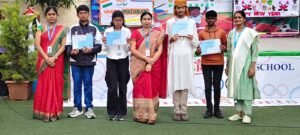
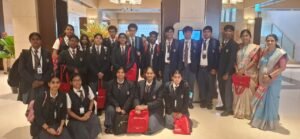
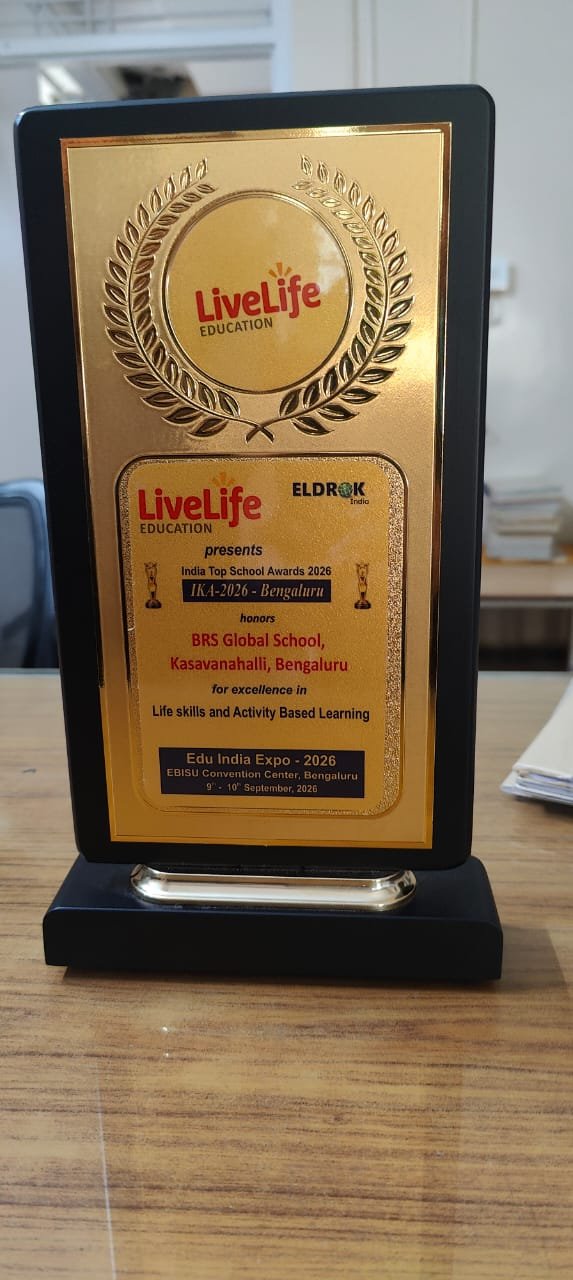
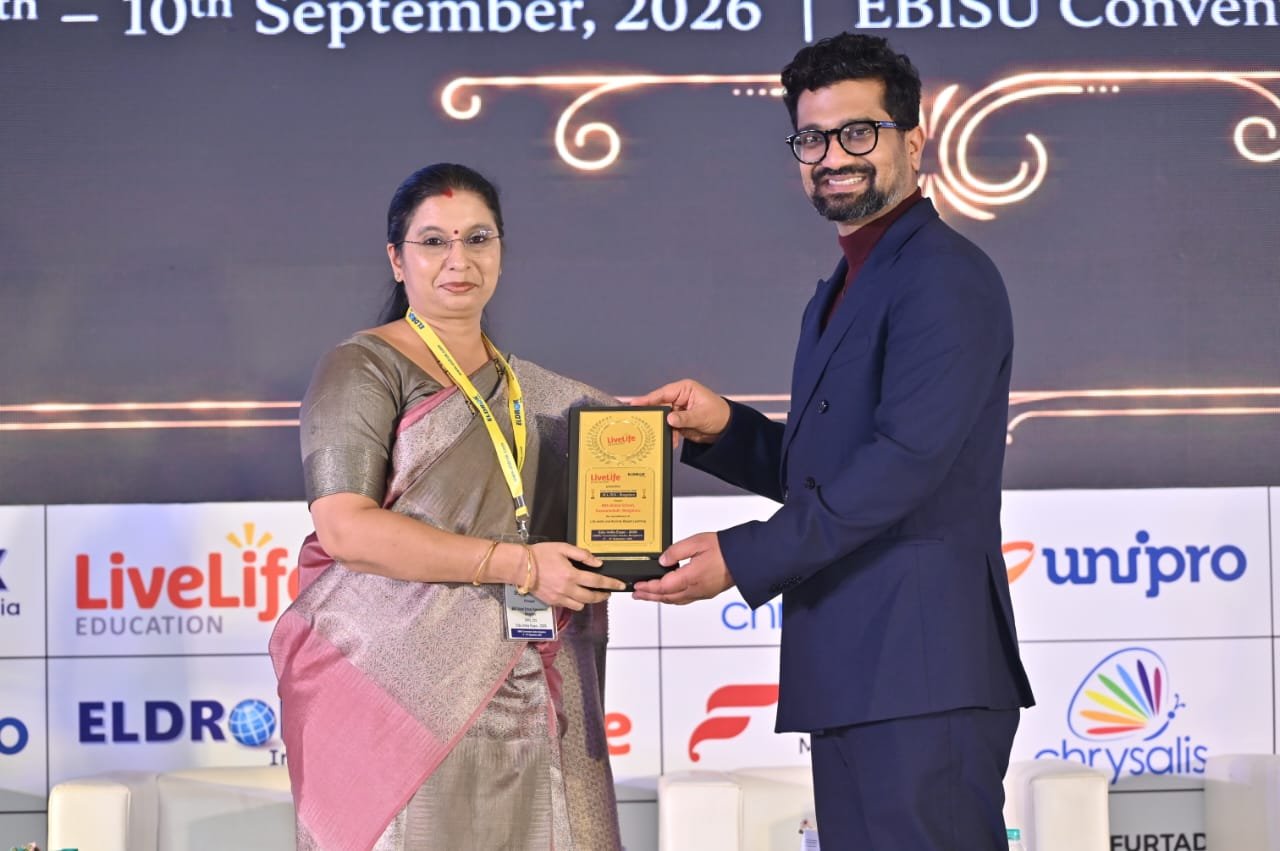
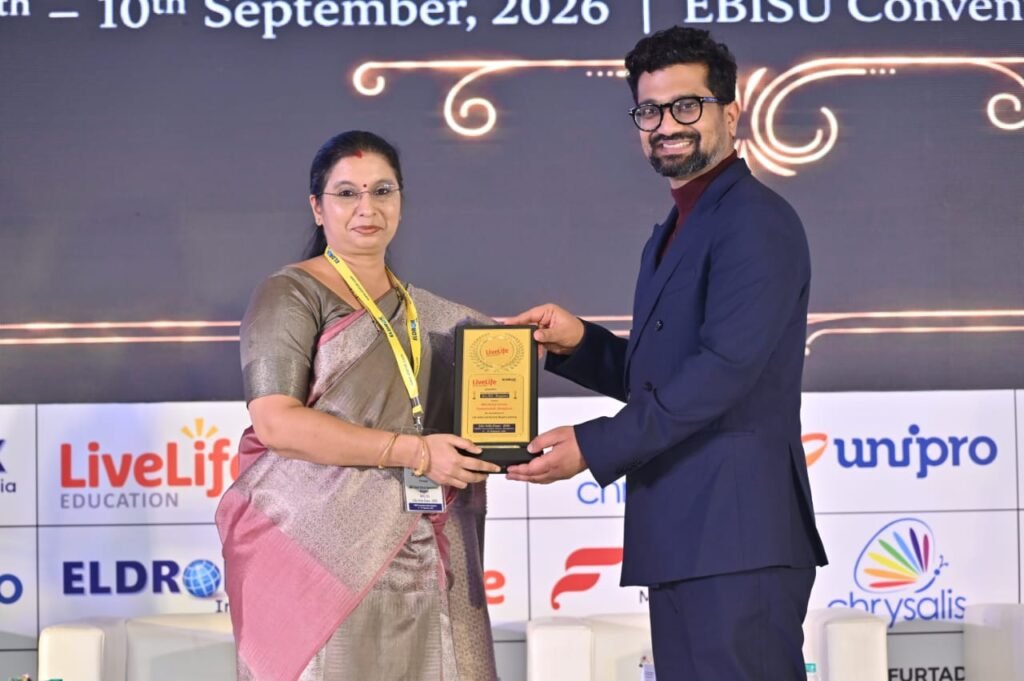
This approach was recently recognised at the Edu India Expo & India K-12 Awards 2026, where BRS Global School, Sarjapur Road, was honoured for its initiatives in Life Skills and Activity-Based Learning.
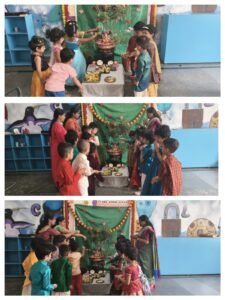
The recognition celebrates an educational environment in which learning is designed to go beyond conventional classroom routines. Through life-skills development, experiential learning, hands-on activities and student engagement, the school seeks to create opportunities for learners to connect academic knowledge with situations that encourage practical thinking and personal growth.
The recognition was received on behalf of the Sarjapur Road campus, marking a proud moment for its students, teachers, leadership and wider school community.
The educational philosophy behind such learning experiences also aligns with established CBSE approaches. CBSE identifies experiential and active learning as important pedagogies for competency-based learning and notes their role in developing critical thinking, creativity and effective study skills.
Event Overview: Edu India Expo & India K-12 Awards 2026
The Edu India Expo & India K-12 Awards 2026 brought together educational institutions and professionals to showcase and recognise initiatives across the K-12 education sector.
BRS Global School, Sarjapur Road, was recognised for its work in Life Skills and Activity-Based Learning at the event held at the EBISU Convention Center, Chokkanahalli, Bengaluru.
The recognition reflects the school’s continuing focus on creating opportunities for students to learn through participation, experience and practical engagement.
Rather than viewing academic learning and skill development as separate areas, activity-based education can create connections between the two. A science activity, collaborative project, presentation, creative exercise, sporting experience or problem-solving task, for example, can involve subject knowledge while simultaneously requiring communication, teamwork, decision-making or reflection.
This broader understanding of learning is also reflected in CBSE’s guidance on experiential learning, which describes learning as an interaction between the learner and the environment and highlights approaches such as field trips, DIY experiments, robotics and other practical experiences.
What Happened During the Event?
BRS Global School, Sarjapur Road, Bengaluru, received recognition for its initiatives in Life Skills and Activity-Based Learning at the Edu India Expo & India K-12 Awards 2026.
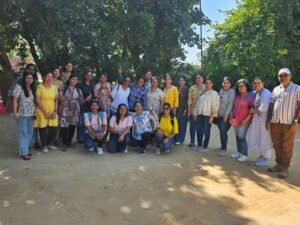
The award was received on behalf of the school, representing the collective contribution of the leadership team, teachers and students.
The recognition acknowledged an educational approach that places importance on meaningful student participation and learning experiences beyond conventional textbook-based instruction.
At its core, activity-based learning gives students opportunities to engage with a concept rather than simply receive information about it. Students may observe, discuss, experiment, create, present, collaborate or reflect depending on the learning objective.
Life skills add another important dimension. Students gradually encounter situations that require them to listen to others, express their ideas, work in teams, make choices, manage responsibilities and respond to challenges.
CBSE’s life-skills resources emphasise that such skills are best developed through active and participatory teaching-learning processes rather than abstract theory alone.
The recognition therefore represents more than an event-day achievement. It reflects an educational emphasis on how students experience learning and how classroom and co-curricular experiences can contribute to broader development.
What Do Students Learn Through Life Skills and Activity-Based Learning?
Students learn by applying knowledge, participating in activities, working with others and reflecting on experiences. This can strengthen communication, collaboration, critical thinking, creativity, problem-solving and self-management alongside academic learning.
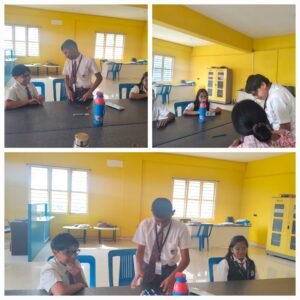
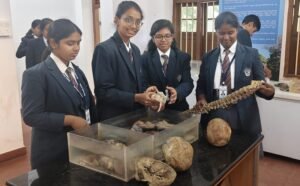
Activity-based learning can make the learning process more participatory. Instead of encountering every concept only through explanation, students can have opportunities to explore ideas through projects, demonstrations, discussions, practical tasks and real-world applications.
For example, a collaborative activity may require students to divide responsibilities, listen to different viewpoints and work towards a shared outcome.
A presentation may involve research, organisation, communication and confidence. A practical experiment may require observation, questioning, prediction and interpretation.
The specific skills developed depend on the activity, age group and learning objective.
CBSE’s competency-based learning framework places emphasis on what students are able to know, understand and demonstrate after a learning experience. It also identifies experiential and active learning as useful pedagogies for developing critical thinking, creativity and study skills.
What Skills Can Activity-Based Learning Develop?
Activity-based learning can support several interconnected areas of student development:
Communication
Students may practise expressing ideas clearly, listening actively, presenting information and participating in discussions.
Collaboration
Group activities can provide opportunities to share responsibilities, respect different perspectives and work towards a common objective.
Critical Thinking
Practical tasks encourage students to examine information, ask questions, identify relationships and consider possible solutions.
Creativity
Projects and open-ended activities can give students opportunities to generate ideas and communicate their understanding in different ways.
Problem-Solving
Real-world tasks can require students to identify challenges, consider alternatives and apply knowledge to reach a solution.
Self-Management
Life-skills activities can help students practise responsibility, organisation, reflection and decision-making in age-appropriate contexts.
Social and Interpersonal Skills
Participatory learning creates opportunities for students to interact with peers and teachers, understand different viewpoints and develop constructive relationships.
UNESCO also describes foundational skills as including cognitive, intrapersonal and interpersonal competencies, with creativity, teamwork and the ability to apply skills across different contexts becoming increasingly important.
How Does This Support CBSE Learning?
The approach supports CBSE’s emphasis on competency-based, active and experiential learning by giving students opportunities to demonstrate understanding through meaningful activities and real-life contexts.
CBSE’s competency-based learning guidance states that learning outcomes focus on what learners are expected to know, understand or demonstrate. It also identifies experiential and active learning as effective pedagogies for competency development.
The Ministry of Education’s documentation on NEP 2020 implementation similarly describes experiential learning as a way to connect curriculum content with students’ lives and the world around them. It identifies benefits such as deeper and more meaningful learning, increased engagement, socio-emotional development and critical thinking.
For students, this means learning can become more connected to application. For teachers, it creates opportunities to design lessons and activities around clearly defined learning outcomes.
Educational Philosophy and Institutional Value Alignment
The recognition at the Edu India Expo & India K-12 Awards 2026 reflects an important educational principle: academic knowledge and life skills can develop together.
A learner-centric environment does not necessarily mean reducing academic rigour. Instead, it can involve providing students with different ways to understand, practise and demonstrate what they learn.
At BRS Global School, the focus on life skills and activity-based learning forms part of a broader emphasis on student participation and experiential education.
This approach is particularly relevant as students progress through different stages of school. Younger learners may benefit from structured hands-on exploration and collaborative activities, while older students can engage with increasingly complex projects, discussions, presentations and real-world problem-solving.
The Ministry of Education’s PRERANA programme, for example, describes experiential learning through hands-on activities, collaborative learning, community interaction and real-world contexts.
The underlying principle is straightforward: students benefit when learning gives them opportunities not only to acquire information but also to use it.
Why Does This Matter for Student Development?
A student’s school experience includes much more than academic subjects.
Students spend years learning how to communicate with others, manage responsibilities, respond to challenges, participate in teams and make decisions. These experiences gradually contribute to how they approach learning and everyday situations.
Life skills and activity-based learning can provide structured opportunities for this development within the school environment.
For parents, the value lies in seeing education as a combination of knowledge, skills, attitudes, participation and application rather than as examination preparation alone.
CBSE’s life-skills resources emphasise supportive learning environments, mutual respect, collaboration and active student participation as important components of life-skills education.
The recognition received by BRS Global School, Sarjapur Road, therefore highlights an educational focus that connects academic learning with practical and personal development.
Why Should Parents Value Activity-Based Learning?
Parents can value activity-based learning because it gives children opportunities to practise skills that are difficult to develop through passive learning alone, including communication, collaboration, problem-solving, creativity and decision-making.
For families exploring CBSE schools in Sarjapur Road, this can be an important part of understanding a school’s educational approach.
Parents may wish to look beyond infrastructure and academic results and ask how students actually learn during a typical school week:
• Are students encouraged to participate?
• Do they work collaboratively?
• Are they given opportunities to present ideas?
• Do activities connect learning with real situations?
• Are students encouraged to ask questions?
• Are life skills intentionally integrated into learning?
• Do students have opportunities to reflect on their experiences?
These questions can help parents understand the learning environment rather than relying only on a school’s facilities or promotional descriptions.
Local Context: Learning in Sarjapur Road, Bengaluru
For families searching for schools in Sarjapur Road, the location is closely connected with a large and diverse residential and working community.
BRS Global School‘s Sarjapur Road campus is located in Kasavanahalli, making the school relevant to families living in and around Bellandur, Sarjapur Road, Hosa Road, Koramangala, HSR layout, Dommasandra, Kodathi, Gunjur, Varthur, Kaikondrahalli, Kasavanahalli, Carmelaram, Harlur, Rayasandra, Naganathapura, Doddakannelli, Kudlu Gate, A Krishnappa Nagar, Halnayakanahalli, Radha Reddy Layout, Chikkanayakanahalli, Huskur, KPC Layout, CSB Layout, Owners Court, Doddanagamangala, Doctors Layout, Shiva Reddy Layout, Meenakshi Layout, Chikbellandur, Sompura Gate, Muthannalur Cross, Gunjur to Dommasandra Road, Mullur, Amrita Engineering College Road Kasavanahalli, Amrita Nagar, Serenity Layout, Spring Fields, Iblur, Marathahalli, Shobha Apartments, Choodasandra, Junnasandra, Rayasandra.
The surrounding area includes established residential communities as well as major employment corridors. Families connected with places such as Wipro Campus, RGA Tech Park, RMZ Ecoworld, Embassy TechVillage and Prestige Tech Park may consider school location, daily travel and educational approach together when evaluating schools.
For parents comparing CBSE schools in Sarjapur Road, a school’s location is only one part of the decision. Curriculum, learning environment, student development opportunities, teaching practices, co-curricular exposure and the school’s approach to experiential learning are also relevant considerations.
Families can explore the official listing for BRS Global School | Best CBSE School in Sarjapur Road through Explore our Google Business Profile.
The school also has another branch, BRS Global School | Pre-school, Primary School & High School | Attibele, serving families in the Attibele area.
This is a separate campus and should not be confused with the Sarjapur Road campus. Families looking specifically at the Attibele branch can view its Google Business Profile.
Common Parent Questions
How does activity-based learning support academic education?
Activity-based learning complements academic instruction by allowing students to apply concepts through practical tasks, projects, discussions and other forms of participation. This can help students connect knowledge with application and demonstrate what they understand.
Does activity-based learning replace traditional classroom teaching?
No. Activity-based learning is generally used alongside other teaching approaches. Its purpose is to provide additional ways for students to explore, practise and apply concepts while working towards defined learning outcomes.
How can activity-based learning improve student confidence?
When students receive opportunities to participate, present ideas, collaborate and complete meaningful tasks, they can practise communicating and taking responsibility in structured settings. The impact varies by student and activity.
What life skills can children develop at school?
Life skills may include communication, interpersonal interaction, decision-making, problem-solving, self-management, teamwork and responsible behaviour. The particular skills developed depend on the student’s age and the learning experience.
Which students benefit from activity-based learning?
Students across school stages can benefit, although the activities should be age-appropriate. Younger learners may benefit from guided exploration and hands-on tasks, while older students can engage in projects, presentations, discussions and more complex problem-solving.
Why is experiential learning relevant to CBSE education?
CBSE identifies experiential and active learning as important approaches within competency-based learning and connects them with deeper learning, critical thinking, creativity and the demonstration of learning outcomes.
Key Highlights
• BRS Global School, Sarjapur Road, Bengaluru, was recognised at the Edu India Expo & India K-12 Awards 2026.
• The recognition was for Life Skills and Activity-Based Learning.
• The event was held at the EBISU Convention Center, Chokkanahalli, Bengaluru.
• The award was received on behalf of the Sarjapur Road campus.
• The recognition acknowledges the collective contribution of the school’s leadership, teachers and students.
• The initiative reflects an emphasis on learner participation and experiential education.
• Activity-based learning can connect academic concepts with practical experiences.
• Life-skills education can support communication, collaboration, problem-solving and self-management.
• CBSE recognises experiential and active learning as important approaches to competency-based education.
• The approach supports a broader view of holistic student development.
Frequently Asked Questions (FAQs)
What award did BRS Global School receive in 2026?
BRS Global School, Sarjapur Road, Bengaluru, was recognised at the Edu India Expo & India K-12 Awards 2026 for its initiatives in Life Skills and Activity-Based Learning.
Where was the Edu India Expo & India K-12 Awards 2026 held?
The recognition event was held at the EBISU Convention Center, Chokkanahalli, Bengaluru.
What is activity-based learning?
Activity-based learning is an approach in which students learn through active participation, practical tasks, exploration, collaboration and application of concepts rather than relying only on passive instruction.
What are the benefits of life-skills education?
Life-skills education can provide opportunities for students to develop communication, interpersonal, decision-making, problem-solving and self-management abilities through participatory learning experiences.
How does experiential learning support CBSE students?
CBSE describes experiential and active learning as effective approaches for competency-based education, helping students develop and demonstrate learning outcomes while supporting critical thinking and creativity.
Which areas are close to BRS Global School, Sarjapur Road?
The Sarjapur Road campus in Kasavanahalli is relevant to families from areas including Sarjapur Road, Bellandur, HSR Layout, Haralur Road, Harlur, Kaikondrahalli, Carmelaram, Dommasandra, Kodathi, Gunjur and Varthur.
How can parents learn more about the Sarjapur Road campus?
Parents can explore the school’s official website and visit the school’s official Google Business Profile for location and listing information before planning a campus visit.
Conclusion: Learning Beyond the Classroom
The recognition of BRS Global School | Best CBSE School in Sarjapur Road, at the Edu India Expo & India K-12 Awards 2026 for Life Skills and Activity-Based Learning highlights the importance of creating learning experiences that extend beyond conventional classroom instruction.
For students, meaningful activities can provide opportunities to participate, collaborate, communicate, explore ideas and apply knowledge. For parents, these experiences offer another perspective on what a school means by holistic education.
The recognition is also a reflection of the collective efforts of the school’s leadership, teachers and students in building a learner-centred educational environment.
As CBSE continues to emphasise competency-based, active and experiential approaches to learning, opportunities that connect knowledge with application can play an important role in a student’s overall educational journey.
Explore our Campus:
Attibele Branch:
https://share.google/iFhJaeGo8wkgOZ1Y5
Sarjapur Road Branch: