Introduction
Festivals can become meaningful learning experiences when children are encouraged not only to observe them but also to understand, participate in and experience their cultural context.
At BRS Global School | Best CBSE School in Sarjapur Road, Krishna Janmashtami was celebrated on 3 September 2026 with a blend of traditional observance, storytelling, creative expression and playful participation. The celebration brought together elements that are particularly engaging for young children: colourful costumes, a familiar cultural story, opportunities to speak and present themselves, and a traditional activity that encouraged active participation.
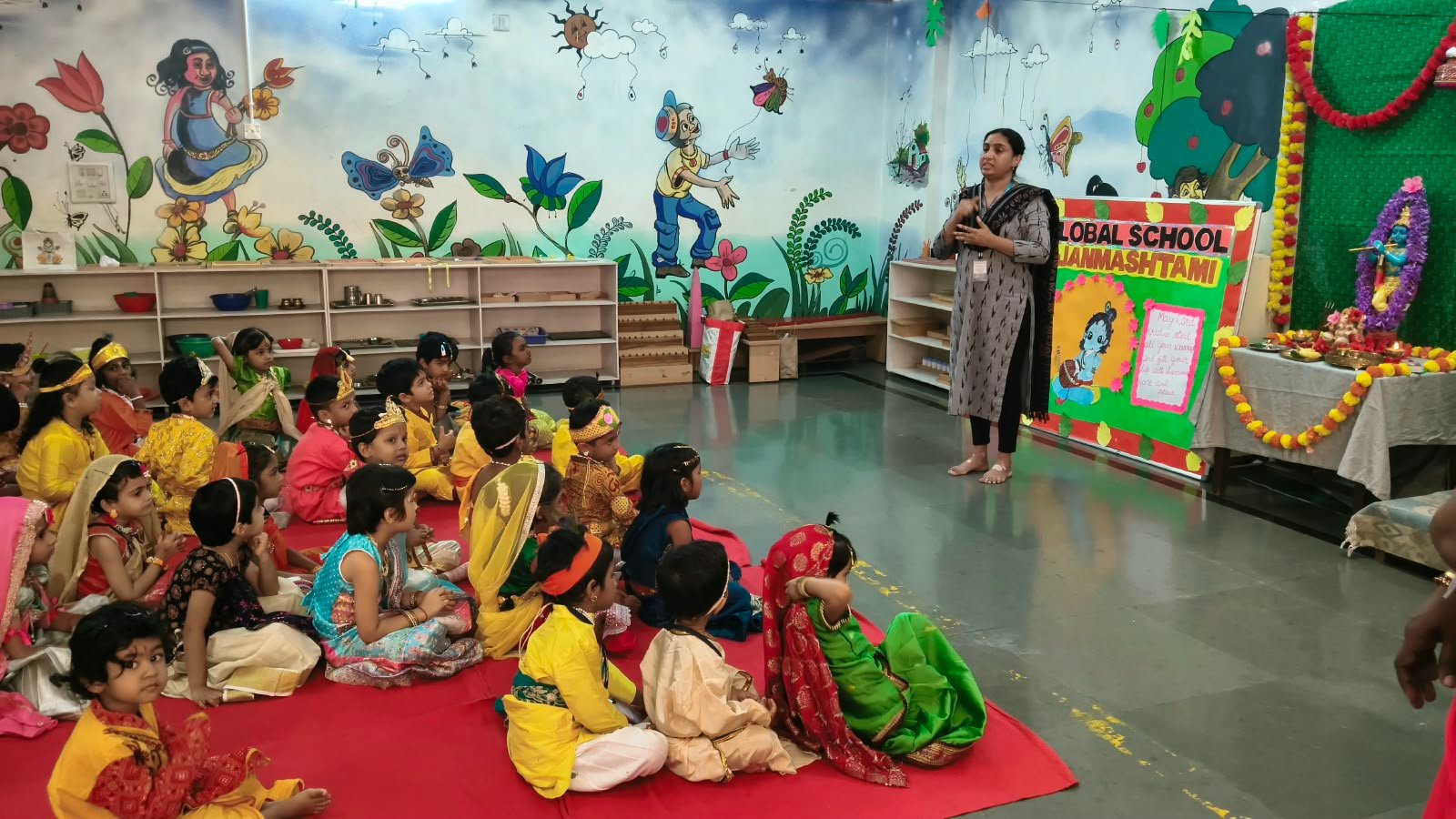
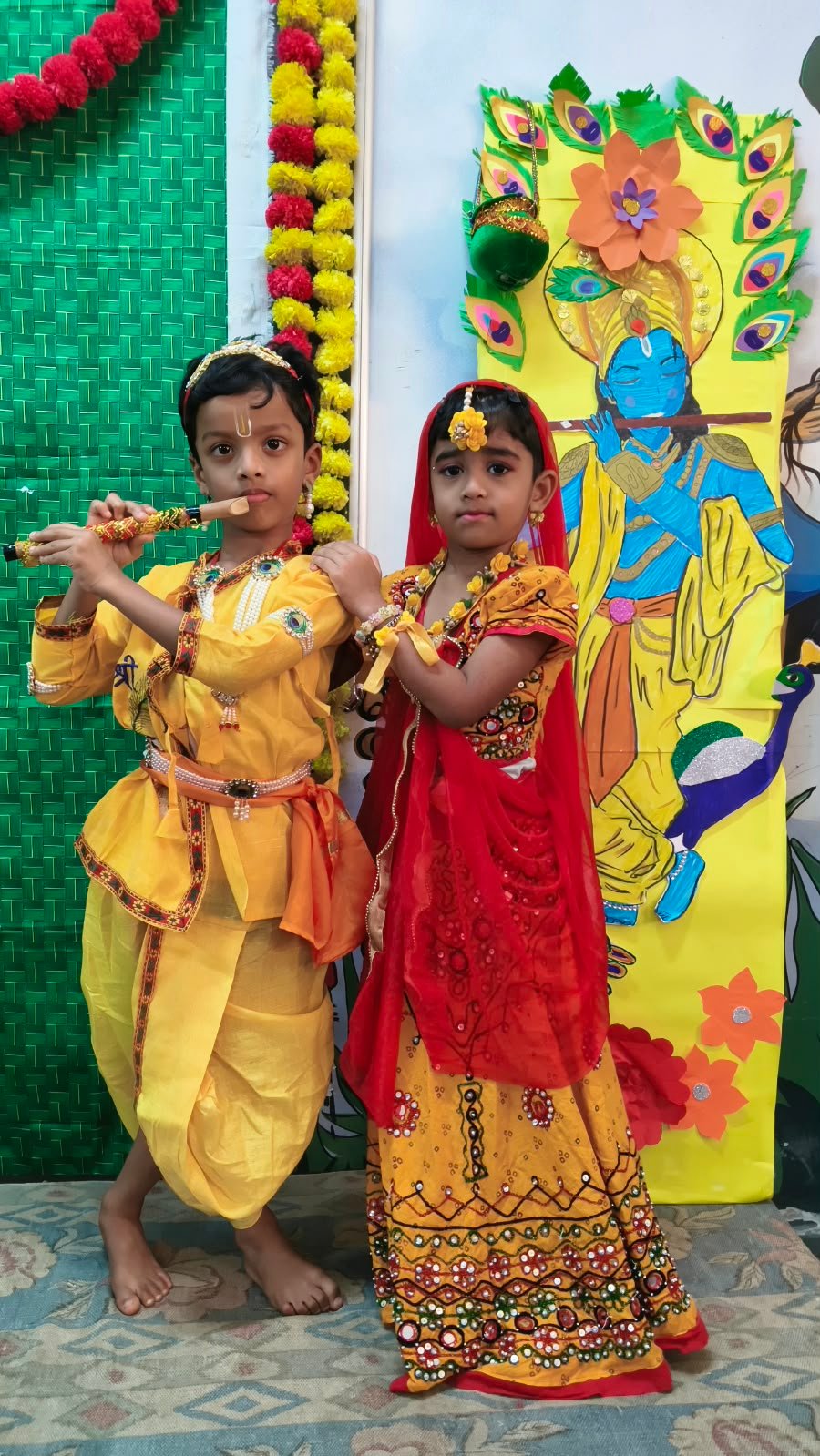
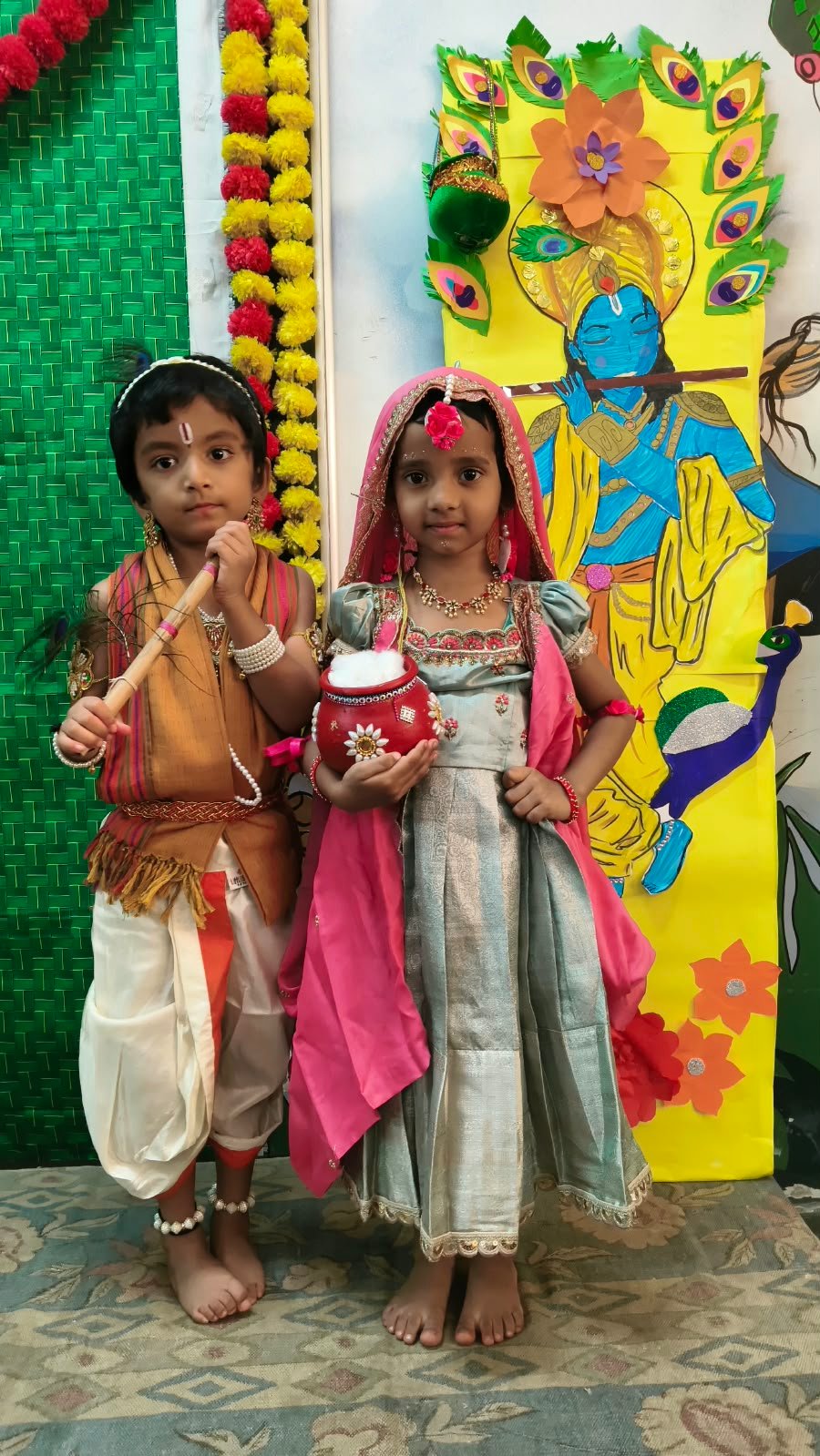
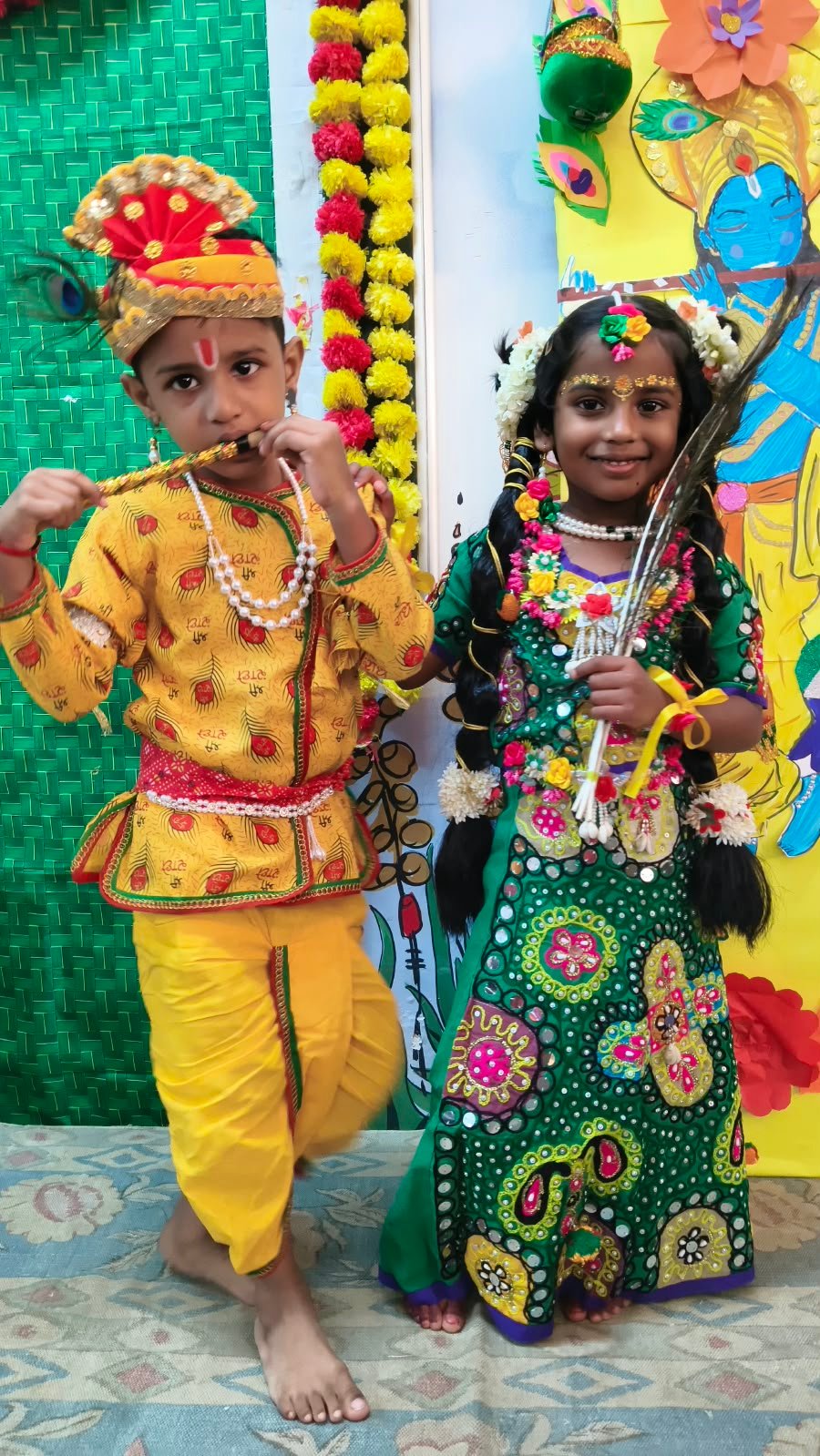
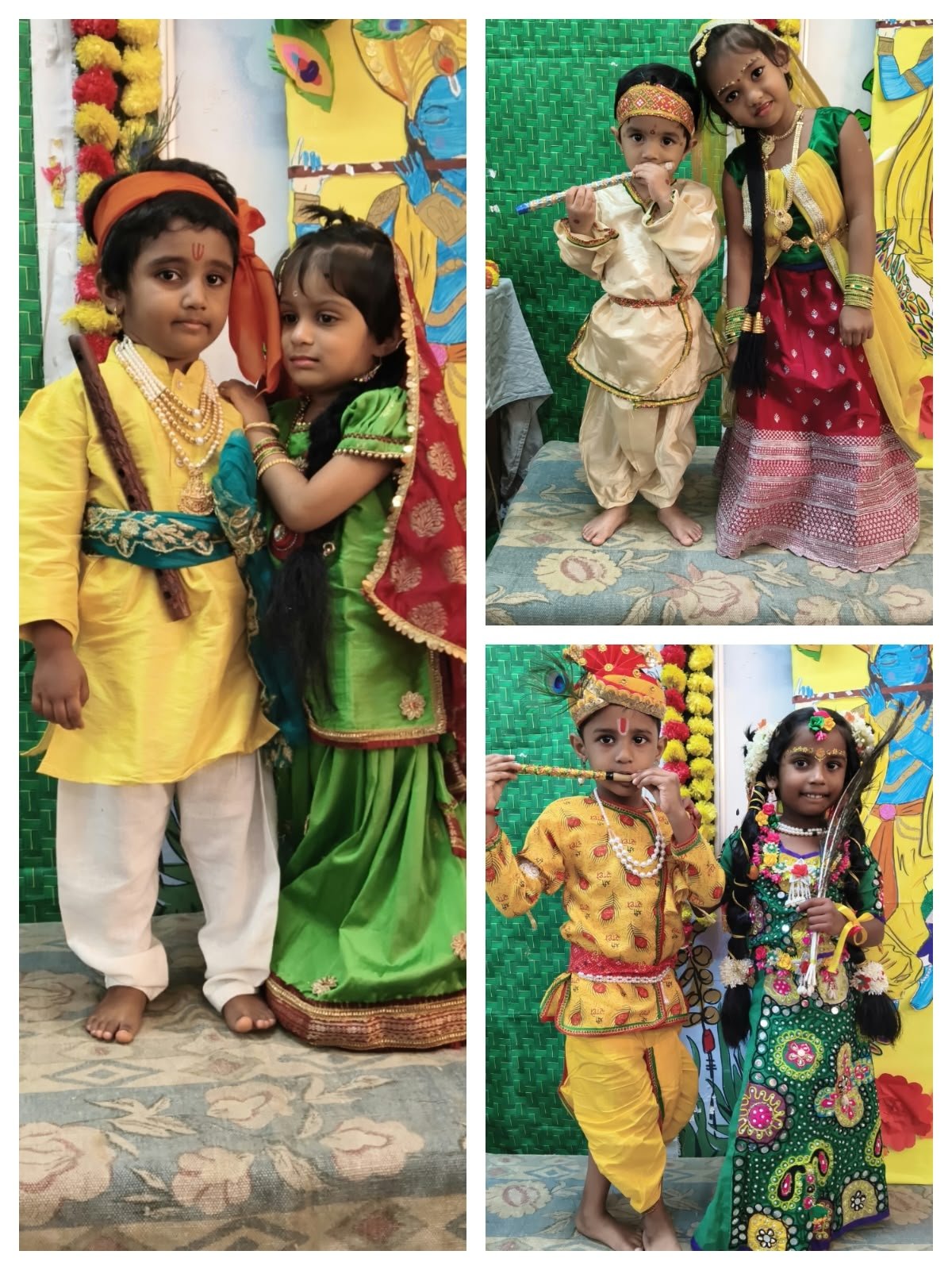
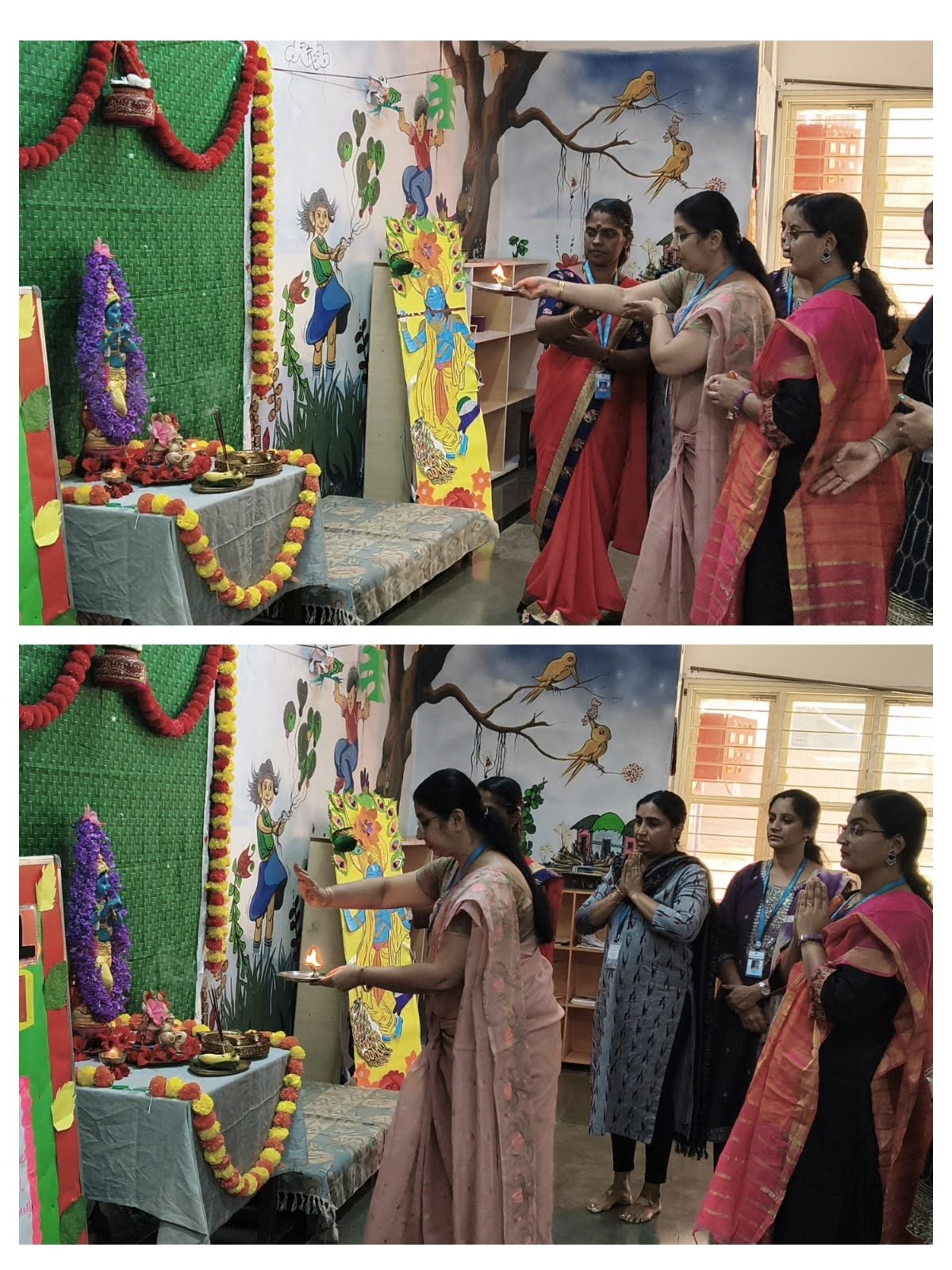
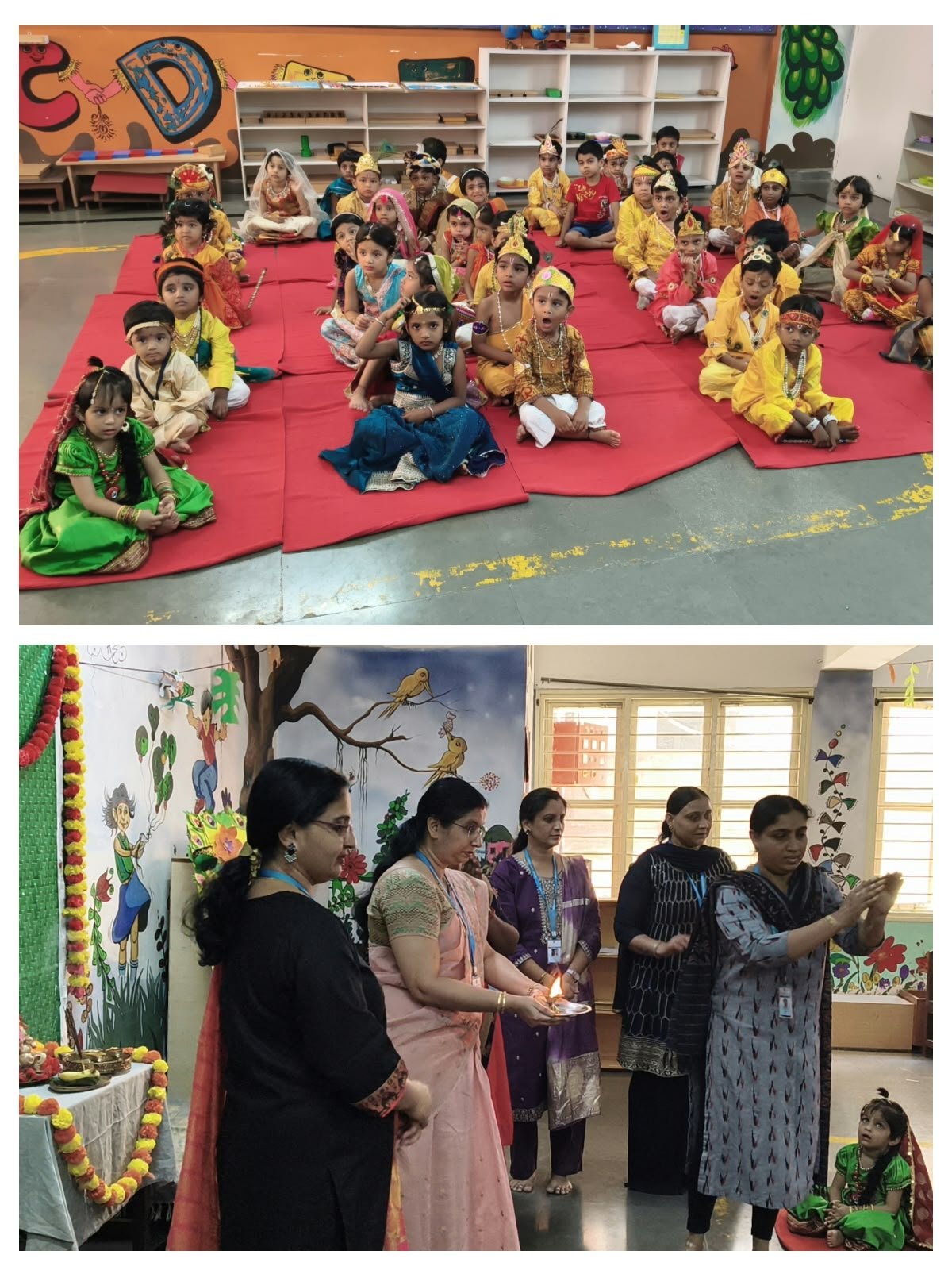
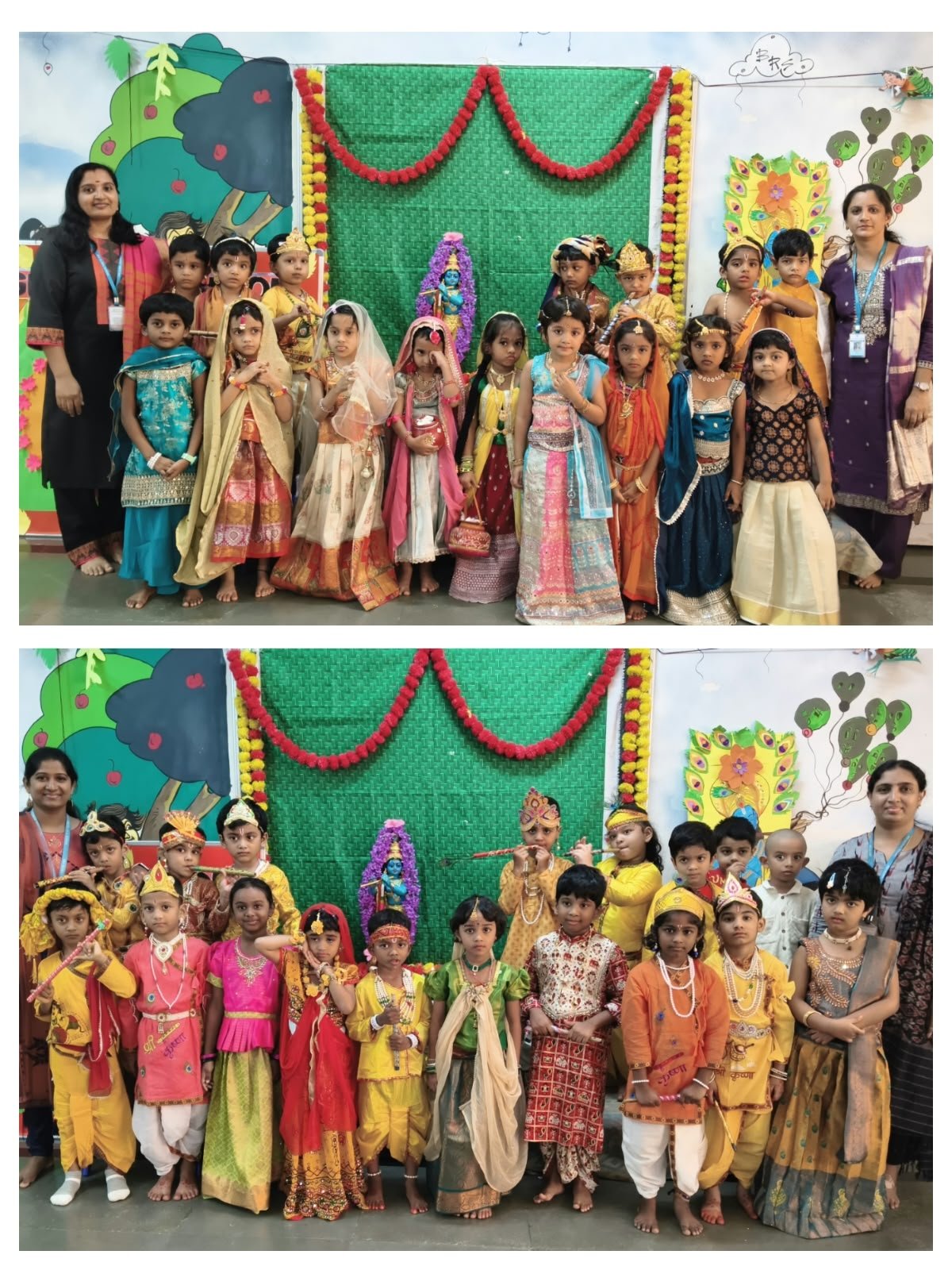
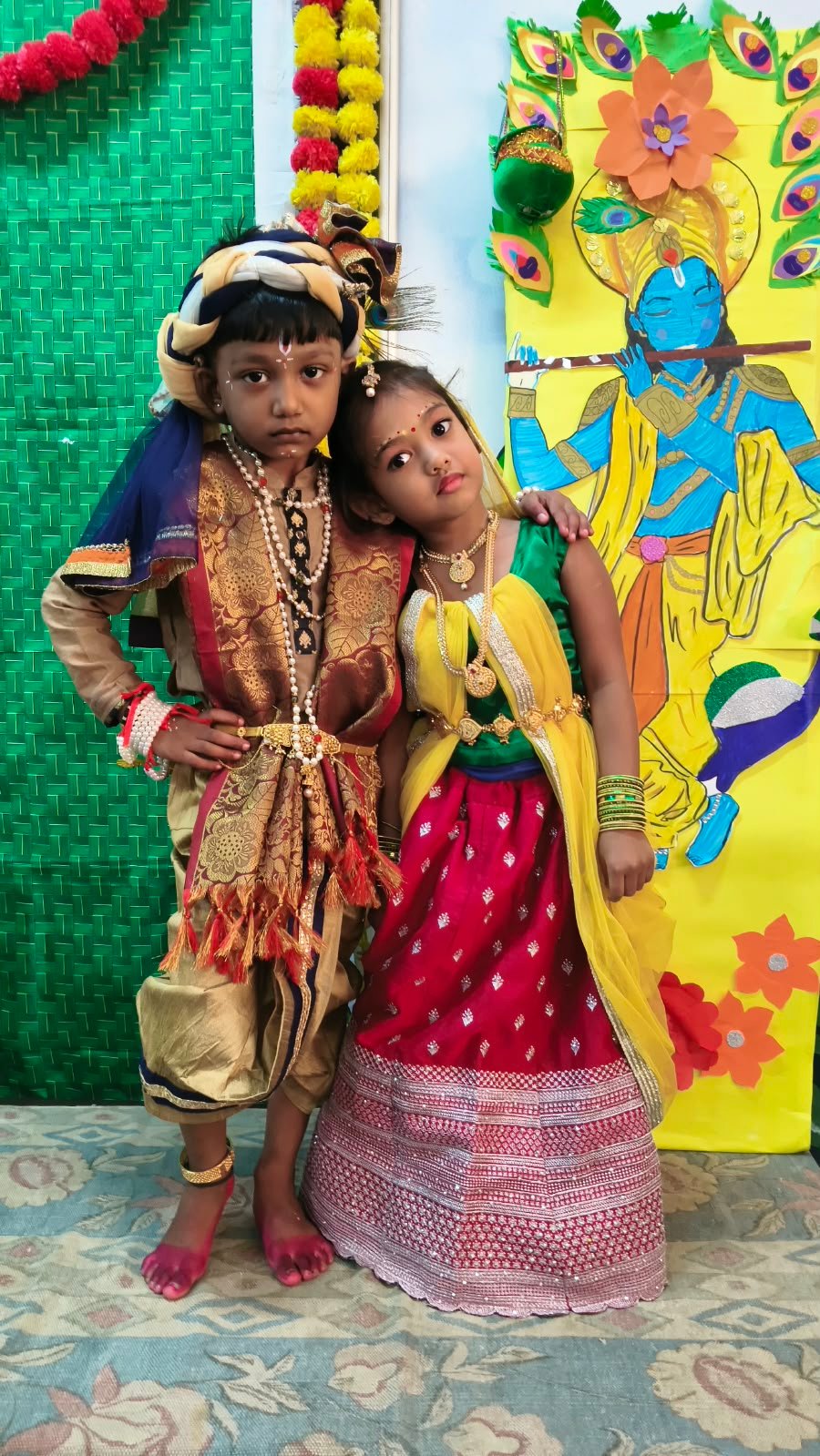
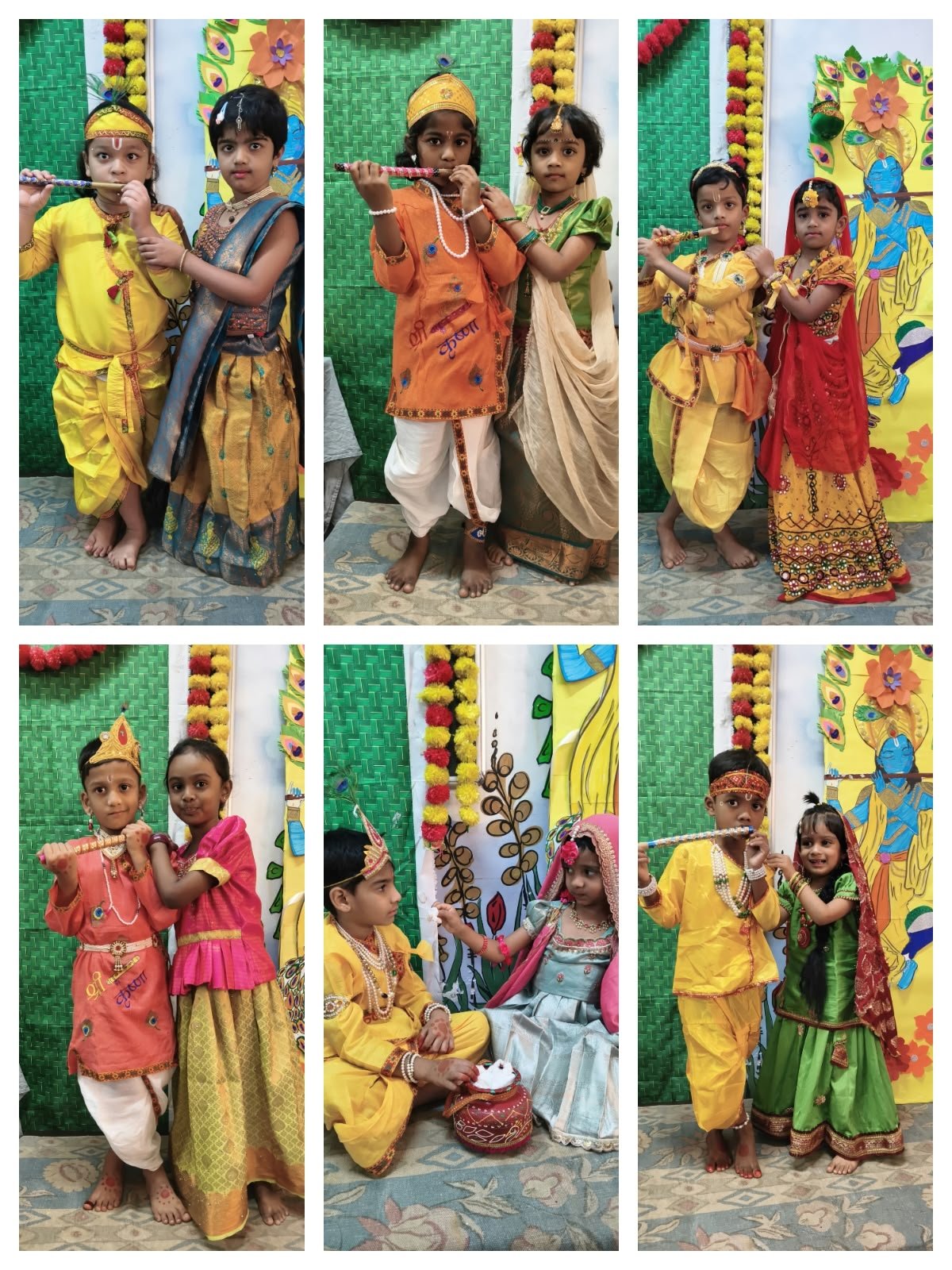
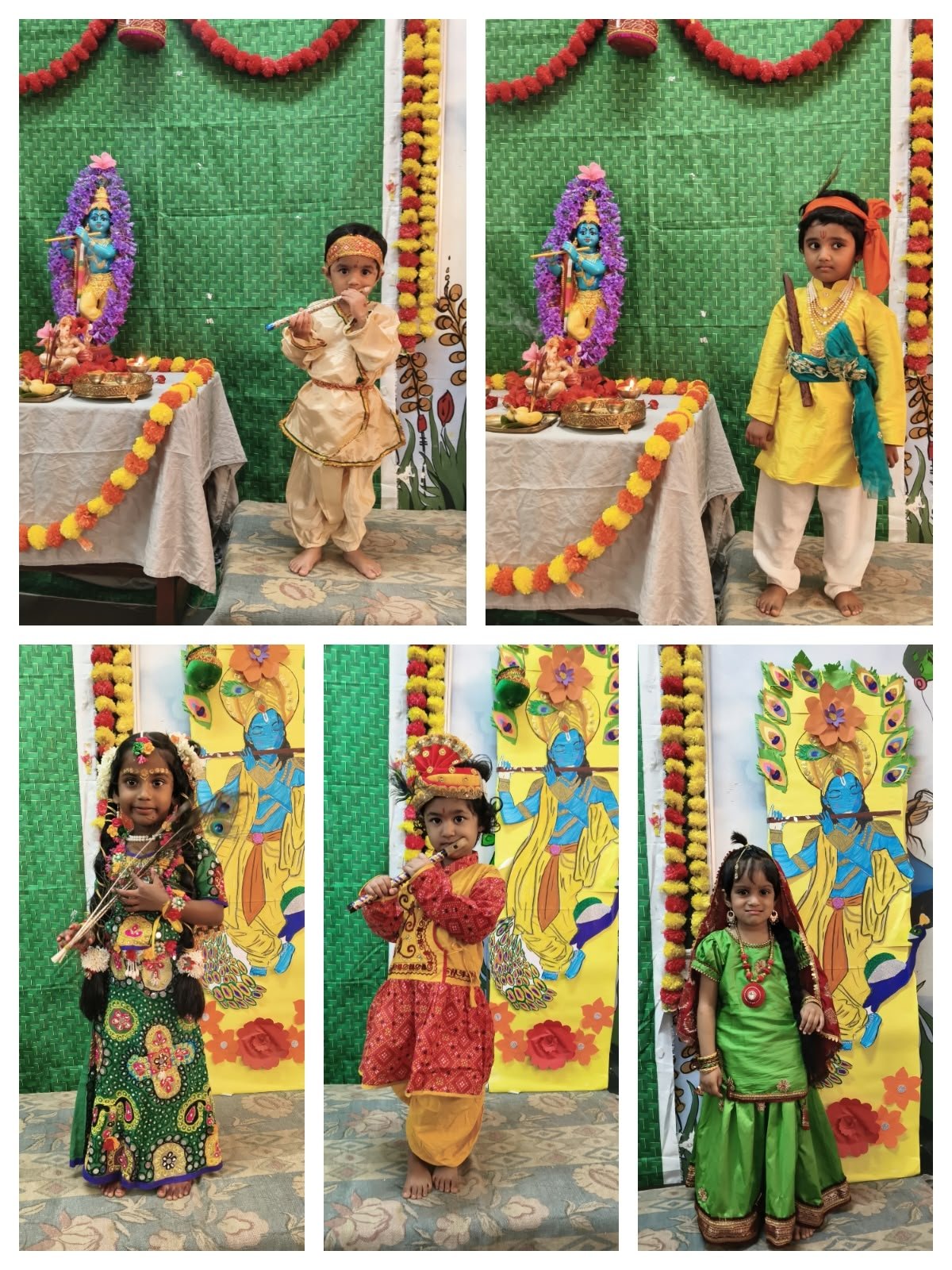
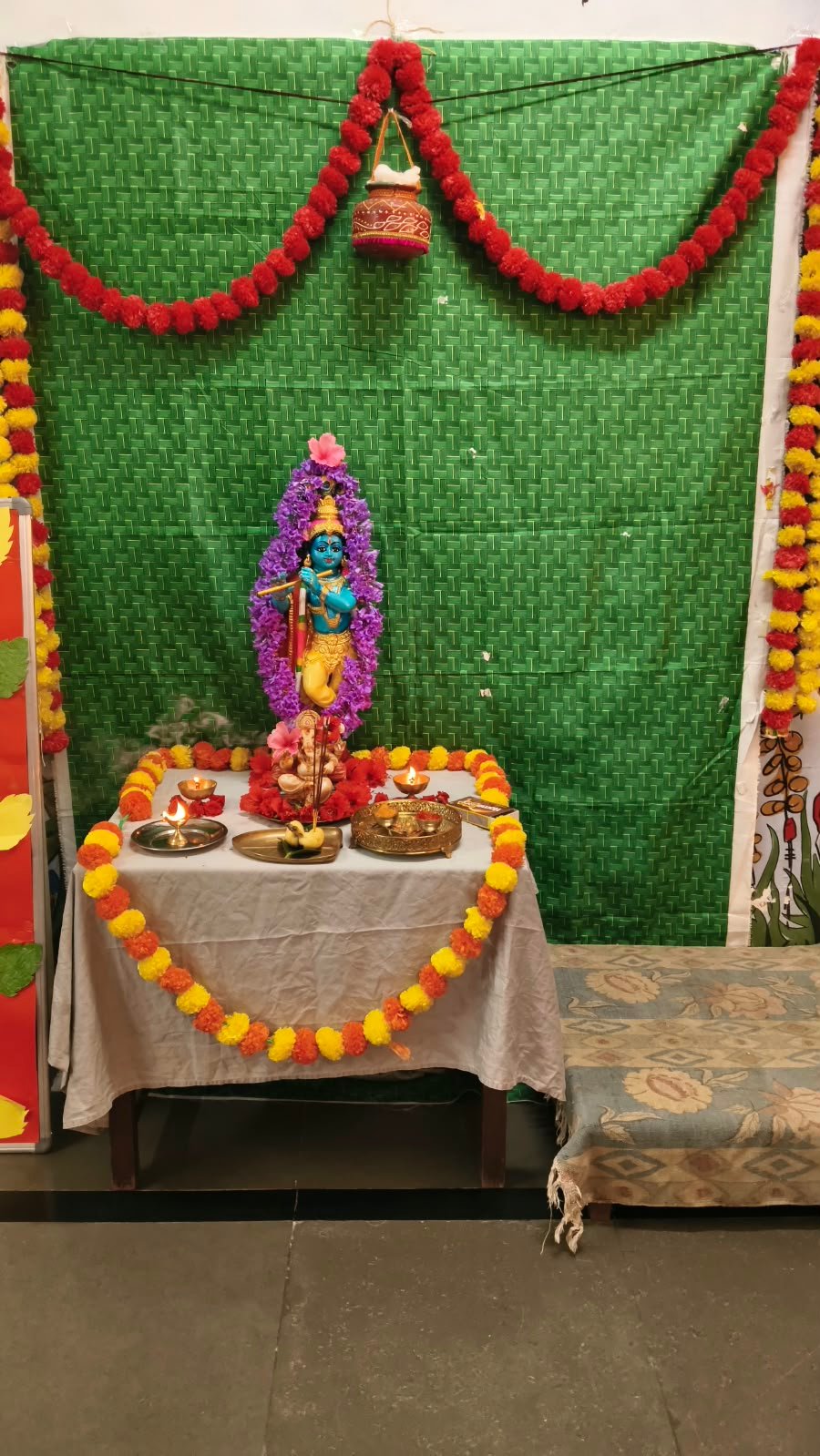
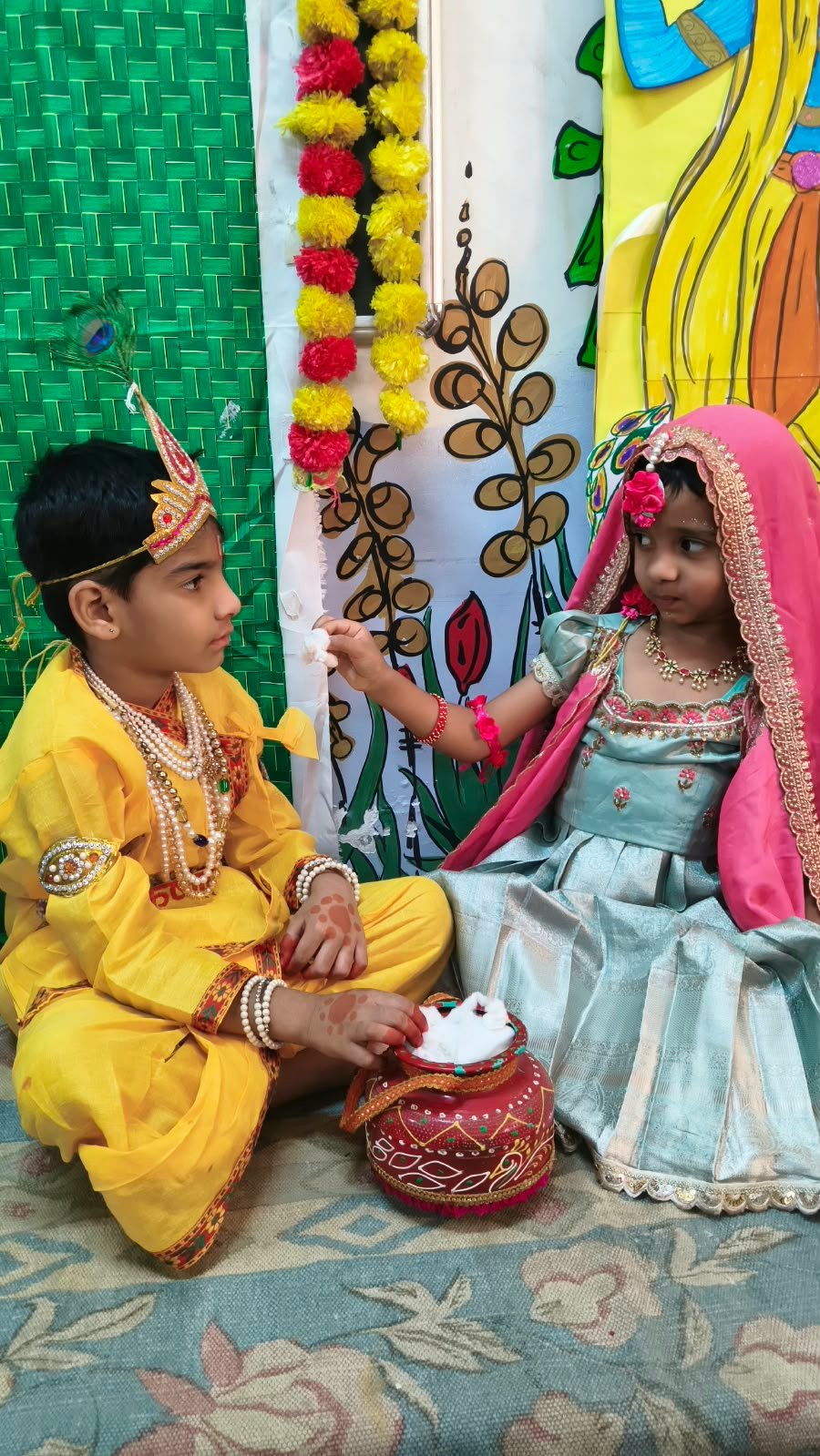
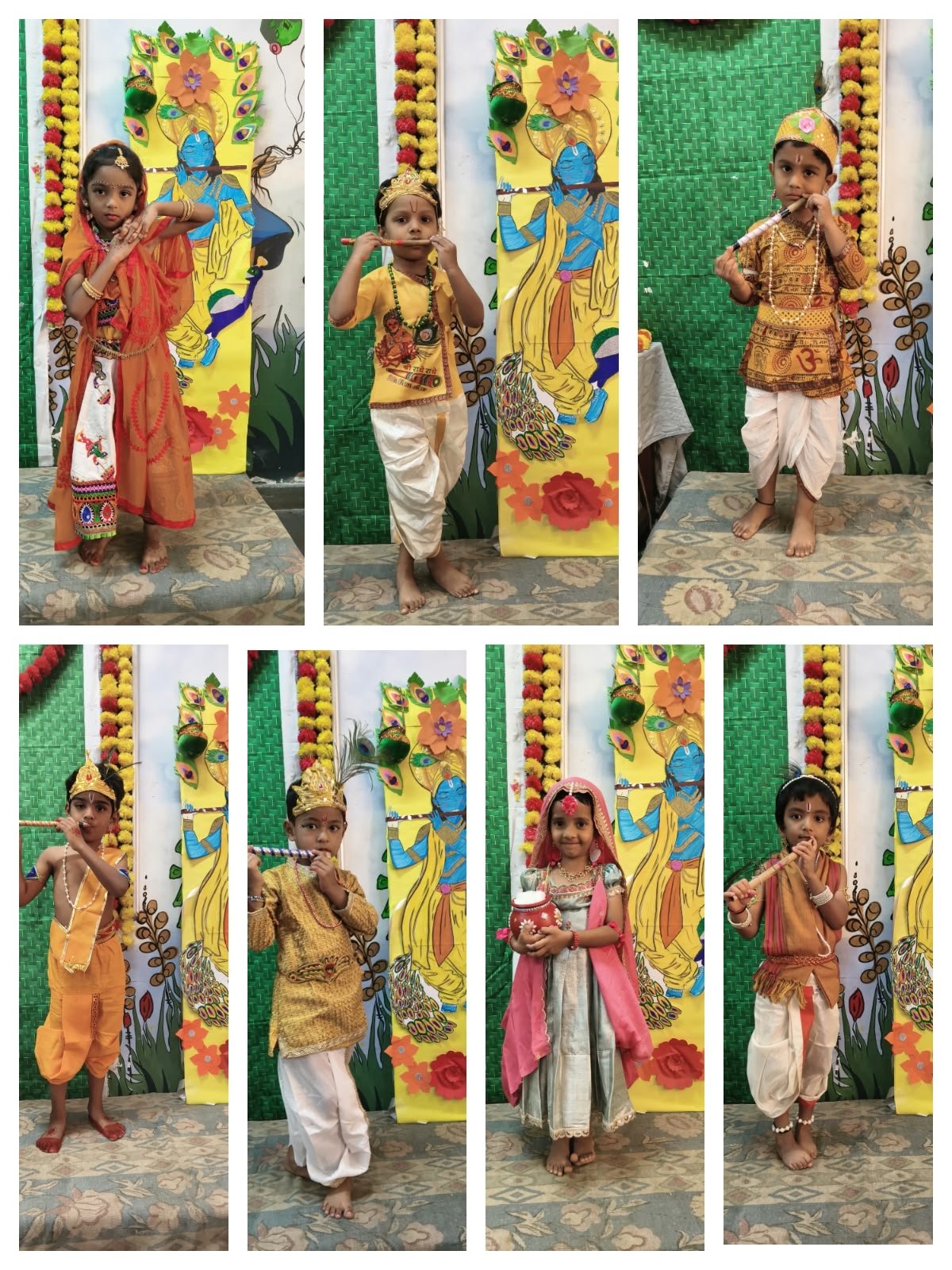
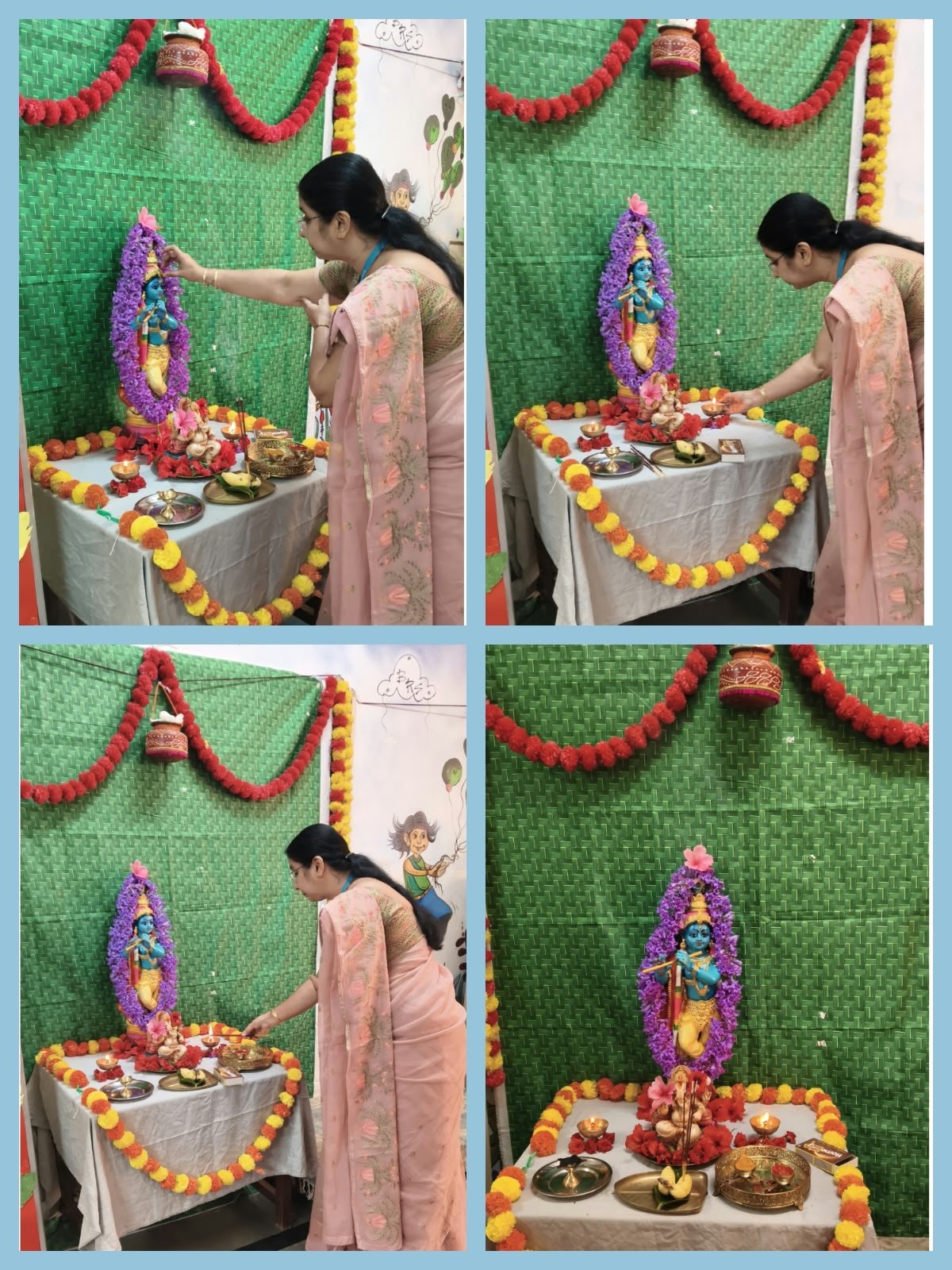
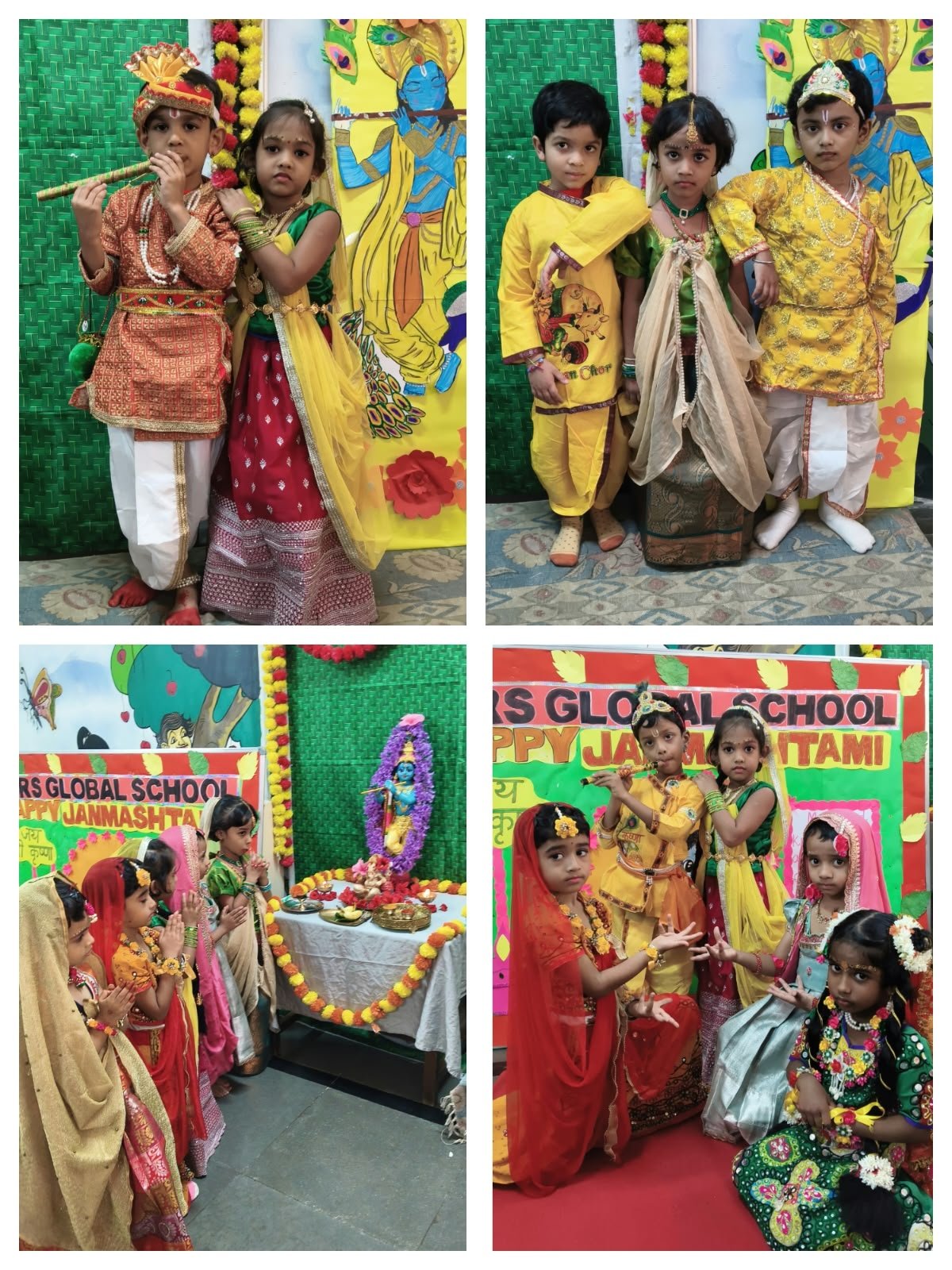
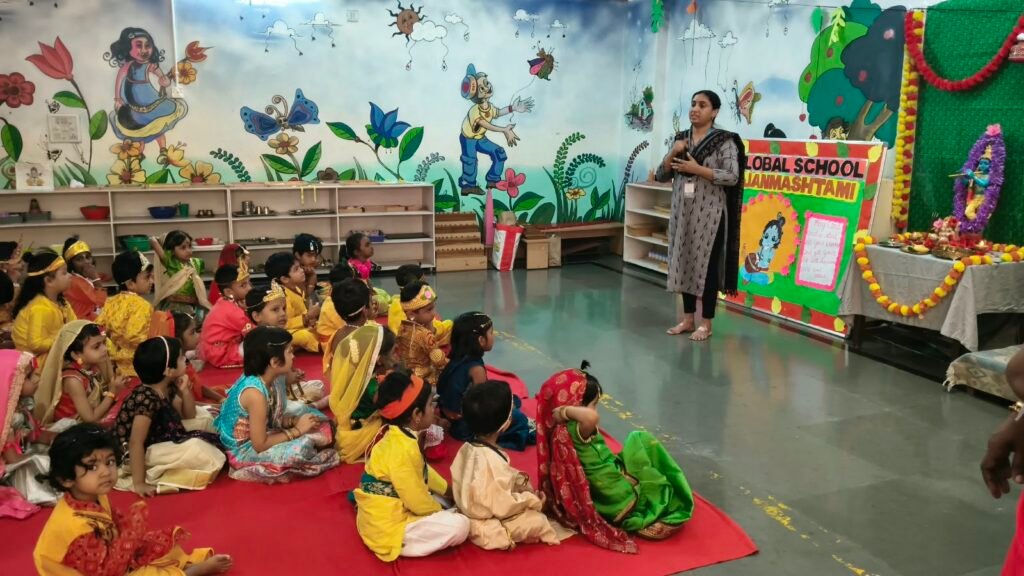
The celebration began with a pooja seeking blessings and continued with children dressed as Radha and Krishna. A fancy dress competition gave students an opportunity to confidently present themselves in their chosen costumes, while a teacher-led storytelling session introduced them to Lord Krishna, his childhood, his love for butter and his playful nature.
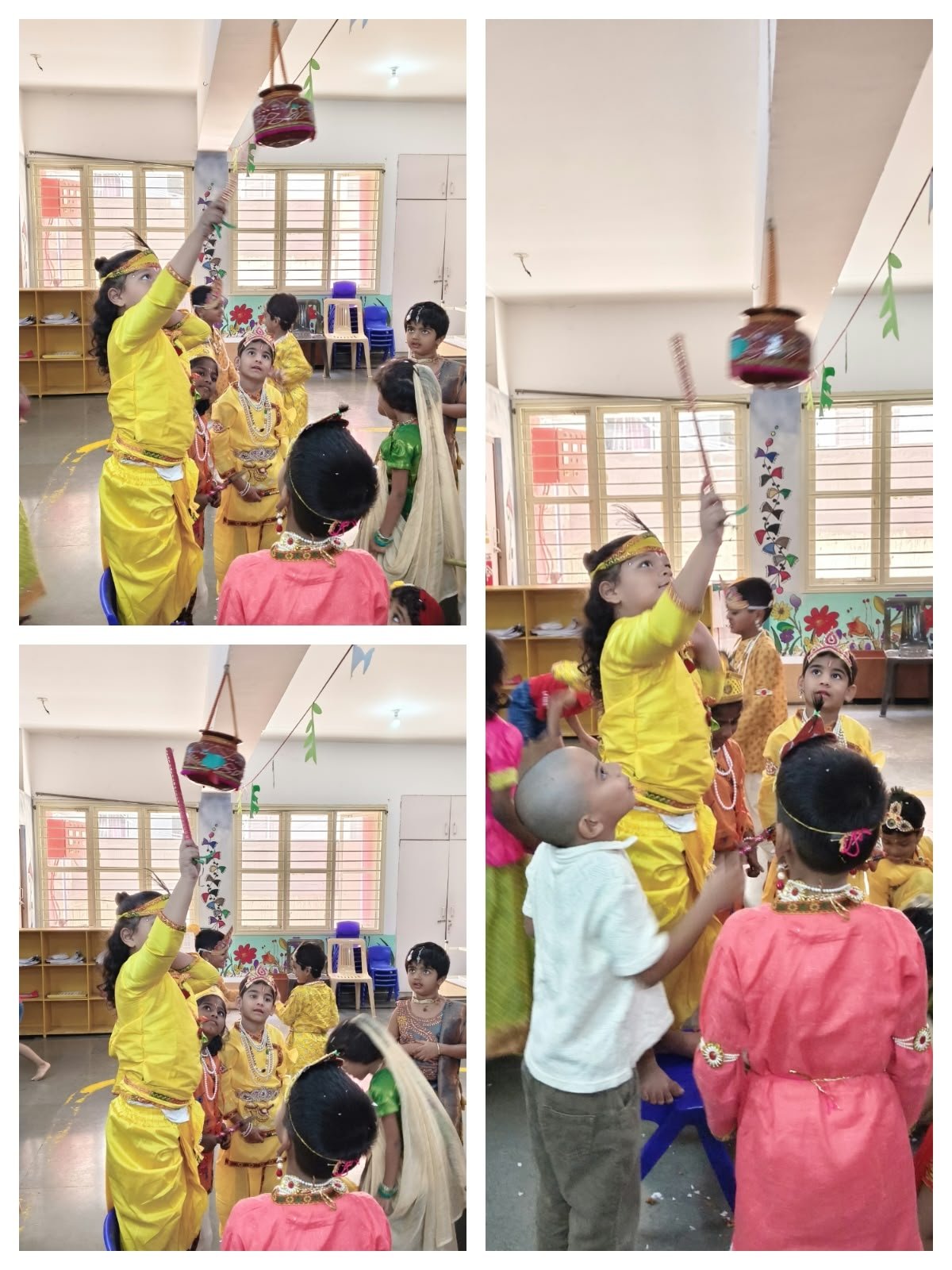
The event concluded with a traditional matka activity, creating an atmosphere filled with enthusiasm, laughter and shared participation.
For children, the value of such an occasion extends beyond the celebration itself. It creates an opportunity to connect cultural knowledge with stories, visual experiences, movement, communication and social interaction.
Event Overview
Event : Krishna Janmashtami Celebration
Date: 3 September 2026
Campus : BRS Global School, Sarjapur Road
Key Activities : Pooja, Radha-Krishna dress-up, fancy dress competition, storytelling and matka activity
Learning Focus : Indian culture, storytelling, creative expression, participation and social learning
Participants : School children and teachers
Theme : Learning about Lord Krishna through celebration and experiential participation
The celebration was designed to keep cultural learning simple, engaging and suitable for children. Rather than presenting the festival only as a cultural observance, the teachers created opportunities for children to listen, dress up, express themselves and participate in a traditional activity.
What Happened During the Event?
How did the Krishna Janmashtami celebration begin?
The celebration began with a beautiful pooja, allowing the children to experience the traditional and devotional aspect of Krishna Janmashtami in a child-friendly setting.
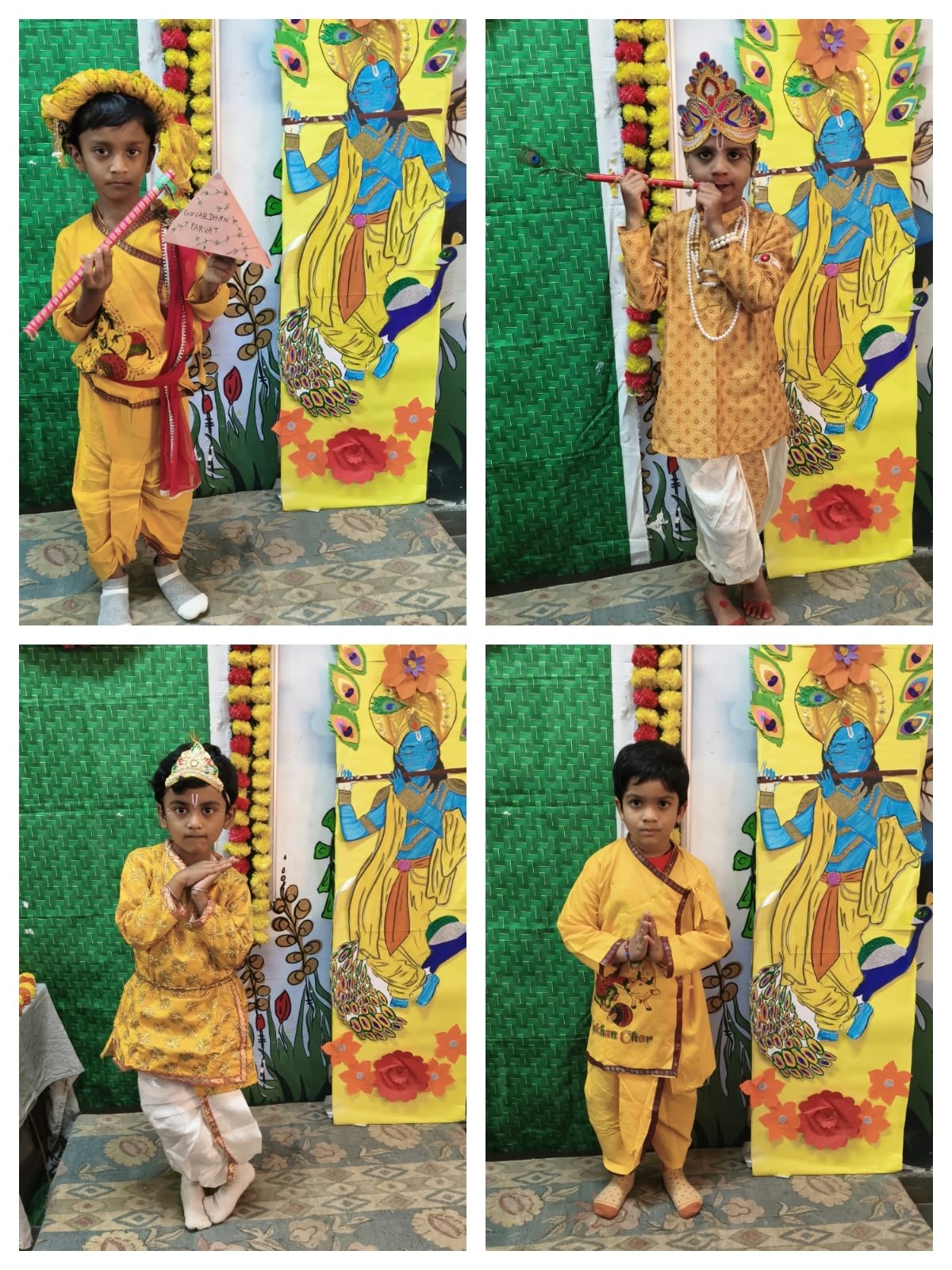
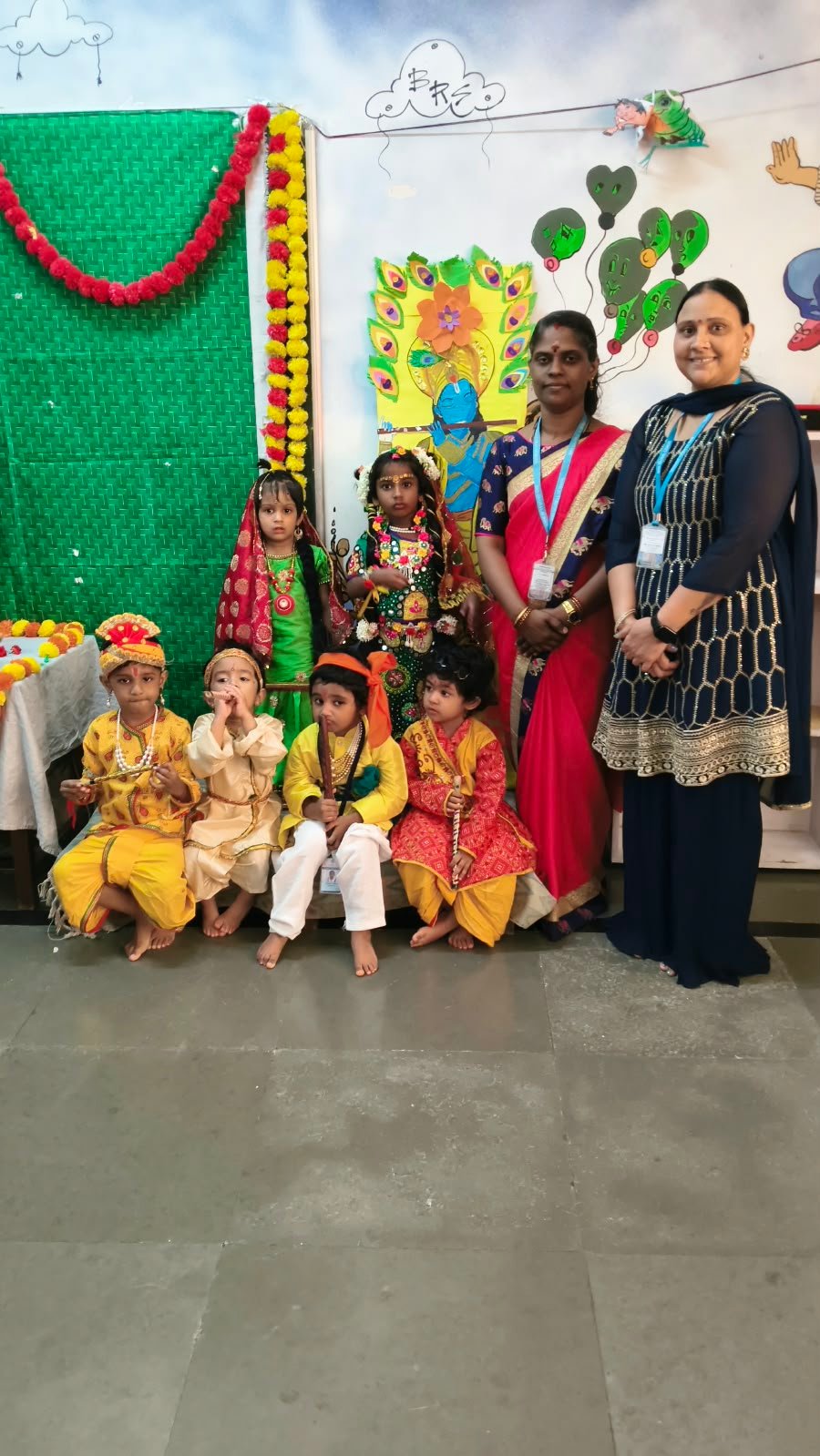
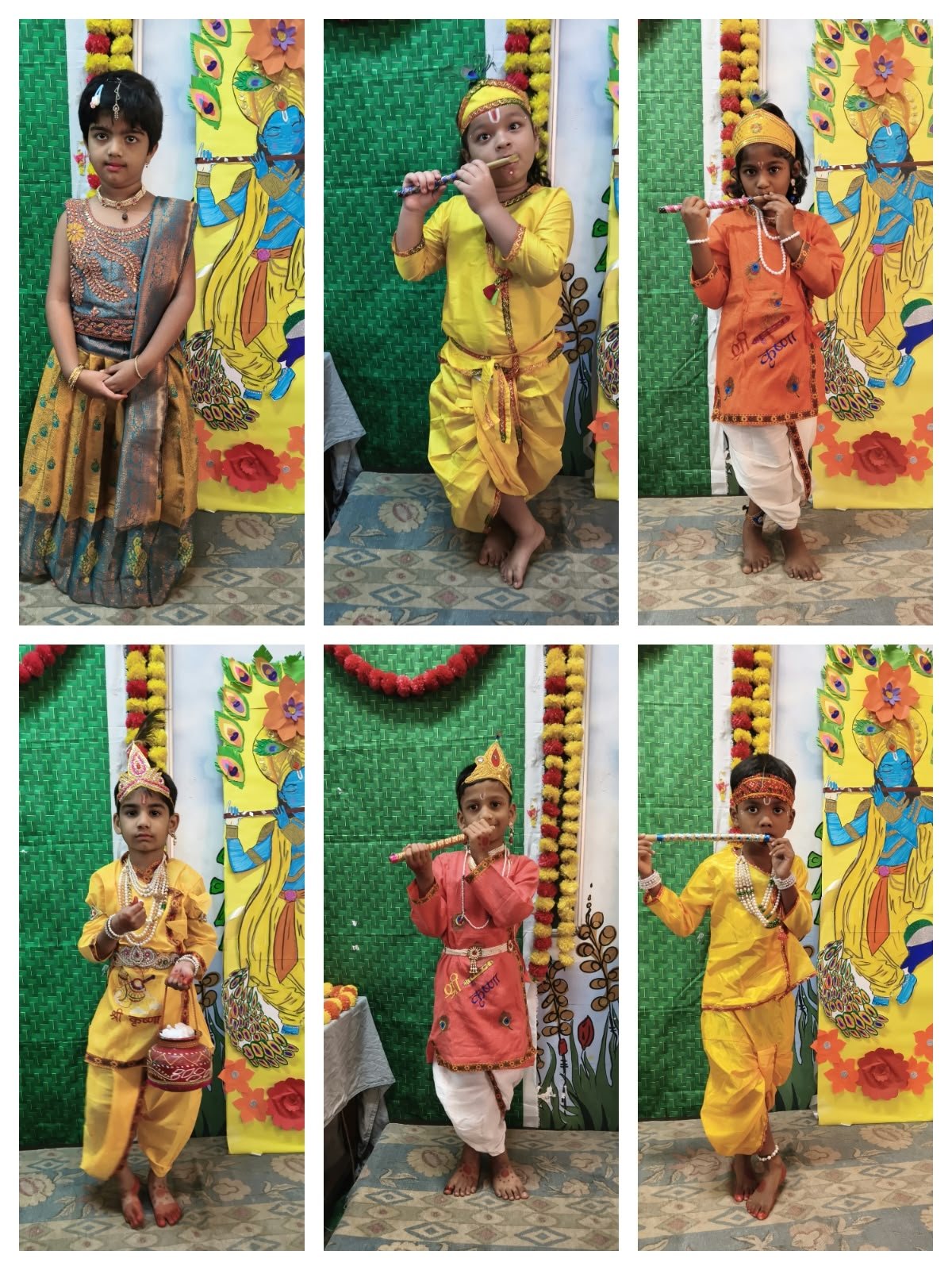
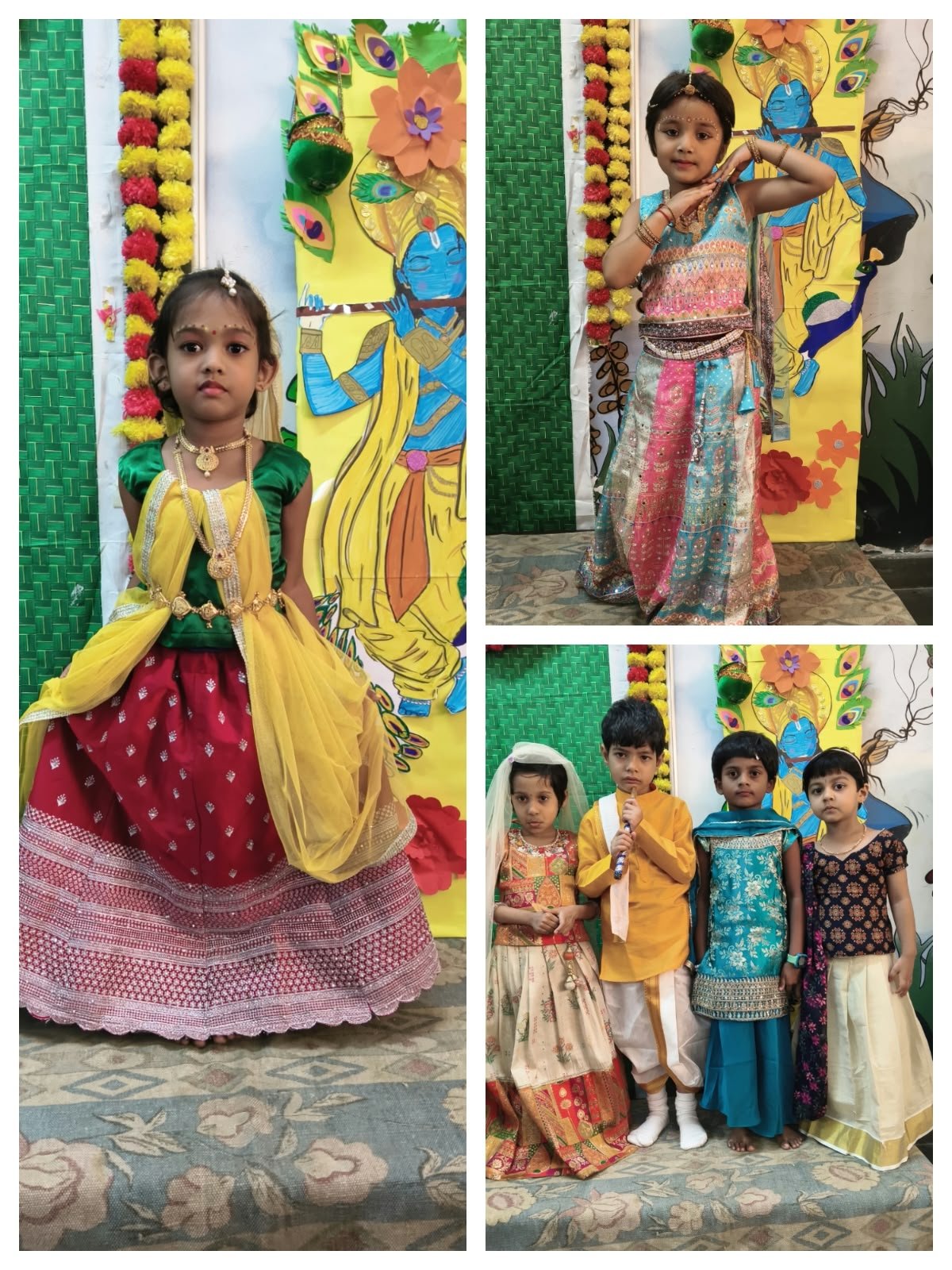
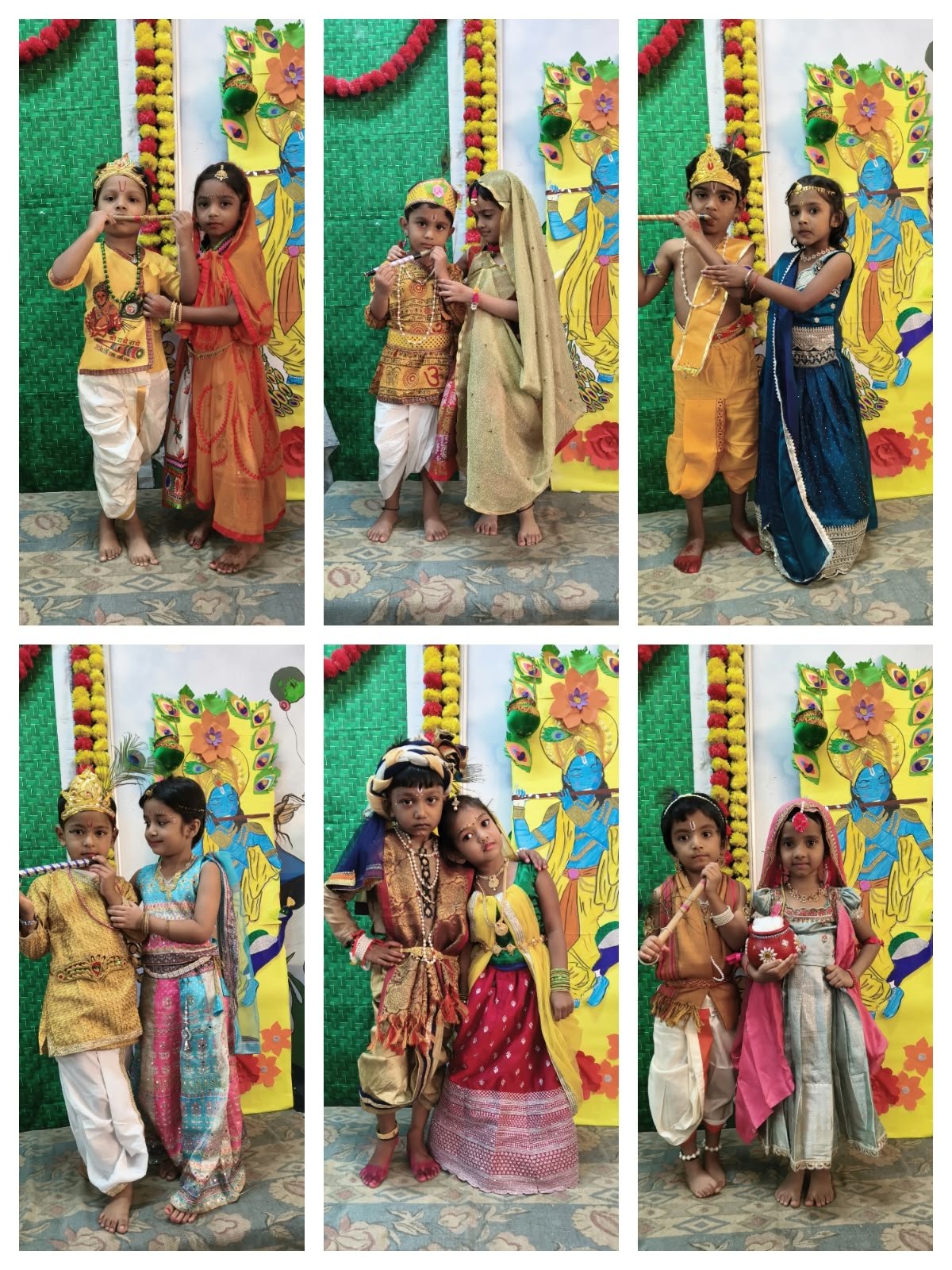
The festive atmosphere became even more colourful as children arrived dressed as Radha and Krishna. Their costumes added excitement to the occasion and helped create a visual connection with the theme of the celebration.
How did the fancy dress competition engage students?
A fancy dress competition was organised as part of the celebration. Children confidently presented themselves in their costumes, giving them an opportunity to express themselves in front of others.
For young learners, such activities can be valuable because participation itself becomes a learning experience. Standing before peers, being observed, following instructions and presenting a costume can gradually encourage confidence and comfort with communication.
What did children learn about Lord Krishna?
The teacher spoke to the children about Lord Krishna and his life story, using simple and interesting information appropriate for their age.
The children learned about Krishna’s childhood, his love for butter and his playful nature. Storytelling helped transform cultural information into a narrative that children could listen to, understand and enjoy.
What was the matka activity?
A matka, or pot, was tied up as part of a traditional activity. The children enthusiastically attempted to reach and break the matka, bringing an energetic and playful element to the celebration.
The activity encouraged children to participate together and created an opportunity to experience a traditional festival-related practice in an age-appropriate way.
The celebration ended with joy, laughter and excitement, leaving the children with memorable experiences connected to Krishna Janmashtami.
Educational Philosophy / Institutional Value Alignment
What did students learn from Krishna Janmashtami?
The primary learning outcome was cultural awareness. Children were introduced to Krishna Janmashtami and aspects of Lord Krishna’s childhood through storytelling and direct participation.
The event also created several complementary learning opportunities.
Cultural awareness
Children were introduced to an important Indian festival and experienced some of its traditions through celebration, costumes and activities.
Listening and comprehension
The teacher’s storytelling session required children to listen carefully and follow a sequence of information about Lord Krishna and his childhood.
Confidence and self-expression
The fancy dress competition provided children with an opportunity to present themselves confidently before others.
Creative expression
Choosing or wearing a Radha or Krishna costume allowed children to engage with the theme visually and creatively.
Social interaction
Celebrating together encouraged children to participate as a group, observe their peers and share a common experience.
Active participation
The matka activity moved learning beyond passive observation. Children became participants in the celebration rather than simply watching an event.
Emotional engagement
Joy, excitement, curiosity and anticipation can make early learning experiences more memorable. The positive atmosphere also helps children associate learning with participation and discovery.
Educational Philosophy / Institutional Value Alignment
Cultural celebrations can complement classroom learning when they are planned as meaningful experiences rather than isolated entertainment.
This approach is consistent with the broader direction of CBSE pedagogy, which encourages child-centred, experiential, active and collaborative learning. CBSE describes experiential learning as a way of connecting learning with real-life contexts and encourages activities that move beyond rote acquisition of information.
The celebration also reflects the importance of joyful and experiential learning in early education. Current CBSE curriculum guidance highlights activities such as stories, music, art, dance, play and conversations as meaningful components of children’s learning experiences.
From this perspective, the Janmashtami celebration offered several layers of learning:
Cultural concept → Storytelling → Visual representation → Self-expression → Active participation → Reflection through experience
This makes the celebration more than a festive occasion. It becomes an opportunity for children to connect cultural knowledge with communication, creativity and participation.
Why Does This Matter for Student Development?
How can a cultural celebration support holistic development?
A well-planned cultural celebration can support multiple dimensions of development at the same time. Children can develop knowledge and understanding while also practising communication, confidence, creativity, cooperation and physical participation.
CBSE’s broader educational vision places emphasis on holistic development and recognises the importance of intellectual, social and cultural development alongside academic learning.
The Krishna Janmashtami celebration brought these dimensions together naturally.
A child listening to the Krishna story is developing understanding and language skills. A child presenting in a fancy dress competition is practising confidence and communication. A child participating in the matka activity is engaging physically and socially.
For parents, this illustrates why school experiences should not be evaluated only through conventional academic activities. Children also need opportunities to communicate, participate, create, collaborate and develop an understanding of the world around them.
Local Context Relevance
For families exploring schools in Sarjapur Road, educational experience is an important part of choosing a school—not simply academic curriculum or location.
BRS Global School | Best CBSE School in Sarjapur Road serves families in and around Bellandur, Sarjapur Road, Hosa Road, Koramangala, HSR layout, Dommasandra, Kodathi, Gunjur, Varthur, Kaikondrahalli, Kasavanahalli, Carmelaram, Harlur, Rayasandra, Naganathapura, Doddakannelli, Kudlu Gate, A Krishnappa Nagar, Halnayakanahalli, Radha Reddy Layout, Chikkanayakanahalli, Huskur, KPC Layout, CSB Layout, Owners Court, Doddanagamangala, Doctors Layout, Shiva Reddy Layout, Meenakshi Layout, Chikbellandur, Sompura Gate, Muthannalur Cross, Gunjur to Dommasandra Road, Mullur, Amrita Engineering College Road Kasavanahalli, Amrita Nagar, Serenity Layout, Spring Fields, Iblur, Marathahalli, Shobha Apartments, Choodasandra, Junnasandra, Rayasandra.
The Sarjapur Road corridor is also closely connected with residential communities and major employment hubs. Families working around technology and business destinations in the wider Sarjapur Road, Bellandur and Electronic City corridors often look for schools that combine academic structure with opportunities for cultural, creative and co-curricular development.
For parents comparing CBSE schools in Sarjapur Road, celebrations such as Janmashtami can offer a glimpse into how a school creates opportunities for children to learn beyond conventional classroom instruction.
The Attibele campus is a separate BRS Global School branch and should not be confused with the Sarjapur Road campus. Families specifically looking for schools in Attibele, Chandapura or Anekal can explore that separate campus based on their location and educational requirements.
For the Sarjapur Road campus, parents can also view the school’s local profile here:
Common Parent Questions
How does this activity support CBSE learning?
The celebration supports experiential and activity-based learning by allowing children to connect cultural knowledge with stories, visual representation, communication and participation. CBSE encourages experiential approaches that help learners connect knowledge with meaningful contexts rather than relying exclusively on rote learning.
How does Janmashtami celebration improve student confidence?
The fancy dress competition gives children a safe opportunity to present themselves before their peers. Participating in such experiences can encourage children to communicate, express themselves and become more comfortable appearing in front of a group.
What skills were developed during the celebration?
The event encouraged listening, communication, confidence, creative expression, social interaction, participation and physical coordination. Different activities provided different opportunities for children to practise these skills naturally.
Which students benefit most from this type of activity?
Young children particularly benefit from learning experiences that combine stories, visual elements, movement, play and direct participation. Such activities can make abstract cultural concepts easier to understand and more memorable.
Why should parents value cultural celebrations in school?
Cultural celebrations can help children understand traditions while developing communication, social and creative skills. They also provide opportunities for children to learn through experiences shared with teachers and peers.
Is a school celebration only recreational?
Not necessarily. When thoughtfully planned, a celebration can combine cultural understanding, storytelling, language development, creative expression, social interaction and active learning.
Key Highlights
• Krishna Janmashtami was celebrated on 3 September 2026 at BRS Global School, Sarjapur Road.
• The celebration began with a traditional pooja.
• Children dressed as Radha and Krishna.
• A fancy dress competition encouraged confidence and self-expression.
• Teachers introduced children to Lord Krishna and his childhood story.
• Children learned about Krishna’s playful nature and his love for butter.
• A traditional matka activity added hands-on participation.
• The celebration created opportunities for cultural awareness, communication and social interaction.
• Children experienced learning through storytelling, observation, creativity and participation.
• The event concluded with joy, laughter and memorable experiences.
Frequently Asked Questions (FAQs)
What is Krishna Janmashtami and why is it celebrated in schools?
Krishna Janmashtami is a Hindu festival associated with the birth of Lord Krishna. In a school setting, age-appropriate celebrations can introduce children to cultural traditions through stories, costumes, activities and creative participation.
What activities were organised for Krishna Janmashtami at BRS Global School?
The Sarjapur Road campus organised a pooja, Radha-Krishna dress-up, a fancy dress competition, a teacher-led storytelling session about Lord Krishna and a traditional matka activity.
What did children learn about Lord Krishna?
Children learned simple information about Krishna’s childhood, his love for butter and his playful nature through an engaging storytelling session.
How does fancy dress help children’s development?
Fancy dress activities can encourage creative expression, confidence and communication. Presenting themselves before peers also gives children an opportunity to practise social participation.
What is the educational value of storytelling for young children?
Storytelling can help children listen, follow sequences, develop vocabulary and understand ideas through narrative. CBSE curriculum guidance recognises stories and conversations as valuable components of early learning.
How does the matka activity support experiential learning?
The matka activity gave children an opportunity to physically participate in a traditional festival-related activity. It transformed an idea associated with the celebration into an experience involving movement, observation, participation and excitement.
Does cultural learning contribute to holistic education?
Yes. Cultural learning can complement academic education by developing children’s awareness, communication, creativity, social interaction and understanding of traditions. CBSE’s educational vision places importance on holistic development alongside academic learning.
Conclusion
The Krishna Janmashtami celebration at BRS Global School, Sarjapur Road demonstrated how a cultural occasion can become a meaningful learning experience for young children. Through pooja, storytelling, traditional costumes, fancy dress and the matka activity, students were encouraged to listen, observe, express themselves and participate.
The celebration also reflected an important principle of child-centred education: children often understand ideas more deeply when they can experience them through stories, interaction and activity. Such opportunities complement academic learning by nurturing confidence, creativity, cultural awareness and social development.
For parents exploring schools in Sarjapur Road or CBSE schools in Sarjapur Road , the learning environment and opportunities for holistic development are important factors to consider alongside academics.
Parents looking for a CBSE learning environment that combines academic learning with cultural, creative and experiential opportunities can explore BRS Global School, Sarjapur Road, and learn more about the campus and admissions.
Explore our Campus:
Attibele Branch:
https://share.google/iFhJaeGo8wkgOZ1Y5
Sarjapur Road Branch: