Introduction
A strong education prepares students not only to understand what they learn, but also to communicate ideas, ask thoughtful questions, listen to different viewpoints and participate responsibly in the world around them.
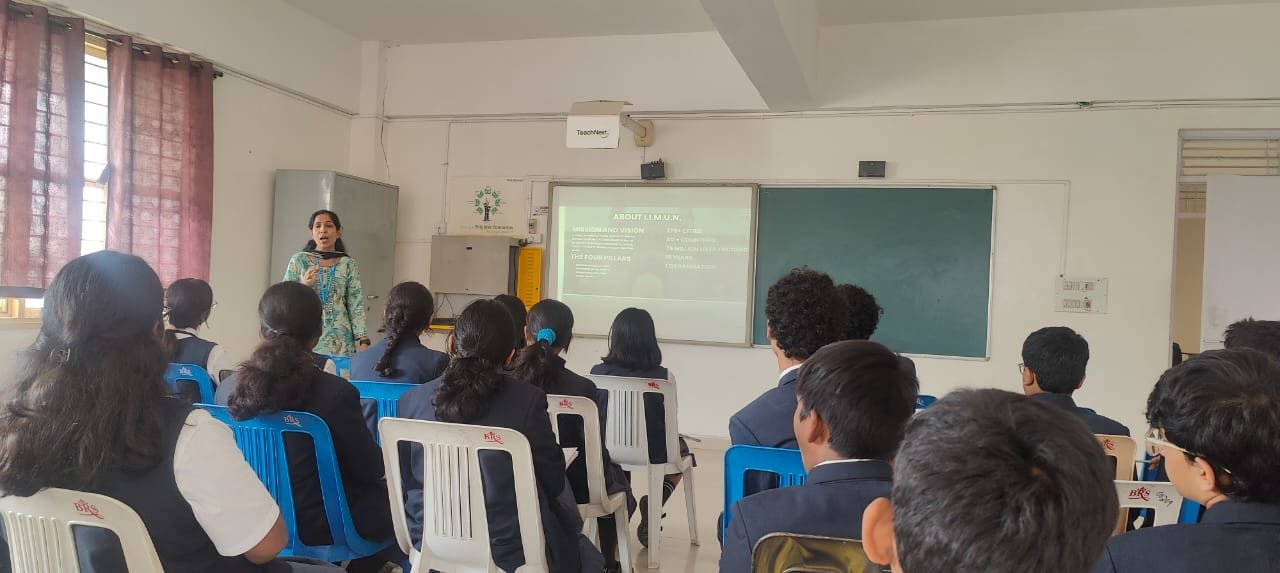
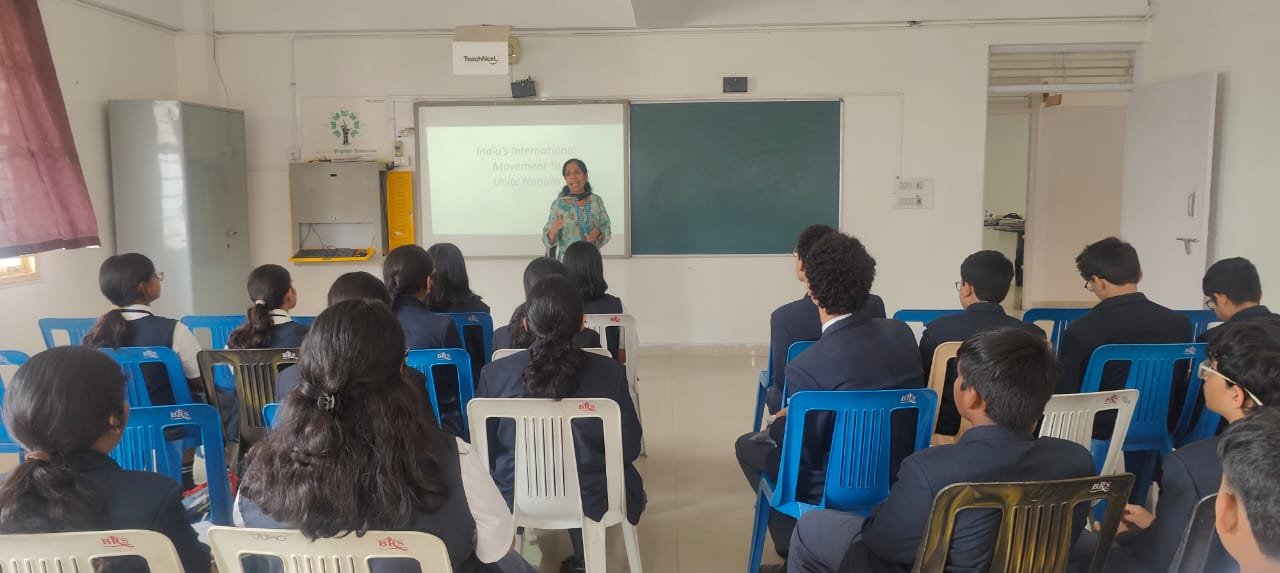
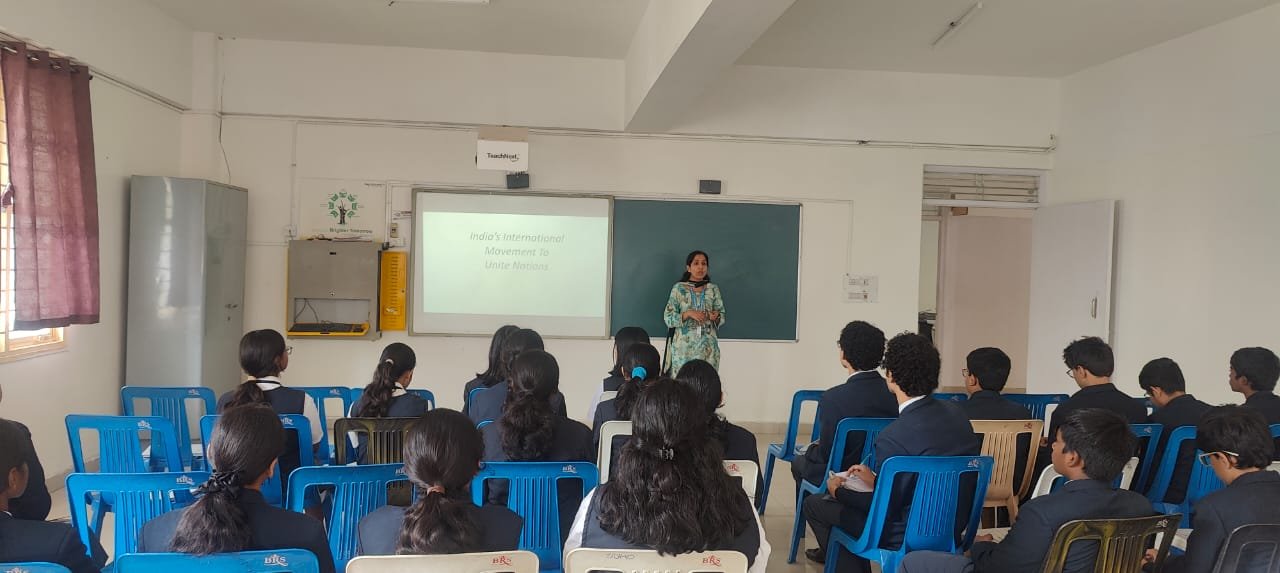
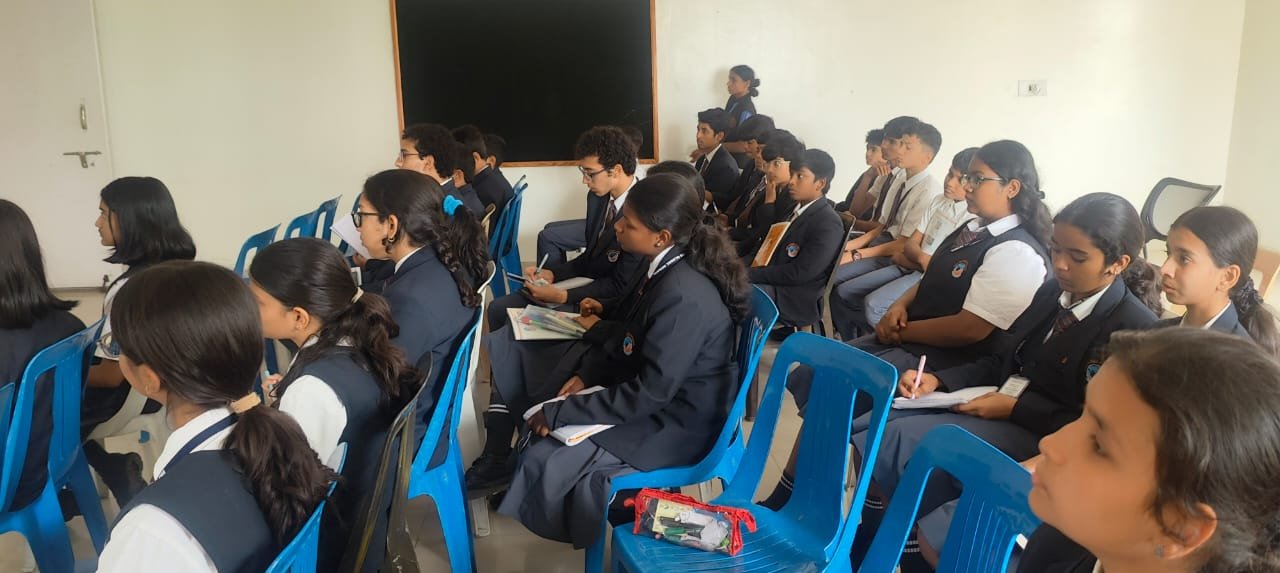
With this objective, BRS Global School, Sarjapur Road, officially launched its IIMUN Club on 27 August 2026. The initiative introduces students to a structured Model United Nations environment where research, discussion, public speaking, teamwork and leadership come together.
The launch marks an important addition to the school’s student-development initiatives. Rather than viewing communication and leadership as skills that develop separately from academics, the IIMUN Club creates opportunities for students to practise them through an organised and collaborative activity.
The inaugural club brings together students from Grades 7, 8, 9 and 11. With a Teacher Coordinator, Student President and department heads, the club has been designed to encourage both student ownership and guided participation.
The educational value of such activities extends beyond speaking before an audience. Students are encouraged to understand issues, consider different perspectives, organise information, work with peers and express their ideas clearly.
This approach is consistent with the broader direction of competency-based education, where students are encouraged to demonstrate what they know and can do through meaningful learning experiences. CBSE identifies experiential and active learning as important approaches for developing competencies such as critical thinking, creativity and effective learning skills.
Event Overview
What happened at the IIMUN Club launch?
The IIMUN Club was formally launched at BRS Global School, Sarjapur Road on 27 August 2026 in the presence of the school’s Principal, Teacher Coordinator Ms. Mahima and Student President Ms. Lavanya of Grade 11.
The presence of the Principal reflected the school’s encouragement of student participation in IIMUN activities and student-led learning initiatives.
At the launch, the leadership structure of the club was established, with Ms. Mahima taking responsibility as Teacher Coordinator and Ms. Lavanya assuming the role of Student President.
The club has also been organised into three departments to provide students with focused areas of participation and clearer coordination.
IIMUN Club Leadership
| Position | Name / Details |
|---|---|
| Teacher Coordinator | Ms. Mahima |
| Student President | Ms. Lavanya – Grade 11 |
| Principal | Present at the launch |
This structure gives students an opportunity to take responsibility while retaining the guidance and oversight of a teacher coordinator.
What Happened During the Event?
The launch represented more than the introduction of a new student club. It established the foundation for a learning environment centred on discussion, research, collaboration and student leadership.
Three departments have been formed:
Indian Department
Department Head: Sudeep
The department includes students from Grades 8, 9 and 11:
• Samwitti – Grade 11
• Divya – Grade 11
• Eram – Grade 9
• Gouri – Grade 9
• Sampoorna – Grade 9
• Zyana – Grade 9
• Sam – Grade 8
• Shrey – Grade 8
• Raghvendra – Grade 8
• Deepak – Grade 8
• Prashanth – Grade 8
International Department
Department Head: Diya
The department includes:
• Janvi – Grade 11
• Riddhi – Grade 11
• Nikki – Grade 9
• Natasha – Grade 9
• Varsha – Grade 9
• Bhurabi – Grade 8
• Trishti – Grade 8
• Yashvi – Grade 8
• Avishi – Grade 8
• Mauktik – Grade 8
• Rishi – Grade 8
Movement to Unite Nations Department
Department Head: Suchir
The department includes:
• Suchika – Grade 11
• Laavnya – Grade 11
• Sonakshi – Grade 9
• Dhanvi – Grade 9
• Natasha – Grade 9
• Krishna – Grade 8
• Kannan – Grade 8
• Rishika – Grade 8
• Venkata Sai – Grade 8
• Waniya – Grade 7
The department structure allows students from different grade levels to participate within a common learning framework while taking on different responsibilities.
Student Learning Outcomes & Benefits
What do students learn through IIMUN activities?
The central educational value of the IIMUN Club lies in its potential to turn knowledge into active participation.
Students engaging in Model United Nations activities can work on several interconnected competencies.
Communication and Public Speaking
Students have opportunities to express ideas in a structured manner, organise their thoughts and communicate them before peers.
For students who are still developing confidence in public speaking, repeated opportunities to articulate ideas can make communication a more purposeful part of their learning experience.
Research Skills
Model United Nations requires students to understand topics rather than rely only on spontaneous opinions.
Research-oriented preparation encourages students to identify relevant information, understand issues and organise their findings before participating in discussions.
Critical Thinking
Discussing national and international issues requires students to examine questions from more than one perspective.
Instead of simply asking “What do I think?”, students can learn to consider questions such as:
• What are the different perspectives on this issue?
• What evidence supports an argument?
• Why might another person or group hold a different position?
• What solutions could address the problem?
This type of questioning supports analytical thinking and informed discussion.
Collaboration and Teamwork
The three-department structure gives students opportunities to work with peers across different grades and responsibilities.
Students learn that successful group participation depends not only on individual performance but also on listening, coordination, delegation and mutual support.
Leadership
Leadership in the club is not limited to a single student role.
The Student President, department heads and participating students each have opportunities to contribute to the functioning of the club.
This creates a progression from participation to responsibility.
Confidence and Self-Expression
Public speaking can initially feel challenging for students. A structured club environment provides a setting in which students can gradually become more comfortable expressing their thoughts.
The goal is not simply to speak more, but to speak with clarity, preparation and purpose.
Understanding Different Perspectives
One of the distinctive features of Model United Nations is the emphasis on representing and understanding perspectives.
UNESCO’s global citizenship education framework similarly identifies critical thinking, communication, empathy, perspective-taking and collaboration as important competencies for helping learners engage with a complex and interconnected world.
Educational Philosophy / Institutional Value Alignment
How does the IIMUN Club support a holistic approach to education?
The IIMUN Club reflects an educational approach in which academic knowledge is complemented by communication, discussion, collaboration and leadership.
NEP 2020 emphasises holistic and multidisciplinary education and highlights the value of communication, discussion, debate, research and interdisciplinary thinking.
The IIMUN format provides a practical setting in which these competencies can be exercised.
For example, a student researching an international issue may simultaneously engage with:
Research → Analysis → Perspective-taking → Discussion → Public Speaking → Collaboration → Reflection
This makes the activity educationally valuable beyond the event itself.
CBSE’s competency-based learning guidance similarly places emphasis on students demonstrating learning outcomes and identifies experiential and active learning as useful approaches for developing competencies.
The IIMUN Club therefore complements classroom learning by creating opportunities for students to apply knowledge through participation.
Why Does This Matter for Student Development?
Why should parents value an IIMUN Club?
Parents often look beyond examination performance when evaluating a child’s educational experience. They want their children to become capable of communicating clearly, working with others, making informed decisions and approaching unfamiliar situations with confidence.
An IIMUN Club can contribute to these areas by giving students an organised environment for practice.
The value lies particularly in the process:
Students research → prepare → discuss → listen → collaborate → present → reflect.
These are transferable learning behaviours.
For a Grade 7 or Grade 8 student, participation may provide an early introduction to structured communication and teamwork. For Grade 9 students, it can offer opportunities to deepen research and argumentation. For Grade 11 students, leadership roles can provide additional responsibility and experience in coordinating peers.
The club can therefore support students at different developmental stages without requiring every learner to have the same level of experience.
UNESCO describes global citizenship education as helping learners understand interconnected issues while developing the ability to think critically, work with others, understand different perspectives and engage responsibly.
Local Context Relevance
Why is this type of learning relevant for families around Sarjapur Road?
The Sarjapur Road–Bengaluru region is home to a large community of families working across technology, business, education and other professional sectors. Residential communities around Bellandur, Sarjapur Road, Hosa Road, Koramangala, HSR layout, Dommasandra, Kodathi, Gunjur, Varthur, Kaikondrahalli, Kasavanahalli, Carmelaram, Harlur, Rayasandra, Naganathapura, Doddakannelli, Kudlu Gate, A Krishnappa Nagar, Halnayakanahalli, Radha Reddy Layout, Chikkanayakanahalli, Huskur, KPC Layout, CSB Layout, Owners Court, Doddanagamangala, Doctors Layout, Shiva Reddy Layout, Meenakshi Layout, Chikbellandur, Sompura Gate, Muthannalur Cross, Gunjur to Dommasandra Road, Mullur, Amrita Engineering College Road Kasavanahalli, Amrita Nagar, Serenity Layout, Spring Fields, Iblur, Marathahalli, Shobha Apartments, Choodasandra, Junnasandra, Rayasandra bring together families from diverse educational and professional backgrounds.
For parents exploring schools near Sarjapur Road, this creates an important educational consideration: students need opportunities to develop not only academic knowledge but also communication and collaborative skills that can be applied beyond the classroom.
The IIMUN Club is particularly relevant in this context because its focus on discussion, research, public speaking and understanding different viewpoints connects naturally with the needs of students growing up in a diverse metropolitan environment.
For families comparing CBSE schools in Sarjapur Road, activities such as IIMUN can also provide useful insight into how a school extends learning beyond conventional classroom instruction.
BRS Global School‘s Sarjapur Road campus is located in Kasavanahalli, off Sarjapur Main Road, making it relevant to families exploring educational options around Sarjapur Road and neighbouring communities such as Bellandur and HSR Layout.
The Attibele branch of BRS Global School is a separate campus and should not be confused with the Sarjapur Road campus discussed in this event report.
Common Parent Questions
How does this activity support CBSE learning?
The IIMUN Club supports competencies that complement CBSE learning, particularly communication, research, critical thinking, collaboration and the application of knowledge. CBSE’s competency-based learning approach emphasises what students can understand and demonstrate, while experiential learning can help students apply knowledge in meaningful situations.
How can IIMUN improve student confidence?
IIMUN gives students structured opportunities to prepare and communicate ideas before others. With repeated participation, students can practise organising their thoughts, speaking clearly, listening to others and responding appropriately.
What skills are developed through Model United Nations?
Students can develop research, public speaking, communication, teamwork, leadership, critical thinking, listening, perspective-taking and structured argumentation skills.
Which students benefit most from the IIMUN Club?
Students from different grade levels can benefit. Younger students can gain experience in communication and teamwork, while older students can take on greater responsibility in research, leadership, coordination and public speaking.
Is IIMUN only for students who are already good at public speaking?
No. A structured club can also benefit students who are still developing confidence. Preparation and participation provide opportunities to practise communication gradually rather than expecting students to begin as accomplished speakers.
Does IIMUN help students understand global issues?
Yes. Model United Nations activities encourage students to research issues and consider perspectives beyond their immediate experience. This aligns with global citizenship education approaches that emphasise understanding interconnected issues, diverse perspectives, critical thinking and collaboration.
How does the club contribute to holistic development?
The club brings together academic research and interpersonal skills. Students can develop intellectually through research and analysis while also building communication, teamwork, leadership, confidence and perspective-taking.
Key Highlights
• Event: Launch of the IIMUN Club
• Date: 27 August 2026
• Campus: BRS Global School Sarjapur Road
• Teacher Coordinator: Ms. Mahima
• Student President: Ms. Lavanya, Grade 11
• Departments: Indian Department, International Department and Movement to Unite Nations Department
• Student participation: Grades 7, 8, 9 and 11
• Core learning areas: Research, communication, public speaking, leadership and teamwork
• Additional competencies: Critical thinking, perspective-taking and collaborative problem-solving
• Educational focus: Meaningful discussion of national and international issues
• Institutional value: Student-led participation supported by teacher guidance
• Developmental value: Academic, social and communication skills working together
Frequently Asked Questions (FAQs)
What is IIMUN in school education?
IIMUN refers to Model United Nations-oriented activities in which students engage with national and international issues through research, discussion, representation and structured communication.
What is the purpose of the IIMUN Club at BRS Global School?
The club aims to provide students with opportunities to develop communication, leadership, teamwork, research and public-speaking skills while engaging meaningfully with national and international issues.
Which grades are represented in the IIMUN Club?
The inaugural IIMUN Club includes students from Grades 7, 8, 9 and 11.
How does Model United Nations help students?
Model United Nations can help students practise research, critical thinking, communication, public speaking, teamwork and understanding different viewpoints.
Is IIMUN useful for CBSE students?
Yes. IIMUN activities can complement CBSE learning by giving students opportunities to apply knowledge through research, discussion, communication and collaborative activities. CBSE’s competency-based learning guidance supports experiential and active approaches to learning.
Can participation in IIMUN support leadership development?
Yes. Students can take responsibility for preparation, coordination, department activities and peer collaboration. The BRS Global School IIMUN Club specifically includes student leadership through a Student President and department heads.
Why are communication and debate important in education?
Communication and discussion help students articulate ideas, listen to other perspectives and engage with questions thoughtfully. NEP 2020 recognises communication, discussion, debate and research as important components of a broader holistic and multidisciplinary educational approach.
Conclusion
The launch of the IIMUN Club at BRS Global School, Sarjapur Road represents an opportunity for students to experience learning through research, discussion, collaboration and leadership.
Its significance lies not simply in creating another extracurricular activity, but in creating a structured space where students can practise skills that complement academic learning. From Grade 7 students beginning to develop confidence in communication to Grade 11 students taking on leadership responsibilities, the club provides different entry points for student participation.
The initiative also reflects a broader understanding of education: academic knowledge becomes more meaningful when students can question, research, communicate, collaborate and apply what they learn.
As the IIMUN Club progresses, students will have opportunities to build upon the foundation established at its launch and develop their ability to participate thoughtfully in discussions involving national and international issues.
For parents exploring a CBSE school on Sarjapur Road, discover how BRS Global School Sarjapur Road combines academic learning with opportunities for communication, leadership and holistic student development.
Explore our Campus:
Attibele Branch
https://share.google/iFhJaeGo8wkgOZ1Y5
Sarjapur Road Branch: