
Introduction
Festivals offer young children some of their earliest opportunities to understand the traditions, stories, values and shared experiences that shape the communities around them. At BRS Global School, Sarjapur Road, the Varamahalakshmi celebration held on 20 August 2026 created a joyful learning environment in which children could explore culture through participation rather than simply observation.
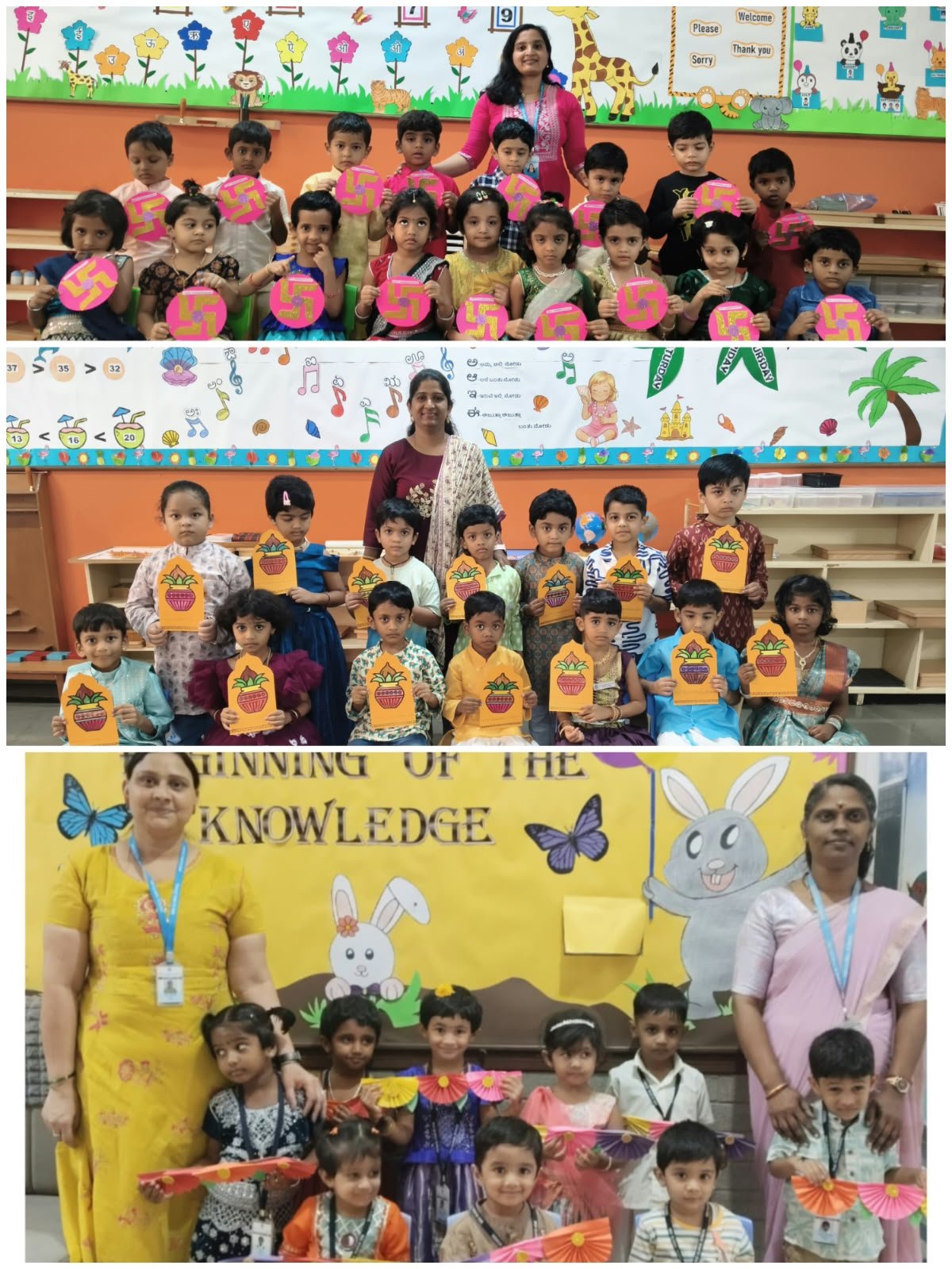
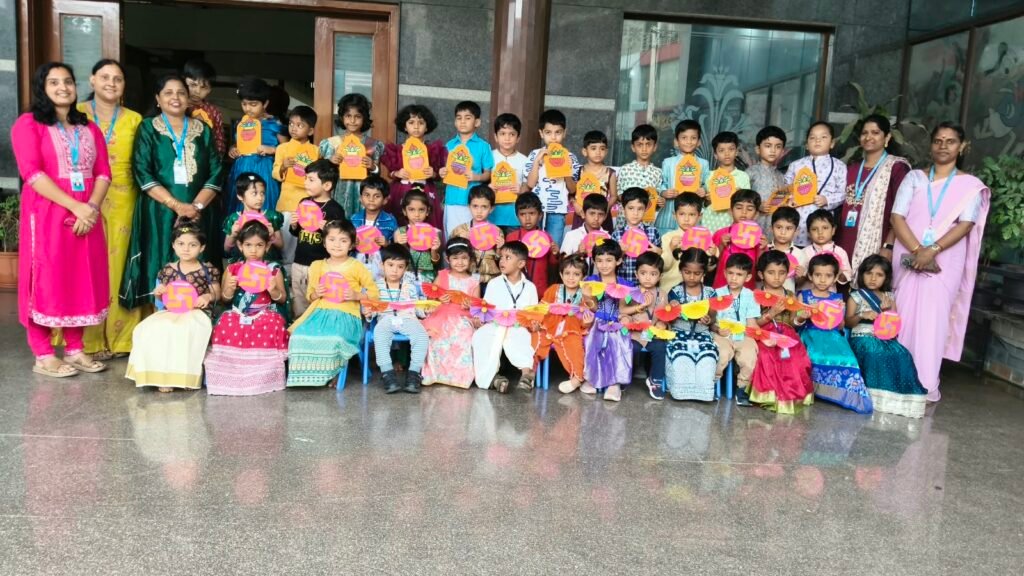
The children arrived in beautiful traditional attire and enthusiastically took part in the day’s activities. The celebration included a simple teacher-led introduction to the significance of Varamahalakshmi, the joyful singing of Bhagyada Lakshmi Baramma, a colourful craft activity and a take-home learning experience that extended the celebration beyond the classroom.
For parents seeking schools in Sarjapur Road that value both academic foundations and meaningful early-learning experiences, cultural activities can offer an important window into how children learn. At the Montessori level, learning is especially effective when ideas are connected with music, movement, conversation, creativity and familiar real-life experiences.
The celebration therefore became more than a festival programme. It was an opportunity for children to listen, participate, create, interact and take their learning home to their families.
Event Overview
When and where was the celebration held?
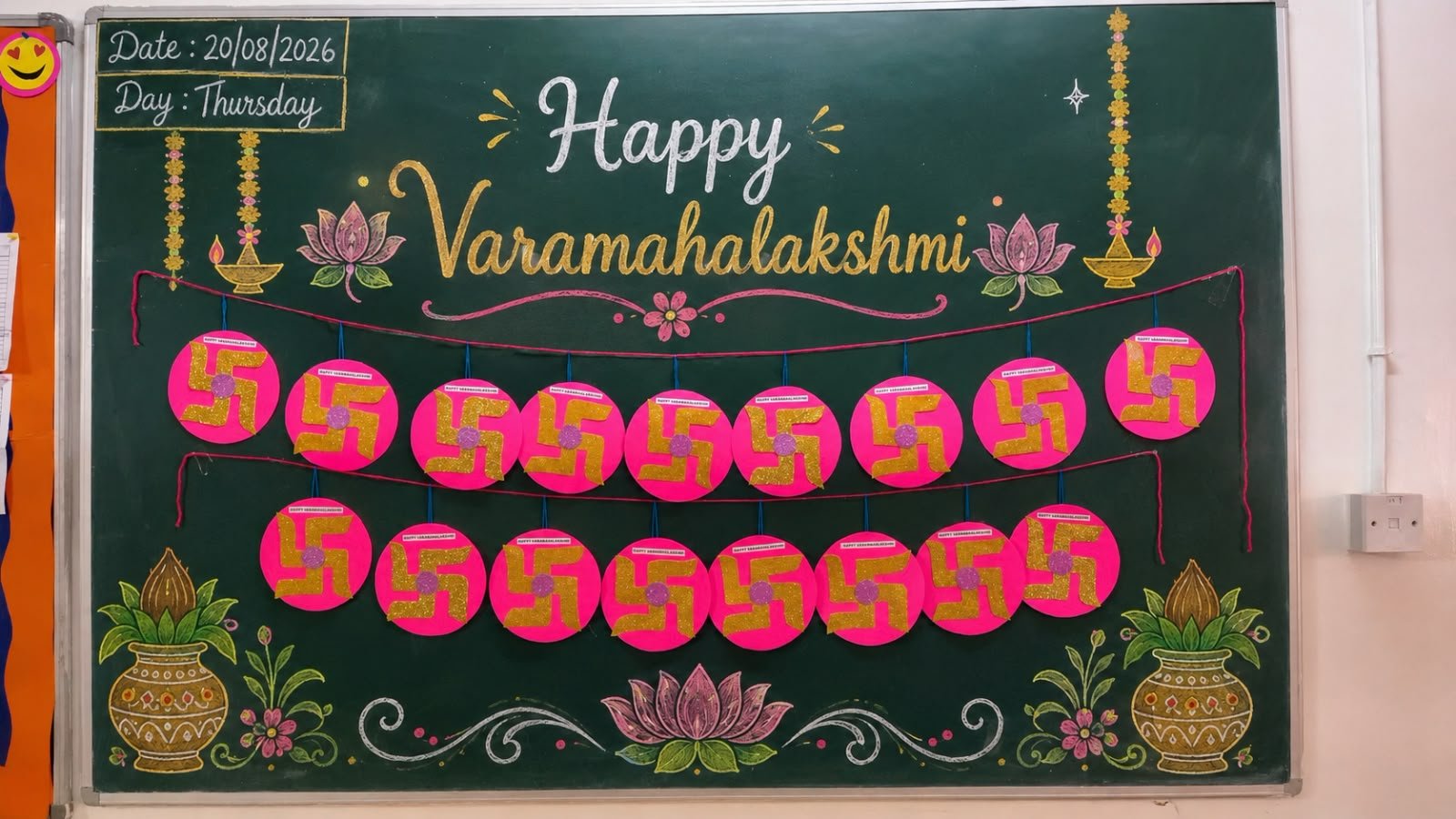
The Varamahalakshmi Celebration was held on 20 August 2026 at BRS Global School, Sarjapur Road. The programme was planned as a joyful and age-appropriate cultural learning experience for young children.
What was the focus of the event?
The celebration focused on helping children become familiar with the Varamahalakshmi festival, its cultural significance and the values associated with Goddess Lakshmi. Rather than presenting the subject as a formal lesson, teachers introduced the festival through simple explanations and participatory activities suited to the children’s age and developmental stage.
The major elements of the celebration included:
• Children coming to school in traditional attire
• A simple explanation of the significance of Varamahalakshmi
• Age-appropriate learning about Goddess Lakshmi and associated cultural values
• Group singing of Bhagyada Lakshmi Baramma
• A Varamahalakshmi-themed creative craft activity
• A take-home activity to encourage continued learning with families
This combination of activities allowed children to engage with the festival through multiple forms of learning.
What Happened During the Varamahalakshmi Celebration?
How did the children begin the celebration?
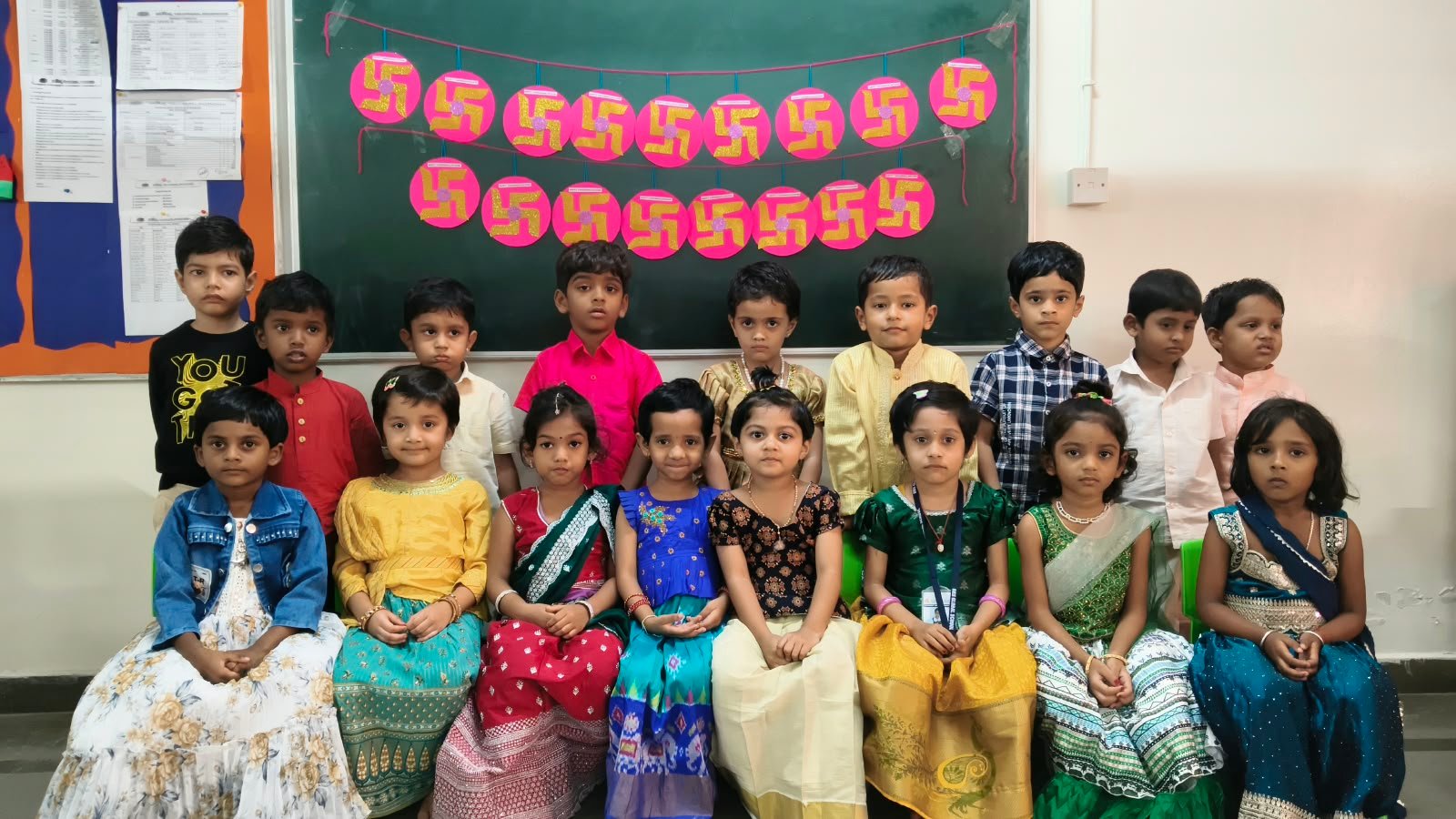
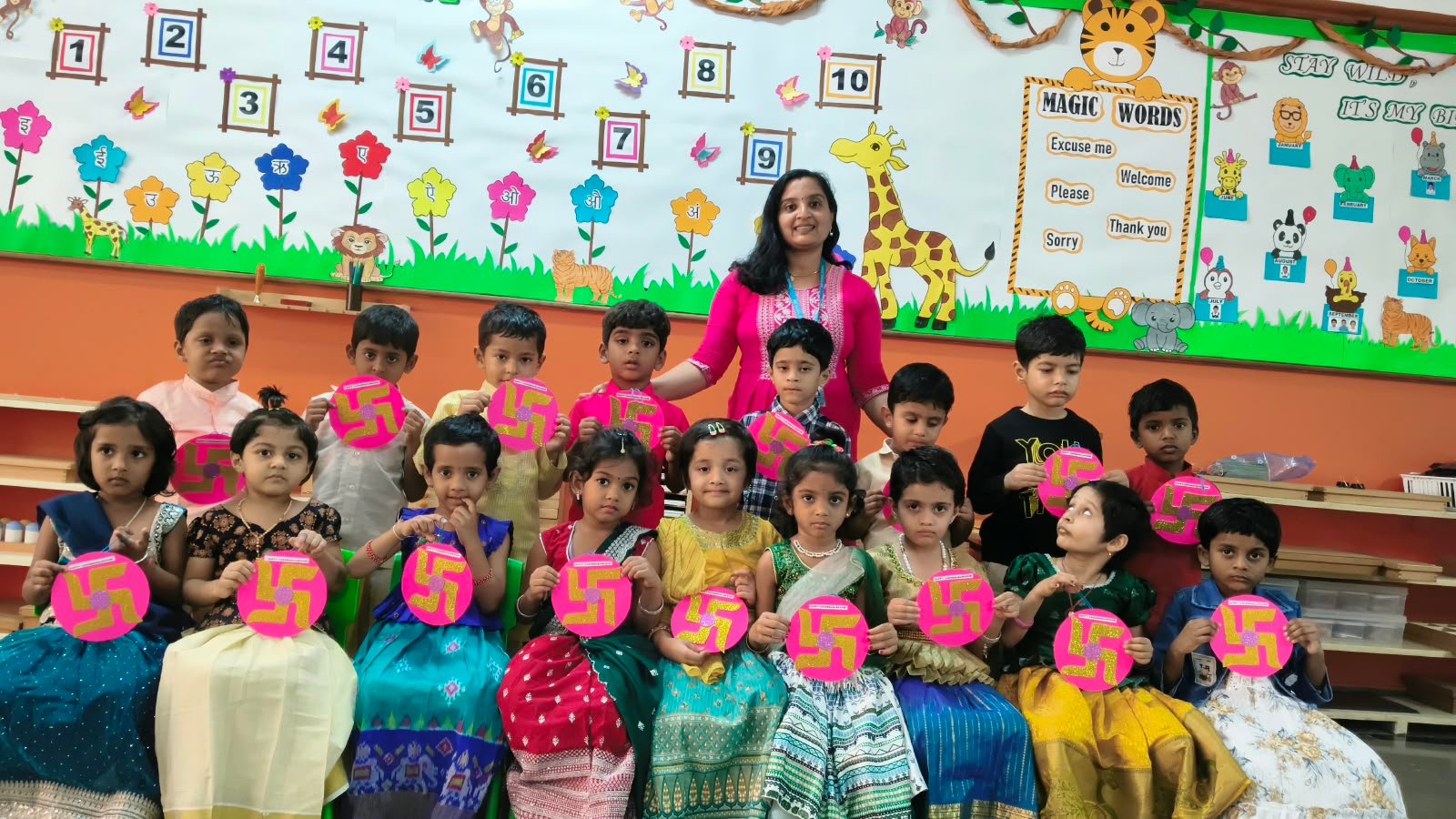
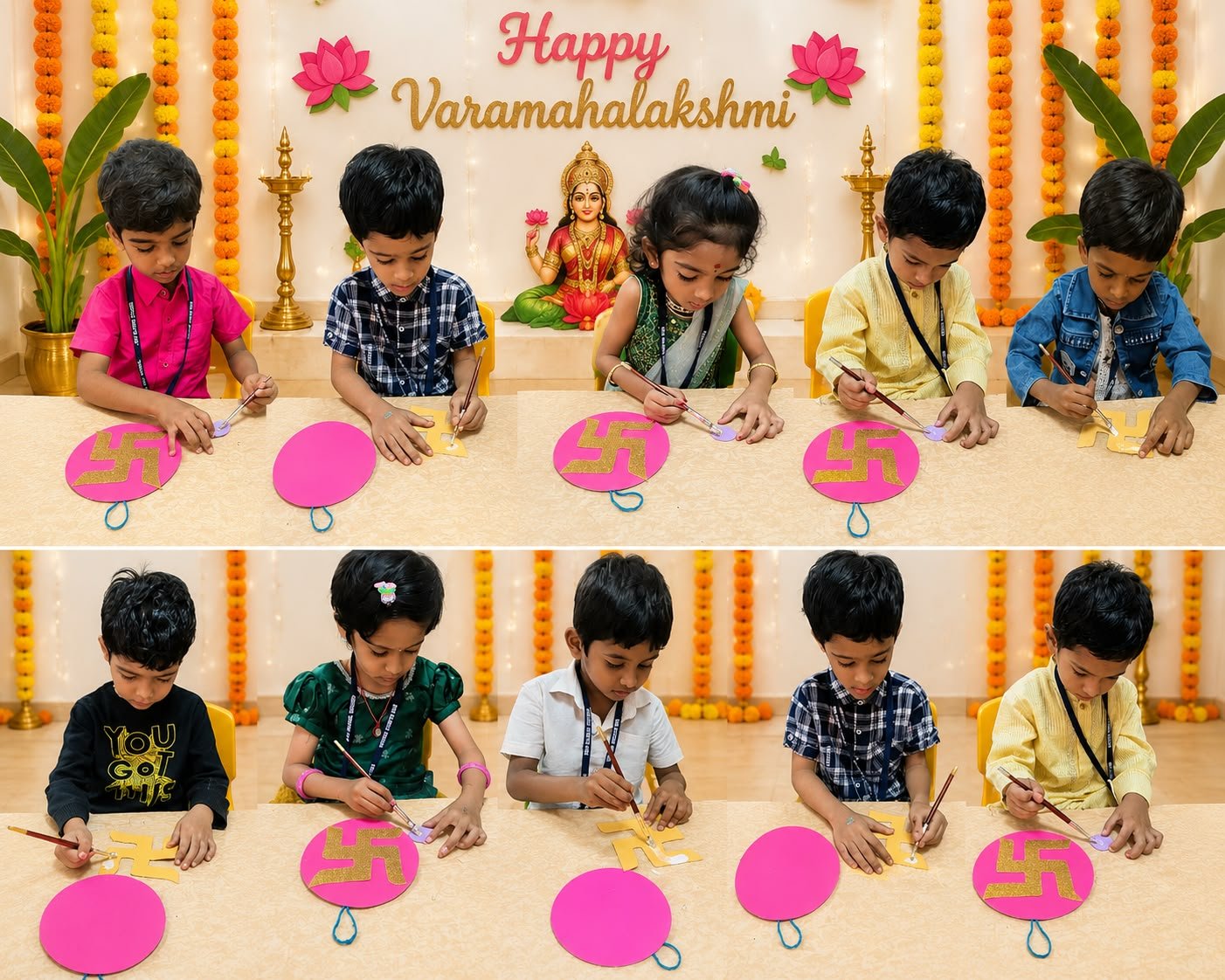
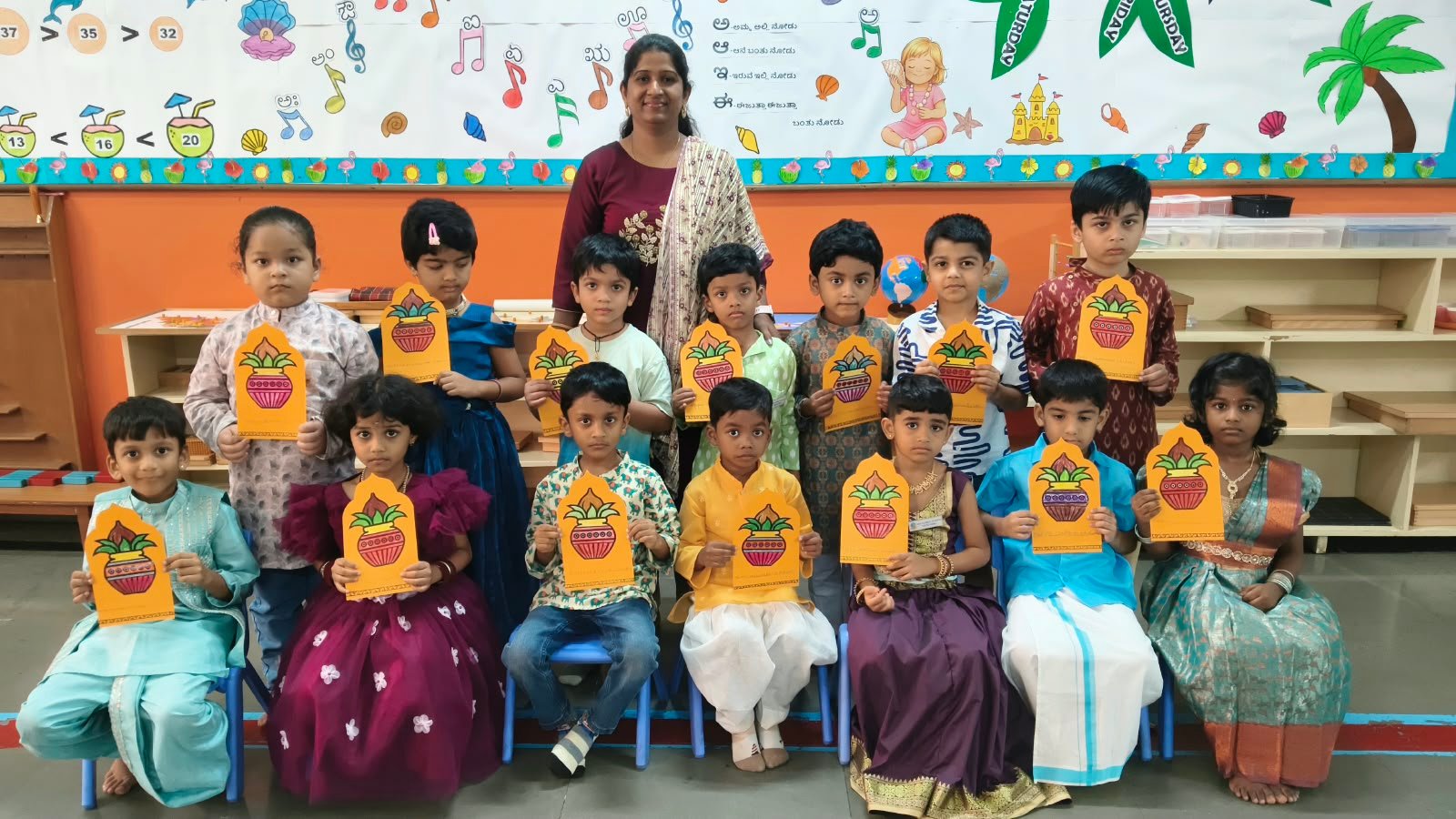
The children brought colour and festive energy to the school by arriving in beautiful traditional attire. This created an immediate sense of occasion and helped transform the regular learning environment into a shared cultural experience.
For young children, dressing for a celebration can also become a conversation starter. Teachers can use these moments to encourage observation and simple communication as children notice different colours, fabrics and traditional styles.
The atmosphere was joyful, warm and participatory, with children actively involved throughout the celebration.
How did children learn about the significance of Varamahalakshmi?
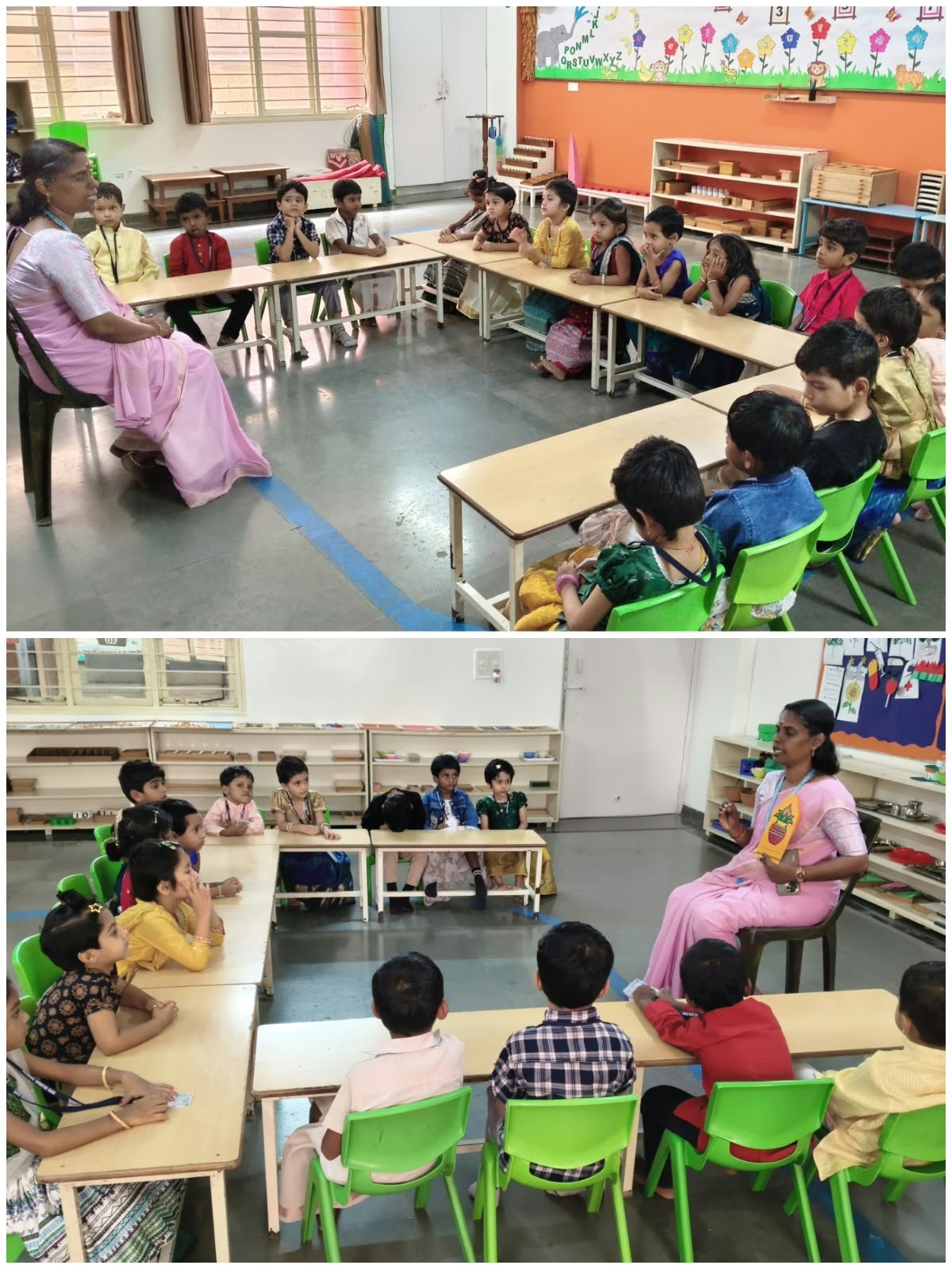
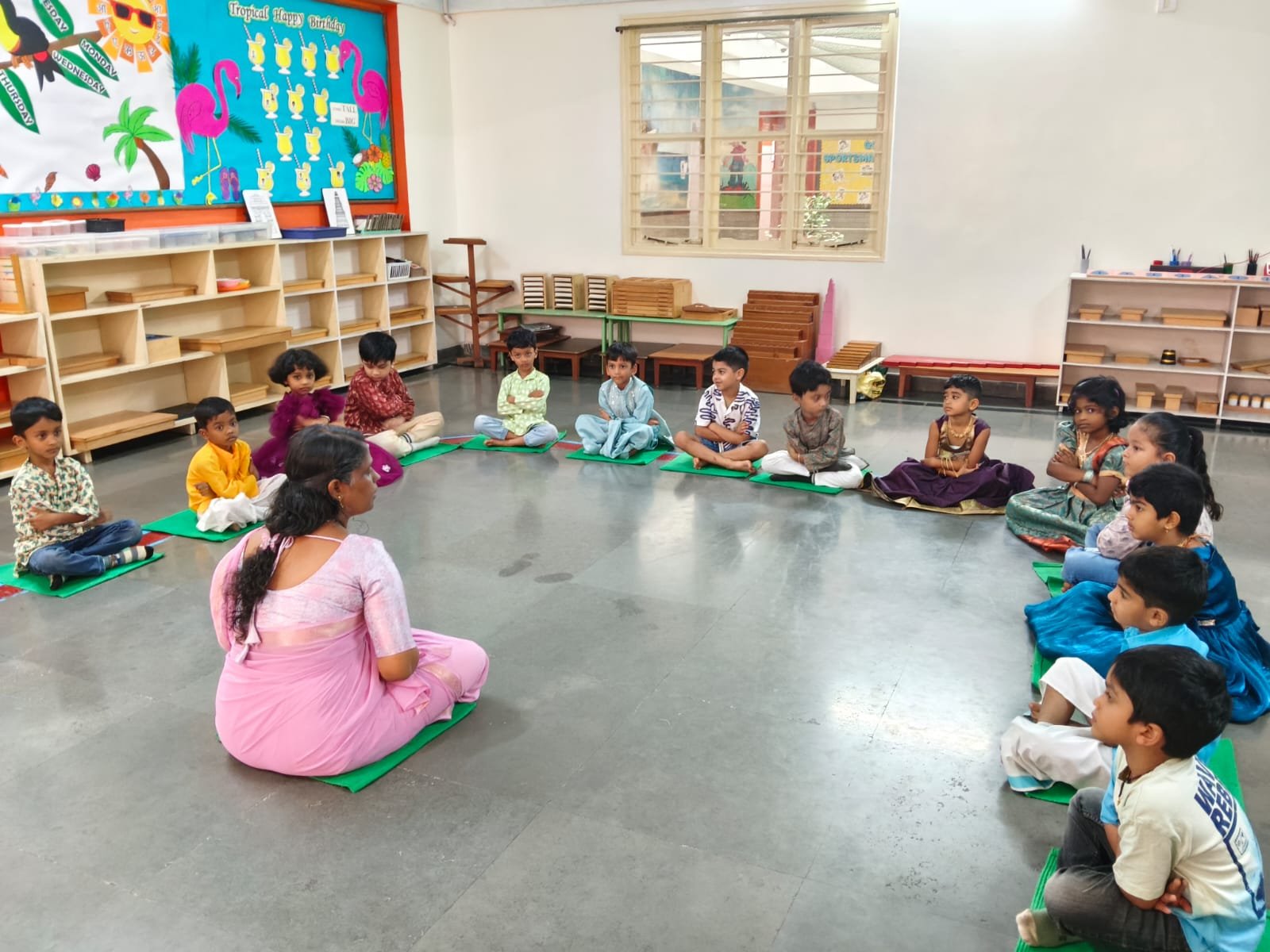
The teacher explained the significance of the Varamahalakshmi festival in a simple and child-friendly manner. Children were introduced to basic facts about Goddess Lakshmi and the values traditionally associated with the festival.
This approach was important because early childhood cultural learning should be understandable and relevant to a child’s level of development. Rather than overwhelming children with complex information, the discussion focused on simple ideas and meaningful associations.
The activity encouraged children to listen, ask questions and connect what they learned at school with festivals and traditions they may experience at home.
Direct answer: Children learned about Varamahalakshmi through simple teacher-led explanations that made cultural knowledge accessible and meaningful for their age group.
Why did the children sing “Bhagyada Lakshmi Baramma”?
Music formed an important part of the celebration as the children joyfully sang the devotional song “Bhagyada Lakshmi Baramma” together. The group singing created a pleasant and festive atmosphere while encouraging participation and collective expression.
Songs can be particularly engaging for young learners because they combine listening, memory, language and rhythm. Singing together also gives children an opportunity to participate as part of a group, which can support confidence and social interaction.
The experience was not treated merely as a performance. It was part of the children’s cultural engagement with the celebration.
What was the creative craft activity?
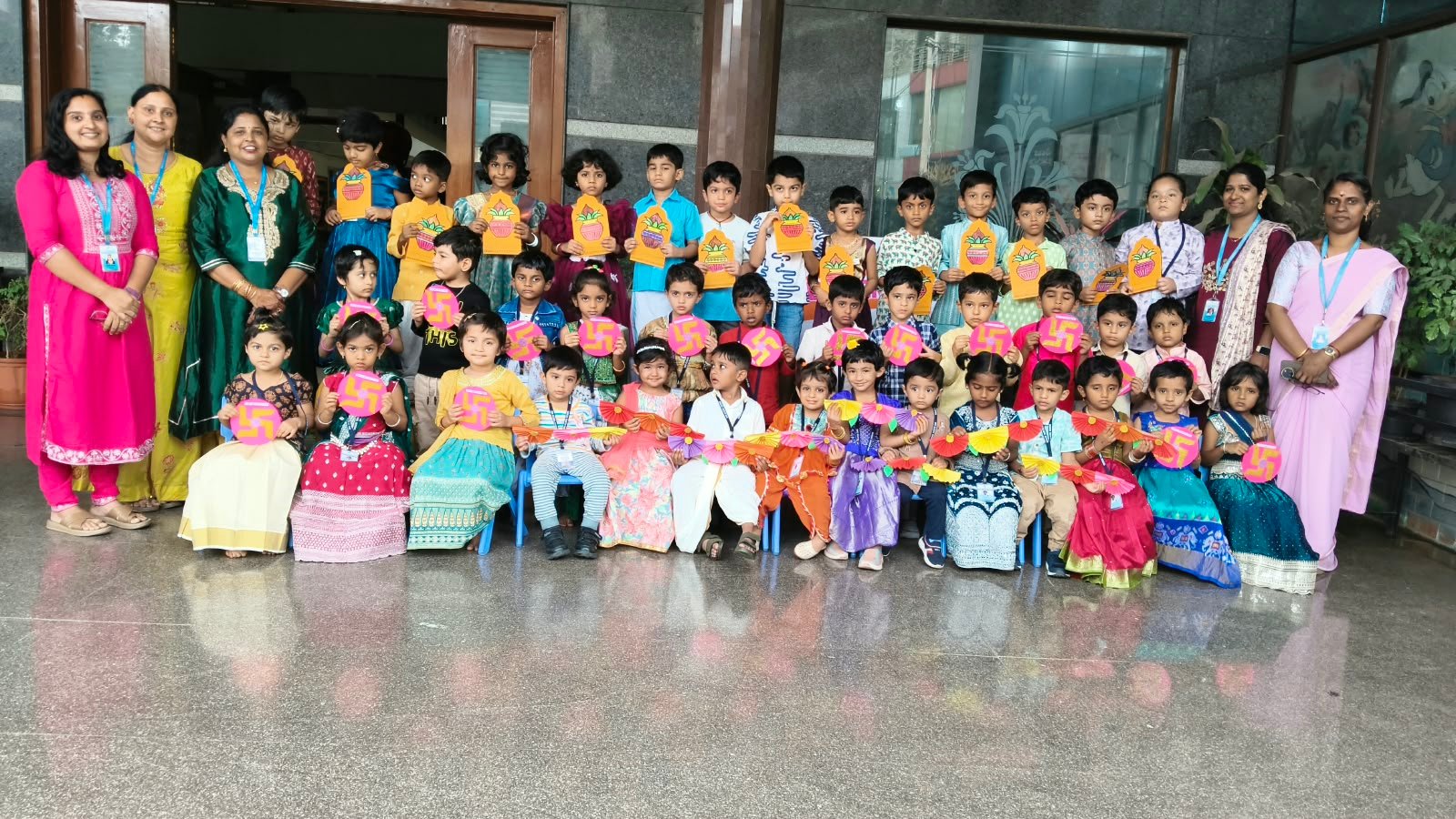
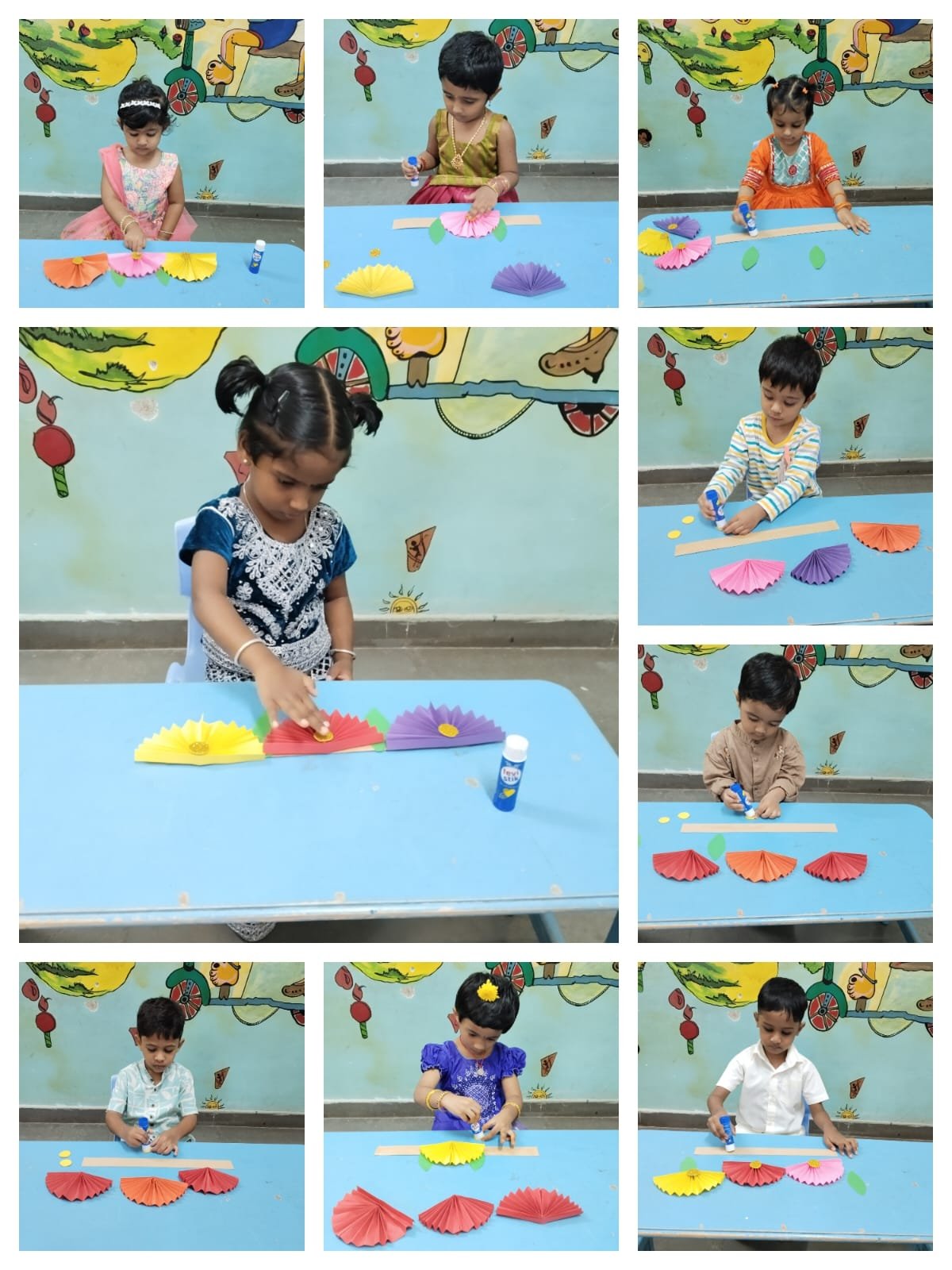
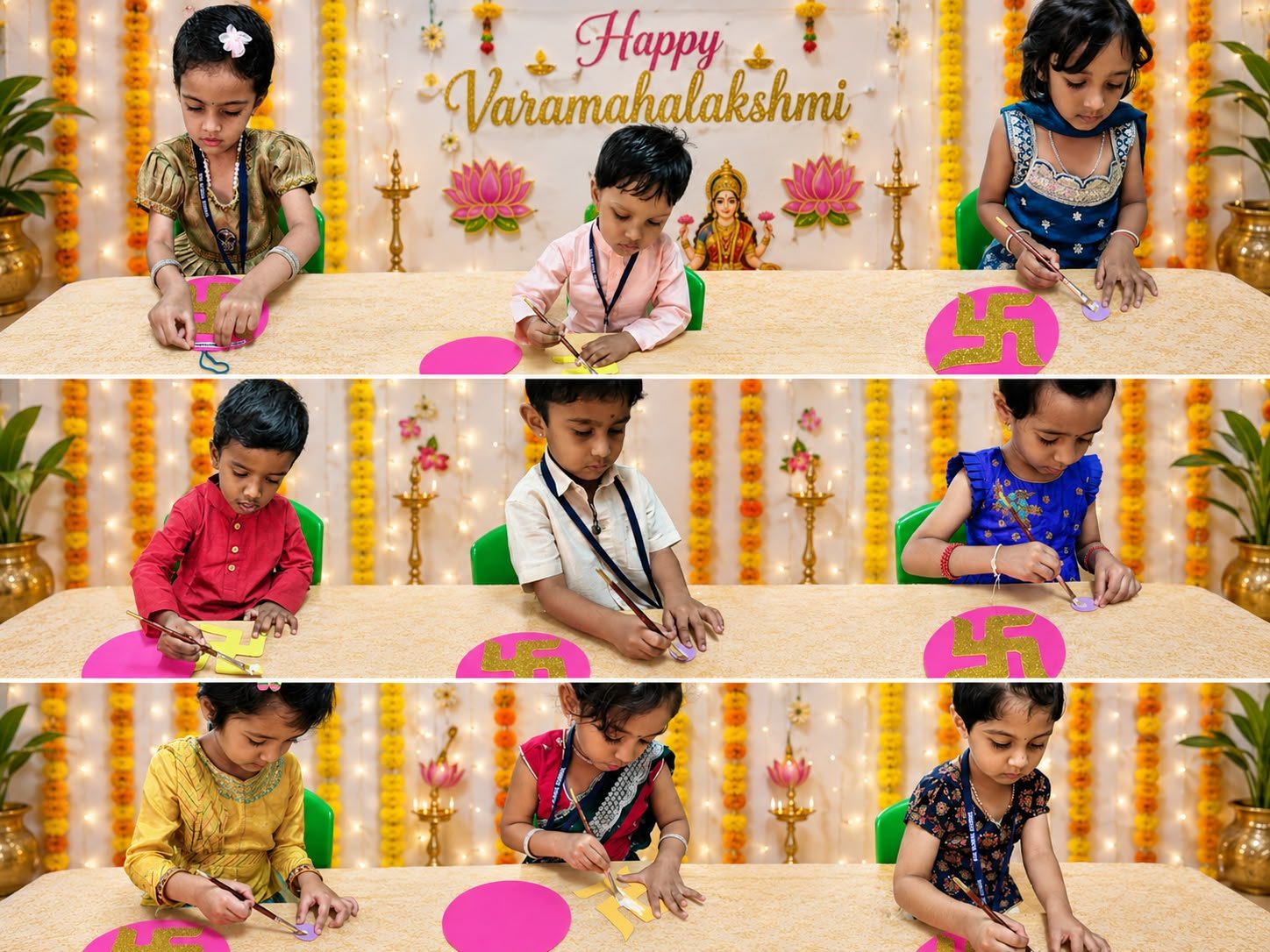
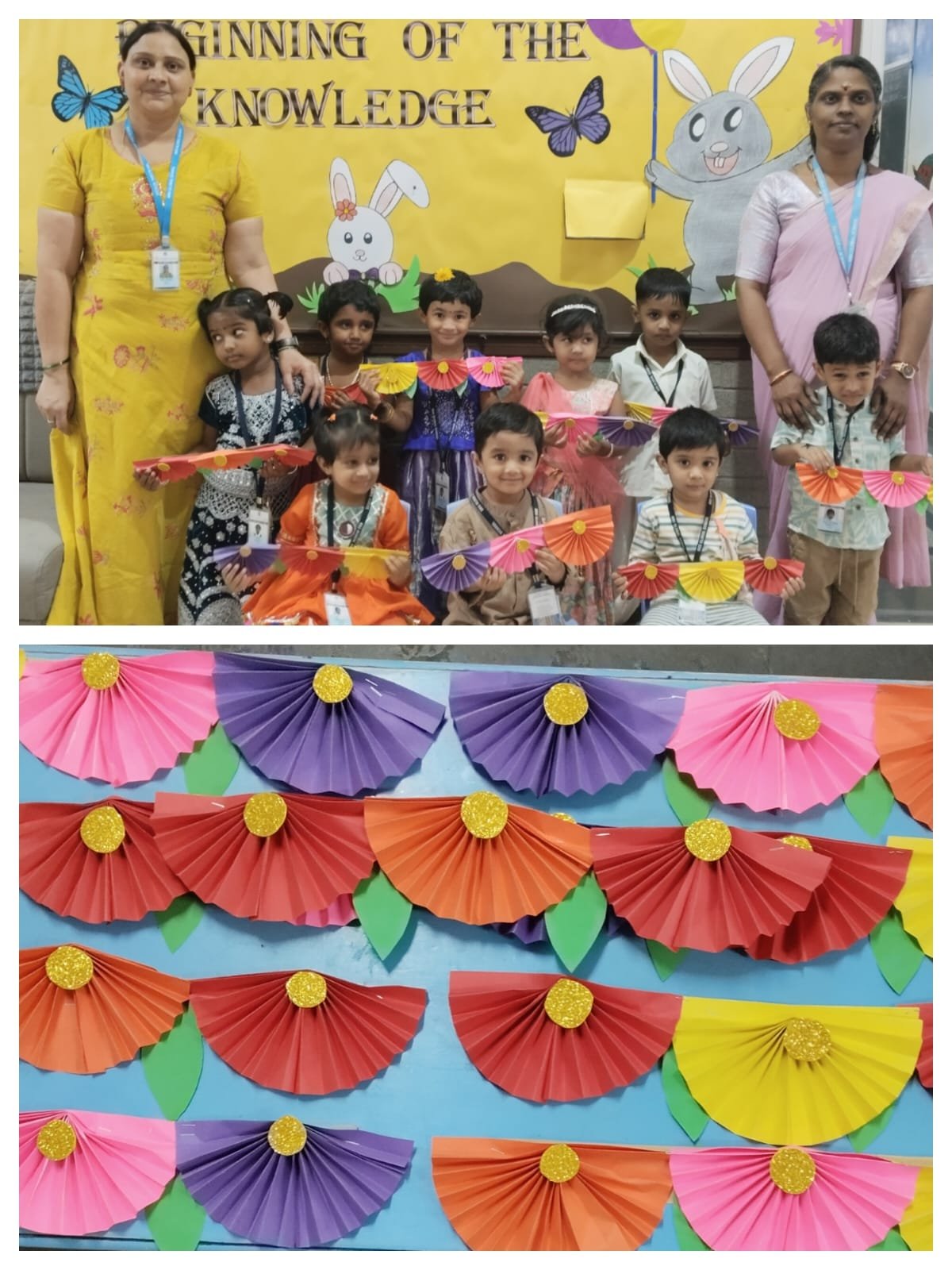
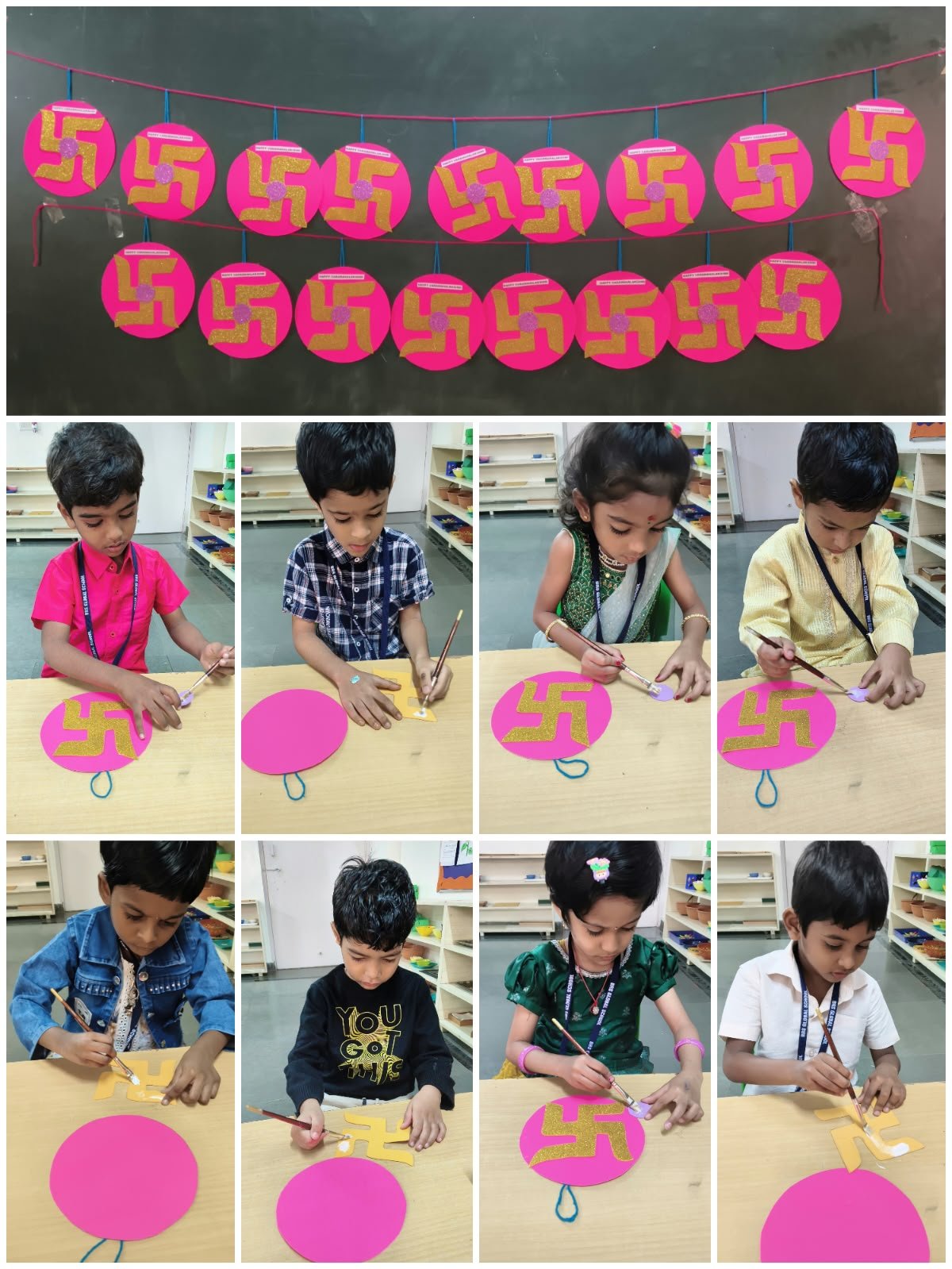
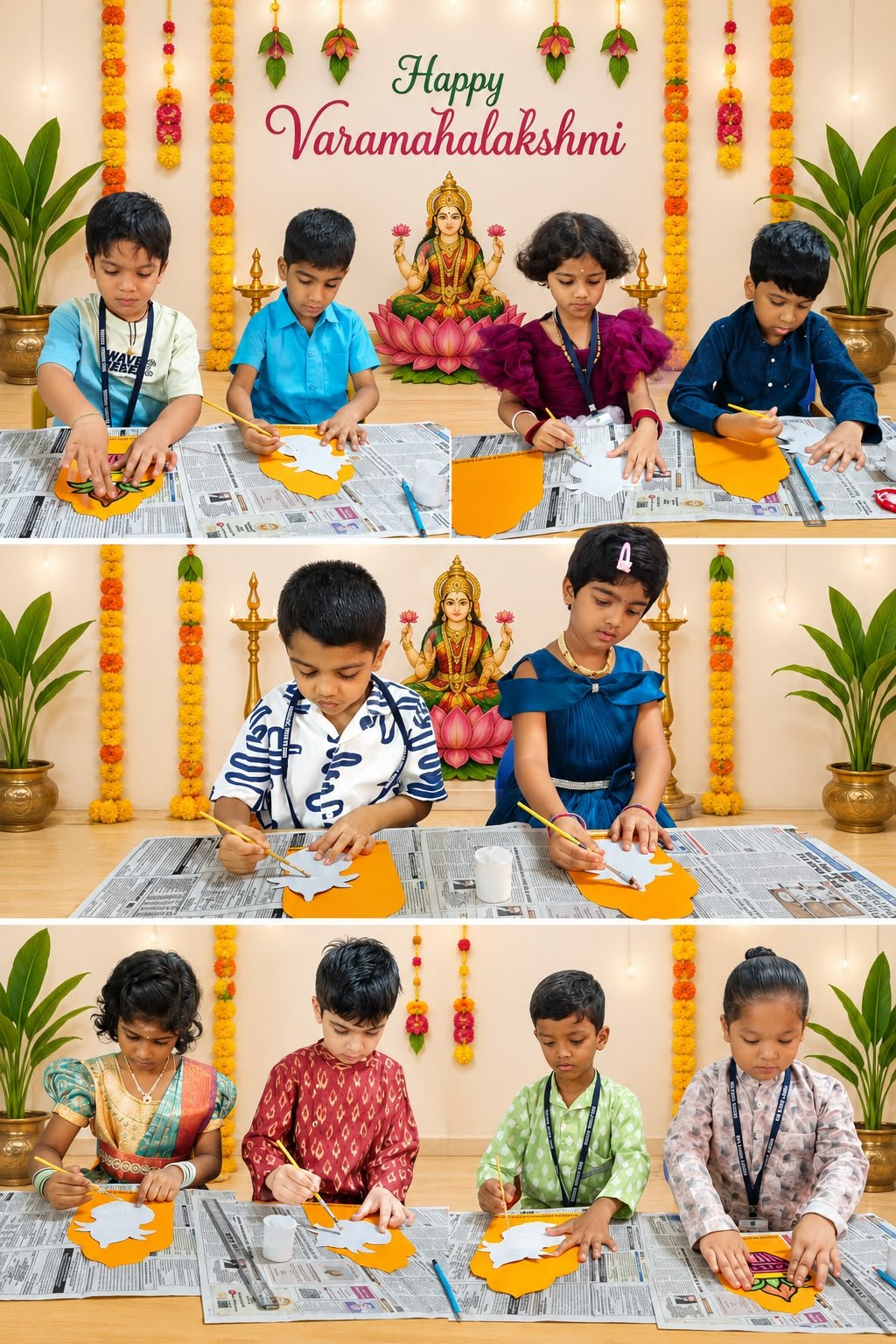
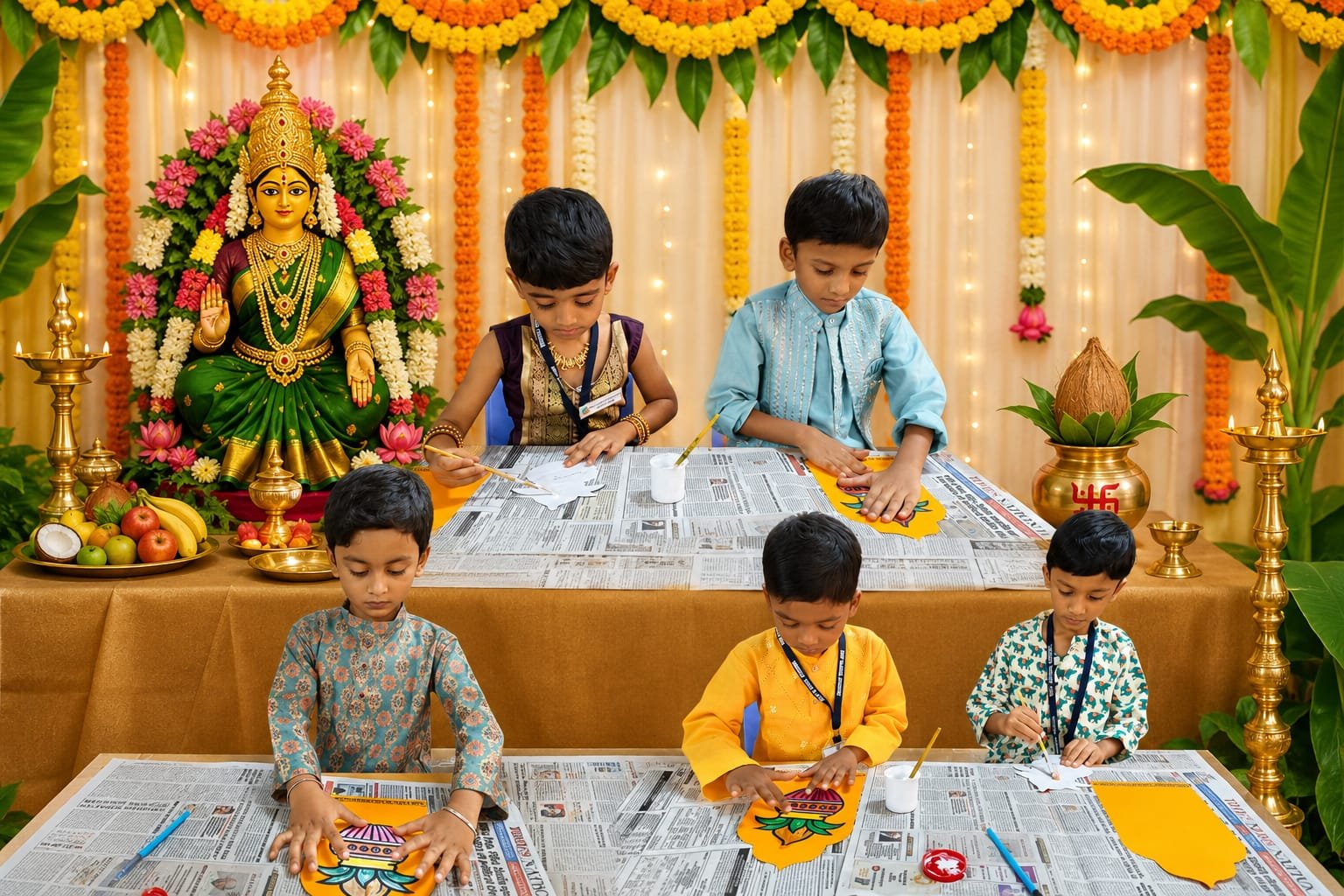
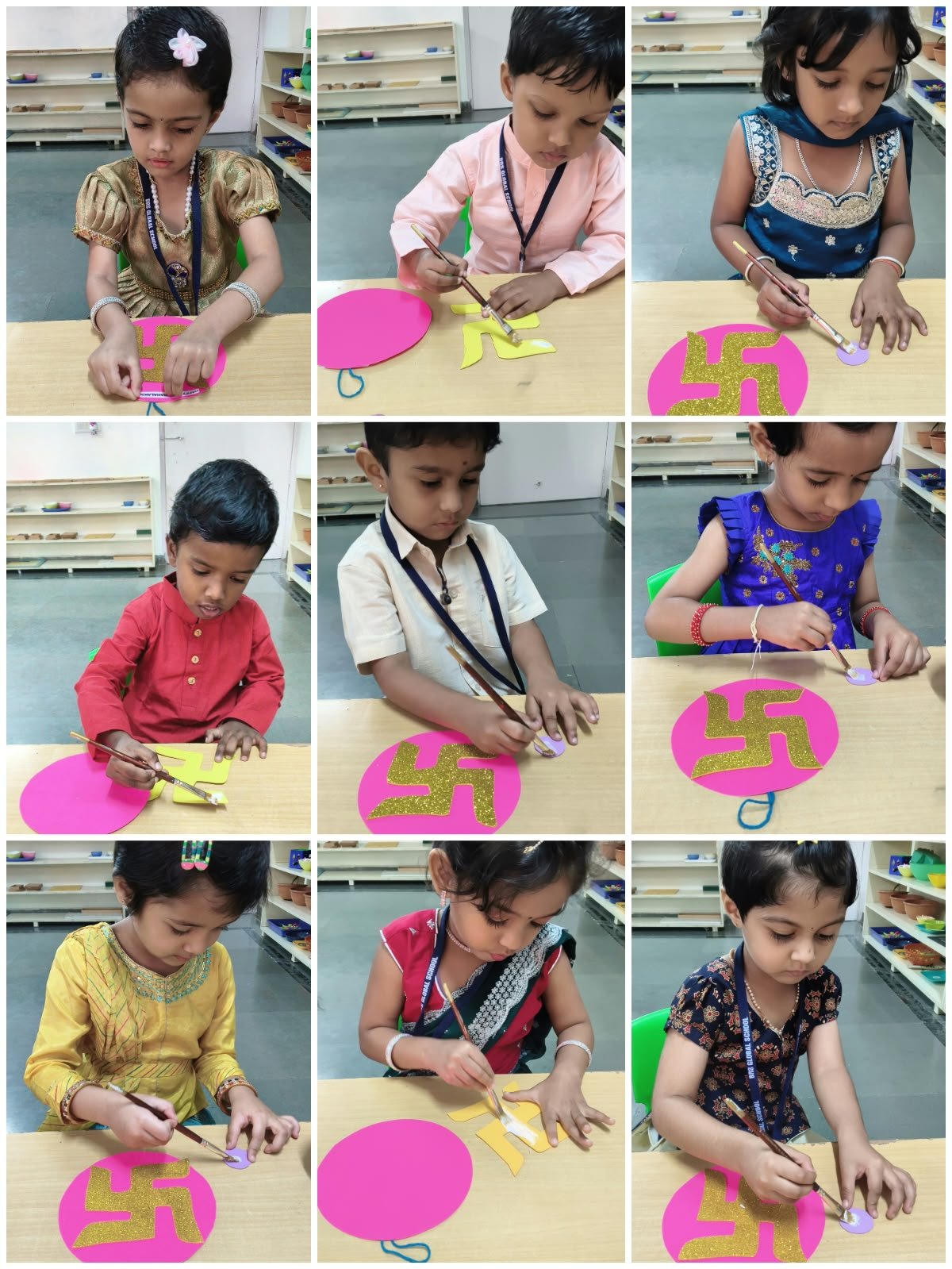
As part of the celebration, the children participated in a colourful Varamahalakshmi-themed craft activity. They created their crafts with interest and enthusiasm, giving them an opportunity to respond to the festival through hands-on creative work.
Craft activities are especially valuable in the early years because children actively use their hands, make choices and bring ideas into a visible form. Depending on the materials and actions involved, such activities can support concentration, coordination and creative expression.
The excitement visible during the activity reflected an important principle of early childhood education: children often learn deeply when they are actively involved in creating and doing.
How did the take-home activity extend learning beyond school?
A take-home activity was sent with the children to encourage them to continue learning and celebrating with their families. This created a meaningful connection between the classroom and home.
Family participation can help reinforce a child’s learning because children have the opportunity to revisit an idea in a familiar environment. It also gives parents a chance to talk with their children about what they experienced at school.
Student Learning Outcomes & Benefits
What did students learn from the Varamahalakshmi celebration?
The celebration supported learning across several interconnected areas.
Cultural awareness
Children were introduced to an important festival and learned simple information about its significance. Early exposure to cultural traditions can help children understand the diversity and richness of the society around them.
Listening and comprehension
The teacher’s explanation encouraged children to listen attentively and understand age-appropriate information. This supports the development of early communication and comprehension skills.
Language and communication
Festive discussions and group activities create natural opportunities for children to hear new words, respond to questions and share their own experiences.
Musical participation
Singing Bhagyada Lakshmi Baramma encouraged children to engage with rhythm, melody and collective participation.
Creativity and imagination
The themed craft activity gave children an opportunity to express themselves visually and creatively.
Fine motor development
Hands-on craft experiences can support coordination and controlled hand movements, both of which are important during the early years.
Confidence and social participation
Taking part in a group celebration can help children become more comfortable participating with classmates and expressing themselves in a shared setting.
Home-school connection
The take-home activity encouraged children to continue their learning with parents and family members.
Educational Philosophy / Institutional Value Alignment
Why are cultural celebrations meaningful in early childhood education?
At BRS Global School, Sarjapur Road, learning experiences can become more meaningful when children are encouraged to connect ideas with real life. Festivals provide a natural context for this kind of learning because children may encounter the same traditions, conversations and celebrations within their families and communities.
The Varamahalakshmi celebration brought together several learning modes within one experience:
• Listening through teacher-led explanations
• Observing through festive attire and visual elements
• Participating through group activities
• Singing through devotional music
• Creating through craft
• Connecting through a take-home family activity
This kind of integrated learning supports a broader understanding of development. Children do not experience learning as separate categories; a single activity can involve language, social interaction, creativity, physical coordination and emotional engagement at the same time.
The approach also reflects the importance of experiential and holistic learning in school education. At the foundational stage, meaningful experiences can help build the habits of curiosity, participation and confidence that children carry into later years.
Why Does This Matter for Student Development?
How do cultural activities contribute to holistic development?
Cultural activities contribute to holistic development because they engage more than one aspect of learning. A child may listen to a story, sing with classmates, create something with their hands and later discuss the experience with family members.
The Varamahalakshmi celebration offered precisely this type of multi-layered experience. Children were not expected to learn through memorisation alone. Instead, they encountered the festival through participation.
For parents, this is significant because early childhood development is not limited to academic readiness. Young children also need opportunities to build:
• Confidence
• Communication
• Creativity
• Social comfort
• Fine motor abilities
• Curiosity
• Cultural awareness
• Emotional connection with familiar traditions
Which students benefit most from such activities?
All young learners can benefit from inclusive, age-appropriate cultural experiences. Children who enjoy music may connect strongly through songs, while children who prefer hands-on activities may engage more deeply through crafts. Group participation can also provide valuable opportunities for children who are developing confidence in social settings.
Direct answer: Multi-sensory celebrations benefit different types of learners by offering several ways to participate, observe, create and communicate.
Local Context Relevance
Why is this type of learning relevant for families around Sarjapur Road?
Sarjapur Road is home to families from diverse cultural and professional backgrounds, including many working parents connected to Bengaluru’s technology and business corridors. Families living in and around – Bellandur, Sarjapur Road, Hosa Road, Koramangala, HSR layout, Dommasandra, Kodathi, Gunjur, Varthur, Kaikondrahalli, Kasavanahalli, Carmelaram, Harlur, Rayasandra, Naganathapura, Doddakannelli, Kudlu Gate, A Krishnappa Nagar, Halnayakanahalli, Radha Reddy Layout, Chikkanayakanahalli, Huskur, KPC Layout, CSB Layout, Owners Court, Doddanagamangala, Doctors Layout, Shiva Reddy Layout, Meenakshi Layout, Chikbellandur, Sompura Gate, Muthannalur Cross, Gunjur to Dommasandra Road, Mullur, Amrita Engineering College Road Kasavanahalli, Amrita Nagar, Serenity Layout, Spring Fields, Iblur, Marathahalli, Shobha Apartments, Choodasandra, Junnasandra, Rayasandra often look for schools that provide a balanced environment for their children’s overall development.
For parents managing busy professional lives, meaningful school activities can be especially valuable when they give children opportunities to experience culture, creativity and community within the school day.
BRS Global School‘s Sarjapur Road branch remains the focus of this event page and can be explored through its official local business profile:
BRS Global School, Sarjapur Road – Official Google Business Profile
The school’s location and community relevance make it accessible to families across several residential and professional neighbourhoods along the Sarjapur Road corridor.
BRS Global School also has another branch in Attibele, which should be understood as a separate campus:
BRS Global School, Attibele – Official Google Business Profile
For this article, however, the celebration and local context are specifically centred on BRS at the Sarjapur Road branch.
Common Parent Questions
How does a cultural celebration support CBSE learning?
Cultural celebrations can complement the broader goals of CBSE -oriented education by supporting experiential learning, communication, creativity, social participation and an understanding of India’s cultural context. At the early years level, these outcomes are often developed through age-appropriate activities rather than formal academic instruction.
The Varamahalakshmi celebration connected learning with music, art, conversation and participation, helping children engage with the experience in different ways.
How does this type of activity improve student confidence?
Group celebrations give children opportunities to participate in a supportive environment. Singing together, wearing traditional attire, speaking about experiences and taking part in creative activities can help children become more comfortable expressing themselves around teachers and classmates.
Confidence develops gradually, and repeated positive participation experiences can be valuable for young learners.
Why should parents value festival celebrations at school?
Festival celebrations can help children understand culture through direct experiences while also developing creativity, communication and social skills. They can create meaningful links between what children learn at school and what they experience with their families at home.
For parents, the value lies in seeing learning extend beyond worksheets and classroom routines.
Does a craft activity have educational value?
Yes. Age-appropriate craft activities can support creativity, concentration and hand-eye coordination. They also allow children to make choices, follow simple instructions and experience the satisfaction of creating something independently or with guidance.
The Varamahalakshmi-themed craft transformed the festival into a hands-on learning experience.
How does music support young children’s learning?
Music can encourage listening, memory, rhythm and participation. Singing in a group also creates a shared experience that can support social interaction and confidence.
During the celebration, Bhagyada Lakshmi Baramma gave children an engaging way to participate in the festive atmosphere.
How does the take-home activity benefit families?
A take-home activity can encourage parents and children to revisit school learning together. It creates opportunities for conversation and helps connect classroom experiences with family traditions and home-based learning.
Key Highlights
• Event: Varamahalakshmi Celebration
• Date: 20 August 2026
• Campus: BRS Global School, Sarjapur Road
• Children attended the celebration in traditional attire.
• Teachers explained the significance of the Varamahalakshmi festival in an age-appropriate manner.
• Children learned simple facts about Goddess Lakshmi and the values associated with the celebration.
• Students joyfully sang Bhagyada Lakshmi Baramma together.
• A festive and positive atmosphere encouraged active participation.
• Children created colourful Varamahalakshmi-themed crafts.
• The hands-on activity supported creativity and active learning.
• A take-home activity extended learning from school to home.
• The celebration connected cultural awareness with creativity, music and holistic development.
Frequently Asked Questions (FAQs)
When was the Varamahalakshmi celebration held at BRS Global School, Sarjapur Road?
The celebration was held on 20 August 2026 at BRS Global School, Sarjapur Road.
What activities were conducted during the Varamahalakshmi celebration?
Children wore traditional attire, learned about the significance of the festival, sang Bhagyada Lakshmi Baramma, participated in a themed craft activity and received a take-home learning activity.
What did children learn during the celebration?
Children learned simple facts about the significance of Varamahalakshmi, Goddess Lakshmi and the cultural values associated with the festival. They also developed creativity and social participation through music and crafts.
How did the craft activity support child development?
The craft activity encouraged hands-on participation and creative expression. Age-appropriate craft experiences can also support concentration, coordination and fine motor development.
Why was a take-home activity included?
The take-home activity was included to encourage children to continue learning and celebrating with their families, strengthening the connection between school experiences and home life.
How do cultural celebrations support holistic development?
Cultural celebrations can bring together communication, creativity, music, social interaction and real-world learning. This supports multiple dimensions of child development within a meaningful context.
Why are such activities valuable for parents looking for schools in Sarjapur Road?
Parents often look for learning environments that balance academic foundations with creativity, confidence and cultural awareness. Meaningful school activities can help children develop through experiences that are engaging, age-appropriate and connected to life beyond the classroom.
Conclusion
The Varamahalakshmi celebration at BRS Global School, Sarjapur Road , was a joyful example of how cultural experiences can become meaningful learning opportunities for young children. Through traditional attire, teacher-led conversations, devotional music, creative crafts and a take-home activity, children experienced the festival through participation, expression and exploration.
The celebration also highlighted the importance of connecting early learning with the world children know beyond the classroom. When culture, creativity, communication and family engagement come together, children can build knowledge while also developing confidence, curiosity and a sense of belonging.
Parents looking to understand how BRS Global School, Sarjapur Road, supports meaningful learning experiences alongside a strong educational foundation are encouraged to explore the Sarjapur Road campus and connect with the school to learn more about its programmes and learning environment.
Explore our Campus:
Attibele Branch
https://share.google/iFhJaeGo8wkgOZ1Y5
Sarjapur Road Branch: