
Introduction
What happens when students move beyond the classroom and learn directly from the people, animals, plants and environments around them? Learning becomes more tangible, memorable and connected to everyday life.
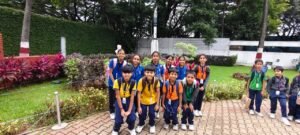
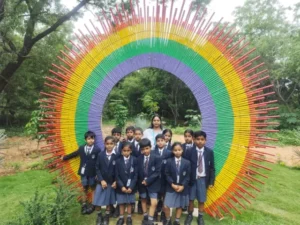
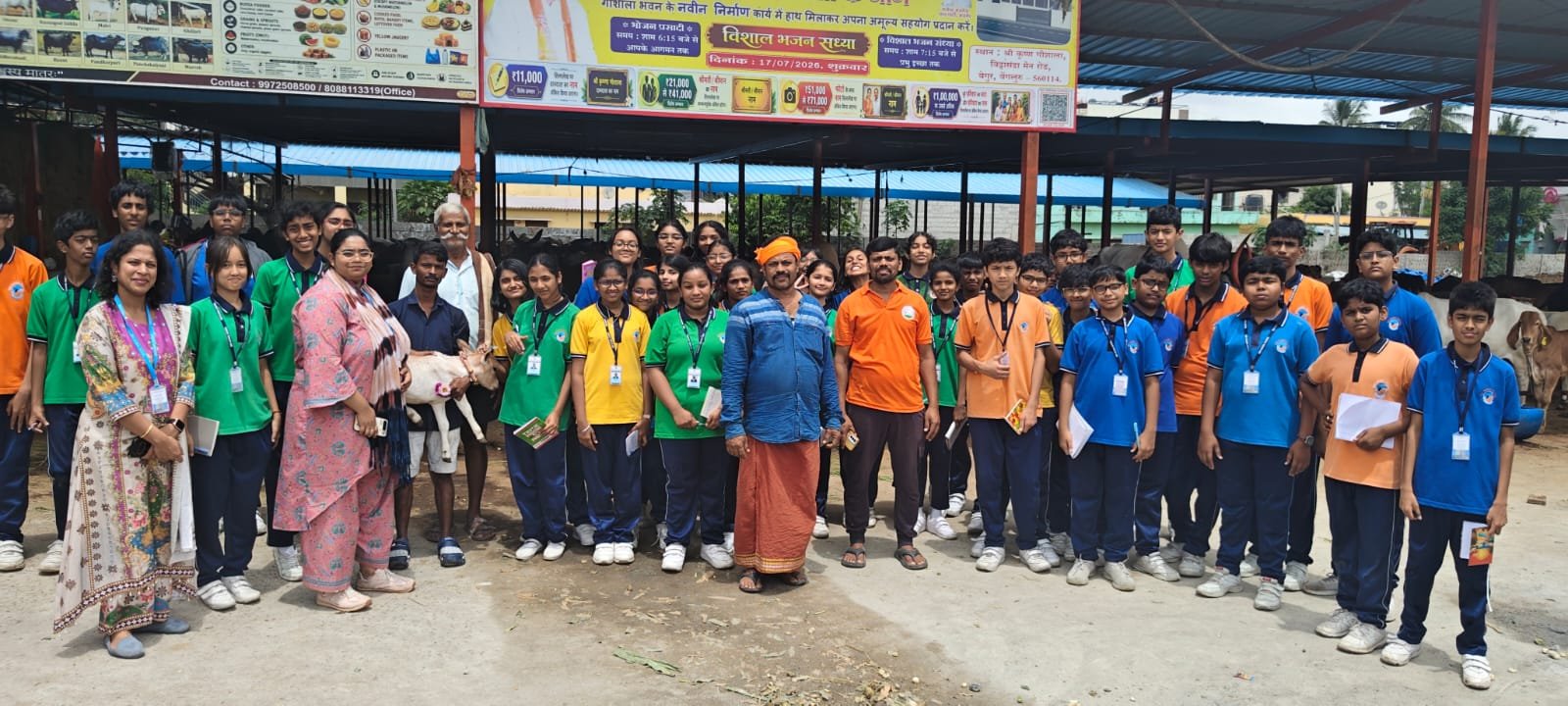
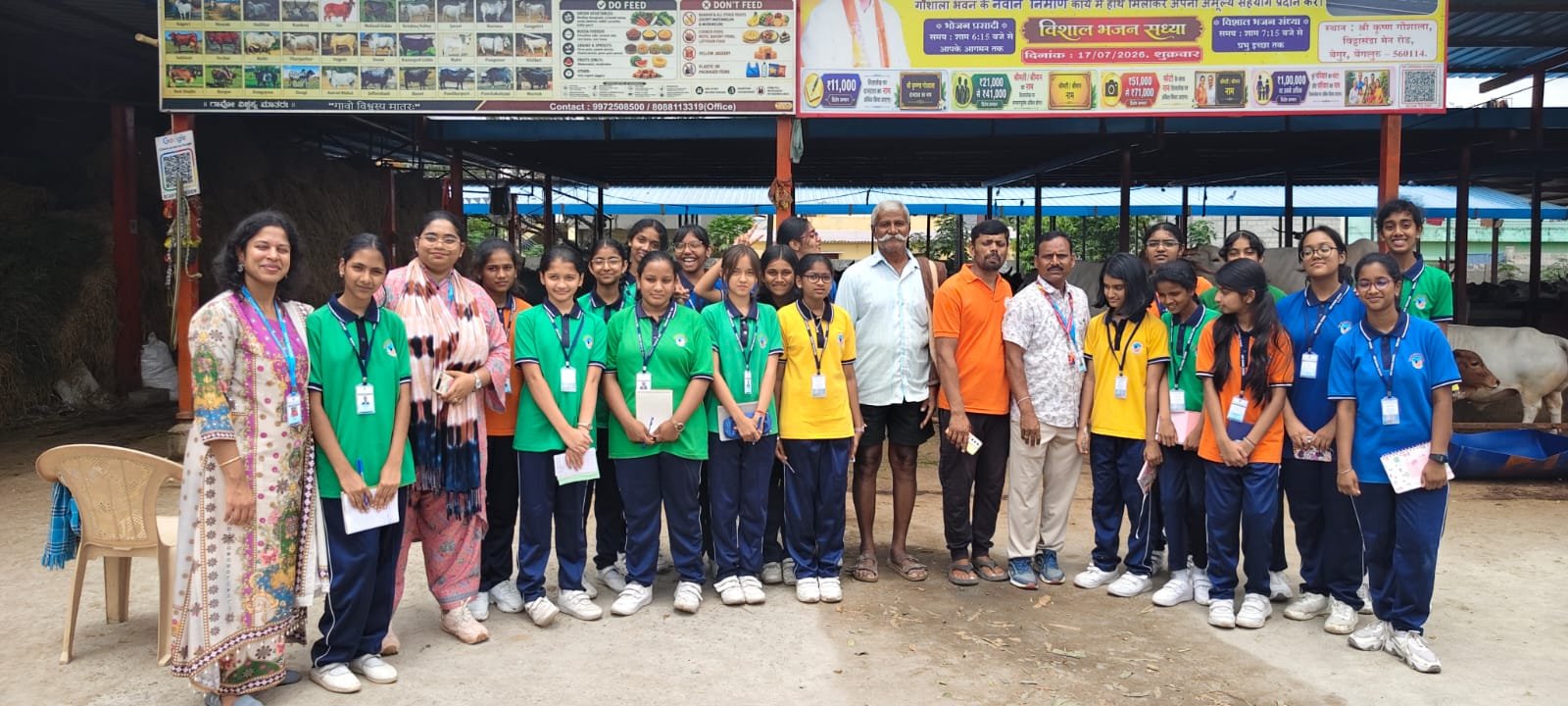
On 19 August 2026, Grade 8 students of BRS Global School | Best CBSE School in Sarjapur Road participated in an educational field visit to Shri Krishna Gaushala & Farm, Lakshmi Layout, as part of the Kaushal Bodh Project – “Work with Life Forms.”
The experience gave students an opportunity to observe animal care and farming practices closely, ask questions, interact with people involved in caring for living beings, and reflect on the responsibility humans have towards nature.
This approach is closely aligned with the broader emphasis on experiential and skill-based learning in school education. CBSE has described Kaushal Bodh as an experiential learning framework developed by NCERT for Grades 6 to 8, designed to connect students with the world of work through skill-based projects and activities.
Event Overview
Event : Kaushal Bodh
Theme : Work with Life Forms
Grade : Grade 8
Date : 19 August 2026
Venue : Shri Krishna Gaushala & Farm, Lakshmi Layout
Focus Areas : Animal care, farming, nurturing living beings and sustainability
Learning Approach : Experiential and practical learning
The field visit was planned around the theme “Work with Life Forms,” encouraging students to understand the everyday responsibilities involved in caring for animals and nurturing plants.
What Happened During the Field Visit?
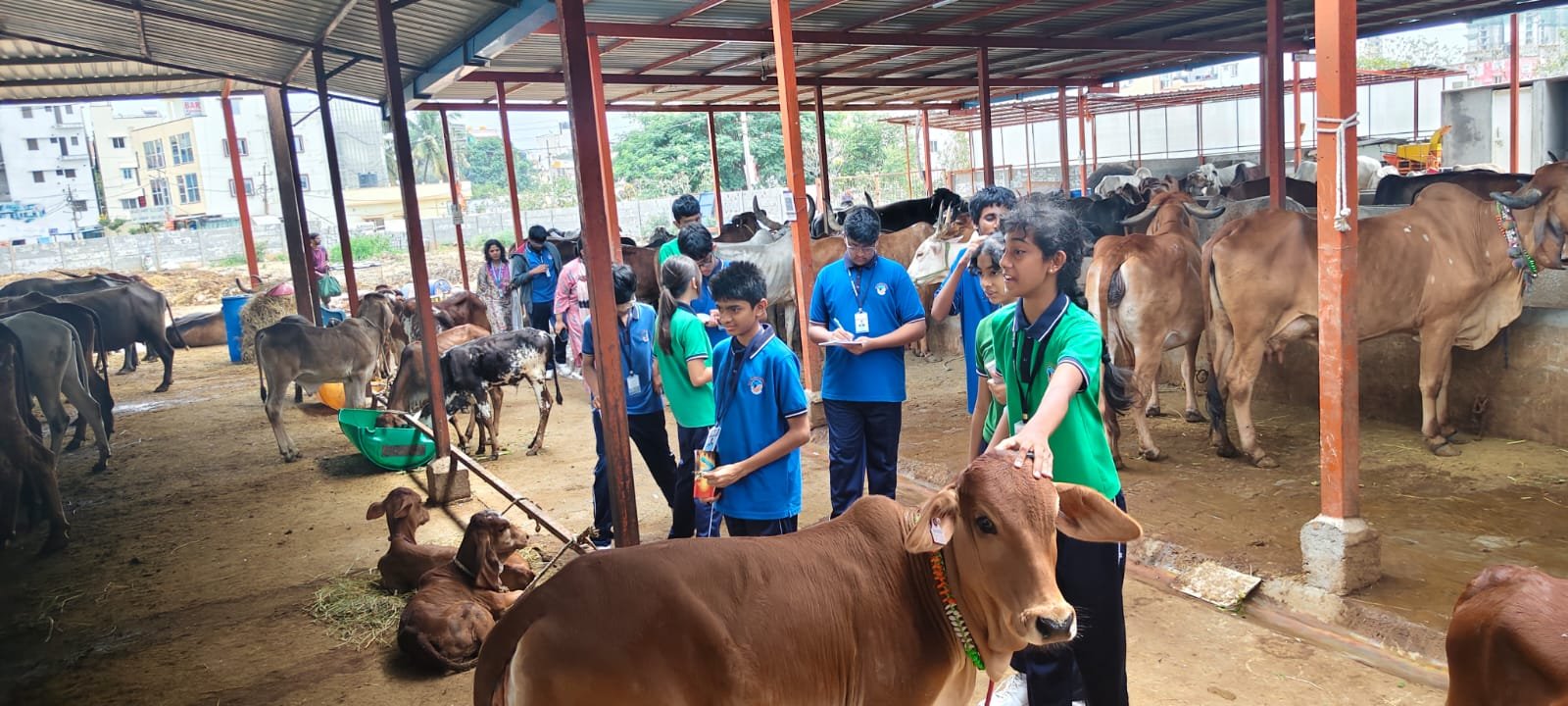
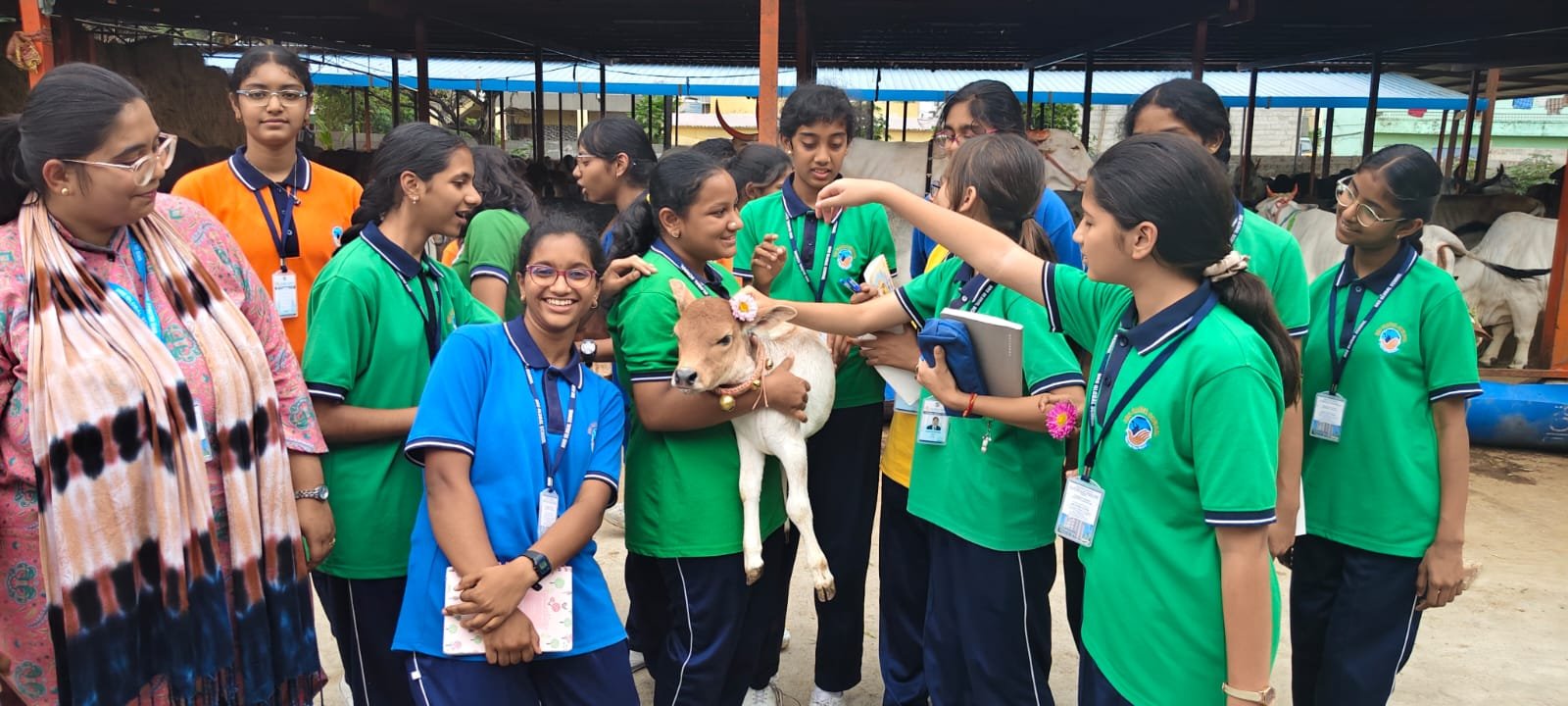
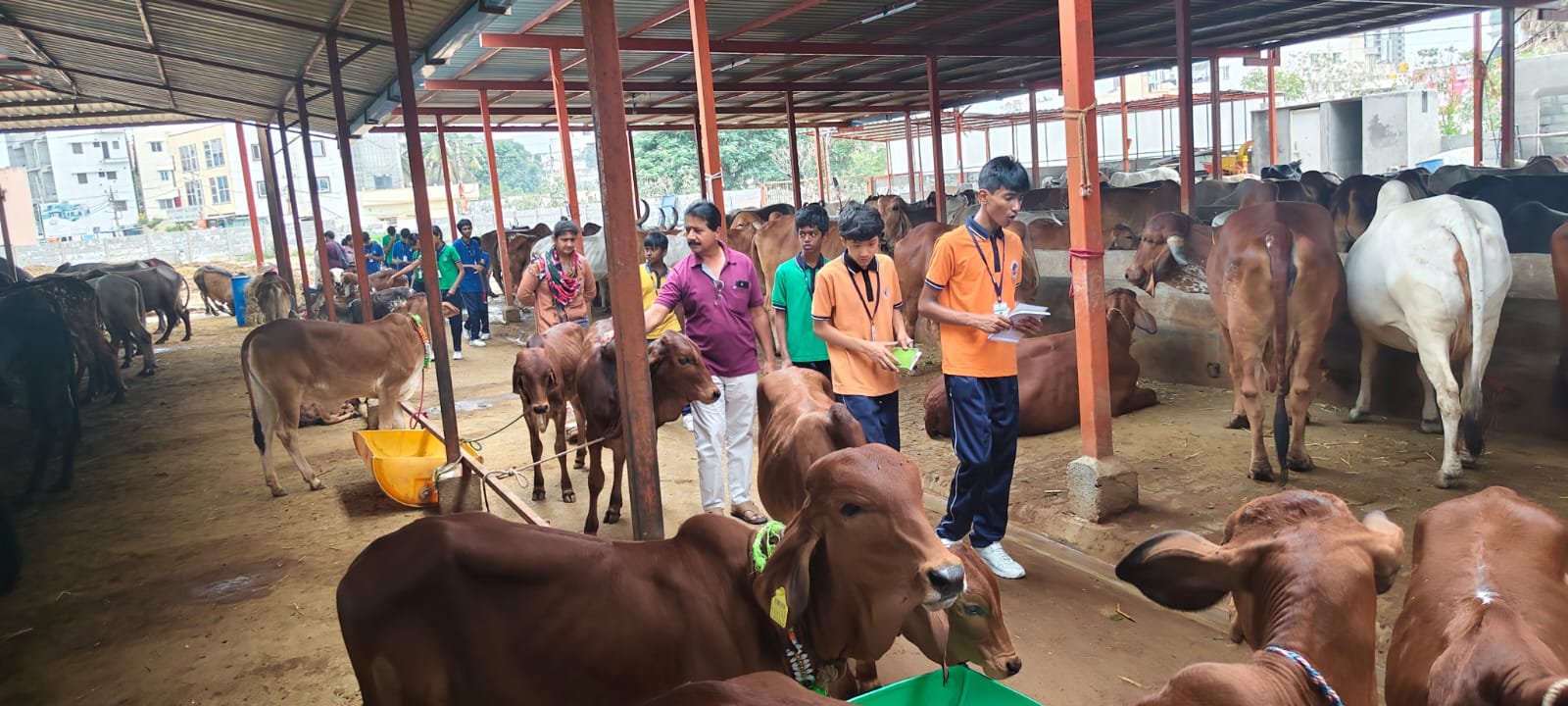
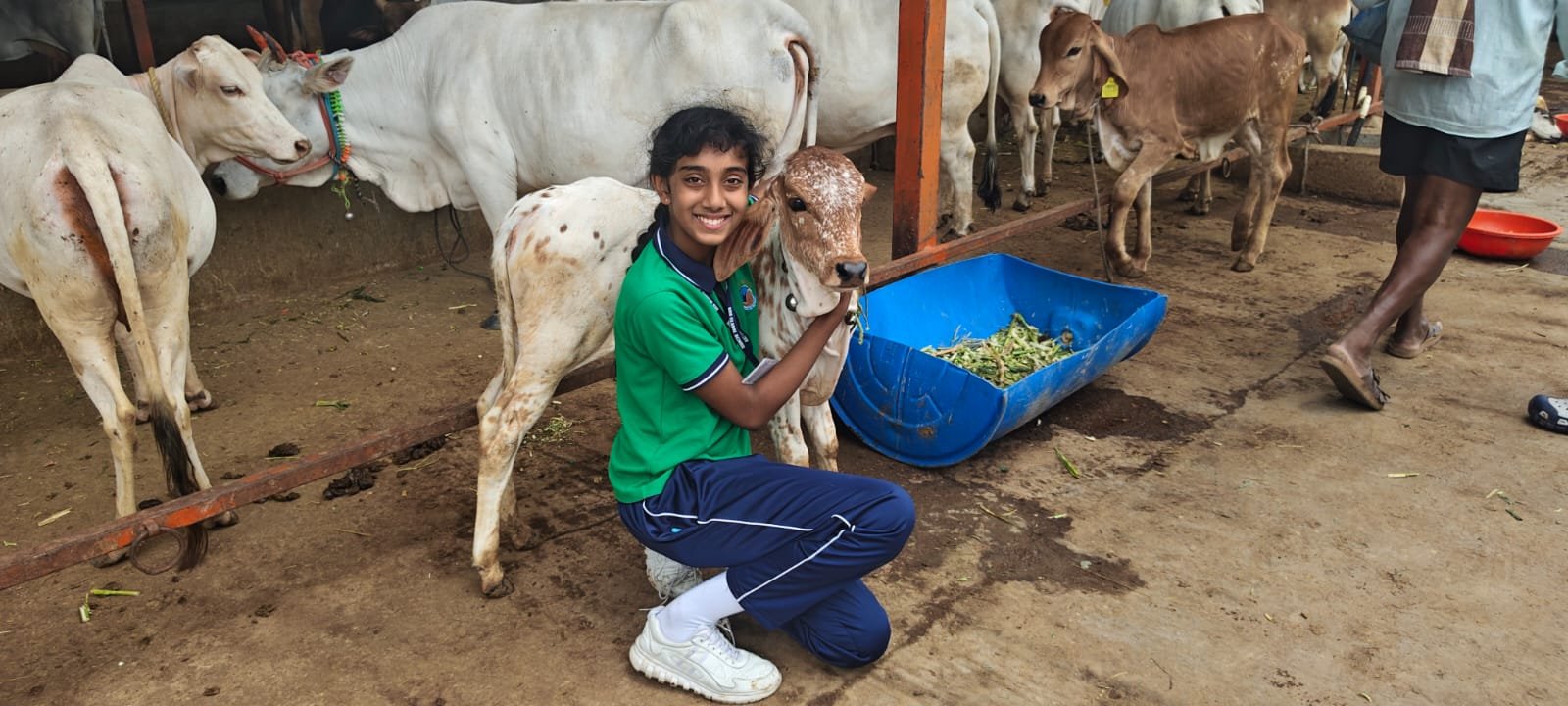
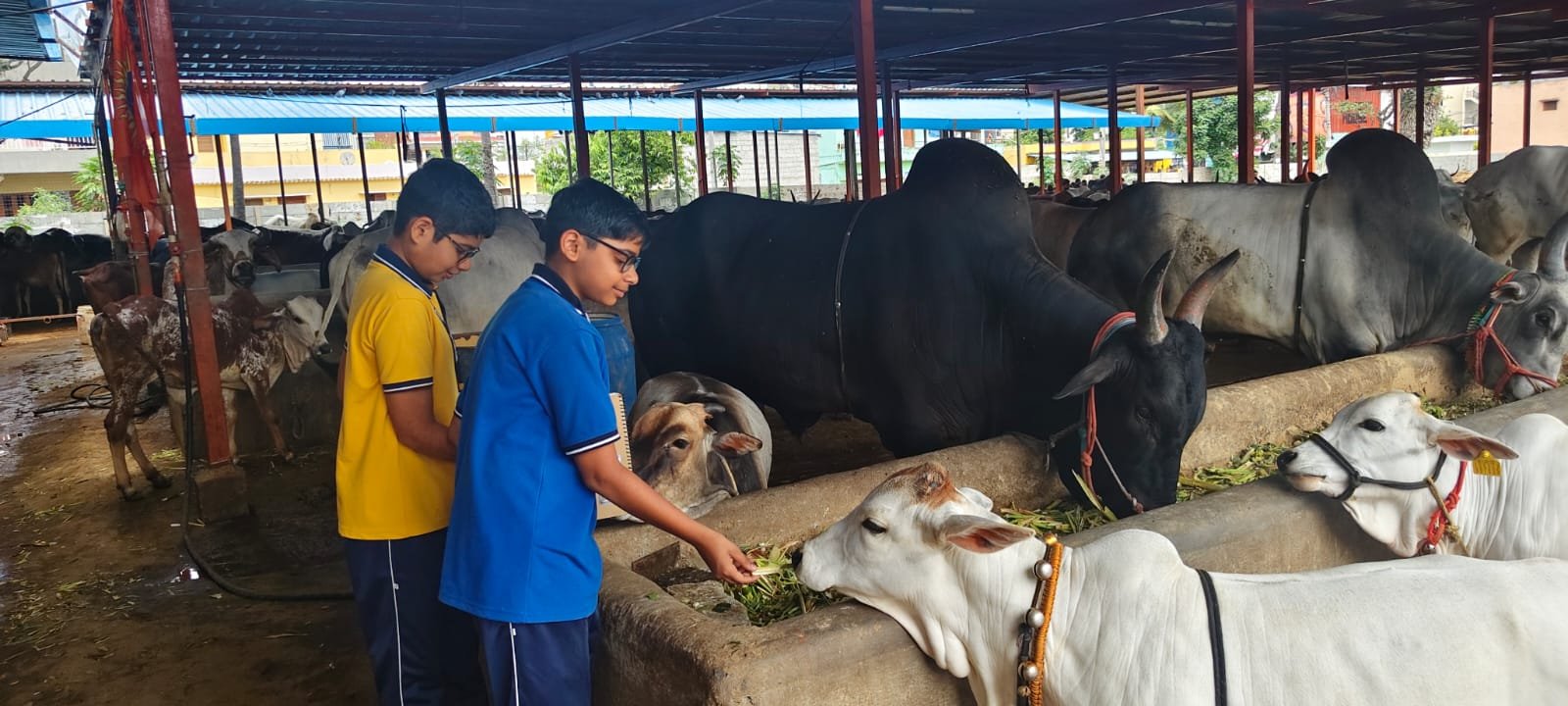
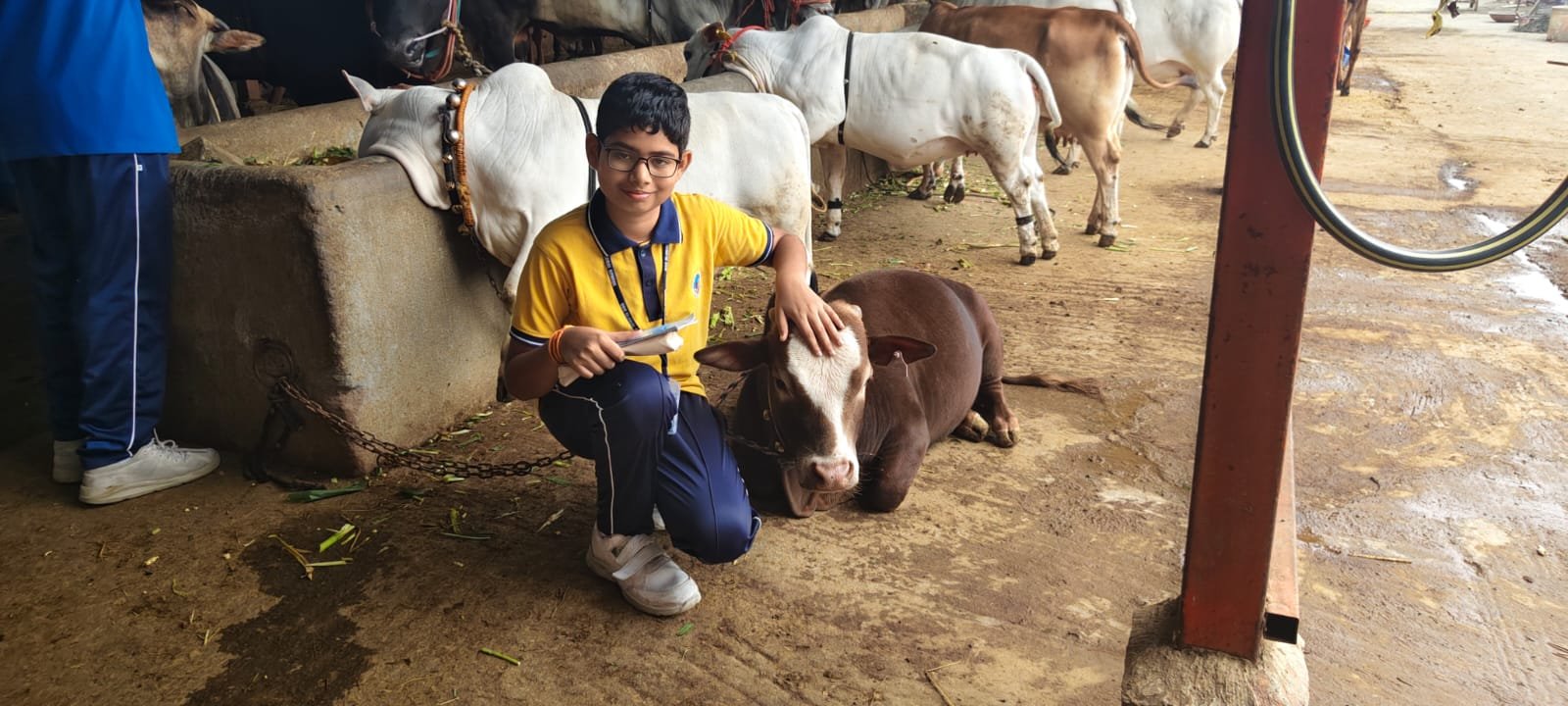
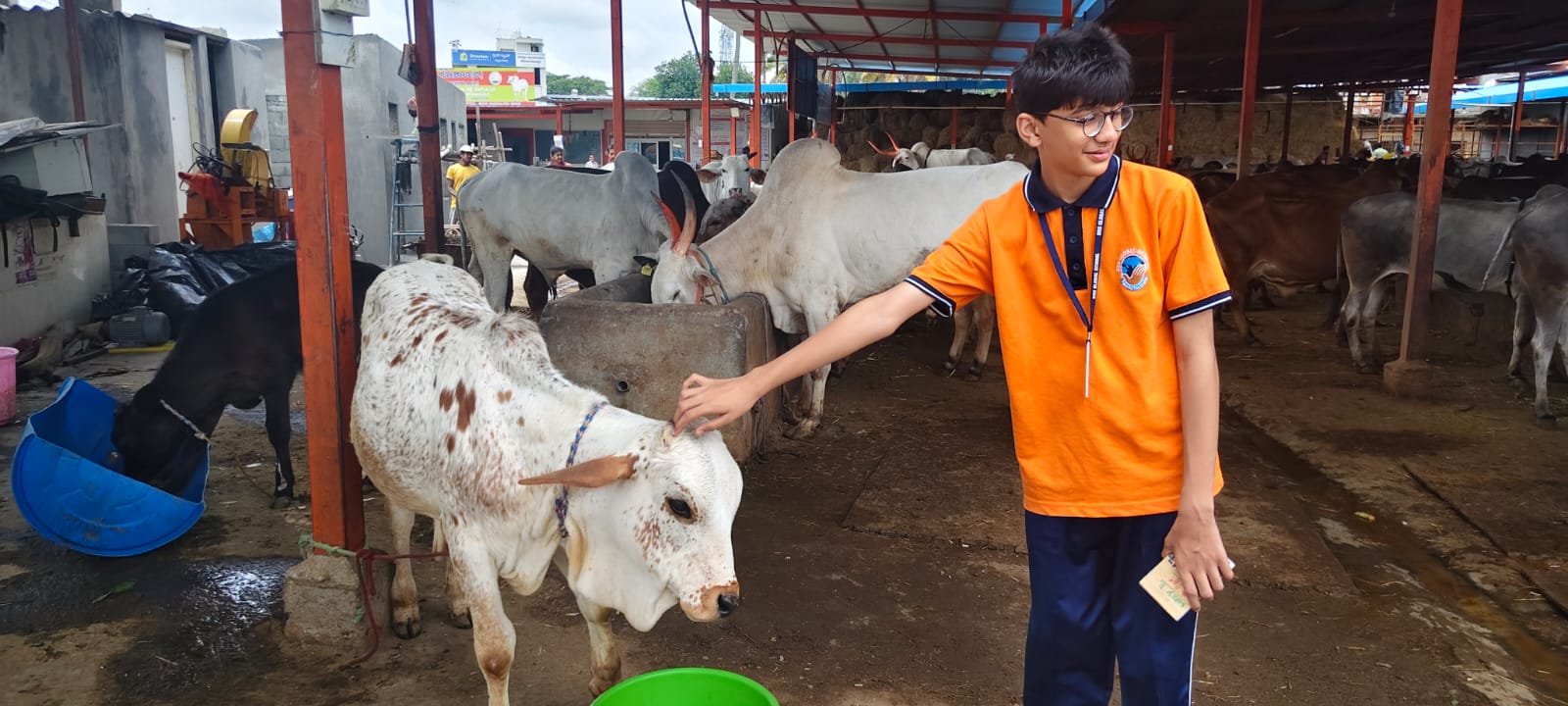
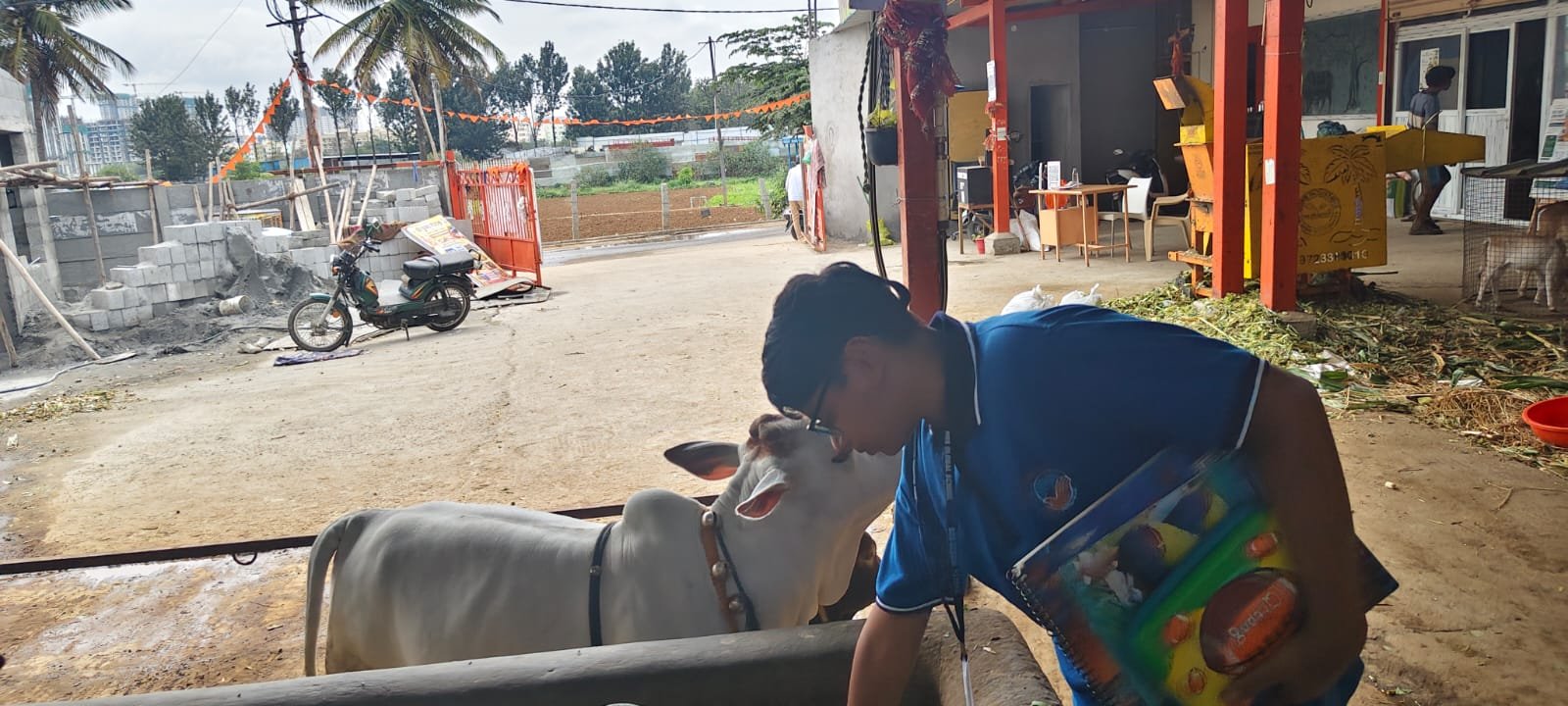
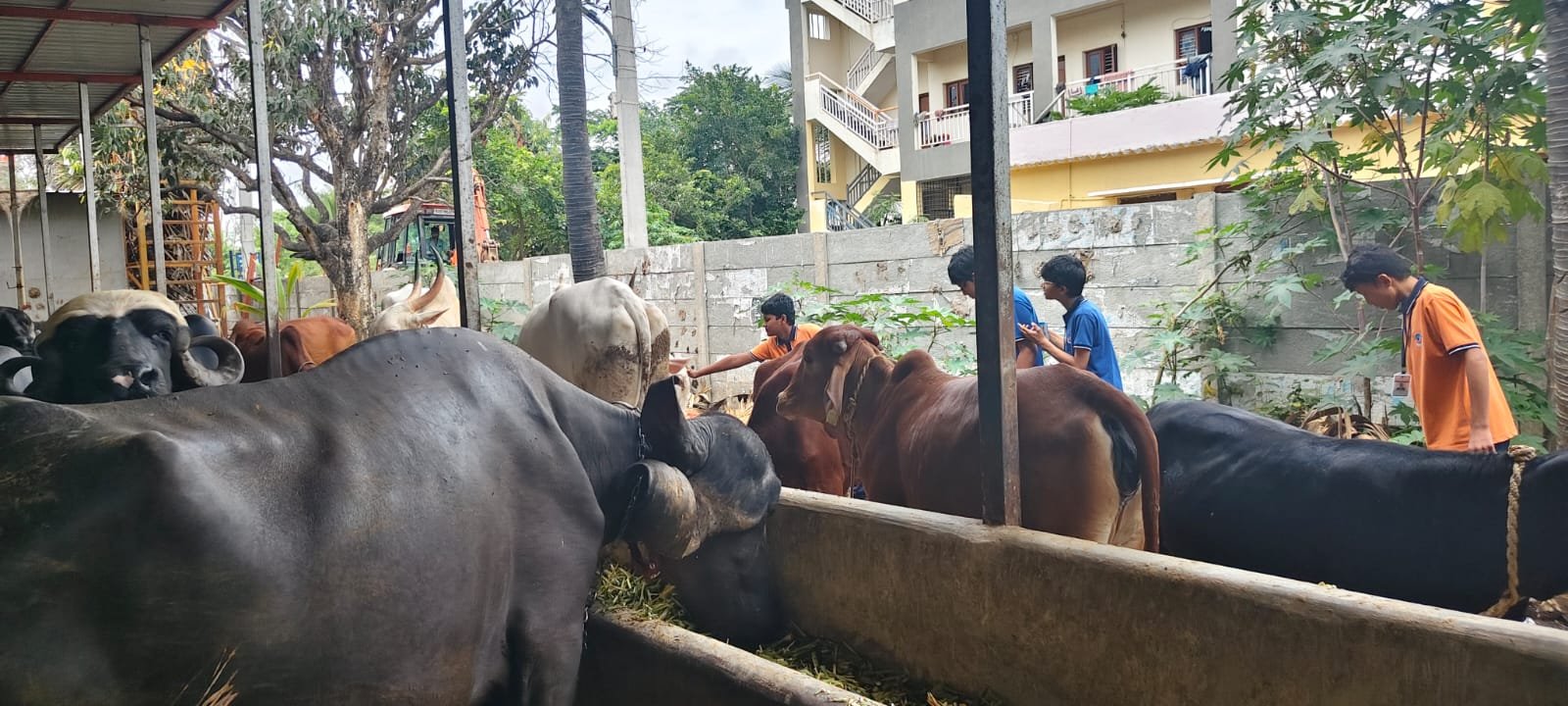
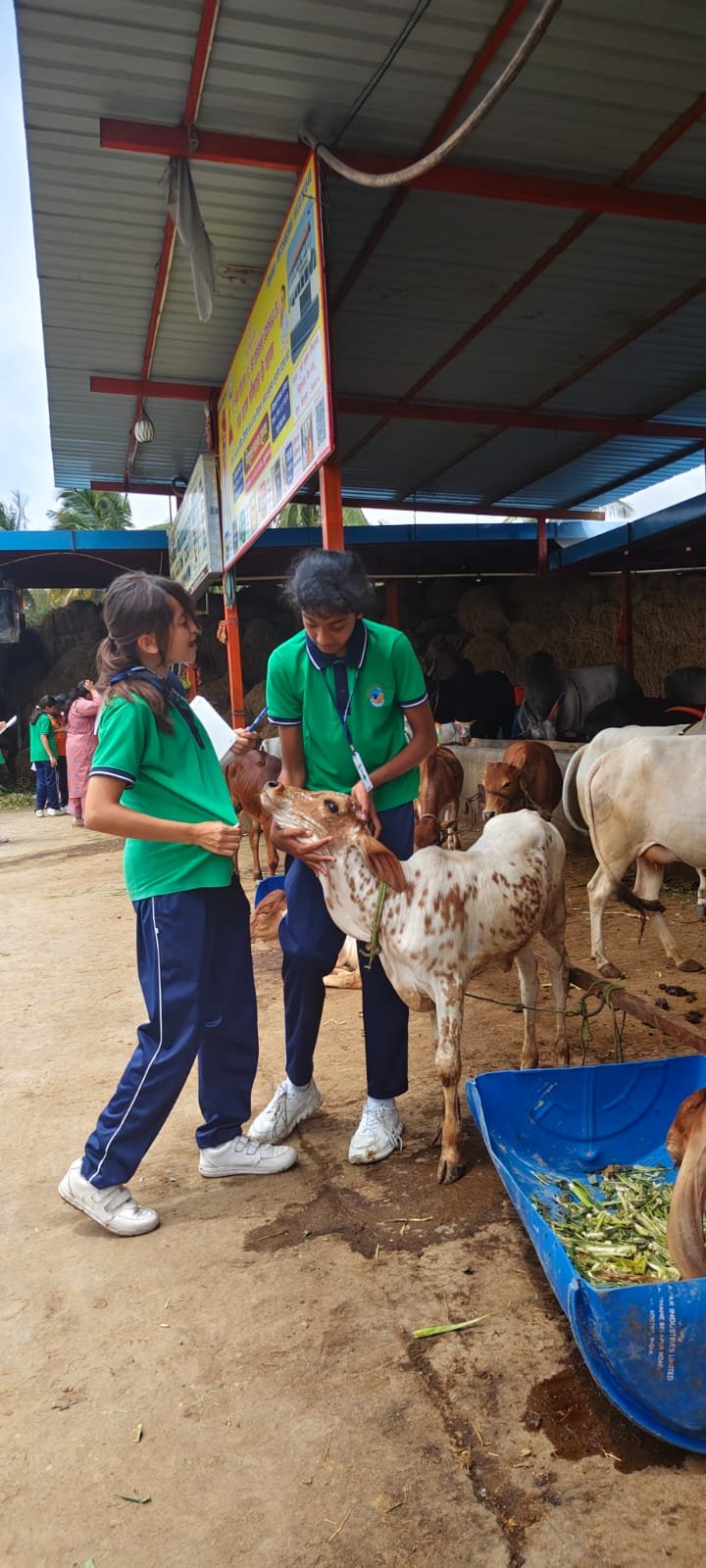
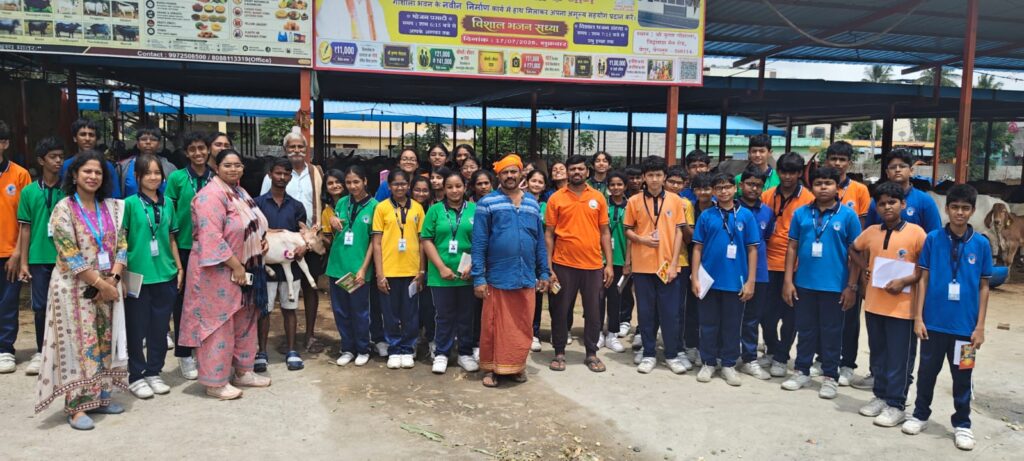
The visit began with students observing the animals at Shri Krishna Gaushala. They saw different varieties of cows, buffaloes and calves and paid attention to the environment in which the animals were cared for.
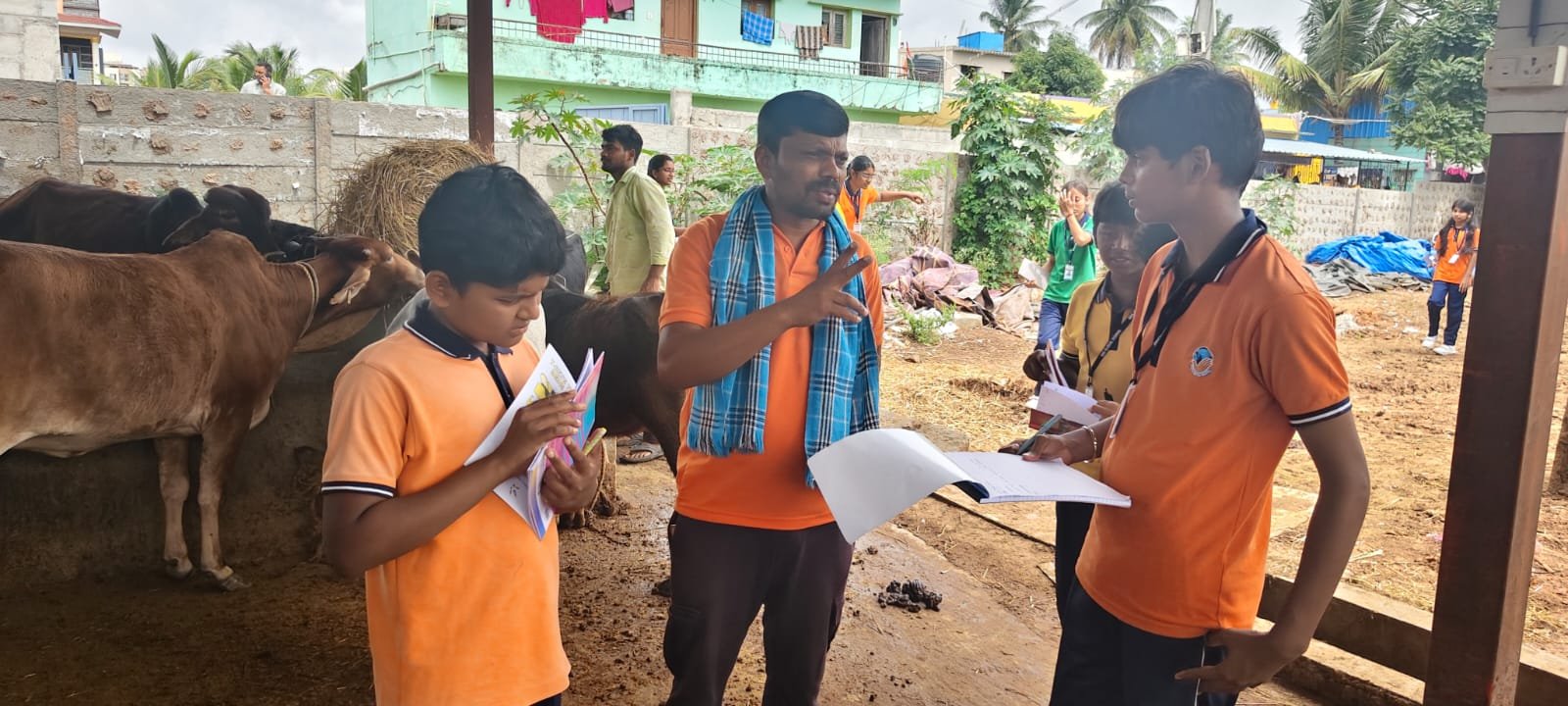
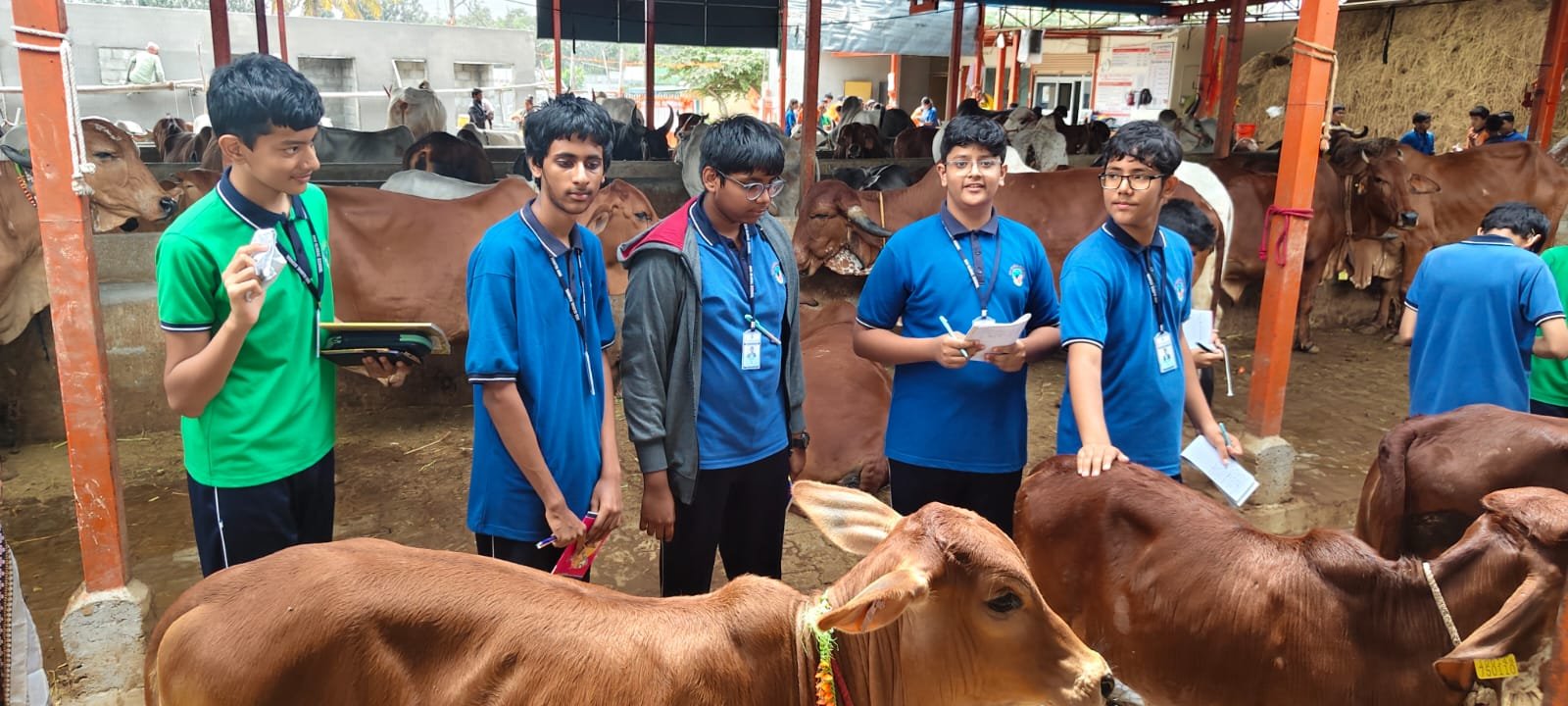
Rather than simply observing from a distance, students engaged actively with the experience. They interacted with the people working at the gaushala and asked questions about the practical aspects of animal care.
Their questions covered areas such as:
• What do the animals eat?
• How frequently are they fed?
• How are animals kept clean?
• How are their living spaces maintained?
• How often are the animals bathed?
• What care is provided when an animal becomes ill?
• What daily responsibilities are involved in looking after animals?
This interaction encouraged students to look at animal care as a responsibility requiring regular attention, patience, cleanliness and compassion.
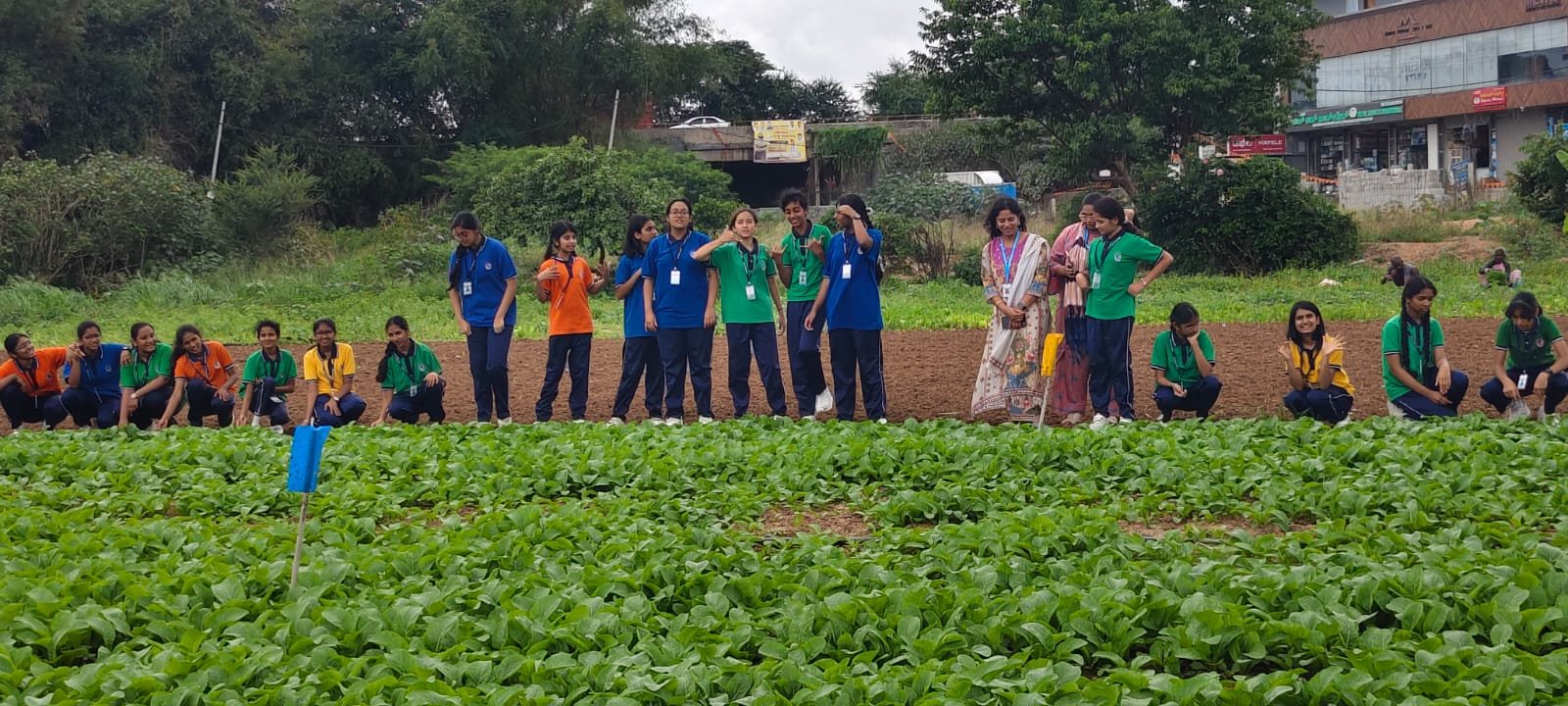
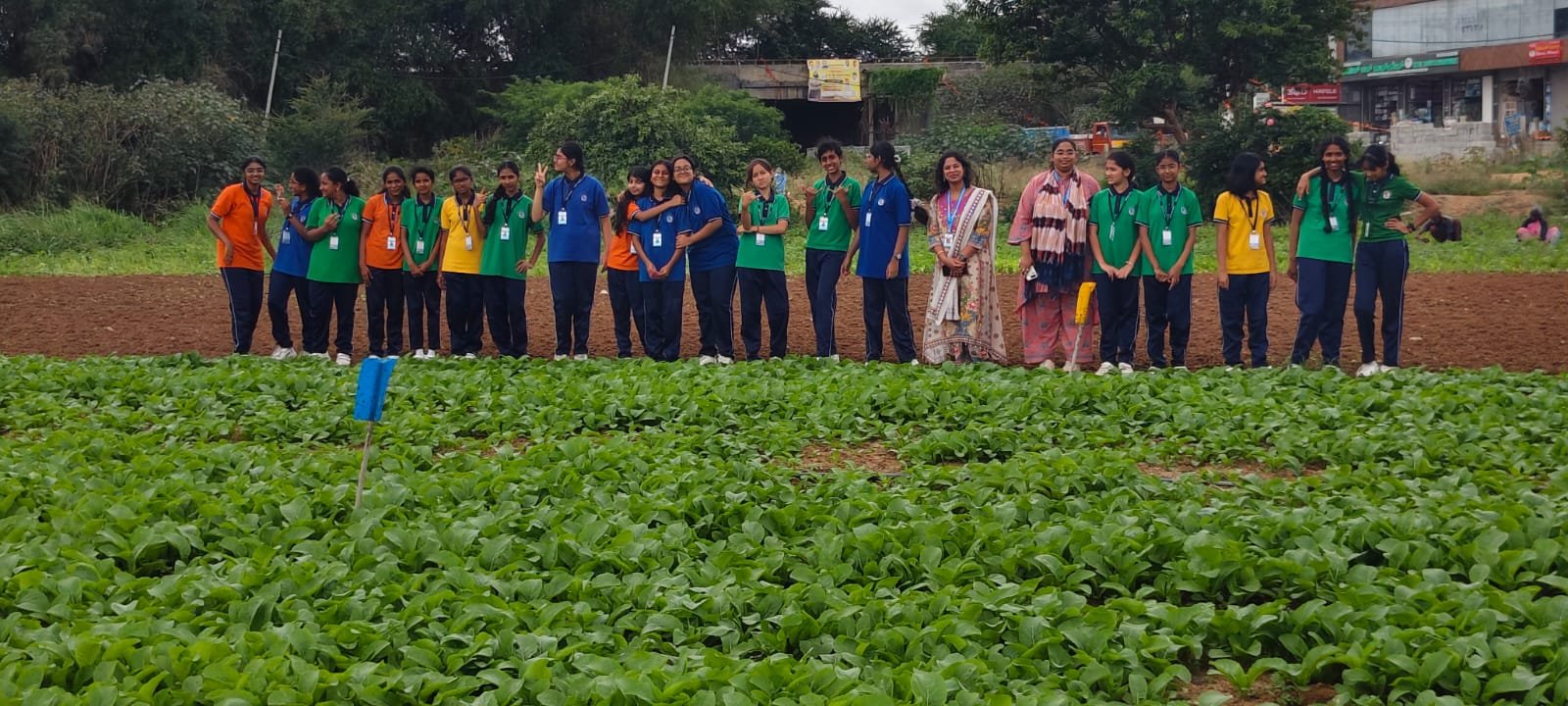
The visit then extended to the adjoining farm, where students observed spinach and mustard plants growing. This provided another dimension to the theme of “Work with Life Forms” by allowing students to see how plants are nurtured and how agricultural practices depend on natural resources and consistent care.
What Did Students Learn About Animals and Farming?
Students gained practical insights into two closely connected areas of life: animal care and plant cultivation.
At the gaushala, they learned that caring for animals involves much more than providing food. Clean surroundings, appropriate feeding, bathing, observation of health and timely care are all part of responsible animal management.
At the farm, students observed growing spinach and mustard plants and began connecting plant growth with basic requirements such as soil, water, sunlight and regular care.
The experience therefore moved learning from an abstract concept to something students could see, question and understand through direct observation.
Student Learning Outcomes & Benefits
Understanding the Needs of Living Beings
Students developed a clearer understanding of the everyday needs of animals and plants. They recognised that living beings depend on consistent care and appropriate environments to remain healthy.
Developing Compassion
Seeing animals closely and learning about their care encouraged students to think about the needs and well-being of other living beings.
Compassion becomes more meaningful when students encounter real situations where care, patience and responsibility are required.
Building Responsibility
The visit helped students recognise that caring for animals and plants involves regular responsibilities. Feeding, cleaning, monitoring health and nurturing growth cannot be treated as occasional tasks.
Learning Through Observation
Students were encouraged to observe carefully, ask questions and understand processes rather than simply receive information. These are important habits for experiential and inquiry-based learning.
Understanding Agriculture
The farm visit introduced students to basic aspects of cultivation and helped them appreciate the effort involved in growing food and maintaining plants.
Respect for Nature
The experience strengthened students’ awareness of the interconnectedness of humans, animals, plants and natural resources.
Communication and Questioning
Interacting with gaushala workers gave students an opportunity to communicate with adults outside their usual classroom environment and seek answers to their questions.
How Does This Activity Support CBSE Learning?
The Kaushal Bodh field visit supports skill-based and experiential learning by giving Grade 8 students opportunities to connect classroom concepts with practical activities and the world around them.
CBSE has highlighted experiential learning as a student-centred approach in which learners engage with experiences, think critically, evaluate situations, make decisions and construct understanding through doing.
CBSE has also stated that NCERT’s Kaushal Bodh framework supports experiential learning for Grades 6–8 and aims to connect classroom learning with the world of work.
The field visit reflects this approach by allowing students to experience real contexts related to:
• Caring for animals
• Nurturing plants
• Understanding work responsibilities
• Observing natural processes
• Asking questions
• Applying classroom knowledge
• Developing practical and social skills
It also reflects the broader educational direction towards integrating practical, skill-based and experiential opportunities into schooling.
Why Does Experiential Learning Matter for Student Development?
A student may learn about plants from a textbook, but observing a growing plant creates another layer of understanding. Similarly, learning about animals academically is different from seeing how people care for them every day.
Experiential learning creates opportunities for students to observe, question, connect, reflect and apply.
The Government of India’s educational resources describe experiential learning as a way of helping students connect what they learn with their own lives and the world around them. Such approaches are associated with deeper and more meaningful learning, engagement, socio-emotional development and critical thinking.
For Grade 8 learners, experiences such as this can therefore complement academic learning by helping them develop practical awareness and values alongside subject knowledge.
Why This Matters for Student Development?
The value of the visit extends beyond what students saw at the gaushala and farm.
A meaningful educational experience should encourage students to think about what they observed, what they learned and how that learning applies to their own lives.
This field visit encouraged students to reflect on questions such as:
• Who is responsible for caring for animals?
• What happens when living spaces are not kept clean?
• Why do plants need regular care?
• How does agriculture depend on natural resources?
• What responsibilities do humans have towards other forms of life?
• How can we show greater respect for nature in everyday life?
Such questions can help students develop a more thoughtful relationship with their surroundings.
Educational Philosophy and Institutional Value Alignment
At BRS Global School | Best CBSE School in Sarjapur Road, experiential opportunities can complement classroom learning by giving students contexts in which they can observe and apply what they learn.
The Kaushal Bodh field visit reflects an educational philosophy in which learning is not restricted to textbooks or examinations. Students are encouraged to understand concepts through experiences, interaction, observation and reflection.
The theme “Work with Life Forms” is particularly valuable because it introduces students to a form of work that requires care rather than simply productivity. Looking after animals, nurturing plants and maintaining clean and healthy surroundings require commitment, patience and responsibility.
These are qualities that contribute to a student’s development both inside and outside the classroom.
Local Context: Learning Experiences for Families Around Sarjapur Road
For families exploring schools in Sarjapur Road, the educational experience offered by a school extends beyond academics. Parents increasingly look for learning environments where children can develop practical understanding, communication skills, confidence and social responsibility alongside their academic foundation.
The BRS Global School, Sarjapur Road Campus is located in Kasavanahalli, Bengaluru, making it relevant to families living and working across nearby communities such as Bellandur, Sarjapur Road, Hosa Road, Koramangala, HSR layout, Dommasandra, Kodathi, Gunjur, Varthur, Kaikondrahalli, Kasavanahalli, Carmelaram, Harlur, Rayasandra, Naganathapura, Doddakannelli, Kudlu Gate, A Krishnappa Nagar, Halnayakanahalli, Radha Reddy Layout, Chikkanayakanahalli, Huskur, KPC Layout, CSB Layout, Owners Court, Doddanagamangala, Doctors Layout, Shiva Reddy Layout, Meenakshi Layout, Chikbellandur, Sompura Gate, Muthannalur Cross, Gunjur to Dommasandra Road, Mullur, Amrita Engineering College Road Kasavanahalli, Amrita Nagar, Serenity Layout, Spring Fields, Iblur, Marathahalli, Shobha Apartments, Choodasandra, Junnasandra, Rayasandra.
The campus also serves families connected to residential communities and employment hubs across the wider Sarjapur Road–Bellandur corridor.
For parents comparing CBSE schools in Sarjapur Road, schools near Sarjapur Road or schools in Bellandur, experiences such as the Kaushal Bodh field visit provide an example of how learning can extend into real-world settings.
The focus is not simply on visiting a location. The educational value lies in what students observe, the questions they ask, the skills they practise and the reflection that follows the experience.
Common Parent Questions
How does a field visit support classroom learning?
A field visit allows students to observe real-world examples of concepts discussed in school. In this case, students connected ideas about living beings, natural resources, responsibility and sustainability with direct observations of animals and plants.
What skills did Grade 8 students develop?
Students developed observation, questioning, communication, responsibility, patience, compassion and awareness of cleanliness and environmental care.
How does Kaushal Bodh benefit middle-school students?
Kaushal Bodh provides students with structured opportunities to explore skills through practical experiences. CBSE identifies the framework as an experiential learning approach for Grades 6–8 that connects learning with the world of work.
How does this activity encourage environmental awareness?
Students observed how animals depend on proper care and how plants depend on soil, water, sunlight and nurturing. These experiences help make ideas about responsible resource use and respect for nature more concrete.
Why should parents value experiential learning?
Experiential learning helps students connect knowledge with real situations. It can encourage curiosity, critical thinking, communication, responsibility and deeper engagement with what they learn.
Which students benefit from activities like this?
All learners can benefit, particularly students who understand concepts more effectively when they can observe, interact with and experience them directly.
Does experiential learning replace academic learning?
No. Experiential learning complements academic learning. It provides real-world contexts in which students can apply, question and deepen their understanding of concepts.
Key Highlights
• Grade 8 students participated in the Kaushal Bodh Project.
• Theme: “Work with Life Forms.”
• Field visit conducted on 19 August 2026.
• Visit location: Shri Krishna Gaushala & Farm, Lakshmi Layout.
• Students observed cows, buffaloes and calves.
• Students interacted with gaushala staff.
• Students learned about feeding, bathing, cleanliness and animal health care.
• Students explored an adjoining farm.
• They observed spinach and mustard plants.
• Students learned about soil, water, sunlight and plant care.
• The experience encouraged compassion, patience and responsibility.
• The activity connected classroom learning with real-life experiences.
Frequently Asked Questions (FAQs)
What is the Kaushal Bodh Project?
Kaushal Bodh is an experiential learning framework developed by NCERT for Grades 6–8 to support skill-based projects and connect classroom learning with the world of work.
What does “Work with Life Forms” mean?
“Work with Life Forms” focuses on experiences involving living beings, such as understanding the care of animals, nurturing plants and recognising the responsibilities associated with living systems.
Where did BRS Global School Grade 8 students go for the Kaushal Bodh field visit?
Grade 8 students visited Shri Krishna Gaushala & Farm, Lakshmi Layout, on 19 August 2026.
What did students learn at the gaushala?
Students learned about animal diets, feeding schedules, bathing, cleanliness, living conditions and care provided when animals become ill.
What did students learn from the farm visit?
Students observed spinach and mustard plants and learned about the importance of soil, water, sunlight and regular care in plant growth.
What values did the field visit develop?
The experience encouraged compassion, patience, responsibility, cleanliness, curiosity and respect for animals, plants and nature.
How does this field visit support holistic education?
It combines practical observation with questioning, communication, responsibility and reflection, allowing students to develop knowledge, skills and values together.
Conclusion
The Kaushal Bodh Project – “Work with Life Forms” field visit gave Grade 8 students of BRS Global School a valuable opportunity to learn directly from the world around them. Their observations at Shri Krishna Gaushala & Farm helped them understand animal care, farming, nurturing living beings and the importance of responsible interaction with nature.
More importantly, the experience encouraged students to look beyond facts and consider the responsibilities, skills and values involved in caring for life.
For parents seeking a CBSE School in Sarjapur Road where academic learning can be complemented by meaningful experiential opportunities, this field visit reflects the value of giving students opportunities to learn through observation, interaction and real-world experiences.
Parents interested in learning more about the academic and experiential learning opportunities at the Sarjapur Road campus can connect with BRS Global School and explore the admission process.
Families looking specifically for the Sarjapur Road campus can refer to the branch listing here: BRS Global School – Sarjapur Road Branch
BRS Global School also has another branch in Attibele; it is a separate campus and should not be confused with the Sarjapur Road branch. BRS Global School – Attibele Branch
Explore our Campus:
Attibele Branch
https://share.google/iFhJaeGo8wkgOZ1Y5
Sarjapur Road Branch: