Introduction: Bringing Space Science Beyond the Classroom
What lies beyond the Earth? How do planets move around the Sun? How do scientists study distant galaxies, and how does India contribute to space exploration?
Questions like these often capture the imagination of school students. Astronomy offers an opportunity to explore such questions while developing an understanding of science, technology and the universe.
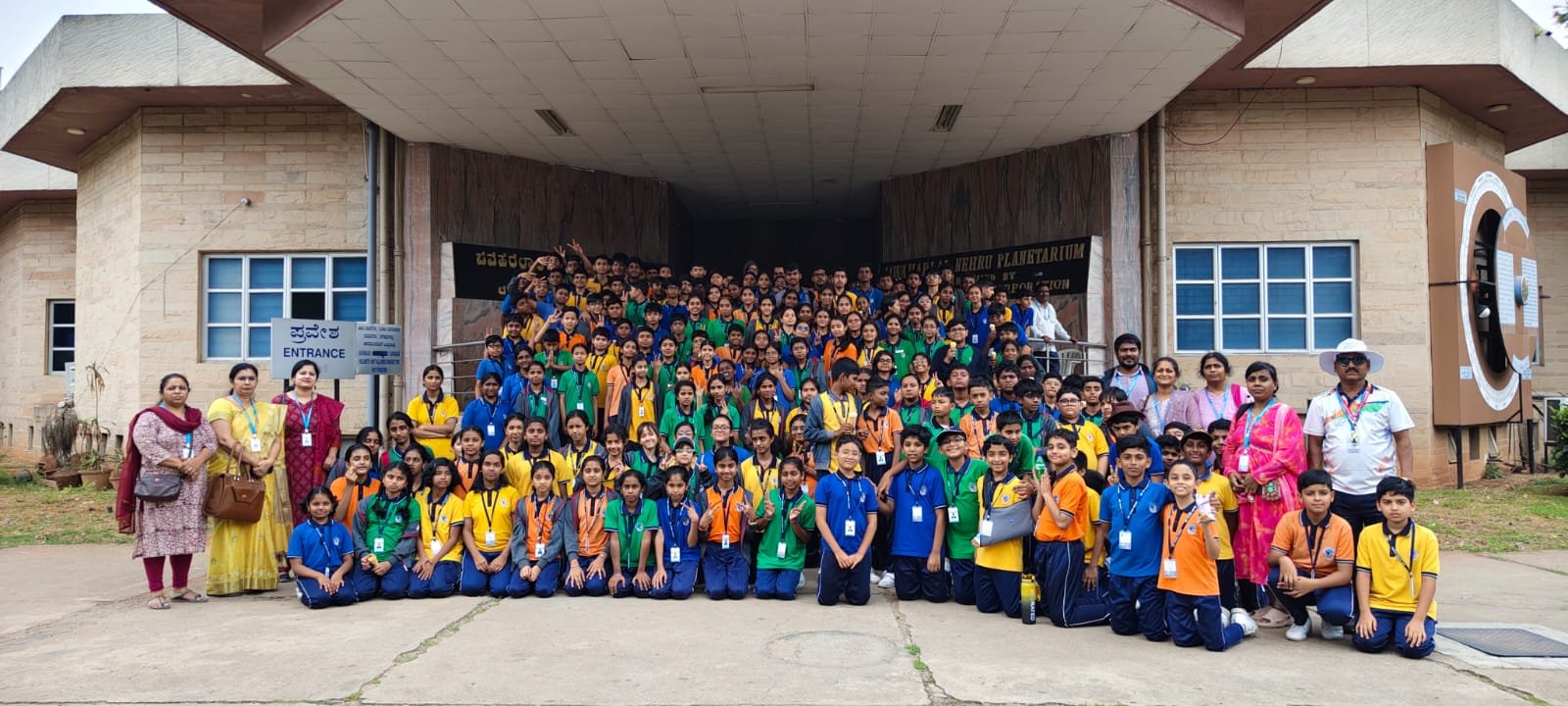
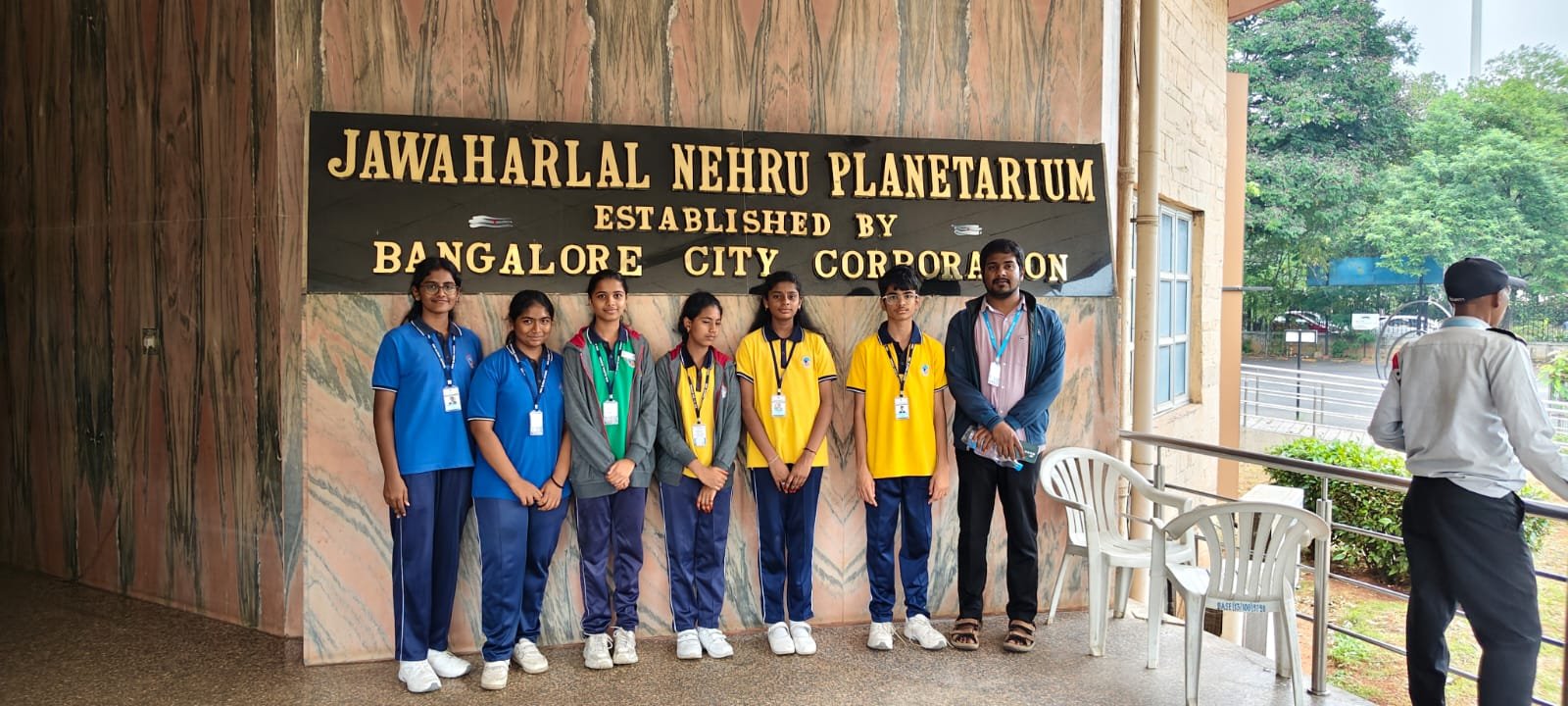
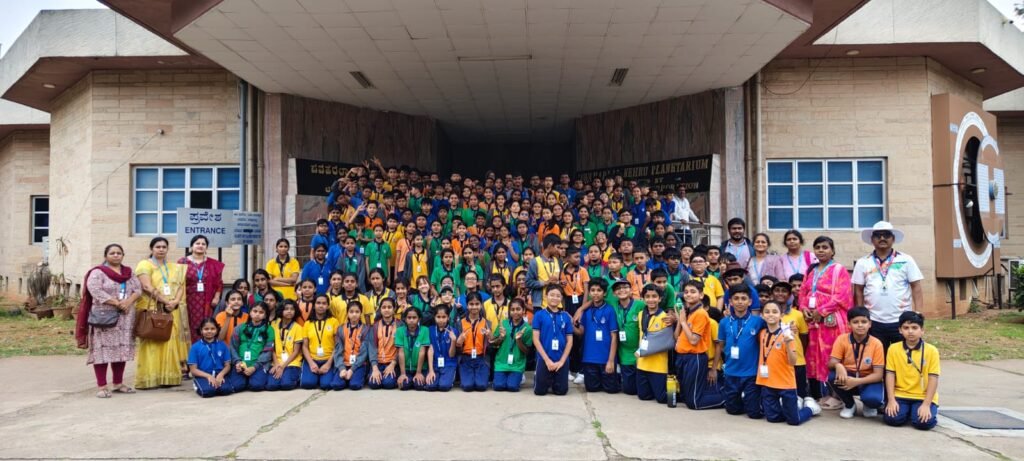
As part of its experiential learning approach, BRS Global School, Sarjapur Road (Kasavanahalli), organised an educational field trip to Jawaharlal Nehru Planetarium, Bengaluru, for students of Grades 6 to 10.
The visit offered students an opportunity to explore astronomy, understand important concepts of space science and learn about India’s growing contributions to space exploration. By experiencing scientific information through visual presentations, exhibitions and interactive learning environments, students could connect theoretical knowledge with practical understanding.
For a CBSE school in Sarjapur Road, educational visits of this nature provide valuable opportunities to extend learning beyond textbooks and encourage students to develop a deeper interest in scientific discovery.
Event Overview
Event : Educational Field Trip
Destination : Jawaharlal Nehru Planetarium
Location : Bengaluru, Karnataka
School : BRS Global School
Campus : Sarjapur Road, Kasavanahalli
Participating Classes : Grades 6, 7, 8, 9 and 10
Learning Focus : Astronomy and Space Science
Key Themes : Solar System, Universe, Constellations and Indian Space Missions
The Jawaharlal Nehru Planetarium is an educational destination where astronomy is introduced through visual experiences, scientific exhibits and interactive learning opportunities. Its learning spaces provide students with ways to explore the universe beyond conventional classroom explanations.
What Happened During the Educational Visit?
The field trip introduced students to different dimensions of astronomy and space exploration. The experience brought together visual learning, scientific concepts and opportunities to understand how space research contributes to our knowledge of the universe.
Exploring the Universe Through Sky Theatre Experiences
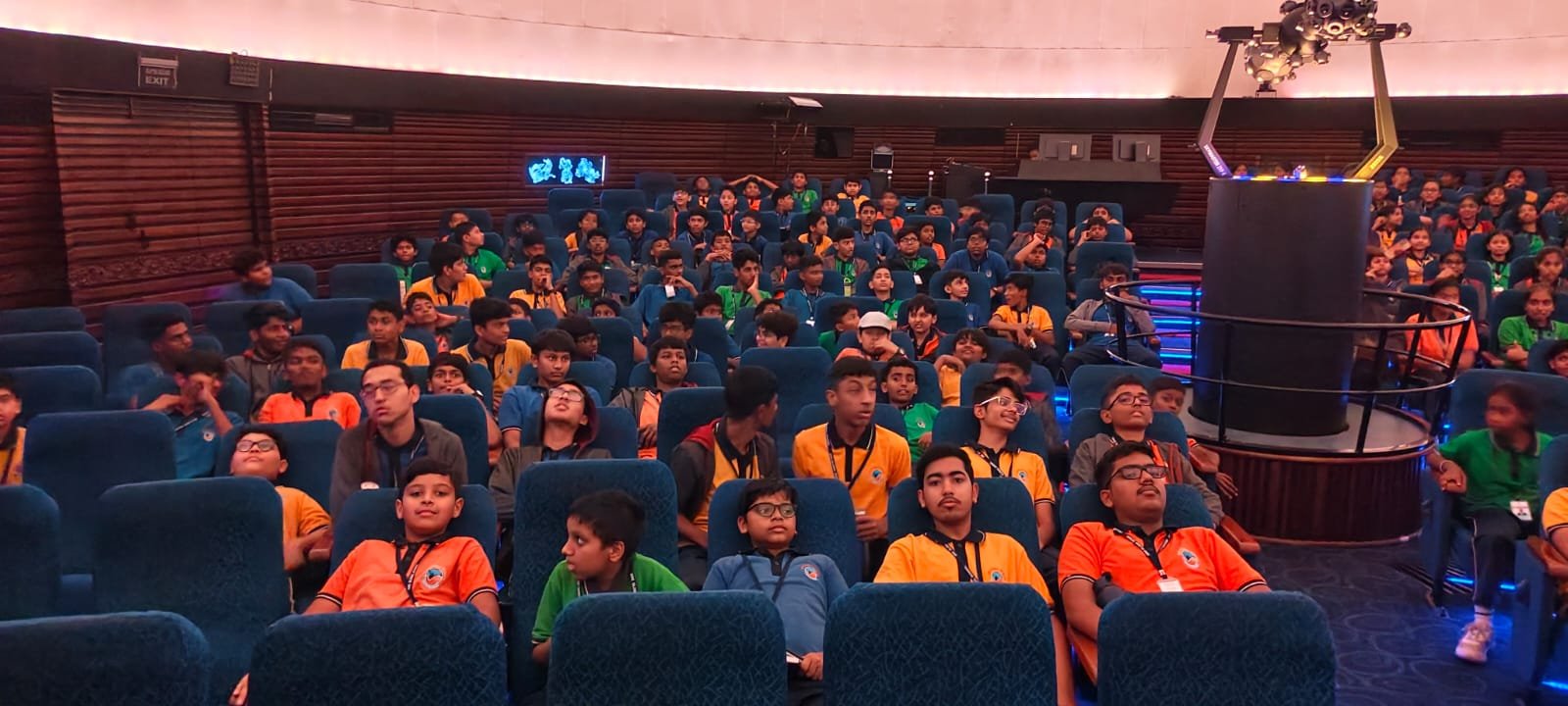
One of the most engaging aspects of a planetarium experience is the sky theatre. Unlike a conventional classroom presentation, a dome-based visual environment allows learners to explore astronomical concepts through immersive projections.
Students had the opportunity to become familiar with how planetarium presentations bring subjects such as the solar system, stars, constellations and the wider universe to life.
Such visual experiences can help students understand concepts that are otherwise difficult to imagine through diagrams or written explanations alone.
Discovering Astronomy Through Exhibitions
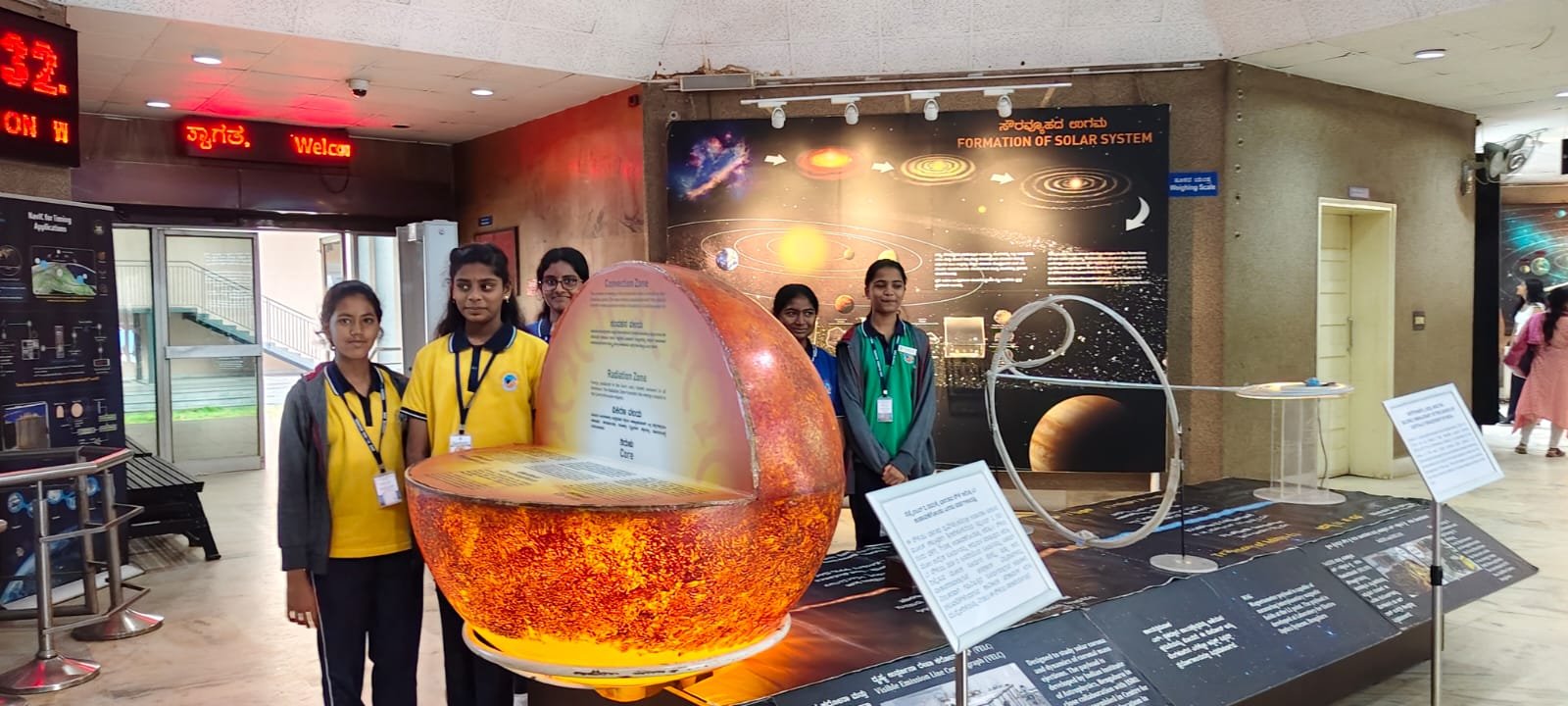
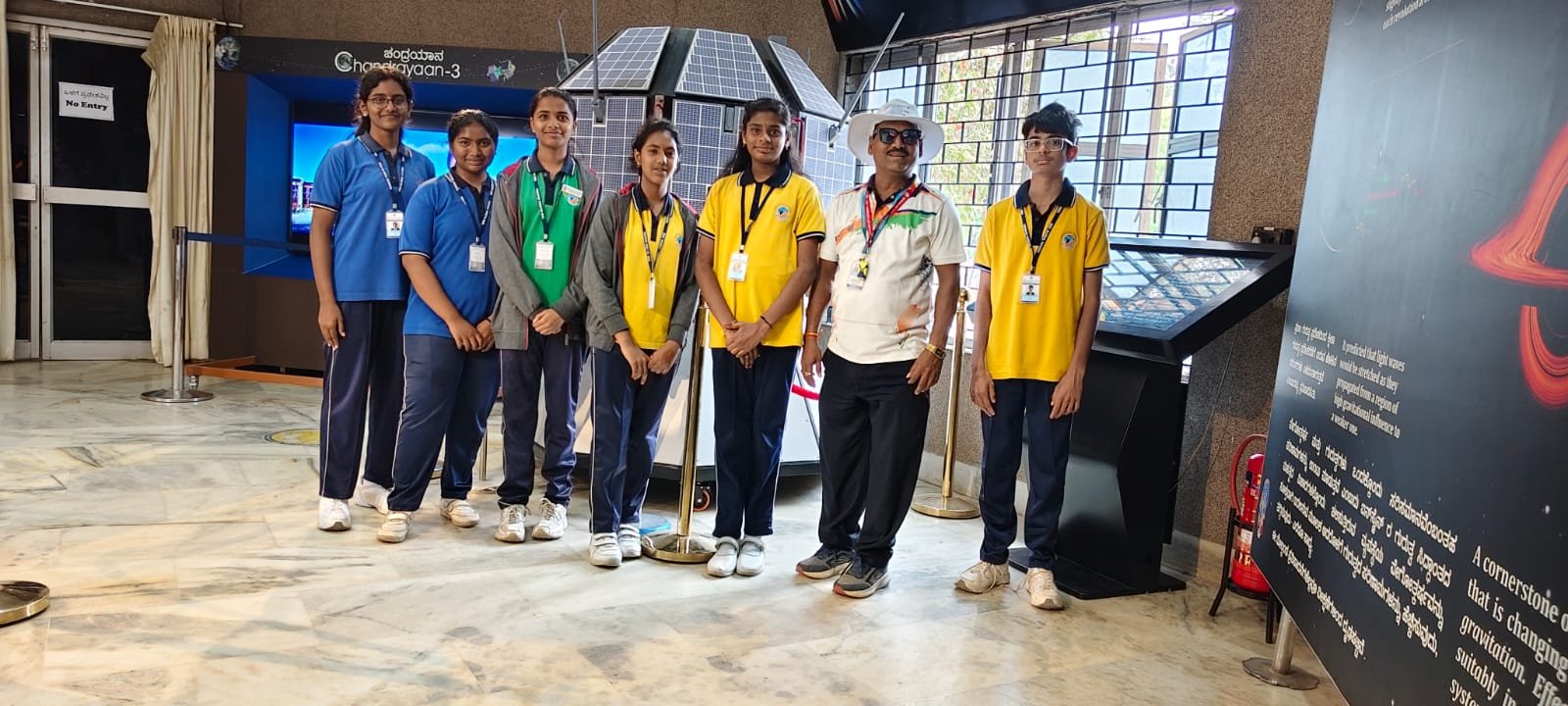
Astronomy exhibitions provide an opportunity to explore scientific information through illustrations, displays, posters and models.
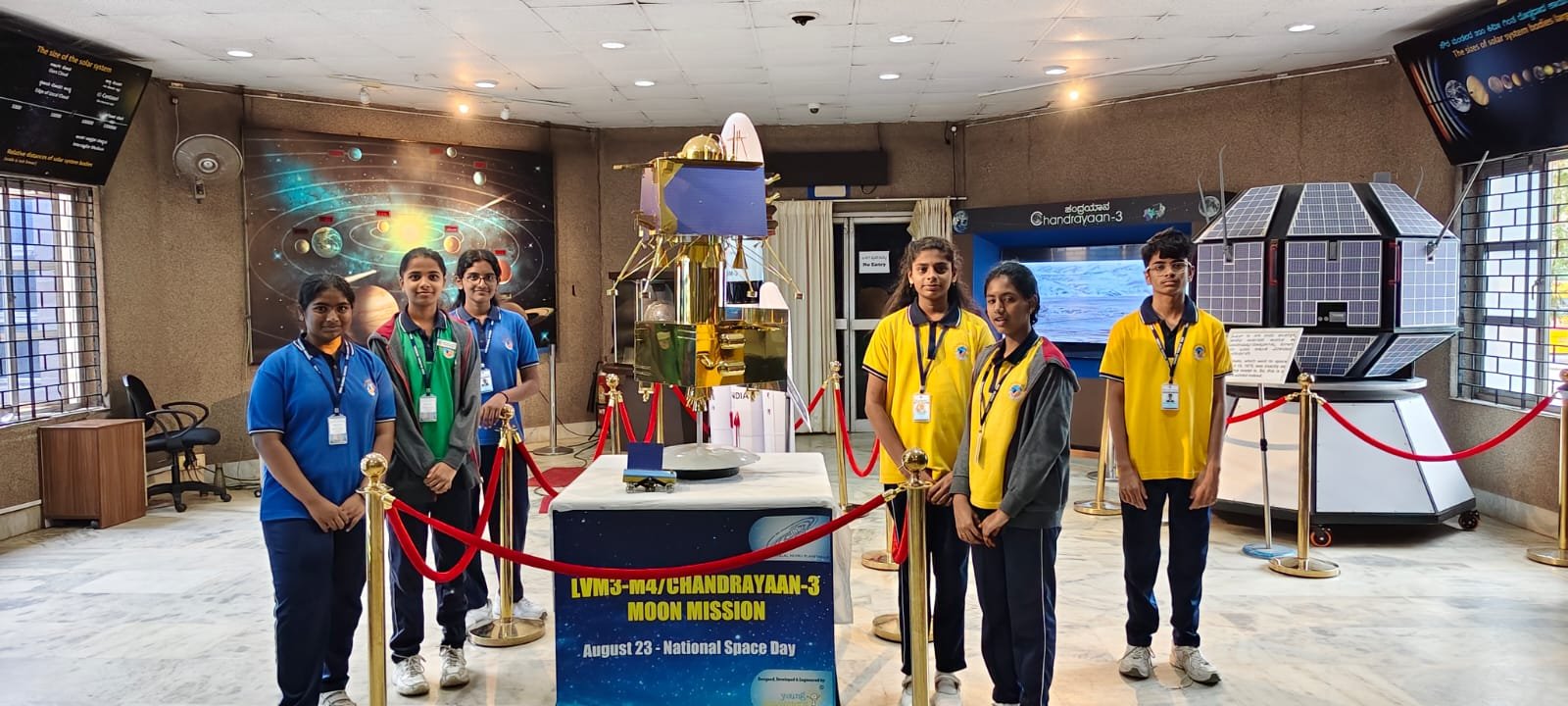
The planetarium’s exhibition spaces introduce visitors to important aspects of space science, including the structure of the solar system, celestial objects and developments in space exploration.
For students, these displays offer an opportunity to connect scientific terminology with visual representations and develop a clearer understanding of astronomical subjects.
Learning Through the Science Park
The Science Park at Jawaharlal Nehru Planetarium offers an interactive environment where scientific principles can be explored through models and demonstrations.
Examples of scientific concepts represented in such spaces include sundials, motion, mechanics and rocket-related designs.
These experiences demonstrate how scientific principles are connected to everyday observations and technological applications. They also encourage students to approach science through exploration rather than memorisation alone.
Understanding India’s Achievements in Space Exploration
An important dimension of the visit was the opportunity to explore India’s progress in space science.
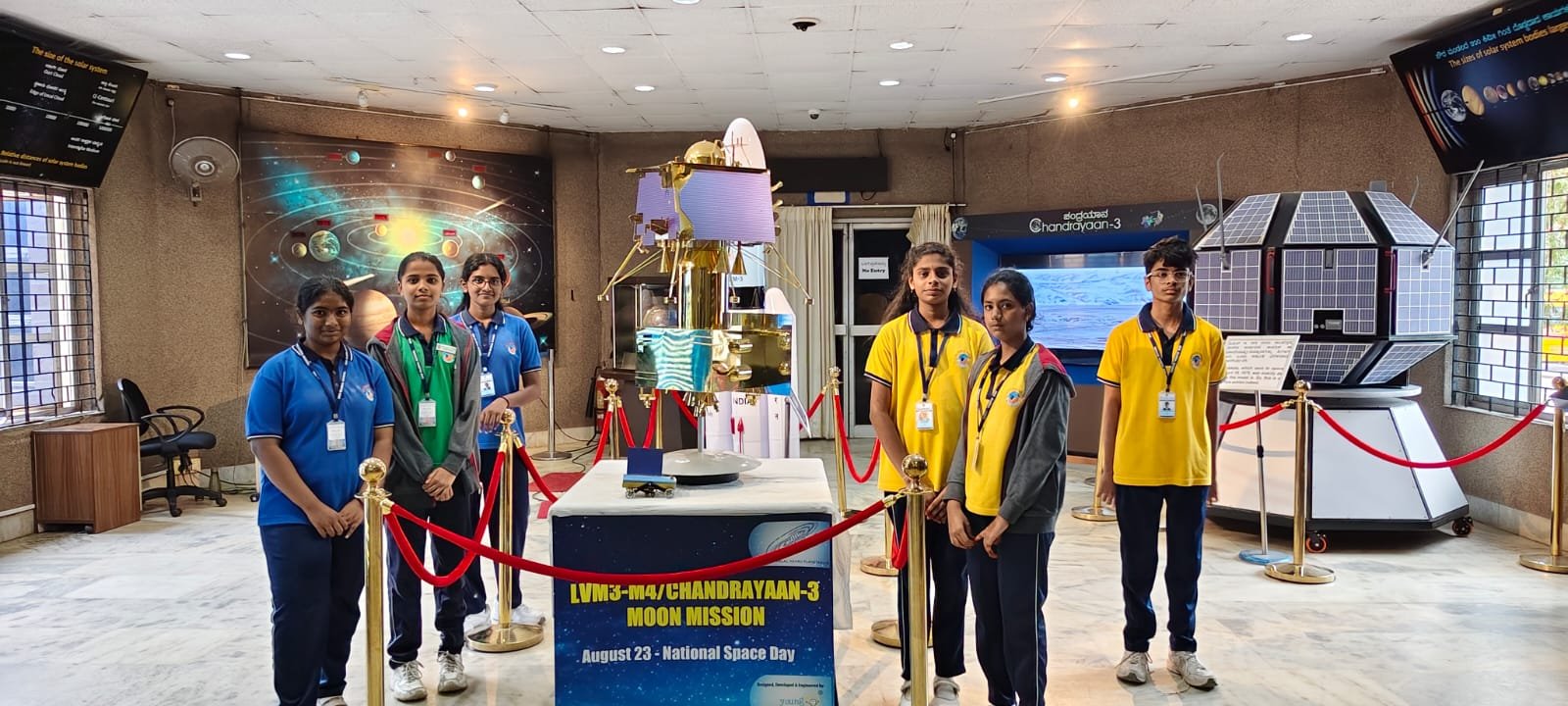
Students were introduced to the significance of missions such as Chandrayaan-3 and Gaganyaan, which represent important areas of India’s space exploration efforts.
Chandrayaan-3 demonstrated India’s lunar exploration capabilities, while Gaganyaan represents India’s human spaceflight programme.
Learning about these missions helps students appreciate the scientific research, engineering, teamwork and technological development involved in space exploration.
It also provides inspiration to learners who may be interested in astronomy, aerospace engineering, physics, robotics and other science-related fields.
Student Learning Outcomes and Educational Benefits
An educational visit to a planetarium offers benefits that extend beyond learning the names of planets or identifying constellations. It encourages students to understand how scientific knowledge is developed and applied.
Better Understanding of Astronomy
Students gain exposure to concepts involving the solar system, celestial objects, constellations and the universe. Visual explanations help make abstract scientific topics easier to understand.
Development of Scientific Curiosity
Space science naturally encourages questions. Students begin to think about how planets form, why celestial bodies move and how scientists gather information about distant objects.
This questioning approach is an important foundation for scientific learning.
Observation and Analytical Thinking
Scientific exhibits and models encourage learners to observe details, identify relationships and interpret information.
These experiences support analytical thinking and help students develop a more structured approach to understanding scientific concepts.
Awareness of Space Technology
Exposure to India’s space missions helps students understand the connection between scientific research, engineering and technological innovation.
It introduces them to the possibilities of future learning and careers in science and technology.
Connecting Theory with Practical Understanding
Classroom lessons often introduce scientific concepts through textbooks, diagrams and explanations. A field trip adds another dimension by allowing students to encounter related concepts in an educational environment.
This connection can make learning more meaningful and memorable.
Encouraging Independent Learning
Educational visits often inspire students to explore subjects further after returning to school. They may develop an interest in researching planets, space missions, satellites, astronauts and new scientific discoveries.
Such curiosity can gradually develop into independent learning habits.
How Does the Field Trip Support CBSE Learning?
CBSE education places importance on developing conceptual understanding, scientific thinking and the ability to apply knowledge.
An educational visit to Jawaharlal Nehru Planetarium complements these learning objectives by giving students opportunities to explore science outside the classroom.
The experience supports:
• Conceptual understanding: Connecting classroom discussions about astronomy with visual scientific representations.
• Observation skills: Examining models, displays and demonstrations.
• Scientific inquiry: Developing questions and exploring explanations.
• Critical thinking: Understanding the relationship between scientific concepts and technological applications.
• Real-world awareness: Learning about India’s space research and technological achievements.
• Interdisciplinary learning: Recognising connections between physics, mathematics, engineering, geography and technology.
For students in middle and secondary school, these opportunities can help develop a stronger foundation for advanced science learning.
The visit also reflects the value of experiential education, where students engage with knowledge through observation, exploration and meaningful experiences.
Educational Philosophy: Learning Through Exploration
At BRS Global School, Sarjapur Road, learning extends beyond classroom instruction. Educational experiences such as field trips provide opportunities for students to encounter new ideas, explore unfamiliar environments and develop a broader understanding of the world.
The planetarium visit reflects an important educational principle: students learn more meaningfully when they can connect theoretical concepts with experiences.
Space science is particularly suitable for this approach because many astronomical concepts are difficult to observe directly. Visual presentations, scientific models and educational exhibitions help make these ideas more accessible.
Such experiences encourage learners to:
• Ask meaningful scientific questions.
• Explore concepts beyond prescribed textbooks.
• Appreciate research and technological innovation.
• Develop curiosity about the natural world.
• Recognise the importance of scientific knowledge in society.
The objective is not simply to introduce students to new information but to encourage them to think, question and continue exploring.
Why Are Educational Field Trips Important for Student Development?
Educational field trips contribute to student development by combining academic learning with observation, exploration and real-world exposure.
A visit to a science-focused institution such as Jawaharlal Nehru Planetarium can make students more aware of how scientific knowledge is applied outside school.
For middle and secondary school learners, these experiences are particularly valuable because they are developing their interests, reasoning abilities and understanding of different academic disciplines.
The visit also introduces students to potential areas of future study, including astronomy, astrophysics, aerospace engineering, physics and space technology.
Parents often look for schools that provide more than textbook-based instruction. Meaningful educational visits demonstrate how academic concepts can be connected with practical experiences.
For families exploring CBSE schools in Sarjapur Road, such opportunities are an important aspect to consider when evaluating a school’s approach to experiential learning and holistic development.
Local Context: A Learning Opportunity for Families Around Sarjapur Road
BRS Global School’s Sarjapur Road campus is located in Kasavanahalli, Bengaluru, making it accessible to families living in several residential communities across the Sarjapur Road and surrounding areas.
The school serves families from neighbourhoods including:
• Kasavanahalli and Kaikondrahalli
• Sarjapur Road and Sarjapura
• Bellandur and Harlur
• Haralur Road and Hosa Road
• Carmelaram and Junnasandra
• Doddakannelli and Kodathi
• Dommasandra and Varthur
• Gunjur and Panathur
• HSR Layout and Kadubeesanahalli
• Kudlu Gate and Electronic City
The surrounding region also includes established residential communities and technology hubs such as RGA Techpark, RMZ Ecospace, Embassy TechVillage, Prestige Tech Park and Wipro’s Sarjapur Road campus.
For working professionals and families in these neighbourhoods, choosing a school that combines academic learning with meaningful educational activities can be an important consideration.
BRS Global School, Sarjapur Road offers a CBSE learning environment where classroom instruction is complemented by educational visits, student activities and opportunities for broader learning.
Parents looking for schools in Sarjapur Road, CBSE schools in Bellandur or schools near Harlur Road can explore the campus and its academic programmes through the school’s official website.
Common Parent Questions: What Should Families Know About Educational Field Trips?
How do educational field trips benefit middle and secondary school students?
Educational field trips expose students to learning environments beyond school. They encourage observation, curiosity, independent thinking and the practical understanding of academic concepts.
Why is a planetarium visit useful for students?
A planetarium introduces astronomy through visual presentations and scientific exhibits. It helps students understand the solar system, celestial objects and space exploration in an engaging educational setting.
What can students learn about India’s space programme?
Students can become familiar with India’s achievements and ongoing work in space exploration, including Chandrayaan-3 and the Gaganyaan human spaceflight programme.
Are educational visits relevant to CBSE science learning?
Yes. Educational visits complement classroom science by encouraging observation, inquiry, conceptual understanding and the application of scientific knowledge.
Why should parents consider schools that organise educational visits?
Educational visits provide opportunities for students to explore subjects in real-world settings. They complement classroom teaching and help develop curiosity, confidence and broader awareness.
Which students benefit from astronomy-related educational activities?
Students from middle and secondary school benefit from astronomy-related activities because they are developing their understanding of physics, mathematics, scientific reasoning and technological applications.
Key Highlights of the Planetarium Field Trip
• Educational visit to Jawaharlal Nehru Planetarium, Bengaluru.
• Participation by students from Grades 6 to 10.
• Exposure to astronomy and space science.
• Introduction to the solar system, universe and constellations.
• Learning opportunities through sky theatre presentations.
• Exploration of scientific exhibitions and models.
• Awareness of India’s space missions, including Chandrayaan-3 and Gaganyaan.
• Encouragement of scientific curiosity and inquiry-based learning.
• Connection between classroom science and practical understanding.
Frequently Asked Questions (FAQs)
Where did BRS Global School students go for their educational field trip?
Students of Grades 6–10 from BRS Global School, Sarjapur Road, visited Jawaharlal Nehru Planetarium in Bengaluru to explore astronomy and space science.
What is the Jawaharlal Nehru Planetarium known for?
Jawaharlal Nehru Planetarium in Bengaluru is known for its astronomy-related educational experiences, including sky theatre presentations, exhibitions and a Science Park featuring interactive scientific models.
What is the educational importance of visiting a planetarium?
A planetarium helps students understand astronomical concepts through visual and interactive experiences. It makes subjects such as the solar system, constellations and the universe more accessible.
Which Indian space missions were highlighted during the learning experience?
The educational content introduced students to India’s space exploration achievements, including Chandrayaan-3 and the Gaganyaan human spaceflight programme.
How does experiential learning improve science education?
Experiential learning allows students to connect theoretical knowledge with observation and exploration. It can improve conceptual understanding and encourage students to develop questions and investigate scientific ideas.
Which classes participated in the BRS Global School planetarium visit?
Students from Grades 6, 7, 8, 9 and 10 participated in the educational field trip.
Where is BRS Global School’s Sarjapur Road campus located?
BRS Global School‘s Sarjapur Road campus is located in Kasavanahalli, Bengaluru, and serves families from nearby areas such as Bellandur, Harlur, Haralur, Hosa Road, Carmelaram, Kaikondrahalli and other surrounding neighbourhoods.
Conclusion: Inspiring the Next Generation of Scientific Thinkers
The educational field trip to Jawaharlal Nehru Planetarium was an enriching opportunity for students of Grades 6–10 to explore astronomy, understand space science and learn about India’s achievements in space exploration.
By connecting classroom concepts with visual and interactive learning experiences, the visit encouraged students to observe, question and appreciate the importance of scientific discovery.
Experiences like these remind us that education is not limited to textbooks or classroom discussions. Opportunities to explore the world, engage with scientific ideas and discover new interests are equally valuable in shaping confident and curious learners.
At BRS Global School, Sarjapur Road (Kasavanahalli), such educational experiences complement academic learning and contribute to the development of well-rounded students.
Explore our Campus:
Attibele Branch:
https://share.google/iFhJaeGo8wkgOZ1Y5
Sarjapur Road Branch: