
Introduction
Language becomes meaningful when students have opportunities to use it, experiment with it and express themselves through it.
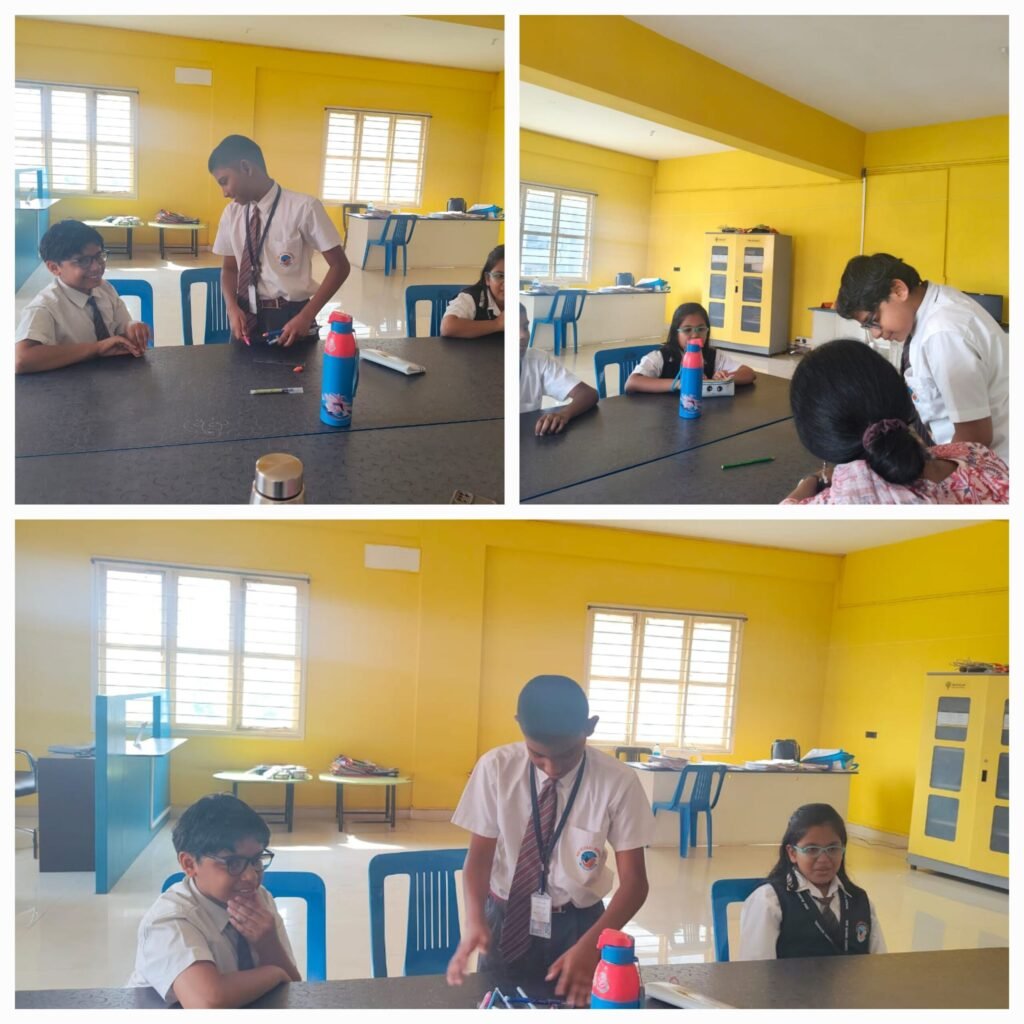
At BRS Global School‘s Sarjapur Road campus, the English Literary Club creates such opportunities through a range of interactive activities. Rather than limiting literary learning to textbooks, the club encourages students to explore English through storytelling, poetry, debates, book reviews, vocabulary games, impromptu speaking, visual storytelling and performance-based activities.
The activities conducted during the 2025–2026 academic year reflected this approach. Students moved from introducing themselves and playing word games to creating stories, reciting poems, reviewing books, debating ideas, participating in Dumb Charades and speaking spontaneously on thought-provoking topics.
This variety matters because language development involves much more than knowing grammar or memorising vocabulary. Students need opportunities to listen, think, formulate ideas, choose appropriate words, speak clearly, write meaningfully and respond to others.
The English Literary Club provides a structured setting in which these skills can develop together.
Event Overview: What Did the English Literary Club Conduct During 2025–2026?
The English Literary Club conducted a sequence of activities across June, July, October and November 2025, with each session focusing on a different aspect of language and literary development.
June 2025: Building the Foundations
The June sessions introduced students to the club and established a foundation for communication and creative expression.
10 June – Self-Introduction and Word Games
The first session began with student and teacher introductions. Students shared their name, class, language spoken at home, favourite food, hobby and reason for choosing the Literary Club.
This was followed by Words Within a Word, where students searched for smaller words within a larger word within a specified time. The session also introduced Random Words, a game requiring students to produce a new word based on the last letter of the previous word.
17 June – My Story
Students worked collaboratively to create stories using a given set of words. Each student contributed ideas before the group combined them into a coherent story.
The activity encouraged students to think about vocabulary not simply as isolated words, but as building blocks for meaningful narratives.
Students were also given a short poem-writing task as homework.
24 June – Poem Recitation and Word Spell
Students presented the poems they had written and practised recitation with attention to expression and delivery.
The Word Spell activity tested vocabulary knowledge through definitions and clues. Students had to identify and spell words such as Niggle, Pilfer, Rehash, Precipice, Myth, Ponder, Indigenous, Meticulous, Biodegradable and Detour.
Siya from Grade V was selected as the winner for her poem.
What Happened During the July Literary Club Activities?
July activities expanded the focus from vocabulary and creative expression to visual storytelling, debate, reading and critical analysis.
Graphic Novel and Story – 1 July
Students explored storytelling through drawings and paintings. The activity encouraged them to represent ideas visually and consider how images can communicate characters, events and emotions.
Visual storytelling can be particularly useful for helping students understand that stories can be communicated through multiple forms rather than words alone.
Debate: Online Class vs Offline Class – 8 July
Students participated in a debate on “Online Class vs Offline Class.”
The class was divided into groups, giving students opportunities to present arguments, listen to opposing viewpoints and reach a conclusion.
The activity encouraged students to organise their thoughts before speaking and to consider different perspectives rather than simply stating an opinion.
Book Review and Vocabulary Quiz – 15 July
Students submitted book reviews based on books selected from the library. Teachers reviewed the submissions and provided feedback.
The activity encouraged students to move beyond simply reading a book. Students were guided to think about what they had read, interpret the content and communicate their response.
A vocabulary quiz was also conducted through multiple-choice and spelling-based activities.
Essay Competition Planning – 29 July
The club also planned a School Essay Competition, including the selection of topics, maximum word limit, competition date and certificates.
The planning process itself reinforced the importance of structured writing and literary participation within school life.
What Was the October Literary Club Activity?
Dumb Charades – 28 October 2025
The October session introduced a more performance-oriented form of language-club participation through Dumb Charades.
Students were divided into teams. One student selected a word or phrase and acted it out without using spoken words or sounds. The student’s team attempted to identify the answer within the allotted time.
If the team could not identify the word, the opposing team received an opportunity to guess.
The activity included a wide range of words and phrases, from everyday situations and occupations to characters, emotions and popular references.
Examples included Stage Fright, Gamer, Tardy, Ballerina, Locksmith, Troublemaker, Superhero, Workaholic, Nightmare, Food Fight, Road Rage, Penguin, Lightning and Mad Scientist.
Although the activity was playful, it required students to observe carefully, interpret gestures, think quickly and communicate ideas non-verbally.
What Happened During the November Pick and Speak Activity?
Pick and Speak – 4 November 2025
The November session focused on impromptu speaking.
Students selected topics randomly and were given approximately one to two minutes to express their thoughts. The topics were intentionally varied, combining humour, everyday experiences, social observations and reflective questions.
Some of the topics included:
• Why Mondays Should Be Banned
• Which Came First: The Chicken or the Egg?
• We Can Lie, But Our Facial Expressions Can’t
• Why Math Feels Like Mental Abuse to Humans?
• Smile While You Still Have Teeth
• Before Facebook, I Had a Life
Students present included Nikhu, Neha and Siya.
The topics chosen were:
• Nikhu: We Can Lie, But Our Facial Expressions Can’t
• Neha: Before Facebook, I Had a Life
• Siya: Why Mondays Should Be Banned?
The activity encouraged students to formulate ideas quickly and present them clearly without extensive preparation.
A follow-up writing activity asked students to write short reviews of the Science and Math Fest conducted on 25 October 2025. Their reviews reflected their observations of the exhibits, experiments, creativity, teamwork and interactive learning experiences.
What Did Students Learn Through These Activities?
The English Literary Club activities developed several interconnected language and life skills.
Vocabulary and Language Proficiency
Word games, spelling challenges, book reviews and speaking activities gave students repeated opportunities to encounter and use new vocabulary.
Rather than learning words in isolation, students encountered vocabulary through games, definitions, stories, books, conversations and performances.
Creative Writing and Storytelling
The My Story activity encouraged students to combine given words into a meaningful narrative. Book reviews and poem writing further encouraged students to structure and communicate their own ideas.
Creative writing gives students space to make choices about language, sequence, description and expression.
Public Speaking and Confidence
Poem recitation, debate and Pick and Speak required students to communicate before an audience.
The experience of speaking aloud can help students become more comfortable organising thoughts and expressing opinions in front of others.
Critical Thinking
The debate on Online Class vs Offline Class and the book-review activity required students to consider information and develop their own responses.
Similarly, Pick and Speak topics required students to interpret a question and formulate an answer quickly.
Collaboration
Several activities were conducted in groups or teams. Students had to listen to one another, combine ideas, negotiate responses and work towards a common outcome.
Creativity and Imagination
Graphic storytelling, poetry, drama-based activities and story creation allowed students to use imagination as part of language learning.
Listening and Observation
Dumb Charades required students to interpret gestures and expressions, while debates and group storytelling required students to listen carefully to their peers.
How Does the Literary Club Support CBSE Learning?
The Literary Club’s activity-based approach complements the broader direction of competency-based education.
CBSE guidance highlights communication, collaboration, creativity and critical thinking as important 21st-century skills and encourages experiential learning and active participation.
The activities conducted by the club provide practical contexts in which these capabilities can be exercised:
| Literary Club Activity | Skills Practised |
|---|---|
| Words Within a Word | Vocabulary, spelling, quick thinking |
| My Story | Creativity, writing, collaboration |
| Poem Recitation | Expression, pronunciation, confidence |
| Word Spell | Vocabulary, listening, spelling |
| Graphic Story | Creativity, visual communication |
| Debate | Critical thinking, communication, listening |
| Book Review | Reading, analysis, written expression |
| Dumb Charades | Observation, interpretation, teamwork |
| Pick and Speak | Impromptu speaking, confidence, idea organisation |
This is particularly relevant to competency-based learning because students are not merely expected to recall information; they are given opportunities to demonstrate what they can do with language.
Why Does This Matter for Student Development?
Strong communication skills influence many aspects of a student’s school experience.
A student who can read carefully, understand information, organise thoughts and communicate an idea clearly is better prepared to participate across subjects and learning situations.
The English Literary Club therefore has value beyond English lessons alone.
Debating can encourage reasoning. Book reviews can encourage reflection. Storytelling can develop imagination. Poetry can strengthen expression.
Vocabulary activities can improve language precision. Group activities can encourage collaboration.
This broader approach reflects the principle of holistic education, where academic and non-academic experiences contribute to the development of the learner. The National Education Policy 2020 places emphasis on holistic development, creativity, critical thinking, communication, cooperation and teamwork.
Why Should Parents Value Literary Club Experiences?
Parents looking at schools in Sarjapur Road often consider academics, curriculum, infrastructure, location and extracurricular opportunities together.
Literary activities offer another important dimension: how effectively does a school create opportunities for students to use what they learn?
For families living around Bellandur, Sarjapur Road, Hosa Road, Koramangala, HSR layout, Dommasandra, Kodathi, Gunjur, Varthur, Kaikondrahalli, Kasavanahalli, Carmelaram, Harlur, Rayasandra, Naganathapura, Doddakannelli, Kudlu Gate, A Krishnappa Nagar, Halnayakanahalli, Radha Reddy Layout, Chikkanayakanahalli, Huskur, KPC Layout, CSB Layout, Owners Court, Doddanagamangala, Doctors Layout, Shiva Reddy Layout, Meenakshi Layout, Chikbellandur, Sompura Gate, Muthannalur Cross, Gunjur to Dommasandra Road, Mullur, Amrita Engineering College Road Kasavanahalli, Amrita Nagar, Serenity Layout, Spring Fields, Iblur, Marathahalli, Shobha Apartments, Choodasandra, Junnasandra, Rayasandra, a school that combines academic learning with opportunities for communication and creative expression can provide a balanced educational environment.
This is especially relevant for students growing up in communities connected to Bengaluru’s technology and business corridors, where communication, collaboration and confidence are valuable skills.
The purpose is not to turn every child into a performer. Some students may enjoy speaking on stage, while others may prefer writing, drawing, reading or working behind the scenes.
A well-designed Literary Club gives different learners multiple entry points into language.
Local Context: English Literary Learning in Sarjapur Road
BRS Global School‘s Sarjapur Road campus is located in Kasavanahalli, serving families looking for schools in and around the Sarjapur Road area.
The campus is accessible to families from neighbourhoods and communities including Bellandur, HSR Layout, Haralur Road, Harlur, Carmelaram, Kaikondrahalli, Kodathi, Gunjur, Dommasandra, Varthur, Doddakannelli, Rayasandra, Choodasandra, Junnasandra and Marathahalli, among others.
For parents comparing CBSE schools in Sarjapur Road, the location question is often closely connected with the overall school experience: curriculum, student activities, commute, learning environment and opportunities for holistic development.
The Sarjapur Road campus is also situated within a residential and employment corridor that connects communities with major technology and business hubs in Bengaluru.
Families can explore the campus and school information directly through the school’s Google Business Profile:
BRS Global School | Best CBSE School in Sarjapur Road – Google Business Profile
Important branch distinction: BRS Global School also has another branch at Attibele. The Attibele campus serves a different local catchment and should not be confused with the Sarjapur Road campus.
Parents exploring schools in Attibele, CBSE schools in Attibele, Chandapura or Anekal can separately view the other branch’s Google Business Profile:
BRS Global School | Pre-school, Primary School & High School | Attibele – Google Business Profile
Common Parent Questions
How does an English Literary Club improve student confidence?
Regular opportunities to speak, recite, debate and present ideas allow students to practise communication in a supportive environment. Activities such as Pick and Speak gradually encourage students to organise thoughts and speak without relying entirely on prepared scripts.
Does Literary Club help students beyond English?
Yes. Many activities develop transferable skills such as critical thinking, collaboration, listening, creativity, presentation and problem-solving. These skills can support participation across different subjects and classroom situations.
How does a book review help students?
A book review encourages students to read actively, identify important ideas, form an opinion and communicate that response in writing. It moves reading from simple completion towards interpretation and reflection.
Why are word games useful for students?
Word games provide repeated exposure to vocabulary in an engaging setting. Activities such as Words Within a Word and Word Spell can encourage spelling accuracy, vocabulary recall, quick thinking and familiarity with language.
Does debate help students academically?
Debate gives students practice in forming an argument, selecting relevant points, listening to another viewpoint and presenting a response. These processes are closely connected with critical thinking and communication.
Which students benefit most from Literary Club activities?
Students with strong interest in reading and writing can deepen their abilities, while students who are less confident in communication gain opportunities to practise speaking, teamwork and expression. The variety of activities allows different strengths to emerge.
Key Highlights
• English Literary Club activities were conducted throughout the 2025–2026 academic year.
• Activities included word games, storytelling, poetry, debates, book reviews, vocabulary quizzes, visual storytelling, Dumb Charades and Pick and Speak.
• Students practised both written and spoken English.
• Creative activities encouraged imagination and original expression.
• Debate and book reviews encouraged critical thinking.
• Team activities developed collaboration and listening.
• Poetry and impromptu speaking supported confidence and presentation skills.
• Vocabulary games encouraged language development in an engaging format.
• Activities connected classroom language learning with practical communication.
• The programme supported a broader approach to holistic student development.
Frequently Asked Questions (FAQs)
What activities are conducted in an English Literary Club?
An English Literary Club can include storytelling, poetry, debates, book reviews, vocabulary games, quizzes, creative writing, public speaking, drama and other language-based activities. At BRS Global School’s Sarjapur Road campus, students participated in several of these formats during the 2025–2026 academic year.
How does a Literary Club help improve English communication?
It gives students repeated opportunities to listen, think, write and speak. Activities such as debates, poem recitation and Pick and Speak help students practise expressing ideas clearly and confidently.
How does storytelling support children’s learning?
Storytelling encourages students to organise events, choose appropriate vocabulary, develop characters and communicate ideas in sequence. Collaborative storytelling can additionally develop listening and teamwork.
What is the benefit of Pick and Speak?
Pick and Speak develops spontaneous communication. Students select a topic and organise their thoughts quickly before presenting them, helping them practise fluency, confidence and structured expression.
Why are book reviews included in Literary Club activities?
Book reviews encourage students to read, interpret, evaluate and communicate their response to a book. They also provide an opportunity for teachers to guide students in developing critical-analysis and written-expression skills.
How do Literary Club activities support holistic development?
Literary activities combine language with creativity, collaboration, confidence, critical thinking and communication. This complements the broader educational emphasis on holistic development and competency-based learning.
Where can parents learn more about the Sarjapur Road campus?
Parents can explore the Sarjapur Road campus information and location through its Google Business Profile:
Conclusion: Encouraging Students to Find Their Voice
A strong literary programme gives students more than an opportunity to read books or learn new words. It gives them a space to find their voice.
Through the English Literary Club, students at the Sarjapur Road campus participated in activities that asked them to create, question, listen, analyse, perform, collaborate and communicate. From finding words within words to presenting poems, debating ideas, reviewing books and speaking spontaneously, each activity provided a different way for students to engage with language.
These experiences complement classroom learning by giving students practical opportunities to use English with purpose. They also support the broader educational goal of developing confident, creative and thoughtful learners.
For parents exploring CBSE schools in Sarjapur Road and nearby Bengaluru communities, the quality of a child’s school experience includes not only what is taught but also the opportunities provided to apply learning.
Explore our Campus:
Attibele Branch:
https://share.google/iFhJaeGo8wkgOZ1Y5
Sarjapur Road Branch: