
Introduction
Education becomes more meaningful when students have opportunities to connect classroom concepts with the world around them. Experiential learning allows children to observe processes directly, ask questions, interact with practitioners and understand how knowledge is applied in everyday life.
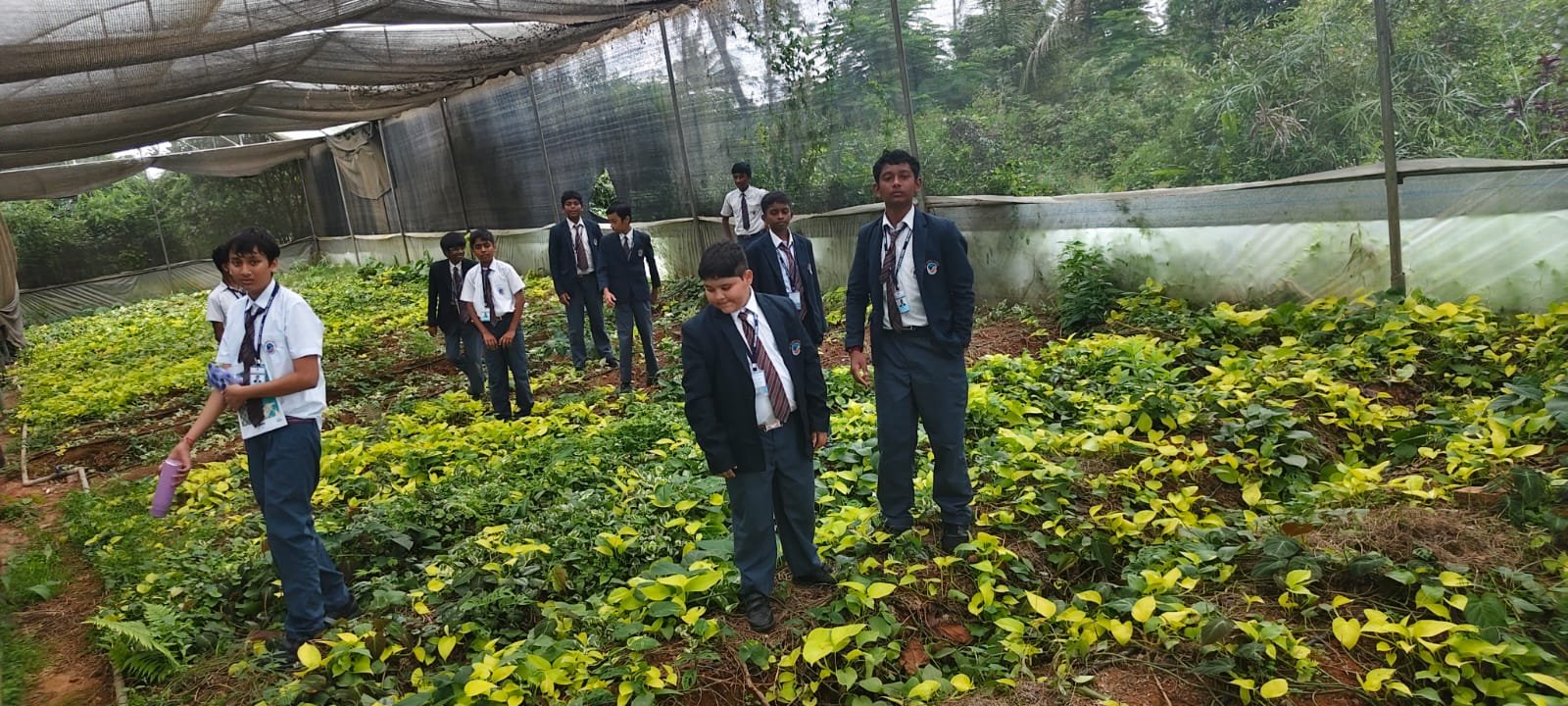
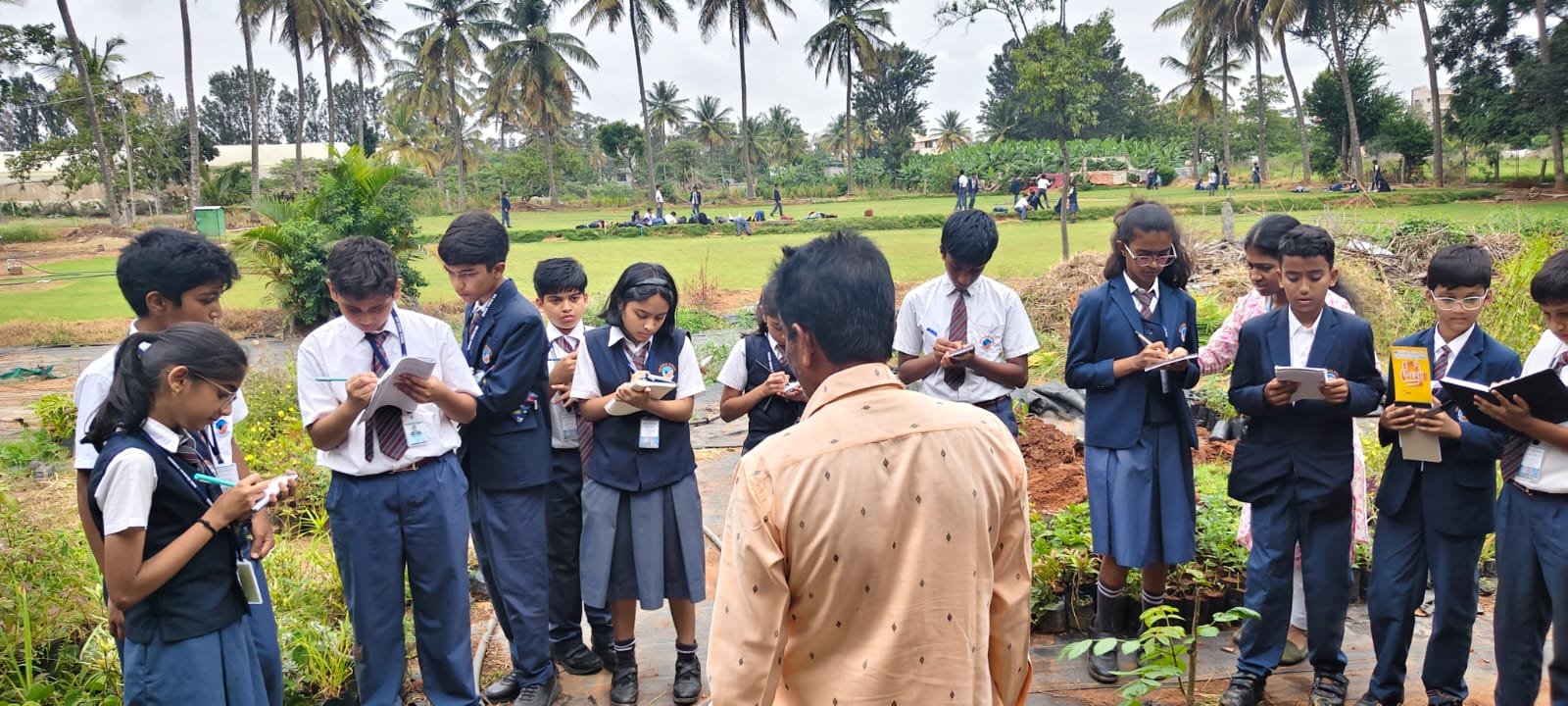
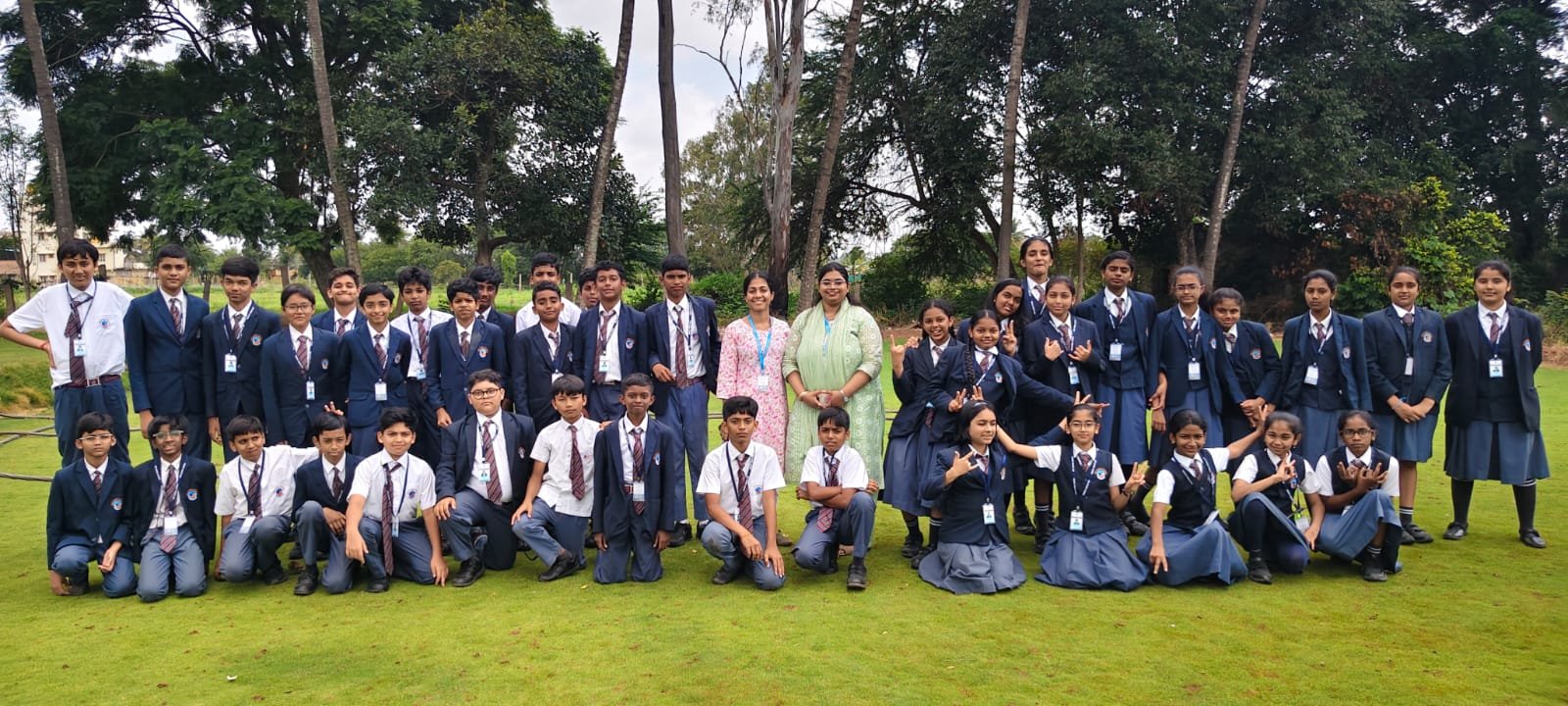
As part of the Kaushal Bodh Project, Grade 7 students BRS Global School | Best CBSE School in Sarjapur Road, visited Shri Krishna Plant Nursery & Farm on 25 August 2026. The visit was designed to provide practical exposure to farming, plant cultivation, nursery management and sustainable agricultural practices.
For students, the nursery became more than a place to observe plants. It provided a real-world setting in which they could understand the patience, planning, care and responsibility involved in growing plants.
The experience also demonstrated how skill-based education can complement academic learning by helping students develop practical awareness and respect for natural resources.
Event Overview
Event : Kaushal Bodh – Skill Education Initiative
Activity : Educational visit to a plant nursery and farm
Date : 25 August 2026
Students : Grade 7
Venue : Shri Krishna Plant Nursery & Farm
Learning Focus : Farming, plant cultivation, nursery management and sustainability
Learning Approach : Experiential and hands-on learning
The visit was organised to give students practical exposure to areas that are difficult to understand fully through classroom instruction alone. By observing plant cultivation and nursery practices directly, students were able to connect concepts related to nature, resources and sustainability with real-life applications.
What Happened During the Field Visit?
Exploring the World of Plants and Farming
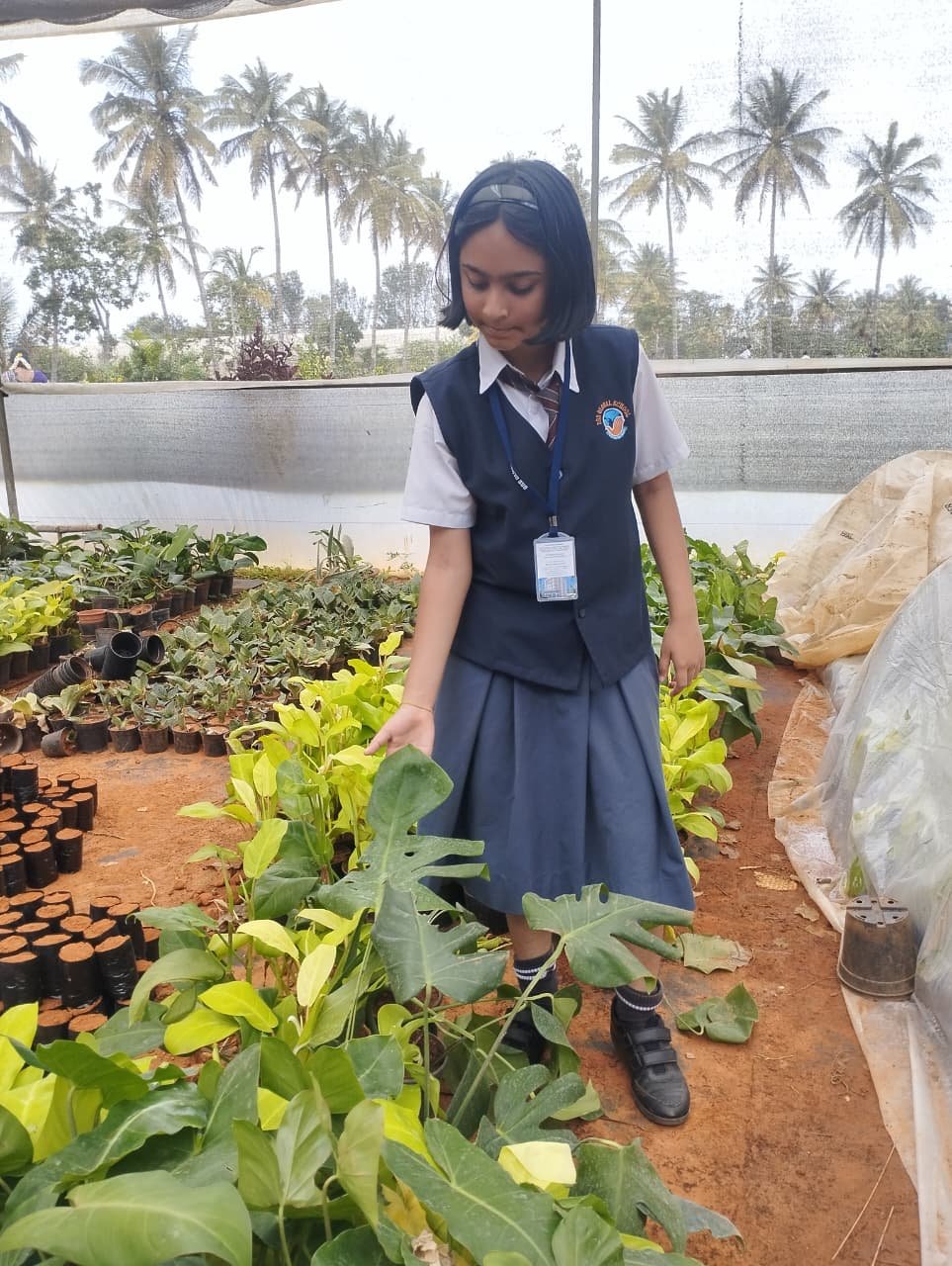
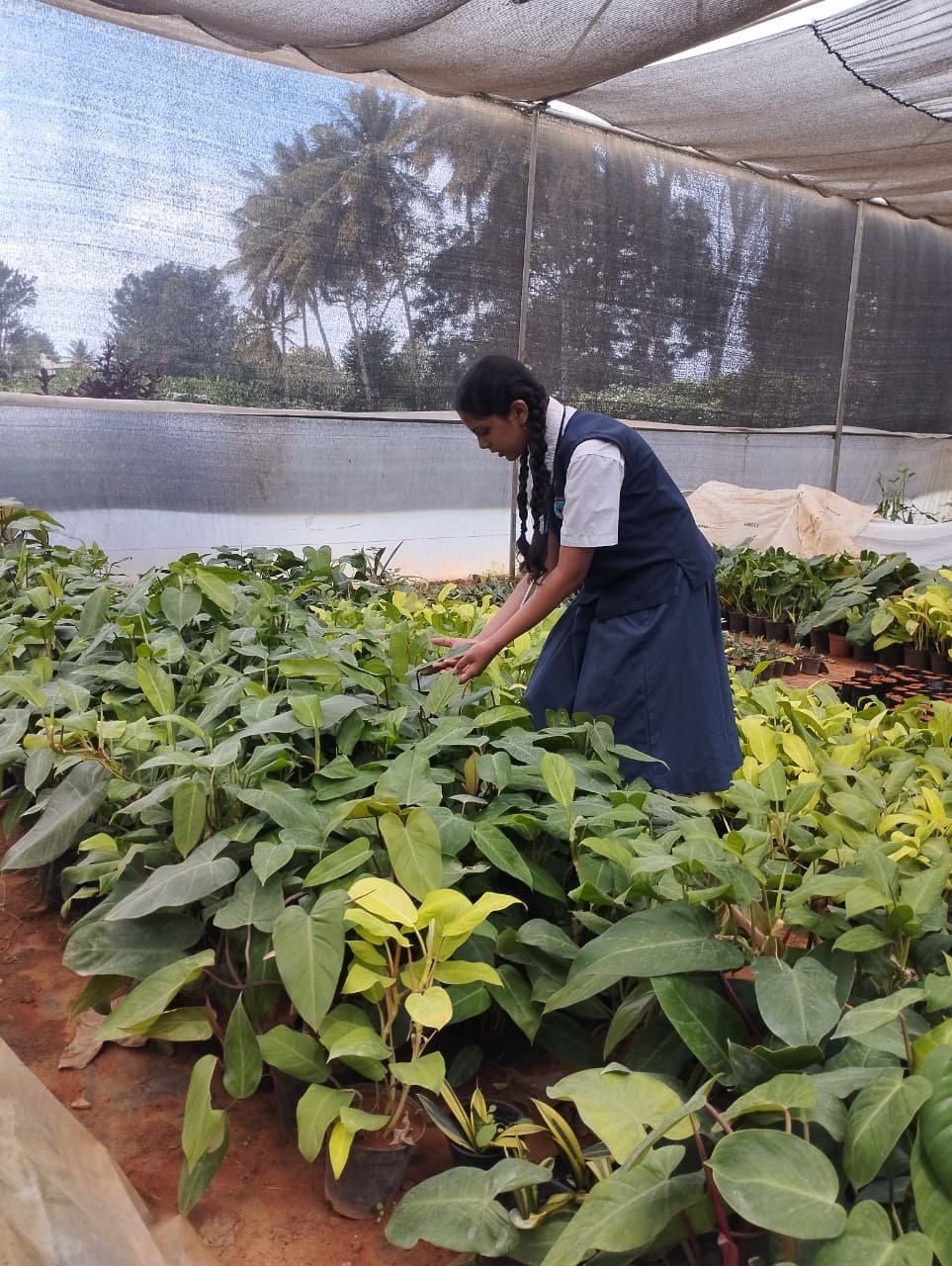
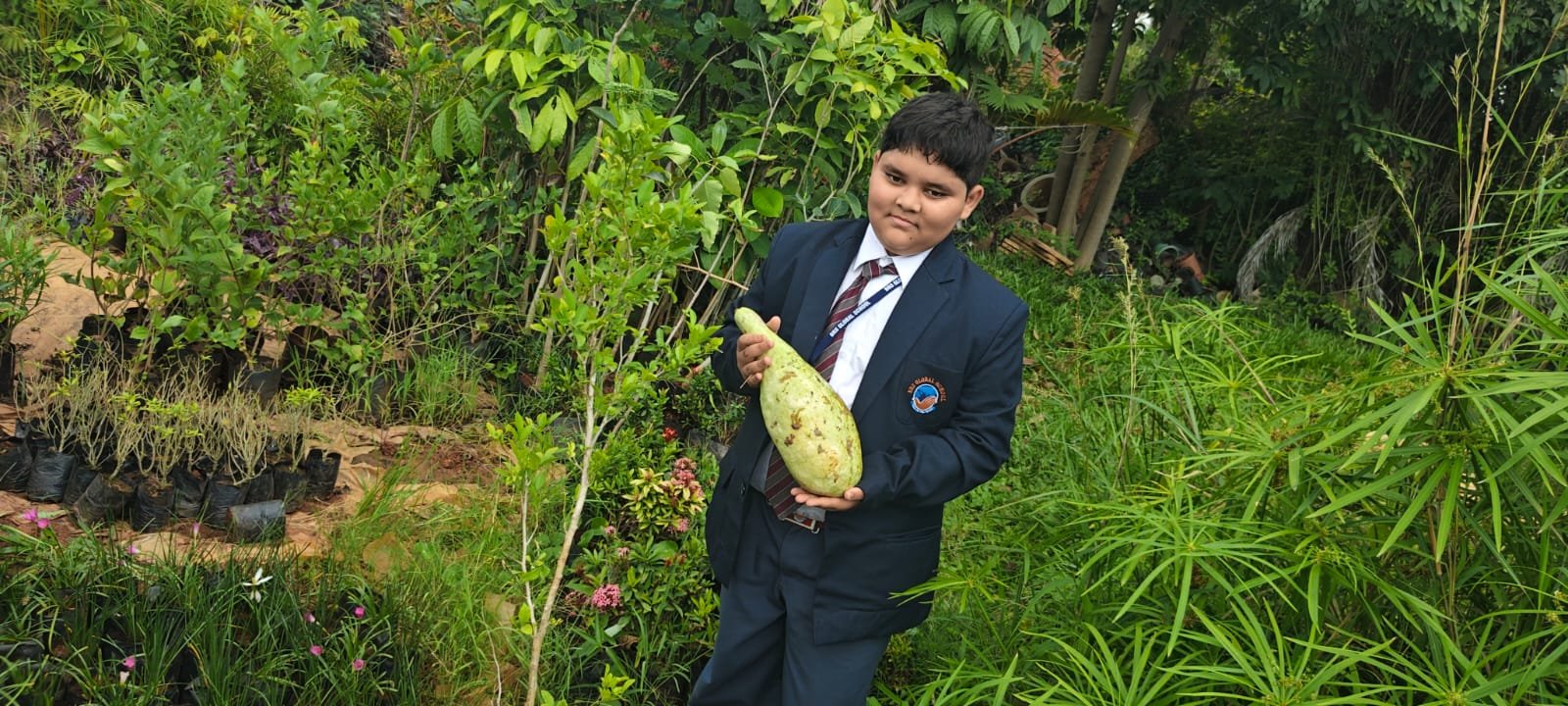
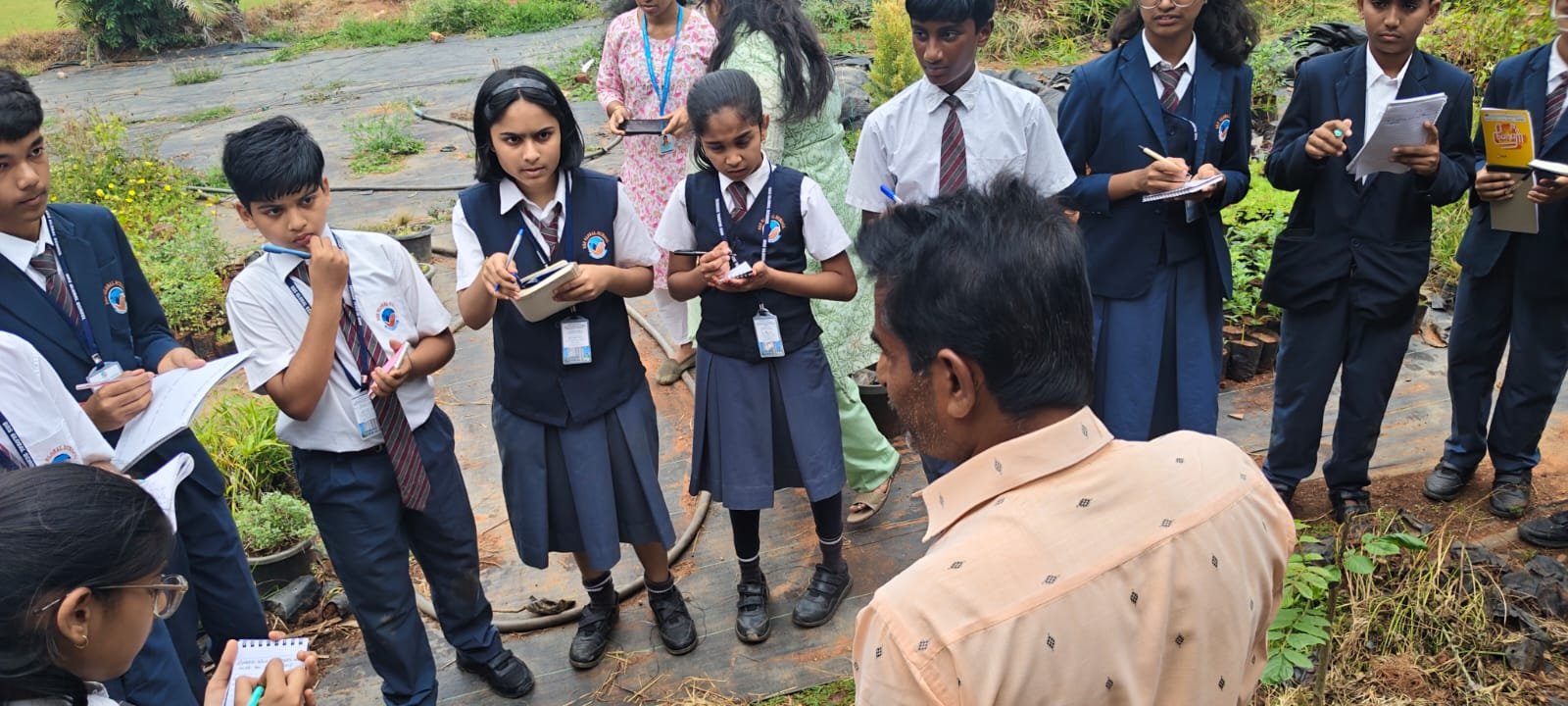
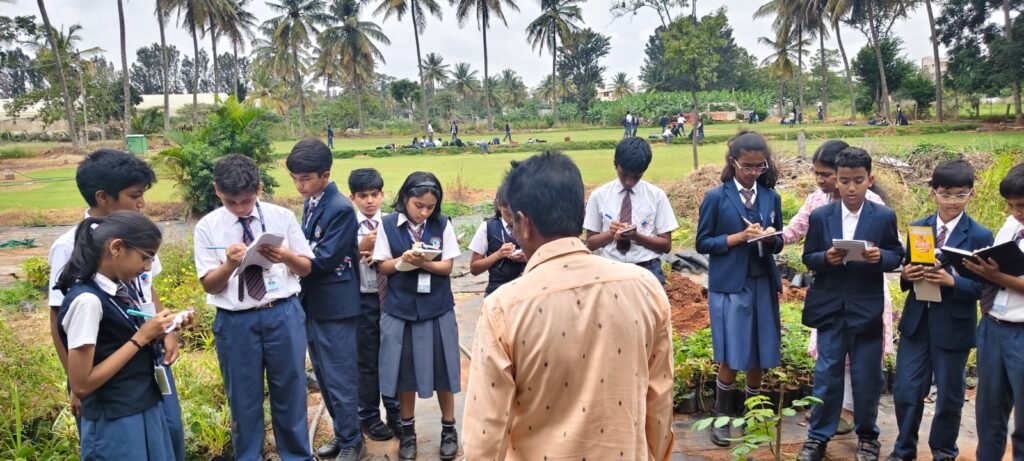
During their visit to Shri Krishna Plant Nursery & Farm, Grade 7 students observed a variety of plants and saplings and learnt about the conditions required for healthy growth.
They explored the importance of fundamental requirements such as:
• Soil
• Water
• Sunlight
• Nutrients
• Regular maintenance
Rather than viewing plant growth as a simple process, students began to understand that successful cultivation requires continuous attention and appropriate care.
This observation-based approach encouraged students to look closely at the relationship between plants and their growing environment.
Understanding Nursery Management
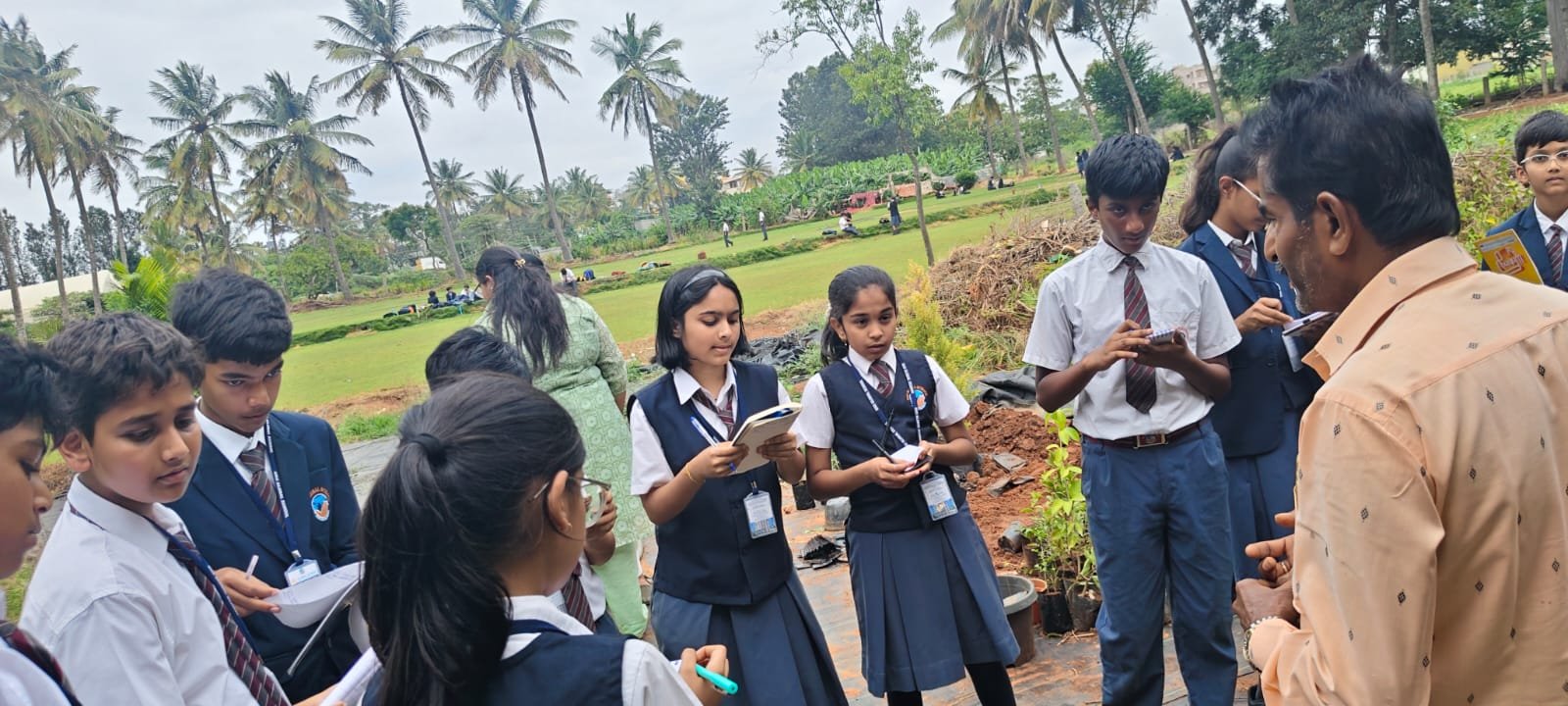
Resource persons at the nursery explained the different stages involved in raising and maintaining plants.
Students were introduced to processes including:
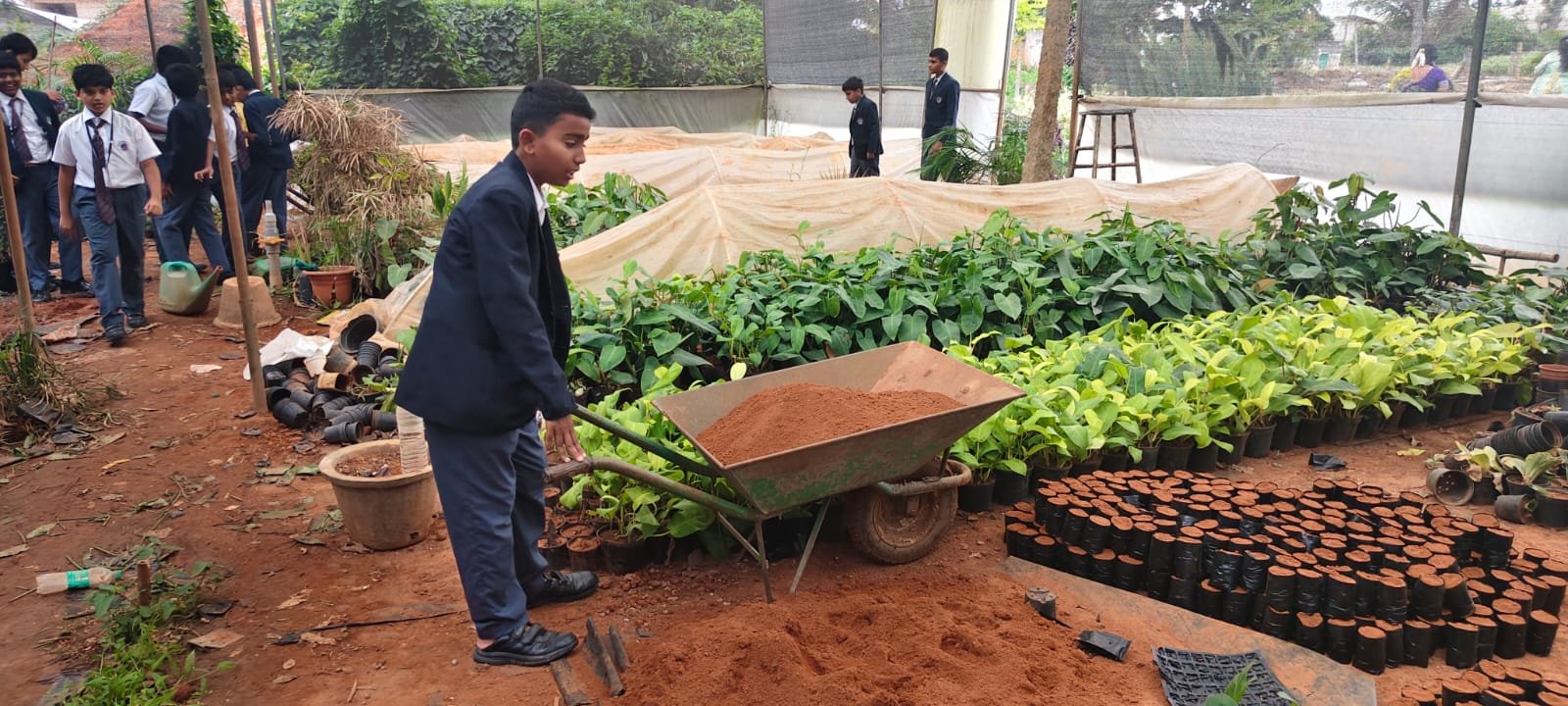
• Preparing soil
• Planting
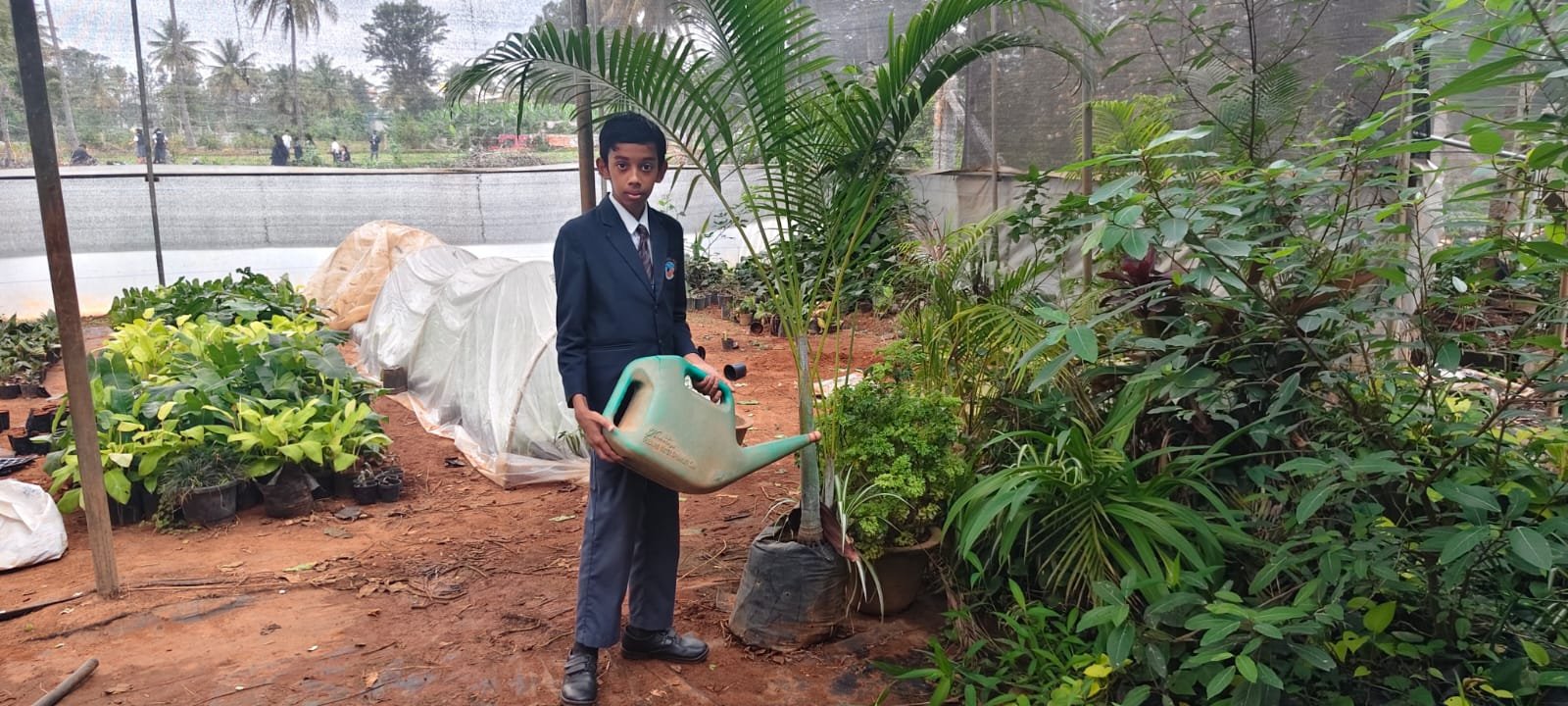
• Watering
• Nurturing plants
• Maintaining saplings
• Selecting plants according to their specific requirements
The interaction helped students understand that different plants may require different conditions and methods of care.
Learning Through Participation
The visit also included opportunities for students to actively observe and participate in activities connected with planting and nursery maintenance.
This practical involvement helped transform the experience from passive observation into experiential learning. Students could see how natural resources are used and why responsible practices are important in farming and gardening.
The experience also introduced them to the connection between agriculture, environmental sustainability and food security.
Student Learning Outcomes & Benefits
What did students learn from the nursery visit?
The visit helped students understand that plant cultivation involves much more than simply placing a seed or sapling in soil. Successful growth depends on suitable environmental conditions, appropriate care, regular maintenance and patience.
Students gained practical awareness of:
• Plant growth requirements
• Basic nursery practices
• Soil preparation
• Planting and watering
• Plant maintenance
• Responsible use of natural resources
• Sustainable agricultural practices
• The importance of agriculture and gardening
These lessons gave students an opportunity to connect observation with practical understanding.
What skills were developed?
The experience supported several transferable skills:
• Observation: Students carefully observed plants, saplings and nursery practices.
• Teamwork: Participating in activities encouraged students to work collaboratively.
• Responsibility: Caring for plants helped students appreciate the importance of consistent responsibility.
• Communication: Interaction with resource persons gave students opportunities to listen, ask questions and communicate.
• Patience: Students understood that plant growth takes time and continuous care.
• Planning: Nursery management demonstrated the importance of planning and systematic effort.
• Environmental awareness: Students developed a greater appreciation for nature and responsible resource use.
Educational Philosophy / Institutional Value Alignment
Why is experiential learning important in school education?
Experiential learning allows students to understand concepts through direct observation, participation and reflection. Instead of learning only through textbooks, students encounter real-world situations where they can see how knowledge and skills are applied.
The Kaushal Bodh Project visit reflects this approach by placing students in an authentic environment connected with agriculture and plant cultivation.
The experience encouraged students to learn through:
• Direct observation
• Practical participation
• Interaction with resource persons
• Real-world problem awareness
• Reflection on sustainability
• Collaboration with peers
Such experiences can complement academic learning by helping students develop practical awareness alongside conceptual understanding.
Why This Matters for Student Development
A visit to a nursery may appear simple, but it can introduce students to several important life concepts.
Understanding effort and patience
Plants require time and continuous care to grow. Students therefore encounter a natural example of how meaningful results often require patience and consistent effort.
Developing responsibility
Plant care provides a tangible example of responsibility. Students can understand that living things depend on regular attention and appropriate care.
Building environmental awareness
The experience helped students recognise the importance of natural resources and understand why responsible use of soil, water and other resources matters.
Appreciating agriculture
Modern children may have limited direct exposure to farming. A nursery and farm visit provides an opportunity to understand the processes behind plant cultivation and agriculture.
Connecting learning with everyday life
Food, plants, gardens and natural resources are part of everyday life. Understanding how plants are cultivated allows students to connect education with the world beyond school.
Local Context Relevance
For families exploring schools in Sarjapur Road, experiential learning can be an important part of understanding a school’s broader educational approach.
BRS Global School | Best CBSE School in Sarjapur Road serves families from Bellandur, Sarjapur Road, Hosa Road, Koramangala, HSR layout, Dommasandra, Kodathi, Gunjur, Varthur, Kaikondrahalli, Kasavanahalli, Carmelaram, Harlur, Rayasandra, Naganathapura, Doddakannelli, Kudlu Gate, A Krishnappa Nagar, Halnayakanahalli, Radha Reddy Layout, Chikkanayakanahalli, Huskur, KPC Layout, CSB Layout, Owners Court, Doddanagamangala, Doctors Layout, Shiva Reddy Layout, Meenakshi Layout, Chikbellandur, Sompura Gate, Muthannalur Cross, Gunjur to Dommasandra Road, Mullur, Amrita Engineering College Road Kasavanahalli, Amrita Nagar, Serenity Layout, Spring Fields, Iblur, Marathahalli, Shobha Apartments, Choodasandra, Junnasandra, Rayasandra and surrounding communities.
The Sarjapur Road area is also surrounded by major residential communities and employment hubs, making practical and holistic education particularly relevant to families seeking a well-rounded school experience close to home.
Parents comparing CBSE schools in Sarjapur Road may therefore consider not only academic instruction but also opportunities that encourage practical learning, collaboration, environmental awareness and student responsibility.
Note: BRS Global School also has an Attibele/Bidaraguppe Campus, which is a separate branch. The event described on this page relates specifically to the Sarjapur Road Campus.
Common Parent Questions
How does a nursery visit support CBSE learning?
A nursery visit can complement classroom learning by giving students direct exposure to plant growth, natural resources and environmental processes. It helps students connect theoretical understanding with real-world observation and practical experiences.
How does the activity improve student confidence?
Interacting with resource persons, participating in activities and sharing observations gives students opportunities to communicate outside the conventional classroom setting. Such experiences can encourage active participation and confidence.
What skills were developed during the visit?
Students developed and practised observation, teamwork, communication and responsibility. The experience also encouraged patience, planning and care for nature.
Why should parents value experiential learning?
Experiential learning gives students opportunities to apply knowledge in real-life contexts. It can strengthen understanding while developing practical skills and attitudes that support learning beyond the classroom.
What is the Kaushal Bodh Project?
The event report identifies Kaushal Bodh as a Skill Education Initiative. The Grade 7 visit connected the project with practical exposure to farming, plant cultivation, nursery management and sustainable agricultural practices.
Why is agricultural awareness important for students?
Agricultural awareness helps students understand where plants and food come from, how natural resources support cultivation and why sustainable practices are important for the environment and food security.
Key Highlights
• Grade 7 students participated in the Kaushal Bodh Project visit.
• The visit took place on 25 August 2026.
• Students visited Shri Krishna Plant Nursery & Farm.
• They observed different plants and saplings.
• Students learnt about soil, water, sunlight and nutrients.
• They explored planting, watering, nurturing and plant maintenance.
• Students participated in activities related to nursery maintenance.
• The experience highlighted responsible use of natural resources.
• Students developed teamwork, observation, communication and responsibility.
• The visit encouraged patience, planning and care for nature.
• The experience connected skill education with real-world learning.
Frequently Asked Questions (FAQs)
When did the BRS Global School Grade 7 Kaushal Bodh visit take place?
The visit to Shri Krishna Plant Nursery & Farm took place on 25 August 2026.
Which students participated in the Kaushal Bodh Project visit?
The participating students were from Grade 7 at BRS Global School’s Sarjapur Road Campus.
What did students learn at the plant nursery?
Students learnt about plant growth requirements, including soil, water, sunlight and nutrients. They also explored planting, watering, nurturing and maintaining plants.
What skills did the students develop?
The visit supported teamwork, observation, responsibility, communication and care for nature. Students also recognised the importance of patience, dedication, planning and consistent effort.
How did the visit promote environmental awareness?
Students learnt about responsible use of natural resources and understood the relationship between farming, gardening, environmental sustainability and food security.
Why are practical visits useful for school students?
Practical visits allow students to observe and participate in real-world activities. They can help learners connect classroom concepts with everyday experiences while developing communication, collaboration and responsibility.
Which BRS Global School campus organised this event?
This event page is specifically about the BRS Global School Sarjapur Road Campus. The Attibele/Bidaraguppe Campus is a separate branch.
Conclusion
The Kaushal Bodh Project visit to Shri Krishna Plant Nursery & Farm gave Grade 7 students an opportunity to step beyond the classroom and engage with farming, plant cultivation and sustainable practices through direct experience.
By observing plants, understanding nursery processes and participating in practical activities, students developed a deeper appreciation for nature and the effort required to cultivate and care for living things. The experience also strengthened skills such as teamwork, observation, communication and responsibility.
For parents looking for a CBSE schools in Sarjapur Road that values both academic learning and meaningful student experiences, exploring the school’s educational programmes and campus offerings can provide a broader understanding of the learning environment.
Explore BRS Global School, Sarjapur Road, to learn more about its academic programmes and student-focused learning opportunities.
Attibele Branch:
https://share.google/iFhJaeGo8wkgOZ1Y5
Sarjapur Road Branch: