
Introduction
Education becomes truly meaningful when students experience learning beyond the four walls of a classroom. Educational excursions provide opportunities to connect academic concepts with real-world experiences, helping learners develop deeper understanding, curiosity, confidence, and appreciation for diverse cultures and historical heritage.
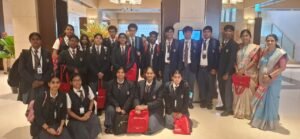
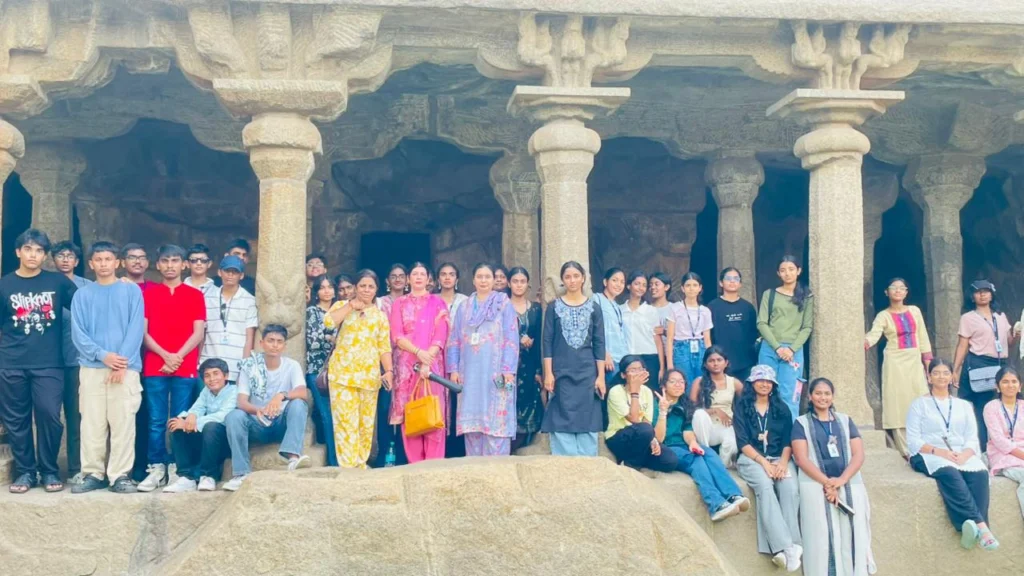
With this vision, BRS Global School | Sarjapur Road organised an educational excursion for students of Grades 8 to 12 to Pondicherry and Mahabalipuram from 30 July to 2 August. Carefully planned to combine education, exploration, and experiential learning, the four-day journey introduced students to India’s rich cultural heritage, architectural marvels, historical landmarks, and unique traditions.
The excursion began with a visit to the revered Thiruvannamalai Temple, one of South India’s most significant spiritual destinations. Students then travelled to Pondicherry, a former French colony renowned for its distinctive blend of Indian and French heritage, colonial architecture, vibrant streets, and cultural diversity. The journey continued to Auroville, an internationally recognised township dedicated to peace, sustainability, and human unity, where students explored the iconic Matrimandir, often referred to as the spiritual heart of Auroville.
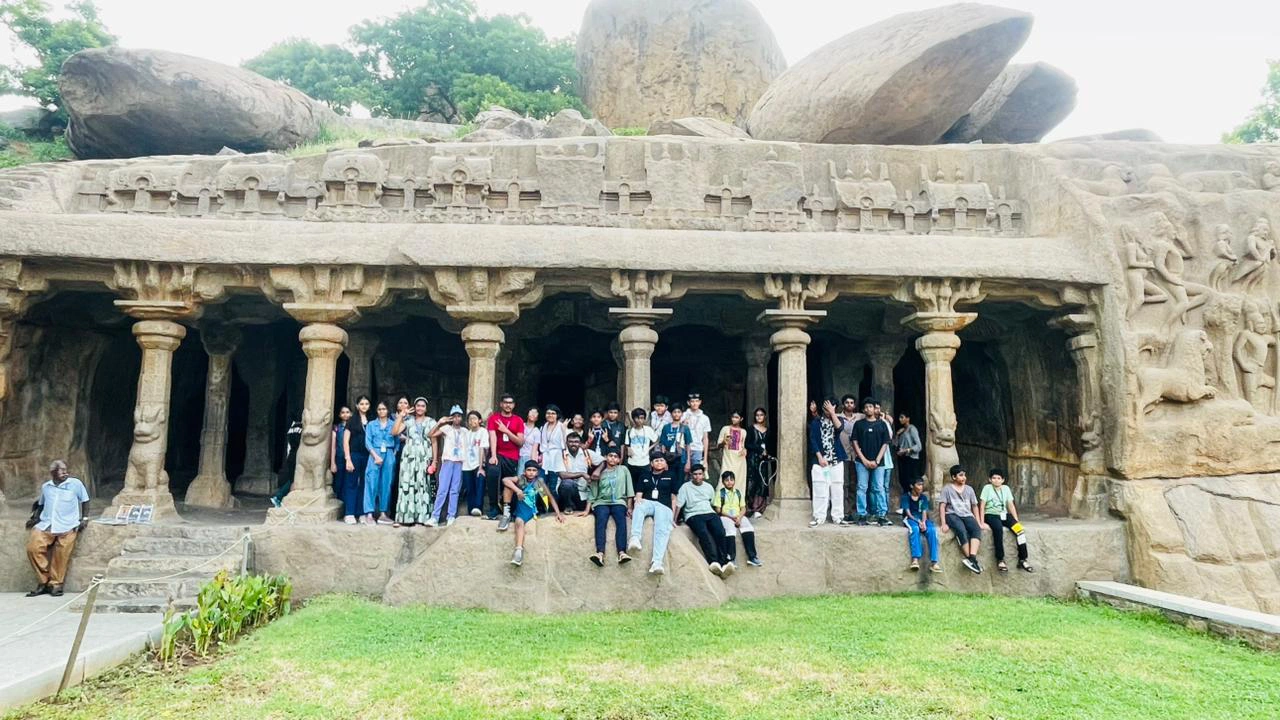
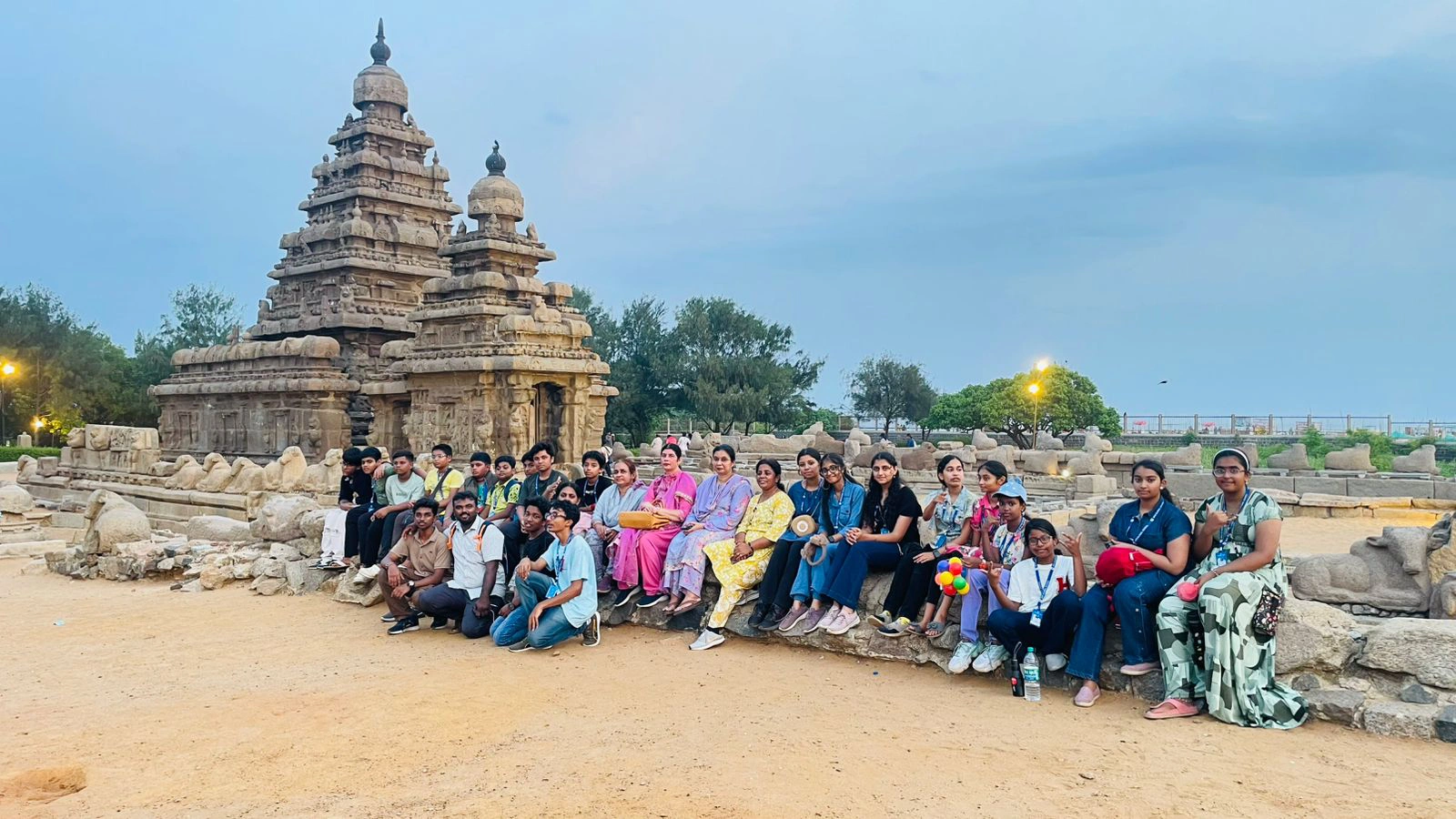
The final phase of the trip took students to Mahabalipuram, home to remarkable monuments created during the Pallava dynasty. Exploring UNESCO World Heritage Sites such as the Shore Temple, Pancha Rathas, and the fascinating Krishna’s Butter Ball enabled students to witness centuries of architectural excellence while connecting classroom history lessons with tangible historical evidence.
Experiential learning programmes such as this encourage students to become active learners, strengthen their understanding of history and culture, and develop broader perspectives about India’s civilisational heritage. Beyond academic enrichment, such journeys nurture independence, teamwork, adaptability, observation skills, and respect for cultural diversity.
For parents looking for CBSE schools in Sarjapur Road that integrate experiential learning with academic excellence, educational excursions like these demonstrate the school’s commitment to holistic education and meaningful learning experiences.
Conveniently located on Sarjapur Road, the campus serves families from Bellandur, Kasavanahalli, HSR Layout, Harlur, Kaikondrahalli, Carmelaram, Dommasandra, Kodathi, Marathahalli, Varthur, Gunjur, Choodasandra, Rayasandra, Hosa Road and neighbouring communities. The school is also well connected to major employment hubs including RMZ Ecoworld, Embassy TechVillage, Prestige Tech Park, RGA Tech Park, Wipro Campus, and the Electronic City IT Corridor, making it an ideal choice for working professionals seeking holistic CBSE education.
Explore BRS Global School – Sarjapur Road Campus on Google Business Profile:
https://share.google/2oEno2EtFtY7eyP2B
Families residing in Attibele, Chandapura, Anekal, and Hosur may also explore BRS Global School – Attibele, another branch of BRS Global School.
BRS Global School – Attibele Google Business Profile:
Event Overview
| Event Details | Information |
|---|---|
| Event Name | Educational Excursion to Pondicherry & Mahabalipuram |
| Duration | 30 July – 2 August |
| Participants | Students of Grades 8–12 |
| Organised By | BRS Global School – Sarjapur Road |
| Destinations | Thiruvannamalai, Pondicherry, Auroville & Mahabalipuram |
| Learning Focus | History, Heritage, Culture, Architecture, Geography & Experiential Learning |
| Educational Theme | Learning Beyond the Classroom |
| Major Attractions | Thiruvannamalai Temple, Auroville, Matrimandir, Shore Temple, Pancha Rathas, Krishna's Butter Ball |
What Happened During the Educational Excursion?
The four-day educational excursion was thoughtfully designed to help students experience history, culture, architecture, geography, and heritage through direct observation rather than relying solely on classroom instruction. Every destination offered unique learning opportunities that encouraged curiosity, exploration, and meaningful engagement with India’s rich cultural legacy.
The journey commenced with a visit to the sacred Thiruvannamalai Temple, one of the most revered temples dedicated to Lord Shiva. Students observed the magnificent Dravidian architecture, intricate stone carvings, towering temple gopurams, and centuries-old artistic craftsmanship. The visit also introduced them to the historical and spiritual significance of temple architecture in South India.
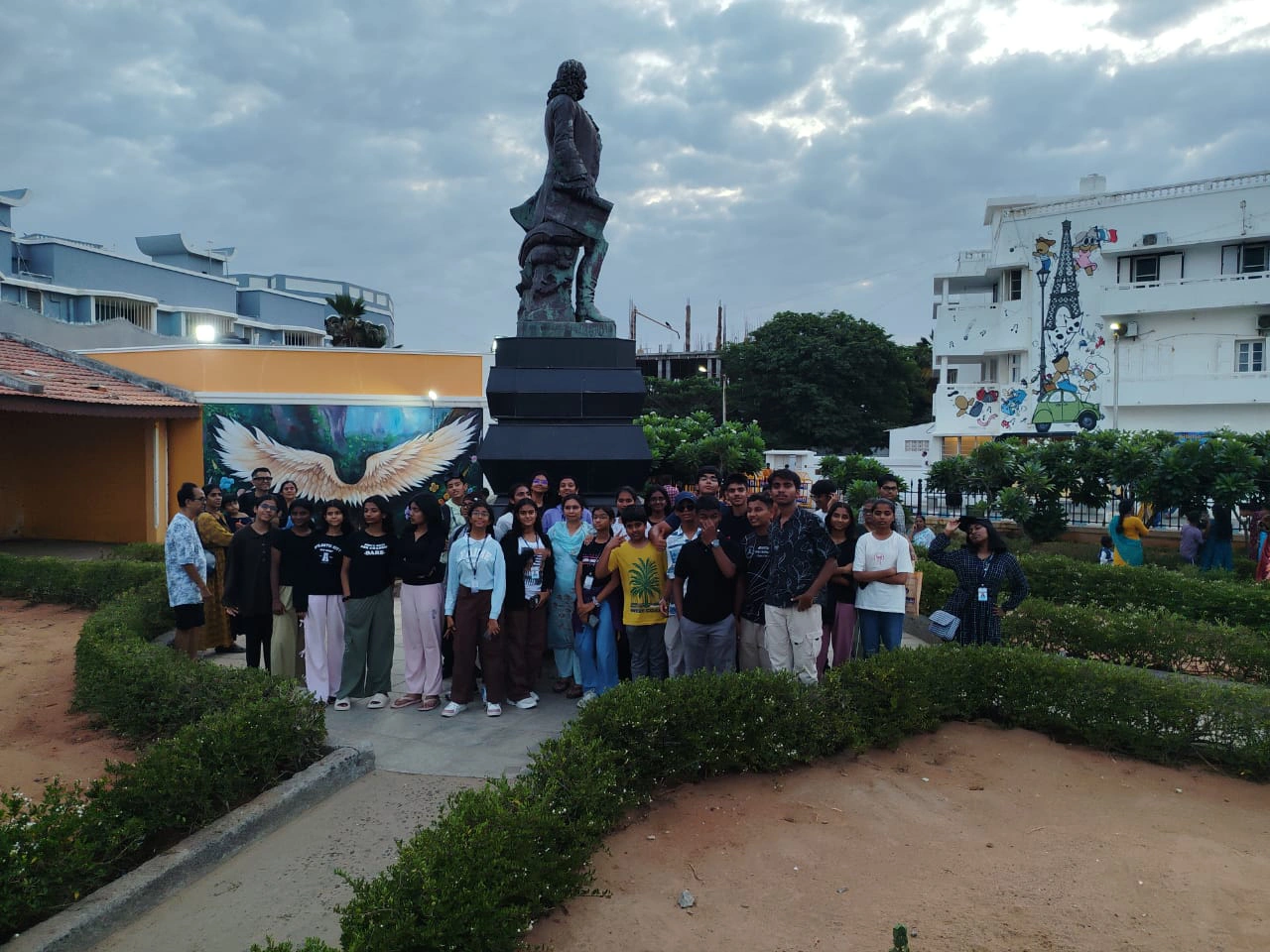
The group then travelled to Pondicherry, where students experienced a fascinating blend of Indian traditions and French colonial influence. Walking through the beautifully preserved French Quarter, they observed colonial-era buildings, colourful streets, heritage architecture, and urban planning that reflected the town’s unique historical identity. The experience helped students understand how history, governance, and culture shape the identity of a city over time.
A memorable highlight of the excursion was the visit to Auroville, an internationally recognised experimental township founded on the principles of peace, sustainability, and human unity. Students explored the surroundings of the iconic Matrimandir, admired its remarkable architectural design, and learned about Auroville’s vision of promoting harmony across cultures and nationalities. The visit encouraged thoughtful discussions on sustainable living, global citizenship, and shared human values.
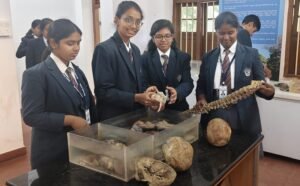
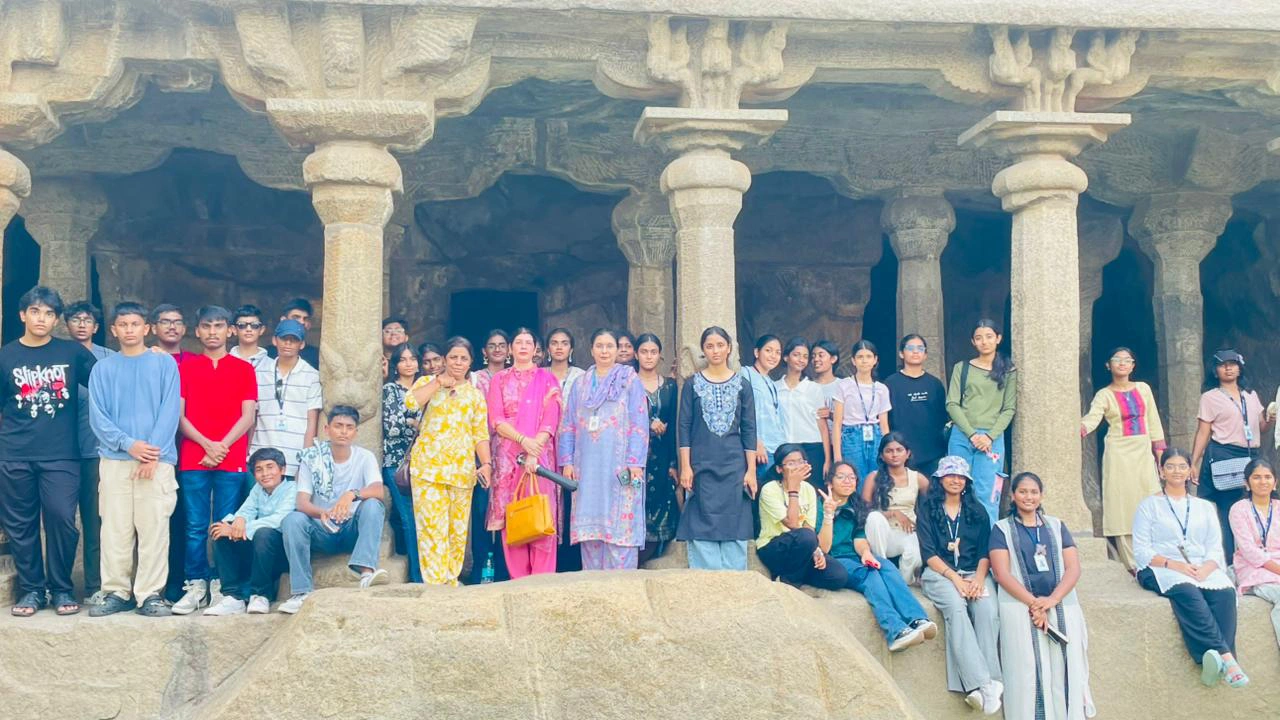
The educational journey continued to Mahabalipuram, one of India’s most celebrated archaeological destinations and a UNESCO World Heritage Site. Here, students explored monuments that stand as enduring examples of the artistic and engineering brilliance of the Pallava dynasty.
One of the most significant landmarks visited was the magnificent Shore Temple, constructed during the eighth century along the Bay of Bengal. Students observed its distinctive Dravidian architectural style, beautifully sculpted stone structures, and historical significance as one of India’s earliest structural temples overlooking the sea.
The excursion also included a visit to the remarkable Pancha Rathas, monolithic rock-cut monuments carved from single granite formations. Students learned how these architectural masterpieces, although never consecrated as temples, represent important milestones in India’s architectural evolution and continue to be recognised as part of the UNESCO World Heritage monument complex.
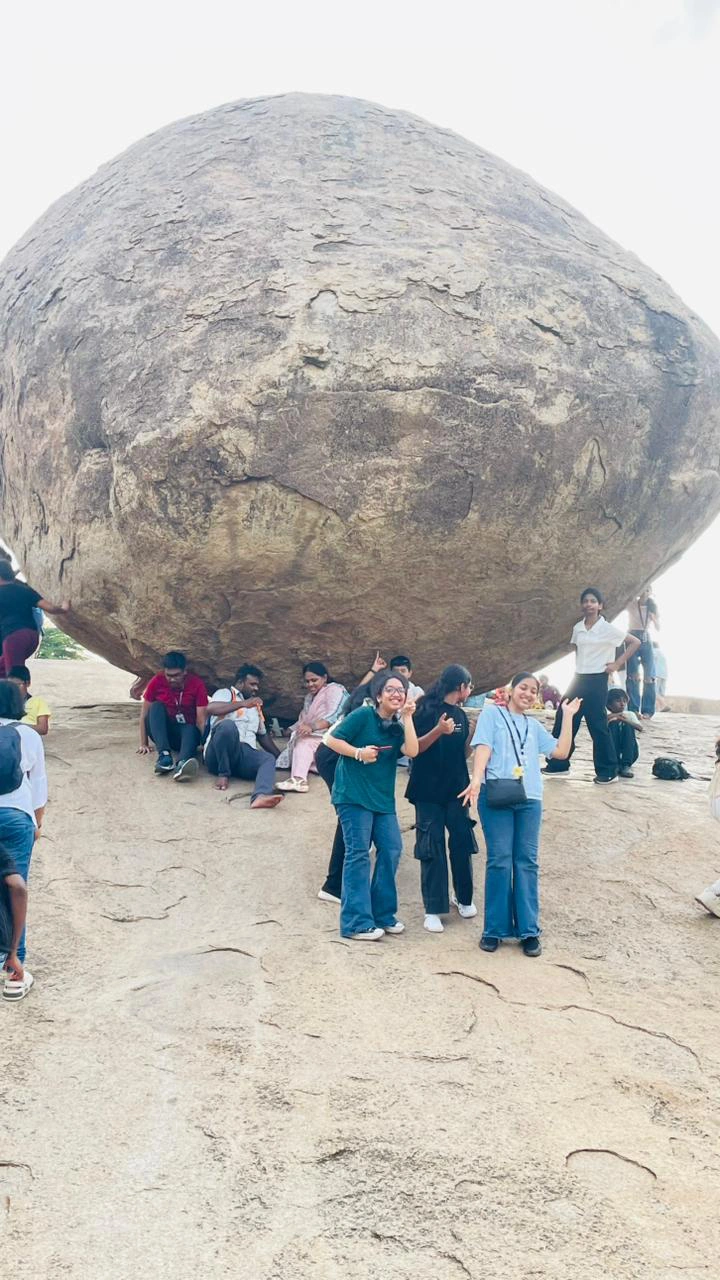
Another fascinating attraction was Krishna’s Butter Ball, the enormous naturally balanced granite boulder that has intrigued historians, engineers, scientists, and visitors for centuries. Standing before this geological wonder inspired curiosity and encouraged students to think critically about natural formations, balance, and scientific observation.
Throughout the excursion, teachers guided students in connecting classroom concepts from History, Geography, Art and Culture with real-world experiences. Observing historical monuments, architectural styles, cultural traditions, and heritage conservation first-hand transformed textbook knowledge into memorable learning experiences.
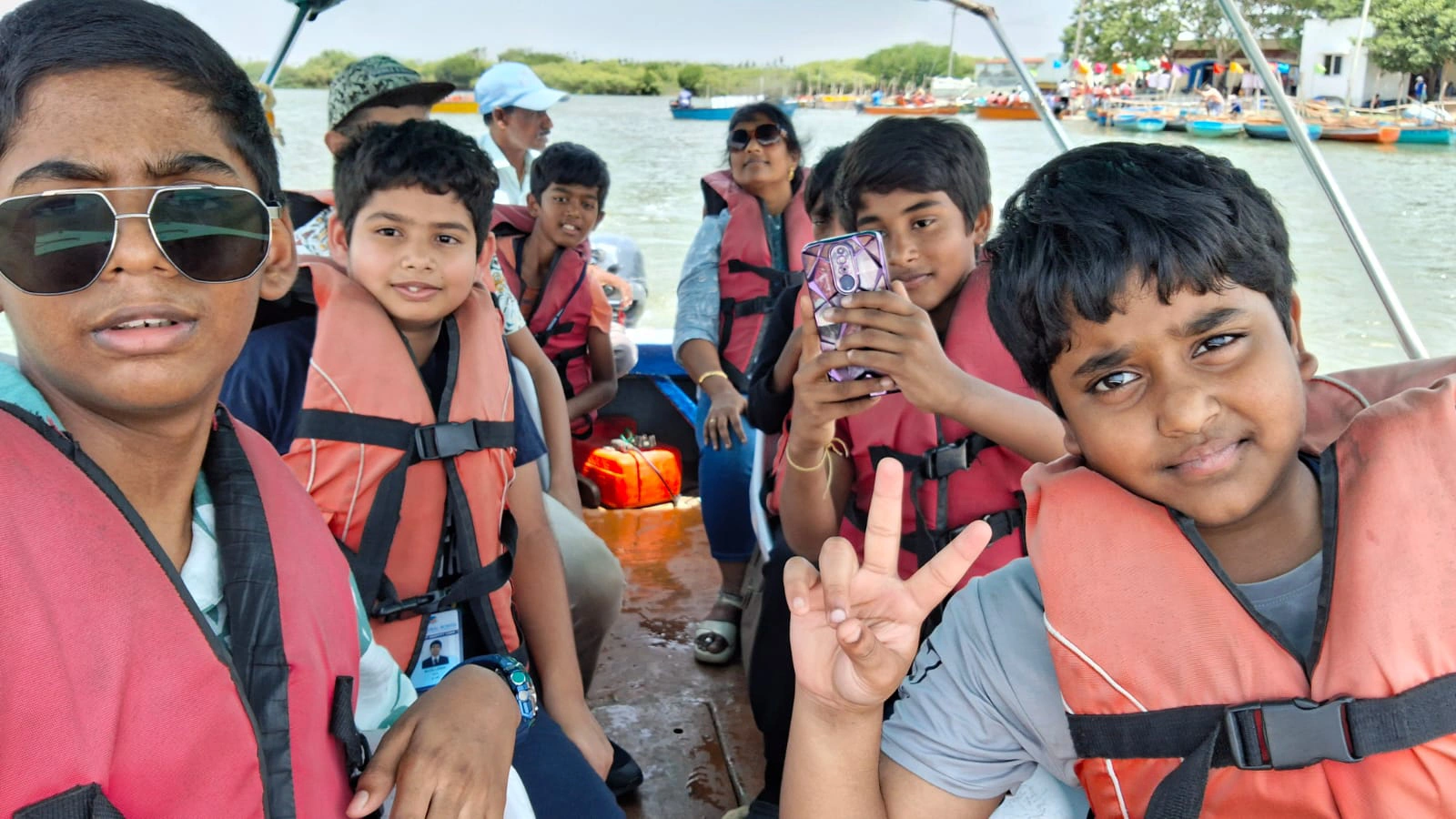
Beyond academics, students strengthened friendships, developed teamwork, practised responsibility during travel, adapted to new environments, and gained confidence through shared experiences. The excursion beautifully demonstrated that meaningful education extends beyond classrooms, inspiring students to appreciate India’s diverse heritage while becoming more observant, independent, and culturally aware learners.
Student Learning Outcomes & Benefits
What Did Students Learn During the Educational Excursion?
Students developed a deeper understanding of Indian history, UNESCO World Heritage Sites, French colonial heritage, architecture, geography, environmental awareness, teamwork, communication, and independent learning through immersive, real-world experiences.
Educational excursions transform theoretical learning into practical understanding. During this four-day journey, students explored destinations of historical, cultural, and architectural significance that complemented classroom learning while broadening their perspectives.
Historical Understanding
Visiting Thiruvannamalai and Mahabalipuram enabled students to connect textbook lessons with real historical landmarks. Observing centuries-old temples, sculptures, inscriptions, and monuments helped them better understand the Pallava dynasty, South Indian temple architecture, and India’s cultural evolution.
Appreciation of India’s Cultural Diversity
Pondicherry offered students a unique opportunity to witness the harmonious blend of Indian traditions and French colonial influence. Exploring the French Quarter introduced learners to different architectural styles, urban planning, and multicultural heritage, encouraging respect for cultural diversity.
Understanding UNESCO World Heritage Conservation
Mahabalipuram’s UNESCO World Heritage monuments demonstrated the importance of preserving historical treasures for future generations. Students learned how archaeological conservation protects invaluable cultural assets and why heritage preservation is a shared global responsibility.
Geography Through Real-Life Observation
Travelling across different regions allowed students to observe coastal landscapes, geological formations, climate variations, and regional ecosystems. Concepts taught in Geography became far more meaningful through direct observation.
Environmental Awareness
The visit to Auroville introduced students to ideas of sustainable development, environmental stewardship, and community living. Discussions around green spaces, sustainable practices, and ecological responsibility encouraged students to reflect on the importance of protecting natural resources.
Architectural Appreciation
From the towering gopurams of Thiruvannamalai Temple to the intricate carvings of the Shore Temple and Pancha Rathas, students gained valuable insights into India’s architectural excellence, engineering achievements, and artistic traditions.
Critical Thinking and Observation
Every destination encouraged learners to ask questions, observe details, compare historical periods, and analyse architectural features. Rather than memorising facts, students actively engaged with history and culture through exploration and discussion.
How Does This Educational Excursion Support CBSE Learning?
The excursion complements the CBSE curriculum by promoting experiential learning, multidisciplinary education, critical thinking, observation, collaboration, and real-world application of classroom concepts.
The National Education Policy (NEP) 2020 and the CBSE framework encourage schools to move beyond textbook-based instruction by providing authentic learning experiences. Educational excursions are an important part of this approach because they connect academic knowledge with practical understanding.
During the excursion, students applied concepts from:
• History through heritage monuments and ancient civilisations.
• Geography through landscapes, coastal environments, and regional diversity.
• Art and Architecture through temple design and stone sculpture.
• Social Science through cultural heritage and historical development.
• Environmental Studies through sustainable practices observed at Auroville.
Such interdisciplinary learning promotes curiosity, analytical thinking, and meaningful understanding rather than rote memorisation.
Educational Philosophy: Learning Beyond the Classroom
At BRS Global School | Sarjapur Road, education extends beyond academic excellence to prepare students for life through meaningful experiences.
Educational excursions are designed to inspire curiosity, encourage independent thinking, and help learners connect theoretical concepts with practical experiences. When students stand before a UNESCO World Heritage monument, explore centuries-old architecture, or experience different cultures firsthand, learning becomes personal, memorable, and impactful.
The school believes that holistic education includes:
• Academic excellence
• Experiential learning
• Cultural awareness
• Leadership development
• Responsible citizenship
• Environmental consciousness
• Collaboration and communication
• Global perspectives
By organising thoughtfully planned educational programmes, the school nurtures confident learners who appreciate history, embrace diversity, and develop skills that prepare them for future academic and personal success.
Why This Matters for Student Development?
Educational excursions foster intellectual curiosity, confidence, cultural understanding, independence, teamwork, and responsible citizenship while making classroom learning more engaging and relevant.
Students often remember experiences more vividly than textbooks. Visiting historical monuments, interacting with different environments, and observing real-world examples strengthen long-term understanding while developing practical life skills.
These experiences encourage students to:
• Become independent learners.
• Develop stronger observation skills.
• Build confidence in unfamiliar environments.
• Appreciate India’s cultural and historical heritage.
• Strengthen collaboration and leadership abilities.
• Connect classroom concepts with real-world experiences.
• Develop respect for heritage conservation and sustainability.
The result is a more balanced educational journey that supports both academic achievement and personal growth.
Local Context: A Trusted Choice for Families in and Around Attibele
Families living along Sarjapur Road increasingly seek schools that provide opportunities beyond conventional classroom instruction. Educational excursions such as this demonstrate a commitment to experiential learning, helping students gain practical knowledge while nurturing confidence, curiosity, and holistic development.
The BRS Global School – Sarjapur Road campus is conveniently accessible for families residing in Bellandur, Sarjapur Road, Hosa Road, Koramangala, HSR layout, Dommasandra, Kodathi, Gunjur, Varthur, Kaikondrahalli, Kasavanahalli, Carmelaram, Harlur, Rayasandra, Naganathapura, Doddakannelli, Kudlu Gate, A Krishnappa Nagar, Halnayakanahalli, Radha Reddy Layout, Chikkanayakanahalli, Huskur, KPC Layout, CSB Layout, Owners Court, Doddanagamangala, Doctors Layout, Shiva Reddy Layout, Meenakshi Layout, Chikbellandur, Sompura Gate, Muthannalur Cross, Gunjur to Dommasandra Road, Mullur, Amrita Engineering College Road Kasavanahalli, Amrita Nagar, Serenity Layout, Spring Fields, Iblur, Marathahalli, Shobha Apartments, Choodasandra, Junnasandra, Rayasandra , and nearby neighbourhoods.
Its proximity to leading employment hubs—including Wipro Campus, RMZ Ecoworld, Embassy TechVillage, RGA Tech Park, Prestige Tech Park, Cessna Business Park, and the Electronic City IT Corridor—makes it a convenient choice for working professionals looking for a CBSE school that combines academic excellence with experiential learning.
Parents can explore the BRS Global School – Sarjapur Road Google Business Profile to learn more about the campus, facilities, admissions, and student activities:
https://share.google/2oEno2EtFtY7eyP2B
Families from Attibele, Chandapura, Anekal, and Hosur can also explore BRS Global School – Attibele, another branch of BRS Global School that serves those communities:
Common Parent Questions
How do educational excursions benefit students?
Educational excursions provide hands-on learning experiences that strengthen academic understanding while developing confidence, teamwork, communication, observation, and problem-solving skills.
Why are historical site visits important for school students?
Historical site visits help students connect classroom lessons with real monuments, architecture, and cultural heritage, making history more engaging, memorable, and meaningful.
How does this excursion support CBSE learning?
The programme aligns with the CBSE approach by encouraging experiential learning, interdisciplinary thinking, observation, cultural awareness, collaboration, and practical application of classroom knowledge.
What life skills did students develop?
Students strengthened communication, teamwork, leadership, adaptability, responsibility, cultural awareness, curiosity, critical thinking, and independent decision-making.
Why should parents value experiential learning?
Experiential learning improves knowledge retention, encourages deeper understanding, builds confidence, develops practical skills, and prepares children for lifelong learning beyond examinations.
Key Highlights
• Students of Grades 8–12 participated in a four-day educational excursion from 30 July to 2 August.
• The journey covered Thiruvannamalai, Pondicherry, Auroville, and Mahabalipuram.
• Students explored the spiritual and architectural significance of Thiruvannamalai Temple.
• The visit to Pondicherry introduced students to the unique blend of Indian and French colonial heritage.
• At Auroville, students learned about sustainable living, global citizenship, and the philosophy of human unity while exploring the iconic Matrimandir.
• Students visited the UNESCO World Heritage monuments of Mahabalipuram, including the Shore Temple, Pancha Rathas, and Krishna’s Butter Ball.
• The excursion connected classroom concepts in History, Geography, Art, Architecture, and Social Science with real-world experiences.
• Students developed communication, teamwork, leadership, observation, critical thinking, cultural awareness, and independent learning skills.
• The programme reflected the CBSE emphasis on experiential learning, multidisciplinary education, and holistic development.
Frequently Asked Questions (FAQs)
Why are educational excursions important for school students?
Educational excursions enable students to experience concepts beyond textbooks. They promote experiential learning, improve knowledge retention, encourage curiosity, and help learners understand history, geography, culture, and science through real-life observation.
What places did students visit during this excursion?
Students visited Thiruvannamalai Temple, Pondicherry, Auroville, and Mahabalipuram, exploring spiritual landmarks, French colonial heritage, sustainable communities, UNESCO World Heritage Sites, and ancient Pallava architecture.
How does visiting historical monuments improve learning?
Historical monuments allow students to connect classroom lessons with real places, making historical events, architecture, and cultural traditions more engaging, memorable, and meaningful.
How does this excursion support holistic development?
The excursion nurtured academic understanding while strengthening confidence, communication, teamwork, leadership, adaptability, cultural awareness, observation, and responsible citizenship.
How does the programme align with CBSE and NEP 2020?
The excursion reflects CBSE and NEP 2020 principles by encouraging experiential learning, multidisciplinary education, critical thinking, collaboration, and practical application of classroom concepts.
Why should parents choose schools that organise educational excursions?
Educational excursions help children become independent, confident learners who develop practical life skills alongside academic knowledge. Such experiences prepare students for higher education and future careers while encouraging lifelong curiosity.
Which families can conveniently access the Sarjapur Road campus?
The BRS Global School – Sarjapur Road campus is conveniently located for families from Sarjapur Road, Bellandur, Kasavanahalli, HSR Layout, Harlur, Dommasandra, Kaikondrahalli, Carmelaram, Marathahalli, Varthur, Whitefield, and surrounding communities, with easy connectivity to major IT corridors.
Conclusion
Meaningful education extends beyond classrooms, and educational excursions play a vital role in helping students connect academic learning with the world around them. The Pondicherry and Mahabalipuram excursion provided students with an enriching opportunity to experience India’s cultural diversity, architectural brilliance, historical heritage, and environmental awareness through direct observation and exploration.
By visiting iconic destinations such as Thiruvannamalai Temple, Auroville, the Shore Temple, Pancha Rathas, and Krishna’s Butter Ball, students transformed textbook knowledge into lasting memories while developing confidence, curiosity, teamwork, and critical thinking.
At BRS Global School | Sarjapur Road, experiential learning is an integral part of holistic education. Carefully planned programmes such as educational excursions complement classroom instruction and prepare students with the knowledge, skills, and perspectives needed to thrive in a rapidly changing world.
Explore BRS Global School – Sarjapur Road
If you are looking for a CBSE school in Sarjapur Road that combines academic excellence with experiential learning, holistic development, and future-ready education, we invite you to discover BRS Global School – Sarjapur Road.
Explore our campus and learn more through our Google Business Profile:
Sarjapur Road Campus:
https://share.google/2oEno2EtFtY7eyP2B
Families from Attibele, Chandapura, Anekal, and Hosur may also explore BRS Global School – Attibele, another branch of BRS Global School:
https://share.google/iFhJaeGo8wkgOZ1Y5
Schedule a campus visit to experience our learning environment, interact with our educators, and discover how we inspire students to learn, explore, and grow beyond the classroom.