
Introduction
Art education becomes more meaningful when students are given opportunities to create, experiment and express their ideas with their own hands. At BRS Global School | Pre-school, Primary School & High School | Attibele, the September monthly activities brought this approach to life through three creative experiences designed for different age groups.
From greeting card making in the primary grades to Ganesha idol making and acrylic painting for older students, the activities combined artistic learning with values, cultural appreciation and holistic development. Such experiential opportunities form an important part of the school’s emphasis on experiential learning, arts, life skills and confidence building.
Event Overview
| Grades | Activity | Key Learning |
|---|---|---|
| Grades 1–2 | Greeting Card Making | Colours, shapes, design, creativity and gratitude |
| Grades 3–5 | Ganesha Idol Making | Form, 3D art, creativity and cultural appreciation |
| Grades 6–10 | Ganesha Acrylic Painting | Colour blending, shading, composition and artistic expression |
The activities were structured to progressively develop students’ artistic abilities while encouraging values such as kindness, gratitude, patience, concentration, respect and appreciation of cultural heritage.
What Happened During the Event?
Greeting Card Making – Grades 1 and 2
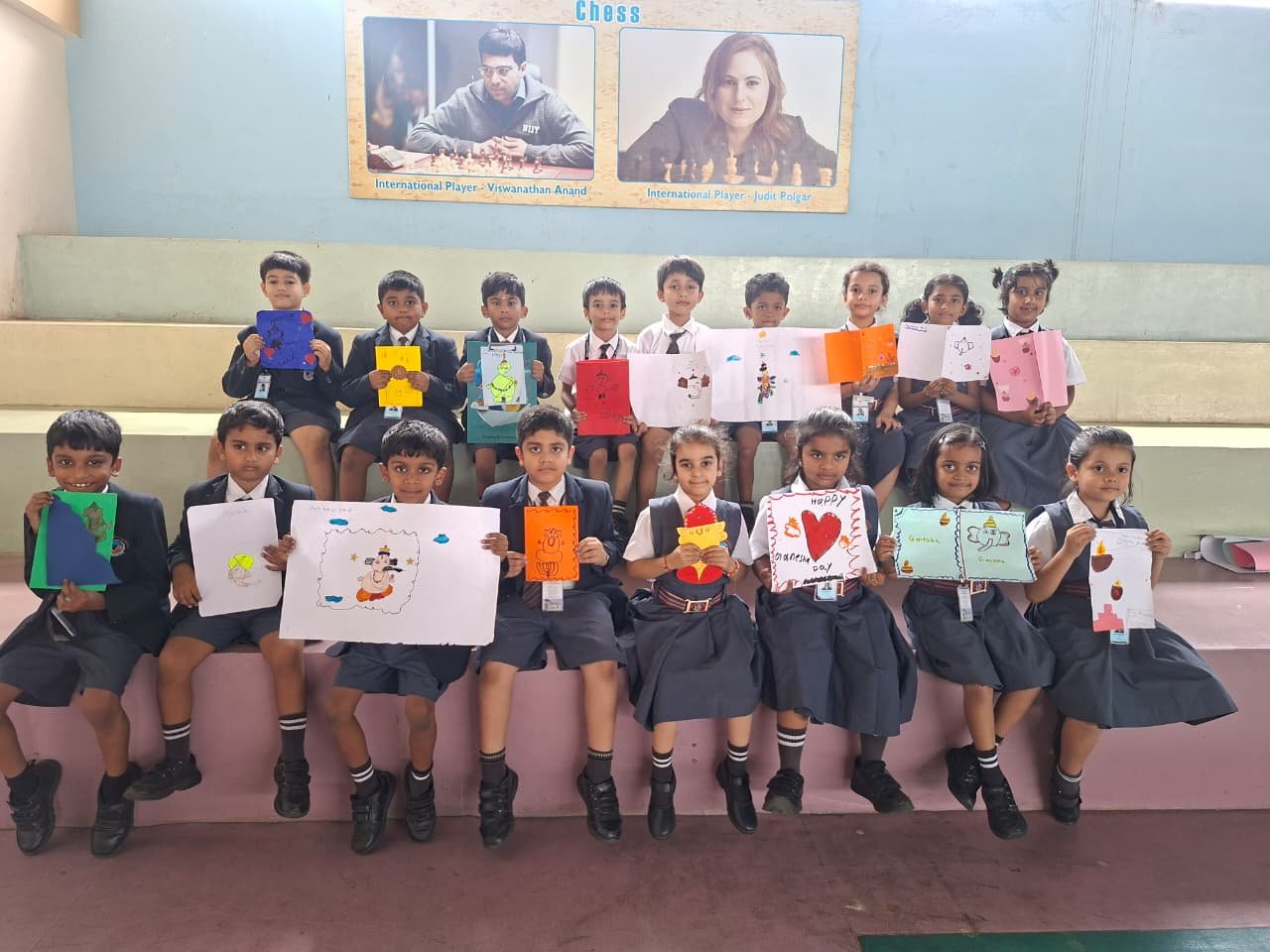
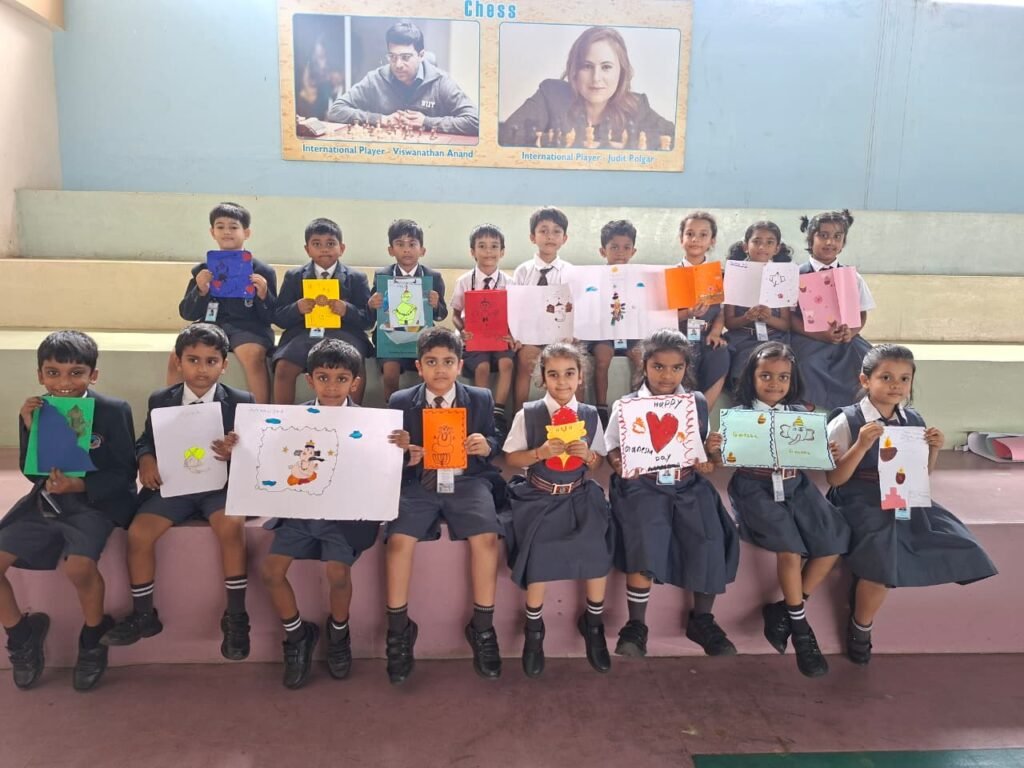
Students of Grades 1 and 2 explored simple elements of visual art through greeting card making. They used drawings, patterns, colours and decorative materials to create their own cards.
The activity introduced young learners to basic design, colour selection and creative expression while strengthening fine motor skills. More importantly, greeting cards provided a natural opportunity to connect creativity with values such as kindness, gratitude and sharing.
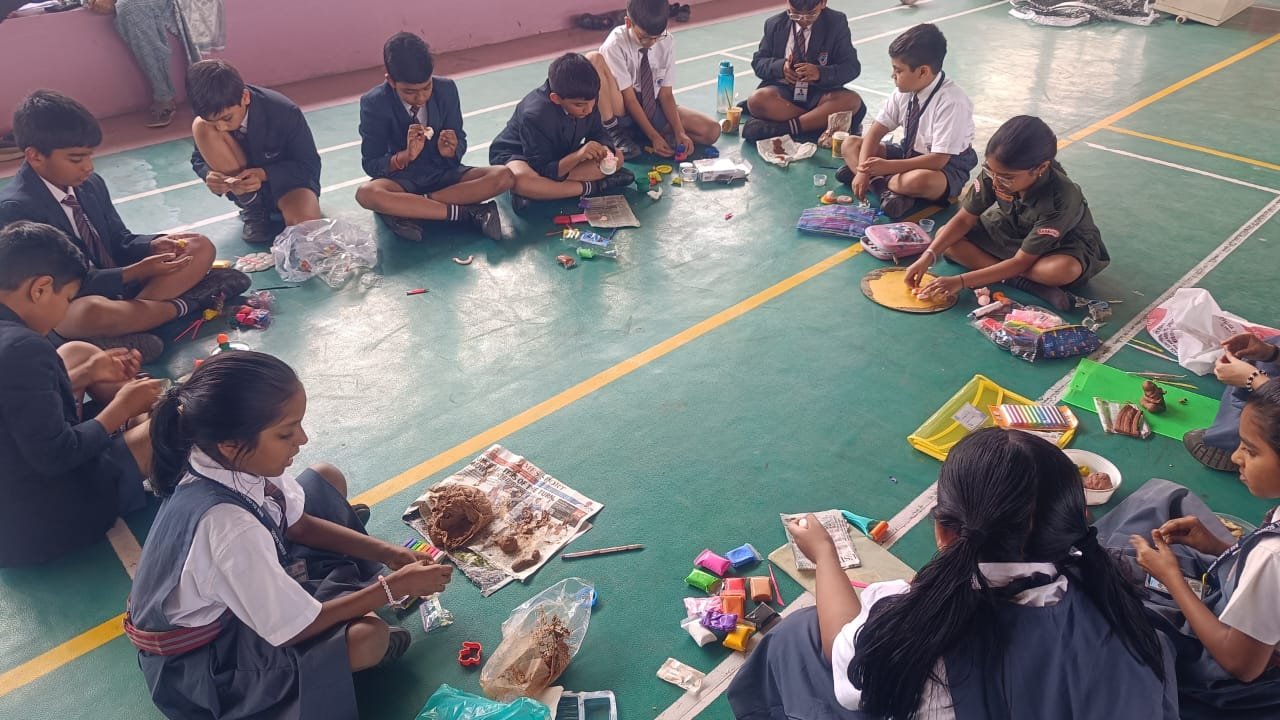
Ganesha Idol Making – Grades 3, 4 and 5
Students of Grades 3 to 5 explored three-dimensional creativity through Ganesha idol making. They experimented with shapes, forms and creative techniques to develop their own representations of Ganesha.
The hands-on activity encouraged students to understand form and three-dimensional art while appreciating Indian art and cultural traditions. It also promoted patience, concentration and respect for cultural heritage.
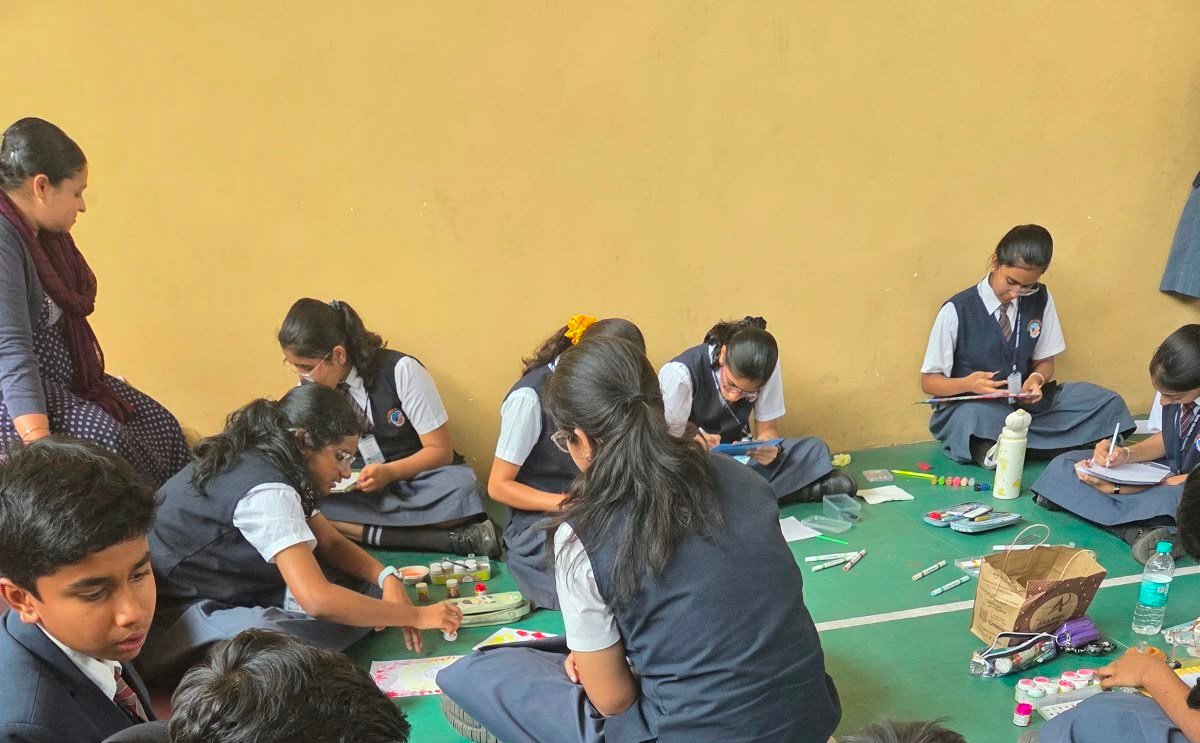
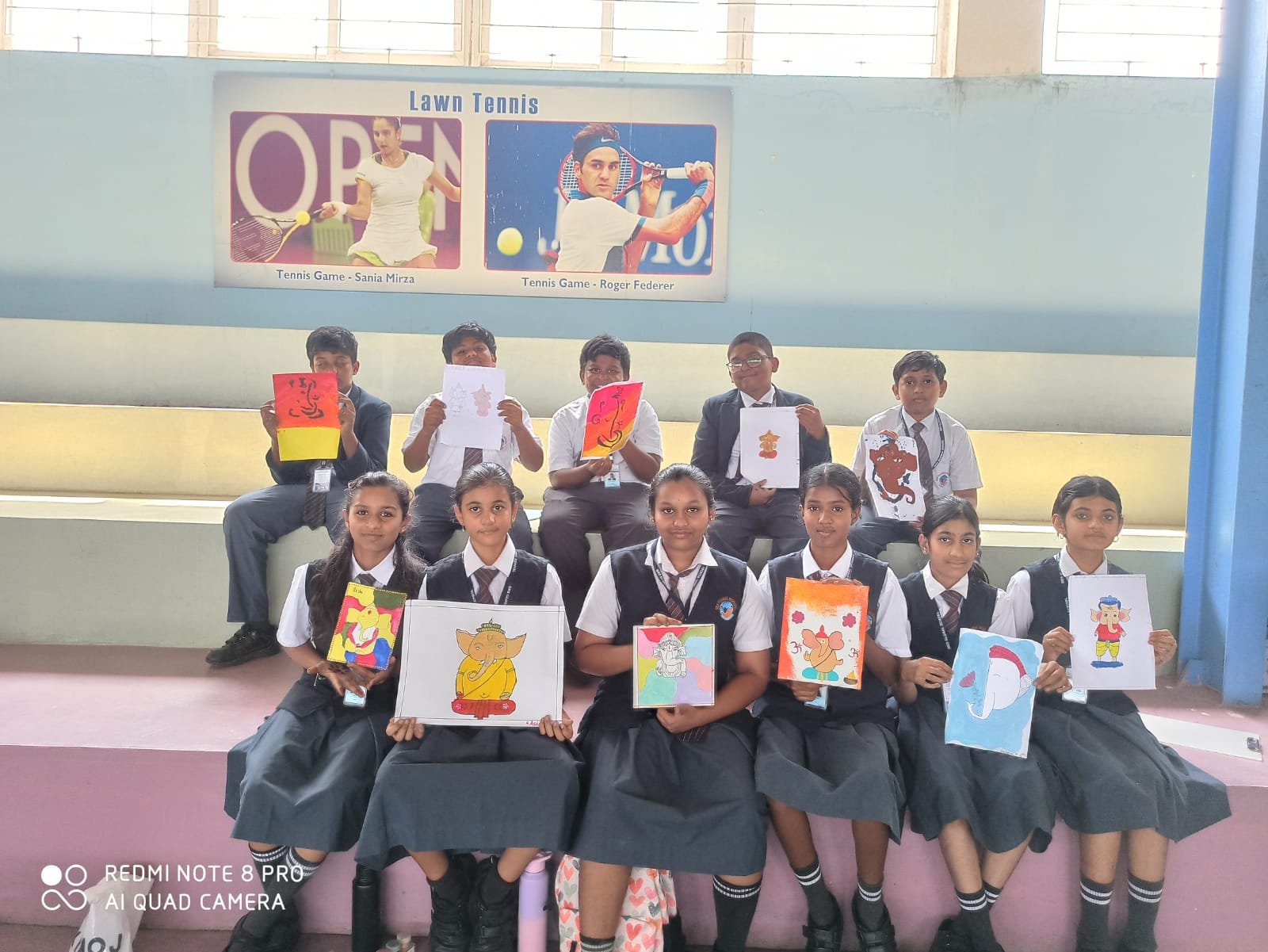
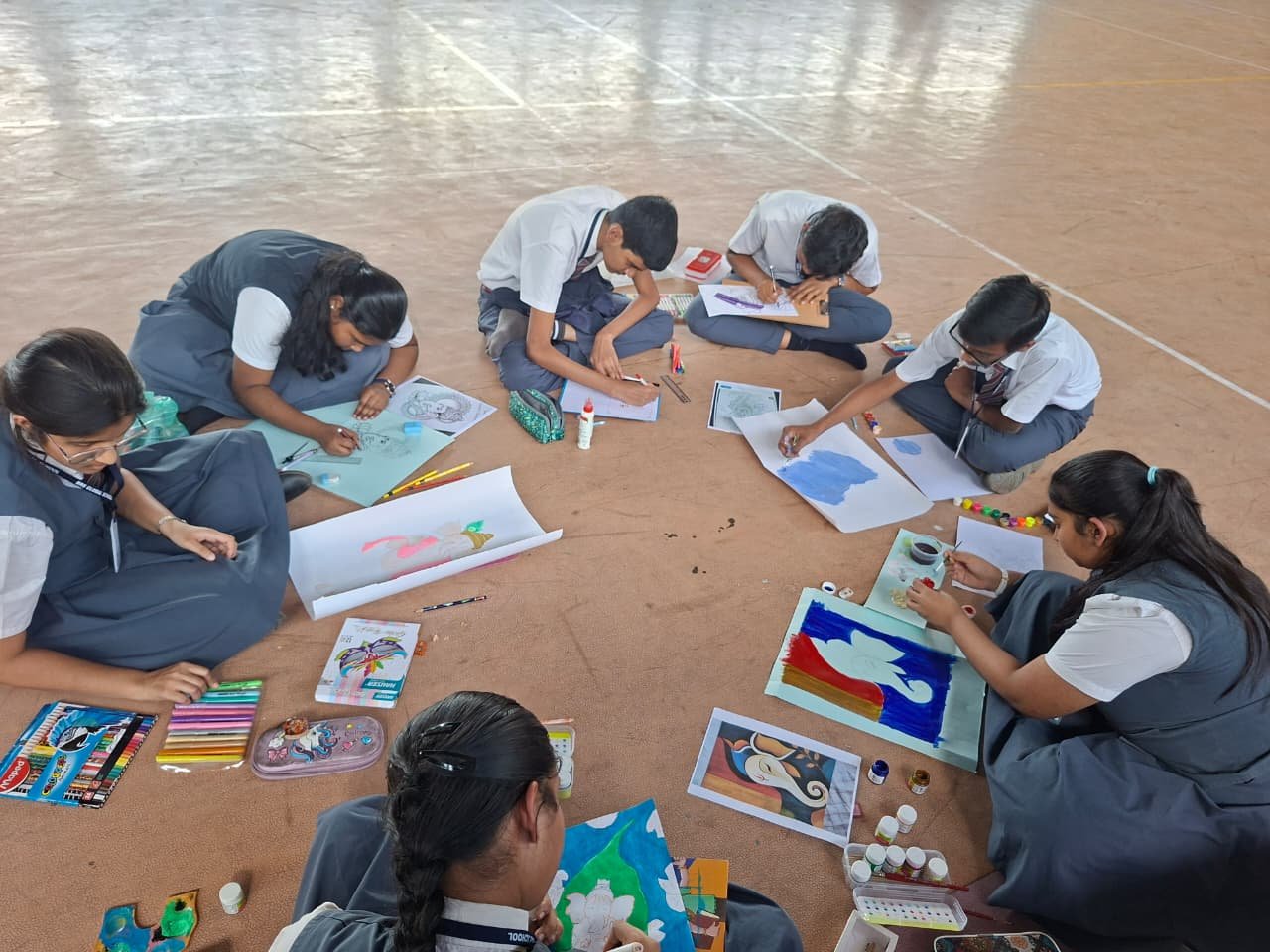
Ganesha Acrylic Painting – Grades 6 to 10
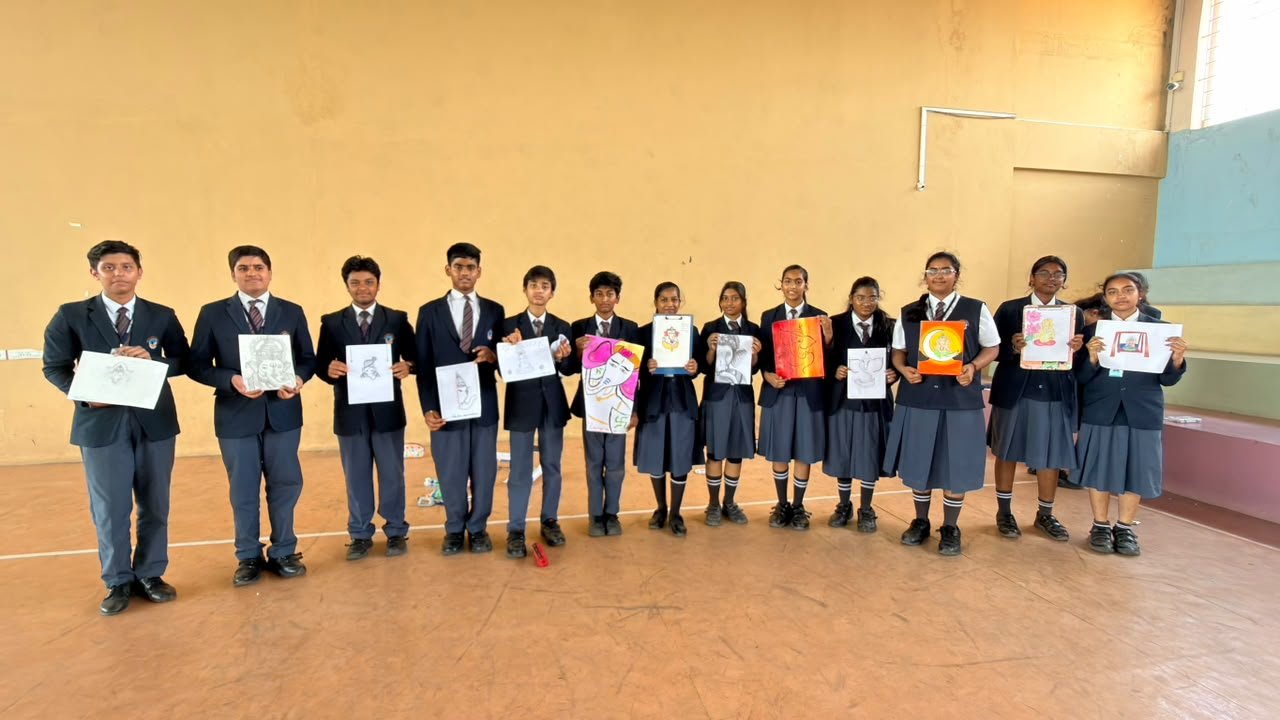
Students of Grades 6 to 10 moved towards more advanced artistic techniques through Ganesha acrylic painting. They experimented with colour combinations, blending, shading, composition and artistic detailing to create vibrant artworks.
The activity encouraged students to develop their own artistic style while learning to respect different creative perspectives.
Student Learning Outcomes & Benefits
The September art activities supported multiple areas of student development:
• Creativity: Students explored original ideas and artistic approaches.
• Fine Motor Skills: Younger students strengthened hand control through drawing, decorating and creating.
• Colour Awareness: Students explored colour combinations, patterns, blending and shading.
• Artistic Expression: Students communicated ideas and emotions through visual art.
• Concentration: Detailed art activities encouraged students to focus on a task.
• Patience: Completing artwork helped students understand the value of careful and sustained effort.
• Confidence: Creating and presenting individual artwork encouraged self-expression.
• Cultural Awareness: Ganesha-themed activities provided opportunities to appreciate Indian artistic and cultural traditions.
• Respect: Students learned to appreciate different artistic styles and perspectives.
Educational Philosophy / Institutional Value Alignment
At BRS Global School | Pre-school, Primary School & High School | Attibele, learning extends beyond textbook-based instruction. The school’s stated positioning combines academic learning with experiential learning, leadership, sports, arts, life skills and confidence-building programmes.
The September activities reflect this philosophy by allowing students to learn through direct experience. Instead of only learning about colours, shapes, forms or cultural themes theoretically, students worked with materials and created something of their own.
This approach makes art a pathway to developing both skills and character.
Why Does Art Matter for Student Development?
Art activities help children move from simply observing to actively creating. Students make decisions about colours, shapes, composition and presentation, which encourages independent thinking and problem-solving.
For older students, techniques such as acrylic painting can further develop attention to detail and artistic discipline. At the same time, culturally themed artwork can encourage students to appreciate India’s artistic traditions while respecting different forms of creative expression.
The September activities therefore supported a broader educational goal: developing confident learners who can think creatively, work patiently and appreciate both their own ideas and those of others.
Local Context Relevance
For families exploring schools in Attibele, CBSE schools in Attibele, schools in Chandapura, schools in Anekal and schools in Sarjapura, opportunities for creative and experiential learning can be an important part of evaluating a school’s overall educational approach.
BRS Global School | Pre-school, Primary School & High School | Attibele – Google Business Profile
The Attibele campus is strategically located along the Attibele–Sarjapur Road corridor, with accessibility from Attibele, Bidaraguppe, Anekal, Chandapura, Sarjapur, Sarjapura and Hosur Road. The location also provides connectivity towards Electronic City, Bommasandra, Sompura, Jigani and other surrounding residential and industrial areas.
This makes the school relevant to families living in nearby apartments, gated communities and emerging residential neighbourhoods across South-East Bengaluru.
Common Parent Questions
How does an art activity support CBSE learning?
Art activities complement classroom learning by developing creativity, observation, fine motor coordination, communication and self-expression. They also provide opportunities for experiential and interdisciplinary learning.
How does art improve student confidence?
Creating an artwork allows students to make independent choices and see the outcome of their effort. Completing and sharing their work can strengthen confidence and encourage self-expression.
What values can children learn through art?
Students can develop patience, concentration, respect, cooperation, appreciation and responsibility. Cultural art activities can additionally encourage appreciation of India’s artistic heritage.
Is art useful for older students too?
Yes. Older students can progress from basic creative activities to techniques such as composition, blending, shading and detailed painting, helping them develop greater artistic control and individual expression.
Key Highlights
• Grades 1 and 2 participated in Greeting Card Making.
• Grades 3, 4 and 5 participated in Ganesha Idol Making.
• Grades 6 to 10 explored Ganesha Acrylic Painting.
• Students developed creativity and artistic expression.
• Younger learners practised colours, shapes and design.
• Middle-grade students explored three-dimensional art and form.
• Older students experimented with acrylic painting techniques.
• Activities encouraged patience, concentration and confidence.
• Students developed appreciation for Indian art and cultural traditions.
Frequently Asked Questions (FAQs)
What art activities were conducted at BRS Global School in September?
The school conducted Greeting Card Making for Grades 1–2, Ganesha Idol Making for Grades 3–5 and Ganesha Acrylic Painting for Grades 6–10.
What skills does greeting card making develop?
Greeting card making supports fine motor skills, creativity and understanding of colours, shapes and design while encouraging gratitude and kindness.
What do students learn from Ganesha idol making?
Students learn about three-dimensional art, shapes and forms while developing creativity, hand-eye coordination, patience and appreciation of Indian cultural traditions.
What techniques did students explore in acrylic painting?
Students experimented with acrylic colours, blending, shading, colour combinations, composition and artistic detailing.
Why should parents value experiential art activities?
Experiential art allows children to learn by doing. It encourages creativity, concentration, confidence and self-expression while complementing academic learning.
Is BRS Global School located conveniently for families near Attibele?
The Attibele campus is positioned on the Attibele–Sarjapur Road corridor and is accessible from areas including Attibele, Bidaraguppe, Anekal, Chandapura, Sarjapur and Hosur Road.
Does BRS Global School have another campus?
Yes. BRS Global School | Best CBSE School in Sarjapur Road is another branch of BRS Global School.
Conclusion
The September art activities at BRS Global School | Pre-school, Primary School & High School | Attibele demonstrated how creative learning can combine artistic skills, cultural awareness and values. From a child’s first greeting card to detailed acrylic painting, every activity provided students with an opportunity to create, experiment and grow.
For parents looking for CBSE schools in Attibele that value experiential learning, arts, life skills and holistic development, explore the Attibele campus and discover how learning extends beyond the classroom.
Explore our Campus:
Attibele Branch
https://share.google/iFhJaeGo8wkgOZ1Y5
Sarjapur Road Branch: