Introduction
Choosing what to study after Grade 10 is an important decision in a student’s educational journey. With options ranging from PUC and diploma programmes to vocational training through ITI, students need clear information to understand which pathways align with their interests, abilities and future ambitions.
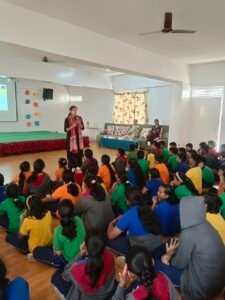
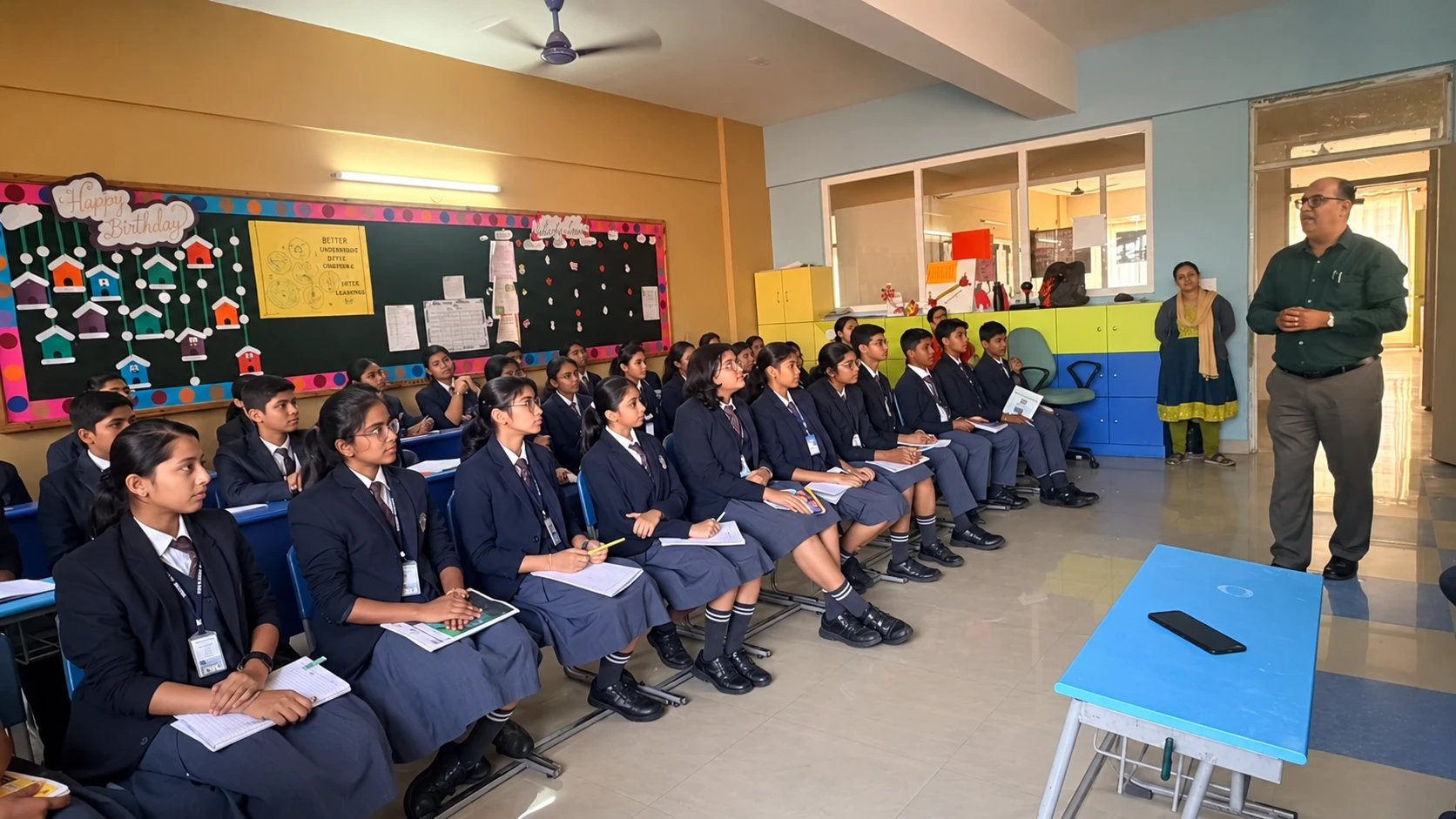
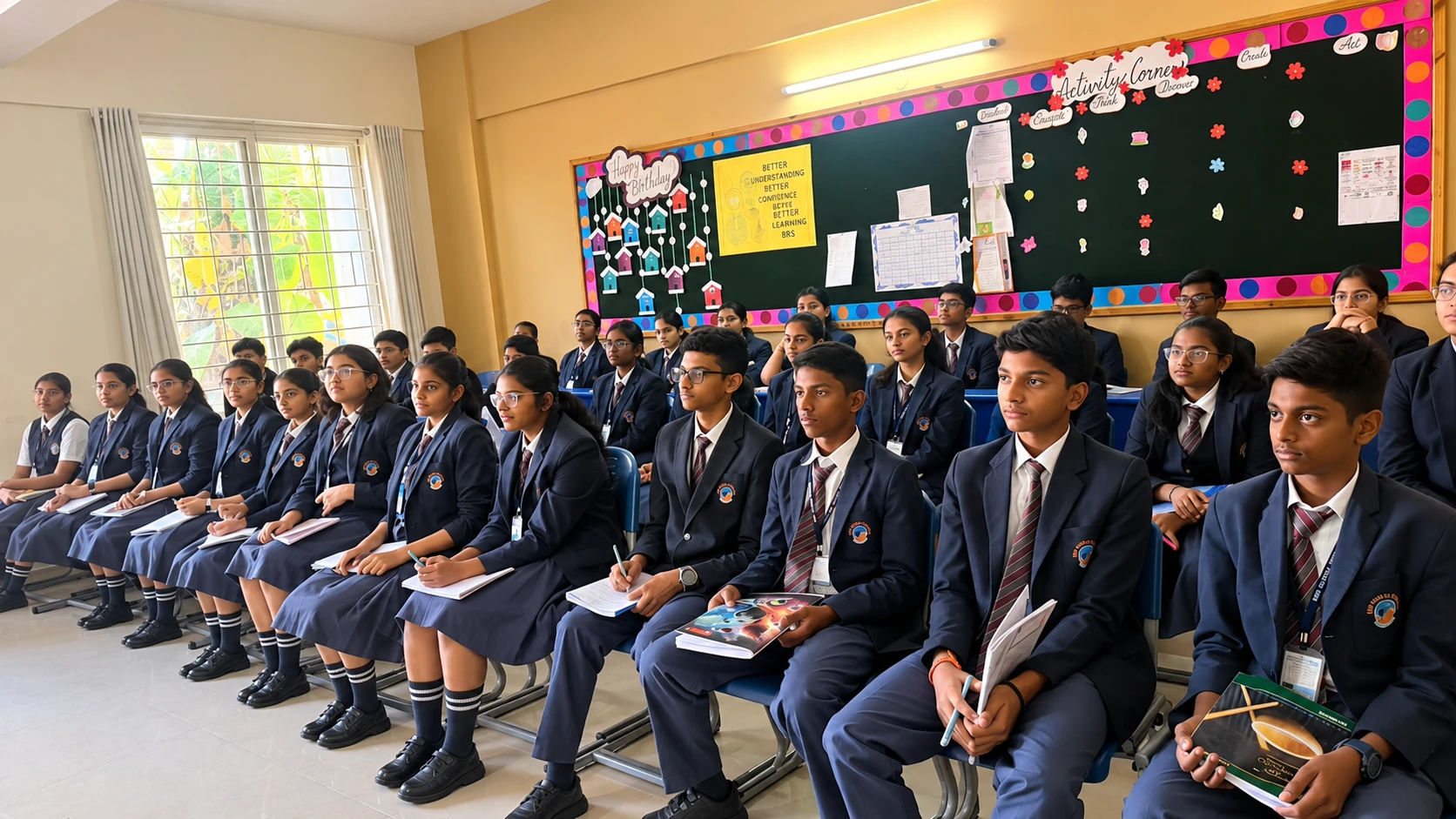
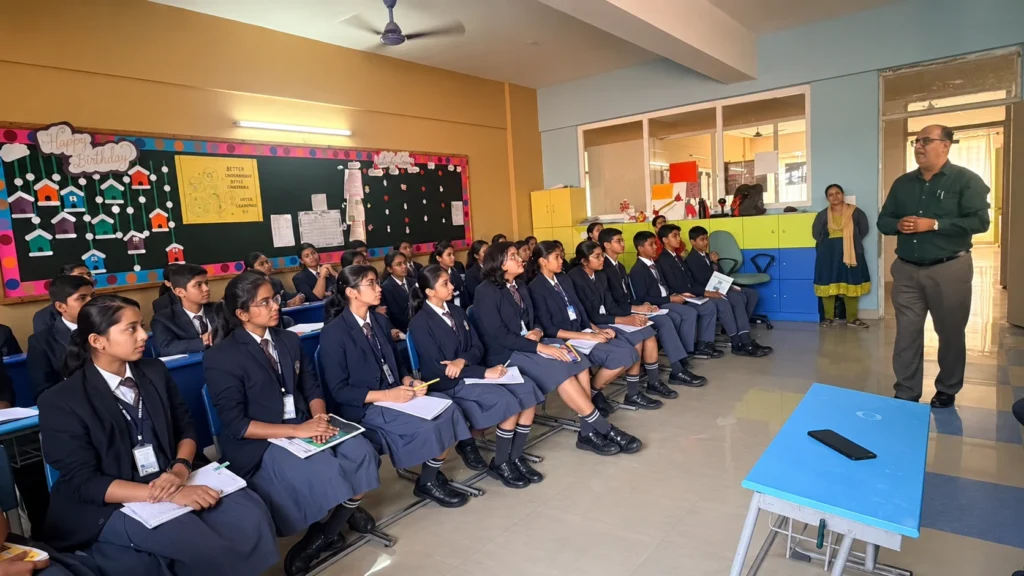
To help students explore these choices, BRS Global School – Attibele Campus hosted the “Post-10th Career Navigator: Navigating What Comes Next” session on 27 October 2026. Organised by Rachna Sagar Pvt. Ltd. and presented by Mr. Ramdas C Inamdar, Senior Academic Relationship Manager, the presentation introduced students to academic, technical and vocational pathways, emerging career fields and essential professional skills.
The session reflected the school’s commitment to preparing learners for life beyond examinations. By encouraging informed decision-making and continuous skill development, BRS Global School aims to help students approach their next educational stage with greater awareness and a clearer sense of direction.
For families exploring BRS Global School – Attibele Campus, this initiative demonstrates the importance of helping students connect their present learning with future possibilities.
Event Overview
Event: Post-10th Career Navigator – Navigating What Comes Next
Date: 27 October 2026
Venue: BRS Global School – Attibele Campus
Organised by: Rachna Sagar Pvt. Ltd.
Presented by: Mr. Ramdas C Inamdar
Designation: Senior Academic Relationship Manager
Central theme: Educational pathways, career exploration, skill development and informed choices after Grade 10.
What Happened During the Post-10th Career Navigator Session?
The presentation, “Navigating What Comes Next,” provided a structured overview of the choices students can consider after completing Grade 10. It compared academic, technical and vocational routes while highlighting how students can evaluate each option against their individual needs and future goals.
Understanding the main educational pathways after Grade 10
The presentation introduced three broad routes: PUC, diploma or polytechnic education, and ITI training. Students were encouraged to understand the differences in learning approach, duration, practical exposure, employment possibilities and further education.
Pre-University Course (PUC)
PUC offers an academic pathway through Classes 11 and 12. The presentation covered Science, Commerce and Arts/Humanities streams, along with examples of the higher education and career directions associated with them.
Diploma and Polytechnic Programmes
Diploma programmes combine theoretical learning with practical training in areas such as Computer Science and IT, Mechanical Engineering, Civil Engineering, Electrical and Electronics, Automobile and related technical fields. The presentation also discussed possible progression to B.E. or B.Tech through lateral entry, subject to applicable admission rules.
Industrial Training Institute (ITI)
ITI courses offer trade-based, hands-on training. Examples discussed included Electrician, Fitter, Electronics Mechanic, Welder, Mechanic, Computer Operator and Programming Assistant (COPA), Draughtsman, and Refrigeration and Air Conditioning.
The central message was that these routes serve different needs. Students should compare them carefully rather than assuming that one pathway is universally better than another.
Exploring PUC streams and career directions
The presentation outlined possible directions associated with different PUC streams.
• Science: Medicine, engineering, research, biotechnology, software development, artificial intelligence, machine learning and data science.
• Commerce: Finance, banking, business and related professional fields.
• Arts and Humanities: Law, civil services, psychology, journalism, teaching and other disciplines.
These examples help students understand the range of opportunities associated with different subjects. Specific eligibility requirements vary by course and institution, so students should verify them before making decisions.
Discovering diverse career ecosystems
The session highlighted five broad career ecosystems: technology, creative fields, healthcare, law, and government and defence.
Examples included web and app development, AI and machine learning, cybersecurity, graphic design, animation, medicine, nursing, pharmacy, legal practice, banking, railways, police services and civil services.
By exploring a broad range of professions, students can begin to connect their interests and strengths with possible fields of further study.
Understanding the importance of transferable skills
The presentation emphasised that career readiness involves more than academic qualifications. Skills such as communication, English fluency, presentation, digital literacy, AI literacy, problem-solving, critical thinking and financial awareness can be valuable across many professions.
Students were encouraged to develop these skills progressively, regardless of whether they choose an academic, technical or vocational pathway.
Learning through practice and feedback
An important concept presented during the session was the continuous learning cycle:
Learn → Practise → Build → Get Feedback and Improve
The presentation encouraged students to gain practical experience through college projects, volunteering, competitions, freelance work, apprenticeships, internships and industry projects, wherever suitable and accessible.
It also highlighted the importance of creating evidence of learning through projects, certifications, resumes and professional profiles, while learning from teachers, seniors, alumni, mentors and industry communities.
Student Learning Outcomes and Benefits
The Post-10th Career Navigator session introduced several practical ideas that can support students as they prepare for further education.
Career awareness
Students gain an overview of academic, technical and vocational pathways and become more aware of the variety of opportunities available after Grade 10.
Informed decision-making
Students are encouraged to compare options using personal interests, strengths, preferred learning styles, eligibility, cost, duration and career goals.
Critical thinking and self-awareness
Reflecting on what they enjoy, what they do well and how they learn best can help students approach educational decisions more thoughtfully.
Future-ready skills
The session highlighted communication, digital literacy, AI literacy, problem-solving, presentation skills and financial awareness as important transferable capabilities.
Practical experience and portfolio development
Students were introduced to the value of projects, certifications, internships, apprenticeships and other suitable experiences that demonstrate their developing skills.
These are learning opportunities highlighted by the presentation. Individual students will still need personalised guidance, accurate course information and further exploration before deciding on a particular pathway.
Educational Philosophy: Preparing Students for Life Beyond School
At BRS Global School – Attibele Campus, education extends beyond completing the syllabus. The school’s educational approach combines academic learning with experiential activities, life skills, leadership opportunities and confidence-building experiences.
Career awareness is a natural part of this broader approach. Helping students understand possible educational pathways encourages them to think about how their present interests, subject choices and developing abilities may connect with future opportunities.
The Post-10th Career Navigator session also reinforced the importance of adaptability. Rather than encouraging students to focus exclusively on a single job title, the presentation highlighted continuous learning, practical experience and transferable skills that can remain useful as career opportunities evolve.
For a CBSE school, this complements the broader aim of helping learners become thoughtful, capable and responsible individuals who can make informed decisions about their education and future.
Why Does Career Guidance Matter After Grade 10?
Career guidance matters because the choices students make after Grade 10 can influence their subsequent studies, training opportunities and professional direction. Understanding the available pathways helps them make decisions based on their circumstances rather than assumptions or peer pressure.
A useful career-planning process encourages students to:
• Identify interests: Recognise the subjects, activities and problems they enjoy.
• Understand strengths: Reflect on their abilities, learning preferences and areas for improvement.
• Compare pathways: Explore PUC, diploma, polytechnic and ITI options.
• Check practical requirements: Review eligibility, admission criteria, duration, approximate cost and progression opportunities.
• Build relevant skills: Develop communication, digital competence, critical thinking and problem-solving.
• Seek guidance: Discuss options with parents, teachers, counsellors, alumni and professionals.
• Take a practical next step: Create a career action plan and begin a suitable project or skill-building activity.
The presentation recommended follow-up opportunities such as student interaction sessions, course-comparison worksheets and discussions with counsellors, alumni and professionals. These activities can help turn initial awareness into a more personalised plan.
The key takeaway for parents is that career planning should be an informed process, not a one-time decision based solely on marks, popularity or a perceived trend.
Local Context: Career Awareness for Families in Attibele and Beyond
BRS Global School – Attibele Campus serves families in Attibele, Attibelle, Bidaraguppe, Anekal, Chandapura, Sarjapura and the wider Attibele–Sarjapur Road corridor.
The surrounding region connects residential communities with employment and industrial centres such as the Attibele Industrial Area, Bommasandra Industrial Area, Jigani Industrial Estate and Electronic City, as well as the Hosur Road industrial corridor.
For families in these communities, career awareness can be an important part of preparing adolescents for further education and a changing world of work. Understanding academic and technical pathways, emerging technology-related careers and transferable skills can help students begin planning for their next stage of education.
Parents looking for CBSE schools in Attibele can also explore BRS Global School – Attibele Campus on Google to find campus information.
BRS Global School has another branch on Sarjapur Road for families exploring schooling options in that area. Parents can visit the Sarjapur Road branch’s Google Business Profile and explore the school’s Sarjapur Road location page.
That branch serves a different local catchment, including areas such as Bellandur, Hosa Road, HSR Layout, Dommasandra, Kodathi, Gunjur, Varthur, Kasavanahalli, Carmelaram, Harlur, Rayasandra, Choodasandra and Junnasandra.
This article focuses on the career guidance event held at the Attibele campus, while the other branch’s information is provided separately for families researching the wider BRS Global School network.
Common Parent Questions About Parent-Teacher Meetings
How Does a Parent-Teacher Meeting Support CBSE Learning?
A Parent-Teacher Meeting supports the learning process by helping parents understand students’ academic progress, classroom participation and areas requiring improvement. It encourages families to reinforce learning habits at home and maintain communication with educators. This creates a more consistent support system for students throughout the academic year.
How Can Parents Help Improve Their Child’s Academic Performance After a PTM?
Parents can support academic improvement by establishing regular study routines, encouraging independent learning, ensuring consistent school attendance and discussing any difficulties their children experience. They can also follow the guidance shared by teachers and maintain communication with the school to understand the child’s progress.
Why Should Parents Attend PTMs Regularly?
Regular attendance allows parents to remain informed about their children’s development rather than waiting until examination results are announced. It also provides opportunities to discuss concerns, recognise achievements, understand learning needs and work with teachers on appropriate improvement strategies.
Does a PTM Discuss Only Examination Marks?
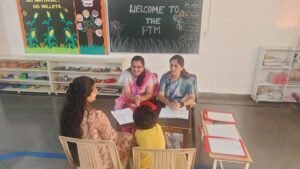
No. A comprehensive Parent-Teacher Meeting can cover several aspects of a student’s school experience, including academic performance, classroom participation, behaviour, learning habits, attendance, strengths and areas for improvement. The Term 1 meeting at BRS Global School addressed these broader aspects of student development.
How Does Communication Between Parents and Teachers Improve Student Confidence?
When parents and teachers share observations and provide consistent encouragement, children receive clearer guidance and emotional support. Recognising effort, discussing challenges constructively and celebrating progress can help students approach their learning responsibilities with greater confidence.
What Should Parents Discuss with Teachers During a PTM?
Parents can discuss academic progress, subject-specific difficulties, classroom participation, learning habits, attendance, behaviour and areas where additional support may be needed. Sharing relevant observations from home can also help teachers understand the child’s learning experiences more completely.
Why Is Holistic Development Important When Choosing a School?
Holistic development recognises that education involves more than academic achievement. It includes social interaction, emotional growth, discipline, communication, confidence and personal responsibility. Parents comparing schools in Sarjapur Road should consider how a school’s educational environment supports these different aspects of a child’s development.
Key Highlights of the Term 1 Parent-Teacher Meeting
• The Parent-Teacher Meeting was held on 31 October 2026.
• The event took place at BRS Global School, Kasavanahalli, Bengaluru.
• Discussions focused on students’ Term 1 academic performance.
• Teachers shared observations about classroom participation and behaviour.
• Individual strengths and areas requiring improvement were discussed.
• The importance of attendance, discipline and consistent academic effort was emphasised.
• Parents were encouraged to provide continued learning support at home.
• Parent feedback and queries were addressed through constructive interaction.
• The meeting reinforced the importance of parent-teacher collaboration.
• The event concluded in a cordial and positive atmosphere.
Frequently Asked Questions (FAQs)
When Was the Parent-Teacher Meeting Conducted at BRS Global School, Sarjapur Road?
The Term 1 Parent-Teacher Meeting was conducted on 31 October 2026 at the Kasavanahalli campus of BRS Global School, Sarjapur Road, Bengaluru.
What Was the Purpose of the Term 1 Parent-Teacher Meeting?
The purpose was to discuss students’ academic performance, classroom participation, behaviour and overall development while strengthening communication between parents and teachers.
What Topics Were Discussed During the PTM?
Teachers discussed students’ academic progress, strengths, areas requiring improvement, learning habits, attendance, discipline and classroom behaviour. Parents were also encouraged to share feedback and support learning at home.
How Do Parent-Teacher Meetings Contribute to Holistic Development?
PTMs help parents and teachers understand a child’s academic, behavioural and personal development needs. This shared understanding supports consistent guidance, positive habits, confidence and continuous learning.
Is BRS Global School Located Near Bellandur and HSR Layout?
BRS Global School’s Sarjapur Road campus is located in Kasavanahalli, Bengaluru, within the broader Sarjapur Road residential corridor. Families from Bellandur, HSR Layout, Haralur, Hosa Road and nearby communities can enquire about admissions and transport availability.
Which Curriculum Does BRS Global School, Sarjapur Road, Follow?
BRS Global School, Sarjapur Road, follows the CBSE curriculum and offers education up to Grade 12. The school also focuses on academic learning and opportunities that contribute to students’ broader development.
How Can Parents Enquire About Admissions at BRS Global School?
Parents can visit the BRS Global School admissions page or contact the Sarjapur Road campus to learn about admission procedures, grade availability, fees and transport facilities.
Conclusion: Building Stronger Learning Partnerships
The Term 1 Parent-Teacher Meeting at BRS Global School, Sarjapur Road, highlighted an essential aspect of meaningful education: children’s development is strengthened when parents and teachers work together.
The discussions on academic performance, classroom participation, learning habits, behaviour and individual progress provided parents with a better understanding of their children’s educational journey. More importantly, the meeting reinforced the value of consistent communication, encouragement and shared responsibility.
For families exploring schools in Sarjapur Road, choosing an educational institution involves looking beyond academic results. A supportive learning environment, committed educators, meaningful parent engagement and attention to holistic development are equally valuable considerations.
At BRS Global School, the focus remains on supporting students through meaningful educational experiences and constructive collaboration with families.
Looking for a CBSE school in Sarjapur Road, Bengaluru? Explore BRS Global School’s Sarjapur Road campus or enquire about admissions to learn more about academic programmes, campus facilities and the school’s educational approach.
Explore our Campus:
Attibele Branch:
https://share.google/iFhJaeGo8wkgOZ1Y5
Sarjapur Road Branch: