
Introduction
Understanding the human brain requires more than memorising diagrams and identifying labelled regions in a textbook. For students studying Biology, seeing how anatomical knowledge connects with real human specimens can make scientific concepts more meaningful and memorable.
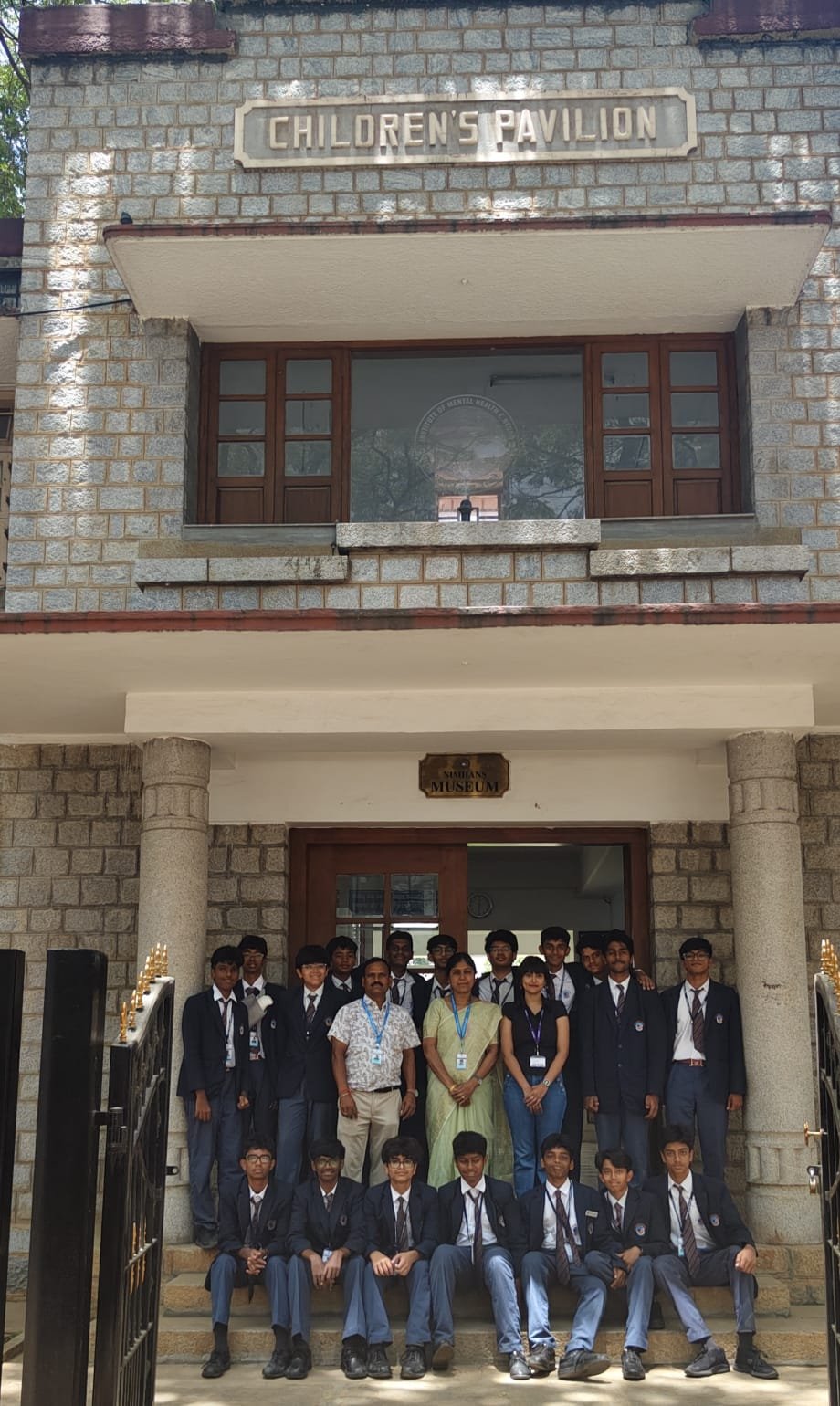
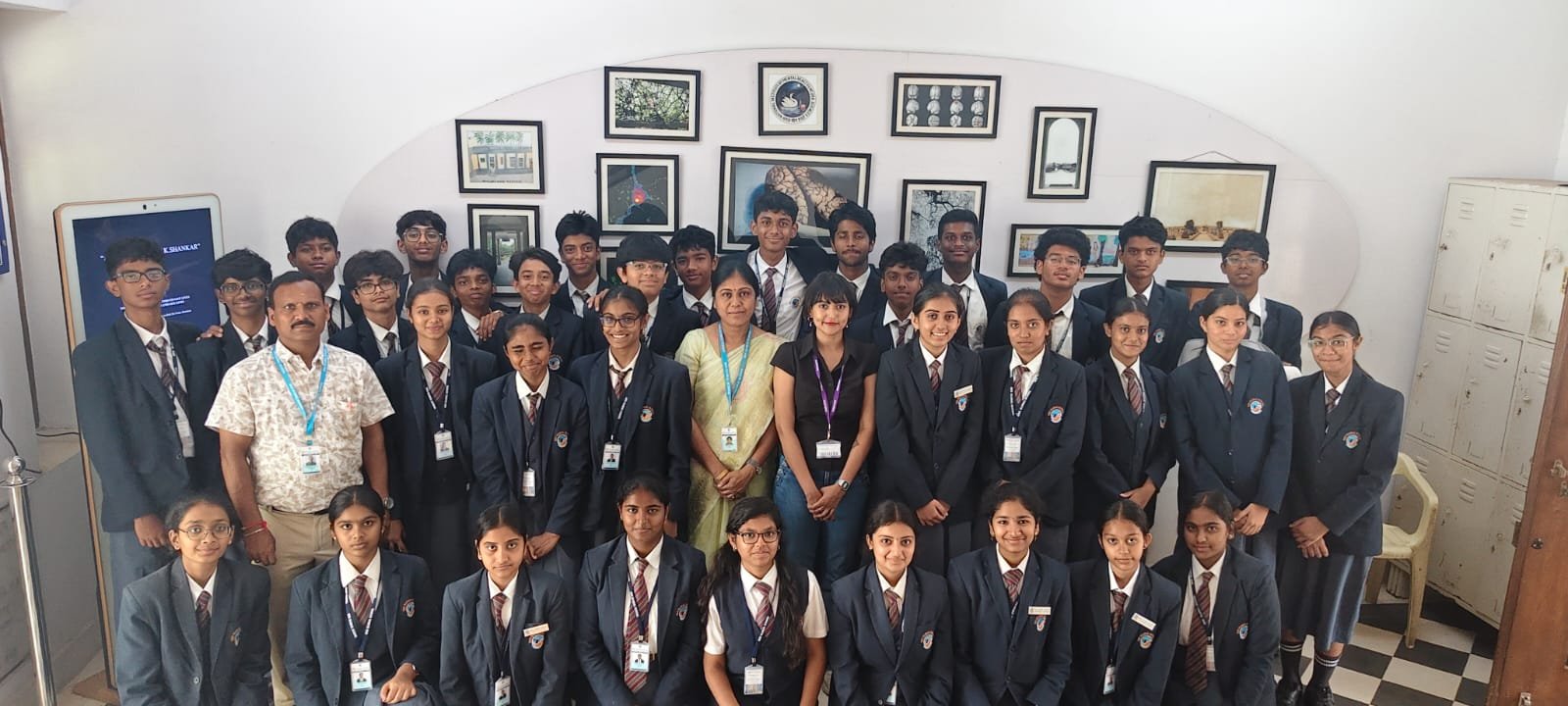
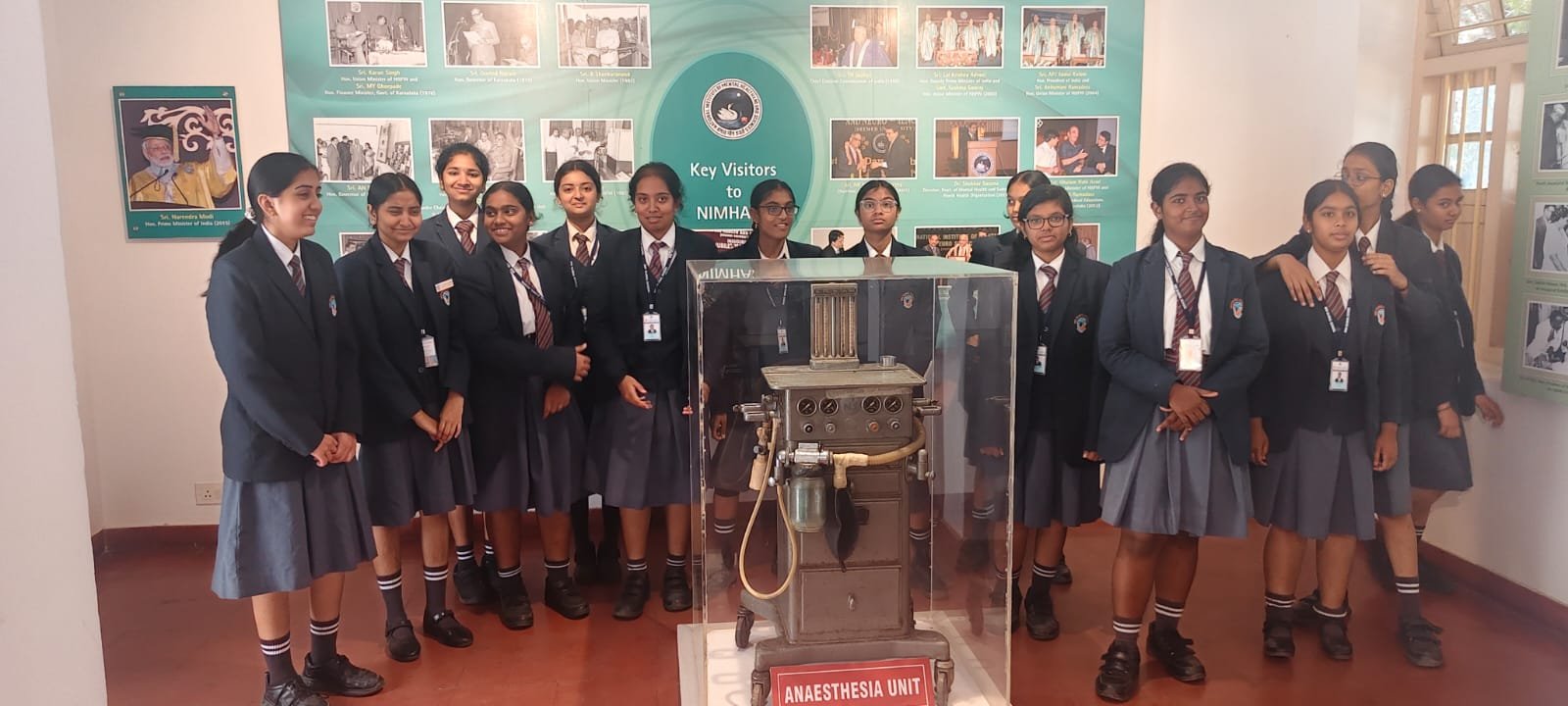
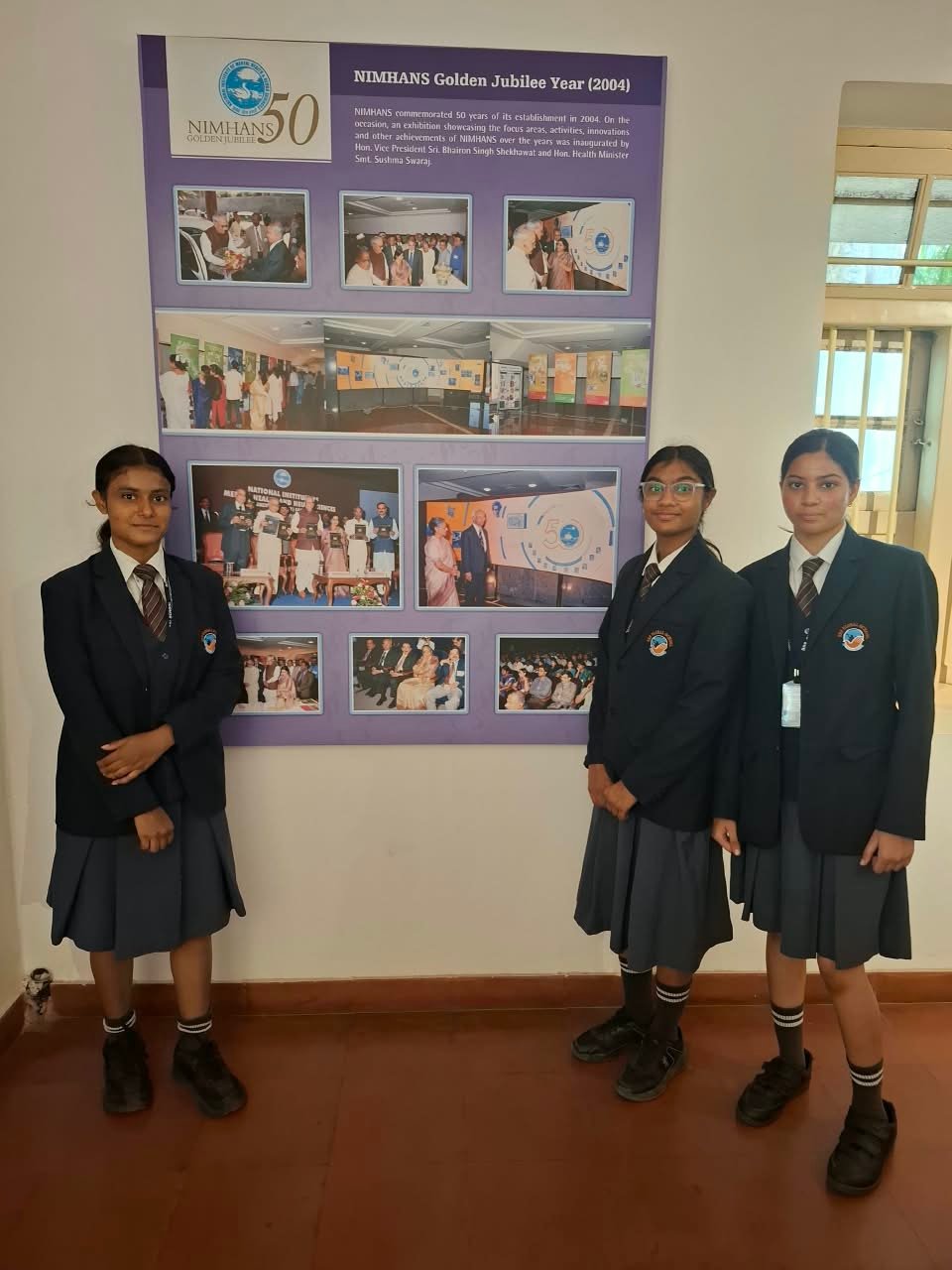
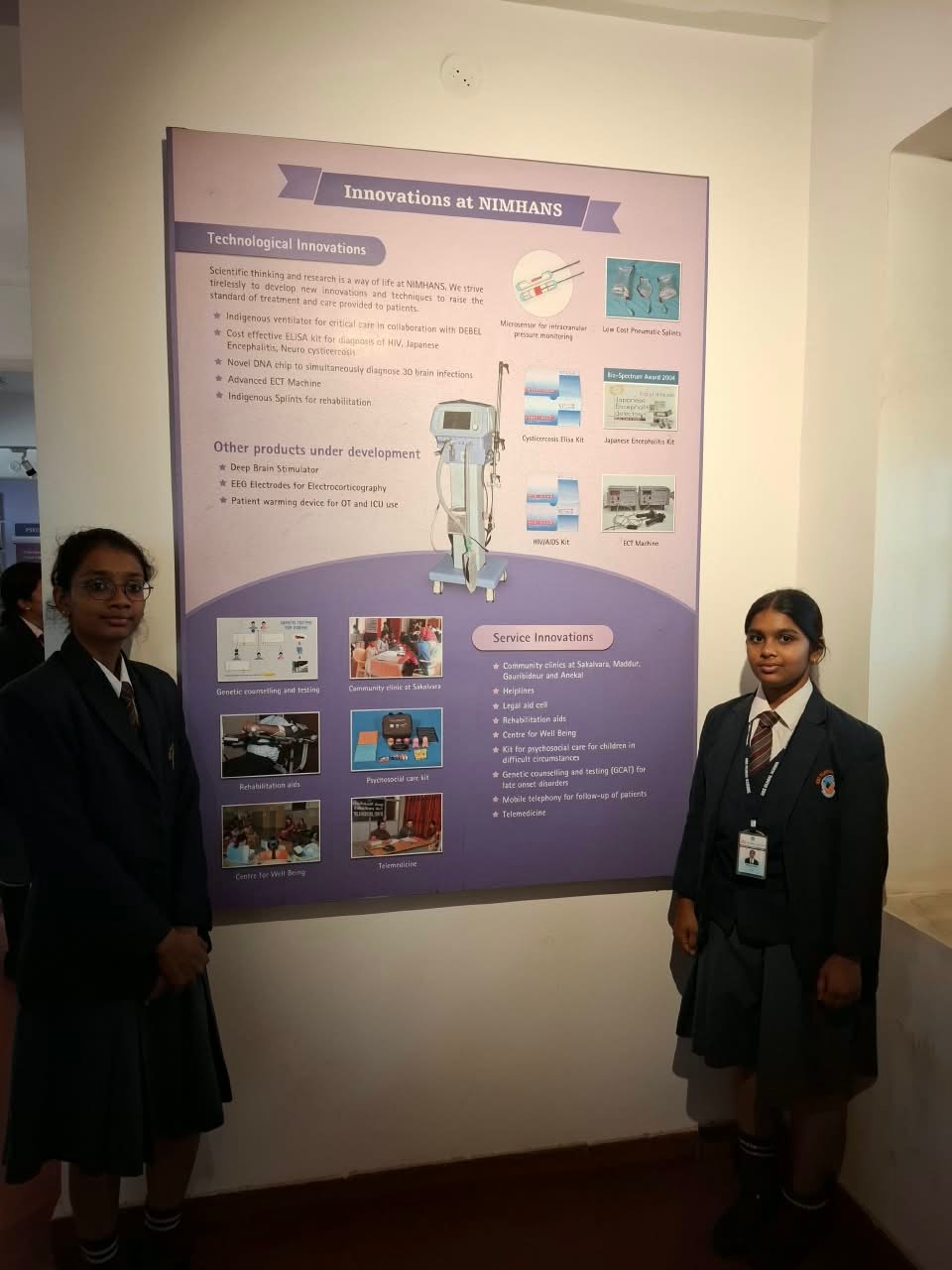
On 8 September 2026, Grade 10 and Grade 12 students of BRS Global School | Best CBSE School in Sarjapur Road, visited the NIMHANS Human Brain Museum in Bengaluru as part of the school’s experiential learning initiatives.
The visit gave students an opportunity to move beyond conventional classroom learning and explore neuroanatomy through direct observation, expert interaction and a guided museum experience. The session was particularly meaningful for students studying Biology and related subjects, as it allowed them to connect concepts learned in class with real anatomical and neurological observations.
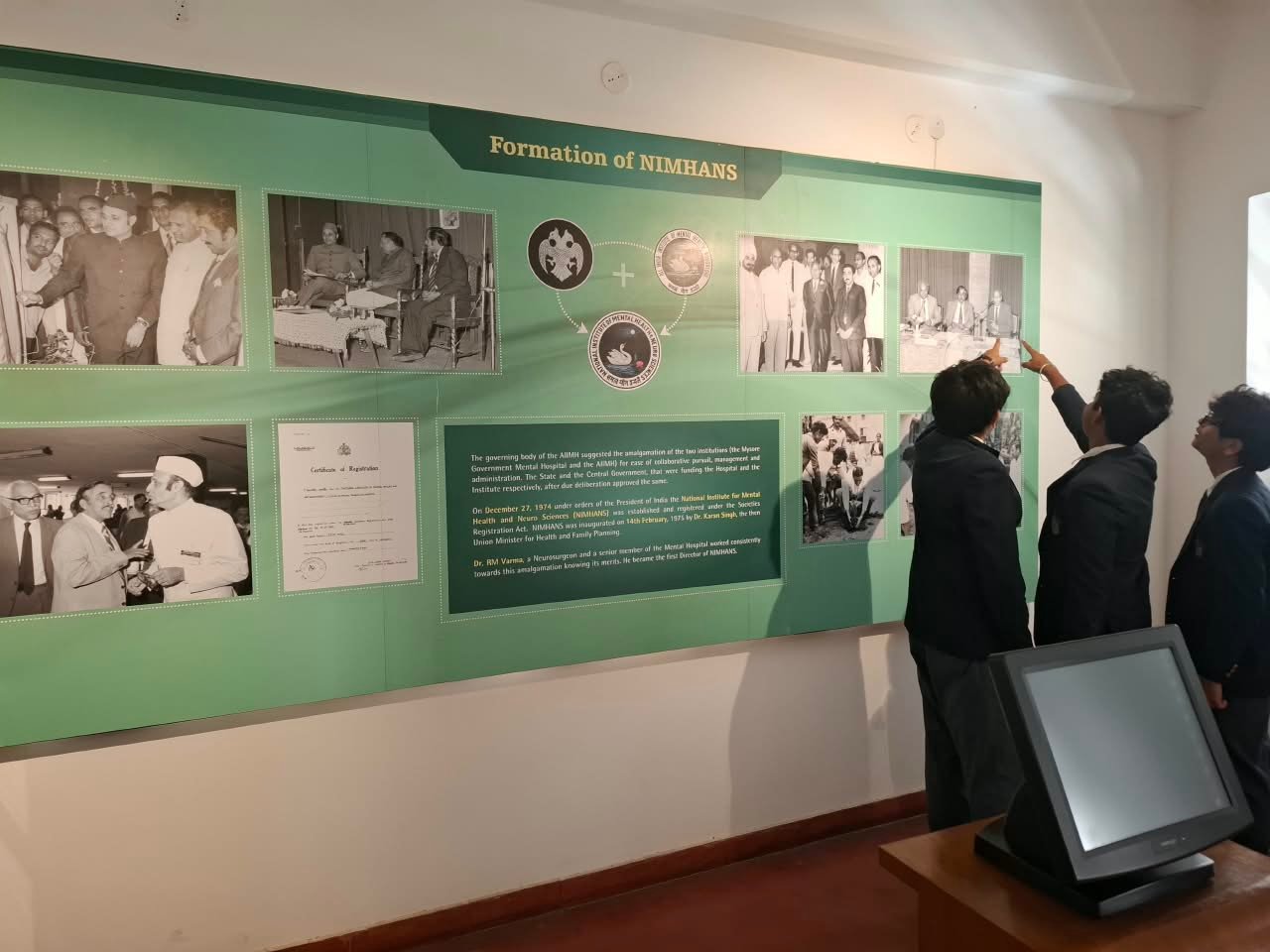
NIMHANS is a nationally recognised institution dedicated to mental health and neurosciences, with education, research and patient care forming important parts of its work. Its Bengaluru campus is located on Hosur Road.
For the students, the visit offered a valuable glimpse into the scientific study of the human brain while encouraging them to ask questions, examine evidence and think more deeply about neurological health and research.
Event Overview: Montessori Gardening and Harvesting Experience
Event : Visit to NIMHANS Human Brain Museum
Date : 8 September 2026
Students : Grade 10 and Grade 12
Venue : NIMHANS Human Brain Museum, Bengaluru
Learning Area : Biology, Neuroanatomy and Neuroscience
Learning Approach : Experiential, observational and interactive
Campus : BRS Global School, Sarjapur Road
The visit was planned as a meaningful academic experience in which students could observe, question and interpret information rather than simply receive it.
What Happened During the NIMHANS Human Brain Museum Visit?
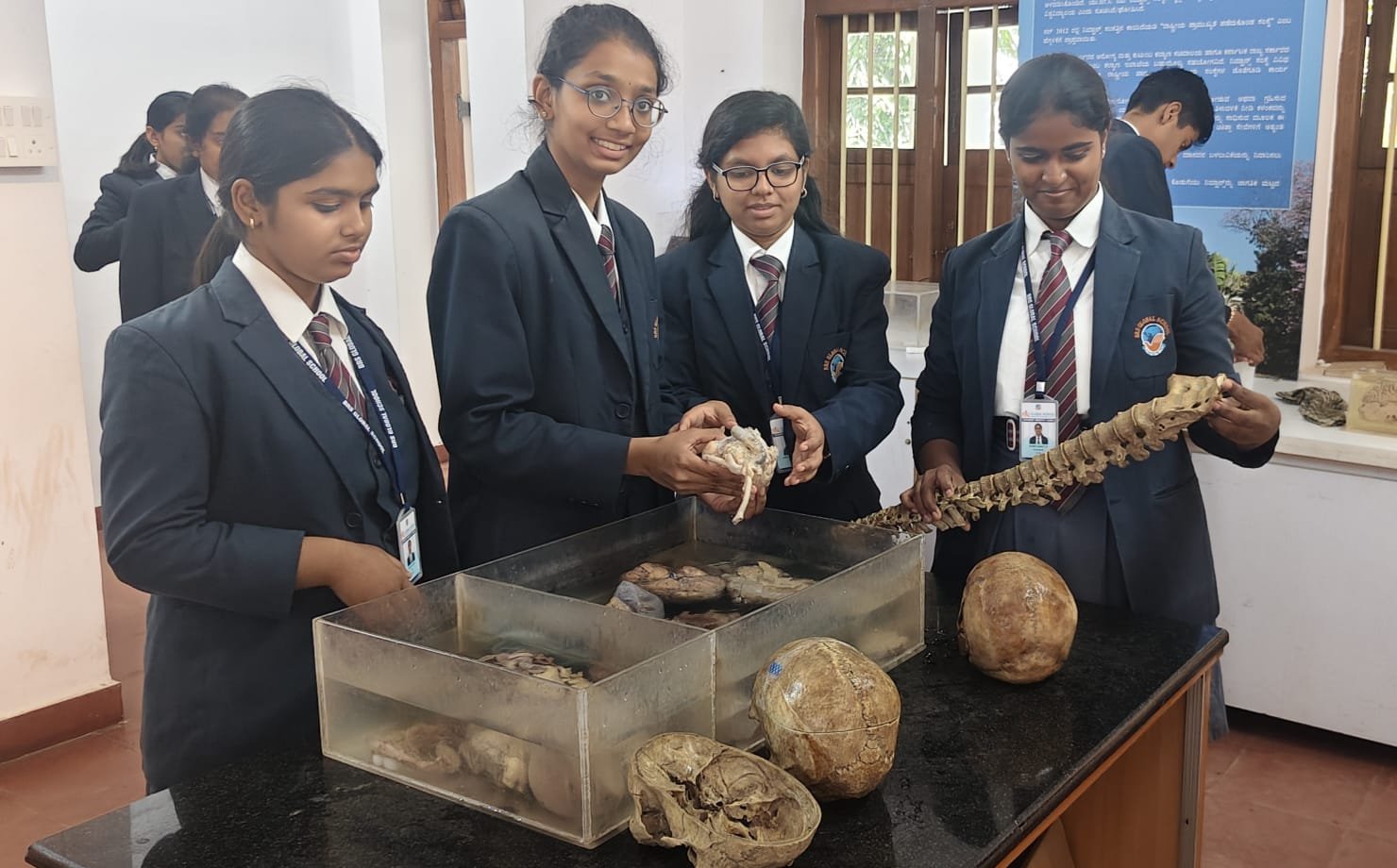
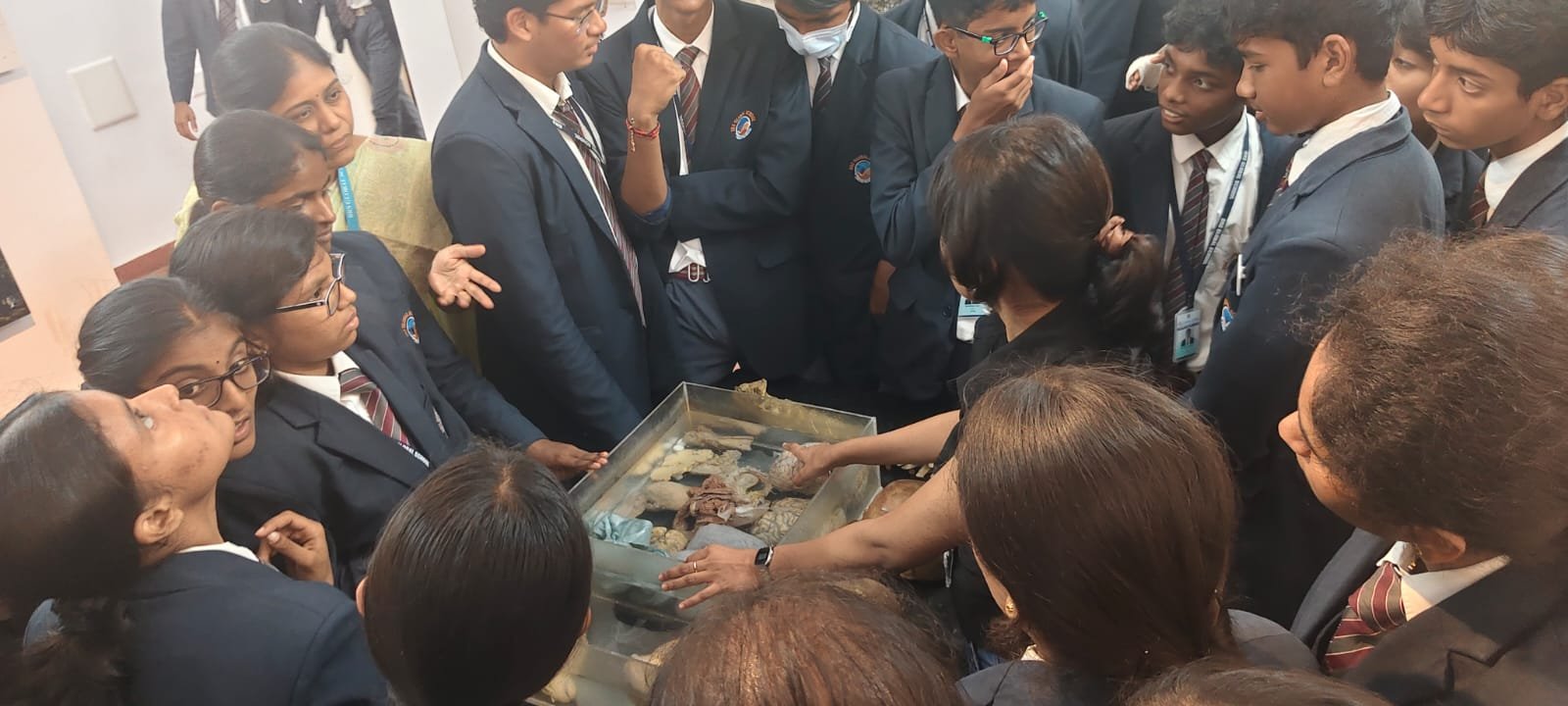
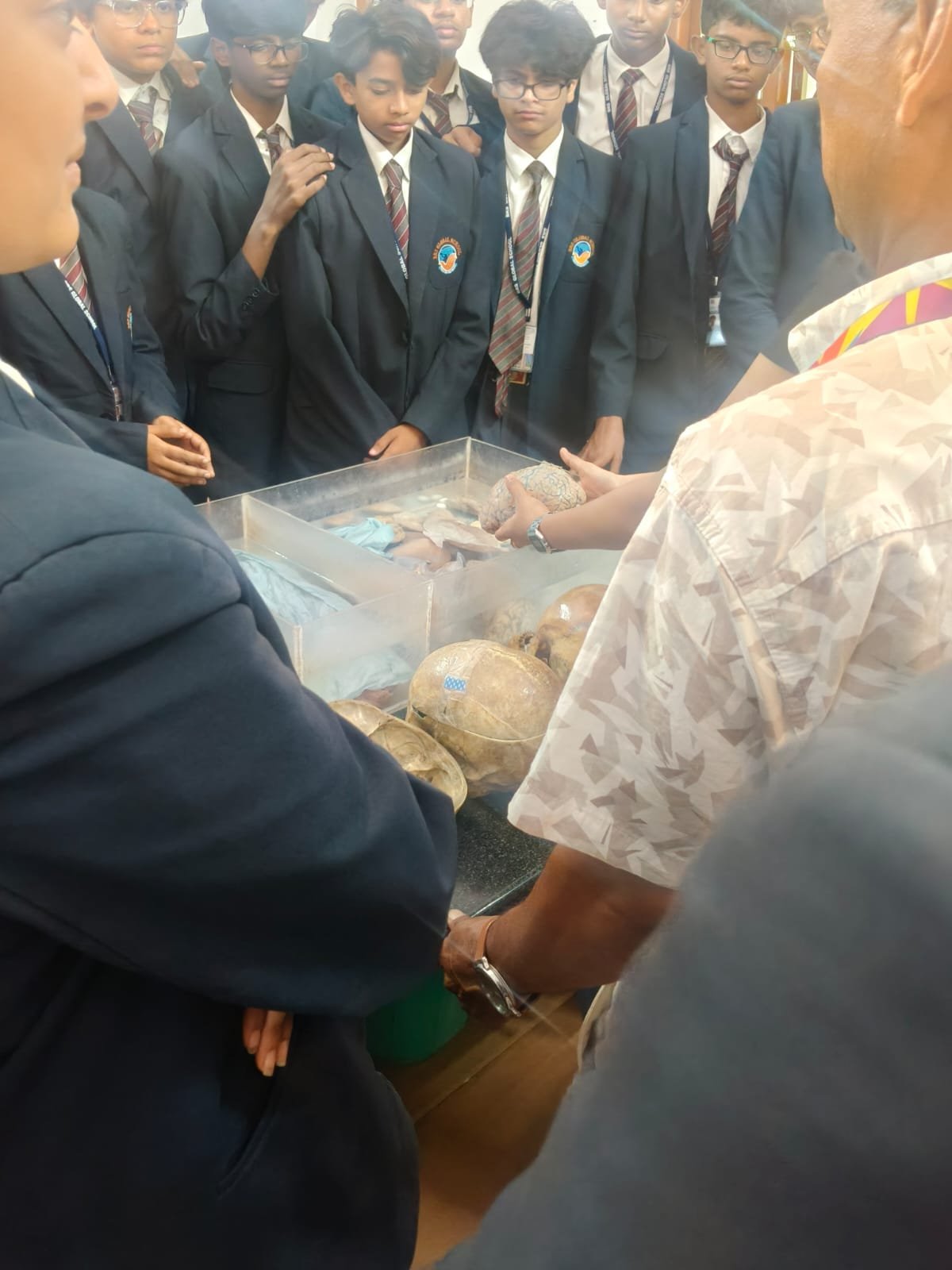
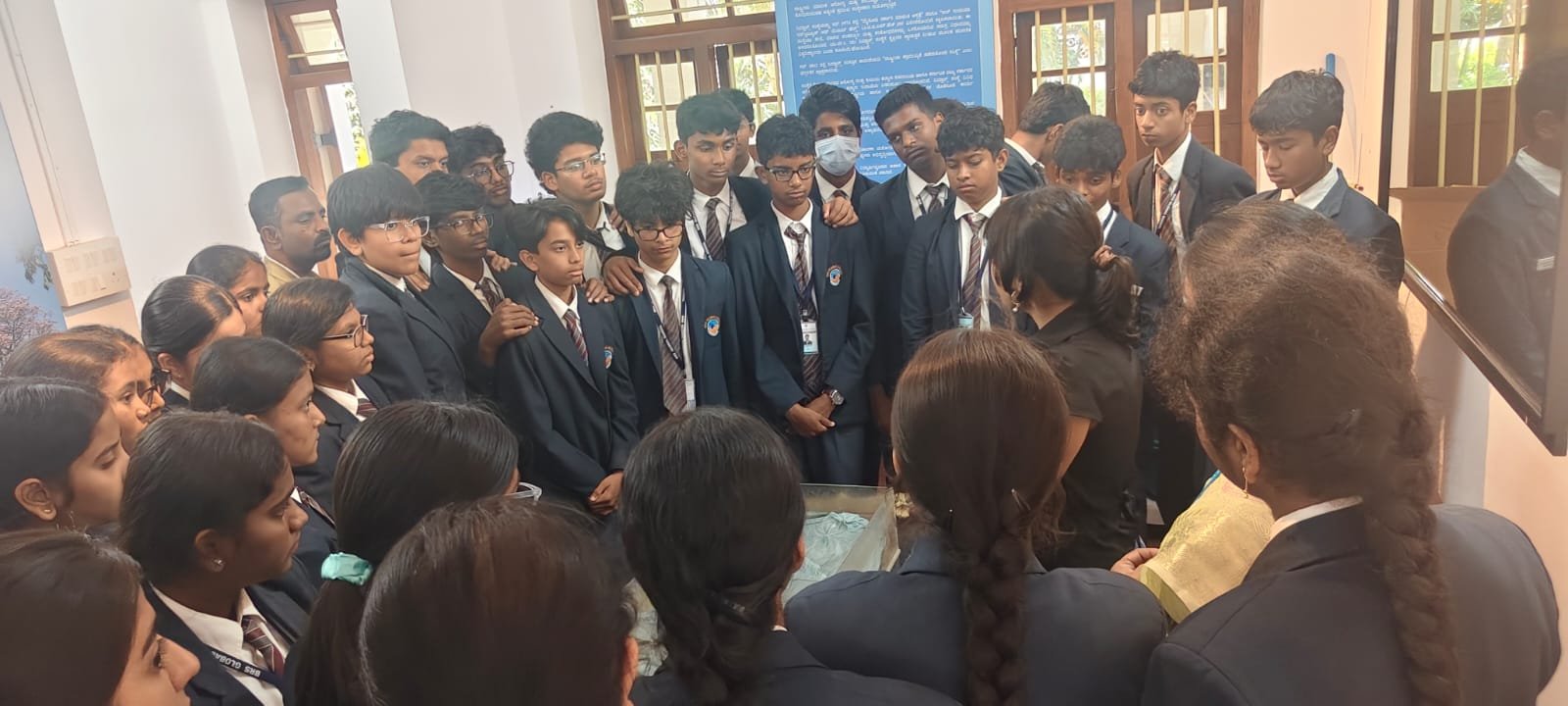
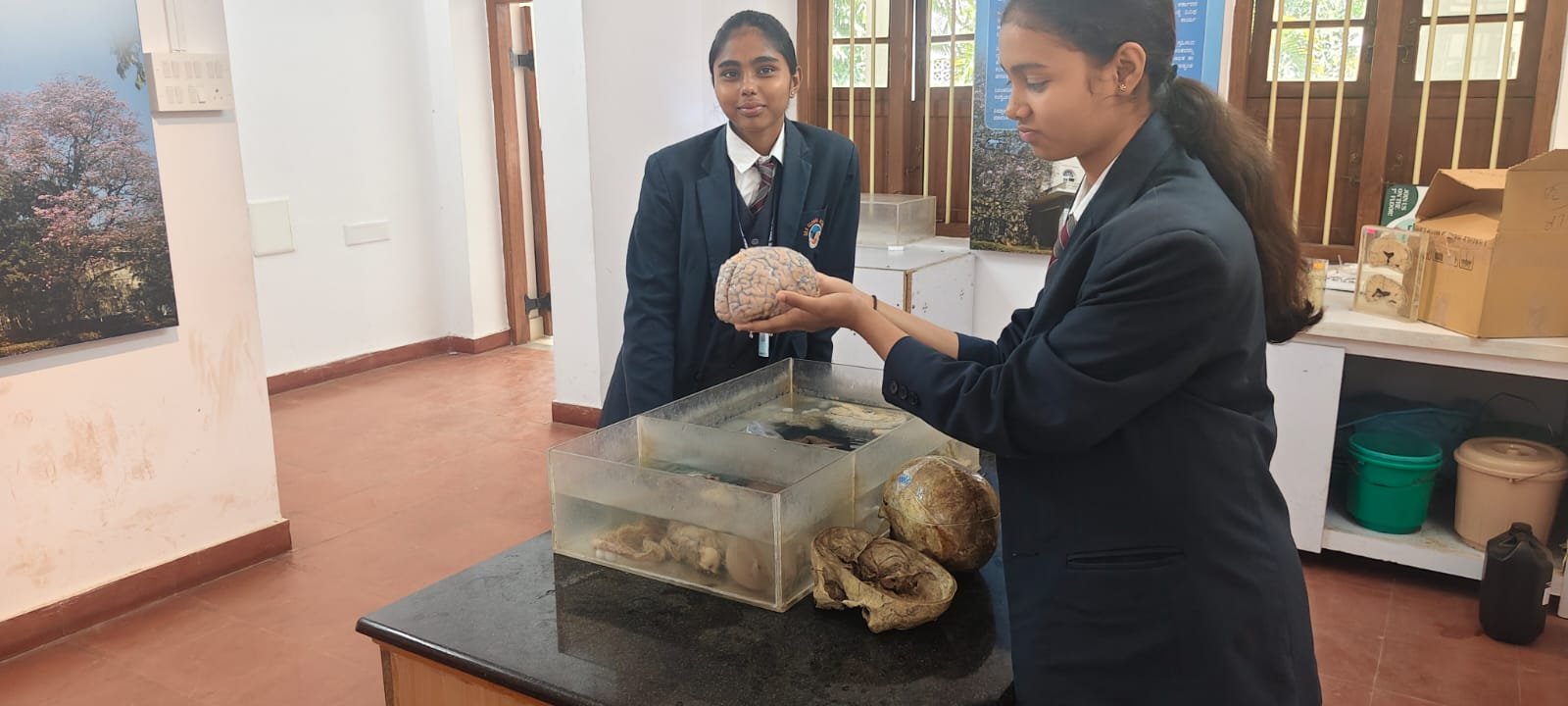
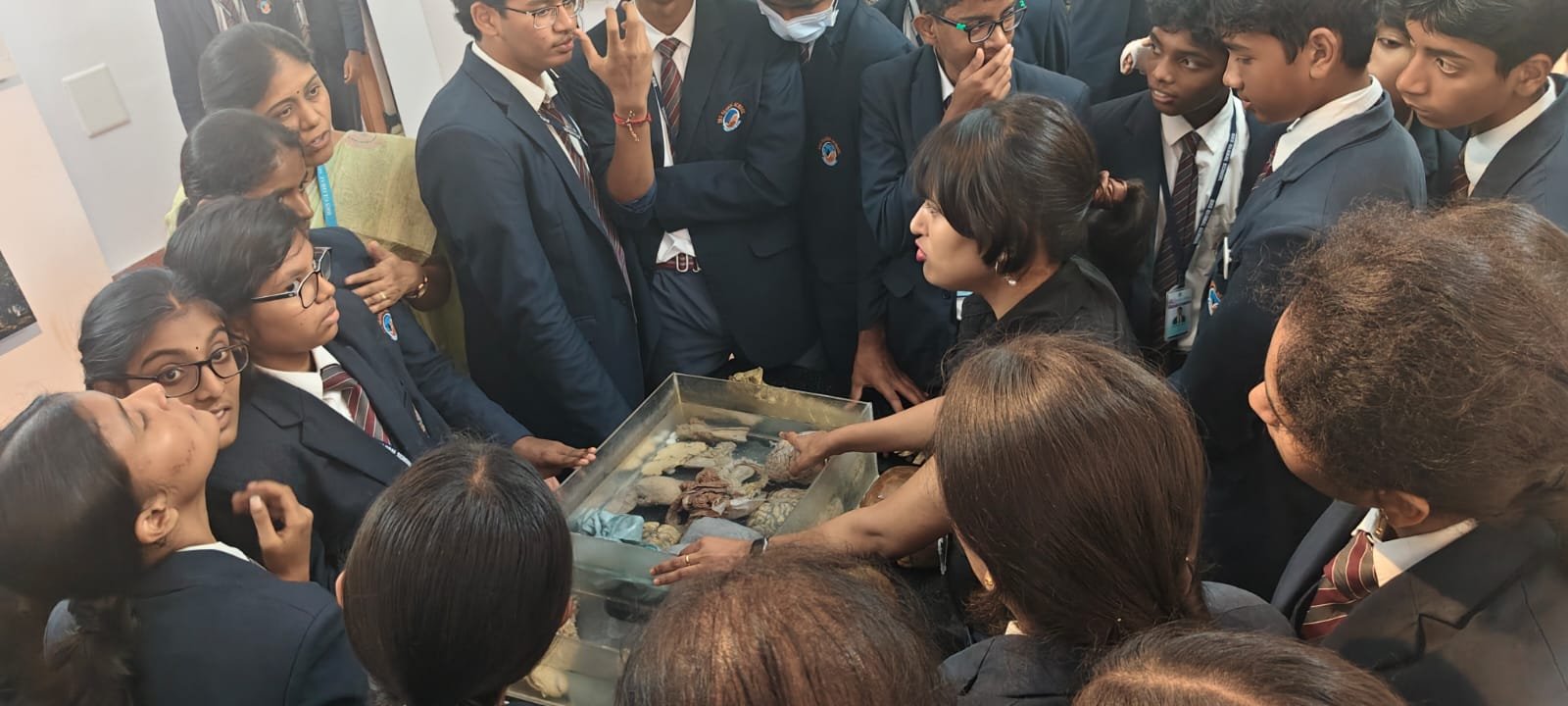
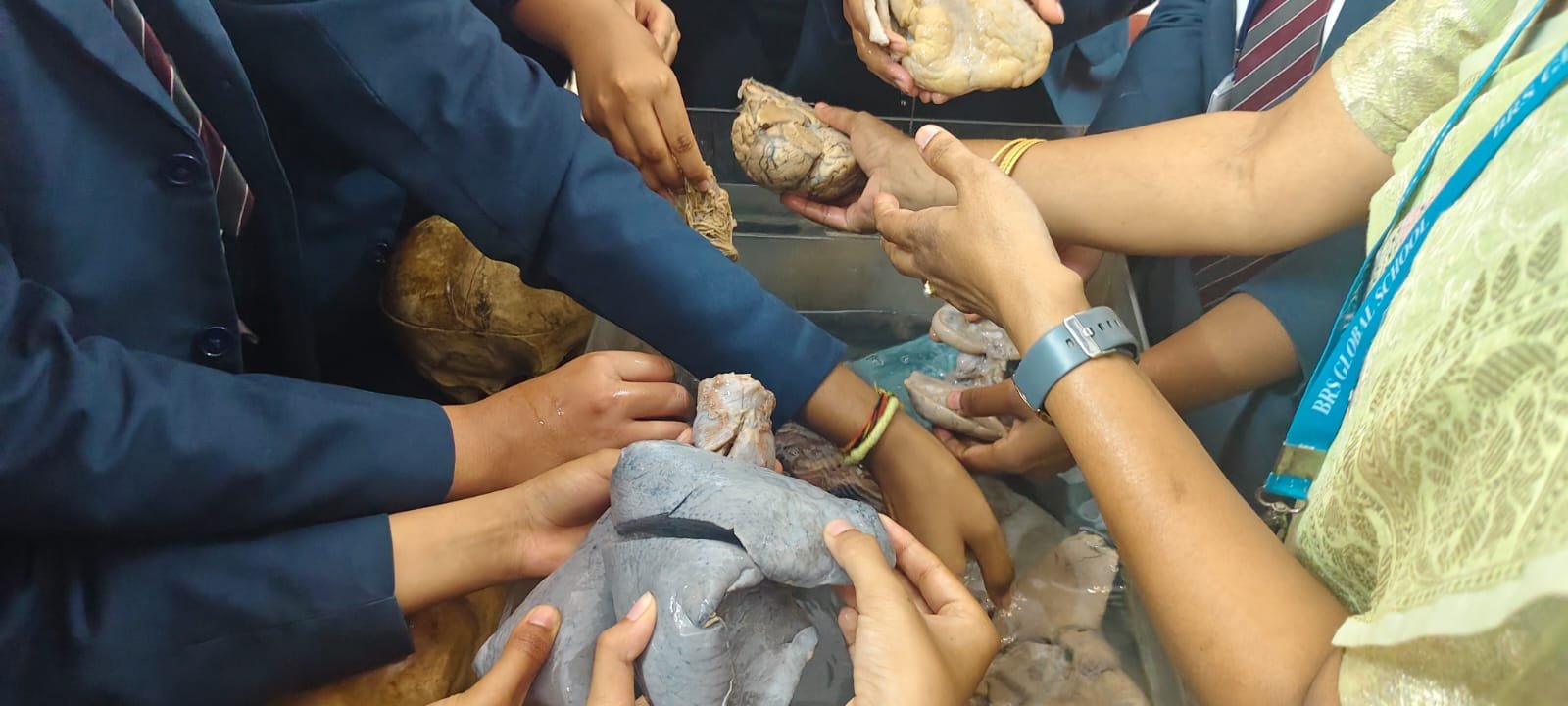
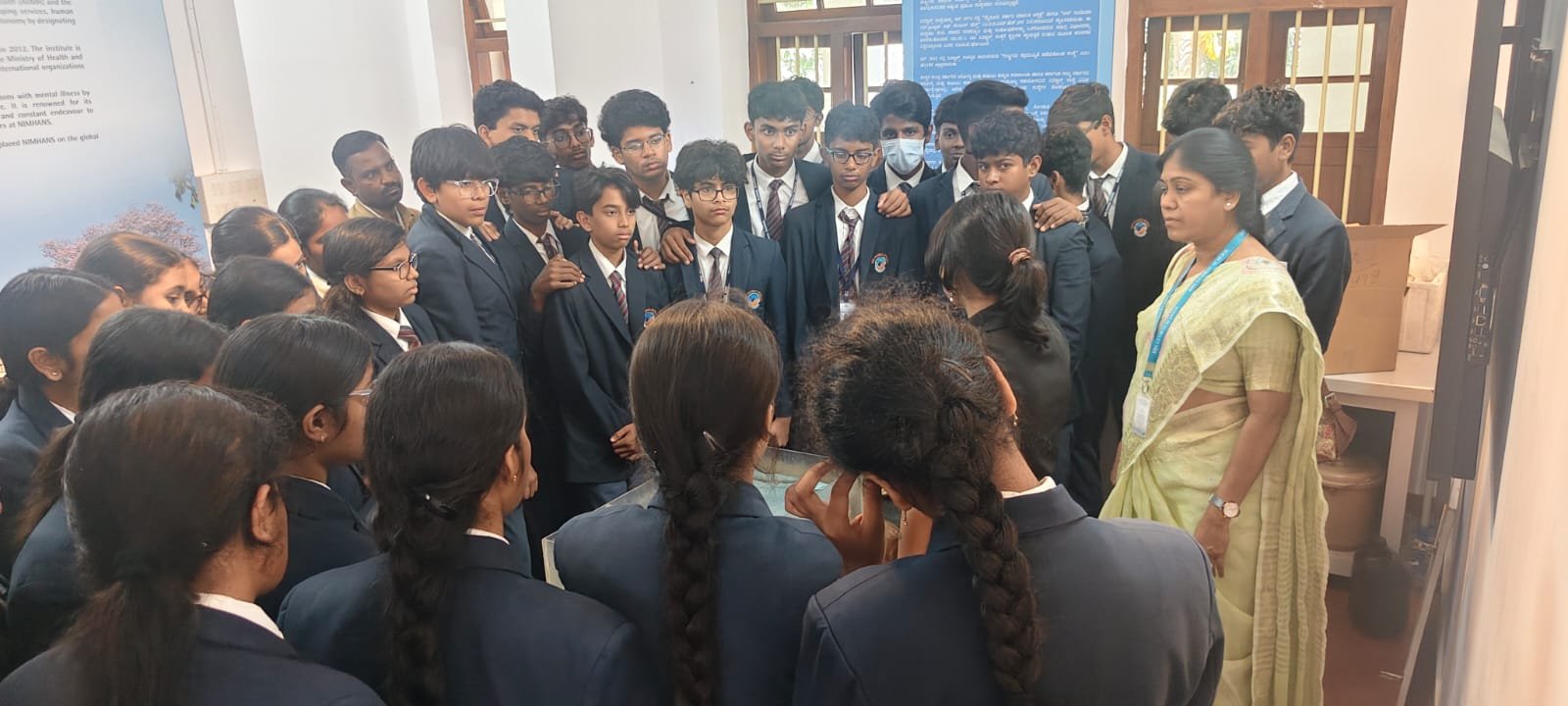
The visit began with an engaging live neuroanatomy demonstration. Students were given the rare opportunity to observe and touch a real human brain under the guidance of faculty members.
This hands-on experience helped students develop a more concrete understanding of the brain’s structure and its different regions. Concepts that students generally encounter through textbook illustrations could be viewed in a real anatomical context.
The experience also encouraged students to think about the relationship between structure and function. Instead of looking at the brain only as a diagram, students were able to appreciate its physical complexity and the importance of understanding different anatomical regions.
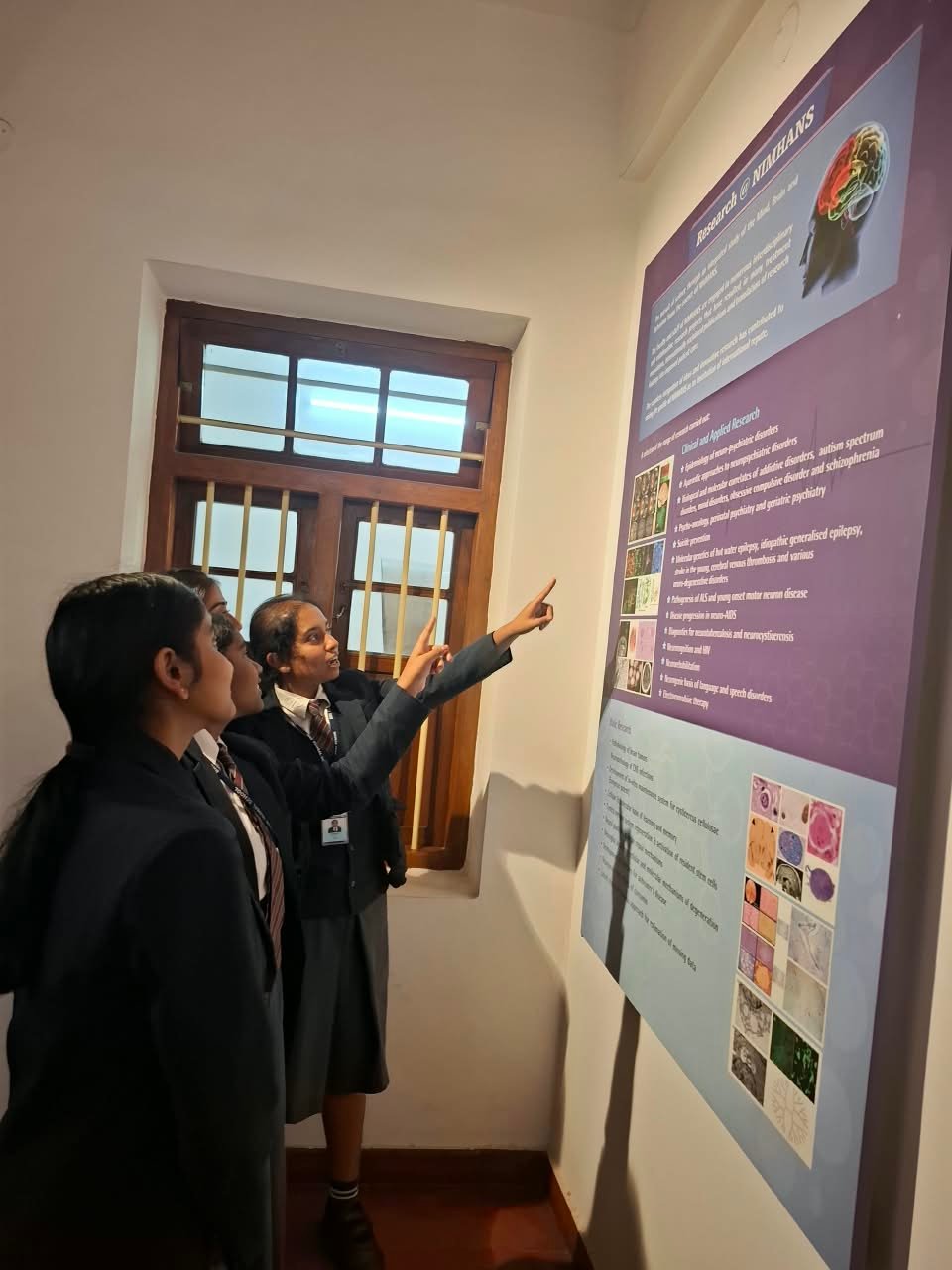
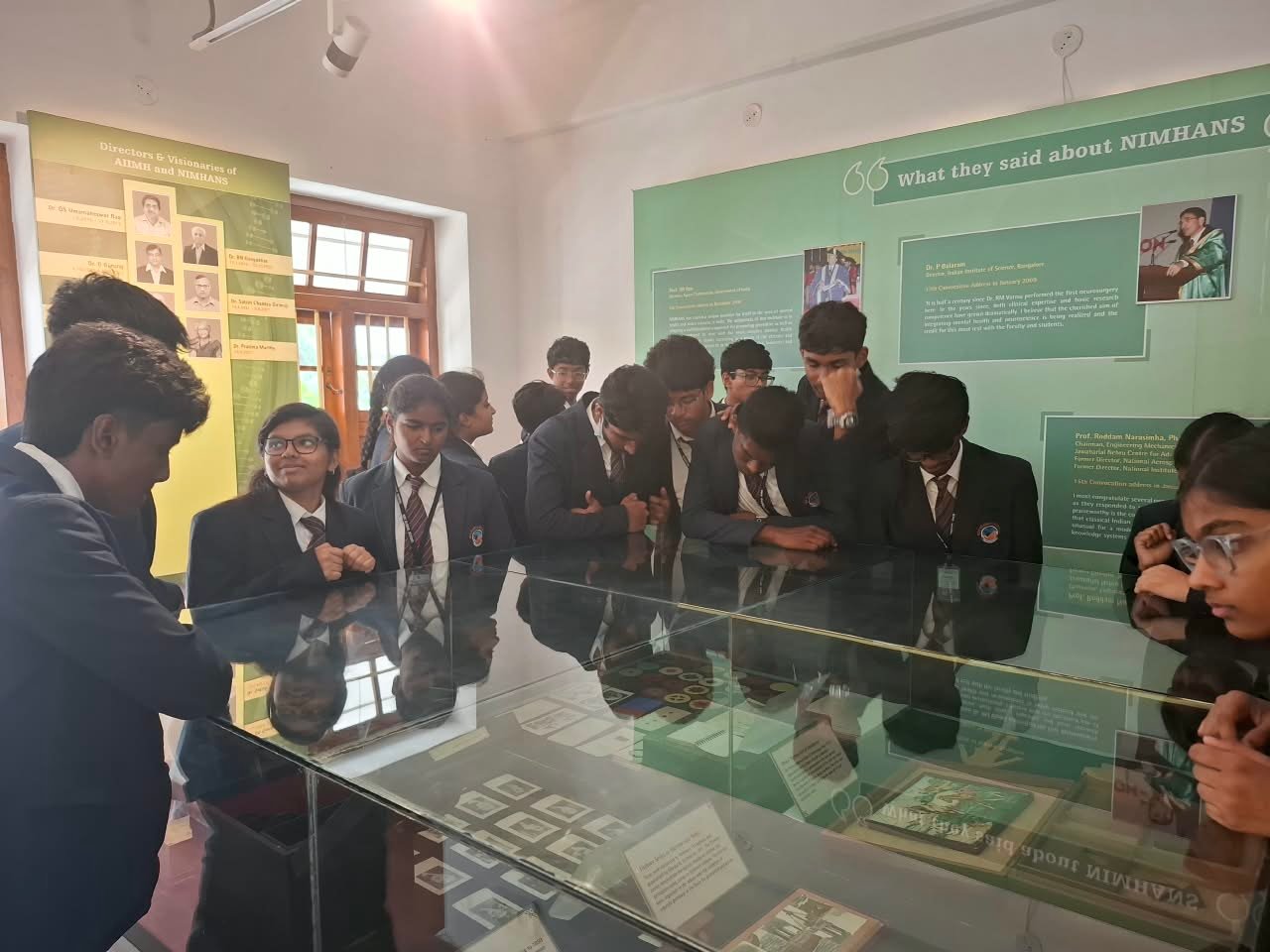
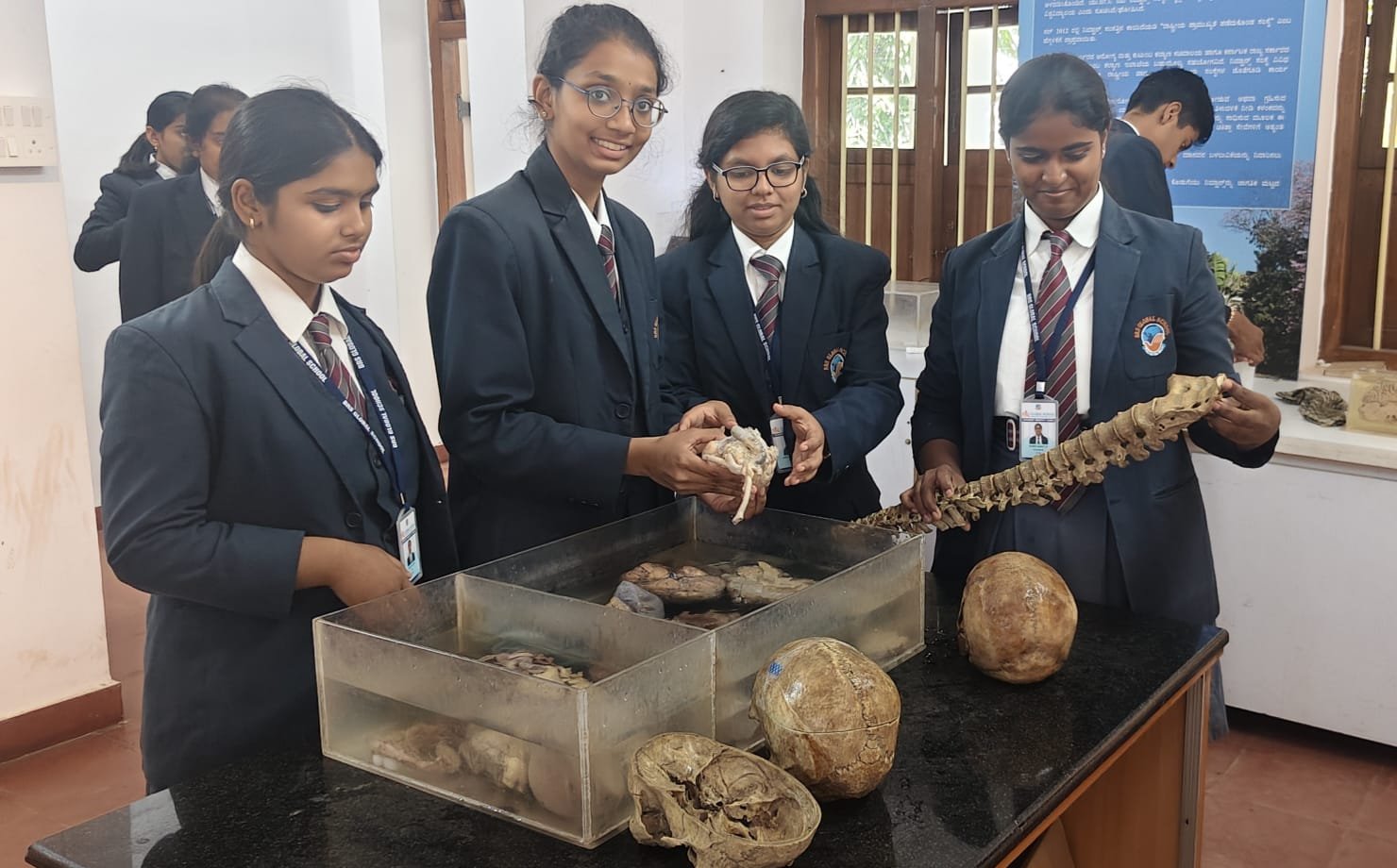
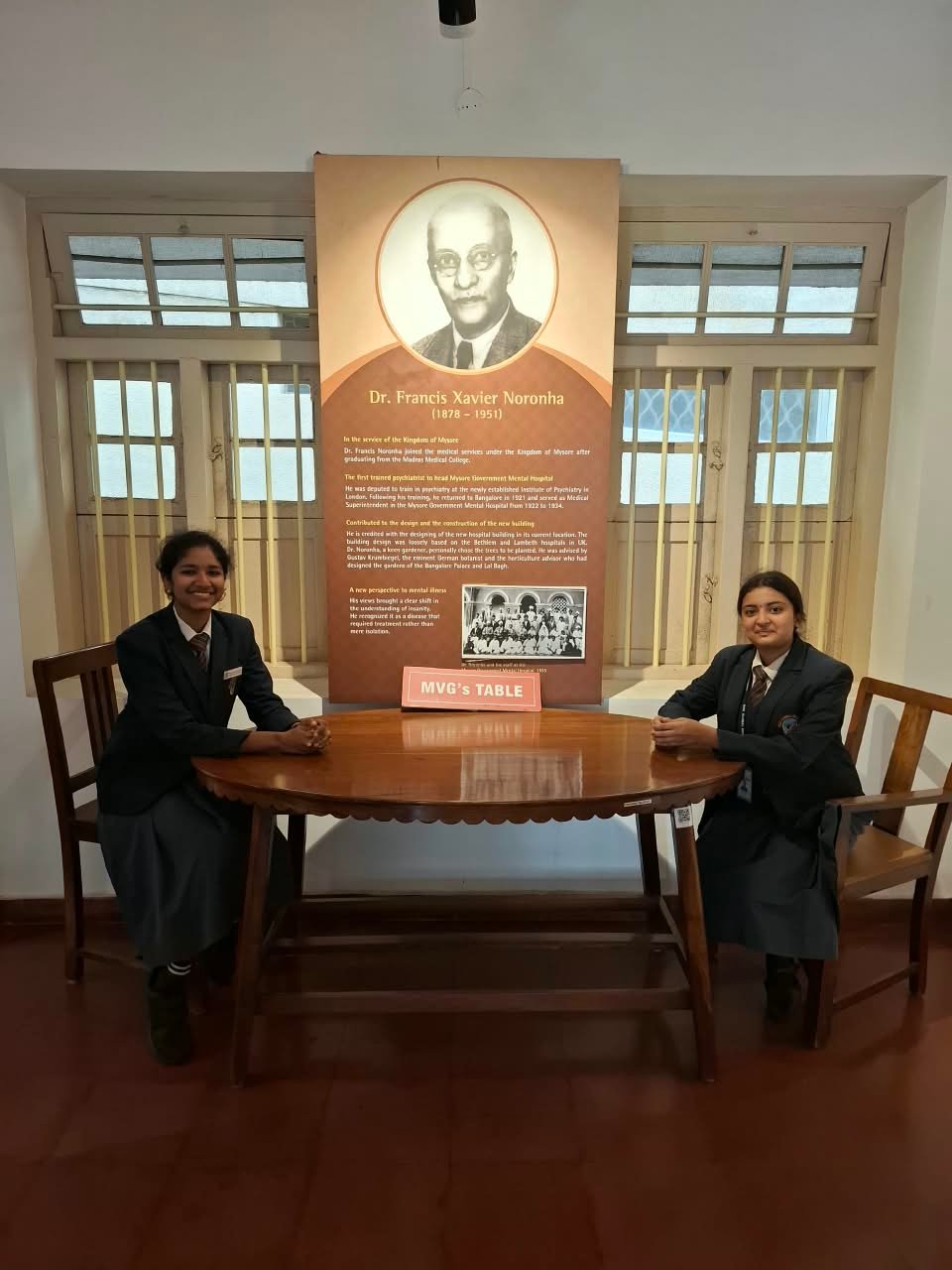
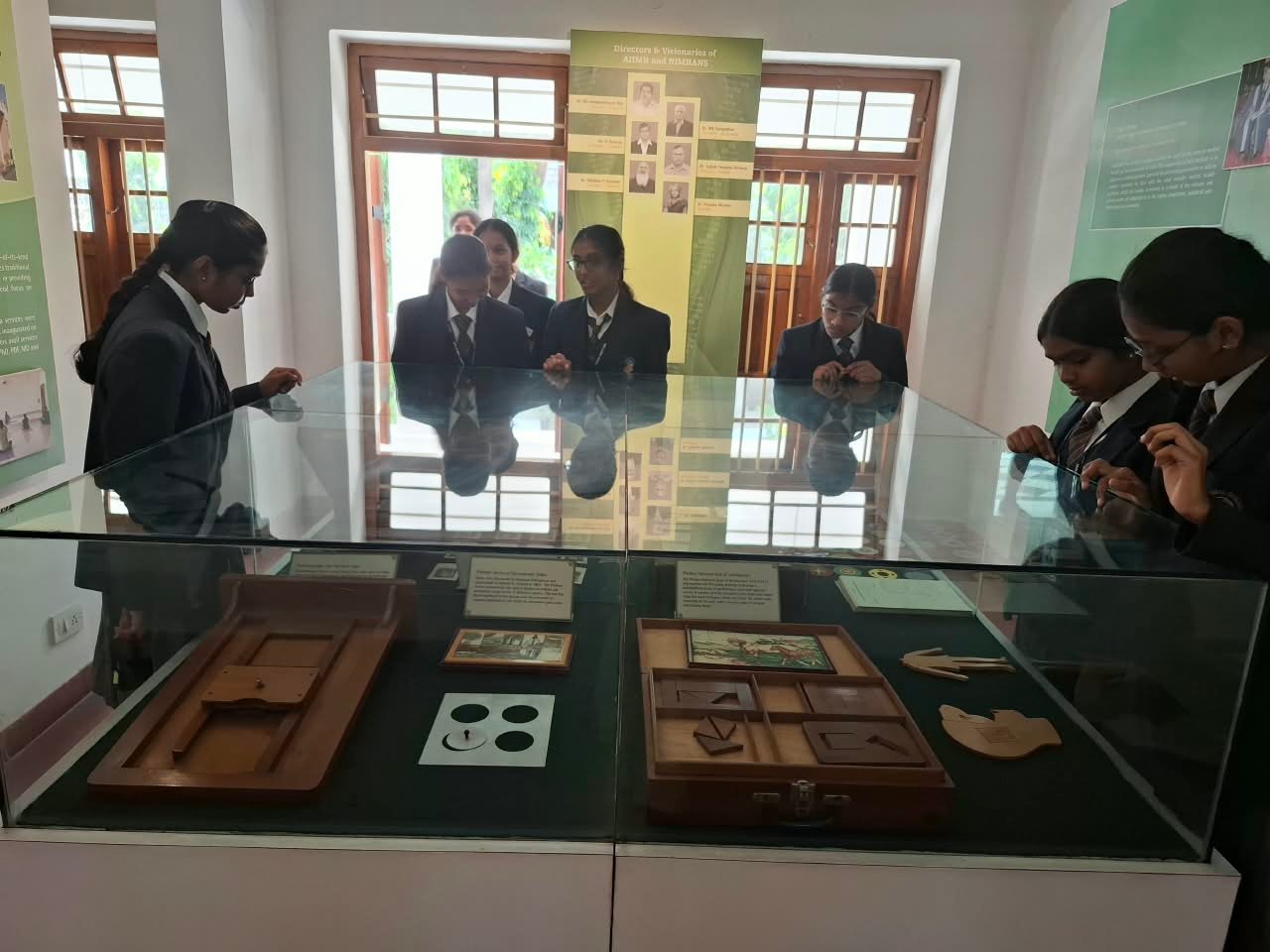
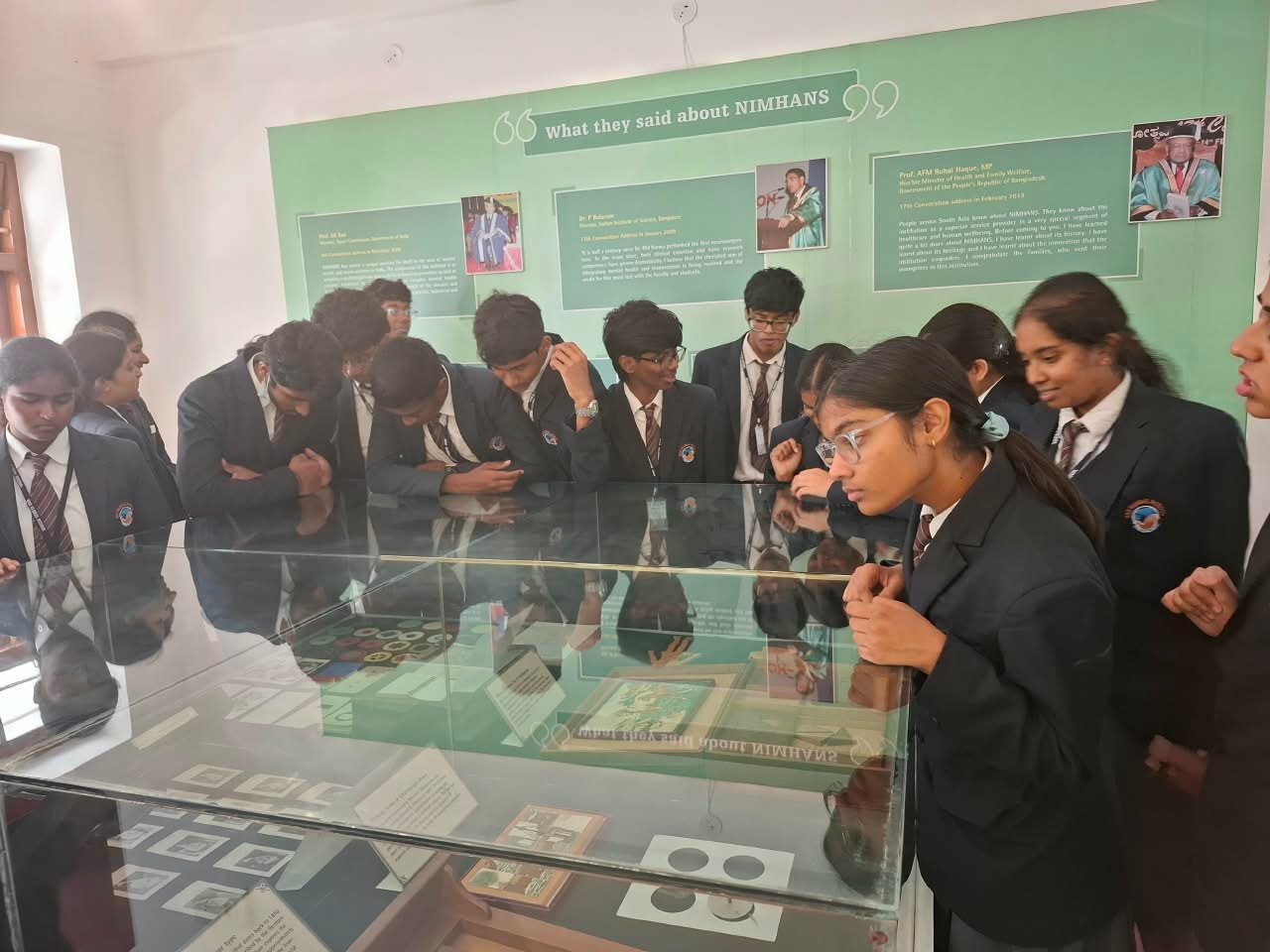
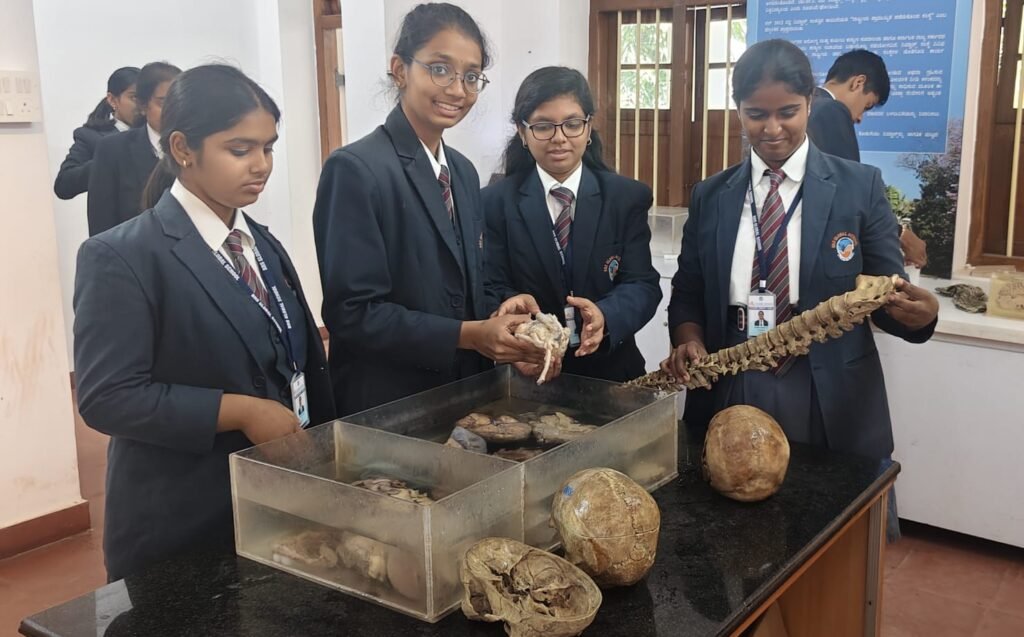
Following the demonstration, students participated in a guided tour of the Human Brain Museum led by faculty members of the Human Brain Bank.
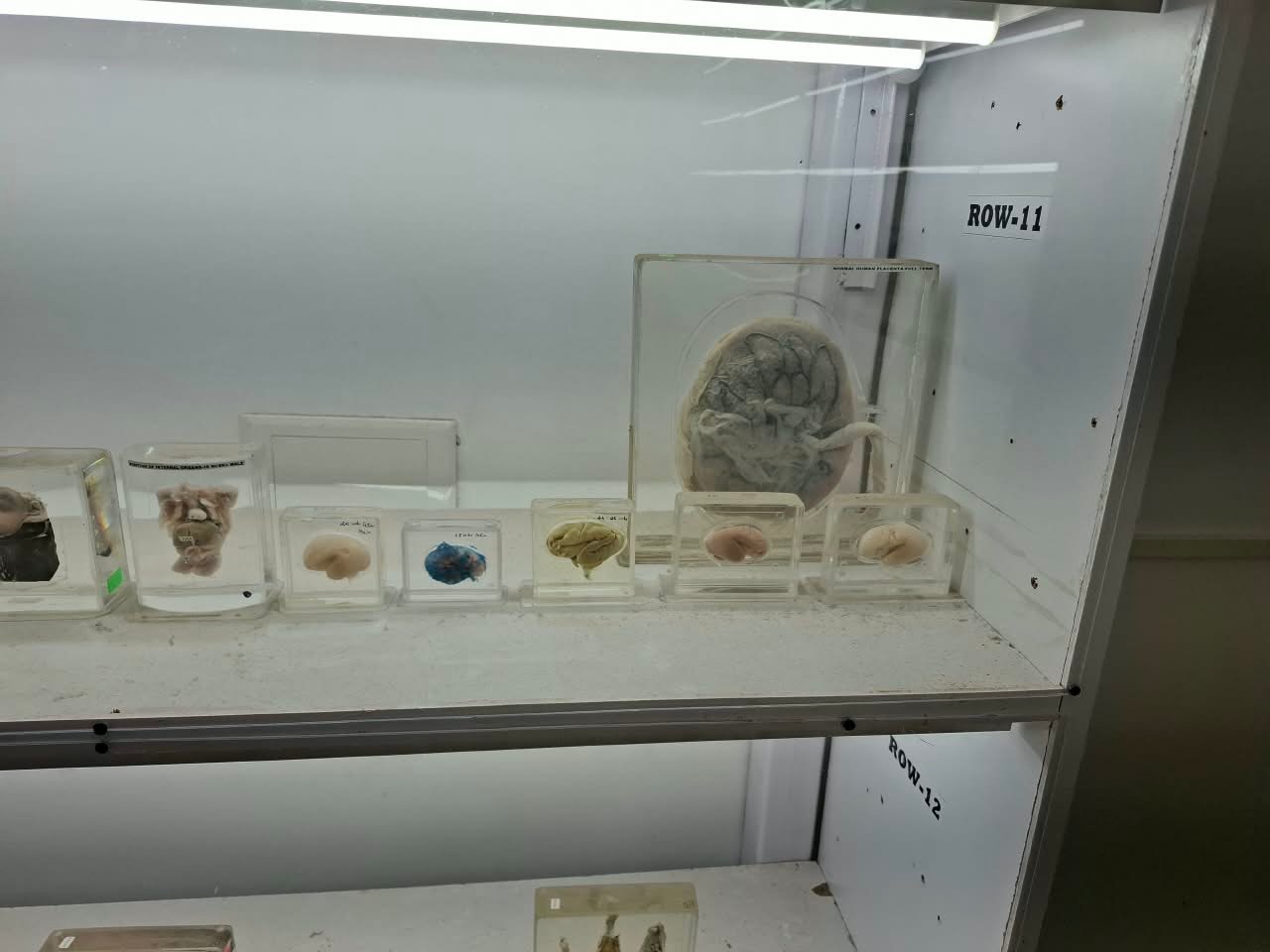
The tour included observations of different diseased and affected brain specimens. These specimens enabled students to understand how neurological conditions can be associated with visible changes in brain tissue and anatomy.
The expert explanations provided important context for what the students were observing. This helped bridge the gap between classroom Biology and real-world anatomical and medical observations.
The interactive nature of the session was another important feature of the visit. Students and accompanying teachers were encouraged to ask questions and clarify their doubts during and after the session.
The faculty members responded to the students’ questions and shared additional insights, making the experience informative, participatory and academically engaging.
How Did the Visit Connect Classroom Biology With Real-World Learning?
The NIMHANS visit connected classroom Biology with real-world learning by allowing students to observe actual human brain specimens, understand anatomical structures and discuss neurological conditions with experts.
For Grade 10 and Grade 12 students, this connection is particularly valuable. Textbook learning introduces students to scientific terminology, structures and processes, but direct observation can provide another layer of understanding.
Students were able to revisit concepts related to the human nervous system while looking at actual specimens and listening to explanations from faculty members.
This type of learning also encourages students to ask more meaningful questions.
For example, students can move from asking “What is this part of the brain?” to thinking about “What does this region do?”, “What happens when neurological structures are affected?” and “How do scientists and medical professionals study these conditions?”
That shift from memorisation towards observation, questioning and application is an important part of meaningful science education.
Student Learning Outcomes and Benefits
The visit supported several academic and personal learning outcomes.
Deeper Understanding of Neuroanatomy
Students gained a more tangible understanding of the human brain and its anatomical regions by observing real specimens rather than relying exclusively on textbook illustrations.
Connecting Theory With Observation
The experience allowed students to relate Biology concepts studied in school to actual anatomical structures and neurological observations.
Scientific Curiosity
Exposure to authentic specimens and expert explanations encouraged students to ask questions and explore the subject beyond the prescribed curriculum.
Observation Skills
The museum experience required students to carefully observe anatomical features and listen to explanations before interpreting what they were seeing.
Questioning and Communication
The interactive question-and-answer sessions gave students an opportunity to communicate their doubts and engage directly with experts.
Awareness of Neurological Health
Seeing specimens associated with neurological conditions helped students appreciate the complexity of the brain and the importance of neurological health and research.
Career Awareness
For students considering Biology, medicine, neuroscience, psychology, healthcare or related scientific fields, exposure to a professional research and medical environment can help them better understand how classroom science connects with future areas of study.
How Does the Visit Support CBSE Learning?
The visit supports CBSE‘s emphasis on experiential and competency-based learning by giving students opportunities to apply academic concepts through observation, interaction, questioning and real-world experiences.
CBSE‘s competency-based learning guidance highlights experiential and active learning as effective approaches for developing competencies, critical thinking and meaningful learning outcomes. It also encourages learning experiences that go beyond textbooks and connect knowledge with application.
The NIMHANS visit reflects these principles in a practical way.
Students were not simply presented with information about the brain. They observed specimens, listened to expert explanations, asked questions and connected their existing Biology knowledge with what they encountered during the visit.
This creates an important learning cycle:
Classroom concept → Direct observation → Expert explanation → Student questioning → Deeper understanding
Such experiences can help students develop knowledge alongside transferable skills such as observation, reasoning, communication and curiosity.
Educational Philosophy and Institutional Value Alignment
A meaningful school experience does not end when students leave the classroom. Learning can happen in laboratories, museums, research institutions, cultural spaces, sports facilities and other environments where students encounter authentic situations.
The NIMHANS Human Brain Museum visit reflects an educational approach that values learning through experience.
For a student, seeing a real specimen can generate questions that a textbook alone may not produce. An expert explanation can provide context that helps students understand why a particular structure matters. A question-and-answer session can encourage students to think critically about what they have observed.
This makes experiential learning particularly relevant to science education.
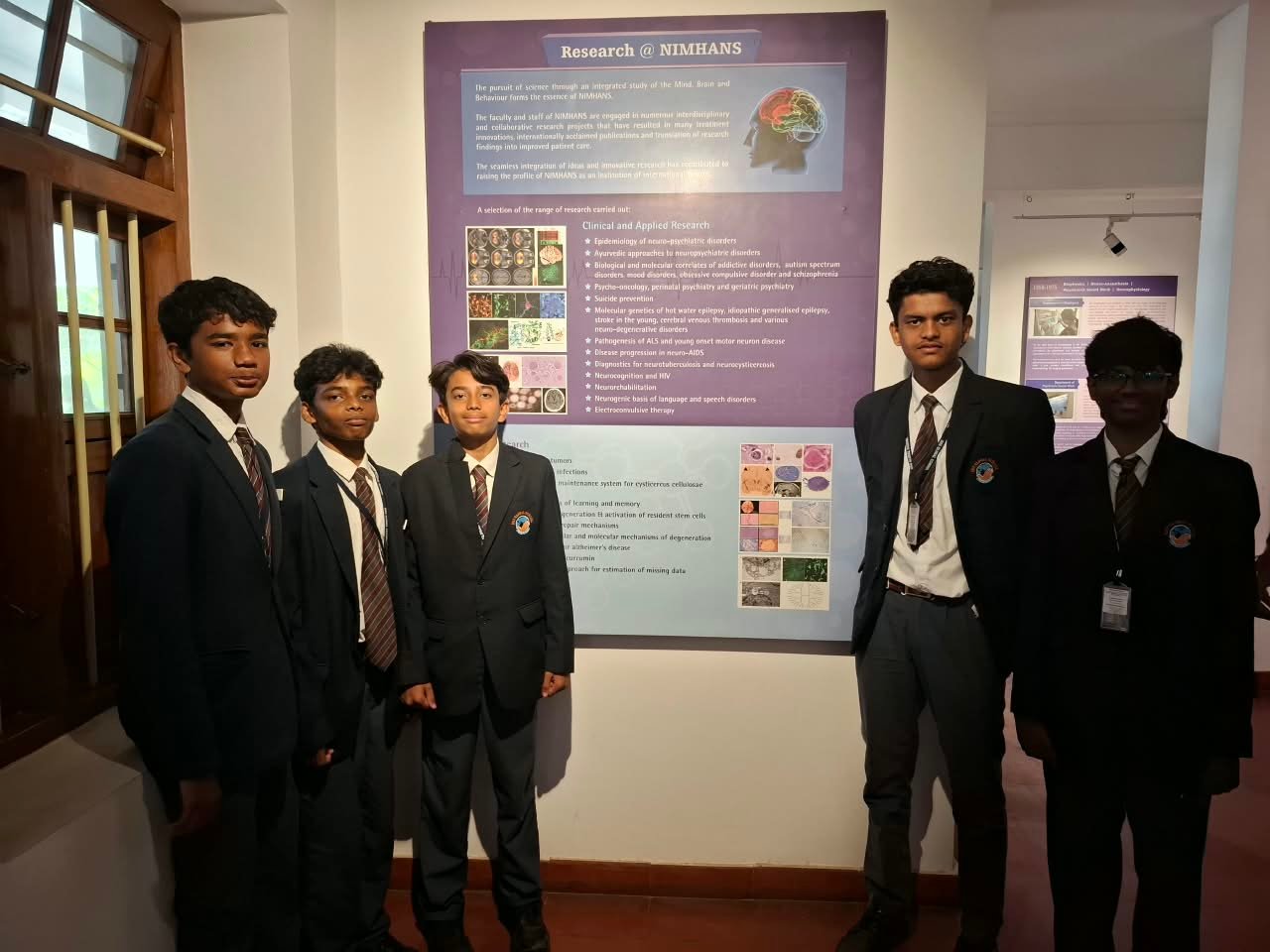
The visit also reflects the broader academic value of connecting school learning with the professional world. NIMHANS itself represents a major institutional environment associated with mental health, neuroscience, research, education and healthcare.
For students exploring future academic pathways, such exposure can help them understand that subjects such as Biology connect to diverse fields including medicine, neuroscience, psychology, research, healthcare and allied sciences.
Why Does This Experience Matter for Student Development?
The value of the visit extended beyond Biology because it encouraged students to observe carefully, ask questions, communicate with experts and think about the practical application of scientific knowledge.
Holistic development involves more than academic performance. Students also need opportunities to develop curiosity, confidence, communication skills, analytical thinking and an appreciation for real-world knowledge.
The NIMHANS visit provided a setting where students could practise these abilities naturally.
The opportunity to interact with experts was especially valuable. Students were encouraged to raise questions and clarify their doubts rather than remain passive observers.
For Grade 10 students, such experiences can strengthen their understanding of secondary-level science. For Grade 12 students, the exposure can be particularly relevant when they are considering higher education and career pathways connected with Biology and healthcare.
Which Students Benefit Most From Such a Visit?
Students studying Biology and related subjects can benefit particularly from a visit to a neuroscience and human brain museum.
However, the learning experience can also benefit students interested in:
• Medicine and healthcare
• Neuroscience
• Psychology
• Biomedical sciences
• Life sciences
• Research
• Neurology
• Clinical and allied health professions
• Scientific and medical communication
The experience can help students understand that academic subjects are interconnected and can lead to diverse higher-education pathways.
Local Context: Experiential Learning for Families Along Sarjapur Road
For families exploring schools in Sarjapur Road, educational experiences outside the classroom can be an important part of understanding a school’s learning approach.
BRS Global School‘s Sarjapur Road Campus serves families in and around Bellandur, Sarjapur Road, Hosa Road, Koramangala, HSR layout, Dommasandra, Kodathi, Gunjur, Varthur, Kaikondrahalli, Kasavanahalli, Carmelaram, Harlur, Rayasandra, Naganathapura, Doddakannelli, Kudlu Gate, A Krishnappa Nagar, Halnayakanahalli, Radha Reddy Layout, Chikkanayakanahalli, Huskur, KPC Layout, CSB Layout, Owners Court, Doddanagamangala, Doctors Layout, Shiva Reddy Layout, Meenakshi Layout, Chikbellandur, Sompura Gate, Muthannalur Cross, Gunjur to Dommasandra Road, Mullur, Amrita Engineering College Road Kasavanahalli, Amrita Nagar, Serenity Layout, Spring Fields, Iblur, Marathahalli, Shobha Apartments, Choodasandra, Junnasandra, Rayasandra and nearby communities.
The campus is also accessible to families living in residential communities and working across the wider Sarjapur Road and Bengaluru technology corridors.
For working parents in areas such as Bellandur, Sarjapur Road, HSR Layout and Electronic City, school selection often involves considering more than academic curriculum. Parents may also look at how a school provides opportunities for experiential learning, exposure beyond textbooks, co-curricular development and preparation for future academic pathways.
The NIMHANS visit is one example of how academic learning can be extended into real-world environments in Bengaluru.
Common Parent Questions
How does a museum visit support classroom learning?
A museum visit gives students an opportunity to observe real objects or specimens related to topics studied in class. In this case, students could connect Biology and human anatomy concepts with real human brain specimens and expert explanations.
Does experiential learning replace classroom teaching?
No. Experiential learning complements classroom teaching. Classroom instruction provides foundational concepts, while practical experiences can help students apply, observe and understand those concepts in real-world contexts.
How can such visits improve student confidence?
Students get opportunities to ask questions, interact with experts and discuss academic concepts outside the usual classroom setting. These experiences can encourage students to communicate more confidently and participate actively.
What skills were developed during the NIMHANS visit?
The experience supported observation, scientific curiosity, questioning, communication, critical thinking and conceptual understanding. Students also practised connecting theoretical knowledge with real-world observations.
How does this activity support Biology students?
It provides a practical context for understanding human anatomy, neuroanatomy and neurological conditions. Students can relate concepts from their Biology curriculum to actual specimens and expert explanations.
Why should parents value experiential learning?
Experiential learning helps students understand that education is not limited to memorising information. It gives them opportunities to observe, question, apply knowledge and understand how academic concepts relate to the world around them.
Key Highlights
• Grade 10 and Grade 12 students visited the NIMHANS Human Brain Museum, Bengaluru on 8 September 2026.
• Students participated in a live neuroanatomy demonstration.
• Students had an opportunity to touch and feel a real human brain under expert guidance.
• The guided museum tour included observations of diseased and affected brain specimens.
• NIMHANS faculty explained the specimens and answered student questions.
• Students connected classroom Biology with real anatomical and medical observations.
• The visit encouraged scientific curiosity, observation and questioning.
• The experience provided valuable exposure for students interested in Biology, medicine, neuroscience and related fields.
• The activity reflects the value of experiential and competency-based learning.
Frequently Asked Questions (FAQs)
When did BRS Global School students visit the NIMHANS Human Brain Museum?
Grade 10 and Grade 12 students from the Sarjapur Road Campus visited the NIMHANS Human Brain Museum in Bengaluru on 8 September 2026.
What did students see at the NIMHANS Human Brain Museum?
Students observed real human brain specimens, including specimens showing changes associated with neurological conditions, and received explanations from faculty members.
Did students participate in a hands-on activity?
Yes. Students participated in a live neuroanatomy demonstration and had the opportunity to touch and feel a real human brain under expert guidance.
How is the NIMHANS visit related to Biology?
The visit helped students connect classroom Biology concepts related to the human brain and nervous system with direct anatomical observation and expert explanations.
Which grades participated in the visit?
Students from Grade 10 and Grade 12 participated in the educational visit.
What educational benefits did students gain?
Students developed a deeper understanding of neuroanatomy while strengthening observation, questioning, scientific curiosity and the ability to connect theoretical knowledge with real-world applications.
Why are educational visits important for school students?
Educational visits provide opportunities for students to experience concepts in authentic settings. They can complement classroom teaching by encouraging observation, application, questioning and independent thinking.
Conclusion: Learning Beyond the Textbook
The visit to the NIMHANS Human Brain Museum offered Grade 10 and Grade 12 students an opportunity to experience Biology in a way that a conventional classroom lesson cannot fully replicate.
From observing a real human brain to exploring neurological specimens and interacting with experts, students experienced a learning environment that encouraged curiosity, questioning and deeper understanding.
The experience also reinforced an important educational principle: students learn more meaningfully when they can connect knowledge with observation and real-world contexts.
For the students, the visit was not simply a museum tour. It was an opportunity to look more closely at the human brain, appreciate the complexity of neuroscience and understand how classroom Biology connects with medicine, research and human health.
For parents exploring CBSE schools in Sarjapur Road, discover how BRS Global School’s Sarjapur Road Campus combines academic learning with meaningful experiential opportunities that help students connect classroom knowledge with the world around them.
Explore our Campus:
Attibele Branch
https://share.google/iFhJaeGo8wkgOZ1Y5
Sarjapur Road Branch: