Introduction: Why Is Karate Important for Primary School Children?
Education during the primary years involves much more than classroom instruction. Children between Grades 1 and 4 are developing important physical, emotional, social and cognitive abilities. Providing opportunities to explore different activities helps them discover their strengths, develop confidence and build healthy habits.
Karate is one such activity that introduces children to the fundamentals of martial arts while encouraging physical fitness, concentration and self-discipline.
At BRS Global School, Sarjapur Road, karate training is included in the co-curricular programme for students from Grades 1 to 4. One dedicated period every week allows young learners to practise age-appropriate martial arts movements and develop essential physical and personal skills.
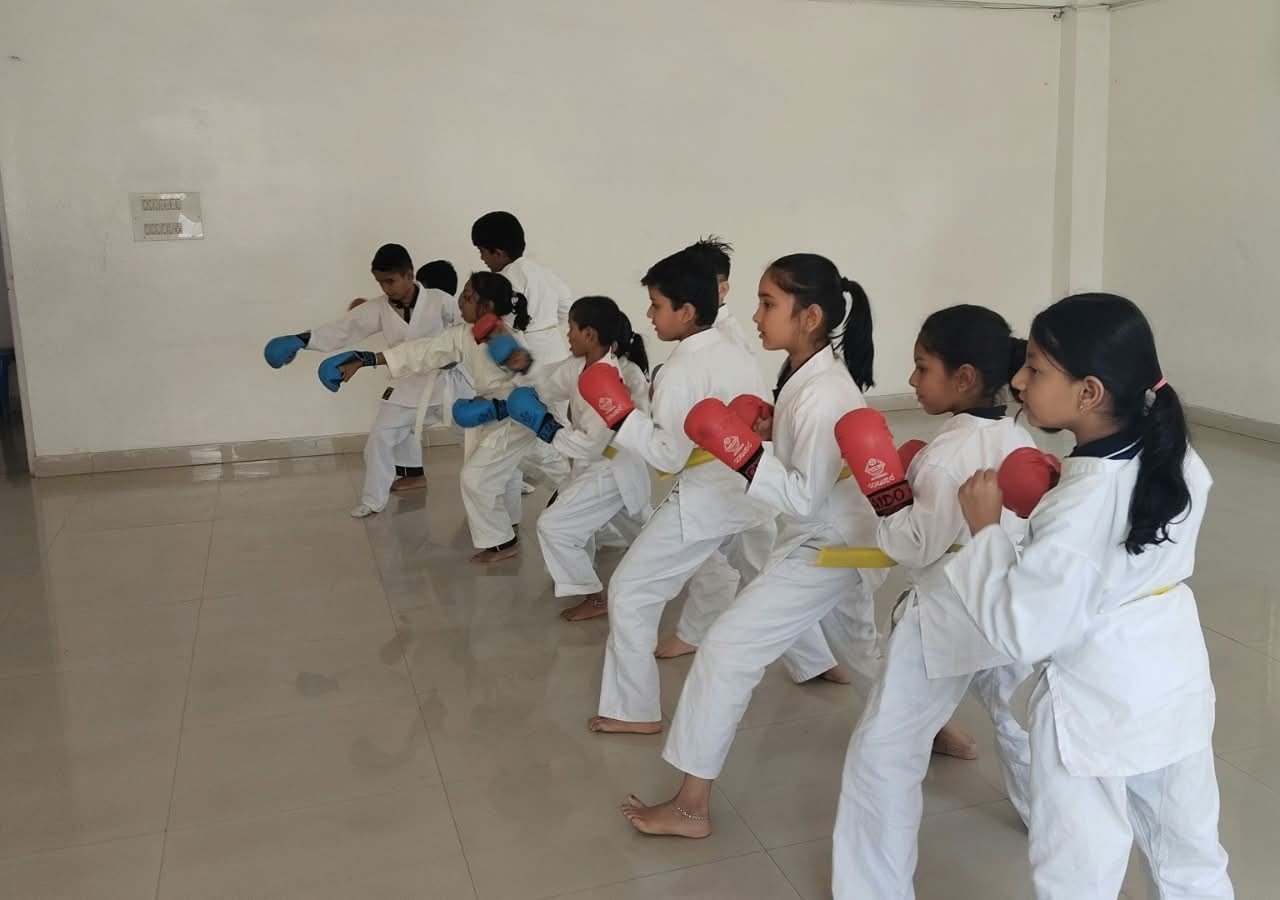
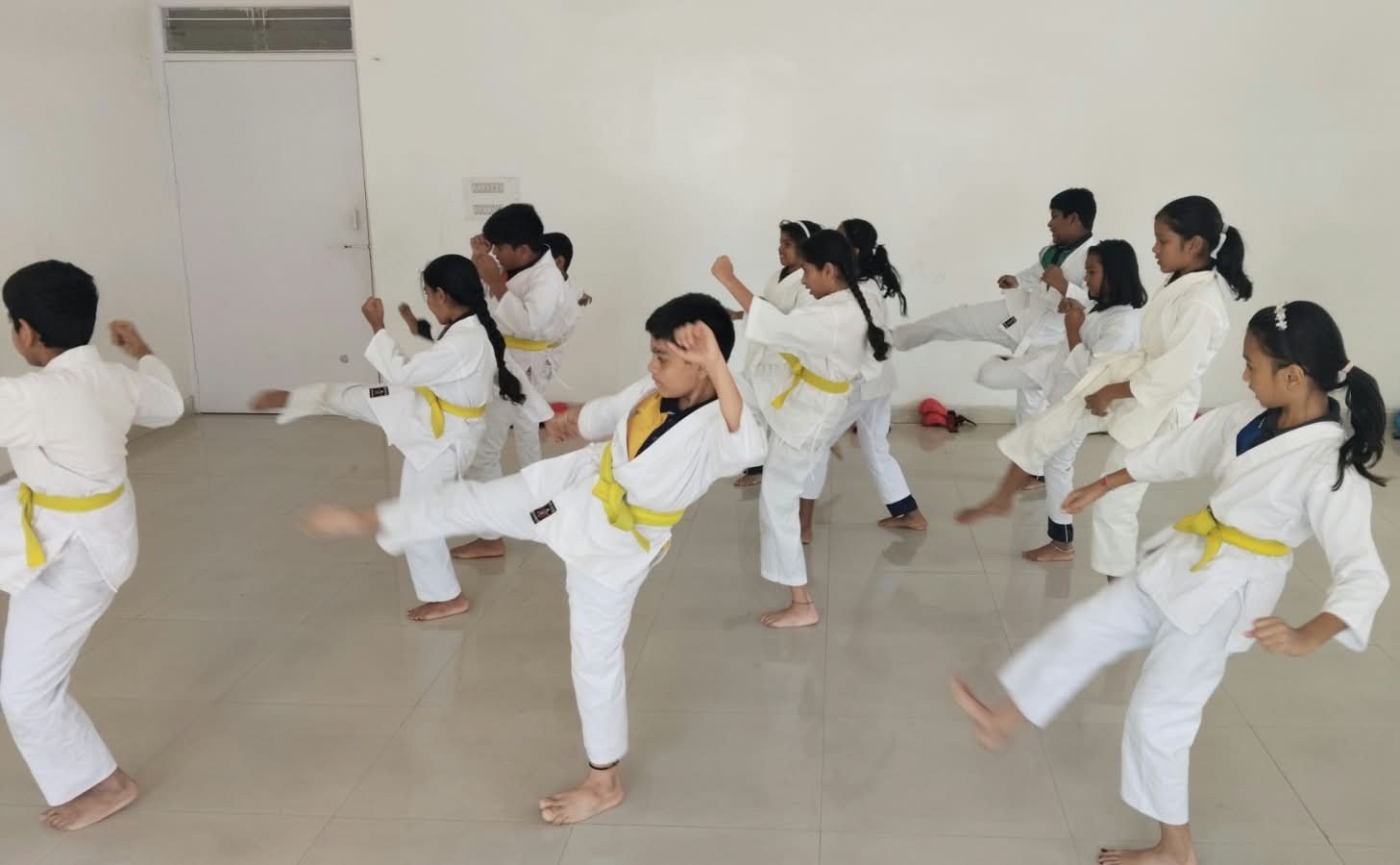
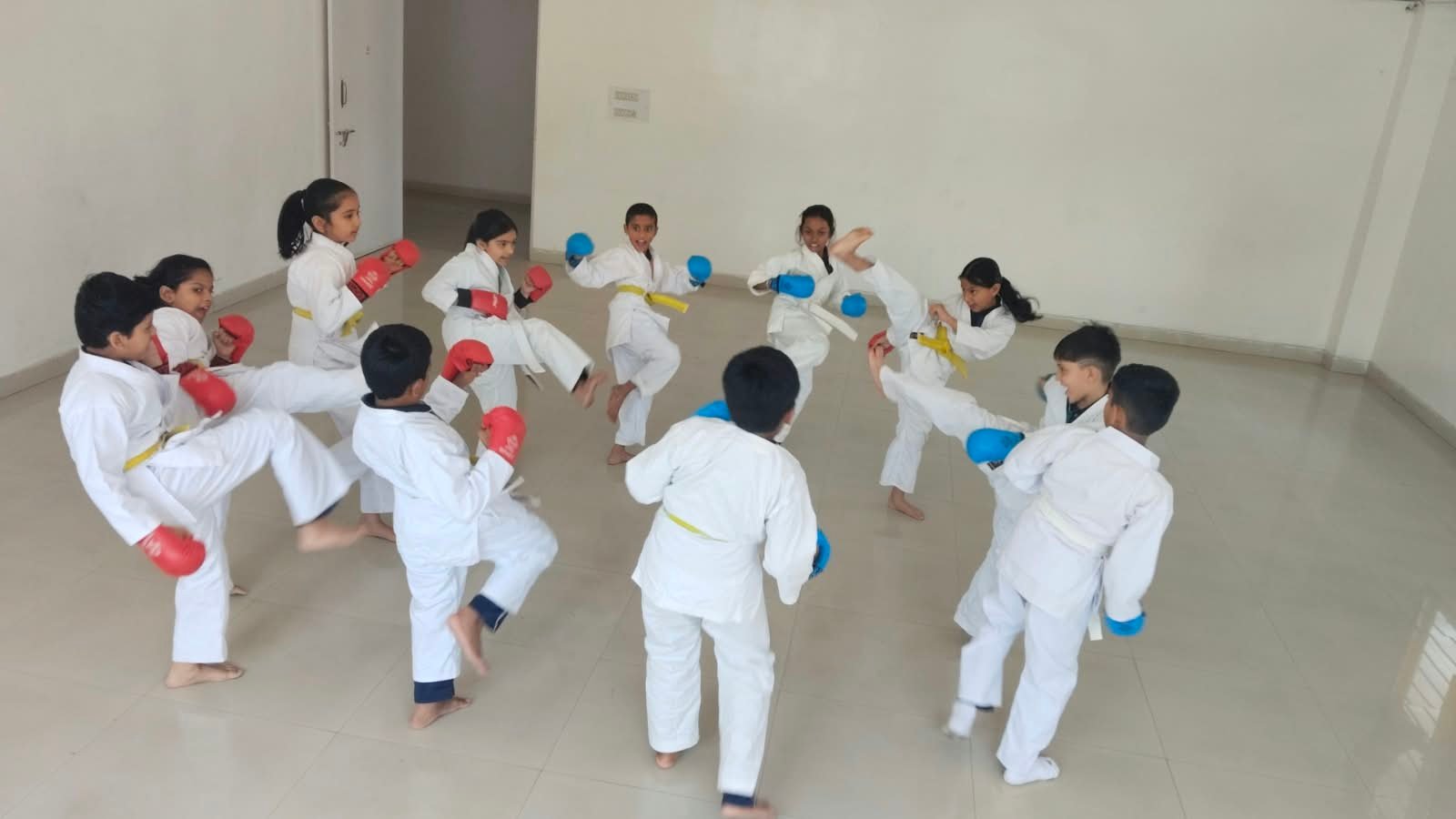
The programme introduces students to basic karate stances, punches, kicks, blocks and defensive movements. Through regular practice, children become familiar with body coordination, balance, controlled movements and the importance of following instructions.
For parents exploring schools in Sarjapur Road, understanding how a school integrates physical activities into its timetable can provide a broader perspective on its approach to primary education.
Karate offers an opportunity to combine movement, learning and personal development in an engaging school environment.
Event Overview: Karate Training Programme at BRS Global School
The karate programme at BRS Global School is designed to introduce primary school students to martial arts through structured weekly sessions.
Activity : Karate Training
School : BRS Global School
Campus : Sarjapur Road, Kasavanahalli
Classes : Grades 1 to 4
Frequency : One period per week
Category : Co-Curricular Activity
Learning Focus : Fitness, coordination, discipline and self-defence awareness
The programme introduces children to fundamental karate movements in a structured learning environment. Its focus is on helping students understand and practise basic techniques while developing physical abilities and positive habits.
Rather than treating karate only as a sporting activity, the programme introduces values such as patience, respect, perseverance and self-control.
For young learners, these qualities are useful not only during physical training but also in classroom participation, group activities and everyday interactions.
What Happens During the Weekly Karate Training Sessions?
Each weekly karate period gives students an opportunity to participate in physical exercises and practise fundamental martial arts techniques.
The sessions introduce different aspects of karate through simple, age-appropriate activities.
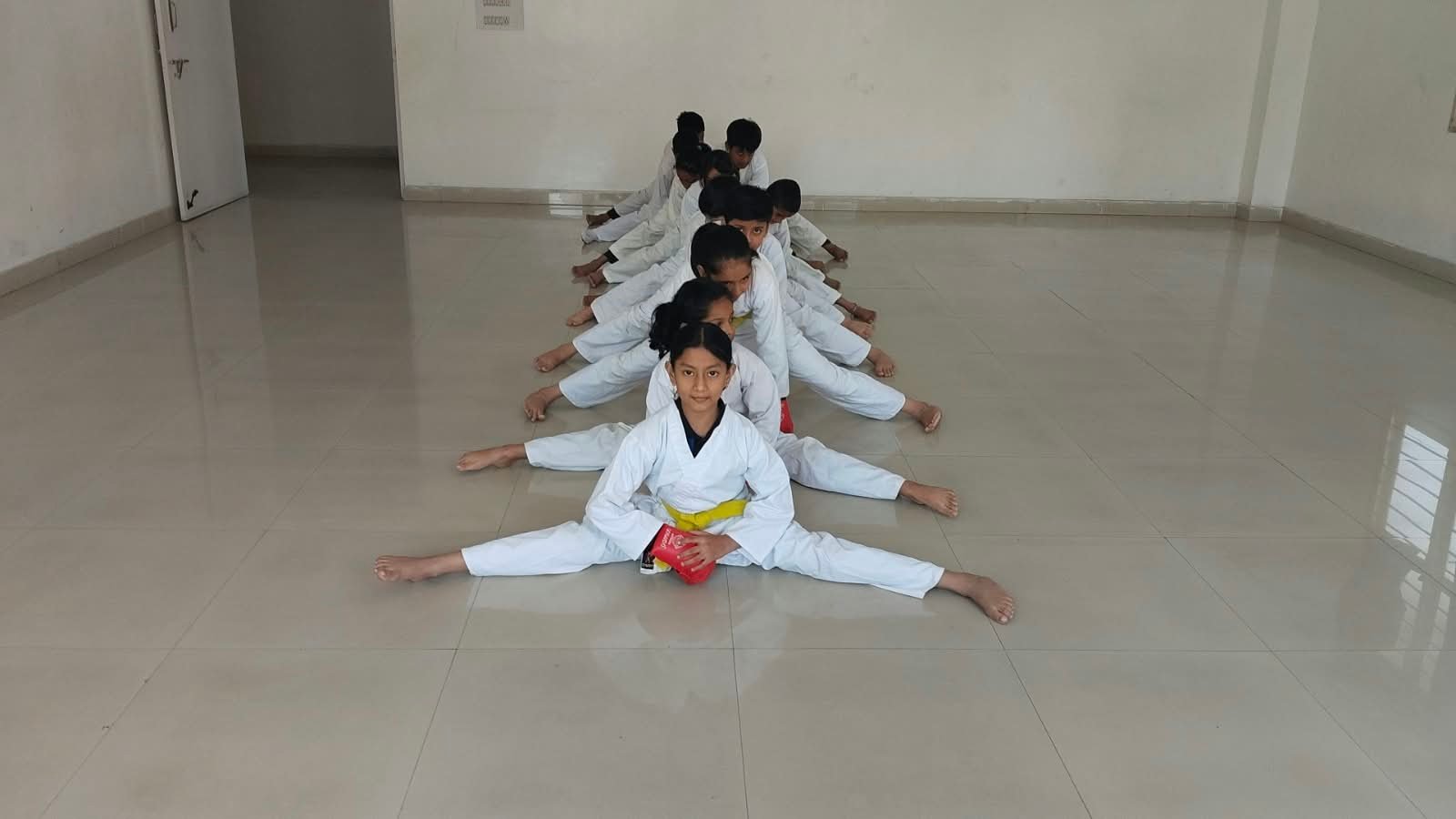
Warm-Up Exercises and Stretching
Every physical activity benefits from appropriate preparation. Warm-up exercises and stretching help students prepare their bodies for movement.
These exercises introduce children to the importance of physical readiness and gradually encourage flexibility and body awareness.
Learning Basic Karate Stances
Karate stances help students understand posture, stability and balance.
Students practise basic standing positions and movements that form the foundation of karate. These exercises encourage body control and help children become more aware of how they move.
Practising Fundamental Punches and Kicks
Students are introduced to basic punching and kicking techniques.
These movements encourage controlled physical activity and help improve coordination between different parts of the body. Students learn to follow instructions and practise movements with attention and control.
Understanding Blocks and Defensive Movements
Karate also introduces students to basic blocking and defensive techniques.
These movements help children understand the fundamentals of protection and controlled responses. The focus at this stage is on learning the techniques safely and appropriately.
Coordination and Balance Exercises
Maintaining balance while performing different movements is an important part of martial arts practice.
Through coordination exercises, children learn to control their movements, maintain stability and improve physical awareness.
Developing Discipline Through Practice
Karate requires students to listen carefully, follow instructions and practise movements patiently.
These structured sessions encourage respect for instructors, fellow students and the learning process.
Together, these activities provide a foundation for understanding martial arts while making physical education an engaging part of the school experience.
Student Learning Outcomes and Benefits of Karate Training
Karate offers several developmental benefits for children when introduced through age-appropriate and structured training.
Physical Fitness and Flexibility
Karate involves stretching, controlled movements, stances and physical exercises.
Regular participation provides opportunities for children to improve flexibility, coordination, strength and general physical fitness.
Developing an active lifestyle during the primary years can also encourage children to appreciate the importance of regular physical activity.
Improved Concentration and Attention
Learning karate techniques requires children to observe demonstrations, listen to instructions and repeat movements carefully.
This process encourages concentration and attention to detail.
Students also learn that practising a movement correctly often requires patience and repeated effort.
Confidence and Self-Belief
Learning a new physical skill can give children a sense of accomplishment.
As they become familiar with basic karate movements, they get opportunities to recognise their progress and develop confidence in their abilities.
This confidence can encourage greater participation in other school activities as well.
Self-Defence Awareness
Karate introduces students to basic defensive movements and personal safety awareness.
At the primary level, the emphasis should remain on understanding protective techniques, respecting personal boundaries and knowing when to seek help from a trusted adult.
Self-defence education should always be accompanied by responsible behaviour and an understanding that physical skills must never be used to intimidate or hurt others.
Discipline and Self-Control
Karate training encourages children to follow instructions, wait for their turn and practise movements with control.
These experiences introduce important habits such as patience, respect and responsibility.
Students learn that discipline is not simply about following rules; it also involves managing their actions and showing consideration for others.
Coordination and Body Balance
Karate movements require students to coordinate their hands, legs and body positions.
Practising these movements helps develop balance, movement awareness and coordination.
Such abilities can also support children’s participation in other physical activities and sports.
How Does Karate Align with Holistic Education?
Holistic education recognises that children’s development includes intellectual, physical, emotional and social dimensions.
Academic learning remains important, but opportunities for physical activity, creativity, collaboration and personal development also contribute to a meaningful educational experience.
The National Education Policy (NEP) 2020 emphasises holistic, experiential and activity-based learning. It recognises the importance of integrating sports, physical education and other enriching activities into the educational experience.
Karate complements this broader educational approach by providing students with opportunities to learn through physical participation and practice.
For example:
• Experiential learning: Students learn movements by observing, practising and repeating techniques.
• Physical development: Exercises encourage flexibility, balance and coordination.
• Personal development: Students practise patience, perseverance and self-control.
• Social development: Group participation encourages respect and consideration for others.
• Emotional development: Learning new techniques provides opportunities to develop confidence and manage challenges.
At BRS Global School, karate is one of the co-curricular opportunities that complements classroom learning and supports students’ overall development.
Why Does Karate Matter During the Primary School Years?
The primary years are an important period for developing physical habits, social behaviour and confidence.
Introducing children to structured physical activities during this stage can help them understand that learning happens in different environments, not only through textbooks and classroom lessons.
Karate provides several opportunities for this development.
Learning through repetition: Children understand that practising a technique repeatedly helps them become more familiar with it.
Accepting instructions: Students learn to observe, listen and follow guidance during training.
Respecting others: Martial arts practice introduces the importance of respecting instructors and fellow participants.
Managing challenges: Children learn to approach unfamiliar movements patiently rather than becoming discouraged.
Building healthy habits: Weekly participation provides a regular opportunity for physical activity within the school timetable.
These experiences help children develop attitudes and habits that can support their progress in different areas of life.
BRS Global School, Sarjapur Road: Supporting Co-Curricular Development
Located in Kasavanahalli on Sarjapur Road, BRS Global School offers a CBSE educational environment that combines academic learning with opportunities for co-curricular participation.
The Sarjapur Road campus serves families living in and around the Sarjapur Road–Bellandur corridor.
For parents, selecting a school involves considering several factors, including academic programmes, physical activities, learning facilities, student participation and the overall school environment.
Co-curricular activities such as karate, dance, music, yoga, robotics and sports provide children with opportunities to explore interests beyond their regular academic subjects.
Karate adds a physical and skill-based dimension to this learning experience, particularly for primary students who are developing coordination, confidence and self-discipline.
Areas Served by the Sarjapur Road Campus
The Sarjapur Road campus is accessible to families from several residential communities and neighbourhoods, including:
• Kasavanahalli and Sarjapur Road
• Bellandur and Iblur
• Haralur and Harlur
• HSR Layout and Koramangala
• Hosa Road and Kudlu Gate
• Kaikondrahalli and Junnasandra
• Carmelaram and Choodasandra
• Doddakannelli and Kodathi
• Gunjur and Varthur
• Dommasandra and Mullur
• Rayasandra and Naganathapura
• Halnayakanahalli and Chikkanayakanahalli
• Doddanagamangala and Huskur
• Marathahalli and Kadubeesanahalli
School transport availability can be discussed with the admissions team based on the residential location and current transport routes.
Families exploring CBSE schools in Sarjapur Road, schools in Bellandur or schools near HSR Layout can learn more about the campus and its academic and co-curricular programmes.
Explore BRS Global School – Sarjapur Road Campus: https://brsglobalschool.edu.in/
Google Business Profile: https://share.google/2oEno2EtFtY7eyP2B/
Common Parent Questions About Karate Training
How does karate training support children’s physical development?
Karate involves stretching, basic stances, punches, kicks and balance exercises. These activities provide opportunities to improve flexibility, coordination, body awareness and physical fitness through structured practice.
Does karate improve concentration in children?
Karate requires students to observe movements, listen to instructions and repeat techniques carefully. These activities encourage attention, concentration and the ability to follow instructions.
Is karate suitable for children in Grades 1 to 4?
Yes. Karate can be introduced to primary school children through age-appropriate movements and structured activities. The training at BRS Global School is intended for students from Grades 1 to 4.
Does karate teach children self-defence?
Karate introduces basic defensive movements and personal safety awareness. It can help children understand protective techniques, respect personal boundaries and the importance of seeking adult support when necessary.
How frequently do students attend karate training at BRS Global School?
Students from Grades 1 to 4 have one dedicated karate period every week as part of the co-curricular programme at the Sarjapur Road campus.
Is karate only about learning martial arts techniques?
No. Along with basic martial arts movements, karate introduces discipline, patience, concentration, coordination, respect and self-control. These qualities make it a valuable developmental activity.
Key Highlights of the Karate Programme
• Karate training is available for students in Grades 1 to 4.
• Students participate in one dedicated period every week.
• Training introduces basic martial arts movements.
• Sessions include warm-ups and stretching.
• Students practise fundamental stances, punches, kicks and blocks.
• Coordination and balance exercises form part of the activity.
• Students develop awareness of basic defensive techniques.
• The programme encourages discipline, confidence and concentration.
• Karate complements academic learning through physical and experiential participation.
Frequently Asked Questions (FAQs)
Which grades are included in the karate programme at BRS Global School?
The karate programme is designed for students from Grades 1 to 4 at the Sarjapur Road campus.
How many karate periods are conducted every week?
Students have one dedicated karate period every week as part of their co-curricular timetable.
What are the basic karate techniques taught to primary students?
Students are introduced to basic stances, punches, kicks, blocks, defensive movements, warm-up exercises and coordination activities.
What are the benefits of karate for young children?
Karate encourages physical fitness, flexibility, concentration, balance, confidence, discipline and awareness of personal safety.
Can karate help children become more disciplined?
Yes. Structured karate practice encourages students to listen to instructions, respect others, practise patiently and control their movements.
Does BRS Global School include physical activities alongside academics?
Yes. BRS Global School provides co-curricular opportunities such as karate, dance, music, yoga, robotics and sports alongside its academic programme.
Where is BRS Global School’s Sarjapur Road campus located?
The Sarjapur Road campus is located in Kasavanahalli, Bengaluru, and serves families from nearby neighbourhoods such as Bellandur, Haralur, HSR Layout, Hosa Road, Carmelaram and Gunjur.
Conclusion: Developing Strong, Confident and Disciplined Learners
Karate is a valuable addition to primary education because it gives children opportunities to develop physical abilities and important personal qualities through structured practice.
At BRS Global School, Sarjapur Road, students from Grades 1 to 4 participate in one dedicated karate period every week. Through basic martial arts movements, stretching, balance exercises and defensive techniques, they are introduced to physical fitness, coordination, discipline and self-defence awareness.
These experiences complement classroom learning and support the development of confident, active and responsible young learners.
For parents exploring a CBSE school that values academics alongside co-curricular development, BRS Global School, Sarjapur Road, welcomes you to discover its learning environment and programmes.
Explore the campus and connect with the admissions team to learn more about the academic and co-curricular opportunities available for your child.
Explore our Campus:
Attibele Branch:
https://share.google/iFhJaeGo8wkgOZ1Y5
Sarjapur Road Branch: