
Introduction: Why Is Learning Beyond Textbooks Important?
Education is most meaningful when students understand not only what they learn but also how to apply that knowledge in everyday situations.
Reading textbooks and listening to classroom explanations are important parts of academic development. However, students also need opportunities to explore ideas, ask questions, experiment and learn through practical experiences.
This is where experiential learning becomes valuable.
Experiential learning is an educational approach that connects classroom concepts with practical experiences. It encourages students to participate actively in the learning process through observation, hands-on activities, experimentation, projects, discussions and problem-solving exercises.
For example, learning about plant growth becomes more meaningful when students observe how seeds germinate. Understanding scientific principles becomes easier when they perform suitable experiments in a laboratory. Similarly, mathematical concepts become more relatable when students apply them to measurements, calculations and everyday situations.
At BRS Global School, Sarjapur Road, learning extends beyond textbooks through a combination of academic instruction, practical activities, digital learning, laboratory experiences, language development, technology-based programmes and co-curricular opportunities.
The approach encourages students to explore concepts, develop curiosity and build skills that complement their academic knowledge.
For parents exploring schools in Sarjapur Road, understanding how a school connects classroom learning with practical experiences can help them evaluate the broader educational opportunities available to their children.
What Does Experiential Learning Look Like in a CBSE School?
Experiential learning allows students to become active participants rather than passive recipients of information.
Instead of simply memorising facts, students are encouraged to observe, investigate, participate and reflect on what they learn.
Some common examples include:
• Performing experiments in science laboratories.
• Solving practical mathematical problems.
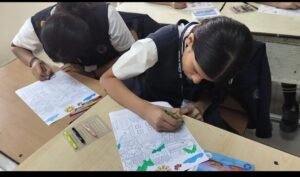
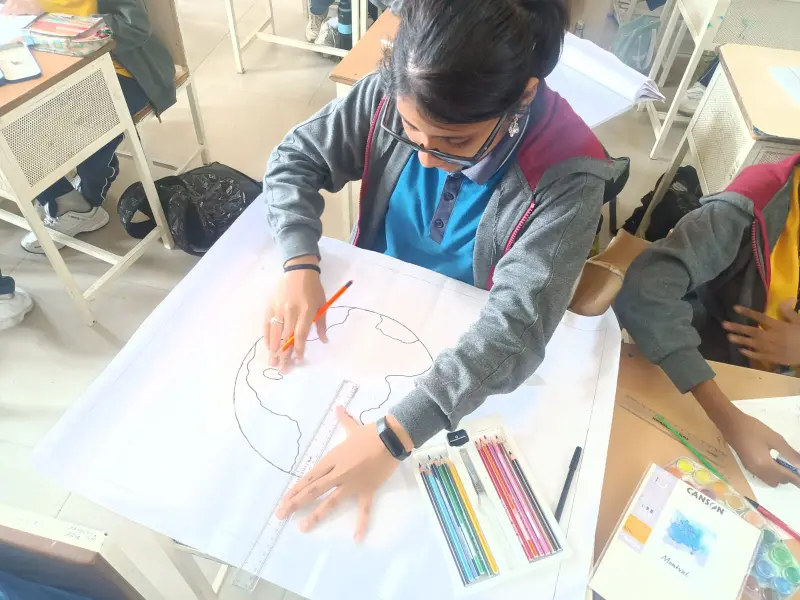
• Participating in project-based activities.
• Learning through educational visits.
• Exploring technology and robotics.
• Developing communication skills through language activities.
• Participating in sports and physical education.
• Working together on group assignments and presentations.
The National Education Policy (NEP) 2020 emphasises experiential, activity-based and inquiry-driven approaches to education. These approaches encourage conceptual understanding, creativity, critical thinking and the application of knowledge.
Experiential learning complements the broader educational objectives of the CBSE curriculum by providing opportunities for students to connect academic concepts with practical experiences.
The objective is not to replace textbooks or classroom teaching but to make academic learning more meaningful through participation and application.
How Does BRS Global School Make Learning Meaningful Beyond Textbooks?
At BRS Global School, Sarjapur Road, students have opportunities to explore different learning experiences through academic facilities, educational programmes and co-curricular activities.
Learning Science Through Laboratory Experiments
Science becomes more engaging when students can observe concepts rather than only read about them.
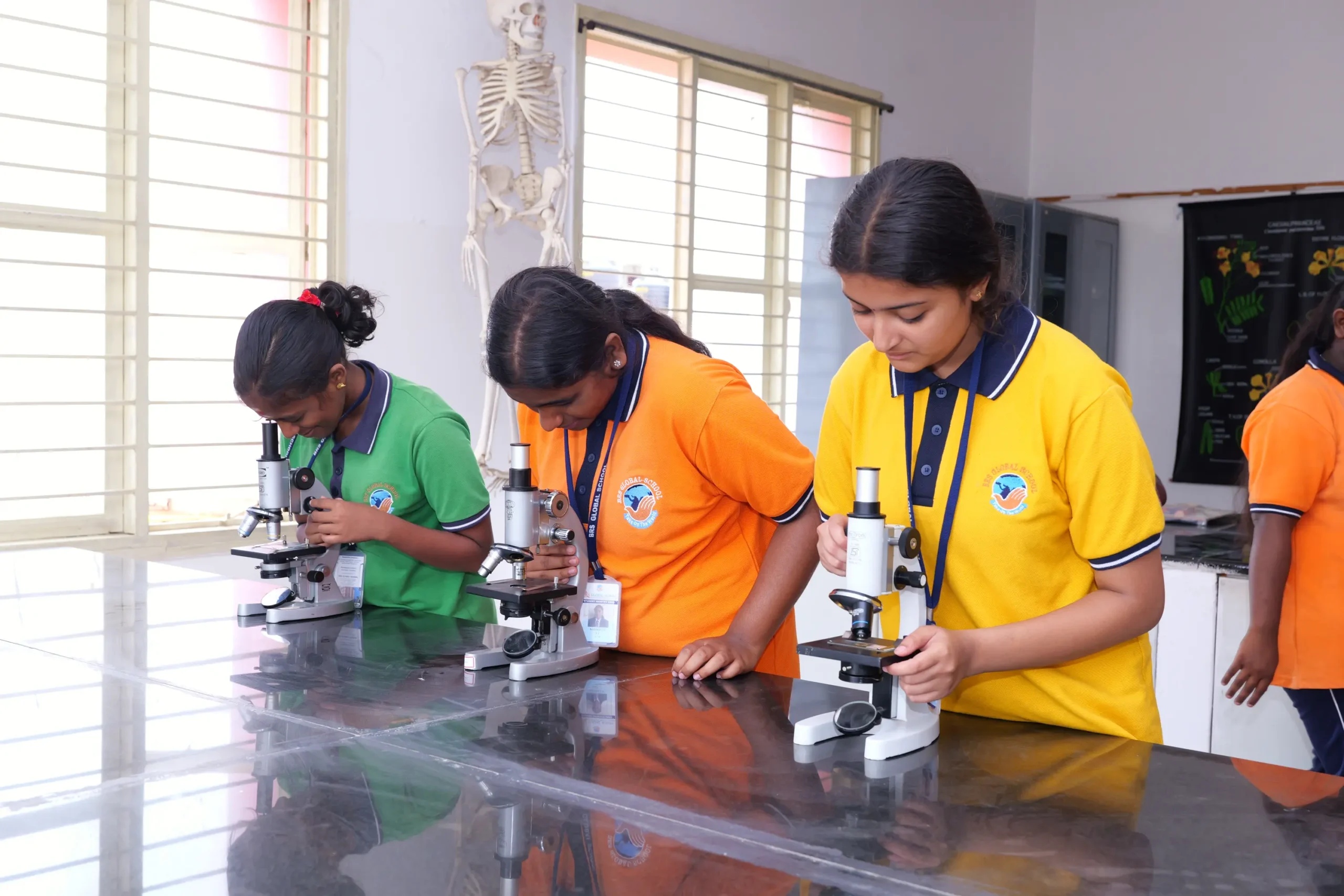
The campus provides dedicated laboratories for Physics, Chemistry and Biology, giving students opportunities to explore scientific concepts through practical activities and experiments.
Laboratory learning helps students understand scientific processes, observe outcomes and develop an interest in investigation.
For example:
• Physics experiments help students explore concepts related to force, motion, light and electricity.
• Chemistry activities introduce students to materials, reactions and scientific observations.
• Biology practical work helps students understand living organisms, biological structures and natural processes.
Students also develop important laboratory habits, including following instructions, handling materials responsibly, observing carefully and recording findings.
These experiences help connect theoretical science education with practical understanding.
Developing Mathematical Thinking Through Practical Applications
Mathematics is not limited to numbers, equations and textbook exercises. It is closely connected to everyday activities such as measuring, calculating, comparing, estimating and analysing information.
The mathematics laboratory at BRS Global School provides an opportunity to approach mathematical concepts through practical learning experiences.
Using suitable mathematical activities and learning materials, students can explore concepts through observation and problem-solving.
For example, geometry becomes easier to understand when students work with shapes and spatial relationships. Measurement activities help them connect mathematical units with real-world objects.
Such experiences encourage logical reasoning and help students appreciate the practical applications of mathematics.
Exploring Technology Through Robotics and AI Integration
Technology plays an increasingly important role in modern education. Introducing students to technology-related concepts can help them understand how digital tools and innovative systems are used in different fields.
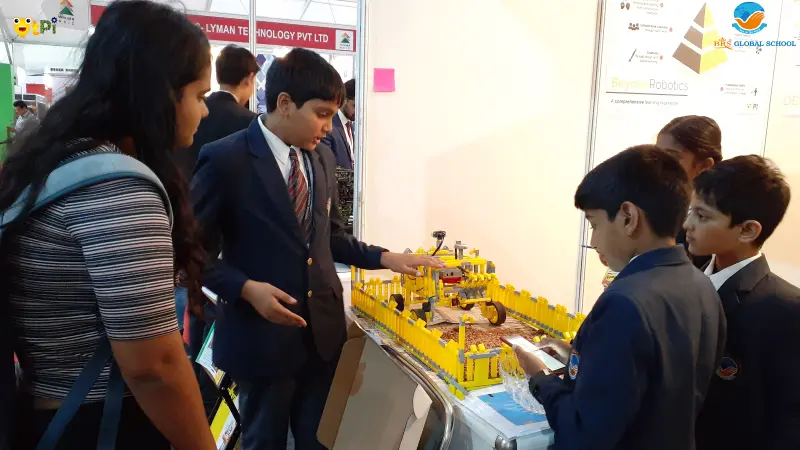
BRS Global School incorporates robotics and AI integration into its educational environment.
Robotics provides opportunities to explore logical thinking, sequencing, creativity and problem-solving through technology-based activities.
Similarly, exposure to artificial intelligence concepts can introduce students to emerging technological developments and encourage curiosity about how intelligent systems work.
When introduced appropriately for different age groups, these learning experiences can help students develop awareness of technology and its practical applications.
Strengthening Language Skills Through Cambridge English
Communication is an essential part of academic and personal development.
Students need opportunities to develop reading, writing, listening and speaking skills so that they can express ideas confidently and understand different perspectives.
BRS Global School incorporates Cambridge English programmes through Cambridge University Press & Assessment.
The programme supports English language development through structured learning experiences that encourage communication and language proficiency.
Students benefit from opportunities to strengthen vocabulary, improve comprehension and develop confidence in using English.
Language learning also supports participation in classroom discussions, presentations, collaborative activities and other academic experiences.
Personalised Learning Through Digital Platforms
Digital learning tools can complement classroom teaching by providing students with additional opportunities to practise concepts and monitor their progress.
BRS Global School uses Swadhyayan, an adaptive e-learning platform for students from Kindergarten to Class 8.
The platform supports digital learning and provides opportunities for students to engage with academic content through technology.
Adaptive learning can help students practise concepts at an appropriate level and identify areas that require additional attention.
The school also uses the Entrar app as its ERP platform to support school-related communication and administrative processes.
Together, digital platforms complement the classroom learning environment by connecting technology with academic and school operations.
Learning Through Montessori and Kindergarten Experiences
Early childhood education is an important stage in developing curiosity, communication, independence and foundational learning abilities.
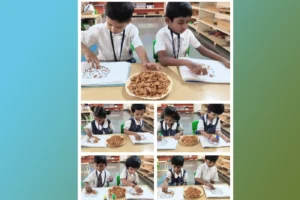
At BRS Global School, the pre-primary programme includes Toddler and Montessori I, II and III, following a blended Montessori and Kindergarten approach.
Young children learn through age-appropriate activities that encourage exploration, interaction and participation.
Practical activities during the early years can introduce children to:
• Basic mathematical concepts.
• Language and communication.
• Sensory exploration.
• Creative expression.
• Social interaction.
• Independent participation.
• Observation and discovery.
These experiences help establish a foundation for future academic learning.
Developing Physical Skills Through Sports and Physical Education
Physical education is an important part of a child’s overall development.
Sports and structured physical activities provide opportunities to improve coordination, flexibility, strength, teamwork and discipline.
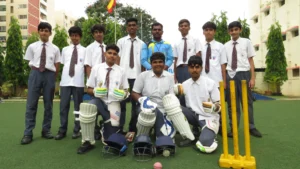
BRS Global School provides sports opportunities through facilities such as its turf ground and basketball court, along with SportiFit as part of its sports programme.
Students can develop physical abilities while learning important values such as cooperation, perseverance, respect and sportsmanship.
Sports also introduce students to the importance of regular physical activity and maintaining a healthy lifestyle.
Building Confidence Through Co-Curricular Activities
Learning experiences outside regular academic subjects allow students to discover interests and develop individual strengths.
BRS Global School offers a range of co-curricular opportunities, including:
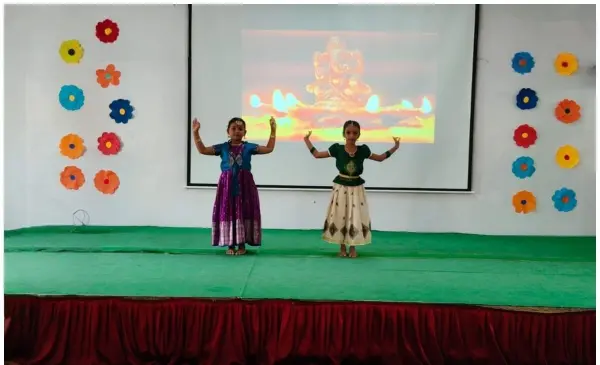
• Dance and music.
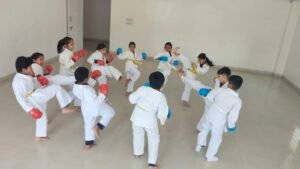
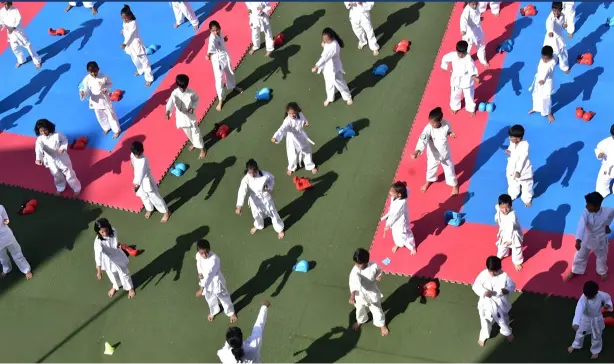
• Yoga and karate.
• Abacus.
• Robotics.
• Sports activities.
• Cambridge Spoken English.
• Literary Club.
• Science Club.
• Eco Club.
• Model United Nations (MUN).
• Spell Bee.
• Olympiad participation.
• Interschool competitions.
These activities encourage students to explore different interests, participate in group experiences and develop confidence.
They also provide opportunities to practise communication, creativity, collaboration and self-discipline.
What Skills Do Students Develop Through Experiential Learning?
Experiential learning contributes to several important skills that complement academic development.
Critical Thinking
Students learn to observe situations, ask questions, analyse information and consider different approaches to solving problems.
Problem-Solving Abilities
Practical activities encourage students to identify challenges, explore possible solutions and understand the outcomes of their decisions.
Creativity and Innovation
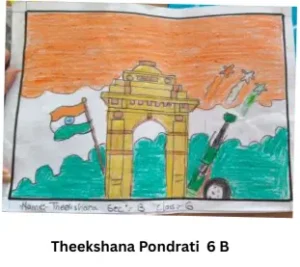
Activities involving art, robotics, projects and experimentation provide opportunities to express ideas and explore new possibilities.
Communication Skills
Discussions, presentations, language activities and group projects encourage students to express their thoughts clearly.
Collaboration and Teamwork
Working with classmates helps students understand shared responsibilities, listen to different viewpoints and contribute towards common goals.
Confidence and Independence
Participating in practical tasks allows students to take responsibility for their learning and recognise their progress.
Application of Knowledge
Students learn to connect concepts studied in classrooms with situations and experiences outside textbooks.
These skills are useful across academic subjects and can support students as they progress through different stages of education.
How Does Experiential Learning Support the CBSE Curriculum?
The CBSE curriculum aims to provide students with a structured academic foundation while encouraging conceptual understanding and the development of essential skills.
Experiential learning complements this approach by helping students explore subjects through practical applications.
For example:
| Academic Subject | Experiential Learning Opportunities |
|---|---|
| Science | Laboratory experiments, observation and investigation |
| Mathematics | Mathematical activities, measurements and practical problem-solving |
| English | Reading, speaking, presentations and communication activities |
| Social Science | Projects, discussions and educational visits |
| Computer Education | Digital learning, technology and robotics activities |
| Physical Education | Sports, fitness and structured physical activities |
| Environmental Education | Nature-based activities and sustainability projects |
Such experiences can help students understand academic concepts more clearly and appreciate their relevance in everyday life.
The focus is on developing understanding rather than relying exclusively on memorisation.
Why Should Parents Look Beyond Textbook-Based Learning?
When selecting a school, parents naturally consider academic performance, curriculum, teachers and infrastructure. However, it is equally important to understand how students experience learning throughout the school day.
A balanced educational environment provides opportunities for children to develop academically while also exploring interests, building confidence and participating in practical activities.
Parents can look for schools that:
• Provide opportunities for hands-on learning.
• Encourage students to ask questions.
• Include laboratory and practical activities.
• Support language and communication development.
• Introduce appropriate technology-based learning.
• Encourage sports and physical education.
• Provide opportunities for creative expression.
• Promote teamwork and student participation.
These elements help parents understand whether a school’s educational approach extends beyond classroom instruction.
For families searching for CBSE schools in Sarjapur Road, evaluating the academic programme alongside practical learning opportunities can provide a more complete picture of the school environment.
Why Is Experiential Learning Relevant for Families in Sarjapur Road?
Sarjapur Road and its surrounding neighbourhoods are home to many residential communities and working families.
Parents living in Kasavanahalli, Bellandur, Haralur, HSR Layout, Hosa Road, Carmelaram, Gunjur, Varthur and Doddakannelli often consider educational opportunities, accessibility and the overall learning environment when selecting a school.
The availability of different academic and co-curricular programmes is an important consideration for families seeking a balanced school experience.
BRS Global School’s Sarjapur Road campus in Kasavanahalli serves families from the surrounding neighbourhoods.
Its academic facilities, digital learning platforms, language programmes, sports opportunities and co-curricular activities provide different ways for students to engage with their education.
Families from nearby areas, including Kaikondrahalli, Junnasandra, Kodathi, Dommasandra, Mullur, Iblur and Marathahalli, can explore the campus and discuss transport availability with the admissions team.
Explore BRS Global School – Sarjapur Road Campus: https://brsglobalschool.edu.in/
Google Business Profile – Sarjapur Road Campus: https://share.google/2oEno2EtFtY7eyP2B/
Common Parent Questions About Experiential Learning
How is experiential learning different from traditional classroom learning?
Traditional classroom instruction often introduces concepts through explanations, textbooks and guided lessons. Experiential learning complements this approach through activities, experiments, projects and practical applications that allow students to engage directly with what they study.
Does experiential learning improve academic understanding?
Experiential learning can support conceptual understanding by helping students connect theoretical knowledge with practical examples. It also provides opportunities to apply what they have learned in different situations.
Is experiential learning suitable for primary school students?
Yes. Experiential learning can be adapted to different age groups. Younger children can learn through play, observation, sensory activities, storytelling and simple practical tasks.
How do science laboratories support experiential learning?
Science laboratories allow students to observe scientific processes and perform suitable experiments. They help students connect theoretical concepts with practical observations and develop scientific curiosity.
What role does technology play in experiential learning?
Technology can provide interactive learning opportunities, digital practice, educational resources and exposure to subjects such as robotics and artificial intelligence.
How do co-curricular activities contribute to learning?
Co-curricular activities provide opportunities to develop creativity, communication, teamwork, discipline and confidence. They complement academic learning by allowing students to explore different interests and abilities.
Does experiential learning replace textbook learning?
No. Experiential learning complements classroom instruction and textbooks. Both are important in helping students build academic knowledge and understand how to apply it.
Key Highlights: Experiential Learning at BRS Global School
• CBSE academic curriculum supported by practical learning opportunities.
• Physics, Chemistry, Biology, Mathematics and Computer laboratories.
• Robotics and AI integration.
• Cambridge English programmes.
• Swadhyayan adaptive e-learning platform for KG to Class 8.
• Entrar ERP platform for school-related operations and communication.
• Montessori and Kindergarten blended approach for pre-primary students.
• SportiFit sports programme.
• Turf ground and basketball court.
• Co-curricular opportunities in dance, music, yoga, karate, abacus and other activities.
• Clubs, competitions and student participation opportunities.
Frequently Asked Questions (FAQs)
What is the meaning of experiential learning in education?
Experiential learning means learning through direct experiences, practical activities, observation, experimentation and reflection. It helps students connect theoretical knowledge with real-world applications.
Why is experiential learning important in CBSE schools?
It complements the CBSE academic curriculum by encouraging conceptual understanding, active participation, critical thinking and practical application of knowledge.
What are some examples of experiential learning at BRS Global School?
Examples include science laboratory activities, mathematics learning, robotics, AI integration, Cambridge English, digital learning, sports and co-curricular activities.
Does BRS Global School have science laboratories?
Yes. The Sarjapur Road campus has dedicated Physics, Chemistry and Biology laboratories, along with Mathematics and Computer laboratories.
Which digital learning platform does BRS Global School use?
The school uses Swadhyayan, an adaptive e-learning platform for Kindergarten to Class 8.
How does the school encourage students to develop skills beyond academics?
Students have opportunities to participate in sports, yoga, karate, dance, music, robotics, clubs, competitions and other co-curricular activities.
Where is BRS Global School located?
The campus featured in this article is BRS Global School, Sarjapur Road, located in Kasavanahalli, Bengaluru, Karnataka.
Conclusion: Making Every Learning Experience Meaningful
Education should prepare students not only to understand academic concepts but also to apply knowledge, think independently and approach new challenges with confidence.
Experiential learning provides opportunities to connect classroom instruction with practical experiences. Through laboratory activities, technology-based learning, language programmes, sports and co-curricular participation, students can explore different dimensions of education.
At BRS Global School, Sarjapur Road, these opportunities complement the CBSE curriculum and encourage students to develop curiosity, creativity, communication and problem-solving abilities.
For parents looking for a school that values academic learning alongside practical experiences and overall development, exploring the educational environment is an important first step.
Visit BRS Global School, Sarjapur Road, to discover its academic programmes, learning facilities and co-curricular opportunities for your child.
Explore our Campus:
Attibele Branch:
https://share.google/iFhJaeGo8wkgOZ1Y5
Sarjapur Road Branch: