
Introduction
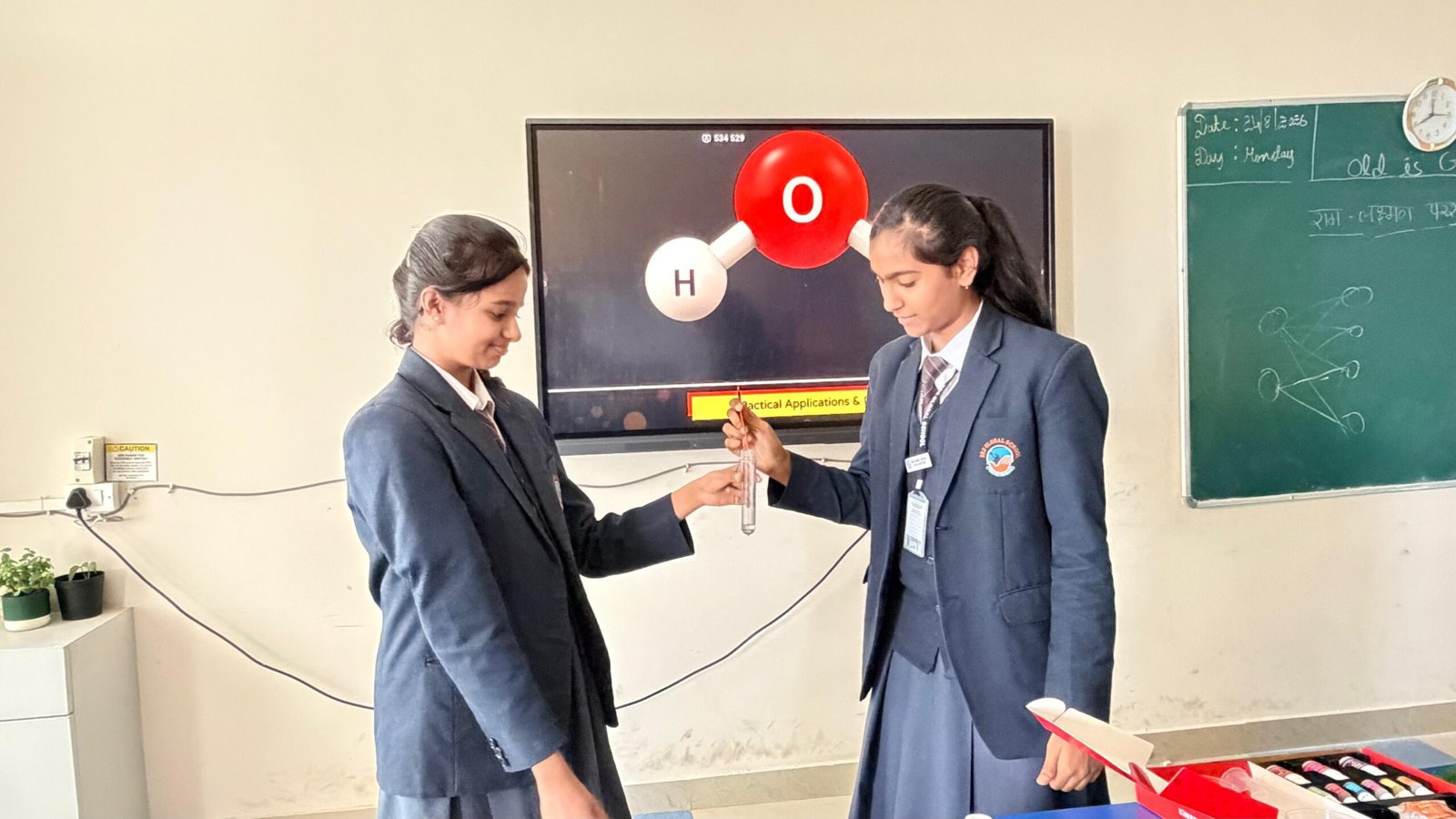
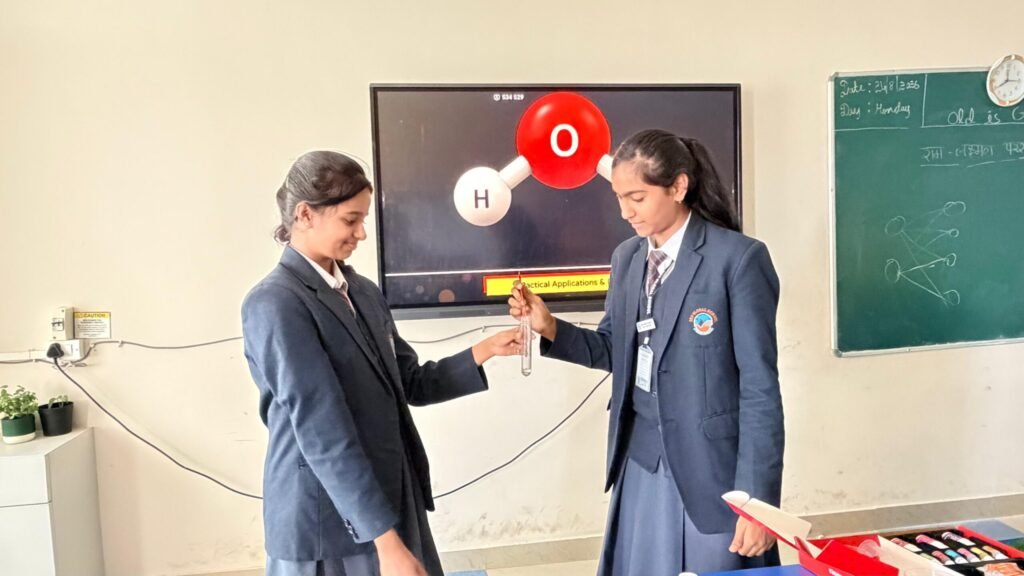
How can a Science lesson become more meaningful for students? By allowing them to experience the concept themselves. At BRS Global School | Pre-school, Primary School & High School | Attibele, Class 9 students explored chemical reactions through a hands-on experiment involving baking soda and vinegar.
The activity was designed to move learning beyond textbook explanations. As students handled the experimental materials, observed the reaction, collected the gas produced, and watched a balloon inflate, they experienced how scientific concepts can be investigated through direct observation and evidence.
This experiential approach reflects the school’s emphasis on interactive, inquiry-based and practical learning in Science.
Event Overview
Event : Class 9 Science Activity
School : BRS Global School – Attibele Campus
Subject : Science
Focus Area : Chemical Reactions and Law of Conservation of Mass
Experiment : Baking Soda and Vinegar Reaction
Key Observation : Formation and collection of carbon dioxide gas
Learning Approach : Hands-on, experiential and inquiry-based learning
Skills Developed : Observation, measurement, recording, teamwork and drawing conclusions
The activity formed part of Class 9 Science learning at the Attibele campus, where students were encouraged to investigate concepts through practical experiences.
What Happened During the Felicitation?
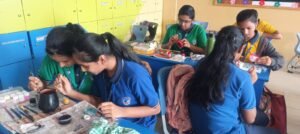
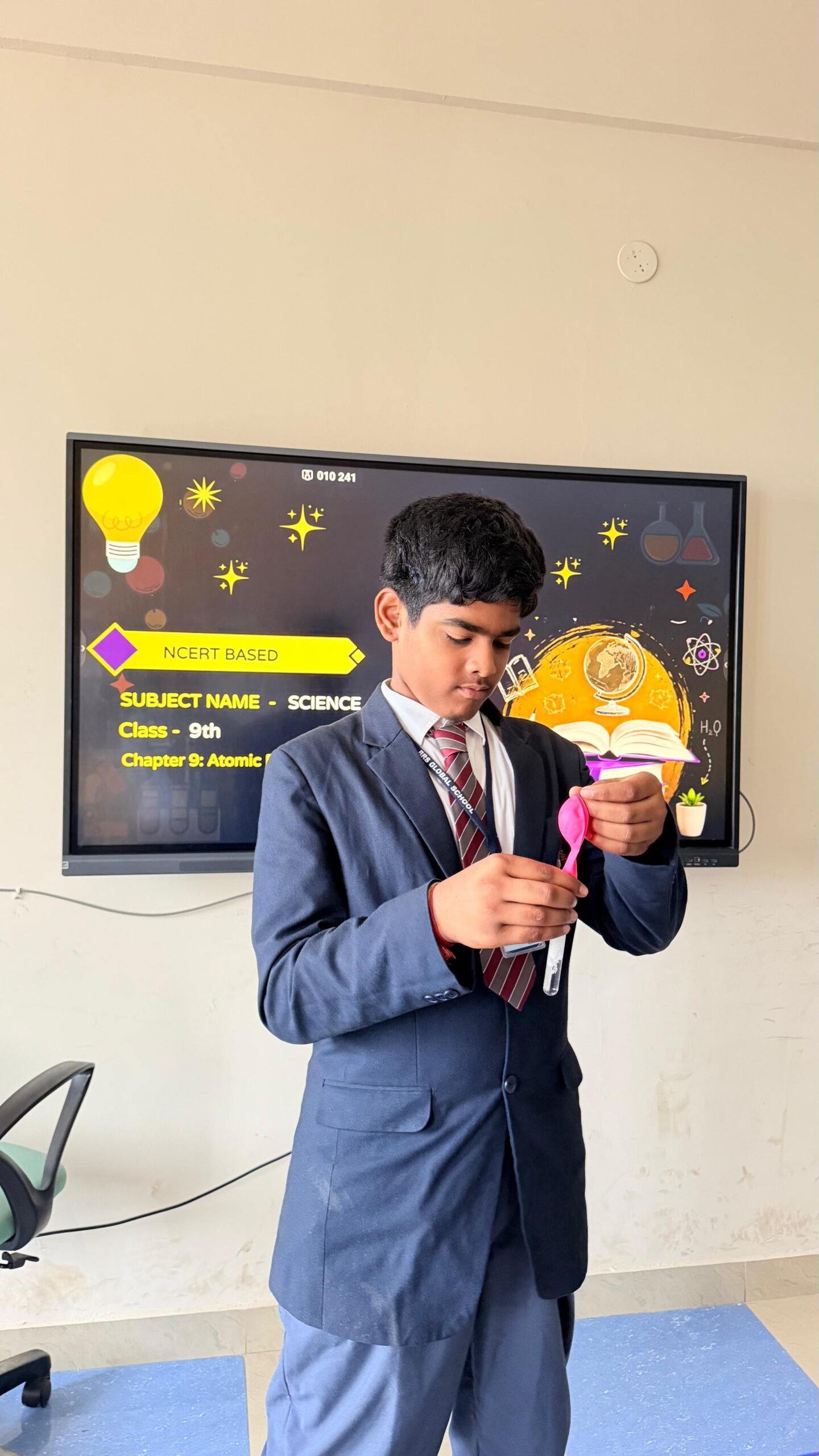
The Class 9 students participated in an experiment using baking soda and vinegar. They carefully handled the materials, followed the experimental setup, observed the reaction and collected the gas generated during the process.
The most visible outcome occurred when the balloon attached to the experimental setup inflated. This gave students direct visual evidence that a gas had been produced during the chemical reaction.
Rather than simply being told that carbon dioxide was formed, students could observe evidence of gas formation for themselves. This helped turn an abstract scientific explanation into a concrete learning experience.
Students also worked collaboratively during the investigation. Their participation involved observing the setup, working with the experimental apparatus and discussing what they saw.
The activity therefore combined conceptual Science learning with practical investigation, collaboration and scientific reasoning.
Student Learning Outcomes & Benefits
Understanding chemical reaction
Students observed how substances interact during a chemical reaction and understood that a reaction can result in the formation of a new substance.
Recognising carbon dioxide formation
The inflation of the balloon provided visible evidence of the gas produced during the baking soda and vinegar reaction. Students connected the observation with the formation of carbon dioxide gas.
Connecting theory with observation
The experiment enabled students to connect classroom concepts with an observable real-world demonstration.
Developing scientific observation
Students carefully observed the experimental setup and the changes taking place during the reaction.
Building measurement and recording skills
The activity provided opportunities to practise scientific processes such as measurement and recording.
Encouraging teamwork
Students collaborated while carrying out the practical investigation, helping them develop communication and teamwork.
Drawing scientific conclusions
Students were encouraged to use their observations as evidence and draw conclusions from the experiment.
Educational Philosophy / Institutional Value Alignment
At BRS Global School – Attibele Campus, experiential learning is an important part of creating meaningful academic experiences. The Class 9 Science experiment demonstrates this philosophy by giving students an opportunity to investigate rather than simply memorise.
The activity also reflects the school’s broader positioning as a premium CBSE learning environment that combines academic learning with experiential learning, leadership, sports, arts, life skills and confidence-building opportunities.
This approach encourages students to ask questions, examine evidence, work collaboratively and communicate their understanding—skills that are valuable both inside and outside the classroom.
Why This Matters for Student Development
Science education becomes more powerful when students understand why something happens rather than simply remembering what happens.
An experiment such as this allows students to:
• Observe scientific phenomena directly.
• Connect theoretical concepts with practical evidence.
• Develop curiosity and inquiry.
• Practise systematic observation.
• Work collaboratively.
• Record and interpret observations.
• Draw evidence-based conclusions.
• Build confidence in approaching scientific problems.
For parents looking for CBSE schools in Attibele, these learning experiences offer an important indication of how classroom concepts can be translated into practical learning.
Local Context Relevance
Located strategically along the Attibele–Sarjapur Road corridor, BRS Global School – Attibele Campus is positioned to serve families from Attibele and surrounding communities including Bidaraguppe, Anekal, Chandapura, Sarjapura, Dommasandra, Sompura, Hosur Road, Electronic City and Bommasandra. The school’s location is also accessible from nearby residential communities, apartment complexes and gated communities in South-East Bengaluru.
For parents researching schools in Attibele, CBSE schools in Attibele, schools in Chandapura, schools in Anekal, schools in Sarjapura or schools in Sarjapur Road, the Attibele campus offers a convenient location combined with a practical and holistic approach to education.
Families can explore the school’s Attibele presence through the BRS Global School | Pre-school, Primary School & High School | Attibele Google Business Profile:
BRS Global School – Attibele Google Business Profile
BRS Global School also has another branch on Sarjapur Road, serving families in areas such as Bellandur, HSR Layout, Harlur, Kasavanahalli, Carmelaram, Gunjur, Varthur and surrounding communities. The Sarjapur Road branch is represented as BRS Global School | Best CBSE School in Sarjapur Road.
Common Parent Questions
How does this activity support CBSE learning?
The activity strengthens Science learning by allowing students to investigate chemical reactions practically. Instead of relying only on theoretical explanations, students observe evidence, record findings and connect their observations with the Law of Conservation of Mass.
How does practical learning improve student confidence?
Practical activities give students opportunities to participate actively in the learning process. Handling materials, observing results and discussing conclusions can help students become more confident in applying scientific concepts.
What skills were developed during the activity?
Students developed observation, measurement, recording, teamwork and conclusion-drawing skills while investigating the chemical reaction.
Why should parents value hands-on Science learning?
Hands-on learning helps children connect classroom theory with observable experiences. It can make scientific concepts easier to understand and encourages curiosity, inquiry and evidence-based thinking.
Which students benefit from practical Science activities?
Students who learn effectively through observation, experimentation and active participation can particularly benefit. Practical investigations also provide opportunities for collaborative learners to work together.
How does the activity contribute to holistic development?
Beyond Science knowledge, the activity develops transferable skills including teamwork, observation, recording, measurement, reasoning and drawing conclusions.
Key Highlights
• Class: 9
• Subject: Science
• Learning focus: Chemical reactions
• Scientific principle: Law of Conservation of Mass
• Materials used: Baking soda and vinegar
• Key observation: Balloon inflation due to gas formation
• Gas demonstrated: Carbon dioxide
• Learning model: Hands-on experiential learning
• Skills developed: Observation, measurement, recording, teamwork and conclusion-drawing
• Educational approach: Interactive, inquiry-based and practical Science learning
Frequently Asked Questions (FAQs)
What Science experiment did Class 9 students conduct at BRS Global School Attibele?
Class 9 students conducted a baking soda and vinegar experiment to explore chemical reactions and observe the formation of carbon dioxide gas.
What did the balloon demonstrate in the Science activity?
The inflation of the balloon demonstrated that gas was produced during the reaction. The collected gas was identified as carbon dioxide within the learning activity.
What is the educational value of the baking soda and vinegar experiment?
The experiment provides students with a simple visual demonstration of gas formation and helps them connect chemical reaction concepts with direct observation.
How does BRS Global School use experiential learning?
BRS Global School incorporates practical and interactive learning experiences that encourage students to understand concepts through observation, investigation and participation.
Is BRS Global School located near Attibele and Sarjapur Road?
Yes. The Attibele campus is strategically located on the Attibele–Sarjapur Road corridor with accessibility from Attibele, Anekal, Chandapura, Sarjapur, Sarjapura and Hosur Road, as well as nearby communities.
Which areas can access BRS Global School – Attibele Campus?
The school serves families in and around Attibele, Bidaraguppe, Anekal, Chandapura, Sarjapura, Dommasandra, Sompura, Electronic City, Bommasandra and nearby South-East Bengaluru communities.
Does BRS Global School have another branch?
Yes. BRS Global School has another branch on Sarjapur Road, serving families across several surrounding South-East Bengaluru neighbourhoods.
Conclusion
The Class 9 Science activity at BRS Global School – Attibele Campus demonstrates how meaningful learning can happen when students are given opportunities to observe, investigate and learn by doing. Through a simple baking soda and vinegar experiment, students explored chemical reactions, observed carbon dioxide formation and connected practical evidence with scientific concepts.
For parents exploring CBSE schools in Attibele, schools in Chandapura, schools in Anekal or schools along the Attibele–Sarjapur Road corridor, experiential learning is an important part of choosing an educational environment that supports both academic understanding and broader student development.
To learn more about the Attibele campus, explore the school’s Google Business Profile:
.
BRS Global School | Pre-school, Primary School & High School | Attibele
You can also explore the school’s academic and location-focused pages:
Best Schools in Attibele – BRS Global School