
Introduction: Making Mathematics Interactive Through Abacus Learning
Mathematics is an important part of a child’s academic development. From recognising numbers and understanding basic arithmetic to solving increasingly complex problems, mathematical learning helps children develop logical thinking, reasoning and problem-solving abilities.
For young learners, developing a strong foundation in mathematics requires more than memorising numbers and formulas. Children benefit from opportunities to explore mathematical concepts through practical activities, visual learning and regular practice.
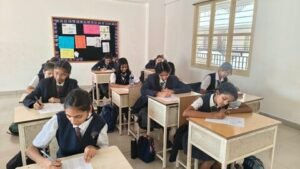
At BRS Global School, Kasavanahalli, Abacus training is provided for students of Grades 1 to 4 to support the development of essential mathematical skills.
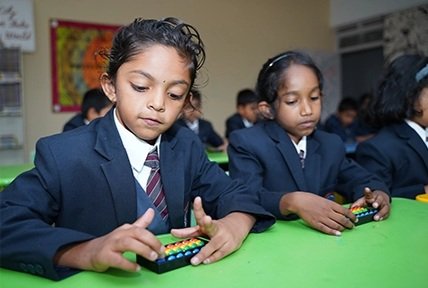
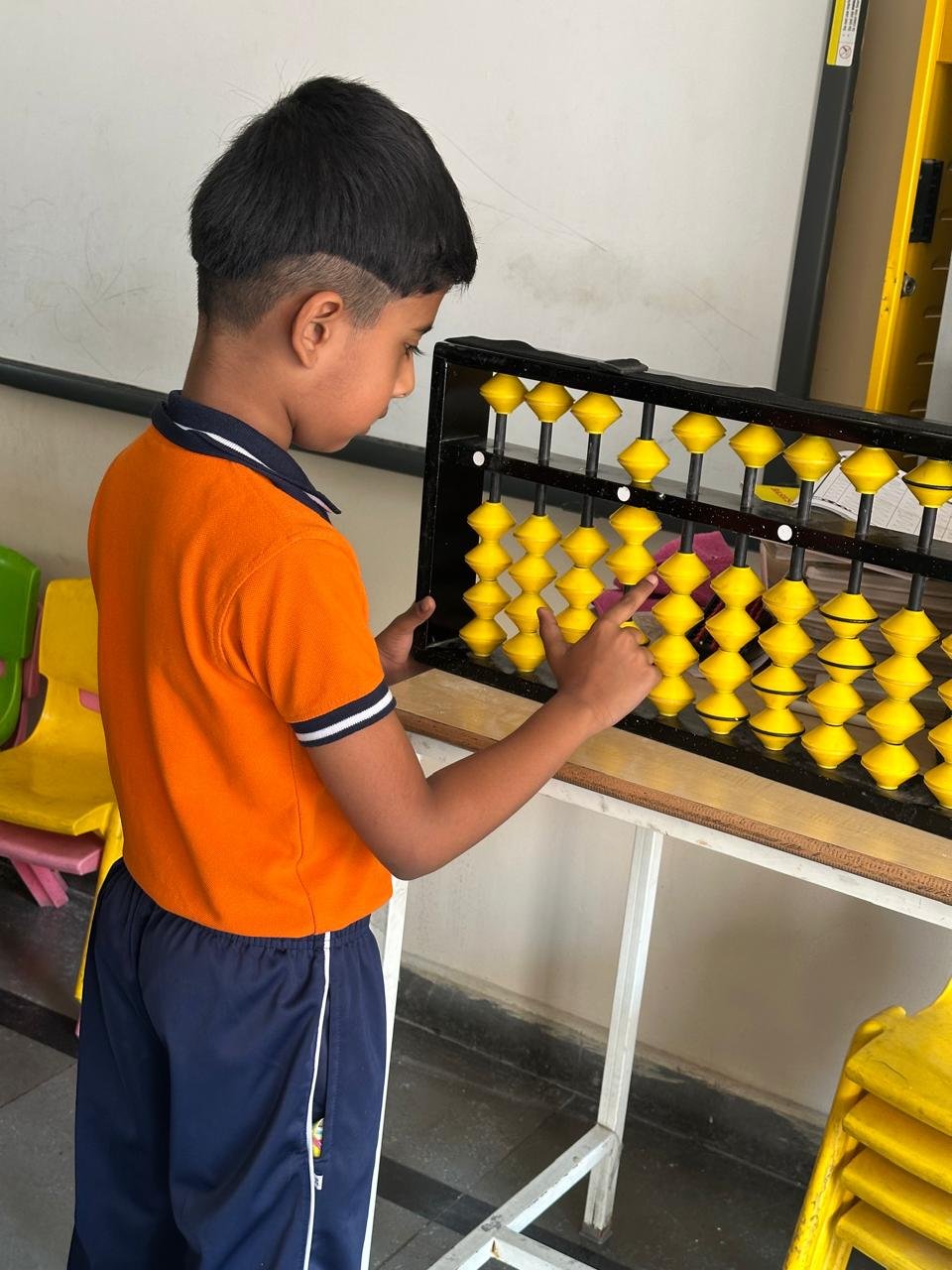
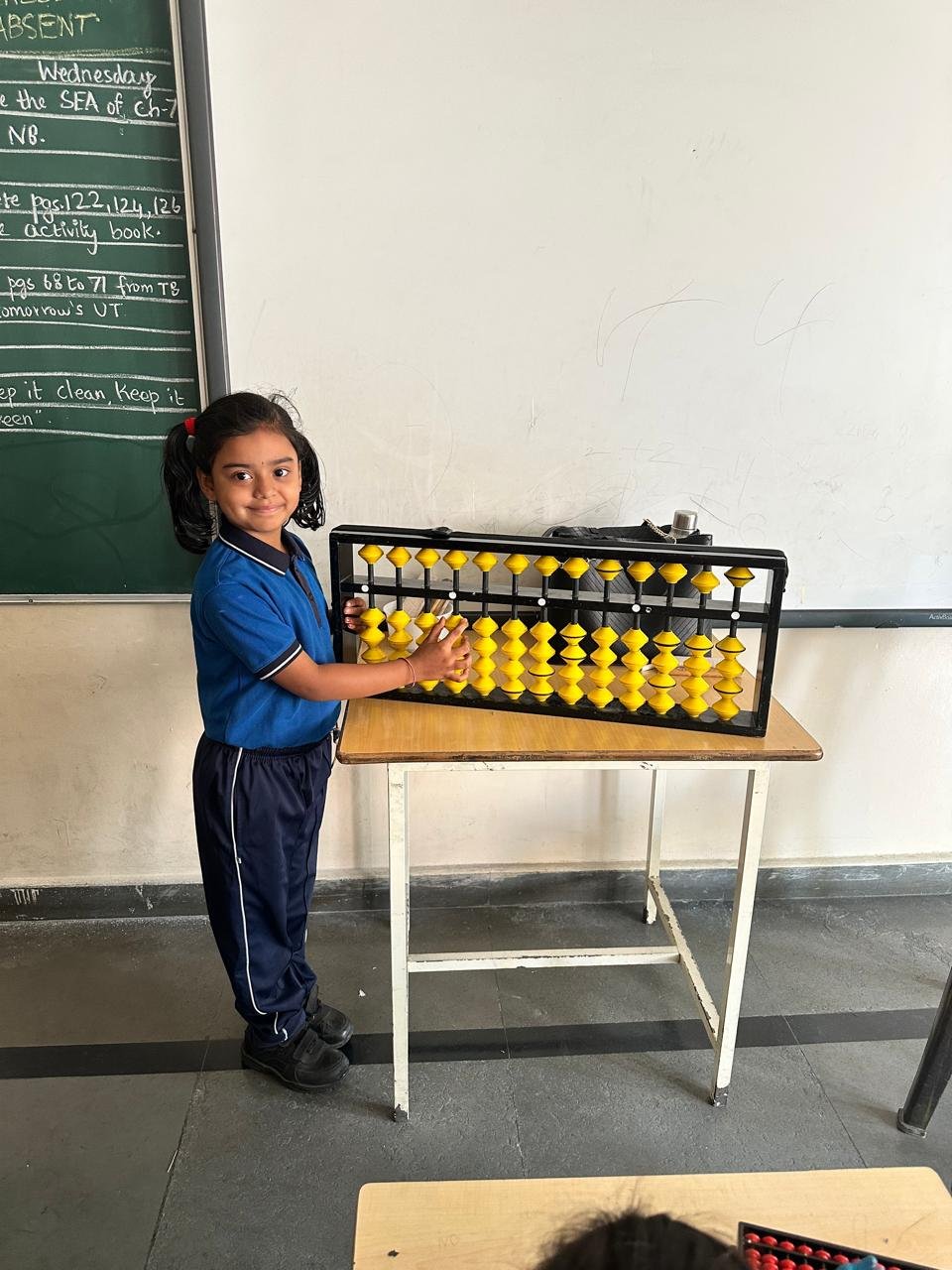
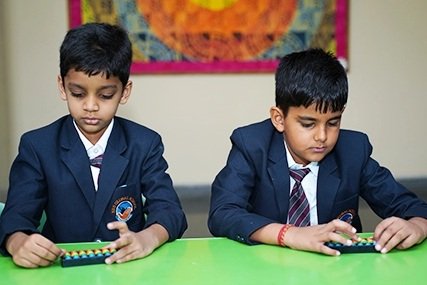
The programme introduces children to the traditional abacus, a counting tool that uses movable beads to represent numbers and perform arithmetic calculations. Through guided practice, students learn to understand numerical concepts using visual and hands-on methods.
Abacus learning also focuses on developing concentration, memory, visualisation, listening abilities and analytical thinking.
For parents exploring schools in Sarjapur Road, understanding how a school supports foundational mathematical development is an important part of evaluating its academic approach.
Event Overview: Abacus Training at BRS Global School
Abacus training is designed to make mathematical learning more interactive and engaging for primary school students.
Programme : Abacus Training
School : BRS Global School
Campus : Sarjapur Road, Kasavanahalli
Classes : Grades 1–4
Learning Method : Visual and hands-on learning
Learning Tool : Traditional Abacus
Focus Areas : Mental maths, concentration, memory and analytical thinking
Learning Approach : Regular practice and interactive exercises
The programme provides students with opportunities to understand mathematical concepts through practical learning rather than relying entirely on conventional calculation methods.
By working with the abacus, children become familiar with numerical representation and develop an understanding of how numbers can be manipulated to perform arithmetic operations.
What Happens During Abacus Training?
Abacus training introduces students to mathematics through a structured and practical learning approach.
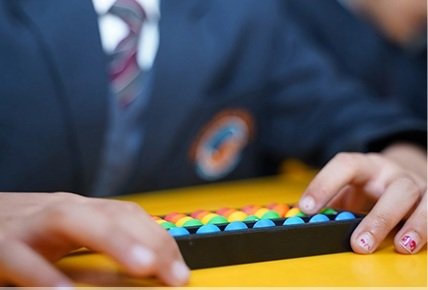
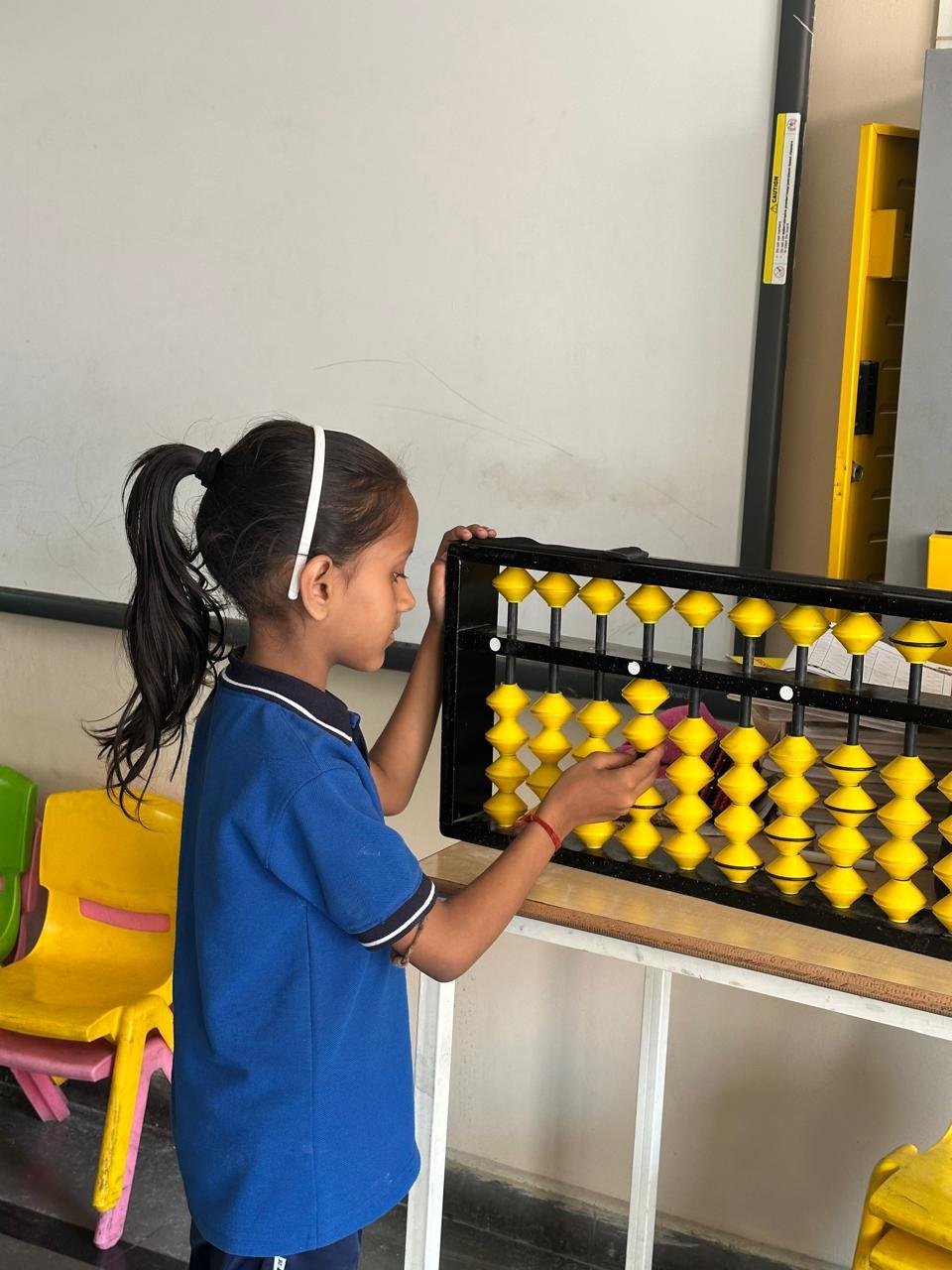
The traditional abacus consists of movable beads arranged on rods. Each bead represents a numerical value, allowing children to perform calculations by moving the beads according to different mathematical operations.
As students become familiar with the tool, they gradually develop the ability to visualise bead movements and work towards performing calculations mentally.
The programme supports several important areas of learning.
Understanding Numbers Through Visual Learning
Visual learning plays an important role in helping young children understand abstract mathematical concepts.
The abacus provides a visual representation of numbers, allowing students to understand how numerical values change when beads are moved.
Instead of viewing numbers only as written symbols, children can observe and practise how numbers are formed and represented.
This hands-on approach helps make mathematical concepts more accessible to young learners.
Developing Mental Calculation Skills
One of the important objectives of Abacus training is to strengthen mental calculation abilities.
Students practise arithmetic operations using the abacus and gradually develop the ability to visualise calculations.
With regular practice, they become more familiar with numerical patterns and learn to approach calculations systematically.
The focus is on developing accuracy, understanding and confidence while working with numbers.
Improving Concentration and Memory
Abacus activities require students to pay attention to numerical values, bead positions and calculation steps.
This encourages children to focus on the task and remember the sequence of movements involved in performing calculations.
Regular engagement with these activities provides opportunities to practise concentration and memory.
Enhancing Visualisation and Listening Abilities
Visualisation is an important part of Abacus learning.
As children practise, they begin to imagine the movement of beads and the representation of numbers in their minds.
Students also develop listening abilities by following instructions, understanding numerical information and responding to guided exercises.
These skills support their participation in different classroom learning activities.
Strengthening Analytical and Logical Thinking
Mathematical learning involves identifying patterns, understanding relationships between numbers and choosing appropriate methods to solve problems.
Abacus exercises encourage students to think through calculations and understand the steps involved in reaching an answer.
This helps them practise analytical thinking and develop a more systematic approach to mathematical challenges.
What Skills Do Students Develop Through Abacus Training?
Abacus training supports the development of mathematical abilities as well as several cognitive and learning skills.
Mental Mathematics
Students practise calculations and develop familiarity with numerical operations. This supports their ability to approach mathematical problems with greater confidence.
Concentration
Following calculation sequences and working with numerical values encourages students to remain attentive during learning activities.
Memory
Remembering bead positions, number combinations and calculation steps provides opportunities to exercise memory.
Visualisation
Students learn to represent numbers and imagine bead movements mentally, strengthening their visual understanding of mathematical concepts.
Listening Skills
Following instructions and responding to guided exercises helps students practise active listening.
Analytical Thinking
Working through calculations encourages children to identify patterns, understand numerical relationships and approach problems logically.
Confidence in Mathematics
Regular practice helps students become more comfortable with numbers and develop a positive attitude towards mathematical learning.
How Does Abacus Training Support CBSE Mathematics Learning?
Abacus training complements the mathematical foundation developed through the CBSE curriculum.
Primary school mathematics introduces children to important concepts such as numbers, place value, addition, subtraction, multiplication, division and numerical relationships.
Abacus activities provide another way for children to practise and understand these concepts.
The connection between Abacus learning and classroom mathematics can be understood through the following examples:
Mathematical Learning Area How Abacus Practice Supports It
| Number recognition | Helps students understand numerical representation |
|---|---|
| Place value | Provides a visual method of representing numbers |
| Addition | Encourages practical calculation exercises |
| Subtraction | Helps students understand changes in numerical values |
| Multiplication | Provides opportunities to practise number combinations |
| Mental mathematics | Encourages visualisation and mental calculation |
| Problem-solving | Promotes systematic thinking and calculation practice |
The programme complements classroom instruction by providing students with additional opportunities to practise mathematical concepts.
It should be viewed as a supportive learning method rather than a replacement for the wider mathematics curriculum.
Why Is Abacus Learning Important During Primary Education?
The primary school years are an important period for developing foundational academic skills.
During this stage, children gradually strengthen their understanding of numbers, develop calculation abilities and become familiar with different ways of solving problems.
Abacus training offers a practical learning environment where students can explore mathematical concepts through activities.
Building a Strong Foundation in Mathematics
A clear understanding of numbers and arithmetic is essential for progressing to more advanced mathematical concepts.
Abacus activities give children additional opportunities to practise basic calculations and develop familiarity with numerical relationships.
Encouraging Learning Through Practice
Children learn effectively when they have opportunities to practise what they are taught.
Regular Abacus exercises help students become familiar with calculation methods and improve their comfort with mathematical activities.
Developing Independent Thinking
Abacus learning encourages children to work through calculations step by step.
This gives them opportunities to think independently, understand numerical patterns and identify appropriate calculation methods.
Making Mathematics More Engaging
Practical learning tools can make mathematical activities more interactive.
Using an abacus gives children an opportunity to participate actively in the learning process rather than simply observing calculations.
Abacus Training and Holistic Student Development
Education involves developing academic knowledge alongside the abilities needed for everyday learning and personal growth.
Abacus training contributes to this approach by encouraging children to practise different skills through mathematical activities.
The programme supports:
• Cognitive development: Opportunities to practise memory, concentration and visualisation.
• Numerical understanding: Familiarity with numbers and arithmetic operations.
• Logical reasoning: Developing a systematic approach to calculations.
• Listening abilities: Understanding and following instructions.
• Self-confidence: Becoming more comfortable with mathematical activities.
• Learning discipline: Developing consistency through regular practice.
These abilities are useful not only in mathematics but also in other classroom activities that require attention, reasoning and problem-solving.
BRS Global School, Sarjapur Road: Encouraging Learning Beyond Textbooks
Located in Kasavanahalli along Sarjapur Road, BRS Global School | Best CBSE School in Sarjapur Road provides CBSE education from pre-primary to Grade 12.
The school recognises the importance of combining academic learning with activities that encourage students to explore their interests and develop essential abilities.
Abacus training for Grades 1–4 is one such initiative that supports foundational mathematical development through interactive learning.
Along with classroom academics, students have opportunities to participate in different co-curricular and skill-development activities that contribute to their overall educational experience.
For parents comparing CBSE schools in Sarjapur Road, it is useful to consider how a school supports foundational learning, encourages participation and provides opportunities for students to develop their abilities.
Conveniently Located for Families Across Sarjapur Road and Nearby Areas
The Sarjapur Road campus is located in Kasavanahalli, Bengaluru, and is accessible to families from several residential neighbourhoods and employment corridors.
Nearby areas include:
• Sarjapur Road
• Bellandur
• Kasavanahalli
• Kaikondrahalli
• Harlur and Haralur Road
• Hosa Road
• Carmelaram
• Junnasandra
• Doddakannelli
• Dommasandra
• Kodathi
• Gunjur
• Varthur
• Choodasandra
• Rayasandra
• HSR Layout
• Iblur
• Marathahalli
• Electronic City
• Kudlu Gate
• Panathur
• Balagere
• Mullur
• Naganathapura
• Chikkakannalli
The campus is also accessible from employment hubs along the Sarjapur Road and Outer Ring Road corridors, including RMZ Ecospace, RMZ Ecoworld, Embassy TechVillage, RGA Techpark and Pritech Park SEZ.
School transport services are available across several surrounding areas. Parents can contact the admissions team to confirm route and stop availability.
Campus: BRS Global School, Sarjapur Road, Kasavanahalli, Bengaluru.
Google Business Profile: – https://share.google/2oEno2EtFtY7eyP2B
Common Parent Questions About Abacus Training
How does Abacus training help primary school children?
Abacus training helps primary school children develop mathematical skills through visual and hands-on exercises. It encourages mental calculation, concentration, memory, visualisation and logical thinking while making numerical learning more interactive.
At what age can children start learning Abacus?
Abacus programmes are commonly introduced during the primary school years when children begin developing their understanding of numbers and arithmetic. At BRS Global School, the training programme is provided for students from Grades 1 to 4.
Does Abacus improve mental mathematics?
Abacus practice helps students become familiar with numerical operations and develop the ability to visualise calculations. With regular practice, children can improve their mental calculation skills and become more confident when working with numbers.
How does Abacus improve concentration?
Abacus exercises require students to focus on numerical values, remember calculation steps and follow instructions. Regular participation provides opportunities to practise attention and concentration.
Is Abacus useful for CBSE students?
Yes. Abacus can complement CBSE mathematics learning by providing additional practice with numbers, arithmetic operations and numerical relationships. It supports foundational mathematical understanding.
What is the difference between Abacus and regular mathematics?
Regular mathematics covers a broad range of concepts, including arithmetic, geometry, measurement and problem-solving. Abacus is a specific learning method that uses a counting tool to practise calculations and develop mental mathematics abilities.
Why should parents encourage Abacus learning?
Parents can encourage Abacus learning because it offers children an additional way to explore mathematics through practical activities. It provides opportunities to develop calculation skills, concentration, memory and confidence.
Key Highlights of Abacus Training at BRS Global School
• Abacus training is provided for students of Grades 1–4.
• Students learn through the traditional abacus tool.
• The programme follows a visual and hands-on learning approach.
• It focuses on developing mental calculation abilities.
• Students practise concentration and memory.
• Activities encourage visualisation and listening skills.
• The programme strengthens analytical and logical thinking.
• Regular exercises support numerical understanding.
• Abacus learning complements classroom mathematics.
• The programme encourages confidence in handling numbers.
Frequently Asked Questions (FAQs)
What is Abacus training at BRS Global School?
Abacus training at BRS Global School is a mathematical learning programme for Grades 1–4. It uses the traditional abacus tool to help students develop mental calculation, concentration, memory and problem-solving skills.
What are the main benefits of Abacus learning for children?
The main benefits include improved mental calculation abilities, concentration, memory, visualisation, listening skills and analytical thinking. It also helps children develop confidence in mathematics.
How does Abacus help children understand mathematics?
Abacus uses movable beads to represent numbers and perform arithmetic operations. This visual and practical approach helps children understand numerical concepts and practise calculations.
Does Abacus training help improve memory and concentration?
Abacus activities involve remembering numerical values, following calculation steps and focusing on bead movements. Regular practice provides opportunities to strengthen memory and concentration.
Which grades are included in the Abacus programme at BRS Global School?
The Abacus training programme at BRS Global School, Sarjapur Road, is provided for students from Grades 1 to 4.
Is Abacus learning connected to the CBSE curriculum?
Abacus training complements CBSE mathematics by providing additional practice in numerical understanding and arithmetic operations. It supports foundational mathematical learning.
Where is BRS Global School’s Sarjapur Road campus located?
BRS Global School’s Sarjapur Road campus is located in Kasavanahalli, Bengaluru. It is accessible to families from Bellandur, Harlur, Hosa Road, Carmelaram, Gunjur, Varthur, Dommasandra and other nearby areas.
Conclusion: Building Mathematical Confidence Through Abacus Learning
Abacus training provides young learners with an engaging way to explore mathematics and strengthen essential numerical abilities.
At BRS Global School, Sarjapur Road, the programme for Grades 1–4 focuses on developing mental calculation skills, concentration, memory, visualisation, listening abilities and analytical thinking through visual and hands-on learning.
By introducing practical mathematical activities during the primary school years, the programme supports children’s understanding of numbers and encourages a positive approach towards learning mathematics.
Looking for a CBSE school in Sarjapur Road that encourages academic development alongside skill-based learning? Explore BRS Global School, Sarjapur Road, and contact our admissions team to learn more about the curriculum and learning opportunities offered at the campus.
Explore our Campus:
Attibele Branch:
https://share.google/iFhJaeGo8wkgOZ1Y5
Sarjapur Road Branch: