
Introduction
Environmental awareness is an essential part of nurturing responsible, thoughtful, and future-ready learners. At BRS Global School – Pre-school, Primary School & High School – Attibele, environmental education goes beyond classroom discussions by encouraging students to understand nature through observation, participation, and hands-on experiences.
The Eco Science Club activity, themed “Introduction to Eco Club and Environment,” provided students with an engaging opportunity to explore environmental conservation, biodiversity, sustainable practices, and plant cultivation. Conducted over three periods, the programme combined conceptual learning with collaborative activities and practical seed sowing.
Through this initiative, students were encouraged to recognise their role in protecting the environment and to develop habits that support a cleaner, greener, and more sustainable school campus.
Event Overview
Event Name : Eco Science Club Activity
Theme : Introduction to Eco Club and Environment
Campus : BRS Global School Attibele
Duration : 3 Periods
Activity Focus : Environmental Awareness and Conservation
Key Concepts : Biodiversity, Reduce, Reuse, Recycle, Germination
Practical Activity : Seed Sowing and Cultivation
Seeds Used : Methi (Fenugreek) and Coriander
Eco Science Club In-charges : Girish Babu K and Archana R
What Happened During the Eco Science Club Activity?
The Eco Science Club programme was organised through three structured learning periods, each designed to strengthen students’ understanding of environmental responsibility.
Period 1: Introduction to the Eco Science Club and Environment
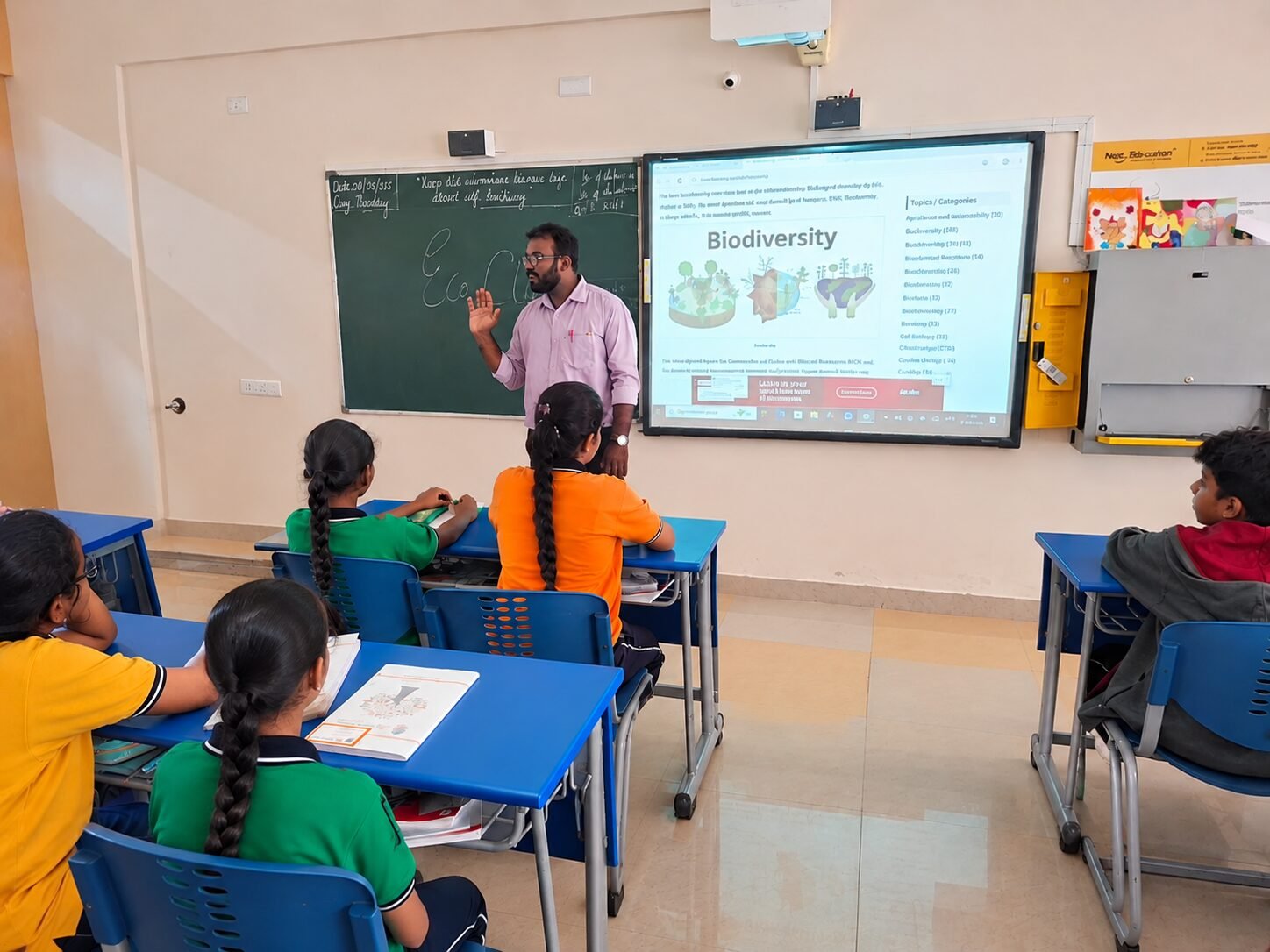
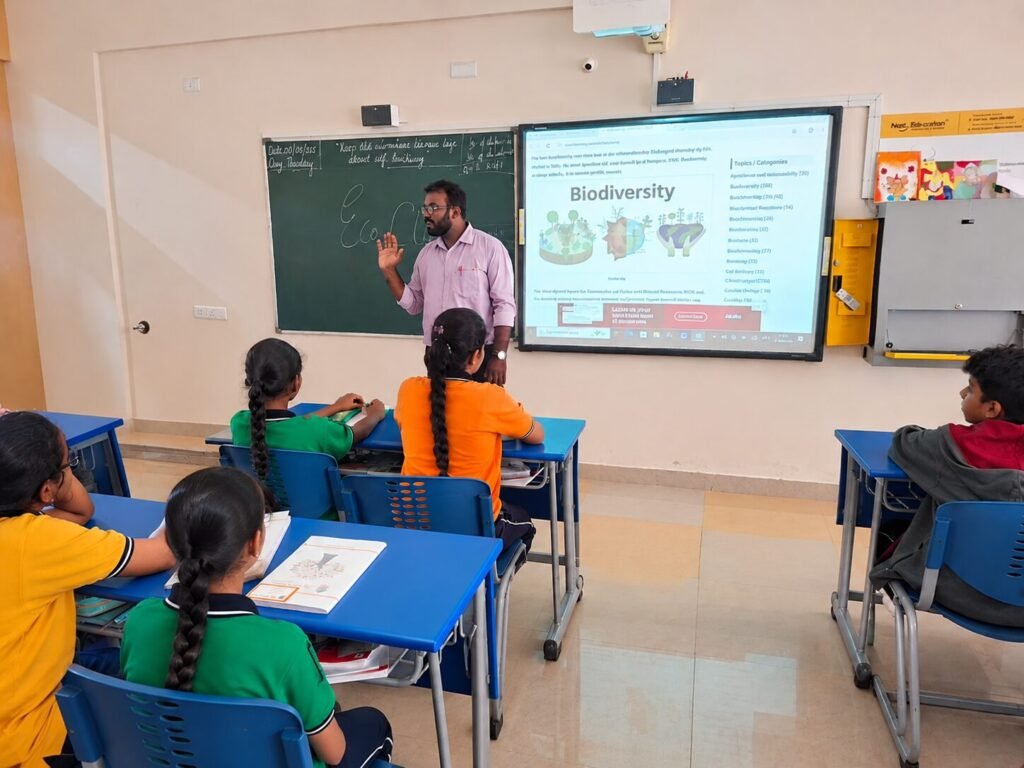
The first period introduced students to the Eco Science Club, its objectives, and its role in promoting environmental conservation.
Students explored the importance of biodiversity and learned about the 3Rs—Reduce, Reuse, and Recycle. The discussion highlighted the importance of protecting the environment and adopting sustainable practices in everyday life.
Through this introductory session, students were encouraged to understand how individual choices and collective actions can contribute to environmental protection.
Period 2: Preparation of Eco Club Rules
The second period encouraged students to become active contributors to environmental responsibility within the school community.
Students collaboratively prepared rules for the Eco Science Club, discussing practical ways to maintain cleanliness and promote sustainability on the school campus.
The discussions included:
- • Maintaining cleanliness across the school campus.
- • Avoiding plastic waste.
- • Conserving water and electricity.
- • Protecting plants and greenery.
- • Keeping the school surroundings clean and green.
This student-participatory activity encouraged teamwork, shared responsibility, and environmental awareness. By taking part in preparing the rules, students gained a better understanding of how collective efforts can support a sustainable school environment.
Period 3: Seed Sowing and Cultivation
The third period transformed environmental learning into a practical experience.
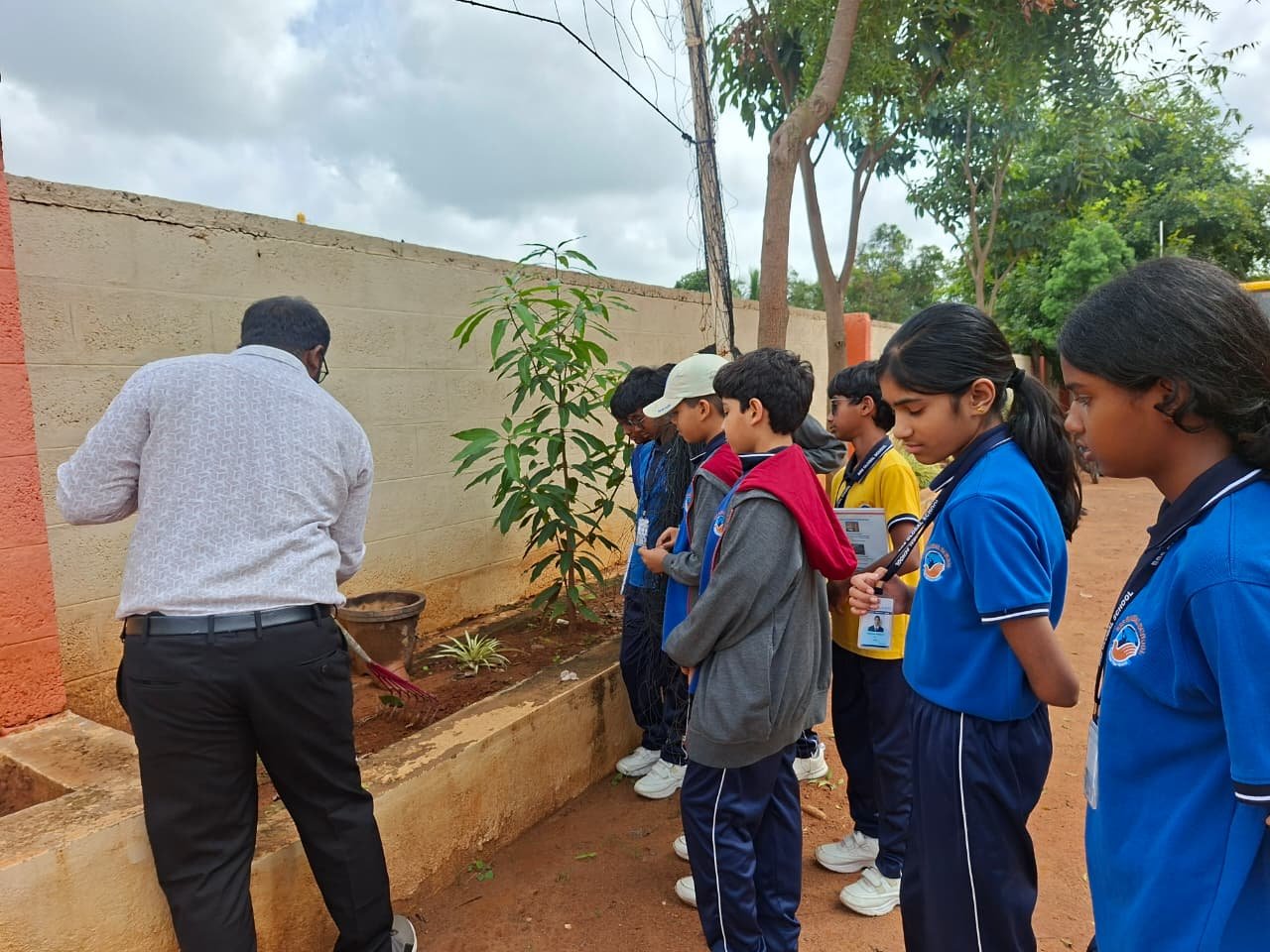
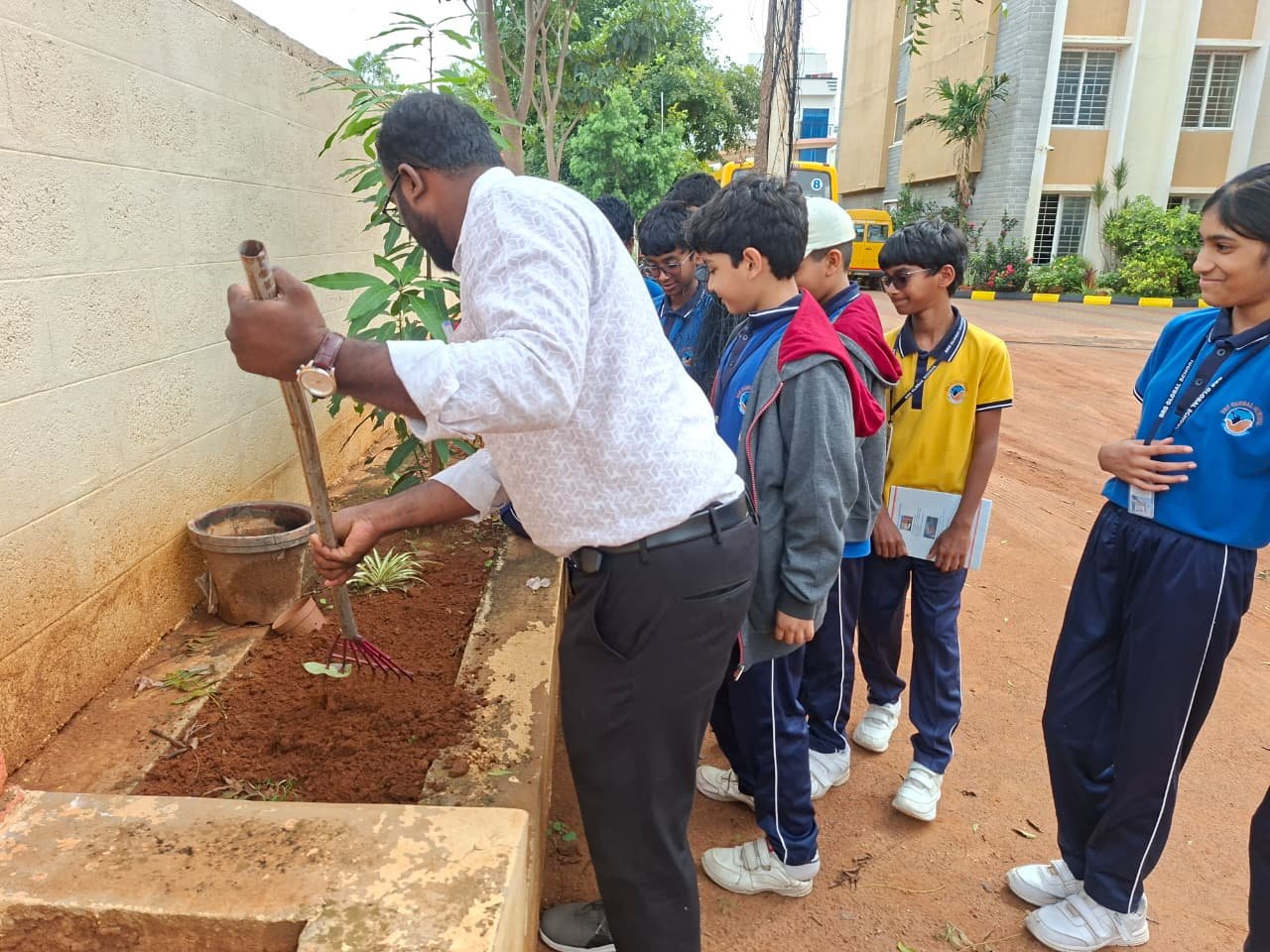
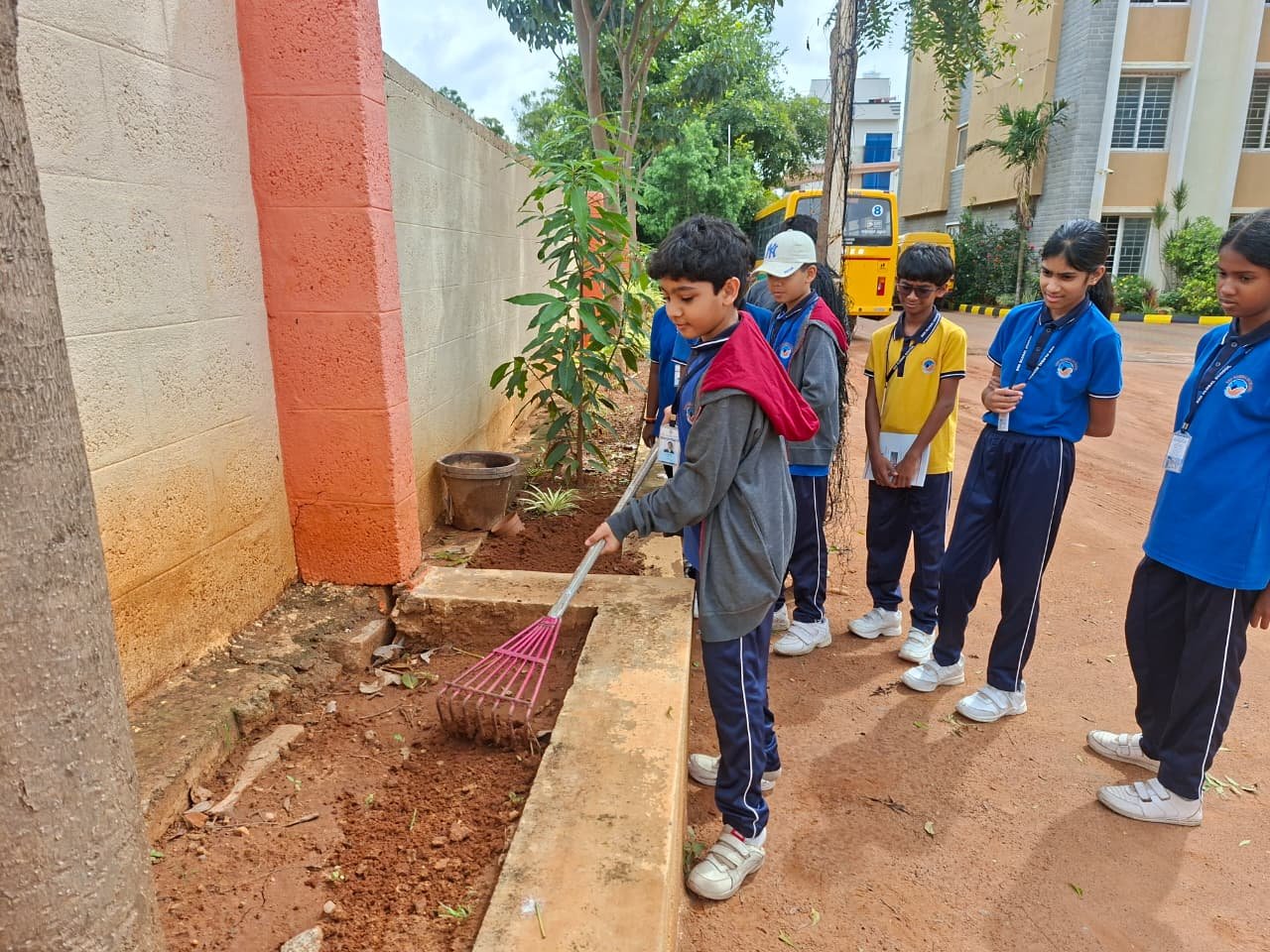
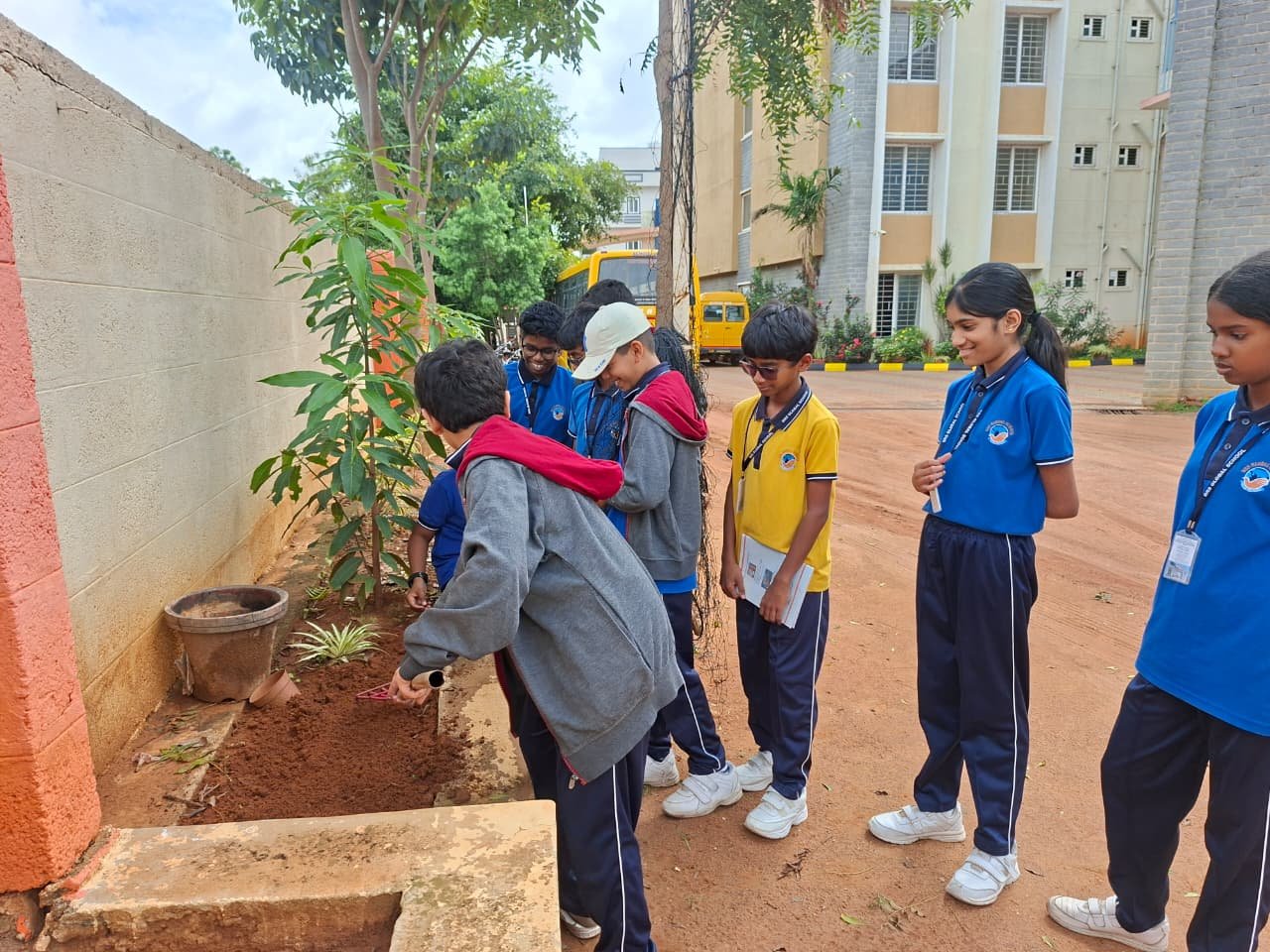
Students participated in sowing methi (fenugreek) and coriander seeds directly into the soil near the school compound wall. They learned the basic steps involved in seed sowing, watering, and caring for plants.
The activity introduced students to the process of germination and the importance of nurturing plants and greenery. Through this hands-on experience, learners could connect scientific concepts with the natural world around them.
The seed-sowing activity also encouraged students to recognise the value of patience, observation, and consistent care in plant cultivation.
Student Learning Outcomes and Benefits
The Eco Science Club activity at BRS Global School Attibele supported several important educational and developmental outcomes.
Environmental Awareness
Students developed an understanding of environmental conservation, biodiversity, and the importance of adopting sustainable habits in their daily lives.
Understanding the 3Rs
The programme introduced students to Reduce, Reuse, and Recycle as practical approaches to minimising waste and promoting responsible resource use.
Scientific Understanding
Through seed sowing and cultivation, students gained practical exposure to germination, watering, and plant care.
Teamwork and Collaboration
The preparation of Eco Club rules encouraged students to share ideas, participate in discussions, and work collaboratively towards a common environmental goal.
Responsibility and Sustainable Habits
Students were encouraged to take responsibility for maintaining cleanliness, conserving resources, and protecting plants and greenery.
Experiential Learning
The practical activity helped students connect theoretical environmental concepts with real-world applications.
Educational Philosophy and Institutional Value Alignment
At BRS Global School – Pre-school, Primary School & High School – Attibele, meaningful education involves nurturing knowledge, practical understanding, values, and responsible behaviour.
The Eco Science Club activity reflects the school’s emphasis on experiential learning and holistic development. Rather than limiting environmental education to textbook concepts, students were encouraged to participate in discussions, collaboratively formulate rules, and engage in practical cultivation.
The activity also reflects the educational value of student participation. Students were given opportunities to contribute ideas, understand shared responsibilities, and practise environmentally conscious behaviour.
These experiences help build a learning environment where scientific understanding is connected with life skills, values, and responsible citizenship.
Why Does Environmental Learning Matter for Student Development?
Environmental learning helps students understand the relationship between human activities and the natural world.
Activities such as seed sowing, waste reduction discussions, and environmental rule-making can support:
• Scientific curiosity and observation.
• Responsible decision-making.
• Collaborative problem-solving.
• Awareness of biodiversity.
• Resource conservation habits.
• Respect for nature.
• Practical application of classroom learning.
For students, environmental responsibility becomes more meaningful when they are encouraged to practise it rather than simply learn about it.
The Eco Science Club activity provided a foundation for students to understand that sustainability begins with simple, consistent actions.
Local Context Relevance: Environmental Learning in Attibele and South-East Bengaluru
BRS Global School – Pre-school, Primary School & High School – Attibele is situated along the growing Attibele–Sarjapur educational and residential corridor of South-East Bengaluru.
Families from Attibele, Attibelle, Bidaraguppe, Sarjapura, Anekal, Chandapura, Dommasandra, Jigani, Sompura, Hosur Road, Electronic City, and Bommasandra seek educational experiences that combine academic learning with practical skills and responsible values.
Environmental awareness is particularly relevant to communities experiencing residential and industrial growth. Learning about waste reduction, water conservation, biodiversity, and plant cultivation can help children develop an understanding of their responsibilities towards the surroundings in which they live.
The school also serves families connected to nearby industrial and residential hubs, including the Attibele Industrial Area, Bommasandra Industrial Area, Jigani Industrial Estate, and Electronic City.
For parents exploring schools in Attibele, CBSE schools in Chandapura, schools in Anekal, or schools near Sarjapur Road, environmental education is one aspect of a broader learning experience that supports responsible and well-rounded development.
Explore BRS Global School Attibele:
Another Branch of BRS Global School: Sarjapur Road
BRS Global School also has another branch on Sarjapur Road, serving families from Bellandur, Hosa Road, HSR Layout, Kodathi, Gunjur, Varthur, Kaikondrahalli, Kasavanahalli, Carmelaram, Harlur, Rayasandra, Doddakannelli, Choodasandra, Junnasandra, and surrounding communities.
The Sarjapur Road branch shares the broader institutional commitment to academic learning and holistic student development.
Common Parent Questions
How does the Eco Science Club activity support CBSE learning?
The activity connects scientific concepts such as biodiversity, germination, plant cultivation, and environmental conservation with practical experiences. It encourages observation, participation, application of knowledge, and responsible behaviour, supporting experiential and holistic learning.
How does environmental education improve student responsibility?
Environmental education encourages students to recognise the consequences of everyday actions. Preparing Eco Club rules, conserving resources, and caring for plants help students practise responsibility through meaningful activities.
What skills were developed during the activity?
Students developed environmental awareness, teamwork, collaboration, practical plant cultivation skills, scientific understanding, and a sense of responsibility towards nature.
How does seed sowing help students learn science?
Seed sowing allows students to observe and understand the basic process of germination. By learning about watering and plant care, students connect scientific concepts with practical experiences.
Why should parents value Eco Science Club activities?
Eco Science Club activities help children develop responsible habits and understand the importance of environmental conservation. They complement academic learning by encouraging practical application, participation, and values-based development.
Which students benefit from Eco Science Club activities?
Students who participate in environmental learning activities benefit from opportunities to explore nature, practise scientific observation, develop collaboration skills, and understand sustainable living. Such activities can be valuable across school levels when adapted to students’ learning needs.
Key Highlights of the Eco Science Club Activity
• Introduction to the Eco Science Club and its objectives.
• Awareness of biodiversity and environmental conservation.
• Learning about Reduce, Reuse, and Recycle.
• Collaborative preparation of Eco Club rules.
• Discussions on cleanliness, plastic waste reduction, and resource conservation.
• Hands-on sowing of methi and coriander seeds.
• Practical understanding of germination and plant care.
• Development of teamwork and environmental responsibility.
• Integration of theoretical learning with practical experiences.
Frequently Asked Questions (FAQs)
What is the Eco Science Club at BRS Global School Attibele?
The Eco Science Club is a student-focused initiative that promotes environmental awareness, conservation, and sustainable practices through interactive discussions and practical activities.
What was the theme of the Eco Science Club activity?
The theme was “Introduction to Eco Club and Environment.” The programme introduced students to environmental conservation, biodiversity, the 3Rs, eco-friendly school rules, and seed sowing.
What are the 3Rs of environmental conservation?
The 3Rs stand for Reduce, Reuse, and Recycle. They encourage individuals to minimise waste, use resources responsibly, and recycle suitable materials to support environmental sustainability.
What seeds were used in the Eco Science Club activity?
Students sowed methi (fenugreek) and coriander seeds directly into the soil near the school compound wall as part of the practical seed-sowing and cultivation session.
What is the importance of seed sowing activities in school?
Seed sowing activities provide practical exposure to germination, watering, and plant care. They encourage scientific curiosity, observation, patience, and responsibility towards plants.
How does the Eco Science Club encourage sustainable living?
The club promotes sustainable living by encouraging students to reduce plastic waste, conserve water and electricity, protect plants, maintain cleanliness, and adopt environmentally responsible habits.
Where can parents learn more about BRS Global School Attibele?
Parents can explore the BRS Global School Attibele campus through its Google Business Profile and official website to learn more about the school’s educational environment, activities, and admissions.
Attibele Campus Google Business Profile:
Conclusion: Nurturing Environmental Responsibility Through Meaningful Learning
The Eco Science Club activity at BRS Global School – Pre-school, Primary School & High School – Attibele successfully brought together environmental awareness, student participation, and hands-on learning.
From understanding biodiversity and the 3Rs to preparing eco-friendly school rules and sowing methi and coriander seeds, students experienced how environmental conservation can become a part of everyday school life.
The programme encouraged learners to appreciate nature, develop responsible habits, and recognise the importance of collective efforts in maintaining a clean, green, and sustainable environment.
At BRS Global School Attibele, experiential learning initiatives such as the Eco Science Club contribute to an educational environment that values academic understanding, practical skills, and responsible citizenship.
Looking for a CBSE School in Attibele?
Parents seeking a learning environment that combines academic excellence, experiential learning, life skills, and holistic development are invited to explore BRS Global School – Pre-school, Primary School & High School – Attibele.
Discover the campus and learn more about the school’s educational approach.
Official Website: https://brsglobalschool.edu.in/best-schools-in-attibele/
Explore our Campus:
Attibele Branch:
https://share.google/iFhJaeGo8wkgOZ1Y5
Sarjapur Road Branch: