Introduction
Social Science becomes more meaningful when students can connect what they read in a textbook with the world they see around them. Concepts such as government, democracy, governance and public institutions are important parts of civic understanding, but they can sometimes seem abstract when learned only through classroom discussion.
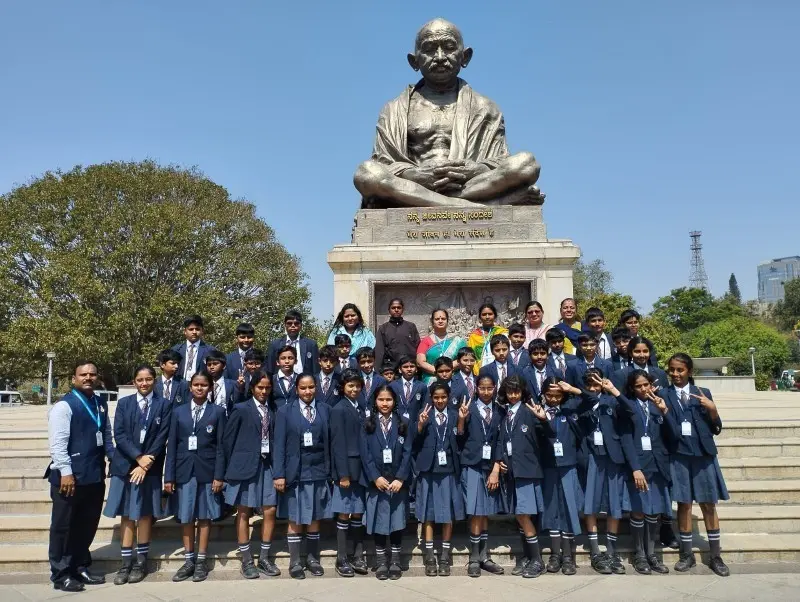
A visit to Vidhana Soudha in Bengaluru offered students an opportunity to place these concepts in a real-world setting. Instead of viewing government only as a chapter or definition, students could connect their learning with an important institution associated with Karnataka’s legislative and administrative framework.
For students at BRS Global School, Sarjapur Road, this kind of experience strengthens the connection between classroom learning and the world beyond the school campus. The visit also reflects the broader idea of experiential education: students learn not only by reading about a concept, but also by observing its context and thinking about how it relates to society.
CBSE has highlighted experiential learning as a pedagogy that helps students connect subject content with their lives and the world around them. Its guidance also identifies real-life examples and activities as ways to make learning more meaningful.
Event Overview
What was the Vidhana Soudha learning experience about?
The Vidhana Soudha visit was designed as a Social Science learning experience, connecting classroom concepts related to government, democracy and governance with a real public institution in Bengaluru.
Event: Vidhana Soudha Visit
Learning Area: Social Science
Core Concepts: Government, Democracy and Governance
Learning Approach: Experiential and contextual learning
Location: Vidhana Soudha, Bengaluru
School Focus: BRS Global School, Sarjapur Road
Vidhana Soudha is closely associated with Karnataka’s legislative institutions. Official Karnataka Legislative Council information lists its Secretariat at Vidhana Soudha, Bengaluru, while official Karnataka Legislative Assembly documents refer to the Legislative Assembly Chamber at Vidhana Soudha.
This makes the location particularly relevant to Social Science learning because students can connect the idea of state-level institutions with a real place in their own city.
What Happened During the Event?
How did the Vidhana Soudha visit connect classroom learning with the real world?
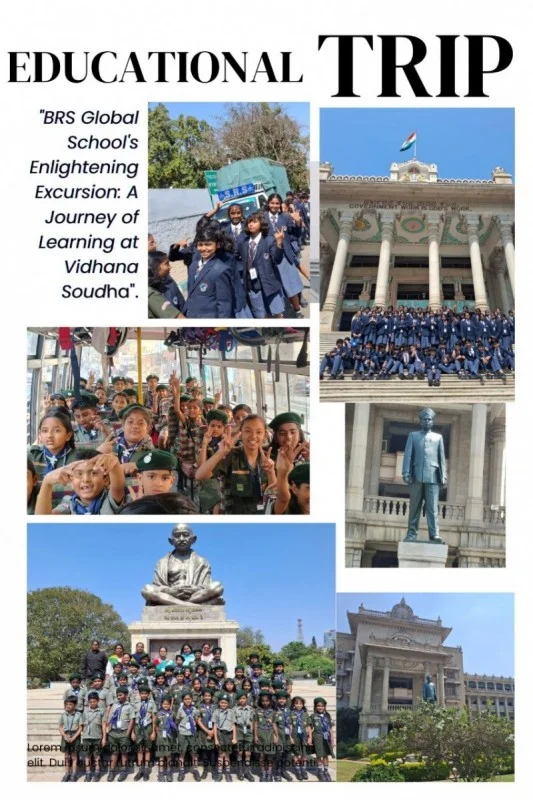
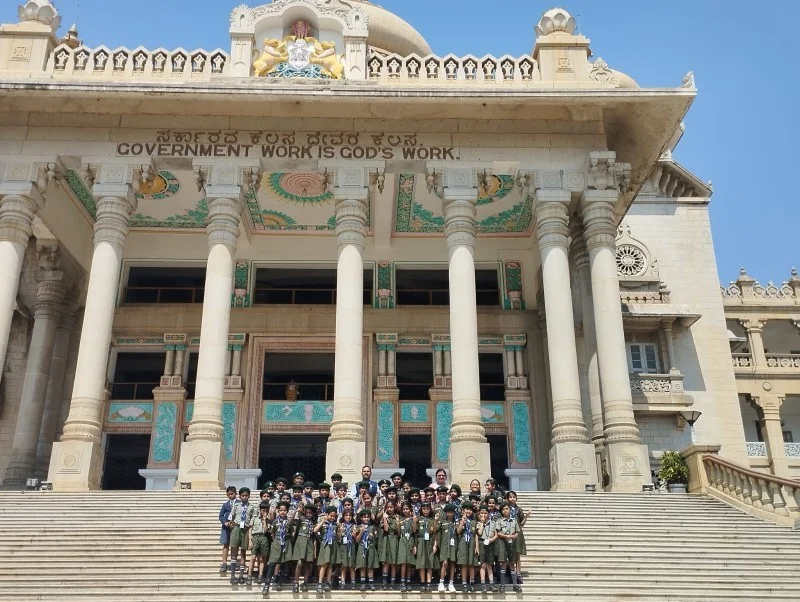
Students were given an opportunity to observe Vidhana Soudha and connect their prior classroom learning about government, democracy and governance with a real institutional setting.
The experience helped move learning beyond definitions and textbook descriptions. Concepts discussed in Social Science gained a physical and contextual reference as students encountered a major institution associated with Karnataka’s legislature and government.
The official Karnataka Legislative Council website identifies Vidhana Soudha, Bengaluru as the location of the Council Secretariat and lists various administrative and legislative branches functioning within the Secretariat.
For students, this creates an important connection:
Textbook Concept → Classroom Discussion → Real Institution → Observation → Reflection
This sequence is valuable because students can begin with a concept, encounter its real-world context and then reflect on what they have learned.
Why does seeing a real institution matter?
Government and democracy are concepts that students encounter through textbooks, classroom explanations, discussions and examples. A real-world visit provides another layer of understanding.
Instead of asking only, “What is government?”, students can begin thinking about questions such as:
• Where do important government and legislative functions take place?
• What is the role of a state legislature?
• How are public institutions organised?
• Why are institutions important in a democracy?
• How does classroom learning relate to the functioning of society?
These questions encourage observation, enquiry and reflection.
The purpose of such a visit is not simply to see a landmark. Its educational value comes from connecting the place with the ideas students are studying.
Student Learning Outcomes & Benefits
What did students learn from the Vidhana Soudha visit?
The experience supported students in developing a contextual understanding of government, democracy and governance. It encouraged them to relate Social Science concepts to an actual institution rather than viewing them only as theoretical content.
Understanding government institutions
Students could develop a clearer understanding that government functions through organised institutions, offices and systems.
The Karnataka Legislative Council’s official information, for example, describes several branches within its Secretariat, including administration, legislation, executive functions, petitions, records and other areas.
This helps students understand that government is not simply an abstract concept but involves structured institutions and responsibilities.
Connecting democracy with institutions
Democracy is not only a textbook definition. Students can understand it more meaningfully when they learn about institutions through which representation, legislation and governance take place.
The Vidhana Soudha experience therefore gave students a contextual reference for discussing democratic institutions in Social Science.
Developing observation skills
A real-world educational visit encourages students to observe their surroundings carefully.
They can notice the setting, identify institutional features, ask questions and connect observations with what they already know.
Encouraging curiosity and enquiry
Visits can naturally generate questions.
When students encounter something they have previously studied only in a classroom, they have an opportunity to ask why, how and what happens next. Such questions are an important part of meaningful learning.
Strengthening communication
A learning experience can provide material for classroom discussions, written reflections, presentations and group conversations. Students can communicate what they observed and explain how it connects with their lessons.
Building civic awareness
Learning about public institutions can contribute to students’ understanding of their community and state.
For children growing up in Bengaluru, Vidhana Soudha provides a local reference point for understanding Karnataka’s government institutions.
Educational Philosophy / Institutional Value Alignment
How does this activity reflect experiential learning?
The Vidhana Soudha visit aligns naturally with the principle of learning through experience.
CBSE introduced experiential learning with the stated aim of helping students connect learning-area and subject content with their lives and the world around them.
CBSE guidance also gives Social Studies examples of experiential content, including activities that allow students to experience concepts differently and gain perspective.
The educational sequence can therefore be understood as:
Learn → Discuss → Observe → Connect → Reflect
At BRS Global School, Sarjapur Road, experiences such as this complement classroom teaching by giving students opportunities to explore how academic concepts exist beyond the pages of a textbook.
The value is not in replacing classroom learning but in deepening it through context.
Why Does This Matter for Student Development?
A student’s school experience includes much more than academic subjects.
Students spend years learning how to communicate with others, manage responsibilities, respond to challenges, participate in teams and make decisions. These experiences gradually contribute to how they approach learning and everyday situations.
Life skills and activity-based learning can provide structured opportunities for this development within the school environment.
For parents, the value lies in seeing education as a combination of knowledge, skills, attitudes, participation and application rather than as examination preparation alone.
CBSE’s life-skills resources emphasise supportive learning environments, mutual respect, collaboration and active student participation as important components of life-skills education.
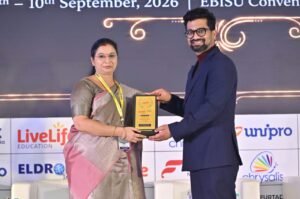
The recognition received by BRS Global School, Sarjapur Road, therefore highlights an educational focus that connects academic learning with practical and personal development.
Why This Matters for Student Development
Why should parents value real-world Social Science experiences?
Parents often look for learning experiences that develop more than examination knowledge. A well-connected educational visit can help students understand why a subject matters and where its concepts appear in real life.
For Social Science, this is particularly important because the subject deals with people, institutions, society, governance, history, geography and civic life.
A visit connected to the curriculum can help students:
• relate textbook concepts to real places;
• develop observation and enquiry;
• participate in meaningful discussions;
• build contextual understanding;
• improve communication and reflection;
• develop awareness of public institutions;
• appreciate the connection between education and society.
These outcomes contribute to a broader educational experience in which knowledge is not isolated from the world around the learner.
Which students can benefit from this type of activity?
Students studying Social Science concepts related to government, democracy, civics and governance can particularly benefit. The experience can also support students who learn effectively through visual observation, discussion, contextual examples and real-world experiences.
Local Context: Learning in Sarjapur Road, Bengaluru
Why is Vidhana Soudha relevant for students from Sarjapur Road and Bengaluru?
For students studying at BRS Global School, Sarjapur Road, Vidhana Soudha is a meaningful local learning context because it connects Social Science concepts with an important public institution within Bengaluru.
The Sarjapur Road campus serves families from communities around Bellandur, Sarjapur Road, Hosa Road, Koramangala, HSR layout, Dommasandra, Kodathi, Gunjur, Varthur, Kaikondrahalli, Kasavanahalli, Carmelaram, Harlur, Rayasandra, Naganathapura, Doddakannelli, Kudlu Gate, A Krishnappa Nagar, Halnayakanahalli, Radha Reddy Layout, Chikkanayakanahalli, Huskur, KPC Layout, CSB Layout, Owners Court, Doddanagamangala, Doctors Layout, Shiva Reddy Layout, Meenakshi Layout, Chikbellandur, Sompura Gate, Muthannalur Cross, Gunjur to Dommasandra Road, Mullur, Amrita Engineering College Road Kasavanahalli, Amrita Nagar, Serenity Layout, Spring Fields, Iblur, Marathahalli, Shobha Apartments, Choodasandra, Junnasandra, Rayasandra and nearby parts of Bengaluru.
Many families in these areas live close to Bengaluru’s major residential and technology corridors. For students growing up in a rapidly developing urban environment, local learning experiences can help connect their education with the city and institutions around them.
This is one reason location-based learning can be valuable: a concept studied at school can become more memorable when students can identify its real-world context within their own city.
For parents exploring schools in Sarjapur Road, CBSE schools in Sarjapur Road, or schools near Bellandur and HSR Layout, the broader educational question is not simply where a school is located, but how classroom learning is connected to meaningful experiences.
BRS Global School | Best CBSE School in Sarjapur Road is the Sarjapur Road campus referred to throughout this article. Parents can explore its local school information through the school’s Google Business Profile: Explore our Google Business Profile – BRS Global School, Sarjapur Road
Common Parent Questions
How does a Vidhana Soudha visit support CBSE learning?
A Vidhana Soudha visit supports experiential learning by connecting Social Science concepts such as government, democracy and governance with a real institutional setting. CBSE has emphasised learning approaches that connect subject content with students’ lives and the world around them.
Does a field visit replace classroom teaching?
No. A field visit works alongside classroom teaching. Students first develop foundational concepts through lessons and discussions; a visit can then provide context that helps them understand and remember those concepts more meaningfully.
How can such an activity improve student confidence?
When students discuss what they observe, ask questions and explain their understanding to peers or teachers, they get opportunities to practise communication and expression. The experience can therefore complement classroom-based learning.
What skills can students develop through educational visits?
Depending on the activity, students can practise observation, questioning, communication, reflection, collaboration and contextual thinking. These skills support learning across subjects rather than being limited to Social Science.
Why is local learning important?
Local learning gives students an opportunity to connect academic concepts with places, institutions and communities they can recognise. This can make learning more relevant and help students understand how classroom knowledge relates to the world around them.
What makes this a Social Science learning experience rather than simply a field trip?
The educational purpose and curriculum connection are what distinguish the experience. In this case, the visit was connected specifically to students’ learning about government, democracy and governance, giving them a real-world context for those concepts.
How does experiential learning contribute to holistic development?
Experiential learning can combine knowledge with observation, enquiry, communication and reflection. This broader process supports students in developing academic understanding alongside transferable skills and awareness of the world around them.
Key Highlights
• Learning Area: Social Science
• Learning Focus: Government, democracy and governance
• Experience: Vidhana Soudha visit
• Location: Bengaluru
• Learning Approach: Experiential and contextual learning
• Real-world Connection: Karnataka’s legislative and government institutions
• Skills Supported: Observation, enquiry, communication, reflection and contextual thinking
• Student Benefit: Connecting textbook concepts with real-world institutions
• Local Relevance: Bengaluru and Karnataka
• School Campus: BRS Global School, Sarjapur Road
Frequently Asked Questions (FAQs)
What is the educational purpose of a Vidhana Soudha visit?
The educational purpose is to connect classroom learning about government, democracy and governance with a real-world public institution. This helps students understand Social Science concepts through context and observation.
Why is Vidhana Soudha relevant to Social Science?
Vidhana Soudha is associated with Karnataka’s legislative institutions, making it a relevant local context for understanding government and democratic institutions. Official Karnataka Legislative Council information places its Secretariat at Vidhana Soudha, Bengaluru.
How does experiential learning help school students?
Experiential learning allows students to connect academic concepts with their lives and the world around them. CBSE has identified this connection as an important purpose of experiential learning.
Can educational visits improve Social Science understanding?
Yes. When a visit is directly connected to classroom concepts, students can use observation and reflection to place theoretical knowledge into a real-world context.
What concepts can students understand through a Vidhana Soudha learning experience?
The experience can provide context for concepts including government, democracy, governance, legislative institutions, public administration and civic awareness.
Is BRS Global School located on Sarjapur Road?
Yes. This event article is specifically focused on the BRS Global School Sarjapur Road branch. Parents can explore the branch’s local listing through its Google Business Profile. BRS Global School – Sarjapur Road Google Business Profile
Does BRS Global School have another branch?
Yes. BRS Global School also has another branch in Attibele. The Attibele branch is separate from the Sarjapur Road campus and has its own local listing. BRS Global School – Attibele Google Business Profile
Conclusion: Learning Beyond the Textbook
A Social Science lesson becomes more meaningful when students can connect concepts with the world around them. The Vidhana Soudha visit provided students with an opportunity to connect their classroom understanding of government, democracy and governance with a significant public institution in Bengaluru.
The experience illustrates an important principle of education: students can deepen their understanding when knowledge is connected to observation, context, enquiry and reflection. It also reflects the experiential-learning approach highlighted by CBSE, in which students connect subject learning with their lives and the wider world.
For families looking at schools in Sarjapur Road and nearby communities, meaningful learning experiences are an important part of understanding how a school approaches education beyond the textbook.
Explore our Campus:
Attibele Branch:
https://share.google/iFhJaeGo8wkgOZ1Y5
Sarjapur Road Branch: