
Introduction
Children are expected to manage many responsibilities as they progress through school-from remembering books and completing homework to preparing for the next school day. Learning how to stay organized can make these responsibilities easier while helping children become more confident and independent learners.
For parents, the goal is not to make children perfectly organized. Instead, it is to teach practical habits that children can gradually use on their own. Simple actions such as preparing a school bag the night before, following a daily routine, using a checklist and breaking large assignments into smaller tasks can make a meaningful difference.
At BRS Global School | Pre-school, Primary School & High School | Attibele, developing responsible, independent and confident learners is part of a holistic educational approach. The school emphasizes experiential learning, leadership, sports, arts, life skills and confidence-building alongside academic development.
Why Is Organization Important for Children?
Organization is more than keeping a child’s room or school bag tidy. It is the ability to understand responsibilities, plan activities, manage time and complete tasks in an orderly manner.
For school-going children, organization can help them:
• Remember important school materials.
• Prepare for the next day.
• Manage homework and revision.
• Develop better time-management habits.
• Take responsibility for their belongings.
• Break complicated tasks into manageable steps.
• Become more independent.
• Build confidence in handling daily responsibilities.
These skills become increasingly valuable as children progress through different stages of their education.
8 Practical Ways Parents Can Help Kids Get Organized
How Can Parents Establish a Simple Daily Routine?
A predictable daily routine gives children a clear idea of what needs to happen throughout the day.
Parents can create an age-appropriate schedule that includes:
• Waking up and getting ready for school
• Homework
• Reading
• Play and physical activity
• Family time
• Preparing for the following day
• Bedtime
The routine does not have to be complicated. Consistency is more important than creating a highly detailed timetable.
How Can Parents Teach Children to Keep Their Belongings Organized?
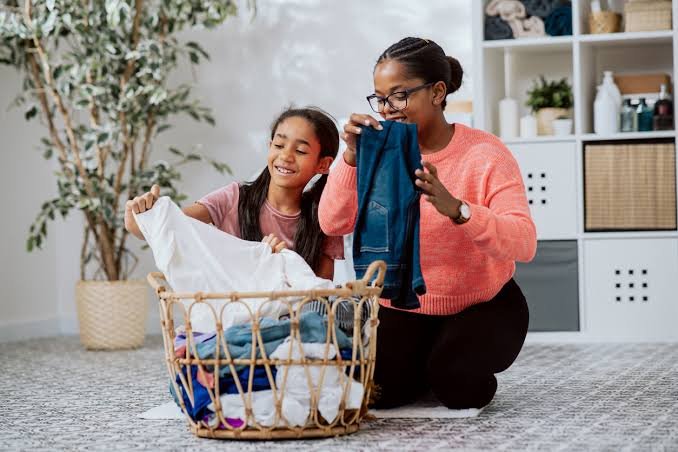
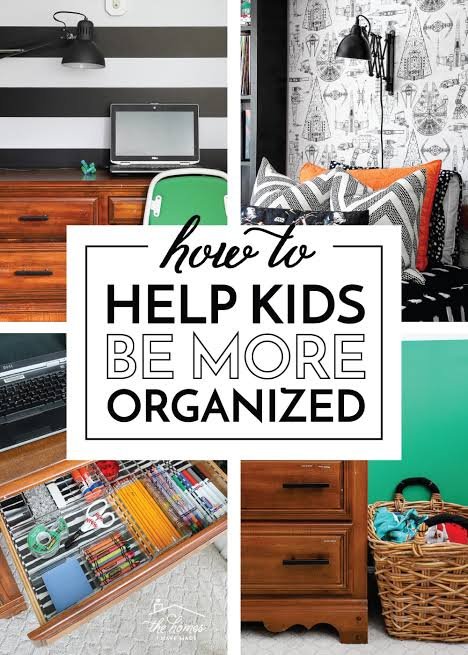
Children can be encouraged to give their belongings a designated place.
For example:
• Books can be kept on a particular shelf.
• Stationery can be stored in one place.
• School uniforms can have a designated space.
• Toys can be placed in labelled baskets.
• School documents can be kept in separate folders.
For younger children, labels, baskets and shelves can make organization easier.
Instead of repeatedly telling children where something belongs, parents can teach them the system and encourage them to follow it independently.
Why Should Children Prepare for School the Night Before?
Morning routines can become stressful when children are searching for books, uniforms or other school materials at the last minute.
Parents can encourage children to check their timetable and prepare what they need the previous evening.
A simple evening preparation routine could include:
• Check the next day’s timetable.
• Pack the required books.
• Keep notebooks and stationery ready.
• Arrange the school uniform.
• Fill the water bottle.
• Check whether any special materials are required.
This habit can reduce unnecessary morning rushes while teaching children to plan ahead.
How Can Checklists Help Children Become Organized?
A checklist gives children a visual reminder of their responsibilities.
For younger children, parents can create a simple checklist such as:
• ☐ Pack school bag
• ☐ Complete homework
• ☐ Keep books ready
• ☐ Fill water bottle
• ☐ Arrange uniform
• ☐ Prepare for tomorrow
As children become older, parents can gradually encourage them to create and manage their own checklists.
This small change can shift responsibility from “My parents remind me” to “I know what I need to do.”
How Can Parents Help Children Manage Large Assignments?
A large project or assignment can sometimes seem difficult simply because it contains too many steps.
Instead of telling a child to “finish the project,” parents can help divide it into smaller stages:
Choose the topic → Collect information → Prepare materials → Complete the work → Review it
Breaking a task into smaller steps can make it easier for children to understand what they need to accomplish and approach the work systematically.
Parent Tip
Ask:
“What is the first step you need to complete?”
This encourages children to think about the process instead of feeling overwhelmed by the entire assignment.
Should Parents Pack the School Bag for Their Children?
Parents should guide children, but they should also create opportunities for them to practise independence.
For younger children, parents may initially demonstrate how to organize a school bag. Over time, the child can take greater responsibility for checking the timetable, selecting books and preparing the bag.
The objective is not to remove parental support but to gradually transfer responsibility to the child.
How Can Parents Teach Time Management?
Time management is another important part of organization.
Parents can introduce simple tools such as:
• A weekly planner
• A calendar
• A timer
• A homework schedule
• A daily checklist
Children can learn to balance studies with hobbies, physical activity, family time and rest.
For younger children, parents should keep planning simple. As children mature, they can gradually take greater ownership of their schedules.
Why Should Organization Become a Family Habit?
Children often learn by observing the adults around them.
When parents demonstrate organized habits-such as maintaining schedules, putting belongings back in their designated places and managing responsibilities-children see organization as part of everyday life rather than as a punishment or additional chore.
Making organization a family habit can therefore create a more natural learning environment at home.
How Can Parents Encourage Organization Without Putting Pressure on Children?
Organization is a skill that develops gradually. Children will forget routines, misplace things and occasionally fail to complete tasks- and these moments are part of the learning process.
Instead of focusing only on mistakes, parents can acknowledge effort and gently remind children about the routine they are learning.
The objective is progress, not perfection.
Children need structure, but they also need opportunities to make decisions, solve small problems and learn from their experiences. The long-term goal is to help them take responsibility for their belongings, time, studies and daily commitments.
How Does Organization Help Build Independent and Confident Learners?
Organizational skills can become valuable lifelong habits.
When parents provide appropriate structure while gradually giving children more responsibility, children can learn to plan, prioritize and manage their commitments.
These skills are useful not only for school but also for future academic, personal and professional responsibilities.
At BRS Global School, this approach complements the school’s emphasis on holistic development, experiential learning, leadership, sports, arts, life skills and confidence-building.
Local Context: Supporting Organized Learners in Attibele and Nearby Communities
For families looking for quality CBSE schools in Attibele, school and home can work together to develop habits that support children’s academic and personal growth.
BRS Global School | Pre-school, Primary School & High School | Attibele is strategically located on the Attibele–Sarjapur Road corridor, with accessibility from Attibele, Bidaraguppe, Anekal, Chandapura, Sarjapur, Sarjapura and Hosur Road. The campus is also connected to areas including Electronic City, Bommasandra, Sompura, Hosur Toll, Jigani and other growing residential and industrial communities in South-East Bengaluru.
For parents exploring school options, these location connections are particularly relevant to working families and residents of nearby gated communities, apartments and emerging residential neighbourhoods.
BRS Global School | Pre-school, Primary School & High School | Attibele – Google Business Profile
Families exploring options among schools in Attibele, schools in Chandapura, schools in Anekal and schools near Sarjapur Road can also explore the school’s location-focused resources below.
• Best Schools in Attibele – BRS Global School
• CBSE Schools in Attibele – BRS Global School
• Schools in Chandapura – BRS Global School
What About Families Looking for Schools in Sarjapur Road?
BRS Global School also has another branch, the BRS Global School | Best CBSE School in Sarjapur Road, serving families across the Sarjapur Road area and surrounding communities.
Its nearby areas include Bellandur, Hosa Road, Koramangala, HSR Layout, Dommasandra, Kodathi, Gunjur, Varthur, Kaikondrahalli, Kasavanahalli, Carmelaram, Harlur, Rayasandra, Naganathapura, Doddakannelli, Kudlu Gate, Chikkanayakanahalli, Huskur and other surrounding residential communities.
BRS Global School | Best CBSE School in Sarjapur Road – Google Business Profile
This separate branch is relevant for parents researching CBSE schools in Sarjapur Road, schools in Bellandur, schools near Sarjapur Road, and schools serving the wider South-East Bengaluru corridor.
Common Parent Questions
How can I make my child more organized for school?
Start with one or two simple habits, such as preparing the school bag at night and following a daily checklist. Once these habits become consistent, introduce additional responsibilities.
How do I teach my child to pack their school bag independently?
First demonstrate how to check the timetable and select the required books. Then allow your child to do the task while you supervise. Gradually reduce reminders as the child becomes more confident.
What organizational skills should children learn?
Children can learn to manage their belongings, follow routines, prepare ahead, use checklists, manage time, break large tasks into smaller steps and take responsibility for completing daily commitments.
How can parents improve children’s time-management skills?
A weekly planner, calendar or simple timer can help children understand how to divide their time between studies, hobbies, physical activity, family time and rest.
Should parents correct children when they forget their routine?
Parents can provide gentle reminders rather than focusing only on mistakes. Organization develops gradually, so encouragement and consistency are important.
How does organization improve independence?
When children gradually take responsibility for their school materials, homework, schedules and daily tasks, they learn to manage responsibilities without depending entirely on adults.
Does organization help academic performance?
Organization can support academic learning by helping children locate materials easily, follow homework and revision routines, plan assignments and spend more time focused on learning.
Key Highlights
• Organization is a life skill, not simply a way of keeping belongings tidy.
• Simple routines can help children understand daily responsibilities.
• Preparing the school bag the night before can encourage planning.
• Checklists can help children remember important tasks.
• Large projects can be divided into smaller, manageable steps.
• Parents should gradually transfer responsibility to children.
• Time management helps children balance academics, activities and rest.
• Children learn organizational habits by observing adults.
• Encouragement is more useful than pressure.
• Organization supports the development of independent and confident learners.
Frequently Asked Questions
What is the best age to teach children organizational skills?
Organizational habits can be introduced from an early age through simple routines such as putting belongings away, preparing school materials and following basic checklists. Responsibilities can become more complex as children grow.
How can I organize my child’s school routine?
Create a predictable routine covering school preparation, homework, reading, play, family time and bedtime. Keep it simple enough for the child to follow consistently.
How can I stop reminding my child about schoolwork?
Instead of providing repeated verbal reminders, introduce a checklist or planner. Gradually encourage your child to check it independently and take ownership of completing the tasks.
How can organization reduce stress for children?
Knowing what needs to be done and where required materials are can reduce last-minute searching and confusion. A predictable routine can make daily responsibilities easier to manage.
Should parents organize everything for their children?
Parents should guide children, especially when they are learning a new routine, but they should gradually transfer responsibility so children can practise independence.
How does organization prepare children for the future?
Organization helps children practise planning, prioritizing, managing time and taking responsibility—skills that can remain useful throughout their academic, personal and professional lives.
Conclusion: Helping Children Become Organized, Independent Learners
Helping kids get organized does not require complicated schedules or constant supervision. Small, consistent habits can make a significant difference: preparing for school the previous evening, maintaining a routine, using checklists, managing time and learning to break large tasks into smaller steps.
Most importantly, children need the opportunity to practise independence. Parents can provide the structure and encouragement while gradually allowing children to take ownership of their responsibilities.
At BRS Global School | Pre-school, Primary School & High School | Attibele, the development of responsible, independent and confident learners forms part of the school’s holistic educational approach. Consistent support from both home and school can help children learn to plan, prioritize and manage responsibilities with greater confidence.
For families exploring CBSE schools in Attibele and the wider Attibele–Sarjapur educational corridor, you can learn more about the campus and connect with the school through its Google Business Profile.
Explore our Campus:
Attibele Branch
https://share.google/iFhJaeGo8wkgOZ1Y5
Sarjapur Road Branch: