
Introduction
At BRS Global School | Pre-school, Primary School & High School | Attibele, learning extends beyond textbooks and classrooms. The Montessori gardening and harvesting experience gave young learners an opportunity to discover how a tiny seed can gradually become something that can be harvested and shared.
The activity was designed as a practical, nature-based learning experience. Montessori children sowed seeds in the school garden, observed their growth and learned about the importance of soil, water, sunlight and regular care. After nearly a month, the children and their teachers returned to harvest the fresh produce they had helped nurture.
For a school community in the growing Attibele–Sarjapur Road educational corridor, such experiential activities create meaningful connections between classroom concepts and everyday life. BRS Global School – Attibele focuses on experiential learning alongside academics, leadership, sports, arts, life skills and confidence-building opportunities.
Event Overview: Montessori Gardening and Harvesting Experience
The gardening activity introduced Montessori children to the basic stages involved in growing food. With teacher guidance, the children sowed seeds and learned that plants require appropriate soil, water, sunlight and consistent care to grow.
Rather than simply being told about plant growth, the children experienced it themselves. They had the opportunity to observe changes in the garden over time and understand that meaningful results often require patience and regular effort.
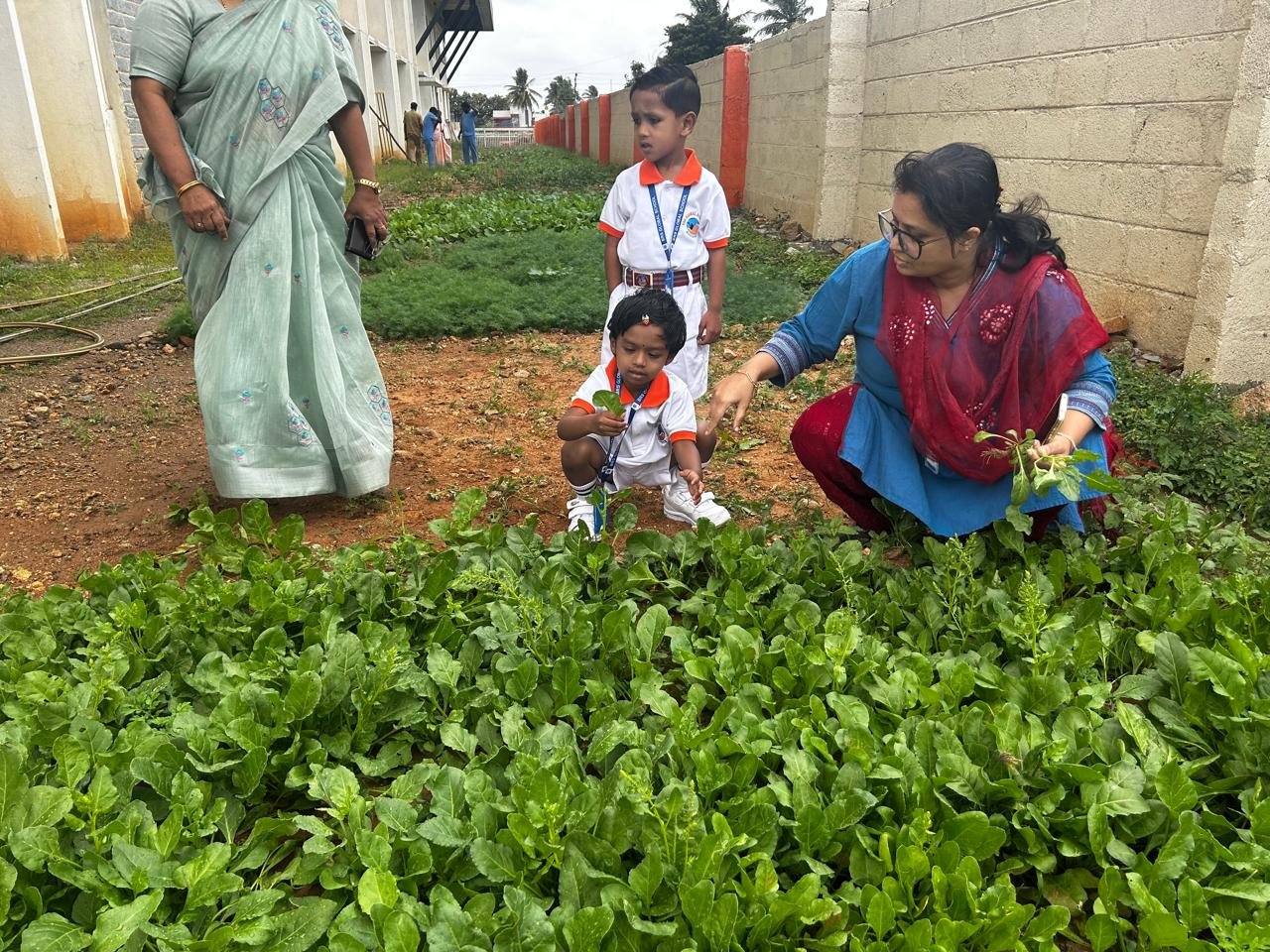
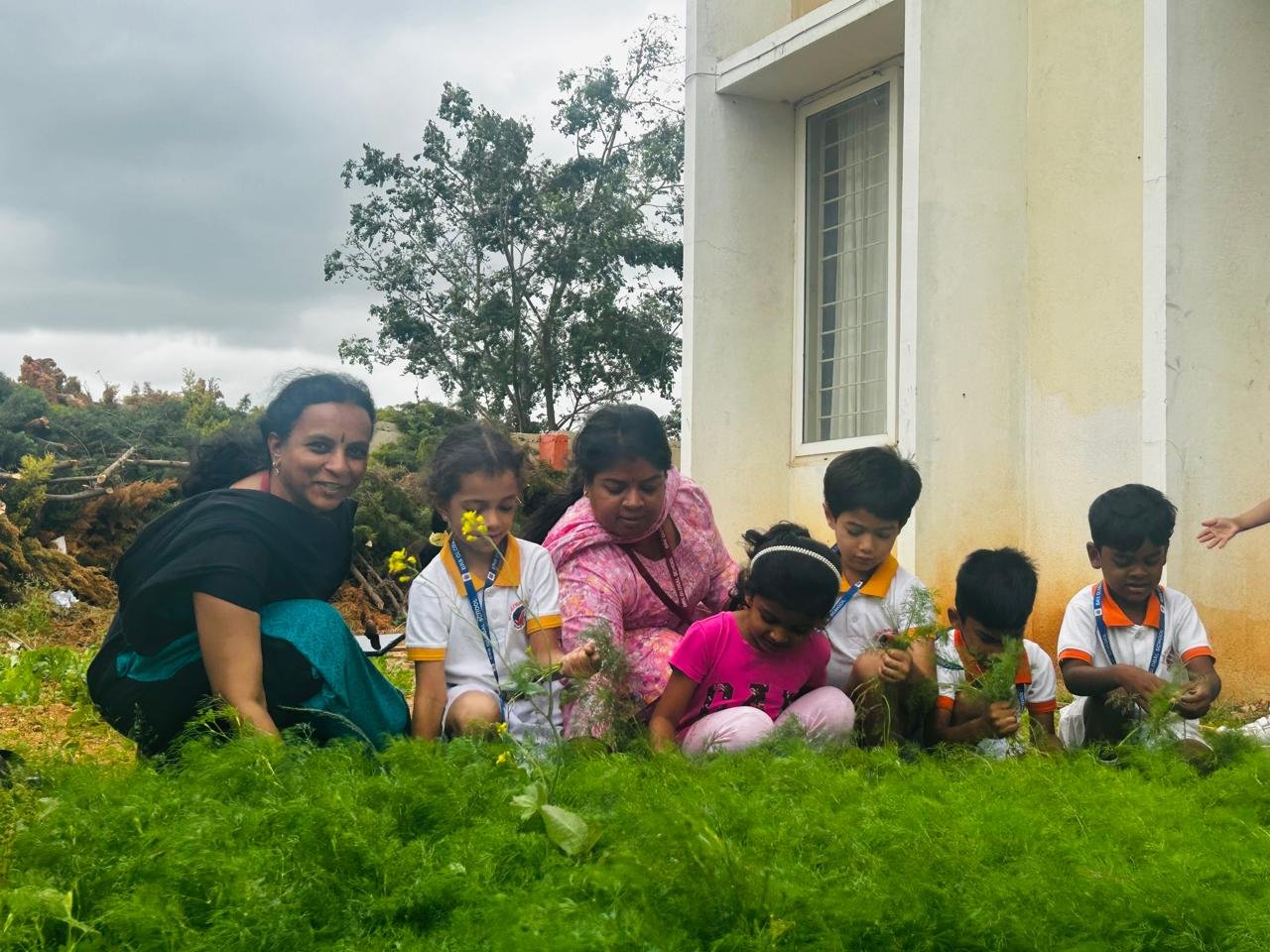
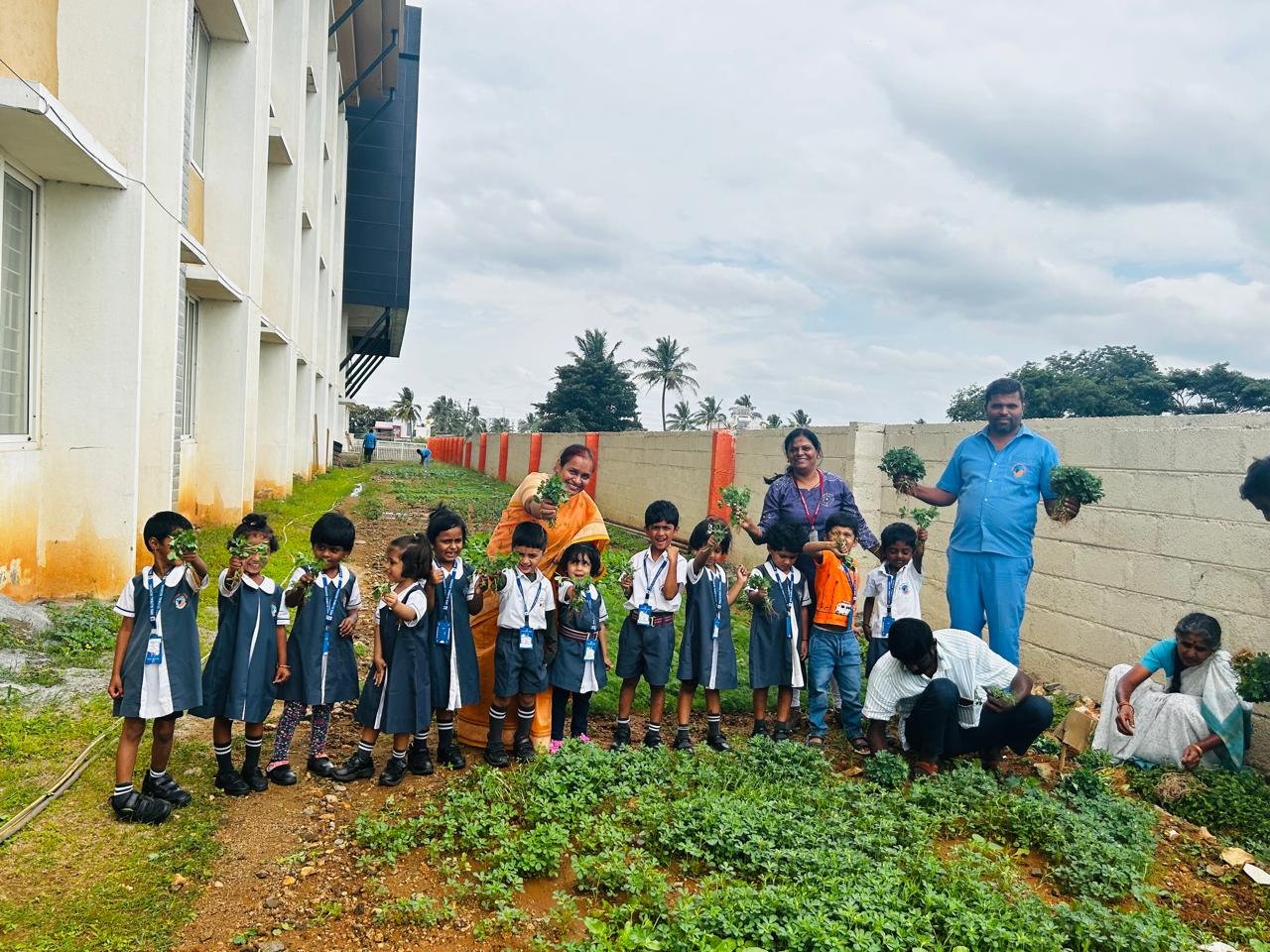
After approximately one month of nurturing the plants, teachers and children participated in the harvesting activity. Together, they collected the fresh greens and vegetables that had grown in the school garden.
What Happened During the Montessori Gardening Activity?
The experience unfolded as a simple but meaningful learning journey:
Children Sowed the Seeds
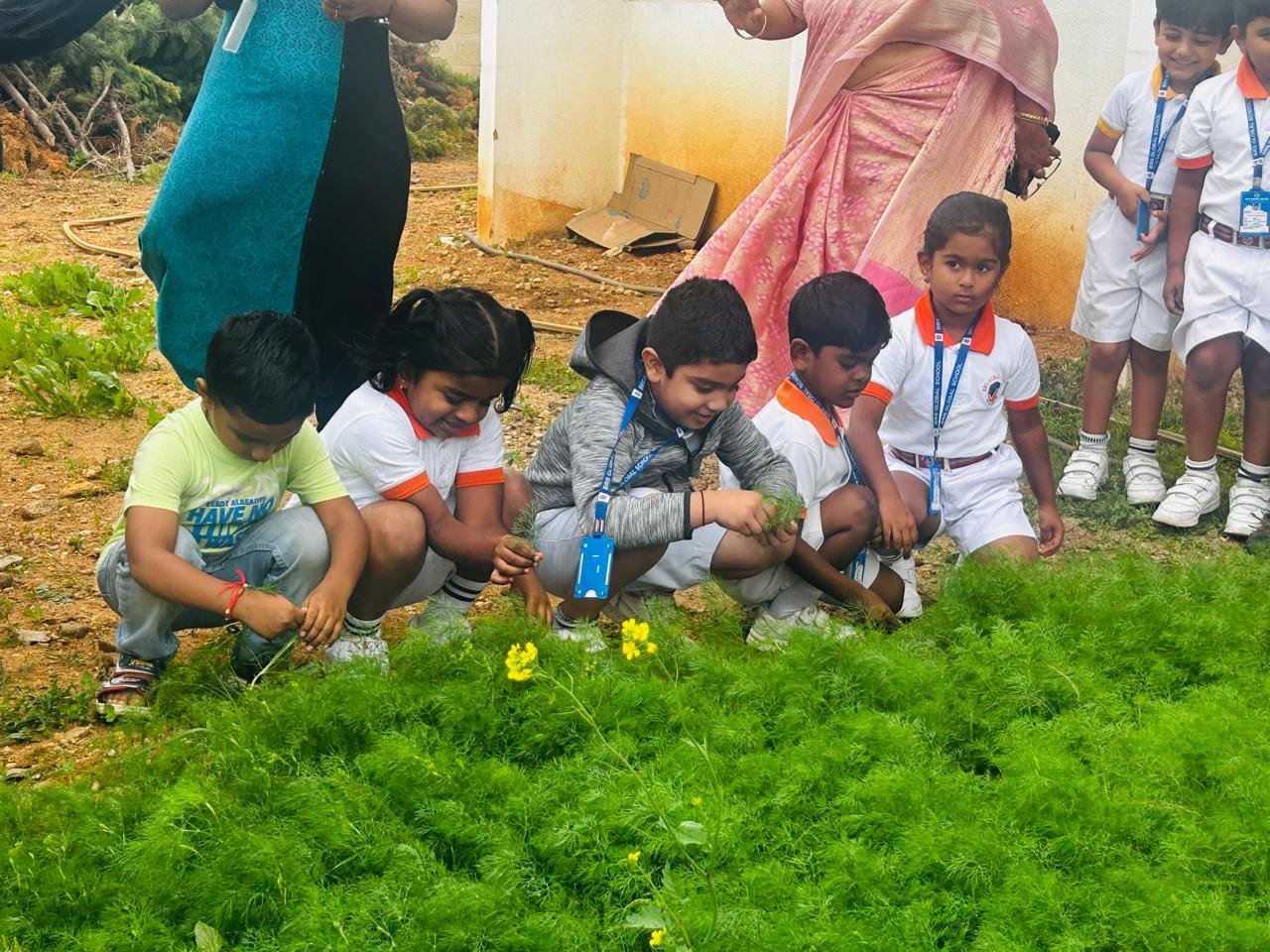
The Montessori children were introduced to seed sowing and participated in planting the seeds in the school garden with the support of their teachers.
Children Observed and Cared for the Plants
As the plants developed, the children learned that growth requires time, care and suitable natural conditions. They were introduced to the importance of soil, sunlight, water and regular attention.
The Children Returned for Harvesting
After nearly a month, the children returned to the garden for the much-anticipated harvest. Teachers and children worked together to collect the fresh greens and vegetables.
Every Child Took Home a Harvest Bundle
One of the most memorable parts of the activity was sharing the harvest. The produce was collected into small bundles, and every child received a bundle to take home. This allowed the children to proudly share the results of their gardening experience with their families.
What Did Students Learn from the Gardening Experience?
The Montessori gardening activity helped children understand the complete seed-to-harvest cycle while developing patience, responsibility, observation, teamwork and respect for nature.
The experience transformed a simple garden into a practical learning environment. Children could see, touch and participate in the processes they were learning about rather than encountering the concepts only through pictures or explanations.
They learned that:
• Plants need suitable conditions to grow.
• Growing food takes time and care.
• Consistent effort contributes to meaningful results.
• Teamwork makes shared tasks more enjoyable.
• Fresh food has a connection with nature and cultivation.
• Caring for plants encourages responsibility.
• Harvesting can be a rewarding result of patience and effort.
The activity also encouraged fine motor development and observation skills while introducing young learners to ideas related to fresh food and sustainable living.
How Does Gardening Support Experiential Learning?
Gardening is particularly valuable for young children because it brings learning into a real-world environment. Instead of only discussing plants, children can participate in planting, observe growth and experience harvesting.
For Montessori learners, this kind of activity encourages learning through direct experience. Children are given an opportunity to interact with their surroundings, develop curiosity and understand cause-and-effect relationships naturally.
The seed-to-harvest journey also introduces an important life lesson: growth requires patience, care and responsibility.
This approach reflects the experiential learning focus of BRS Global School – Attibele, where learning is positioned alongside opportunities for holistic development, life skills and confidence building.
Why Is Gardening Important for Early Childhood Development?
A gardening activity can support several areas of early childhood development simultaneously. Children use their hands, observe natural changes, communicate with peers and teachers, and participate in a shared responsibility.
The Montessori gardening experience at BRS Global School – Attibele supported:
Fine Motor Skills: Handling plants and harvesting produce provided opportunities for controlled hand movements.
Observation Skills: Children observed the development and changes in the plants over time.
Patience: Waiting for the plants to mature helped children understand that natural processes take time.
Responsibility: Caring for living plants encouraged children to understand the importance of regular attention.
Teamwork: Children and teachers worked together during the harvesting process.
Environmental Awareness: The experience helped children develop appreciation and respect for plants and nature.
These learning outcomes are directly reflected in the original event report.
How Does This Activity Support CBSE-Oriented Learning?
The gardening experience supports CBSE-oriented experiential learning by connecting concepts about plants, food, nature and the environment with direct observation and practical participation.
For young learners, experiences such as gardening can make foundational concepts more meaningful. Children are able to connect what they encounter in their learning environment with things they see in everyday life.
At BRS Global School – Attibele, the activity forms part of a broader educational approach that combines academic learning with experiential learning, life skills, confidence building and holistic development.
Parents looking for CBSE schools in Attibele can therefore consider not only classroom academics but also how a school creates opportunities for children to explore, participate and learn through real experiences.
Why Should Parents Value Hands-On Learning Experiences?
Parents often want children to develop more than academic knowledge. They also want them to become responsible, observant, confident and capable of applying what they learn.
A gardening activity provides a simple example of this approach. A child who plants a seed, observes its growth and eventually harvests the produce experiences a complete learning cycle. The child can understand effort and outcome in a way that is tangible and memorable.
At BRS Global School – Attibele, such experiential opportunities complement the school’s premium CBSE learning environment and its focus on holistic development.
Parents exploring educational options can also learn more through the school’s resources on CBSE schools in Attibele and schools in Chandapura.
Local Context: Learning in the Attibele - Sarjapur Road Educational Corridor
BRS Global School – Attibele is positioned on the Attibele–Sarjapur Road corridor, with accessibility from Attibele, Bidaraguppe, Anekal, Chandapura, Sarjapur and Hosur Road. The campus is also connected to surrounding residential and industrial areas, including Bommasandra, Electronic City, Sompura, Jigani and the Hosur Road corridor.
This makes the school relevant to families living in nearby apartments, gated communities, villas and emerging residential neighbourhoods across South-East Bengaluru. The school’s location and educational positioning are particularly relevant for working professionals and families seeking a CBSE school that combines academics with holistic development.
Families researching schools in Attibele, schools in Anekal, schools in Chandapura, schools near Sarjapur Road, schools in Electronic City and CBSE schools in Bangalore can explore the school’s location-specific resources as part of their school-selection journey.
What Makes BRS Global School - Attibele's Approach to Learning Meaningful?
The gardening experience reflects a wider educational philosophy in which children are encouraged to learn through participation.
At BRS Global School | Pre-school, Primary School & High School | Attibele , the school describes its Attibele Campus as offering a premium CBSE learning environment that combines academic excellence with holistic development. The educational approach includes experiential learning, leadership opportunities, sports, arts, life skills and confidence-building programmes.
For families considering best CBSE schools in Anekal, CBSE schools in Hosur, or schools in Sarjapur Road, it is useful to look at how schools translate their educational philosophy into actual student experiences.
The gardening activity is one example of how young learners can develop practical understanding through direct participation.
Common Parent Questions
How does gardening help Montessori children learn?
Gardening gives young children direct experience with plants, growth and nature. Through sowing, observing, caring and harvesting, children develop practical understanding alongside patience, responsibility, observation and fine motor skills.
What did the children do after sowing the seeds?
The children observed and cared for the plants as they grew. After nearly a month, they returned with their teachers to participate in harvesting the fresh greens and vegetables.
Did the children get to take the harvested produce home?
Yes. The harvested produce was divided into small bundles, and every child received a bundle to take home and share with their family.
What skills were developed through the activity?
The experience supported fine motor skills, observation, patience, responsibility, teamwork and respect for nature
How does this activity contribute to holistic development?
The activity combined physical participation, observation, social interaction, responsibility and environmental awareness, giving children an opportunity to learn beyond conventional classroom instruction.
Which children benefit from experiential gardening activities?
Young learners can particularly benefit because gardening allows them to explore natural processes through direct, age-appropriate participation. It can make abstract ideas about plants, food and nature more tangible.
Key Highlights
• Montessori children participated in a hands-on gardening experience.
• Children learned how to sow seeds with teacher guidance.
• They observed the plants and learned about soil, water, sunlight and care.
• The plants were nurtured for nearly a month.
• Teachers and children participated together in harvesting.
• Fresh greens and vegetables were collected from the school garden.
• Every child received a harvest bundle to take home.
• The activity encouraged patience, responsibility and teamwork.
• Children developed observation and fine motor skills.
• The experience strengthened children’s connection with nature and fresh food.
Frequently Asked Questions (FAQs)
What was the Montessori gardening activity at BRS Global School – Attibele?
It was a hands-on learning experience in which Montessori children sowed seeds, cared for plants and later harvested fresh greens and vegetables from the school garden.
How long did the children wait before harvesting?
The children cared for the plants for nearly one month before participating in the harvesting activity.
What did children take home from the garden?
Each child received a bundle of the harvested produce to take home and share with their family.
What values does gardening teach children?
Gardening can help children understand patience, responsibility, care, teamwork and respect for nature.
Is experiential learning part of BRS Global School – Attibele’s educational approach?
Yes. The school’s positioning highlights experiential learning alongside academics, leadership, sports, arts, life skills and confidence-building programmes.
Where is BRS Global School – Attibele accessible from?
The school is positioned on the Attibele–Sarjapur Road corridor and is accessible from areas including Attibele, Bidaraguppe, Anekal, Chandapura, Sarjapur and Hosur Road, with connections to surrounding South-East Bengaluru communities.
Does BRS Global School have another campus?
Yes. BRS Global School – Sarjapur Road is another branch of BRS Global School. Its surrounding areas include Bellandur, Sarjapur Road, Hosa Road, HSR Layout, Dommasandra, Kodathi, Gunjur, Varthur, Kasavanahalli, Carmelaram, Harlur and other nearby communities.
For families considering that campus, the BRS Global School | Best CBSE School in Sarjapur Road provides the relevant local business profile.
Conclusion: Growing Young Minds, One Seed at a Time
The Montessori gardening and harvesting experience at BRS Global School – Attibele showed children that meaningful learning can begin with something as simple as a seed.
From sowing and caring for plants to harvesting fresh produce and taking a bundle home, the children experienced a complete cycle of growth. More importantly, they learned lessons that extend beyond the garden-patience, responsibility, teamwork, observation and respect for nature.
For parents exploring schools in Attibele, CBSE schools in Attibele, schools near Sarjapur Road, schools in Anekal or schools in Chandapura, BRS Global School – Attibele offers an educational environment where academic learning is complemented by experiential opportunities and holistic development.
Parents can explore the BRS Global School – Attibele to discover more about the campus and local school presence, or explore the school’s website resources below.
Explore our Campus:
Attibele Branch
https://share.google/iFhJaeGo8wkgOZ1Y5
Sarjapur Road Branch: