Introduction
Pongal is a harvest festival that celebrates nature, agriculture, food and the contribution of farmers. At BRS Global School – Attibele Campus, Pongal Celebration 2026 transformed this cultural tradition into an engaging experiential learning opportunity for young learners.
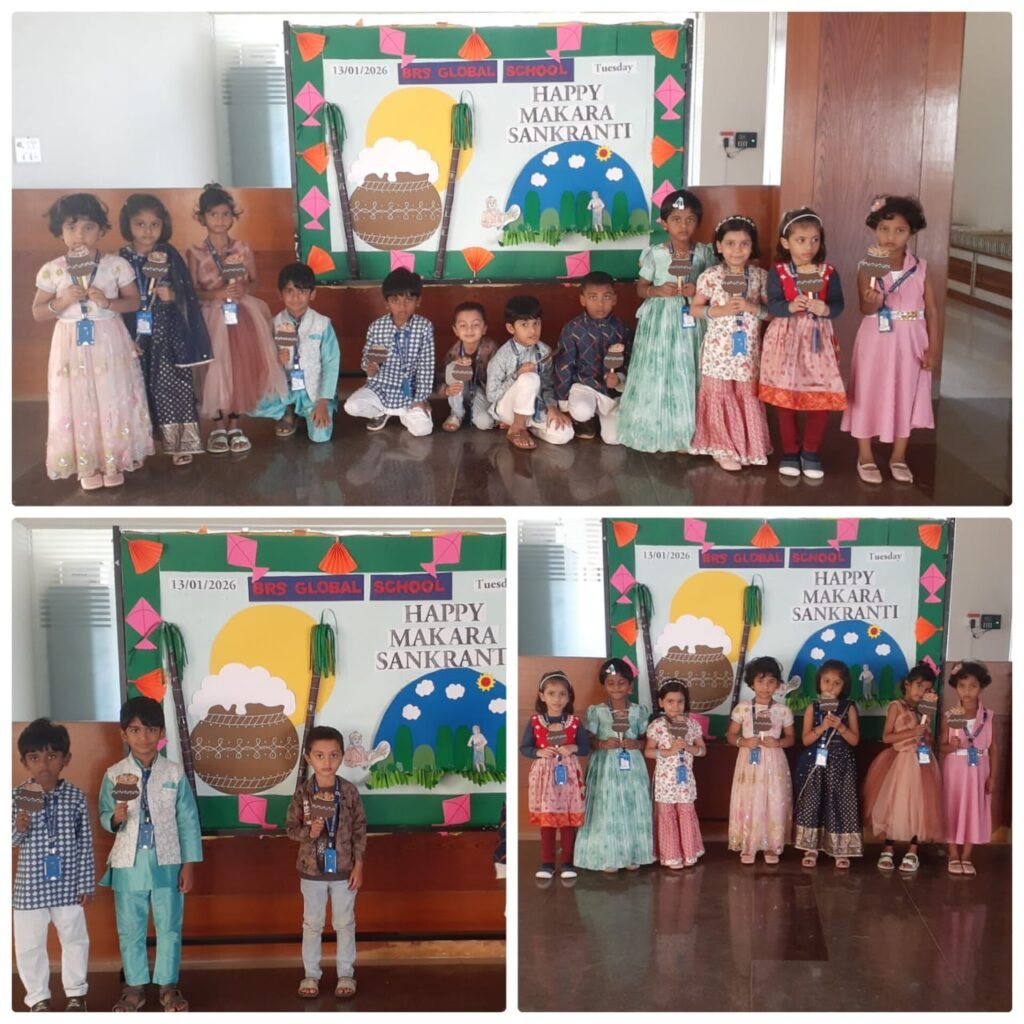
Held on 13 January 2026, the celebration brought together traditional decorations, creative Pongal craft activities, ethnic attire and kite flying. Every activity was designed to help children connect with the meaning of Pongal while developing age-appropriate skills through active participation.
For children, cultural celebrations are most meaningful when they can experience traditions firsthand. At BRS Global School, Attibele, the celebration created an environment where learning extended beyond the classroom and became a memorable part of the students’ school experience.
Event Overview
Event : Pongal Celebration 2026
School : BRS Global School – Attibele Campus
Date : 13 January 2026
Theme : Pongal – Harvest Festival of Tamil Nadu
Learning Approach : Experiential and activity-based learning
Key Activities : Pongal craft, decoration, traditional attire and kite flying
Focus Areas : Culture, creativity, fine-motor skills, confidence and social participation
What Happened During the Pongal Celebration?
The Pongal celebration at BRS Global School, Attibele, was planned as a joyful and experiential cultural learning experience.
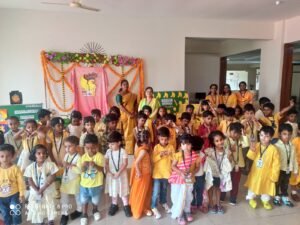
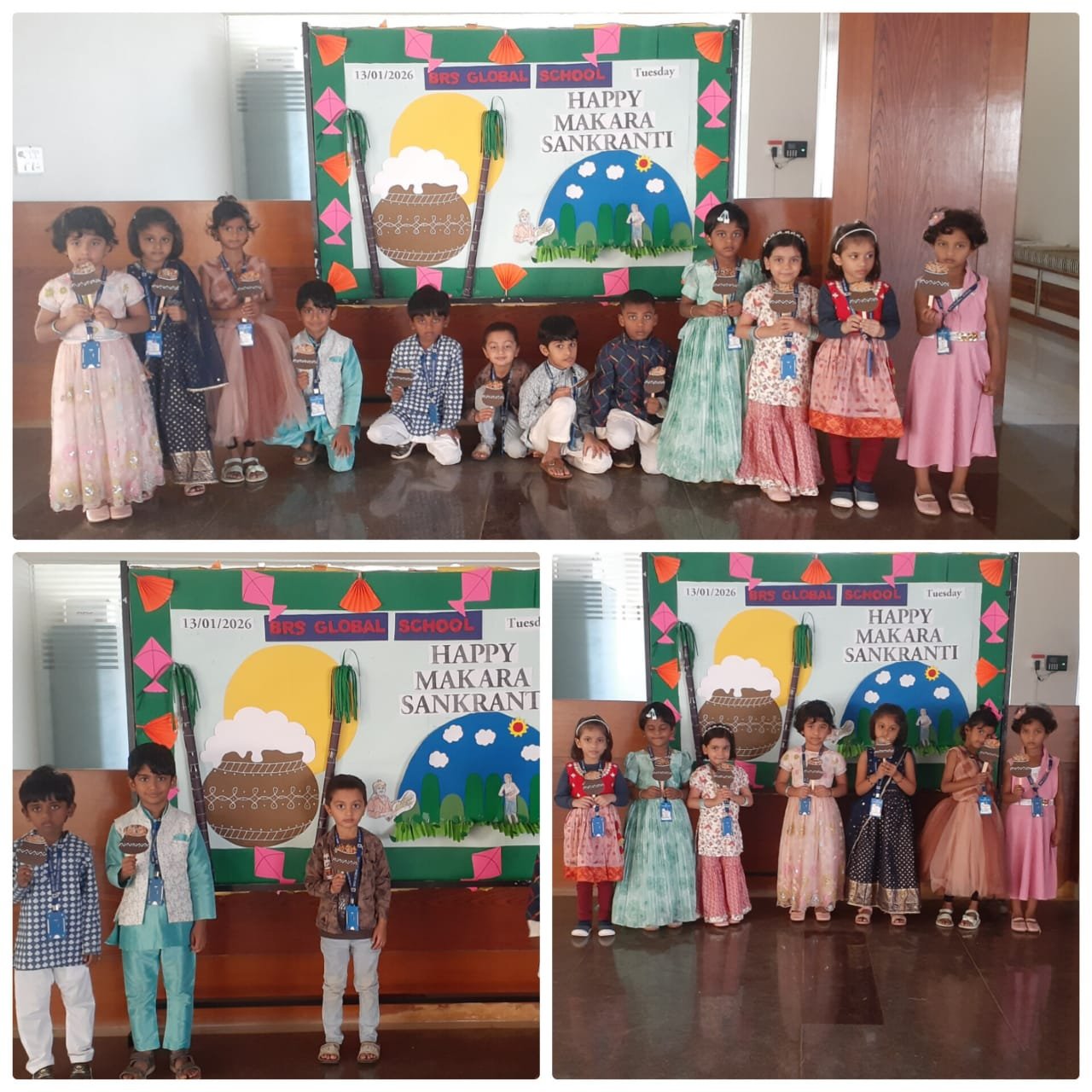
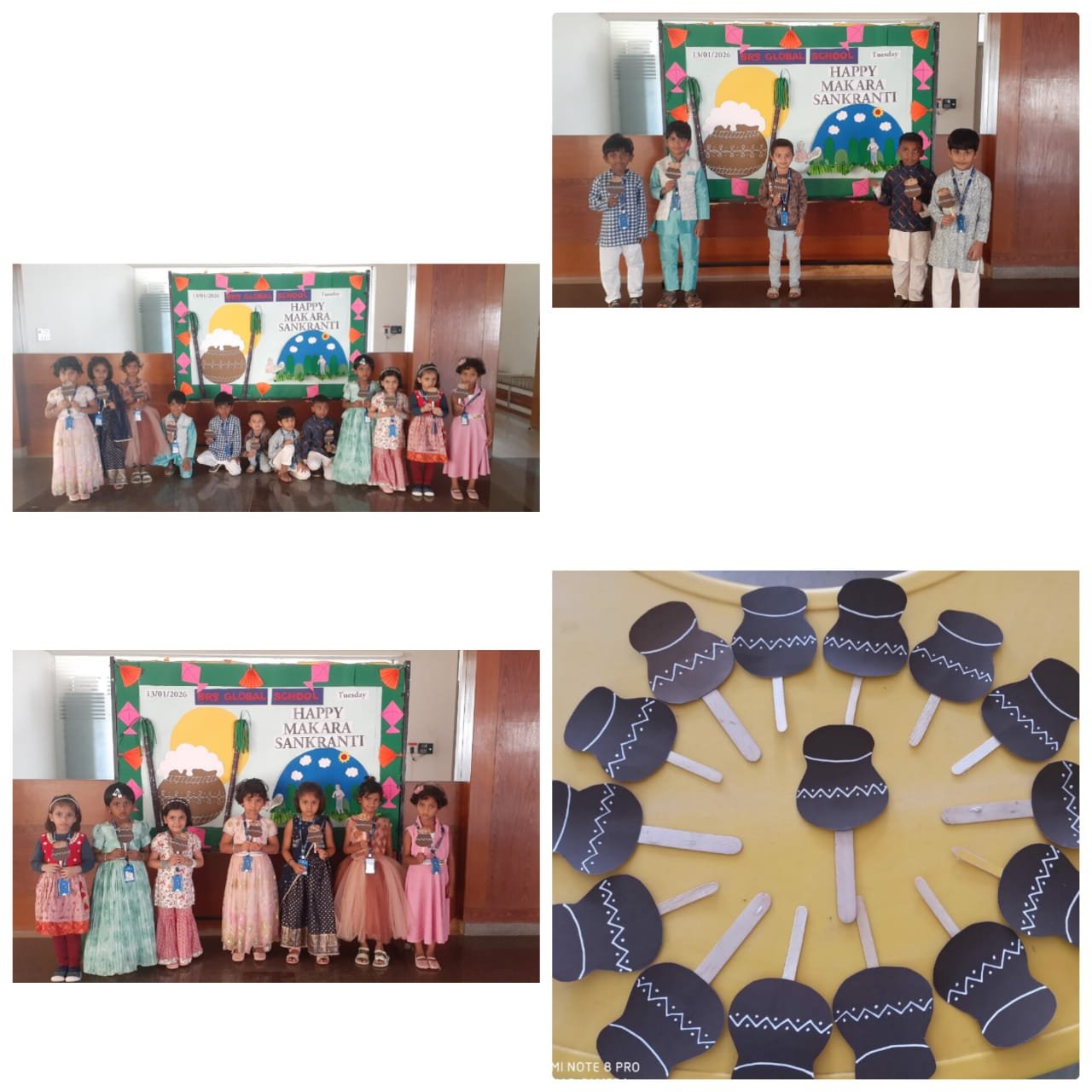
The classroom and celebration area were decorated with sugarcane, traditional Pongal pots and festive elements, creating a visual representation of the harvest festival. A colourful Pongal-themed display board further helped students connect familiar visual elements with the traditions associated with Pongal.
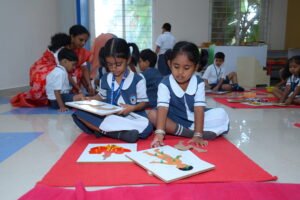
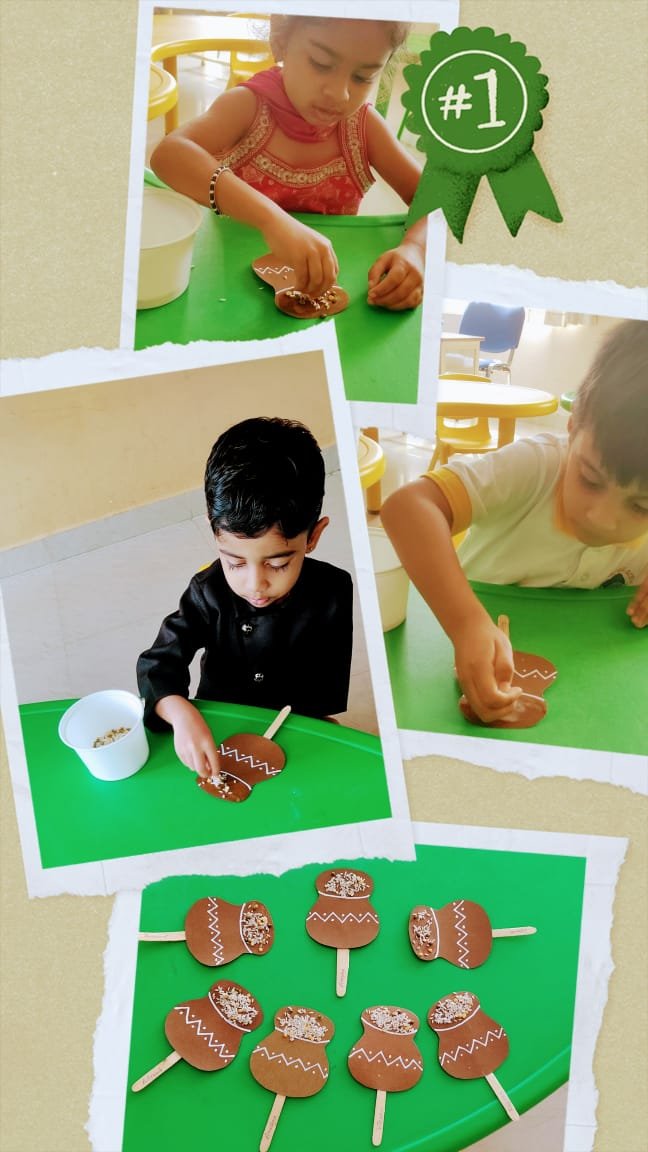
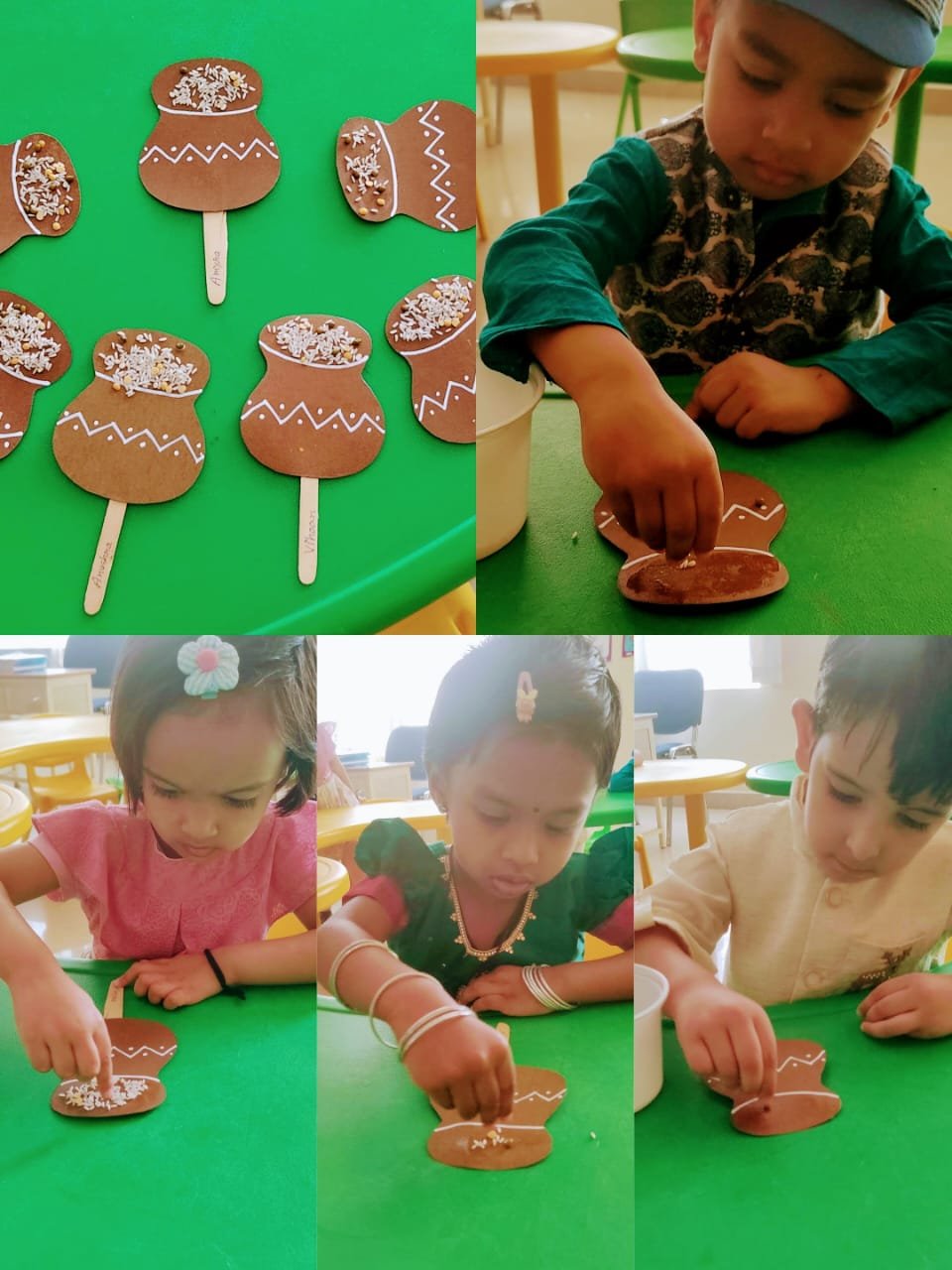
One of the key creative activities was Pongal pot-making and decoration. Students decorated handmade pot cut-outs using traditional patterns and grains. Through this activity, children explored textures, designs and materials while strengthening their fine-motor coordination.
The celebration also gave students an opportunity to wear traditional ethnic attire. Dressed in colourful outfits, the children participated enthusiastically and proudly displayed the crafts they had created.
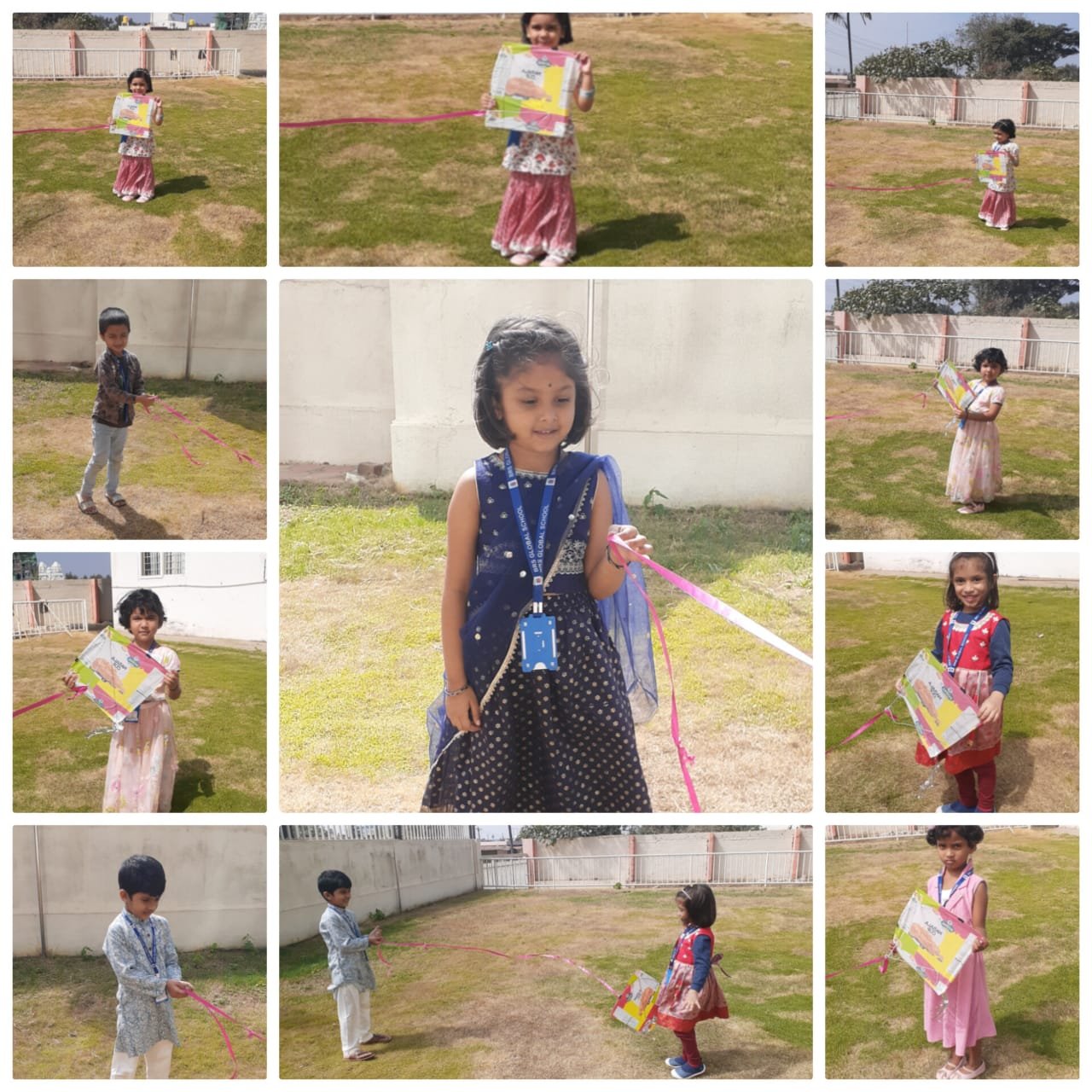
Another highlight was kite flying. The outdoor activity brought excitement and movement into the celebration while giving children an opportunity to enjoy a traditional festive experience in a playful setting.
What Did Students Learn from the Pongal Celebration?
The Pongal celebration helped students understand that festivals are not simply occasions for celebration; they are also opportunities to learn about culture, community, nature and everyday life.
Students learned about:
• Pongal as a harvest festival of Tamil Nadu.
• The cultural significance of sugarcane and Pongal pots.
• Traditional patterns, textures and materials.
• The importance of agriculture, food and farmers.
• Indian cultural traditions and heritage.
• The value of participating in community celebrations.
• Creative expression through hands-on activities.
The experience allowed children to make connections between what they see around them and what they learn in school.
What Skills Were Developed Through the Activities?
Creativity and Artistic Expression
Decorating Pongal pot cut-outs encouraged students to experiment with patterns, textures and designs. The activity provided freedom for creative expression while introducing children to traditional visual elements.
Fine-Motor Skills
Handling craft materials, placing grains and decorating the handmade pot cut-outs supported fine-motor coordination and controlled hand movements.
Cultural Awareness
Students developed an age-appropriate understanding of Pongal and its connection to Tamil Nadu’s agricultural and cultural heritage.
Confidence and Participation
Wearing traditional attire, displaying handmade crafts and participating in group activities encouraged students to express themselves confidently.
Sensory Exploration
The use of different materials, grains and textures gave students opportunities to explore through touch and visual observation.
Social and Collaborative Learning
Celebrating together encouraged children to participate as a group, share experiences and appreciate cultural traditions collectively.
How Does Pongal Celebration Support Experiential Learning?
Pongal Celebration 2026 reflects the value of learning by doing.
Instead of simply explaining Pongal through a textbook or classroom discussion, students were able to see traditional symbols, create their own crafts, wear ethnic clothing and participate in kite flying.
This approach makes learning more memorable because children engage multiple senses and participate actively in the learning process.
At BRS Global School – Attibele Campus, experiential opportunities such as cultural celebrations complement academic learning by helping students connect concepts with real-world experiences.
Why Does This Matter for Student Development?
A child’s education extends beyond academic achievement. Cultural and experiential activities can help children develop confidence, creativity, curiosity and social awareness.
The Pongal celebration supported this broader development by bringing together:
Culture + Creativity + Physical Activity + Social Participation + Experiential Learning
The celebration also introduced students to the relationship between festivals, harvests, food and farming. This helped children appreciate the contribution of farmers and understand why harvest festivals hold cultural significance.
For parents looking for a CBSE school in Attibele, such experiences demonstrate how school life can combine academic learning with opportunities for cultural awareness, creativity and character development.
How Does This Activity Support CBSE Learning?
The Pongal celebration complemented classroom learning by giving students an opportunity to apply learning through observation, creativity, communication and participation.
It supported learning areas such as:
• Cultural and social awareness
• Creative expression
• Fine-motor development
• Observation and sensory exploration
• Communication and confidence
• Collaborative participation
• Awareness of agriculture and community life
• Appreciation of Indian heritage
Rather than treating cultural education as an isolated topic, the celebration connected it with creativity, social interaction and real-life experiences.
Why Should Parents Value Cultural Celebrations at School?
Parents often look for schools that provide children with more than textbook-based learning. Cultural celebrations can contribute to a child’s overall school experience by helping students understand traditions while developing confidence and social awareness.
At BRS Global School, Attibele, celebrations such as Pongal provide children with opportunities to participate actively, create something with their own hands and learn about Indian culture in an age-appropriate manner.
The most important takeaway for parents is simple:
Children understand culture more deeply when they are given opportunities to experience it, create through it and participate in it.
Local Context: BRS Global School - Attibele Campus
BRS Global School – Attibele Campus is positioned in the growing Attibele – Sarjapur educational corridor, providing accessibility for families living across Attibele, Bidaraguppe, Anekal, Chandapura, Sarjapura and nearby communities.
The campus is also accessible from areas connected to Hosur Road, Electronic City, Bommasandra, Jigani, Sompura, Hosur Toll, Sipcot Industrial Area, Marasuru and Chikka Tirupati Road.
This location can be convenient for working parents and families living in the expanding residential communities, apartments and gated communities around South-East Bengaluru.
The Attibele campus offers a premium CBSE learning environment with an emphasis on academic development, experiential learning, leadership opportunities, sports, arts, life skills, confidence-building and strong values.
For families exploring schools in Attibele, CBSE schools in Attibele, or schools accessible from the Attibele–Sarjapur corridor, BRS Global School – Attibele Campus offers a locally accessible option focused on holistic student development.
Common Parent Questions
- How does Pongal celebration benefit young children?
- Pongal celebration helps children understand cultural traditions through direct participation. Activities such as craft-making, traditional dressing and kite flying can develop creativity, coordination, confidence and cultural awareness.
- What did children do during Pongal Celebration 2026?
- Students participated in Pongal-themed craft and decoration activities, wore traditional attire, observed festive decorations featuring sugarcane and Pongal pots, and enjoyed kite flying.
- What skills did students develop?
- The activities supported creativity, fine-motor coordination, sensory exploration, confidence, cultural awareness and social participation.
- Why are activity-based celebrations important in school?
- Activity-based celebrations make cultural learning more engaging by allowing children to see, touch, create and participate rather than only listen to an explanation.
- Does Pongal celebration support holistic education?
- Yes. The celebration brought together cultural learning, creativity, physical activity, social interaction and hands-on participation, supporting several dimensions of a child’s development.
- Which students benefit from experiential cultural activities?
- Young learners particularly benefit from hands-on experiences because concrete activities help them connect new concepts with familiar objects, actions and real-life experiences.
Key Highlights
• Pongal Celebration 2026 was held on 13 January 2026.
• The event introduced students to Pongal as a harvest festival.
• Traditional Pongal pots and sugarcane were used as festive learning symbols.
• Students participated in handmade Pongal pot decoration.
• Grains and traditional patterns were incorporated into the creative activity.
• Children came dressed in colourful traditional attire.
• Kite flying added an outdoor and physical element to the celebration.
• Students learned about Indian cultural heritage.
• The activities supported creativity and fine-motor development.
• Students explored the importance of harvest, food and farmers.
• The celebration encouraged collective participation and confidence.
Frequently Asked Questions (FAQs)
When was Pongal Celebration 2026 conducted at BRS Global School?
Pongal Celebration 2026 at BRS Global School – Attibele Campus was conducted on 13 January 2026.
What is the purpose of celebrating Pongal at school?
The purpose is to help students understand Pongal as a harvest festival and appreciate Indian traditions, agriculture, food and the contribution of farmers through meaningful activities.
What activities were conducted during the Pongal celebration?
The celebration included festive decorations, Pongal pot-making and decoration, traditional attire and kite flying.
How did the Pongal craft activity help students?
The craft activity encouraged creativity and helped strengthen fine-motor coordination while allowing children to explore traditional patterns, grains, textures and designs.
How does Pongal celebration contribute to holistic development?
It combines cultural awareness, creativity, physical activity, confidence, sensory exploration and social participation, making it a multidimensional learning experience.
Why is experiential learning valuable for children?
Experiential learning allows children to understand concepts through direct participation. It can make learning more meaningful and memorable by connecting ideas with real experiences.
Where is BRS Global School – Attibele Campus located?
BRS Global School – Attibele Campus is positioned in the Attibele–Sarjapur corridor and is accessible to families from Attibele, Bidaraguppe, Anekal, Chandapura, Sarjapura and nearby areas.
Conclusion: Celebrating Culture, Creating Memories and Learning Through Experience
The Pongal Celebration 2026 at BRS Global School – Attibele Campus was more than a festive gathering. It was an opportunity for children to discover Indian cultural heritage through creativity, participation and joyful experiences.
From decorating Pongal pots and exploring traditional materials to wearing ethnic attire and enjoying kite flying, each activity encouraged children to learn through participation.
Such experiences contribute to a school environment where academic learning and real-world understanding complement each other. For parents seeking a CBSE school in Attibele that values experiential learning, creativity, confidence and holistic development, meaningful cultural activities form an important part of a child’s educational journey.
Explore BRS Global School – Attibele Campus to discover a learning environment where children learn, participate, create and grow with confidence.
Explore Our Campus:
Attibele Campus Google Business Profile: https://share.google/iFhJaeGo8wkgOZ1Y5
Sarjapur Road Campus Google Business Profile: https://share.google/2oEno2EtFtY7eyP2B