
Introduction: Making EVS Learning Meaningful
Environmental Studies becomes more meaningful for young learners when concepts move beyond the pages of a textbook and become something children can observe, discuss, create and experience.
At BRS Global School, Sarjapur Road, the EVS topic “Water Animals” was introduced through a week-long sequence of classroom and experiential activities. Instead of relying on a single teaching method, children explored the topic through discussion, direct observation, creative work and an educational visit.
The approach allowed children to encounter the same concept in different ways. They discussed water animals in the classroom, observed aquatic life at the school aquarium, created water-animal-themed crafts and later visited the Cubbon Park Aquarium.
Event Overview: How Was the Water Animals Topic Introduced?
The Water Animals topic was covered over one week using four complementary learning methods:
• Classroom discussion
• Observation at the school aquarium
• Water-animal-themed bottle craft
• Educational visit to the Cubbon Park Aquarium
Each activity addressed the topic from a different learning perspective.
The classroom discussion established the basic concepts. The school aquarium provided an opportunity for direct observation. The bottle craft encouraged children to express their understanding creatively, while the aquarium visit extended the learning experience into a real-world setting.
This created a simple progression from learning → observing → creating → experiencing.
What Happened During the Water Animals Activity?
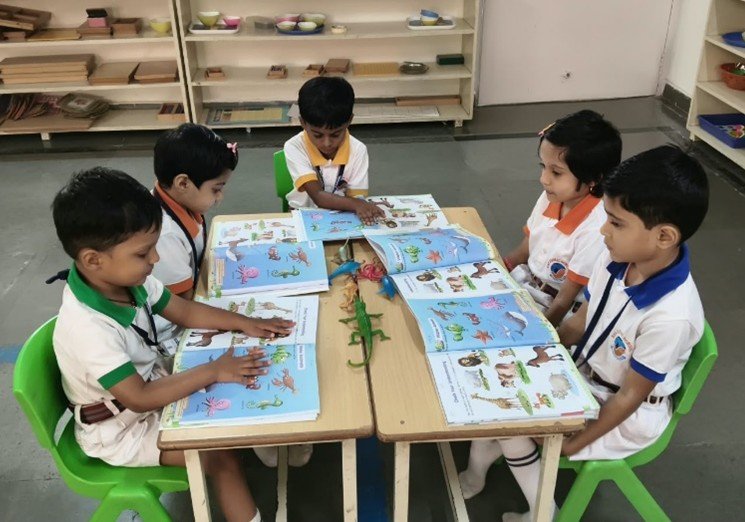
Classroom Discussion: Building the Foundation
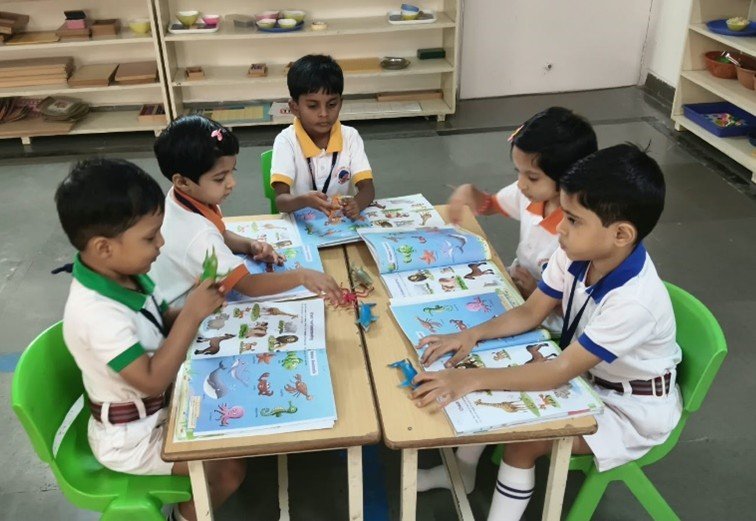
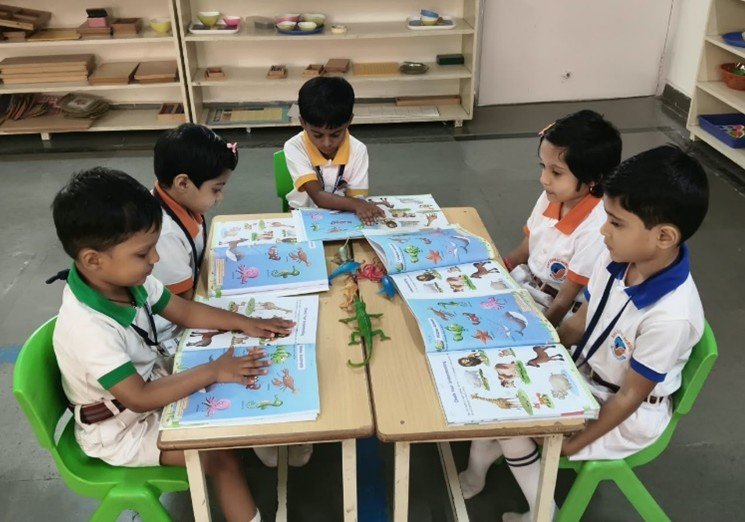
The topic began with a classroom discussion using the textbook.
Children learned about different water animals, their names, features and habitats. They actively participated in the discussion and shared what they already knew.
The classroom discussion provided the foundation for the activities that followed. By talking about aquatic animals before observing them, children had an opportunity to connect their existing knowledge with new concepts.
School Aquarium: Learning Through Direct Observation
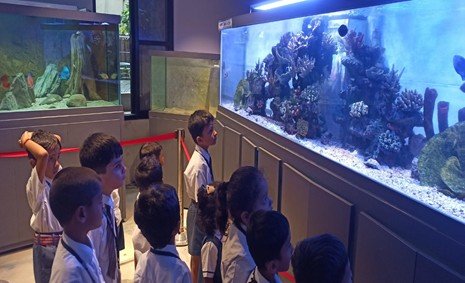
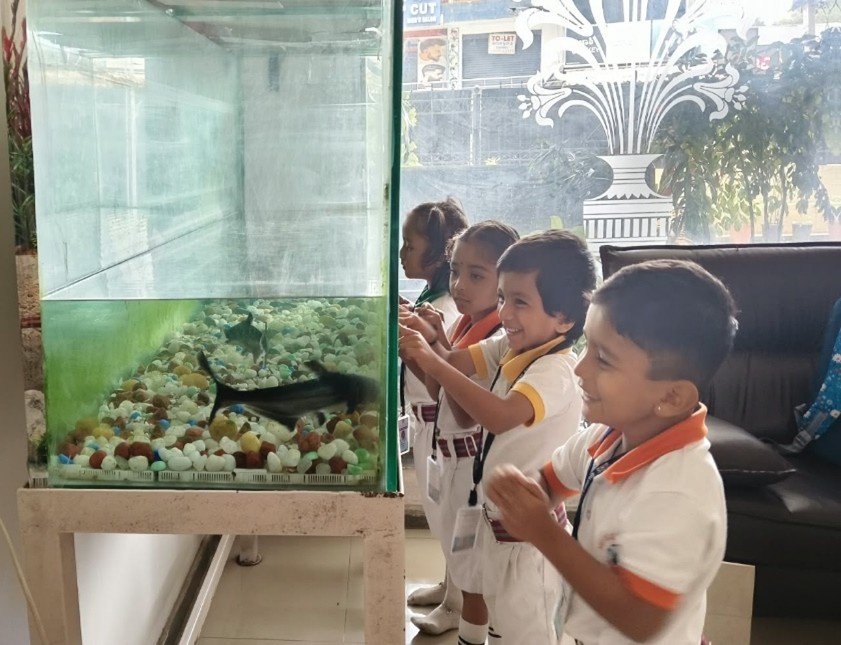
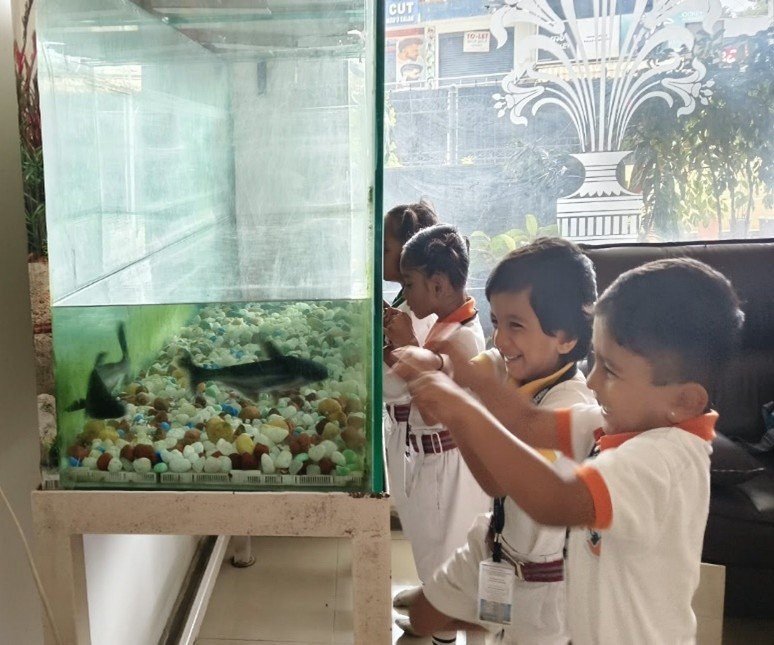
The children were then taken to the school aquarium to observe aquatic animals closely.
They enjoyed watching the fish and other water creatures and learned through direct observation. Seeing aquatic animals in person gave children an opportunity to connect the concepts discussed in class with real-life examples.
Observation also encouraged curiosity. Instead of only learning what water animals look like from a textbook, children could see their appearance and movements directly.
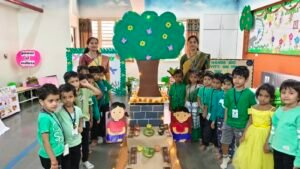
Bottle Craft Activity: Learning Through Creativity
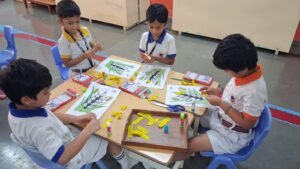
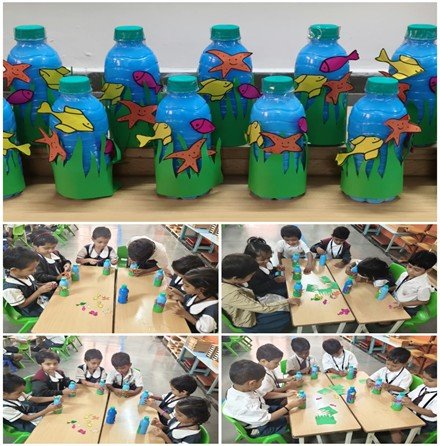
Children also participated in a creative bottle craft activity in the classroom.
They made water-animal-themed crafts using bottles and other materials. The activity encouraged creativity and helped children connect their craft with the EVS topic they had been learning.
The hands-on nature of the activity provided another way for children to engage with the concept. They could revisit the idea of water animals while working creatively with different materials.
Educational Visit to Cubbon Park Aquarium
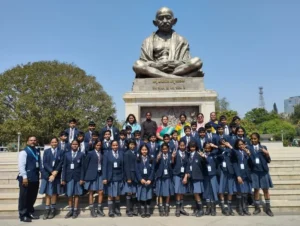
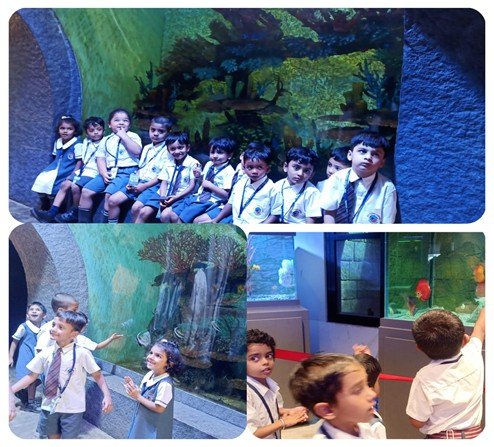
As part of experiential learning, the children went on an educational trip to the Cubbon Park Aquarium.
During the visit, they observed different water animals and learned more about their appearance, habitat and movements. The visit gave children an opportunity to learn about aquatic life through real-life observation.
The experience extended the classroom lesson into an educational environment where children could observe aquatic animals directly.
What Did Students Learn from the Water Animals Activity?
The week-long activity gave children multiple opportunities to develop their understanding of aquatic life.
Rather than learning through one method alone, students encountered the topic through discussion, observation, creativity and an educational visit.
Key learning outcomes included:
Understanding aquatic animals:
Children developed a better understanding of different water animals and their characteristics.
Learning about habitats:
Students learned about where water animals live and began connecting animals with their habitats.
Observation skills:
The school aquarium and educational visit encouraged students to observe aquatic creatures closely.
Creative expression:
The bottle craft activity gave children an opportunity to express their understanding of the topic creatively.
Participation and communication:
Classroom discussion encouraged children to share what they already knew and participate actively.
Connecting classroom and real-world learning:
The aquarium visit helped students connect textbook-based learning with real-world observation.
Educational Philosophy and Institutional Value Alignment
Sporting experiences complement academic learning by giving students opportunities to apply important personal and interpersonal skills outside the classroom.
At BRS Global School, student development encompasses more than academic achievement. Participation in competitions allows students to explore interests, experience challenges and learn through doing.
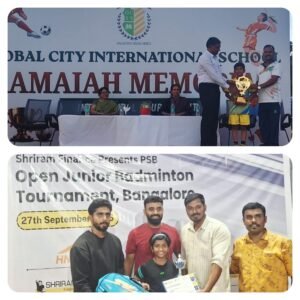
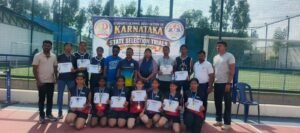
The achievements of Siddiksha and Nihal demonstrate two different sporting pathways. Siddiksha’s participation across U13, U15 and higher-grade badminton categories shows how students can challenge themselves through competition. Nihal’s recognition in football highlights how individual performance can be acknowledged within an inter-school sporting environment.
Such experiences contribute to a learning environment where students can pursue interests and develop qualities such as commitment, confidence, perseverance and sportsmanship.
Why Is Experiential Learning Important for Young Children?
Experiential learning allows children to encounter a concept through different forms of engagement.
In the Water Animals activity, children did not simply read about aquatic animals. They discussed them, observed them, created something related to them and encountered aquatic life during an educational visit.
This created several points of connection around the same concept.
For young learners, these varied experiences can make learning more engaging and meaningful. A topic becomes associated not only with words in a textbook but also with classroom conversation, visual observation, creative activity and real-world experiences.
How Does the Activity Support Holistic Student Development?
A learning experience can support several areas of development at the same time when children are given opportunities to engage in different ways.
The Water Animals activity combined academic understanding with observation, creativity and participation. Classroom discussion supported communication, while aquarium observation encouraged attention and curiosity. The craft activity provided creative engagement, and the educational visit offered real-world exposure.
The children were therefore given opportunities to understand, observe, create and experience.
How Does the Activity Connect with CBSE-Oriented Learning?
The Water Animals activity connected classroom-based EVS learning with observation, practical engagement and real-world experiences.
Students first learned about water animals through classroom discussion and then explored the topic through the school aquarium, creative craft activity and educational visit.
This approach helped children connect concepts about animals, characteristics and habitats with experiences beyond the textbook.
Why Does Real-World Observation Matter in Environmental Studies?
Children naturally learn by observing the world around them. When an EVS concept is connected to something they can see and experience, the concept can become more concrete.
Discussing water animals in the classroom and then observing aquatic animals at an aquarium gave students different ways to engage with the same topic.
The Water Animals activity therefore demonstrated how EVS learning can connect classroom concepts with the living world.
Local Context: Experiential Learning in Bengaluru
For families exploring schools in Sarjapur Road, CBSE schools in Sarjapur Road, or schools serving communities around Bellandur and nearby areas, experiential learning can be an important part of the overall school experience.
BRS Global School‘s Sarjapur Road branch serves families in and around Bellandur, Sarjapur Road, Hosa Road, Koramangala, HSR layout, Dommasandra, Kodathi, Gunjur, Varthur, Kaikondrahalli, Kasavanahalli, Carmelaram, Harlur, Rayasandra, Naganathapura, Doddakannelli, Kudlu Gate, A Krishnappa Nagar, Halnayakanahalli, Radha Reddy Layout, Chikkanayakanahalli, Huskur, KPC Layout, CSB Layout, Owners Court, Doddanagamangala, Doctors Layout, Shiva Reddy Layout, Meenakshi Layout, Chikbellandur, Sompura Gate, Muthannalur Cross, Gunjur to Dommasandra Road, Mullur, Amrita Engineering College Road Kasavanahalli, Amrita Nagar, Serenity Layout, Spring Fields, Iblur, Marathahalli, Shobha Apartments, Choodasandra, Junnasandra, Rayasandra.
The Sarjapur Road area is also connected to several residential communities and employment hubs across Bengaluru’s eastern and southeastern corridors.
For families considering schools from areas such as Koramangala, HSR Layout, Bellandur or nearby communities, the school experience involves more than classroom instruction. Activities that allow children to observe, create and experience concepts can complement their regular academic learning.
Common Parent Questions
How does learning about water animals support EVS learning?
The activity introduced children to different water animals, their characteristics and habitats while giving them opportunities to explore the topic through discussion, observation, creativity and real-world experiences.
How does an aquarium visit help children learn?
An aquarium visit provides direct observation of aquatic animals. Children can see their appearance and movements and connect these observations with concepts introduced during classroom learning.
Why include craft activities in an EVS lesson?
A topic-based craft activity gives children a creative and hands-on way to engage with what they have learned. It allows them to revisit the topic while making something connected to the lesson.
What skills can children develop through observation-based learning?
Observation-based activities encourage children to pay attention to details, notice characteristics and communicate what they observe.
Does experiential learning replace classroom teaching?
No. In this activity, classroom discussion provided the foundation, while aquarium observation, craft and the educational visit extended the learning experience.
Which students benefit from this type of learning?
Young learners can benefit from varied learning experiences because concepts are explored through discussion, observation, hands-on activity and real-world exposure.
Key Highlights
• Topic: EVS – Water Animals
• Duration: One week
• Number of learning methods: Four
• Method 1: Classroom discussion
• Method 2: School aquarium observation
• Method 3: Water-animal-themed bottle craft
• Method 4: Educational visit to Cubbon Park Aquarium
• Key concepts: Water animals, characteristics and habitats
• Learning approaches: Discussion, observation, creativity and real-world experience
Frequently Asked Questions (FAQs)
What is the Water Animals activity at BRS Global School?
It is a week-long EVS learning experience in which children explore water animals through classroom discussion, school aquarium observation, bottle craft and an educational visit to the Cubbon Park Aquarium.
What do children learn from studying water animals?
Children learn about different water animals, their characteristics and habitats while developing observation and topic-related understanding.
Why did students visit an aquarium?
The aquarium visit provided an opportunity for children to observe aquatic animals directly and connect classroom learning with real-world experience.
What was the purpose of the bottle craft activity?
The bottle craft activity encouraged children to explore the topic creatively by making water-animal-themed crafts using bottles and other materials.
How does this activity make EVS learning engaging?
The topic was explored through several learning methods, giving children different ways to engage with the same concept.
How does the activity support holistic development?
The activity combined academic learning with observation, creativity, participation and real-world exposure.
Is this activity relevant to parents looking for CBSE schools in Sarjapur Road?
Yes. It demonstrates how a classroom topic can be extended through observation, hands-on work and experiential learning.
Conclusion: From Classroom Learning to Real-World Experience
The Water Animals learning experience demonstrates how a simple EVS topic can become a broader learning journey when children are given different ways to explore it.
The week began with classroom discussion and continued with observation at the school aquarium, a creative bottle craft activity and an educational visit to the Cubbon Park Aquarium. Together, these experiences helped children develop a better understanding of water animals while engaging with the topic through different forms of learning.
For parents, experiences like these provide an insight into how classroom concepts can be connected with observation, creativity and real-world experiences.
Explore our Campus:
Attibele Branch:
https://share.google/iFhJaeGo8wkgOZ1Y5
Sarjapur Road Branch: