
Introduction
Environmental awareness becomes more meaningful when students have opportunities to experience, question, create, and communicate. At BRS Global School | Best CBSE School in Sarjapur Road, the Eco Club provides students with a platform to explore environmental themes through creative and participatory activities.
The Eco Club programme includes activities that use natural and reusable materials, encourage students to communicate environmental messages, and introduce themes such as pollution, climate change, water conservation, plastic use, and protection of natural resources. The June and July planners show a progression from upcycled crafts and natural dyeing to environmental sculptures, collage making, skits, vegetable carving, and poster making.
For students, this creates an opportunity to understand environmental responsibility through doing and creating, rather than through information alone.
Event Overview
The Eco Club programme at the Sarjapur Road branch includes a range of environmental activities conducted across the academic year.
The documented activities include:
• Natural Dyeing
• Environmental Sculptures
• Collage Making
• Skits and Role-Plays
• Vegetable Carving
• Save Water Poster Making
• Eco-Themed Slogan Competition
• Environmental Documentary Screening
• Eco-Poetry Competition
• DIY Upcycled Planters and Garden Beds
The June planner introduced activities such as upcycled crafts, natural dyeing, and environmental sculptures using materials including recycled items, plants, vegetables, leaves, twigs, and rocks.
The July programme expanded the environmental theme through creative communication, including collage making based on “Our Changing Planet” and skits addressing air pollution, climate change, and plastic bans.
What Happened During the Eco Club Activities?
Natural Dyeing: Discovering Colours from Nature
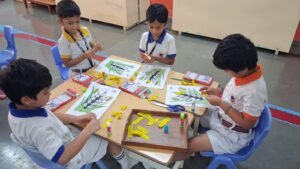
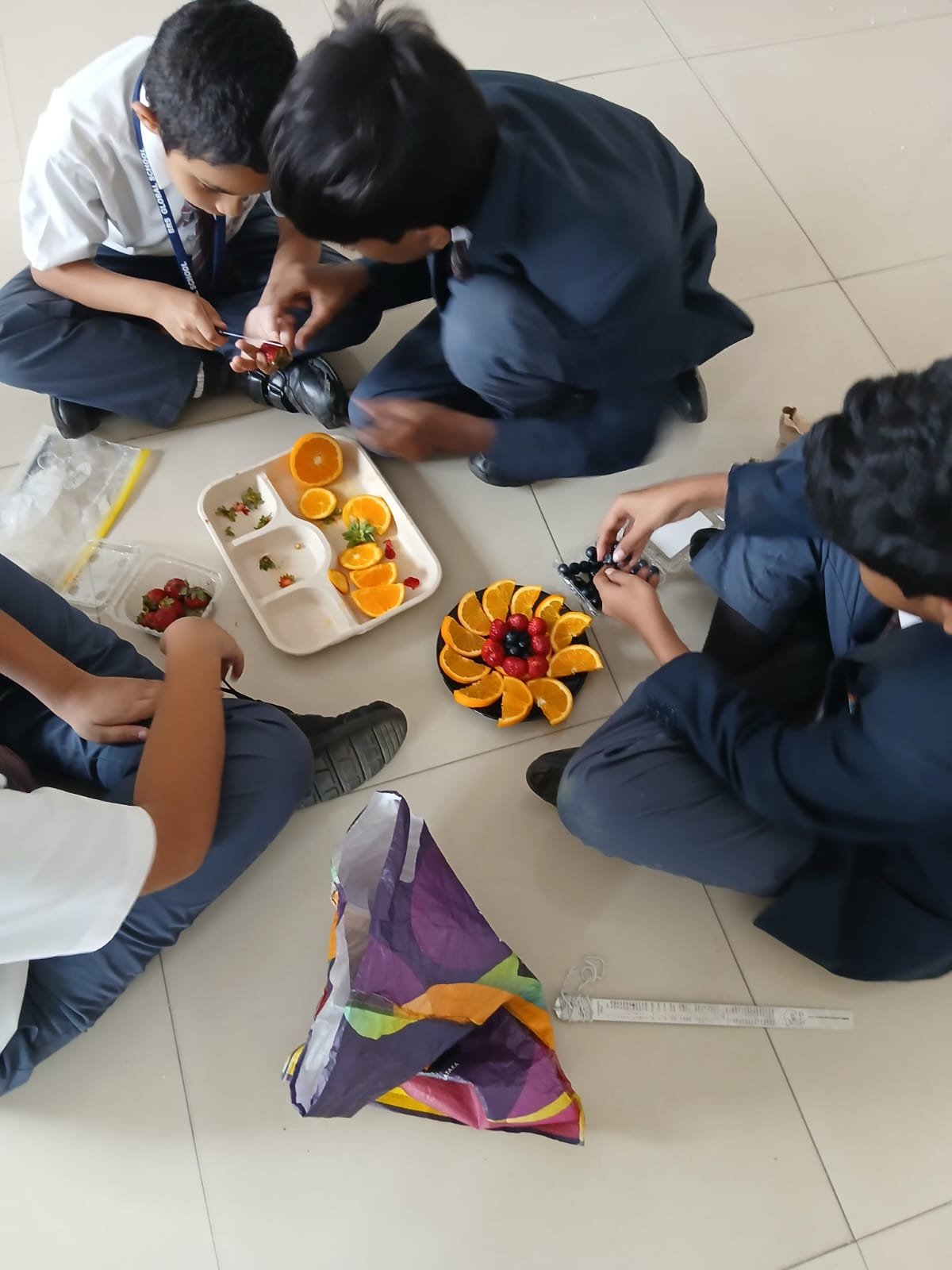
The Natural Dyeing activity introduced students to sustainable creative practices using colours derived from fruits and vegetables.
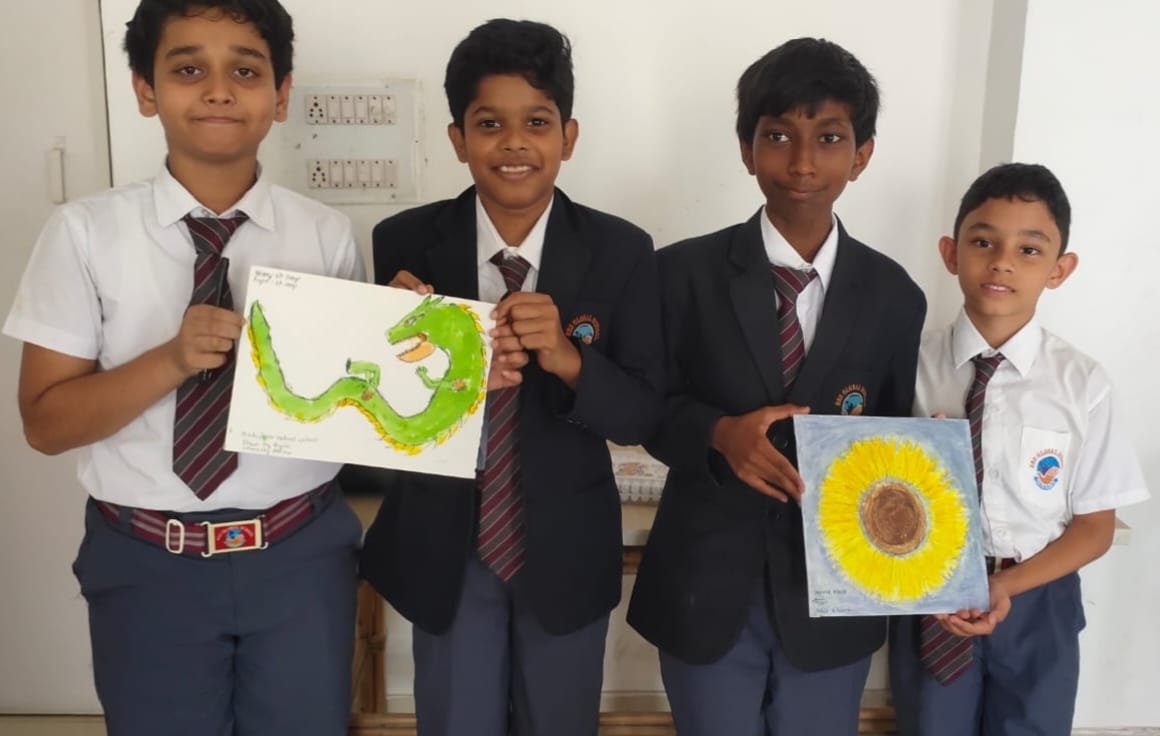
The documented activity specifically used beetroot, turmeric, spinach, carrot, pomegranate peel, and jamun/blueberries as natural sources of colour. Its stated aim was to promote eco-conscious creativity and reduce the use of chemical-based art supplies.
Students used the natural colours to create a variety of artworks, including:
• Palm prints
• Sunflower paintings
• Floral patterns
• Abstract and symmetrical designs
• A multi-coloured parrot
• Nature scenery
• A real-plant depiction
• A “Save Earth, Save Water” poster
The activity connected artistic expression with an introduction to sustainable choices.
Environmental Sculptures: Creating with Natural Materials
On 1 July 2025, the Eco Club conducted an Environmental Sculptures – House-wise Competition in the Eco Club Room.
The activity involved 76 Eco Club students, with 74 present and 2 absent. Students were divided into the Blue, Yellow, Green, and Orange Houses.
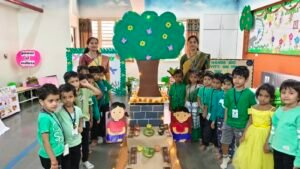
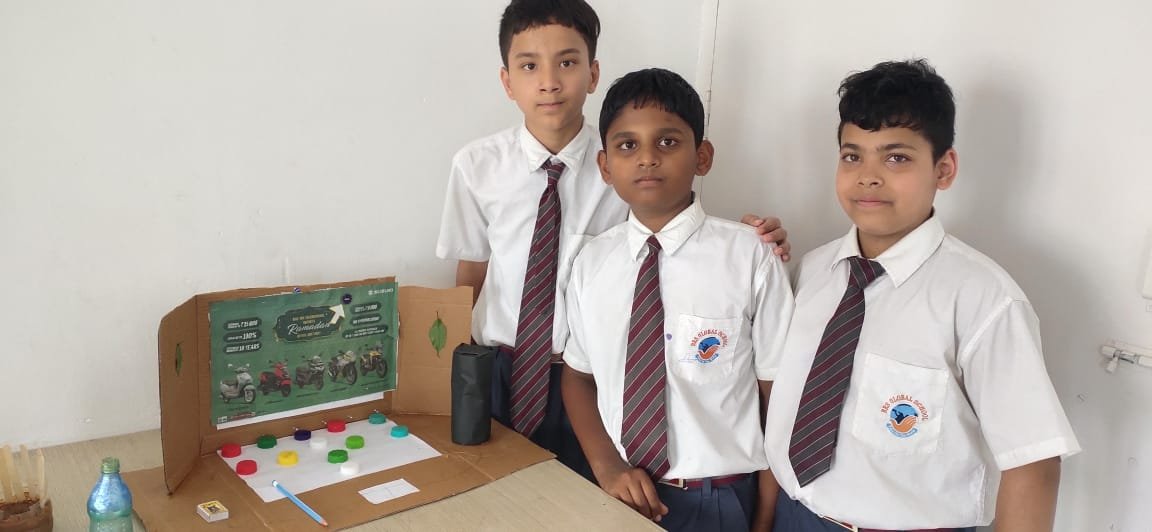
Students created environmental-themed models using materials such as leaves, small stones, sticks, paper, clay, and other accessible resources.
The documented creations included:
• A tortoise model using leaves and small stones
• A fish model using leaves and glue
• A beach model using paper, stones, leaves, and sticks
• A plant model carrying the message “Save Plants”
• Other house-based environmental models
The recorded house-wise results were:
First Place – Orange House
Second Place – Green House
Third Place – Blue House
The activity gave students an opportunity to translate environmental ideas into three-dimensional creative work.
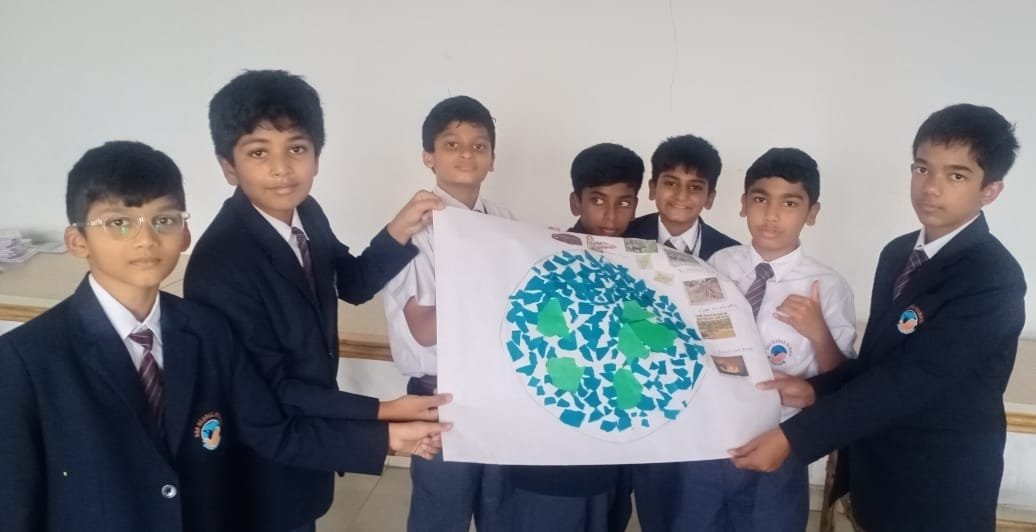
Collage Making: “Our Changing Planet”
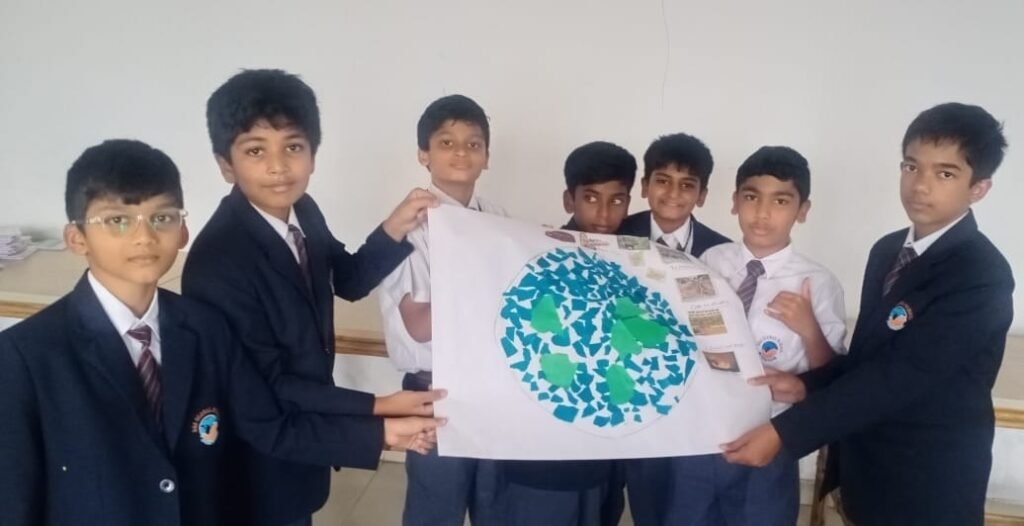
The July Eco Club planner scheduled Collage Making for 8 July 2025 under the theme “Our Changing Planet.”
Students were encouraged to use newspaper cuttings, magazines, and similar materials to highlight environmental issues.
Collage making can help students organise visual information, identify environmental themes, and communicate ideas through a combination of images and text.
In this context, the activity provided a creative way for students to engage with the idea of a changing planet and reflect on environmental concerns.
Skits and Role-Plays: Communicating Environmental Messages
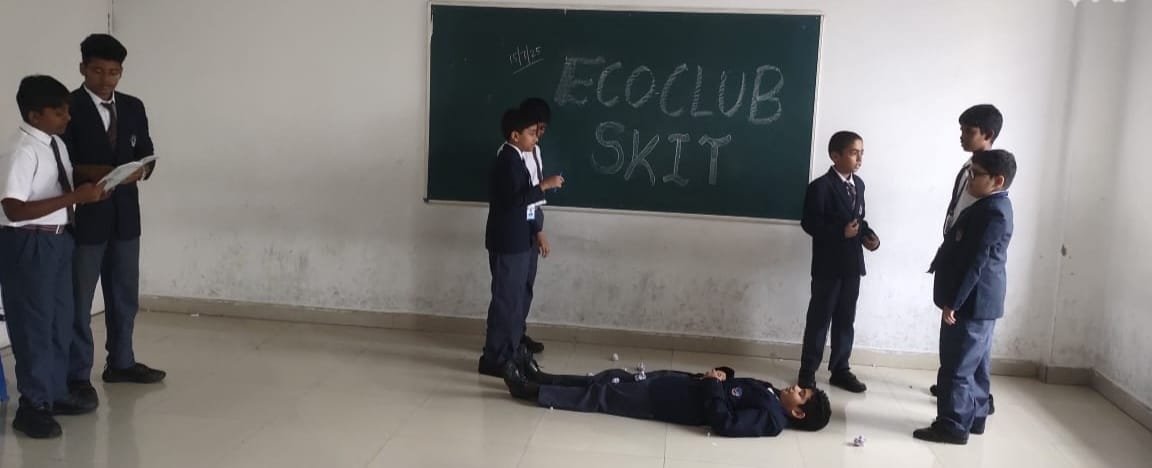
On 15 July 2025, the Eco Club conducted Skits and Role-Plays around environmental topics including air pollution, climate change, and plastic bans.
Students were divided into groups according to their houses. They discussed their topics and prepared scripts before presenting their performances.
The documented performances included messages related to saving water, protecting the Earth, maintaining a clean environment, and preventing water pollution.
This format allowed students to communicate environmental ideas through dialogue and performance while working collaboratively.
Student Learning Outcomes & Benefits
What skills do students develop through Eco Club activities?
Eco Club activities combine environmental themes with opportunities to develop practical and interpersonal skills.
Creativity and Expression
Natural dyeing, sculpture making, collage creation, and environmental art allow students to communicate ideas visually. They work with different materials and explore ways to represent environmental concepts creatively.
Collaboration and Teamwork
House-wise competitions and group performances require students to work together, discuss ideas, divide responsibilities, and contribute towards a common outcome.
Communication Skills
Skits and role-plays provide students with an opportunity to communicate environmental messages through spoken performance. Students also need to organise their ideas and present them to an audience.
Environmental Awareness
The activities introduce students to themes including pollution, climate change, water conservation, plastic use, plant protection, and responsible use of resources.
Problem-Solving and Resourcefulness
Activities involving natural, recycled, or readily available materials encourage students to think about how different resources can be used creatively.
Educational Philosophy / Institutional Value Alignment
The Eco Club reflects an experiential approach to learning in which students engage with concepts through participation.
Environmental education becomes more relevant when students are given opportunities to work with materials, collaborate with peers, create representations, and communicate their understanding.
The activities documented for the Eco Club demonstrate this approach through practical experiences such as natural dyeing, environmental sculpture making, collage creation, and role-play.
The programme also complements the broader idea of holistic student development by combining knowledge, creativity, communication, collaboration, and awareness rather than treating environmental learning as an isolated topic.
Why Does This Matter for Student Development?
Why should parents value environmental learning experiences?
Environmental activities can help students develop awareness alongside practical and creative skills. They provide opportunities for children to think about everyday environmental issues while working collaboratively and expressing their understanding.
For parents, the value lies in seeing learning move beyond memorisation. When students create a model from natural materials, experiment with plant-based colours, prepare an environmental skit, or develop a sustainability-themed collage, they are engaging with ideas through an active learning process.
The Eco Club therefore creates a space where environmental awareness and student development intersect.
Local Context Relevance
For families exploring schools in Sarjapur Road, environmental learning is one aspect of the broader educational experience that can help differentiate a school’s student engagement opportunities.
BRS Global School’s Sarjapur Road branch serves the Kasavanahalli and Sarjapur Road community, with relevance for families from nearby areas such as Bellandur, Sarjapur Road, Hosa Road, Koramangala, HSR layout, Dommasandra, Kodathi, Gunjur, Varthur, Kaikondrahalli, Kasavanahalli, Carmelaram, Harlur, Rayasandra, Naganathapura, Doddakannelli, Kudlu Gate, A Krishnappa Nagar, Halnayakanahalli, Radha Reddy Layout, Chikkanayakanahalli, Huskur, KPC Layout, CSB Layout, Owners Court, Doddanagamangala, Doctors Layout, Shiva Reddy Layout, Meenakshi Layout, Chikbellandur, Sompura Gate, Muthannalur Cross, Gunjur to Dommasandra Road, Mullur, Amrita Engineering College Road Kasavanahalli, Amrita Nagar, Serenity Layout, Spring Fields, Iblur, Marathahalli, Shobha Apartments, Choodasandra, Junnasandra, Rayasandra , and surrounding communities.
For working families living in residential communities and gated societies around the Sarjapur Road–Bellandur corridor, activities such as Eco Club initiatives can provide students with opportunities to engage with sustainability and environmental responsibility within their school environment.
This local relevance is particularly meaningful in a rapidly developing urban area, where conversations around responsible resource use, environmental awareness, and sustainable habits are increasingly part of everyday community life.
Common Parent Questions
How does Eco Club learning support CBSE education?
Eco Club activities provide opportunities for students to explore environmental themes through practical, creative, and collaborative experiences. They can complement classroom learning by allowing students to apply communication, observation, creativity, and teamwork in an environmental context.
How does the Eco Club improve student confidence?
Activities such as skits and role-plays give students opportunities to prepare content, work with peers, and communicate messages through performance. Participation in house-wise activities can also encourage students to contribute actively to group outcomes.
What skills are developed through environmental activities?
Students can develop creativity, teamwork, communication, problem-solving, resourcefulness, environmental awareness, and the ability to express ideas through different forms.
Which students benefit from Eco Club activities?
Students with different interests can participate meaningfully. Those who enjoy art may engage strongly with natural dyeing, sculpture, and collage work, while students interested in communication and performance may connect with skits and role-plays. Group activities also provide opportunities for collaborative learners.
Why is hands-on environmental learning important?
Hands-on learning gives students opportunities to interact directly with materials and ideas. It can make abstract environmental concepts more tangible by connecting them with creative tasks and practical experiences.
Key Highlights
• Eco Club activities combine environmental awareness with experiential learning.
• Natural Dyeing used colours derived from fruits and vegetables.
• Students created artworks using beetroot, turmeric, spinach, carrot, pomegranate peel, and jamun/blueberries.
• The Environmental Sculptures competition involved 76 club students, with 74 present.
• Students created environmental models using natural and accessible materials.
• The July collage activity followed the theme “Our Changing Planet.”
• Environmental skits addressed air pollution, climate change, and plastic bans.
• The Eco Club programme includes water conservation and sustainability-focused activities.
• Later planned activities include eco-themed slogans, documentary screening, eco-poetry, and upcycled planters.
Frequently Asked Questions (FAQs)
What is the purpose of the Eco Club at BRS Global School?
The Eco Club provides students with opportunities to explore environmental awareness through creative, collaborative, and hands-on activities.
What did students do during the Natural Dyeing activity?
Students used natural sources such as beetroot, turmeric, spinach, carrot, pomegranate peel, and jamun/blueberries to create colours and artworks.
When was the Environmental Sculptures competition conducted?
The Environmental Sculptures house-wise competition was conducted on 1 July 2025 in the Eco Club Room.
What was the theme of the Eco Club collage activity?
The theme was “Our Changing Planet.” Students were encouraged to use newspaper cuttings, magazines, and similar materials to highlight environmental issues.
What topics were covered in the Eco Club skits?
The July activity plan identified air pollution, climate change, and plastic bans as the key topics for the Skits and Role-Plays.
How do Eco Club activities support holistic development?
They bring together environmental awareness, creativity, teamwork, communication, resourcefulness, and active participation, providing students with learning experiences beyond conventional classroom activities.
What other Eco Club activities are planned?
The documented November–December planner includes vegetable carving, Save Water poster making, an eco-themed slogan competition, environmental documentary screening, eco-poetry, and DIY upcycled planters or garden beds.
Conclusion
The Eco Club at BRS Global School provides students with meaningful opportunities to explore environmental responsibility through creative expression, hands-on activities, teamwork, communication, and sustainability-focused learning.
From natural colours and environmental sculptures to collages and role-plays, the documented activities show how students can engage with environmental themes in varied and accessible ways.
For families considering CBSE schools in Sarjapur Road, experiences such as these form one part of a broader learning environment where academic development can be complemented by creativity, collaboration, awareness, and practical engagement.
Parents looking to understand how BRS Global School approaches holistic and experiential learning can explore the Sarjapur Road campus and learn more about the school’s academic and student development programmes.
Sarjapur Road Campus (Primary Campus):
https://share.google/2oEno2EtFtY7eyP2B
Attibele Campus (Another BRS Global School Branch):
https://share.google/iFhJaeGo8wkgOZ1Y5