Introduction
Technology education becomes more meaningful when students are encouraged to use what they learn to understand and solve real-world problems.
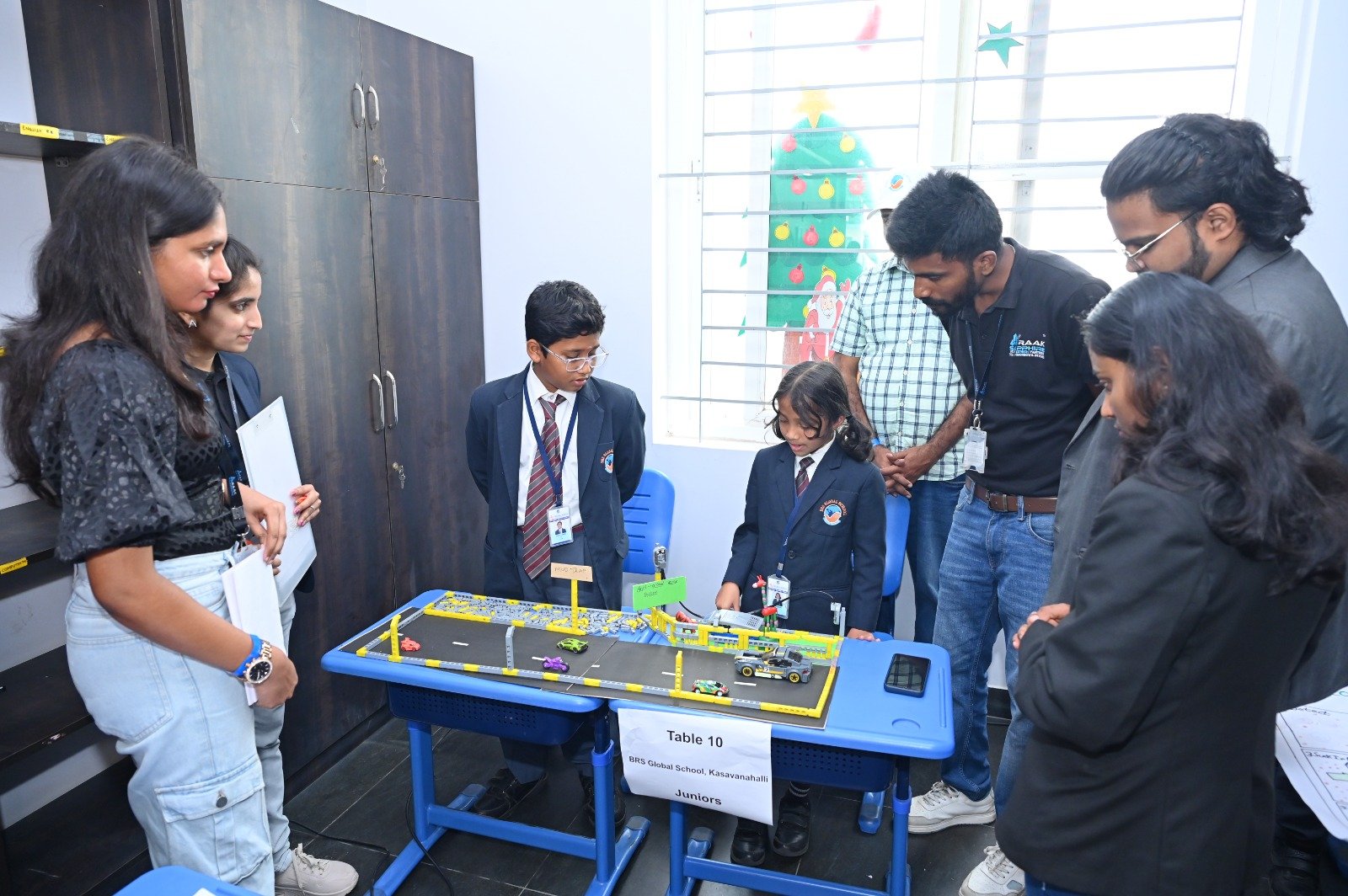
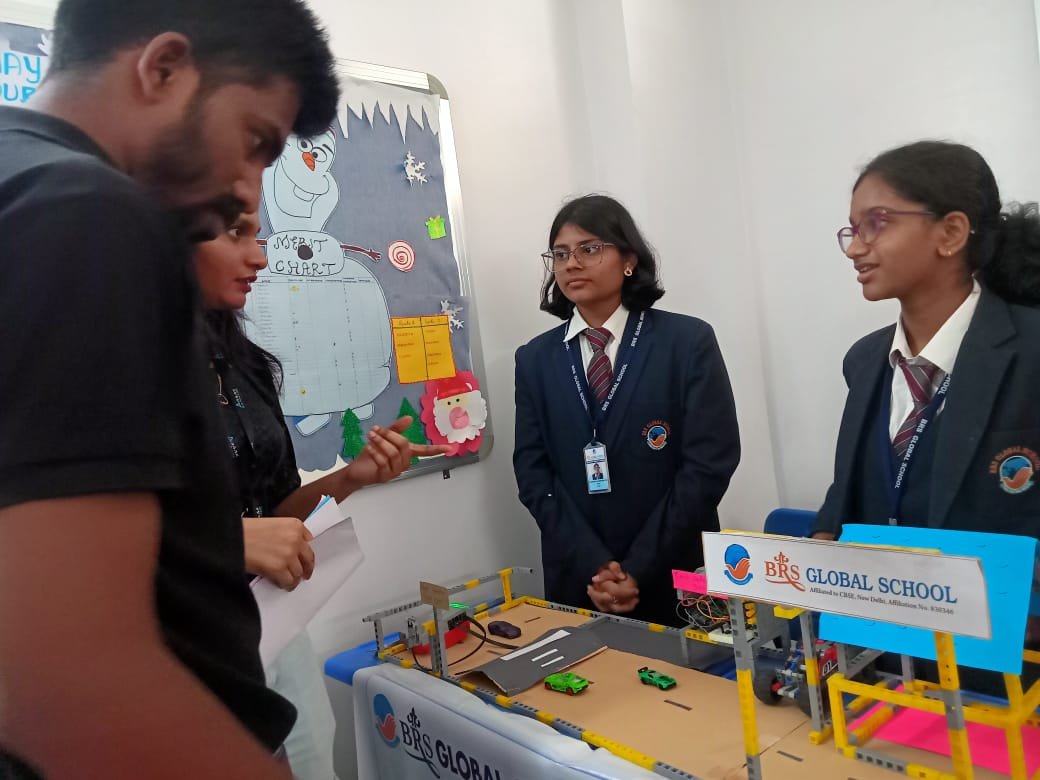
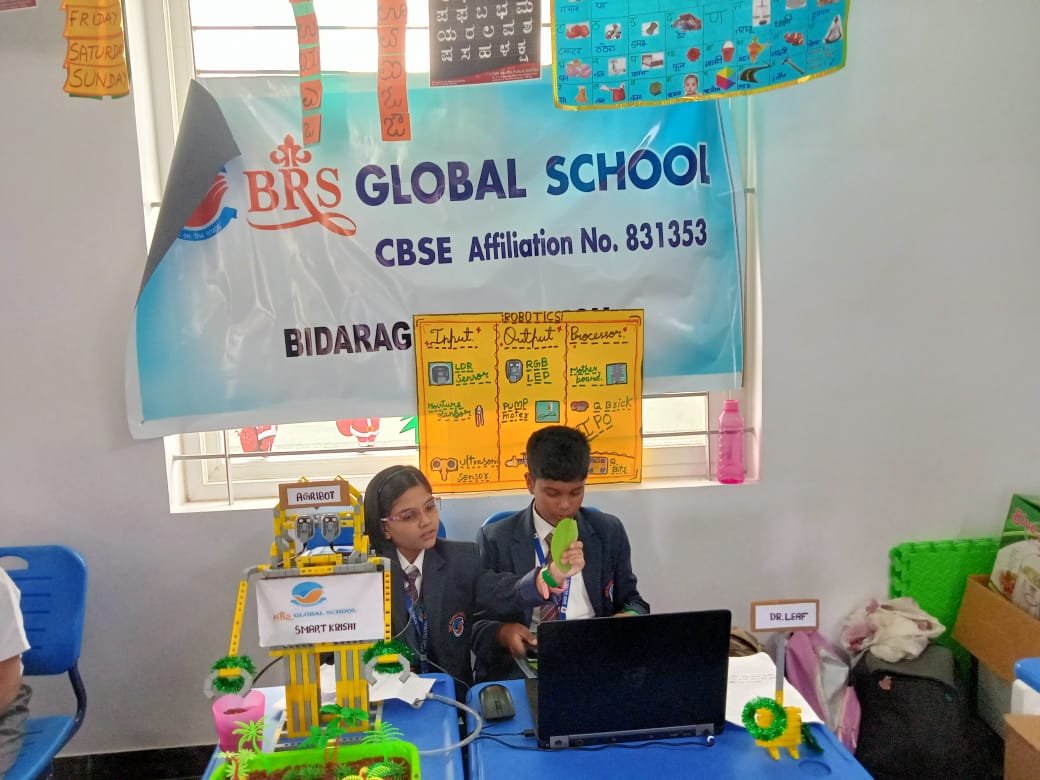
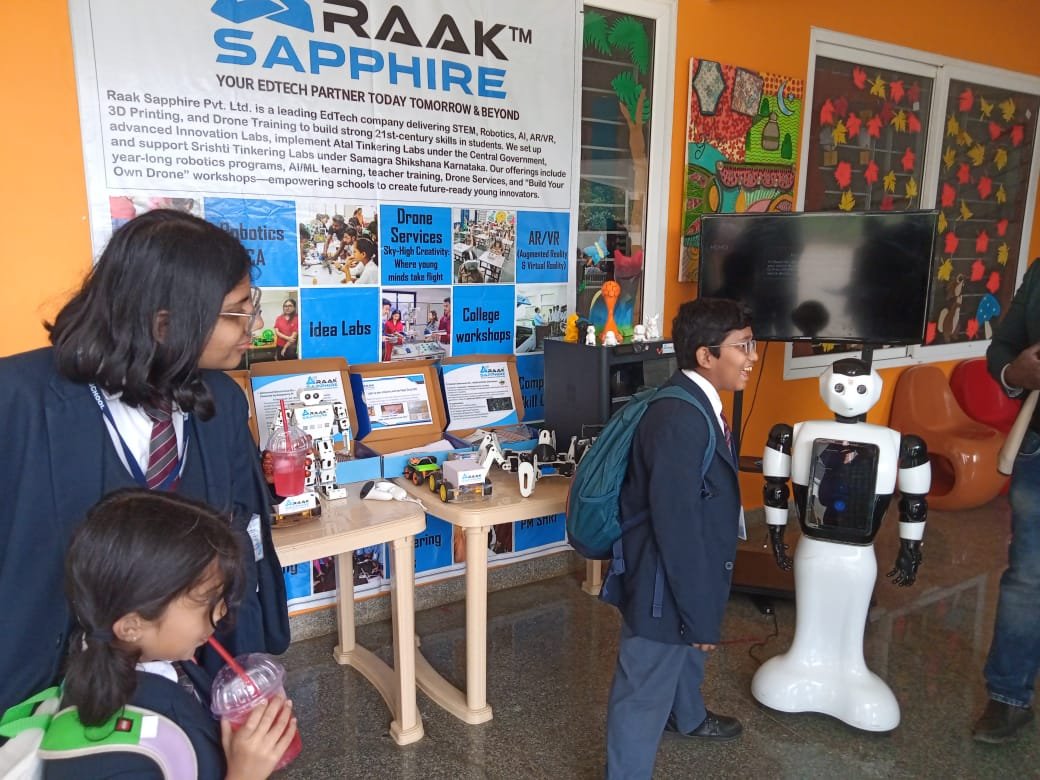
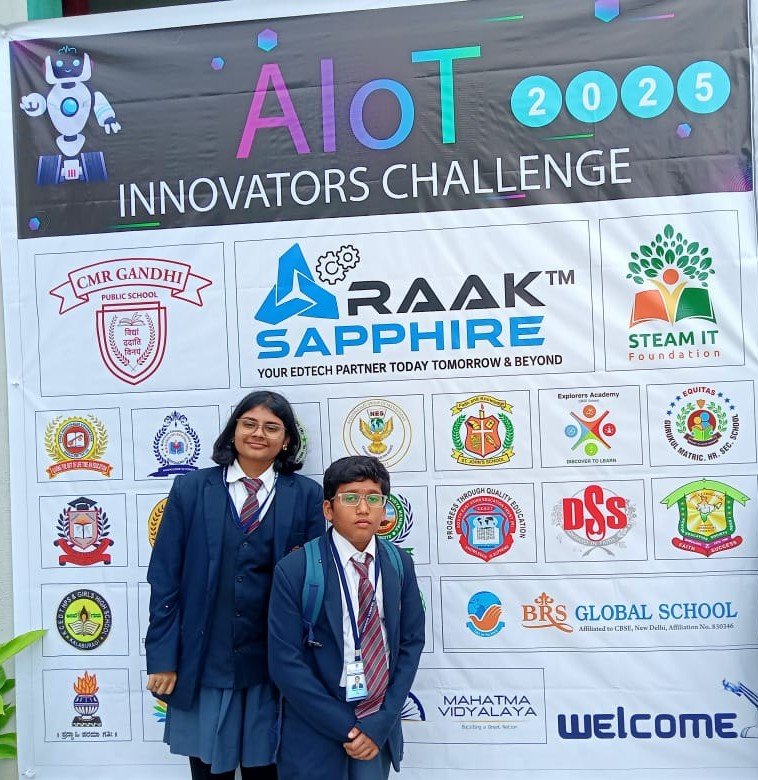
At BRS Global School, Sarjapur Road, students participated in the AIoT Innovators Challenge, a robotics competition held at CMR Gandhi Public School, Sarjapur Road. The event gave students an opportunity to present an innovative model focused on road safety, smart infrastructure, energy efficiency, and emergency support.
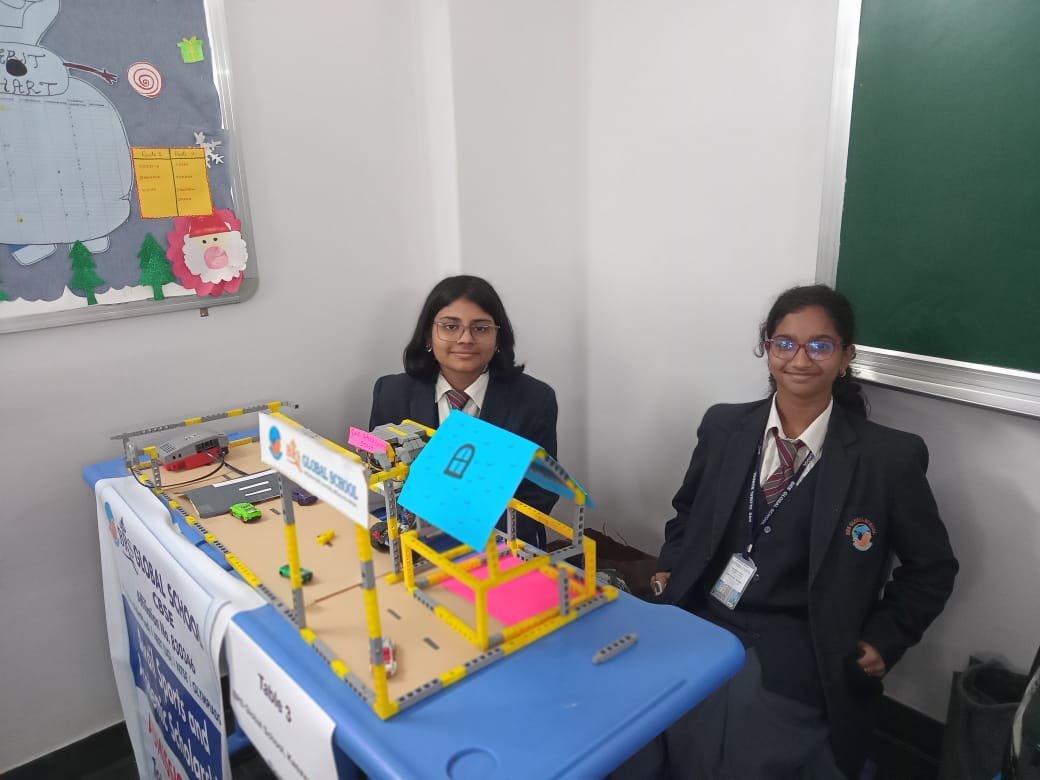
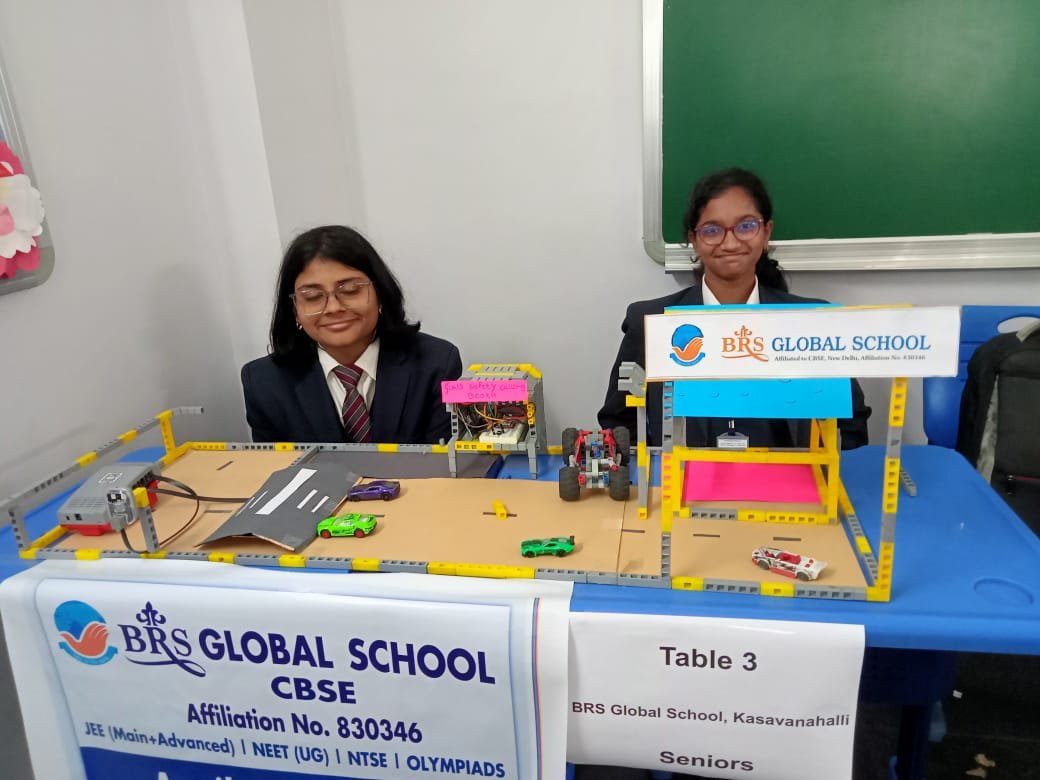
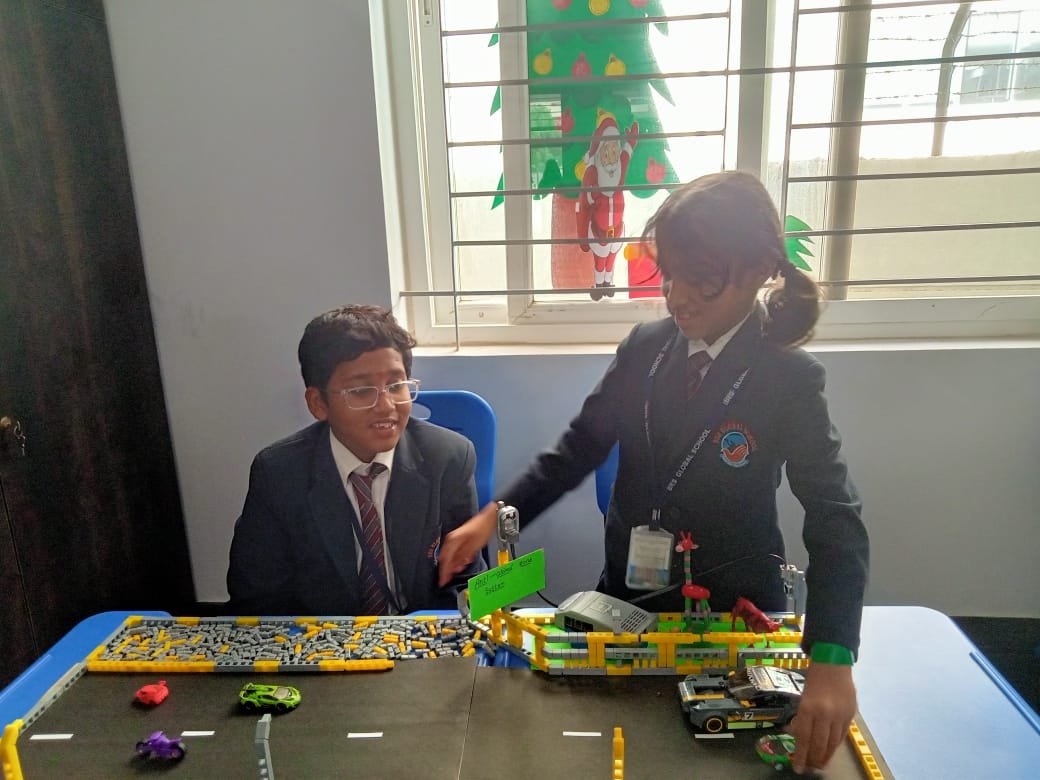
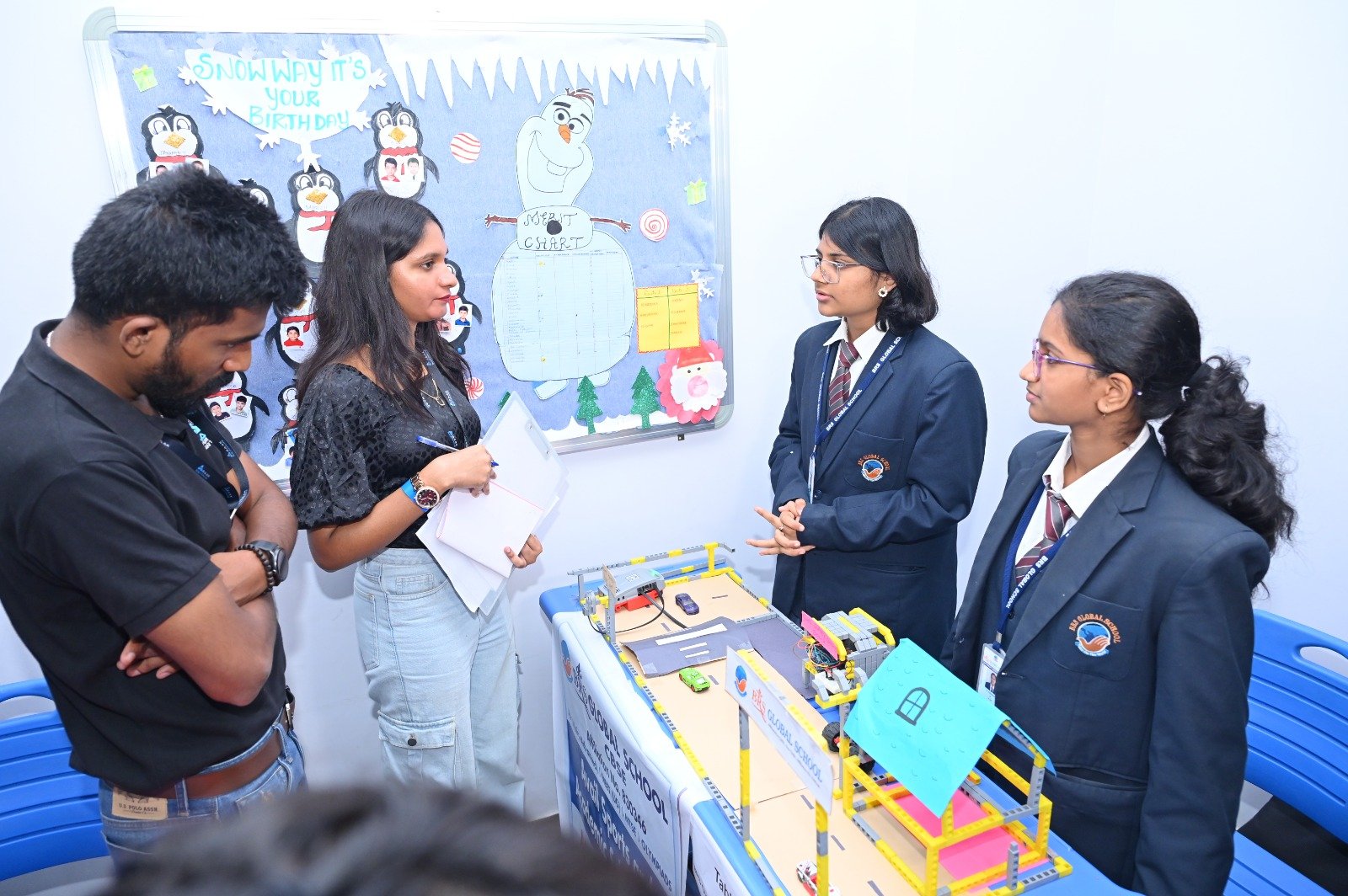
The student team presented RoadSafe 360° / SmartRoad Guardian, a proposed smart road safety and traffic management system. The model brought together several technology-based ideas, including an energy-harvesting road hump, a smart curve indicator, a GSM-based women’s safety system, and an automated streetlight system.
The project is a strong example of experiential learning, where students move from simply understanding technology to considering how it can be applied to everyday challenges.
What Happened During the AIoT Innovators Challenge?
The students presented their RoadSafe 360° / SmartRoad Guardian model as a technology-driven approach to improving road safety and public infrastructure.
The project considered several challenges that can affect road users, including blind curves, poor lighting, stray animals, safety concerns, and inefficient use of energy. The students proposed technology-based mechanisms using IoT, sensors, GSM, automation, and microcontrollers to address these challenges.
Four students represented the school:
• Innaya Noora – Grade 3
• Kunal – Grade 5
• P. Rishika – Grade 7
• Aishwarya P – Grade 8
All four students participated in the competition and received certificates.
The project demonstrated how students across different grade levels can engage with technology and work towards presenting solutions to practical problems.
What Was the RoadSafe 360° / SmartRoad Guardian Project?
RoadSafe 360° / SmartRoad Guardian was presented as a smart road safety and traffic management system incorporating multiple technology concepts.
The project consisted of four key components:
• Energy-Harvesting Road Hump
• Smart Curve Indicator for Hilly Roads
• GSM-Based Women’s Safety System
• Smart Streetlight System
Each component addressed a different aspect of road safety, sustainability, or public infrastructure.
Energy-Harvesting Road Hump
One component of the project explored how vehicles passing over a speed breaker could generate mechanical energy that could potentially be converted into electricity.
The proposed system uses a limit switch or piezoelectric sensor to detect vehicle pressure. A microcontroller can then manage the generated energy, while an LED indicator can show real-time energy generation.
The concept introduces students to the connection between mechanical movement, sensors, electricity, and sustainable energy.
The project presentation highlighted the potential advantages of such a system, including reducing energy consumption for street lighting and demonstrating how everyday infrastructure could potentially contribute to energy generation.
What did students learn from this component?
Students were able to explore how energy can be generated, detected, stored, and used through a combination of mechanical and electronic systems.
It also encouraged them to consider sustainability as part of technological problem-solving.
Smart Curve Indicator for Hilly Roads
The second component focused on the safety challenges associated with blind curves.
The proposed smart curve indicator uses IR or proximity sensors to detect approaching vehicles. LED indicators can then alert drivers about oncoming traffic, while a microcontroller manages the signals.
This concept demonstrates how sensors and visual alerts can be combined to improve awareness in locations where visibility may be limited.
The project presentation used a hilly-road scenario to explain how an early warning could help drivers respond more cautiously near blind curves.
Why is this important for student learning?
This part of the project encouraged students to think about cause and effect. They considered a real-world problem, identified the information that a driver needs, and then explored how technology could detect and communicate that information.
This is an important aspect of STEM and robotics learning: technology is not simply about building a device; it is about understanding a problem and designing a meaningful response.
GSM-Based Women’s Safety System
The third component addressed emergency assistance and women’s safety.
The proposed system uses an emergency button connected to a GSM module. When activated, the system can send an alert, while an LED indicator can confirm that the alert has been triggered.
The project presentation described the concept as a way of providing immediate access to assistance during an emergency. Its intended advantages include ease of use, quick communication, and improved confidence in emergency situations.
What skills does this demonstrate?
This component introduced students to the idea of communication technology and emergency-response systems.
It also encouraged them to consider technology from a human perspective: how can a technological system be designed to provide assistance when someone needs it?
Smart Streetlight System
The fourth component focused on energy efficiency and automated lighting.
The proposed smart streetlight system uses LDR sensors to detect ambient light. The lights can automatically switch on when it becomes dark and switch off when sufficient daylight is available. A microcontroller manages the automation.
The concept demonstrates how simple sensors and automation can be used to improve energy efficiency while maintaining appropriate lighting.
The project presentation also included an example of automated streetlights being used in a Bengaluru park to illustrate the potential energy-saving benefits of smart lighting.
What did students learn?
Students were introduced to the relationship between sensors, environmental conditions, automation, and energy management.
They could see how a system can respond automatically to changing conditions instead of relying entirely on manual operation.
What Skills Did Students Develop Through the Robotics Competition?
The AIoT Innovators Challenge provided students with an opportunity to develop several skills beyond conventional classroom learning.
Problem-solving
Students began with real-world challenges and explored possible technological solutions. This encourages them to approach problems analytically rather than accepting them as fixed difficulties.
Innovation and creative thinking
The RoadSafe 360° concept brought together different technologies to address multiple aspects of road safety and infrastructure.
STEM understanding
The project introduced students to concepts involving sensors, microcontrollers, IoT, GSM, automation, LEDs, and energy generation.
Communication skills
Presenting a project requires students to explain what the problem is, how their model works, and why their proposed solution matters.
Collaboration
Robotics projects often require students to work together, exchange ideas, divide responsibilities, and coordinate towards a common outcome.
Confidence
Participating in a competition and presenting a project before an audience can help students become more comfortable communicating technical ideas.
Real-world application
Perhaps most importantly, the activity connected technology concepts with practical situations involving roads, lighting, safety, energy, and public infrastructure.
How Does Robotics Support Holistic Student Development?
Robotics can contribute to holistic development because it combines knowledge, creativity, experimentation, communication, and problem-solving.
A student working on a robotics project is not only learning how a sensor or microcontroller works. They are also learning how to identify a problem, consider different solutions, test an idea, communicate their reasoning, and understand the practical limitations of a solution.
For students, these experiences can make technology learning more purposeful.
For parents, such activities provide an opportunity to see how classroom learning can extend into practical, project-based experiences.
The AIoT Innovators Challenge reflects this broader approach by giving students an opportunity to work with technology while thinking about issues that affect communities.
How Does This Activity Support CBSE Learning?
The activity supports an experiential approach to learning by encouraging students to connect concepts with practical applications.
Through the RoadSafe 360° project, students explored scientific and technological ideas involving energy, sensors, electronics, automation, communication, and environmental awareness.
The competition also encouraged inquiry and problem-solving. Instead of simply learning definitions, students had to understand a problem and think about how technology could potentially respond to it.
This kind of project-based learning can complement academic learning by developing skills such as:
• Critical thinking
• Problem-solving
• Communication
• Collaboration
• Creativity
• Application of knowledge
• Scientific curiosity
The project therefore represents an opportunity for students to explore learning beyond textbook-based instruction.
Why Should Parents Value Experiences Like This?
Parents looking for CBSE schools in Sarjapur Road often consider more than academic performance. Opportunities for students to participate in projects, competitions, presentations, sports, arts, and technology activities can also form an important part of the school experience.
Robotics competitions give students a chance to experience learning in a practical setting.
Instead of asking only, “What is a sensor?”, students can begin asking:
“What problem can a sensor help us solve?”
That shift—from remembering information to applying it—is valuable for developing independent thinking.
Activities such as the AIoT Innovators Challenge can also help students discover interests that may later develop into deeper engagement with STEM, engineering, computer science, robotics, or innovation.
Why Is This Relevant for Students in Sarjapur Road and Bengaluru?
Sarjapur Road is part of a rapidly developing Bengaluru region with residential communities, educational institutions, and major technology and business hubs nearby.
Families living around Bellandur, Sarjapur Road, Hosa Road, Koramangala, HSR layout, Dommasandra, Kodathi, Gunjur, Varthur, Kaikondrahalli, Kasavanahalli, Carmelaram, Harlur, Rayasandra, Naganathapura, Doddakannelli, Kudlu Gate, A Krishnappa Nagar, Halnayakanahalli, Radha Reddy Layout, Chikkanayakanahalli, Huskur, KPC Layout, CSB Layout, Owners Court, Doddanagamangala, Doctors Layout, Shiva Reddy Layout, Meenakshi Layout, Chikbellandur, Sompura Gate, Muthannalur Cross, Gunjur to Dommasandra Road, Mullur, Amrita Engineering College Road Kasavanahalli, Amrita Nagar, Serenity Layout, Spring Fields, Iblur, Marathahalli, Shobha Apartments, Choodasandra, Junnasandra, Rayasandra and Electronic City may look for educational environments that combine academic learning with opportunities for practical development.
The location is also connected to Bengaluru’s wider technology ecosystem, making exposure to STEM, innovation, robotics, and technology particularly relevant for young learners.
For families exploring CBSE schools in Sarjapur Road, activities such as robotics competitions can provide an additional perspective on how students are encouraged to apply their learning.
Common Parent Questions
How does a robotics competition benefit school students?
A robotics competition gives students an opportunity to apply concepts through practical problem-solving. It can develop creativity, teamwork, communication, technical curiosity, and confidence while encouraging students to think about real-world applications.
Does robotics help improve problem-solving skills?
Yes. Robotics projects require students to identify a problem, understand how a system works, consider possible solutions, and explain how their model addresses the problem. This naturally encourages analytical and problem-solving thinking.
What technologies did students explore in this project?
The RoadSafe 360° project explored concepts involving IoT, sensors, GSM technology, automation, microcontrollers, LEDs, LDR sensors, IR or proximity sensors, and energy harvesting.
Can younger students benefit from robotics activities?
Yes. Robotics and technology activities can be adapted to different age groups. In this competition, students from Grade 3 through Grade 8 participated, demonstrating that students at different stages can engage with technology-based projects.
How does project-based learning complement academics?
Project-based learning allows students to apply concepts rather than only study them theoretically. It can help connect classroom knowledge with practical situations and encourage students to ask questions, experiment, communicate, and solve problems.
Why are technology competitions important for students?
Competitions provide students with a goal and an opportunity to present their work. They can encourage preparation, teamwork, creativity, confidence, and a willingness to learn from challenges.
What did the BRS Global School students present?
The students presented RoadSafe 360° / SmartRoad Guardian, a proposed smart road safety and traffic management system covering energy-harvesting road humps, smart curve indicators, a GSM-based women’s safety system, and smart streetlights.
Key Highlights
• BRS Global School students participated in the AIoT Innovators Challenge robotics competition.
• The competition was held at CMR Gandhi Public School, Sarjapur Road.
• Four students from Grades 3, 5, 7, and 8 participated.
• All four participating students received certificates.
• The team presented RoadSafe 360° / SmartRoad Guardian.
• The project focused on smart road safety and traffic management.
• Students explored IoT, sensors, GSM, automation, and microcontrollers.
• The model included four major technology concepts.
• The activity encouraged practical problem-solving and innovation.
• The experience supported communication, collaboration, creativity, and STEM learning.
Frequently Asked Questions (FAQs)
What is the AIoT Innovators Challenge?
The AIoT Innovators Challenge is a robotics-focused competition that provides students with an opportunity to explore technology and present innovative solutions to practical problems.
What was the BRS Global School project about?
The project, RoadSafe 360° / SmartRoad Guardian, focused on smart road safety and traffic management using technologies such as sensors, IoT, GSM, automation, and microcontrollers.
Which students participated?
Innaya Noora from Grade 3, Kunal from Grade 5, P. Rishika from Grade 7, and Aishwarya P from Grade 8 participated in the competition and received certificates.
What were the four components of the project?
The project included an energy-harvesting road hump, smart curve indicator, GSM-based women’s safety system, and smart streetlight system.
Does robotics support STEM education?
Robotics provides a practical way for students to explore science, technology, engineering, mathematics, electronics, programming, sensors, and problem-solving concepts.
How can parents encourage children interested in robotics?
Parents can encourage curiosity by allowing children to experiment, participate in school projects and competitions, explore age-appropriate STEM activities, and ask questions about how technology can solve everyday problems.
Conclusion
The AIoT Innovators Challenge provided BRS Global School | Best CBSE School in Sarjapur Road, students with a valuable opportunity to explore how technology can be connected with real-world needs.
Through RoadSafe 360° / SmartRoad Guardian, students considered road safety, energy efficiency, emergency communication, and smart infrastructure while gaining practical exposure to sensors, IoT, GSM, and automation.
For families exploring CBSE schools in Sarjapur Road , experiences like these offer a useful glimpse into how learning can extend beyond textbooks and encourage students to become curious, creative, collaborative, and confident learners.
Parents interested in understanding how BRS Global School, Sarjapur Road combines academic learning with practical student experiences can explore the school’s campus and educational programmes.